 How to resolve AdBlock issue?
News
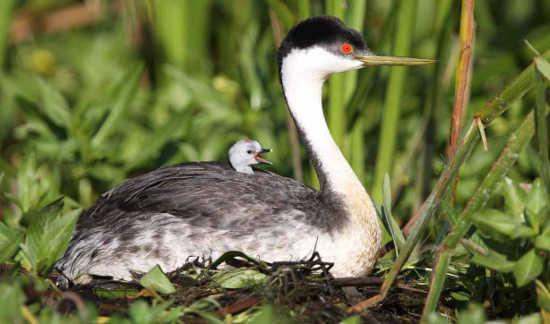
LAKE COUNTY, Calif. – It’s possible that global warming could become the swan song for some bird species in Lake County and elsewhere.
“There is evidence,” acknowledged Roberta Lyons, co-chair of the Redbud Audubon Society in Lake County, “that climate change is going to dramatically affect the number of birds.”
The immediate concern is the Western and Clark’s Grebe, which comes here in sufficient numbers to wrest the unofficial title of “bird of Clear Lake” from its present holder of that title – the blue heron.
Of the 133 species of birds counted by Redbud Audubon’s birders during the annual Christmas Bird Count on Dec. 27, the Western Grebe won the prize for the most individuals tallied with a high of 8,585.
The local Audubon chapter reported that highlights of the December count included a greater roadrunner, a member of the cuckoo family that was seen for the second year in a row, as well as a black-throated gray warbler that is considered extremely rare in Lake County in the winter but fairly common the rest of the year.
The sighting considered by the group to be the most unusual was a potential Iceland Gull, which has been seen only once before in Lake County.
Several species hit record high counts, including the acorn woodpecker, the red-breasted sapsucker and the phainopepla, black phoebes and the northern mockingbird.
At the same time, species shown to be down in the count included the European Starling, a nonnative species, and Brewer’s Blackbirds, with the group reporting that the “big misses” were the Northern Pintail and Redhead ducks, Cooper’s Hawk, Prairie Falcon, Wilson’s Snipe and Barn Owl.
Swans, it may be noted, are not abundant on Clear Lake.
Lyons said that annual bird counts of all the birds in Lake County annually undertaken at Christmas was “a little was a little bit lower this year” – the five-year average is 137.8 birds, with the all-time low count of 122 seen in 2003 – but not enough to be a cause for concern.
“It is not a definitive way to judge,” she said. “It depends on a lot of things because you may go out on a day when the weather’s not so good.”
Another factor could well be the switch in agriculture in the county to winegrapes. “It affects their habitat,” Lyons said of the county's bird species.
And yet another may be construction in the area. “Development is going to happen,” she said. “It just has to be mitigated.”
But she added that Redbud Audubon “has its say” about most construction.
One impact that probably doesn’t get much consideration is the invasion of new and invasive bird species.
Studies have established that bird species that can move easily to new habitat will likely continue to do well.
But bird species that thrive only in a narrow environmental range are expected to decline, and to be outnumbered by invasive species.
During the past five summers, from 2010 to 2014, Redbud Audubon has joined two other chapters of California Audubon in a cooperative project promoting the conservation of Western Grebes and Clark’s Grebes on several lakes in northern California.
The studies are financed by oil spill mitigation funds administered by the National Oceanic and Atmospheric Administration and the National Fish and Wildlife Federation.
An Audubon grant supports a project to educate the public about the Western and Clark’s grebe that thrive in this region.
The project has focused on monitoring the breeding success of grebes, documenting nesting disturbances such as power boats deploying warning signs and buoys around the perimeter of nesting colonies, and building public awareness of various threats to the grebes’ reproductive success and how those threats may be reduced.
Marilyn Waits, a former Redbud Audubon president, has partnered with Dr. Floyd Hayes, professor of biology at Pacific Union College, in administering the grant.
A constant threat for grebes is the snarled fishing line that gets tossed into the lake where it frequently gets tangled around them.
“It’s always a concern,” said Lyons. “We just acknowledge that it’s going to be a problem. I’ve never seen a grebe wrapped up in fishing line, but I’ve seen pictures of them.”
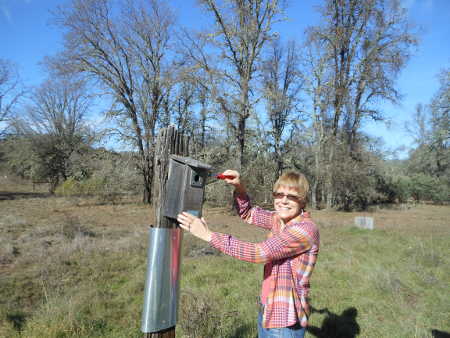
Redbud Audubon, she added, works with environmentalist-conservationist Rob Patton in putting lakeside boxes in strategic places for the disposal of fishing line and maintaining them.
Email John Lindblom at
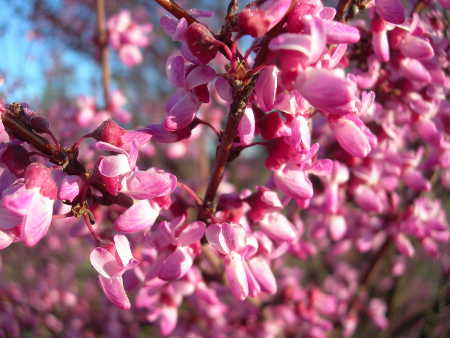
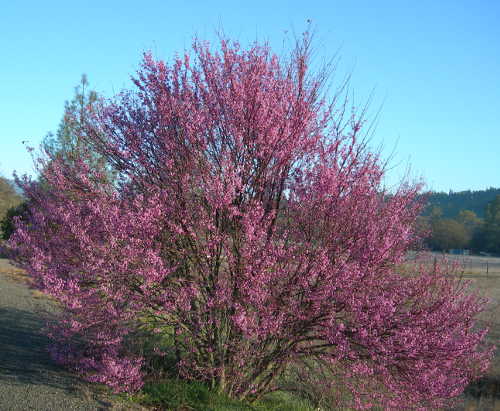
LAKE COUNTY, Calif. – The ubiquitous redbud stands out like a magenta umbrella amongst the spring greenery.
The western or California redbud, or Cercis orbiculata is the namesake of our local parks and hospitals.
More importantly, this highly visible shrub or tree has been a key plant, historically, in Lake County and California's native cultures for centuries.
It has been prized by about 20 different American Indian groups or tribes as a significant plant for basketry.
There are seven kinds of native redbud species in Europe, Asia and North America, but just one is indigenous to California.
Actually a member of the legume family, the redbud can reach a height of up to 20 feet.
The magenta pink flowers are wonders of nature, appearing as pea-shaped, and arriving before the leaves.
The pink mist of flowers arrives in Lake County from February to March, but an individual tree's display lasts only about two weeks.
Redbud is a drought-tolerant plant, and is found in several plant populations: riparian, cone forest, oak woodland and chaparral, preferring rocky soil.
In the Sierra Nevada mountains redbud plants have been studied by ethnobotanists, and there, too the plant played a large part in American Indian basketry.
After lightning fires there, the redbud regenerated and adapted vigorously in woodland plant ecosystems.
Copious amounts of redbud have been discovered by archaeologists studying the Sierra Miwok Indian sites, and they posit that human activity played a large part in the prolific presence of the redbud plants there.
It is believed that the trees were pruned and weeded to maintain the elegant wine-colored switches for basketry use throughout history.
Elders have given ethnohistories describing just that – the plants were coppiced, or cut back extensively to manage the plant's growth for future use. In this way, the new sprouts were longer and straighter, less scarred and better for basket making.
Redbud was harvested in fall or winter as basket making material to create unique patterns in their baskets.
In the spring or summer seasons redbud could be harvested and its bark removed to be used as a white sewing twine.
The plant was utilized for both structure and in the warp or foundation, and weft for coiling and twining the baskets.
Often, the redbud's branches were split, then stored in coils to “cure” for about a year, in a cool, dry location.
When the time came for basket making, the coils of redbud were soaked for hours, then cleaned again for use by talented tribe members.
Be sure to visit our local museums to see, firsthand, the beautiful, handmade baskets, some of which are so well made that they can hold water.
Kathleen Scavone, M.A., is an educator, potter, writer and author of “Anderson Marsh State Historic Park: A Walking History, Prehistory, Flora, and Fauna Tour of a California State Park” and “Native Americans of Lake County.” She also writes for NASA and JPL as one of their “Solar System Ambassadors.” She was selected “Lake County Teacher of the Year, 1998-99” by the Lake County Office of Education, and chosen as one of 10 state finalists the same year by the California Department of Education.
LAKE COUNTY, Calif. – Lake County Animal Care and Control this week is looking for new homes for a group of mostly large dogs.
Dogs available for adoption include mixes of Australian Shepherd, cattle dog, Chihuahua, German Shepherd, Labrador Retriever, pit bull, Rhodesian Ridgeback and terrier.
Low adoption fees are offered for some of the dogs.
Dogs that are adopted from Lake County Animal Care and Control are either neutered or spayed, microchipped and, if old enough, given a rabies shot and county license before being released to their new owner. License fees do not apply to residents of the cities of Lakeport or Clearlake.
If you're looking for a new companion, visit the shelter. There are many great pets hoping you'll choose them.
In addition to the animals featured here, all adoptable animals in Lake County can be seen here: http://bit.ly/Z6xHMb .
The following dogs at the Lake County Animal Care and Control shelter have been cleared for adoption (additional dogs on the animal control Web site not listed are still “on hold”).

Pit bull terrier mix
This female pit bull terrier mix has a short brown coat.
She's in kennel No. 6, ID No. 1901.

Chihuahua mix
This female Chihuahua mix has a short white coat with brown markings.
She is in kennel No. 13, ID No. 1851.
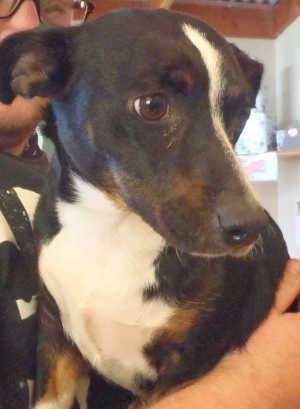
Female terrier mix
This female terrier mix is 4 years old, and has a short tricolor coat.
Shelter staff said she weighs 24 pounds, is very sweet and calm.
She walks great on a leash, does not bark much and is looking for a loving home.
Find her in kennel No. 14, ID No. 1855.
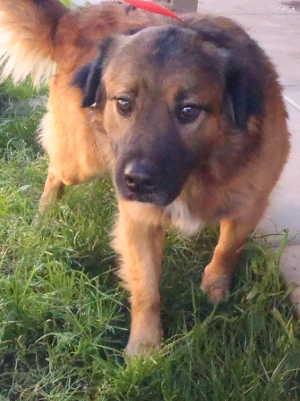
'Max'
“Max” is a male Labrador Retriever-German Shepherd mix.
He is 3 years old, weighs nearly 60 pounds and has a medium sable and black coat.
Shelter staff said he is well trained: Max knows his commands and is leash trained.
He is looking for a family to be a part of or an individual who will love him.
He's in kennel No. 15, ID No. 1770.
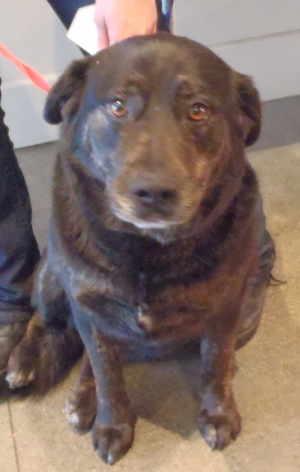
'Roxie'
“Roxie” is a female Labrador Retriever mix who came into the shelter along with Max.
She is 4 years old, weighs 69 pounds and already is spayed, so she is available for a low adoption fee.
Roxie also is leash trained and knows basic commands, and has beautiful big brown eyes.
Roxie is in kennel No. 16, ID No. 1771.
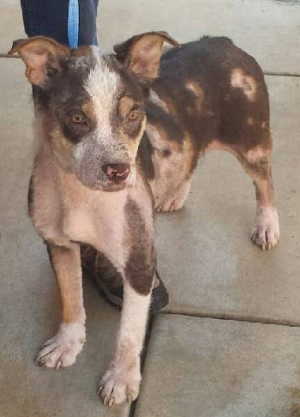
Female Australian Shepherd mix
This young female Australian Shepherd mix has a short multicolored coat.
She's in kennel No. 24, ID No. 1321.
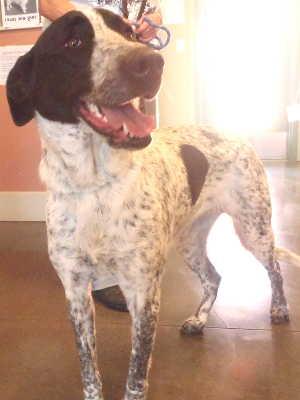
Female cattle dog mix
This female cattle dog mix has a short black and white coat.
She's in kennel No. 28, ID No. 1888.
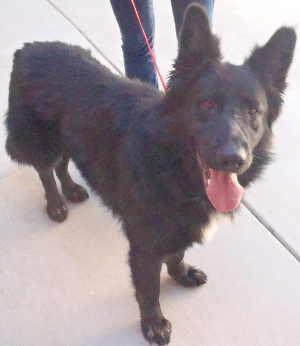
Male shepherd mix
This male shepherd mix has a medium-length black coat.
He's in kennel No. 30, ID No. 1861.
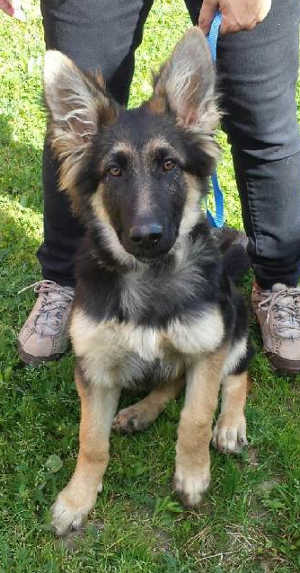
Female German Shepherd mix
This young female German Shepherd mix has a medium length black and tan coat.
She's in kennel No. 31a, ID No. 1916.
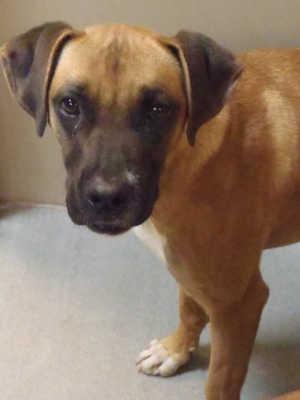
Rhodesian Ridgeback mix
This female Rhodesian Ridgeback mix, along with her brother, came in as a stray from the Hendricks Road area in Lakeport.
She is 4 years old, weighs 54.5 pounds, and has a short brown coat and black markings.
Shelter staff said she is mellow, very sweet and a little shy, but warms up once she's had a chance to get to know a person.
She is heartworm positive so she will need treatment. Call for a quote for medications.
She's in kennel No. 32a, ID No. 1757.
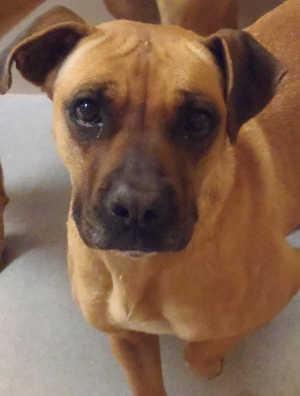
Rhodesian Ridgeback mix
This male Rhodesian Ridgeback mix came in with his sister, and is also 4 years old.
Shelter staff says he gets along well with cats; his tail wagged as he watched them play.
Anyone who is interested in adopting him and who has dogs already is asked to submit an application and introduce bring their dogs in for an introduction.
He is slightly shy but with some training he could be a wonderful addition to your family or for an individual.
He's in kennel No. 32b, ID No. 1762.
To fill out an adoption application online visit http://www.co.lake.ca.us/Government/Directory/Animal_Care_And_Control/Adopt/Dog___Cat_Adoption_Application.htm .
Lake County Animal Care and Control is located at 4949 Helbush in Lakeport, next to the Hill Road Correctional Facility.
Office hours are Monday through Friday, 11 a.m. to 5 p.m., and 11 a.m. to 3 p.m., Saturday. The shelter is open from 11 a.m. to 4 p.m. Monday through Friday and on Saturday from 11 a.m. to 3 p.m.
Visit the shelter online at http://www.co.lake.ca.us/Government/Directory/Animal_Care_And_Control.htm .
For more information call Lake County Animal Care and Control at 707-263-0278.
Email Elizabeth Larson at
Warm temperatures in February contributed to further snowpack decline in the Cascades and Sierra Nevada, according to data from the third 2015 forecast by the United States Department of Agriculture's Natural Resources Conservation Service (NRCS).
Snowpack in Nevada, Utah and Idaho also fell further behind normal.
"Nearly a third of our SNOTEL sites in the Cascades and Sierra Nevada are reporting the lowest snowpack ever measured," NRCS Hydrologist Cara McCarthy said. "For the first time, some sites were snow-free on March 1. These areas can expect reduced summer streamflow."
Recent storms helped relieve dry conditions in the Southwest. However, drought conditions persist in California, Nevada and Utah, as well as in parts of Arizona, New Mexico, and Colorado. Areas in Washington and Oregon also remain in drought.
In Western states where snowmelt accounts for the majority of seasonal water supply, information about snowpack serves as an indicator of future water availability.
Streamflow in the West consists largely of accumulated mountain snow that melts and flows into streams as temperatures warm in spring and summer.
NWCC scientists analyze the snowpack, air temperature, soil moisture and other measurements taken from remote sites to develop the water supply forecasts.
The Cascades of Oregon and Washington have received near normal levels of precipitation this water year, but it's mostly fallen as rain instead of snow. Rainfall captured by reservoirs in those states will help mitigate dry spring and summer months.
NRCS monitors conditions year-round and will continue to issue monthly forecasts until June. The water supply forecast is part of several USDA efforts to improve public awareness and mitigate the impacts of climate change, including drought and other extreme weather events.
Through the creation of the National Drought Resilience Partnership, launched as part of the President's Climate Action Plan, federal agencies are working closely with states, tribes and local governments to develop a coordinated response to drought.
Since 1939, USDA has conducted snow surveys and issued regular water supply forecasts. Other resources on drought include the U.S. Drought Monitor.

NASA's Hubble Space Telescope has the best evidence yet for an underground saltwater ocean on Ganymede, Jupiter's largest moon. The subterranean ocean is thought to have more water than all the water on Earth's surface.
Identifying liquid water is crucial in the search for habitable worlds beyond Earth and for the search of life as we know it.
“This discovery marks a significant milestone, highlighting what only Hubble can accomplish,” said John Grunsfeld, associate administrator of NASA's Science Mission Directorate at NASA Headquarters in Washington. “In its 25 years in orbit, Hubble has made many scientific discoveries in our own solar system. A deep ocean under the icy crust of Ganymede opens up further exciting possibilities for life beyond Earth.”
Ganymede is the largest moon in our solar system and the only moon with its own magnetic field.
The magnetic field causes aurorae, which are ribbons of glowing, hot electrified gas, in regions circling the north and south poles of the moon.
Because Ganymede is close to Jupiter, it is also embedded in Jupiter's magnetic field.
When Jupiter's magnetic field changes, the aurorae on Ganymede also change, “rocking” back and forth.
By watching the rocking motion of the two aurorae, scientists were able to determine that a large amount of saltwater exists beneath Ganymede's crust affecting its magnetic field.
A team of scientists led by Joachim Saur of the University of Cologne in Germany came up with the idea of using Hubble to learn more about the inside of the moon.
“I was always brainstorming how we could use a telescope in other ways,” said Saur. “Is there a way you could use a telescope to look inside a planetary body? Then I thought, the aurorae! Because aurorae are controlled by the magnetic field, if you observe the aurorae in an appropriate way, you learn something about the magnetic field. If you know the magnetic field, then you know something about the moon's interior.”
If a saltwater ocean were present, Jupiter's magnetic field would create a secondary magnetic field in the ocean that would counter Jupiter's field. This “magnetic friction” would suppress the rocking of the aurorae.
This ocean fights Jupiter's magnetic field so strongly that it reduces the rocking of the aurorae to 2 degrees, instead of the 6 degrees, if the ocean was not present.
Scientists estimate the ocean is 60 miles thick – 10 times deeper than Earth's oceans – and is buried under a 95-mile crust of mostly ice.
Scientists first suspected an ocean in Ganymede in the 1970s, based on models of the large moon. NASA's Galileo mission measured Ganymede's magnetic field in 2002, providing the first evidence supporting those suspicions.
The Galileo spacecraft took brief “snapshot” measurements of the magnetic field in 20-minute intervals, but its observations were too brief to distinctly catch the cyclical rocking of the ocean's secondary magnetic field.
The new observations were done in ultraviolet light and could only be accomplished with a space telescope high above the Earth's atmosphere, which blocks most ultraviolet light.
NASA's Hubble Space Telescope is celebrating 25 years of groundbreaking science on April 24. It has transformed our understanding of our solar system and beyond, and helped us find our place among the stars. To join the conversation about 25 years of Hubble discoveries, use the hashtag #Hubble25.
MIDDLETOWN, Calif. – Firefighters have contained a small vegetation fire that broke out early Saturday afternoon near Middletown.
The fire, located at 14255 Big Canyon Road, was called in just before 12:30 p.m., according to Cal Fire Battalion Chief Greg Bertelli.
Ted Dunn, who lives on the property next door to the fire, told Lake County News that he called in the fire.
He said he and his wife started smelling smoke late Saturday morning. They also heard chainsaws and ATVs leaving the area, although they didn't actually see any people.
He and a friend headed out in different directions to look for the fire, with his friend spotting the flames, leading to Dunn's 911 call.
Bertelli said Cal Fire and South Lake County Fire responded with one handcrew, two engines and a helicopter that did bucket drops.
He said the fire was two-thirds of the way up a hill and difficult to access.
“It just took awhile to get resources in there,” Bertelli said.
The fire was contained shortly before 3:30 p.m., at just under an acre and a half, with no structures threatened, Bertelli said.
Bertelli said the fire's cause is under investigation.
“We're eliminating causes right now as we speak,” Bertelli said shortly after the fire was contained.
Dunn said he believed it was possible that the fire resulted from tree cutting in the area, reporting that he's seen downed trees in the vicinity.
Email Elizabeth Larson at