 How to resolve AdBlock issue?
News

NORTHERN CALIFORNIA – On Tuleyome’s the last hike along the Judge Davis Trail, hikers encountered a rattlesnake – which is leading the group to remind everyone that rattlesnakes are common throughout the Berryessa Snow Mountain region.
Although rattlers breed in the summer, the females store the sperm and reproduce in the spring, so be aware that some of the snakes you’re seeing out there may very well be “pregnant.”
Rattlesnakes, unlike many snakes, are ovoviviparous, which means they carry their eggs inside their bodies and then give birth to live young.
Here are some rattler tips for you to remember next time you go hiking:
– Wear over-the-ankle or calf high boots and loose fitting long pants or chaps.
– Do not step or put your hands where you cannot see. (Don't place your hands on unseen ledges or into animal holes.)
– Don't turn rocks or boards over with bare hands. Use a tool.
– Step up onto logs and rocks, never over them, and be especially careful when climbing rocks.
– Avoid walking through dense brush or willow thickets. If you must, use a long stick or branch to beat the brush before you as you go.
What to do in the event of a snake bite:
– Try to remain calm and inactive.
– Get to a hospital or doctor as soon as possible (have someone else drive).
– Loosen or remove any restrictive clothing or jewelry (e.g. shoes, watch) from the area near the bite.
– Watch the victim for signs of shock. Treat if necessary by lying flat with feet elevated and cover with warm clothes or blanket. But never elevate the bitten area, as this will increase the blood flow and send the venom to other tissues.
– Identify or photograph the snake only if it remains visible from a safe distance.
– Don't make incisions over the snakebite.
– Don't constrict the flow of blood.
– Don't immerse a limb in ice water.
– Don’t use your mouth to extract venom. Sucking out the venom is no longer a recommended practice and wastes valuable time. The important thing is to get to a hospital as quickly as possible.
– Don't run or carry unnecessary items as you go for help, to avoid elevating your pulse rate.
– Don't try to catch or kill the snake.
– Don't administer any pain medications or antihistamines, unless instructed by a doctor or EMT.
Remember, about one-third of all rattlesnake bites are "dry" bites, when no venom has been injected.
Have fun out there, but be smart and stay safe.
Tuleyome is a conservation organization based in Woodland, Calif. Mary K. Hanson is an amateur naturalist and photographer who is the author of “The Chubby Woman’s Walkabout” blog.
“It was one of those March days when the sun shines hot and the wind blows cold: when it is summer in the light, and winter in the shade.” – Charles Dickens, Great Expectations
“Everything is blooming most recklessly; if it were voices instead of colors, there would be an unbelievable shrieking into the heart of the night.” – Rainer Maria Rilke
LAKE COUNTY, Calif. – The spring season has always inspired hope and joy with its abundance of life and luminosity.
Spring's resurgence of tulips, butterflies and robins is heartwarming and reaffirming.
The first day of spring, or the vernal equinox, in 2015 occurred on March 20 at 3:45 p.m.
This astronomical event happens when our star, the sun moves across the celestial equator alongside the ecliptic, otherwise known as the path of the sun.
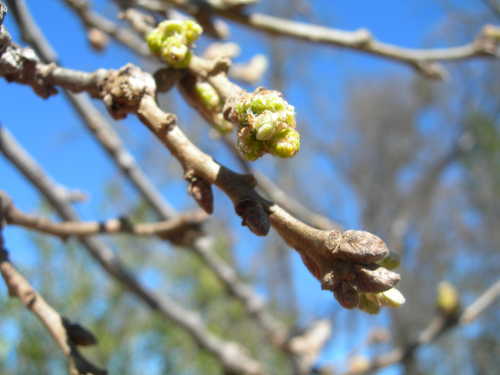
The vernal season brings about great change in vegetation here in Lake County. It seems that the trees and shrubs “green up” over night, and that one day the oaks are lifeless looking masses of intertwining branches, then, before you know it they are decked out in their new spring finery, practically glowing with fresh, green growth of the season.
Although we did not really experience much of a winter season at all this year, temperature-wise and rain-wise, it is truly inspiring to witness the annual event of spring.
As if playing Joseph Haydn's “Variations on a Theme,” Mother Nature's palette of green tones is astounding – almost overwhelming!
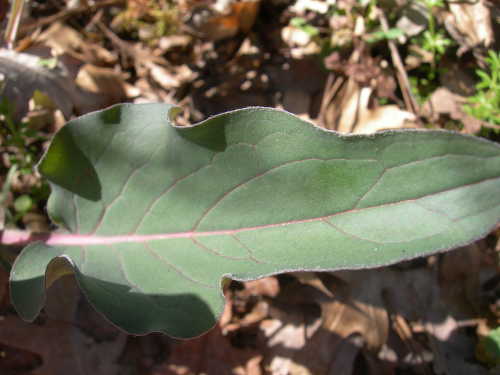
Take the green of a newly emergent oak leaf. It is a succulent and moist green treat, and tender to the touch. The olive green of a hound's tongue leaf contrasts itself to the lime green of fresh-from-the-ground vetch.
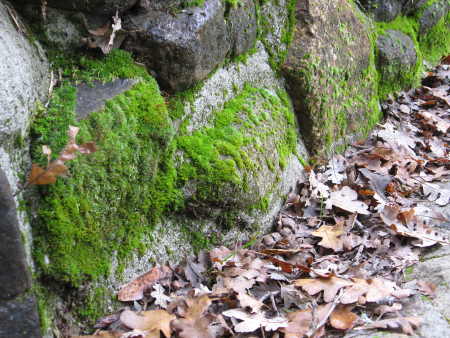
Tender new growth of the wild rose plants stands out from the shades of emerald tree moss. Yet another shade of green begs to be noticed on the nearby moss decorating the rocks.
Talk of all things green brings to mind “the wear'n of the green” on Saint Patrick's Day (March 17).
Wearing green on this day is said to have come about when, around 1640, the green harp flag was put into use by the Irish Catholic Confederation.
Then, sometime during the 1670s the Irish began to honor the Friendly Brothers of St. Patrick.
Now it's a custom to wear green accessories or shamrocks on St. Patrick's Day to honor the story that speaks of St. Patrick having used a three-leaved plant or shamrock to depict the Holy Trinity for the pagan Irish.
Then, three was an especially significant number for the Irish since they included several triple deities in their culture.
The term, “lucky clover” has been attributed to the four-leaf clover, and is actually an unusual variant of the more frequently seen three-leaved clover.
Astronauts on NASA's International Space Station got into the spirit of St. Patrick's Day awhile back. You can view a tribute to the holiday on YouTube at https://www.youtube.com/watch?v=vX-5n_YcxgQ .
Kathleen Scavone, M.A., is an educator, potter, writer and author of “Anderson Marsh State Historic Park: A Walking History, Prehistory, Flora, and Fauna Tour of a California State Park” and “Native Americans of Lake County.” She also writes for NASA and JPL as one of their “Solar System Ambassadors.” She was selected “Lake County Teacher of the Year, 1998-99” by the Lake County Office of Education, and chosen as one of 10 state finalists the same year by the California Department of Education.
LAKE COUNTY, Calif. – Unemployment rates across Lake County, California and the United States showed improvement in February, according to a Friday report.
Lake County's February unemployment rate was 8.3 percent, down from a revised 9 percent in January and much improved over the 10.2 percent rate reported in February 2014, according to the California Employment Development Department.
Statewide, unemployment was 6.7 percent in February, down from 7 percent in January and 8 percent last February, the Employment Development Department reported. California's unemployment rate is based on a survey of 5,500 households.
The US Bureau of Labor Statistics reported that in February nationwide unemployment was 5.5 percent, down from 5.7 percent in January and 6.7 percent in February, 2014.
California's nonfarm jobs totaled 15,949,200 in February, an increase of 29,400 jobs over the month. The year-over-year change, February 2014 to February 2015, showed an increase of 476,400 jobs – up 3.1 percent – according to a survey of 58,000 businesses that measures jobs in the economy.
The federal survey of households showed an increase in the number of employed people, estimating that Californians holding jobs in February totaled 17,668,000, an increase of 48,000 from January, and up 450,000 from the employment total in February of last year.
The number of people unemployed in California was 1,275,000, down by 42,000 over the month, and down by 217,000 compared with February of last year, the state said.
Not only did Lake County's unemployment rate drop in February, its placement among the state's counties also improved slightly, rising to No. 32 from No. 33 in January.
Neighboring counties were ranked as follows: Colusa, 22.7 percent, No. 58; Glenn, 10.4 percent, No. 42; Mendocino, 6.6 percent, No. 20; Napa, 7 percent, No. 5; Sonoma, 4.9 percent, No. 6; Yolo, 7.5 percent, No. 28.
San Mateo County had the lowest unemployment statewide – 3.5 percent – the report showed.
Within Lake County itself, February unemployment rates were as follows, from lowest to highest: Nice, 2.1 percent; Cobb, 3.9 percent; north Lakeport, 5.2 percent; Hidden Valley Lake, 5.6 percent; city of Lakeport, 5.6 percent; Middletown, 6.6 percent; Upper Lake, 6.8 percent; Clearlake Oaks, 7.9 percent; Kelseyville, 8.2 percent; city of Clearlake, 12.2 percent; Lucerne, 14.2 percent; and Lower Lake, 15.8 percent.
Lake County's workforce has shown growth over the last few months. In February, it totaled 30,140 individuals, down slightly from 30,240 in January and 29,830 in February 2014, according to the state.
Taken as a whole, all Lake County job sectors showed a growth rate of 1.1 percent over the month and 3.7 percent over the year, based on a review of the report data.
The “total farm” industry category in Lake County once again showed the most growth – 19 percent – of any sector, as the county heads into the agricultural growing season.
Among the “total nonfarm” subcategories, wholesale trade grew by 7.1 percent over the month, with government showing a 0.7 percent growth rate.
Sectors showing declines included nondurable goods (-4.2 percent), goods producing (-2.5 percent), and transportation, warehousing and utilities (-1.8 percent).
Reviewing statewide job sectors showing changes, mining and logging; construction; manufacturing; trade, transportation and utilities; financial activities; professional and business services; educational and health services; and leisure and hospitality added jobs over the month.
At the same time, information, other services and government reported job declines, and construction; manufacturing; trade, transportation and utilities; information; financial activities; professional and business services; educational and health services; leisure and hospitality; other services; and government posted job gains, the state said.
Also on Friday, the Employment Development Department reported that there were 426,874 people receiving regular Unemployment Insurance benefits during the February survey week, compared with 397,142 in January and 539,062 in February of last year.
At the same time, new claims for Unemployment Insurance were 43,302 in February, compared with 40,989 in January and 65,494 in February of last year, the state reported.
Email Elizabeth Larson at
Mobilizing California's resources to face another year of extreme dry conditions, Gov. Edmund G. Brown Jr. on Thursday joined Senate President pro Tempore Kevin de León, Assembly Speaker Toni Atkins, and Republican Leaders Senator Bob Huff and Assemblymember Kristin Olsen to announce legislation to help local communities cope with the ongoing, devastating drought.
The $1 billion package will expedite bond funding to make the state more resilient to the disastrous effects of climate change and help ensure that all Californians have access to local water supplies.
“This unprecedented drought continues with no signs yet of letting up,” said Brown. “The programs funded by the actions announced today will provide direct relief to workers and communities most impacted by these historic dry conditions.”
The legislation includes more than $1 billion for local drought relief and infrastructure projects to make the state’s water infrastructure more resilient to extreme weather events.
The package accelerates $128 million in expenditures from the governor’s budget to provide direct assistance to workers and communities impacted by drought and to implement the Water Action Plan.
It also includes $272 million in Proposition 1 Water Bond funding for safe drinking water and water recycling and accelerates $660 million from the Proposition 1e for flood protection in urban and rural areas.
“Taken together, this package provides a major boost to our state’s efforts to manage the drought and strengthen our infrastructure,” said Pro Tempore De León. “I want to thank the governor and the Speaker for working together to respond to this crisis. It shows how we – as leaders – can get things done when we all work together in common purpose.”
“The drought isn’t letting up, so we can’t let up either,” said Speaker Atkins. “This legislation will deliver relief to Californians harmed by the drought and help us manage the significant problems the drought continues to cause. Since our skies are still clear – our job is too. And making sure we meet emergency needs, prepare for short term problems, and advance longer-term projects are an important part of that effort.”
“Republicans have consistently said that storage is essential for providing a reliable water source to all of California for future generations,” said Senate Republican Leader Bob Huff. “The Prop 1 water bond that was passed last year is a critical step forward in meeting the needs for California’s future. There’s no question California’s drought crisis has worsened, as once again we’ve experienced a dry winter. With the hot summer months approaching, it’s incumbent on all Californians to be responsible with how they use water. It’s critical that we act now.”
“This emergency drought relief is an important band aid,” said Assembly Republican Leader Kristin Olsen. “We must move beyond temporary fixes. Projects to increase water supply have been hung up in government red tape for decades. I'm glad today we are making decisions that help people and look to us all to take real actions on long-term projects so emergency actions are no longer needed.”
The legislation underscores the ongoing crisis facing California’s rural communities, according to the president of the California Farm Bureau Federation, Paul Wenger.
Wenger thanked Gov. Brown and legislative leaders for their attention to the crisis and urged the state to move quickly to provide aid to rural residents whose livelihoods have been harmed by water shortages. He also encouraged the state to move as quickly as possible to approve and build new water storage.
“Many California farmers face water cutbacks of 80 to 100 percent, and water shortages will force hundreds of thousands of acres of productive farmland to be idled,” Wenger said. “Tens of thousands of jobs will be lost on farms and in packinghouses and other rural businesses. People who work in those jobs form the backbone of our state’s rural economies, and we appreciate the state’s efforts to help them through this difficult time.”
While tackling the short-term crisis, Wenger said, the state should also improve management of existing water infrastructure and adapt it to meet future needs.
“Many people who study the climate say we may have more years such as this, with California receiving a few heavy rainstorms and not much snow,” he said. “We need to have the reservoirs in place to capture more of those heavy rain flows, especially if we can’t count on the Sierra snowpack. This winter, millions of acre-feet of water flowed to the ocean that might have been captured for later use.”
Wenger noted that California voters made it clear they want the state to build new surface storage, through their passage of the Proposition 1 water bond last year.
“That bond money needs to be put to work as quickly as possible,” he said. “Several projects have been identified that would allow California to capture runoff from strong storms like those we’ve had this winter, which would make future droughts less punishing. It’s time to stop studying and start building.”
Timothy Quinn, executive director of the statewide Association of California Water Agencies, said his organization applauded state leaders for taking a strong stance on protecting Californians from the effects of “this unrelenting drought.”
“This drought shows no sign of abating, and this package is a welcome step to accelerate relief to communities that are hardest hit,” Quinn said. “The expedited bond funding will help needed projects get out of the gate more rapidly – including recycled water projects that are ready to go and can be brought on line relatively quickly. It also jump starts some longer term projects that will help improve the resiliency of our system to combat future droughts.
“Local water agencies are on the front lines responding to this drought with aggressive projects and programs to reduce water use, stretch existing supplies and protect remaining water reserves,” Quinn said. “They will continue to use every tool available to manage through the drought this year and improve our water supply reliability long term.
The Sierra Nevada snowpack, which Californians rely on heavily during the dry summer months for their water needs, is at a near record low.
The March snowpack measurement came in at 0.9 inches of water content in the snow, just 5 percent of the March 3 historical average for the measurement site.
The overall water content for the Northern Sierra snowpack came in at 4.4 inches, just 16 percent of average for the date. Central and southern Sierra readings were 5.5 inches (20 percent of average) and 5 inches (22 percent) respectively. Only in 1991 has the water content of the snow been lower.
Taking action to further strengthen water conservation in the state, the State Water Resources Control Board on Tuesday voted to expand and extend an emergency regulation to prohibit certain water use, such as washing down sidewalks, and create a minimum standard for outdoor irrigation restrictions by urban water suppliers.
Since last February, the state has pledged more than $870 million to support drought relief, including money for food to workers directly impacted by the drought, funding to secure emergency drinking water supplies for drought impacted communities and bond funds for projects that will help local communities save water and make their water systems more resilient to drought.
Last month, Gov. Brown met with U.S. Secretary of the Interior Sally Jewell in Sacramento to announce nearly $20 million in federal drought relief for California’s Central Valley Project.
In December 2013, the Governor formed a Drought Task Force to closely manage precious water supplies, to expand water conservation wherever possible and to quickly respond to emerging drought impacts throughout the state.
The following month, the administration finalized a comprehensive water action plan that charts the course for California to become more resilient in the face of droughts and floods and the governor declared a drought state of emergency.
In April 2014, the governor called on the state to redouble their efforts at combating drought.
Last fall, the governor signed legislation requiring local, sustainable groundwater management as well as legislation to put a water bond before voters, which won bipartisan approval in the Legislature and was approved overwhelmingly at the polls.
He also issued an executive order streamlining efforts to provide water to families in dire need as the extreme drought continues to grip the state by making funding available through the California Disaster Assistance Act to provide water for drinking and sanitation to households currently without running water.
The following are real life examples that illustrate problems which could have been avoided if the decedent had planned ahead while alive.
Consider the father who died with no will or trust leaving behind a predatory girlfriend and a disabled son, his heir.
Notwithstanding numerous requests from his family while he was alive, a divorced father with a living daughter did not do a will or a trust.
He died unexpectedly while with his girlfriend at a hotel. After his death the girlfriend proceeded to take possession of his truck and to stay at the father’s residence.
The surviving daughter as heir to the entire estate does not have legal grounds to remove the girlfriend until an administrator is appointed by the probate Code.
That leaves the deceased father’s estate – his residence and personal property – vulnerable to predators, including perhaps the girlfriend.
The lesson here is that if the father had transferred his residence and other assets into a living trust then the daughter could have secured his assets quickly after the father died, without any probate.
Consider the mother (of two children) who married in her 70s but did not update her separate property living trust to reflect her testamentary intentions.
Here the mother takes the risk, if she predeceases her current husband, that he will become automatically entitled to one-third of her separate property as an omitted spouse.
The lesson here is that if the mother updates her living trust she can specifically state her intentions not to leave any of her separate property to her current husband, should he outlive her.
Consider the father who dies leaving a second wife who did not get along with her husband’s son. She automatically takes title to the couple’s residence as the surviving joint tenant by filing an affidavit of death of joint tenant, and receives many bank accounts as the father’s designated death beneficiary.
The son is the trustee of the father’s living trust that leaves everything to the father’s two sons. The problem here is that the son cannot gain the cooperation of his stepmother with regard to inventorying and collecting the father’s personal property at the residence that now belongs to the mother alone.
The lesson here is that had the father transferred the residence into the trust the son as trustee (and thus owner of the residence) could not be denied entrance to the home for such purposes.
Instead a protracted and bitter confrontation ensued that finally led to the son gaining entrance to the home under difficult terms to remove the father’s personal property.
Take the mother who died naming her disabled daughter as death beneficiary to the mother’s IRA. The IRA would disqualify the daughter from continued eligibility to receive needs based SSI/Medi-Cal benefits.
As a result she does not know what to do and does not take required minimum distributions from the IRA.
The daughter has to hire an accountant to appeal federal tax penalties and as her attorney I petition the court to establish a special needs trust.
The lesson here is that the mother while alive could have created a special needs trust for daughter and named it as the death beneficiary to her IRA.
The foregoing are just a sampling of what can go wrong after a decedent dies.
The overall lesson is that decedent’s who keep their estate planning up to date as their circumstances and the circumstances of their beneficiaries change do a great service for their loved ones.
Dennis A. Fordham, attorney (LL.M. tax studies), is a State Bar Certified Specialist in estate planning, probate and trust law. His office is at 870 S. Main St., Lakeport, California. Fordham can be reached by e-mail at
When you attach the prefix “nano” to something, it usually means “very small.” Solar flares appear to be the exception.
Researchers are studying a type of explosion on the sun called a “nanoflare.” A billion times less energetic than ordinary flares, nanoflares have a power that belies their name.
“A typical 'nanoflare' has the same energy as 240 megatons of TNT,” said physicist David Smith of UC Santa Cruz. “That would be something like 10,000 atomic fission bombs.”
The sun can go days, weeks or even months without producing an ordinary solar flare. Nanoflares, on the other hand, are crackling on the sun almost non-stop.
“They appear as little brightenings of the solar surface at extreme ultraviolet and X-ray wavelengths,” continued Smith. “The first sightings go back to Skylab in the 1970s.”
The relentless crackle of nanoflares might solve a long-standing mystery in solar physics: What causes the sun's corona to be so hot?
Imagine standing in front of a roaring fire. You feel the warmth of the flames. Now back away. You get cooler, right?
That's not how it works on the sun. The visible surface of the sun has a temperature of 5500 C. Moving away from the surface should provide some relief. Instead, the sun's upper atmosphere, known as the “solar corona,” sizzles at a million degrees – a temperature almost 200 times higher than that of the roaring furnace below.
For more than a half-century, astronomers have tried to figure out what causes the corona to be so hot. Every year or so, a press release appears purporting to solve the mystery, only to be shot down by a competing theory a year or so later. It is one of the most vexing problems in astrophysics.
Smith thinks nanoflares might be involved. For one thing, they appear to be active throughout the solar cycle, which would explain why the corona remains hot during Solar Minimum.
And while each individual nanoflare falls short of the energy required to heat the sun's atmosphere, collectively they might have no trouble doing to job.
To investigate this possibility, Smith turned to a telescope designed to study something completely different.
Launched in 2012, NASA's NuSTAR X-ray telescope is on a mission to study black holes and other extreme objects in the distant cosmos.

Solar scientists first thought of using NuSTAR to study the sun about seven years ago, after the space telescope's design and construction was underway. Smith contacted the principal investigator, Fiona Harrison of the California Institute of Technology in Pasadena, to see what she thought.
“At first I thought the whole idea was crazy,” said Harrison. “Why would we have the most sensitive high energy X-ray telescope ever built, designed to peer deep into the universe, look at something in our own back yard?”
Eventually, she was convinced. As Smith explained, NuSTAR has just the right combination of sensitivity and resolution to study the telltale X-ray flickers of nanoflares.
A test image they took in late 2014 removed any doubt. NuSTAR turned toward the sun and, working together with NASA's Solar Dynamics Observatory, captured one of the most beautiful images in the history of solar astronomy.
The next step, said Smith, is to wait for Solar Minimum. The current solar cycle will wind down in the years ahead, leaving the sun mostly free of sunspots and other magnetic clutter that can obscure nanoflares. NuSTAR will be able to survey the stellar surface and gather data on these explosions like no telescope has done before.
Will it solve the mystery of nanoflares and the solar corona?
“I don't know,” said Smith, “but I cannot wait to try.”
Dr. Tony Phillips works for the National Aeronautics and Space Administration.