 How to resolve AdBlock issue?
News
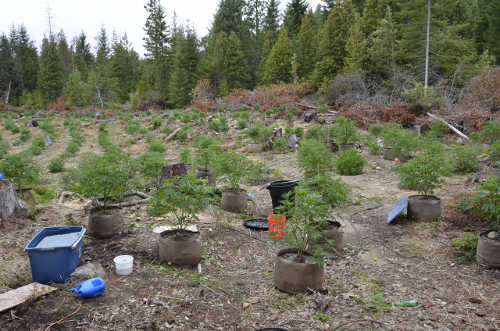
NORTH COAST, Calif. – State Sen. Mike McGuire, working with Senate President Pro Tem Kevin de Leon, has helped secure critical funding from state water and drought relief bonds to fight devastating illegal water diversions from trespass marijuana grows in Northern California.
These illegal grows, compounded with historic drought conditions, have had a significant negative impact on Northern California watersheds and forests.
Last year was the first since written records have been kept that both the Eel and the Mattole Rivers ran dry, due to the historic state drought and a multitude of illegal diversions.
The bond dollars, which were approved on the Senate Floor late Wednesday afternoon, will be immediately put to work through the California Department of Fish and Wildlife, or CDFW.
CDFW will utilize the $2 million McGuire helped secure to hire an additional 11 positions that will be focused on ending the thousands of illegal cultivation related diversions in Northern California watersheds.
These 11 positions will join a marijuana task force which was created last year by Gov. Jerry Brown’s office.
“The ongoing drought has been devastating to our rural areas and I applaud Gov. Brown, President Pro Tem de Leon and Speaker Atkins for advancing these desperately needed investments,” McGuire said. “Northern California has been particularly hard hit due to the state’s historic drought and the thousands of illegal marijuana grows that have taken hold in our forests.”
The overall $1 billion package will expedite bond funding to make the state more resilient to the disastrous effects of climate change and help ensure that all Californians have access to local water supplies.
“North Coast watersheds are under attack and the drought is exacerbating these impacts on drinking water supplies, our environment and they represent a severe threat to endangered species. This money is a good step in the right direction, but there is a long road ahead and I’ll continue to fight to make sure Northern California has the resources it needs to combat this historic drought,” McGuire said.
There also will be expanded funding for the protection of streams and rivers for instream flows, fish and habitat as well as water efficiency programs to benefit local customers.
“There’s more to come as we work together at the state and local levels to fight for the funds our rural counties and small cities need to create and update the water infrastructure projects,” McGuire said.
In related news, McGuire's report about the funds came on the same day as CDFW announced the publication of new, groundbreaking work on marijuana's effect on the environment conducted by the agency's scientists.
The first-of-its-kind study clearly shows that water used for growing marijuana has a devastating effect on fish in the state.
The study showed that during drought conditions, water demand for marijuana cultivation exceeded streamflow in three of four study watersheds.
The resulting paper, entitled “Impacts of Surface Water Diversions for Marijuana Cultivation on Aquatic Habitat in Four Northwestern California Watersheds,” concludes that diminished stream flow from this water-intensive activity is likely to have lethal to sub-lethal effects on state and federally listed salmon and steelhead trout and will cause further decline of sensitive amphibian species.
The study was published online in the scientific journal PLOS One, http://journals.plos.org/plosone/article?id=10.1371/journal.pone.0120016 .
By using online tools to count marijuana plants and measure greenhouses, and conducting inspections of marijuana cultivation sites with state wildlife officers and local law enforcement, CDFW scientists quantified plant numbers and water use.
Utilizing stream flow data provided by staff at the National Oceanic and Atmospheric Administration, CDFW determined water demand for cultivation could use more than 100 percent of stream flow during the summer dry season in three of four study watersheds.
Stream flow monitoring conducted by CDFW in the summer of 2014 appeared to verify these results.
“All the streams we monitored in watersheds with large scale marijuana cultivation went dry,” said CDFW Senior Environmental Scientist Scott Bauer, lead author of the research paper. “The only stream we monitored that didn’t go dry contained no observed marijuana cultivation.”
CDFW’s Law Enforcement Division works closely with dozens of other state and federal agencies to eradicate illegal marijuana grows on public, tribal and private lands as well as protect the state’s natural resources.
“This research paper demonstrates the importance of greater regulatory efforts by state agencies to prevent the extinction of imperiled fisheries resources,” said CDFW Assistant Chief Brian Naslund. “CDFW’s new Watershed Enforcement Team (WET) was created with just that in mind.”
The WET program works with agency partners to protect public trust resources from the negative effects of marijuana cultivation, which include both excessive water use and pollution.
CDFW will continue to monitor the effects of water diversion for marijuana cultivation on stream flow through the summer of 2015.
Marijuana cultivation is legal in California if growers have the proper CDFW lake and streambed alteration permits. Responsible growers help conserve the state’s natural resources and are less likely to be subject to enforcement action.
Severe droughts are nothing new to California, home to the highest variable precipitation in the United States.
In the midst of a fourth dry year, the California Department of Water Resources (DWR) has released an in-depth report comparing the severity and impacts of California’s most significant droughts, which stretched from 1929 to 1934, 1976 to 1977 and 1987 to 1992.
The report also details the ongoing drought, which began in 2012.
“California’s Most Significant Droughts: Comparing Historical and Recent Conditions,” is posted below and also is available at http://www.water.ca.gov/waterconditions/publications.cfm .
The report presents a wealth of information about California’s climate; federal, state and local water systems; surface and groundwater resources; and historical precipitation.
It also provides a summary of lessons learned from previous droughts and highlights the need for better data about groundwater conditions, improved drought prediction capability and better drought preparedness for small water systems.
The report also describes:
– The atmosphere-ocean dynamics that influence drought in California;
– Highlights of past droughts, such as the extremely severe 1929-34 dry spell that occurred when irrigated acreage in the state was relatively small and the population was less than six million people;
– The setting for past droughts in terms of major water project development, population, and irrigated acreage in the state;
– Historical attempts to cope with drought, such as the temporary emergency pipeline constructed across the San Rafael Bridge to bring imported water to southern Marin County in 1976-77;
– Estimated economic loss data, where available, from the historical droughts, including farmland fallowing and timberland destroyed by wildfire and bark beetle infestation;
– Changes in institutional settings that affect California’s response to drought, such as environmental protection laws that have modified water project operations; and
– Historical deliveries made by the State Water Project and the Central Valley Project from 1977 to the present.
The appendix of the report includes a copy of each gubernatorial executive order or emergency proclamation issued related to drought since 1977.
Charts, maps and graphs in the report illustrate such information as the at-risk small water systems around the state, a comparison of storage in key reservoirs during various drought years, changes in the Colorado River total system storage over time, changes in California’s statewide mean temperature departure since 1900, and maximum salinity intrusion into the Sacramento-San Joaquin Delta in previous droughts.
The report was prepared by DWR Deputy Drought Manager and Interstate Resources Manager Jeanine Jones.
“The water years of 2012-14 stand as California’s driest three consecutive years in terms of statewide precipitation,” said Jones, “and we do not know how long this drought will last. It’s important for Californians to remember that drought is a part of life in California and we can learn from history as we try to emerge from each drought better prepared for the next.”
In January 2014, Gov. Edmund G. Brown Jr. declared a drought state of emergency and asked Californians to voluntarily curb their water use by 20 percent.
Vast tracts of farmland have been fallowed and some communities have been short on drinking water.
Every Californian can help stretch the state’s limited supplies by using water carefully. Outdoor landscaping needs little water in the winter, so shut off sprinklers, especially for the first couple of weeks after a rain.
Replace washers in leaking faucets or make other repairs to stop leaks. Run dishwashers and clothes washers only with full loads.
For more water-saving tips, visit www.saveourwater.com .
032515 - California’s Most Significant Droughts: Comparing Historical and Recent Conditions
U.S. Reps. Mike Thompson (D-CA) and Mike Fitzpatrick (R-PA) on Wednesday led 125 of their colleagues in calling on appropriators to provide funds to strengthen the National Criminal Background Check System (NICS).
The letter, signed by 119 Democrats and 8 Republicans, urged the House Appropriations Committee to, at minimum, maintain Fiscal Year (FY) 2015 funding levels in House version of the FY 2016 Commerce, Justice, Science (CJS) Appropriations bill.
Last year, Thompson and Fitzpatrick passed a bipartisan amendment which led to NICS funding being increased to record levels in the FY 2015 omnibus appropriations bill. The funds are used to help states improve data submissions to NICS.
“To stop criminals from getting guns we need to make sure their names are in the background check system,” said Thompson and Fitzpatrick in a joint statement. “Our national criminal background check system is only as good as the data you put in it. These funds will help states get all their information into the system so that we know if a person trying to buy a gun is a criminal, a domestic abuser or is dangerously mentally ill.”
NICS, the database used to determine whether or not a prospective buyer is eligible to buy a firearm, is missing information. Because of this, people who otherwise would not pass a background check can slip through the cracks and buy guns.
– A USA Today report found that in just five states, records for at least 2.5 million fugitives weren’t entered into the NICS system.
– According to a report by Everytown, 12 states have still submitted fewer than 100 mental health records to the NICS system.
– According to the Department of Justice, six states have fewer than 30 total records each in the NICS system in all prohibited categories combined.
Maintaining, at minimum, the funding from the FY 2015 omnibus appropriations bill will provide states with additional resources to ensure the background check system has complete and timely information to keep firearms out of the hands of individuals who should not possess guns.
The letter's full text is below.
The Honorable John Culberson
Chairman
House Subcommittee on Commerce, Justice, Science and Related Agencies
H-309, The Capitol
Washington, DC 20515
The Honorable Chaka Fattah
Ranking Member
House Subcommittee on Commerce, Justice, Science and Related Agencies
1016 Longworth House Office Building
Washington, DC 20515
Dear Chairman Culberson and Ranking Member Fattah:
As the Committee begins writing the Fiscal Year (FY) 2016 Commerce, Justice, Science, and Related Agencies Appropriations bill, we respectfully request funding for implementation of the National Instant Background Check Systems (NICS) Improvement Amendments Act of 2007 (Pub. L. No. 110-180) at least at the FY15 level of $73 million. The Act provides for grants to states to upgrade their electronic databases, incentives for states to transmit electronic records to NICS, penalties for states that do not comply, and requirements for keeping NICS up-to-date, including the removal of obsolete or erroneous records. The Act also provides financial incentives for states to develop “relief from disabilities” procedures for persons who have lost the right to possess a firearm due to a mental health adjudication or commitment but are later determined not to pose a danger to public safety.
As you are aware, the Gun Control Act of 1968 (Pub. L. No. 90-618) precludes certain persons, including felons, those adjudicated mentally ill, illegal aliens, drug abusers, and those under a restraining order, from purchasing or possessing firearms. The only way to enforce these requirements effectively is to ensure that NICS has up-to-date records from state and federal sources. At present, millions of records are currently missing from the various databases that make up NICS. Many states do not have the resources necessary to implement the technology to automate criminal history and mental health records, which has allowed persons otherwise prohibited from purchasing or owning firearms to do so in violation of federal law. This remains a serious problem because many states still do not submit adequate numbers of mental health and criminal records to make NICS work as intended.
The intent of NICS Improvement Amendments Act is to ensure there are sufficient resources to provide accurate and timely data about persons prohibited from possessing firearms. This cannot be achieved absent adequate funding for NICS. In fact, demand for this funding is increasing every year and we must provide adequate funding to meet this growing need. While the Act authorized a combined total of $1.125 billion from FY 2009 through FY 2013, a total of only $63.567 million was appropriated during that time.
We fully understand the current constraints on the federal budget and appropriations process. Keeping citizens safe, however, must be Congress’s top priority. The NICS Improvement Amendments Act has been severely underfunded in years past, and the recent tragedies in Newtown, Connecticut, Aurora, Colorado, and Tucson, Arizona, unfortunately show that gun violence is still a very serious issue that plagues our country. Ensuring NICS has complete and timely information to keep firearms out of the hands of persons who cannot safely and legally possess them while at the same time protecting Americans’ Second Amendment rights will save lives. Consequently, we respectfully urge the Committee to fund the NICS Improvement Amendments Act at a level that at minimum matches $73 million.
UPPER LAKE, Calif. – The governing boards of the Upper Lake Union High School District and the Upper Lake Union Elementary School District will hold the latest in a series of joint meetings on Wednesday evening to discuss the proposal to unify the two districts.
The meeting will begin at 6 p.m. Wednesday, March 25, in the Upper Lake High School cafeteria, 675 Clover Valley Road.
Last August, the two boards met to discuss the unification proposal, which kicked off an involved process of further consideration.
According to California Education Code Section, there are 10 criteria for unification. They are:
– The reorganized districts will be adequate in terms of number of pupils enrolled.
– The districts are each organized on the basis of a substantial community identity.
– The proposal will result in an equitable division of property and facilities of the original district or districts.
– The reorganization of the districts will preserve each affected district's ability to educate students in an integrated environment and will not promote racial or ethnic discrimination or segregation.
– Any increase in costs to the state as a result of the proposed reorganization will be insignificant and otherwise incidental to the reorganization.
– The proposed reorganization will continue to promote sound education performance and will not significantly disrupt the educational programs in the districts affected by the proposed reorganization.
– Any increase in school facilities costs as a result of the proposed reorganization will be insignificant and otherwise incidental to the reorganization.
– The proposed reorganization is primarily designed for purposes other than to significantly increase property values.
– The proposed reorganization will continue to promote sound fiscal management and not cause a substantial negative effect on the fiscal status of the proposed district or any existing district affected by the proposed reorganization.
– Any other criteria as the board may, by regulation, prescribe.
On June 26 and March 4, the two boards met jointly and considered the first three criteria, approving them at the last meeting, Upper Lake High Superintendent Patrick Iaccino told Lake County News.
This week, the board is set to consider the next three criteria – regarding integration, costs to the state and a sound educational program – Iaccino said.
He said the boards will meet jointly again on April 22 and May 27 to look at criteria seven through nine and a full draft report on consolidation, respectively.
Once the boards work through all of the criteria, they will need to vote on whether or not to support unification, actions that would need to take place at the boards' regularly scheduled meetings in June, Iaccino explained.
From there, it would go to the county board of education, which would consider recommending it to the state, and a new board would need to be appointed by the county superintendent in order to begin its work next January, Iaccino said.
Email Elizabeth Larson at
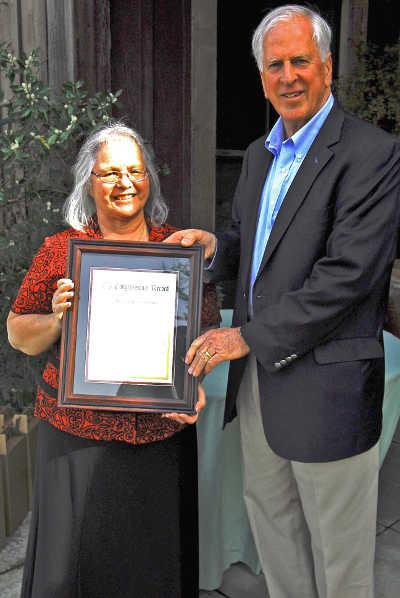
LAKE COUNTY, Calif. – In recognition of Women’s History Month, U.S. Reps. Mike Thompson (CA-5) recognized Pamela Phillips as Lake County’s Woman of the Year.
Phillips was one of five women recognized. One woman from each of the five counties that make up the Fifth Congressional District was honored as Woman of the Year.
In addition to Phillips, the honorees included Cynthia Guzman, Napa County; Gaye LeBaron, Sonoma County; Karen Taylor, Solano County; and Maureen Toms, Contra Costa County.
“I regularly have the privilege to work with extraordinary women across our district. It’s important that they are recognized – and what better time to do it than Women’s History Month,” said Thompson.
“Pam served five amazing decades as an employee of the Social Security Administration, retiring last June as manager of the Lakeport Social Security Office where she worked for more than 30 years,” Thompson said. “I’ve worked with Pam for the past 16 years and her work ethic and dedication to our mutual constituents was outstanding. She is an extraordinary public servant and it’s my honor to recognize her as Lake County’s Woman of the Year.”
Over her exemplary five-decade career as a public servant, Phillips worked her way up from receptionist to field manager of the Lakeport Social Security Office.
Throughout her career, Phillips always did her utmost to alleviate the immediate personal need in every dire situation and to see that every question was answered and every beneficiary was well-served.
The origins of Women’s History Month begin in Thompson’s district. Until the late 1970s, women’s history was rarely included in K-12 curriculum and was virtually absent in public awareness.
To counter this, the Education Taskforce of the Sonoma County Commission on the Status of Women initiated a “Women’s History Week” celebration in 1978 centered on International Women’s History Day.
With the help of the National Women’s History Project, founded in Sonoma County, thousands of schools and communities joined in the commemoration of Women’s History Week.
In 1981, Congress responded to the growing popularity of Women’s History Week by making it a national observance and eventually expanding the week to a month in 1987.
Earlier this month, Thompson introduced H. RES. 525, a bipartisan resolution in the U.S. House of Representatives honoring March as Women’s History Month.

MIDDLETOWN, Calif. – The Lake County Sheriff's Office on Tuesday released a sketch of a male subject who attempted to abduct a 12-year-old girl in Middletown on Monday in the hopes that someone in the community may be able to identify the man.
The drawing, which can be seen above, was done by Lakeport Police Officer Joe Eastham, who is a trained sketch artist through the Commission on Peace Officer Standards and Training.
At 3:30 p.m. Monday, the girl was waiting for her mother on the steps of the Middletown Methodist Church on Armstrong Street when an adult male drove up in a black late model Toyota pickup, according to sheriff's Lt. Steve Brooks.
Brooks said the man got out of his pickup, opened the tailgate and then asked the juvenile if she needed a ride. When the juvenile told him that she did not need a ride, the male sat down on the stairs next to her, subsequently grabbing her wrist and pulled her to her feet.
The girl immediately kicked the male in his shin, which caused him to let go of her wrist, get into his pickup and leave the area, Brooks said.
The subject is described as an adult white male who is short with a stocky build, with no facial hair, wearing a black jacket and black cowboy-type boots. Brooks said the vehicle is described as being a black late model Toyota pickup.
Upon hearing of the investigation, Lakeport Police Chief Brad Rasmussen contacted Sheriff Brian Martin and offered the assistance of Eastham, Brooks said.
Eastham met with the victim and was able to obtain additional information as he was making a sketch of the male subject, Brooks said.
At that time, Brooks said the girl further described the man as being approximately 50 years of age with light brown short fuzzy hair. She said he was missing a lower front tooth and appeared to be dirty.
Brooks said the girl also remembered there was a second person in the pickup. She described the second person as being a white male adult in his 50s with long black hair and a puffy face. She said the second person was leaning forward while sitting in the pickup.
Brooks said it's hoped that someone in the community may recognize this person.
Anyone who may have witnessed this incident or has any information is asked to call the Lake County Sheriff’s Office at 707-263-2690.