 How to resolve AdBlock issue?
News
The safety checkpoint will take place on Friday, Aug. 16, somewhere within the unincorporated area of Lake County.
The goal of the CHP is to ensure the safe passage of each and every motorist by targeting roads where there is a high frequency of intoxicated or unlicensed drivers.
The agency said a sobriety/driver license checkpoint is a proven effective tool for achieving this goal and is designed to augment existing patrol operations.
Vehicles will be checked for drivers who are under the influence of alcohol or drugs, or driving unlicensed, officials said.
The CHP said the objective is to send a clear message to those individuals that consider driving and mixing alcohol or drugs, or driving when unlicensed, that you will be caught and your vehicle will be towed away.
Funding for this program was provided from a grant from the California Office of Traffic Safety through the National Highway Traffic Safety Administration.
The data cover more than 375,000 positions and a total of $22.04 billion in 2018 wages.
Users of the site can:
· View compensation levels on maps and search by region;
· Narrow results by name of the entity or by job title; and
· Export raw data or custom reports.
The newly published data include 252,214 positions in 151 state departments and 123,717 positions in 23 CSU campuses and the Chancellor’s Office.
California law requires cities, counties, and special districts to annually report compensation data to the State Controller.
The State Controller also maintains and publishes state and CSU salary data. A list of entities that did not file or filed incomplete reports is available here.
Since the Web site launched in 2010, it has registered more than 11 million pageviews. The site contains pay and benefit information on more than two million government jobs in California, as reported annually by each entity.
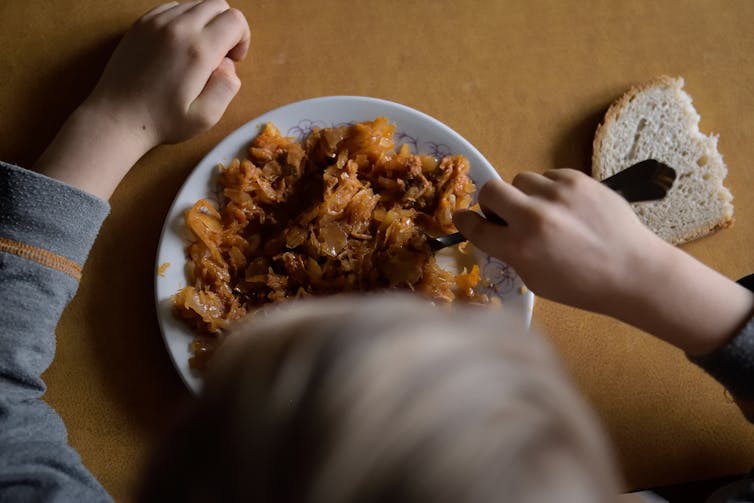
The U.S. Department of Agriculture is trying to restrict access to Supplemental Nutrition Assistance Program benefits.
SNAP is the primary way the government helps low-income Americans put food on the table. According to the government’s own calculations, an estimated 3.1 million people could lose SNAP benefits, commonly referred to as food stamps, through a new proposal that would change some application procedures and eligibility requirements.
We are nutrition and food policy researchers who have studied the effects of SNAP on the health and well-being of low-income Americans. Should this change go into effect, we believe millions of Americans, especially children, and local communities would suffer.

Helping families and the economy
SNAP helped 39.7 million Americans buy food in 2018.
Federal research has found that the program reduces hunger, particularly in children – who make up 44% of its beneficiaries.
Hunger and poor nutrition harm children’s health and hinder their development. Kids who don’t get enough to eat have more trouble at school and are more likely to experience mental health problems. One research team found that people who had access to SNAP as children earned higher incomes and were less likely to develop chronic diseases like diabetes once they grew up.
“My eating habits have improved where I can eat more healthy than before,” a Massachusetts woman who had recently been approved for SNAP told us. “It is like night and day – the difference between surviving and not surviving.”
SNAP benefits also ripple through the economy. They lead to money being spent at local stores, freeing up cash to pay rent and other bills. Every US$1 invested in SNAP generates $1.79 in economic activity, according to the USDA.
Trying again and again
The Trump administration has repeatedly attempted to slash SNAP and make it harder for people who qualify for benefits to get them.
Its 2018, 2019 and 2020 budget proposals all called for cutting spending on food stamps by about 25%.
The Trump administration also worked with Republicans in Congress to try to tighten eligibility requirements. Had this policy been implemented, all beneficiaries between the ages of 18 and 59 deemed “able-bodied” would have had to prove they were working at least 20 hours per week or were enrolled in school. According to government projections, some 1.2 million Americans would have eventually lost their benefits as a result.
Congress, which would have needed to approve the change for it to take effect, rejected it in December 2018. The White House then sought to change work requirements through a new rule that has not yet taken effect.
In July 2019, the Trump administration again sought to restrict access to food stamps without any input from Congress, this time by going through Temporary Assistance for Needy Families – a program that gives low-income families with children cash to cover childcare and other expenses.
Currently, most states automatically enroll families in SNAP once they obtain TANF benefits. The new rule would prevent states from doing this. Even though 85% of TANF families also get SNAP benefits, the vast majority of them still live in poverty.
The government is seeking comments from the public about this proposed change through September 23, 2019.
Replacing food stamps with ‘harvest boxes’
Other changes to SNAP could also take a toll.
The Trump administration’s proposed budgets have also called for changing how the government helps low-income families get food they have trouble affording. Its 2019 budget proposal called for replacing half of SNAP benefits with what it called “harvest boxes” of nonperishable items like cereals, beans and canned goods.
According to research we conducted with low-income Americans, 79% of SNAP participants opposed this proposal, with one of the primary reasons being not being able to choose their own foods.
“People who are struggling are already demoralized,” a New Mexico woman who uses SNAP benefits told us. “Being able to make our own food decisions is something that keeps us feeling like human beings.”
Congress rejected the concept but the White House included it again in its 2020 budget draft.
Advocates for food aid fear that recent proposals to change how SNAP works would reduce the share of Americans who get these benefits by making it harder to qualify and enroll in the program. Should this major transformation ever occur, children and families won’t have access to critical benefits that help them avoid going hungry.
Tracking the demand for food stamps
Although the Trump administration has until now largely failed in its effort to cut SNAP spending, the number of people getting food stamps is already declining. This trend began during the Obama administration, in the aftermath of the Great Recession.
Since the economy is doing well overall, the number of people on food assistance programs has fallen. The reason for the decline is that the number of people who are eligible for these benefits rises when the economy falters and falls when conditions improve. As a result, the government is spending less on food stamps without cutting the SNAP budget.
Case in point, 7 million people have already left SNAP due to better economic stability. In parallel, federal spending on SNAP budget has dropped from $78 billion in 2013 to $64 billion in 2019.
If the Trump administration wants to shrink SNAP, reduce costs and have fewer low-income Americans receive benefits, we believe that the best thing it can do is to keep working to improve the economy – particularly for low-income Americans, who have been reaping fewer benefits from the improving economy than others in recent years.
Cindy Leung, Assistant Professor of Nutritional Sciences, University of Michigan and Julia A. Wolfson, Assistant Professor of Health Management and Policy, University of Michigan
This article is republished from The Conversation under a Creative Commons license. Read the original article.
Just 62 miles west of Morocco off the coast of North Africa, lie seven beautiful islands known as Las Islas Canarias in the language spoken there.
The Canary Islands, as we know them, are so close to the African continent that weather on the nearest islands is influenced by the arid winds from the Sahara Desert; even so, it’s Spain that claims the territory, making them the most remote outpost of the European Union.
And what a jewel in Spain’s crown they are!
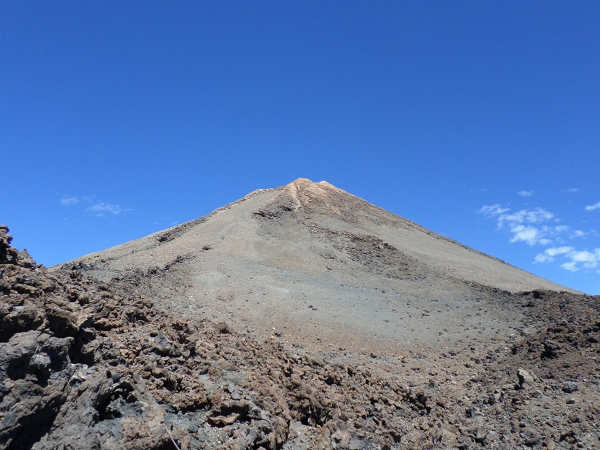
The world’s third highest volcano (when measured from the ocean floor), El Teide, is located on Tenerife, the largest of the islands in both area and population. Its height makes it the tallest mountain in Spain.
In addition, three of Spain’s four UNESCO World Heritage Sites are in the Canary Islands, an astounding fact if one considers mainland Spain’s rich trove of culture and history.
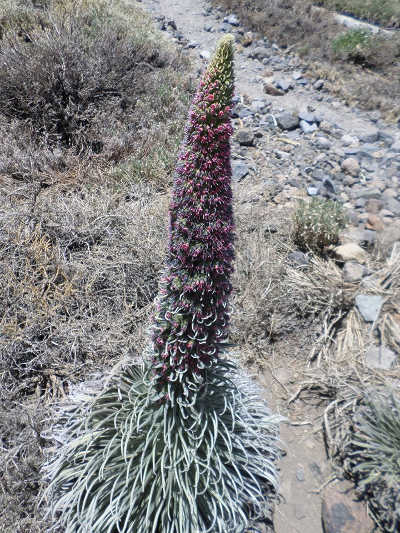
Each of the Canary Islands is unique, with variances in climate, geology and flora depending on where they’re situated in the archipelago. Some islands have flora found nowhere else in the world.
The Canary Islands chain is part of Macaronesia, a collection of four North Atlantic archipelagos of volcanic origin off the continents of Europe and Africa. Others in the group are the Azores, Madeira and Cape Verde.

There are still active volcanoes on the Canaries, evidenced by the spewing forth of a full four eruptions since European habitation in the 15th century.
While subtropical in climate, the culture is definitely European. The Canary Islands chain is the only part of Macaronesia that had inhabitants before European conquest, and the aboriginal peoples, the Guanche, are now completely assimilated into the current civilization.
Mystery surrounds the origin of these native people (some legends claim that they’re descendants of the lost city of Atlantis); however, DNA gleaned from mummified remains shows them to be most closely related to the Berbers of North Africa. Some mummies reportedly had blond or red hair.
Historical evidence indicates that they traded with the Romans; in fact, it was Roman author and military officer Pliny the Elder who first reported their existence.
While Guanche culture is considered lost, a legacy remains through the remnants of Guanche food found in Canarian cuisine.

The Canary Islands were once considered a crossroads between Europe, Africa and the Americas, so the cuisine there has hints of Spanish, Latin American and North African fare.
The influence goes both ways, however. Canarian elements can be found in such New World cuisines as the Tex-Mex food found along the southern U.S. border, surprising until I learned that the city of San Antonio, Texas was founded by Canarian settlers, whose descendants fought alongside Davy Crockett at the Alamo.
My son spent a recent year in Tenerife teaching English, and my appreciation for the Canary Islands increased dramatically thanks to his rich experience.
He lived in the largest city on the island, San Cristobal de la Laguna (commonly known as La Laguna), which happens to be one of the UNESCO World Heritage Sites in the island chain.
From the images my son sent while there, the town’s architecture is a beautifully preserved example of 16th century Spain.
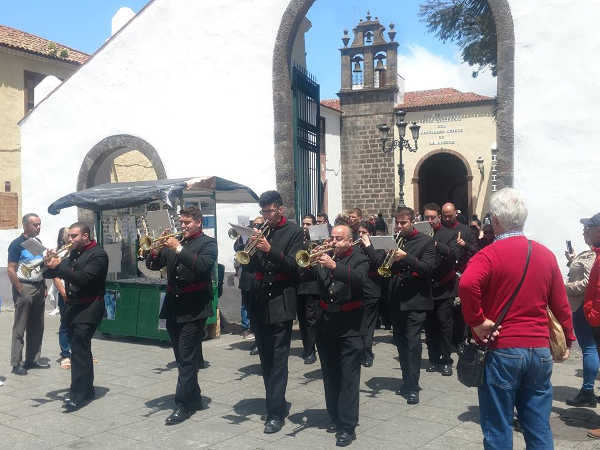
La Laguna exudes history, particularly in the historic downtown area where my son taught, yet is very much alive with activity. Festivals and processions take place regularly, both religious and local in nature, and it’s not unusual to see jugglers and other artisans in the many public plazas.
Near his apartment vendors offered their wares in the Mercado de Municipal de la Laguna, a large, open building with a tent-like roof where individual stalls display a seemingly endless array of foods such as cheeses, meats, fish, vegetables, candied fruits, spices and sweets.
At nearby outdoor stalls live chickens, pigeons, ducks and rabbits could be found, as well as clothing, religious items, and even flowers sold by nuns.
A favorite Mercado find of his was olives in a variety of flavorful local sauces known as mojo.
Perhaps no food is more quintessentially Canarian than mojo sauce. The most popular version is called mojo picon, or red pepper sauce, made from dried red peppers, oil and other ingredients, thickened with stale bread.
Mojo verde, a green version, is made with fresh cilantro or parsley. These sauces are served with potatoes, fish and meats.
One of the teachers at my son’s school gifted him with a bag of gofio, a Canarian flour made with toasted grains (usually wheat or maize).
Gofio goes back to the time of the Guanches, when it was a staple of their diet and made with barley and a rhizome of certain ferns.
Canarians are raised on gofio – it’s rich in vitamins and minerals – and emigrants have spread its use to the Caribbean and the Western Sahara.
Gofio doesn’t spoil easily, so it was a favorite of Canarian mariners.
To accompany the flour, he was given a bottle of homemade palm syrup. As is typical, my son mixed the gofio flour with milk and the palm syrup to make a sweet paste, which he enjoyed.
He says that gofio tastes and looks like the dust in the bottom of a box of Cheerios (a good thing in his opinion).
If any readers are interested in trying gofio, a quick Internet search revealed that it can be purchased online at a surprising variety of vendors common to us.
Typical of the Canary Islands are guachinche restaurants, usually found in the countryside or small towns, though my son frequented one in La Laguna near his home.
These restaurants are unique in that they’re owned and run by families who prepare large batches of food made exclusively with bounty from a working farm which they also own. Wines made with grapes from the property are often served.
It’s not unusual to see smoked pig legs hanging from the ceilings of coffee shops and bars, with the meat used to make sandwiches. A favorite neighborhood pub of my son’s featured an employee whose job was to carve ham at the end of the bar.
As a vegetarian, my son stuck with almogrote, a thick and delicious Canarian cheese sauce served with toasted bread.
Fried cheeses, queso asado, are served with a variety of sauces in the islands, including in sweet presentations. My son especially enjoyed (and now misses) queso asado con miel de palma, fried cheese with palm syrup.
I’m sure he would enjoy it if I could find the ingredients to make it.
Today’s recipe is for a signature dish in the islands, papas arrugadas, or wrinkled potatoes, which are served as a side dish or in a restaurant as tapas, typically accompanied by red or green mojo sauce. (A recipe for mojo verde is included below.)
What makes them interesting are the wrinkly skin and high level of salt that coats it, which originally came from boiling them in sea water.
The modern version uses heavily salted water, and I found a wide variety in the amount of salt added, from 2 tablespoons to a full quarter cup. I prefer a happy medium of 4 tablespoons, but you can adjust the salt as desired.
And before we go, you might be interested to know that the closest Taco Bell restaurant to La Laguna in Tenerife is 886.6967 miles away in Madrid, something that my son researched. As much as he enjoyed Canarian cuisine and his experience there, it was good to be home to enjoy a nice, American taco.
Please enjoy!
Papas arrugadas con mojo verde
2-1/2 pounds baby potatoes, the smaller the better (I like using a mixture of colors)
4 tablespoons coarse sea salt
Water to just cover potatoes
For the mojo verde:
1 large bunch of cilantro (parsley can also be used; increase the cumin a bit, if so)
2 cloves garlic, peeled
½ teaspoon salt
1/4 teaspoon cumin
1/3 cup olive oil
3 or more tablespoons cold water
2 or more (to taste) tablespoons sherry vinegar
Scrub potatoes and remove eyes, but do not peel. Place in pot with the salt and just enough water to cover them. Bring to a boil and then simmer until potatoes are cooked, about 20 minutes, but this will depend on their size.
In the meantime, make the mojo. Add cilantro, garlic, salt and cumin to a blender and puree to a paste. Add the oil in a steady drizzle while blending, then add the water and blend again. Add the vinegar and blend again. Check for seasoning and add more salt, cumin or vinegar to taste. Thin with more water, if needed.
Once the potatoes are cooked, drain all the water and return pot to the heat. Once all the moisture has evaporated, a thin coating of white salt should start to form on the potatoes. Shake or stir the pot to keep them from sticking. When the potatoes start to brown and wrinkle slightly, they’re done.
Served hot, topped with the mojo verde.
Editor's note: A previous version had inadvertently omitted the cumin in the mojo verde recipe.
Esther Oertel is a writer and passionate home cook from a family of chefs. She grew up in a restaurant, where she began creating recipes from a young age. She’s taught culinary classes in a variety of venues in Lake County and previously wrote “The Veggie Girl” column for Lake County News. Most recently she’s taught culinary classes at Sur La Table in Santa Rosa, Calif. She lives in Middletown, Calif.


LAKEPORT, Calif. – A Lake County native has received a new command, the latest accomplishment in his military career.
On July 11 in New River, North Carolina, Lt. Col. Daniel Goff took over command of HMH-366 United States Marine Corps Heavy Helicopter Squadron.
Goff was just known as “Daniel” when he lived in Lake County, but now you’ll find most people refer to him as “sir.”
Goff grew up in Lakeport, was an All Empire and All County Athlete in baseball, and basketball and graduated from Clear Lake High School in 1992. After graduation he went to Sonoma State University where he graduated with a bachelor’s degree in history.
He entered the Marine Corps through the Officer Candidate Class program and was commissioned a second lieutenant upon graduation from Officer Candidate School in 2000.
Upon completion of the basic school in June 2001, he attended Naval Aviation Flight Training in Pensacola, Florida, where he earned his wings in 2003.
In September of 2003, Lt. Col. Goff reported to “Ironhorse” of Heavy Marine Helicopter Squadron 461, Marine Corps Air Station New River, North Carolina.
In 2004 and 2006 Goff deployed to Djibouti, Africa, in support of Combined Joint Task Force-Horn of Africa.
In the spring of 2007, he attended Weapons and Tactics Instruction WTI Course and became the HMH-461 Pilot Training Officer before deploying in 2008 with HMM-365 as the Action Combat Element for the 24th Marine Expeditionary Unit, where he planned and led combat missions in Afghanistan.
In the spring of 2009, Lt. Col. Goff was selected as an Olmstead Scholar, a prestigious award only provided to a handful of military personnel from every branch of the United States military each year.
To date since 1960, Lt. Col Goff has been one of only 82 Marines that have ever been selected as an Olmstead Scholar.
After studying Russian at the Defense Language Institute in Monterey, California, Goff traveled to Kyiv, Ukraine, where he, his wife Scheri and their two children lived from 2010 to 2012.
While in Kyiv Lt. Col Goff studied political science in the Russian language at the National University Kyiv Mohyla Academy and received his master’s degree in European political studies.
During his stint in Ukraine he flew home to Lake County to give his little sister away in marriage to Greg Panella, also a former Marine.
Upon completion of his Olmsted Scholar tour in the summer of 2012, Goff joined the “Condors” of Marine Heavy Helicopter Squadron 464 aboard MCAS New River. He served as the future operations officer, operations officer and later deployed as the detachment officer in charge of the squadron’s Unit Deployment Program to Okinawa, Japan.
From 2014 to 2017 Goff served as the deputy director of Stockdale Center at the United States Naval Academy in Annapolis, Maryland.
While at the Naval Academy, Lt. Col. Goff served in a variety of roles to include leadership education, development division, political science instruction and leatherneck operations officer.
In the summer of 2017, he was assigned to the Strategic Initiatives Group as a part of the Commandant of the US Marine Corps’ at the United States Pentagon.
His personal decorations include the Meritorious Service Medal, two individual Air Medals with combat “V” and Strike/Flight Numeral 3, the Navy and Marine Corps Commendation Medal (3), the Joint Services Achievement Medal and the Navy and Marine Corps Achievement Medal.
Lt. Col. Goff plans to eventually retire from the Marine Corps and hopes to return to Lake County where his mother Ana Goff and sister, Allison Panella, still live. He hopes to gain employment with a local school district and teach high school students.


Smokey Bear turns 75 on Aug. 9.
The star of the longest-running public-service advertising campaign in U.S. history is now big on social media, with Facebook, Flickr, Instagram and Twitter accounts.
Americans are also still sending the imaginary character loads of real mail. The postal service has delivered hundreds of thousands of the bear’s many letters and occasional jars of honey to his own ZIP code: 20252.
Some 96% of Americans recognized this constant reminder to keep forests safe, according to a survey in 2013, making him about as familiar as Mickey Mouse and Santa Claus.
By the way, there’s no “the” in Smokey’s name. The word was added by songwriters to make their 1952 medley dedicated to the iconic image more catchy.
Wartime propaganda
I researched Smokey and six other public service ad campaigns for my book about the Ad Council, the nonprofit that creates public-service campaigns on behalf of clients like the U.S. Forest Service. It taught me that there’s much more going on with that friendly face than you probably realize.
The fire-prevention campaign, like the Ad Council itself, has a past rooted in wartime propaganda.
A Japanese submarine had surfaced off the coast of California on Feb. 23, 1942, and fired a volley of shells toward an oil field. This first wartime attack on the U.S. mainland caused little property damage and no loss of life, but it had an enormous psychological impact.
The threat to America’s national security including its vast lumber supply, needed to build ships and guns to fight the war, worried government officials and business leaders alike. The Forest Service worked with what was then known as the War Advertising Council, and later became the Ad Council, to create a fire prevention campaign.
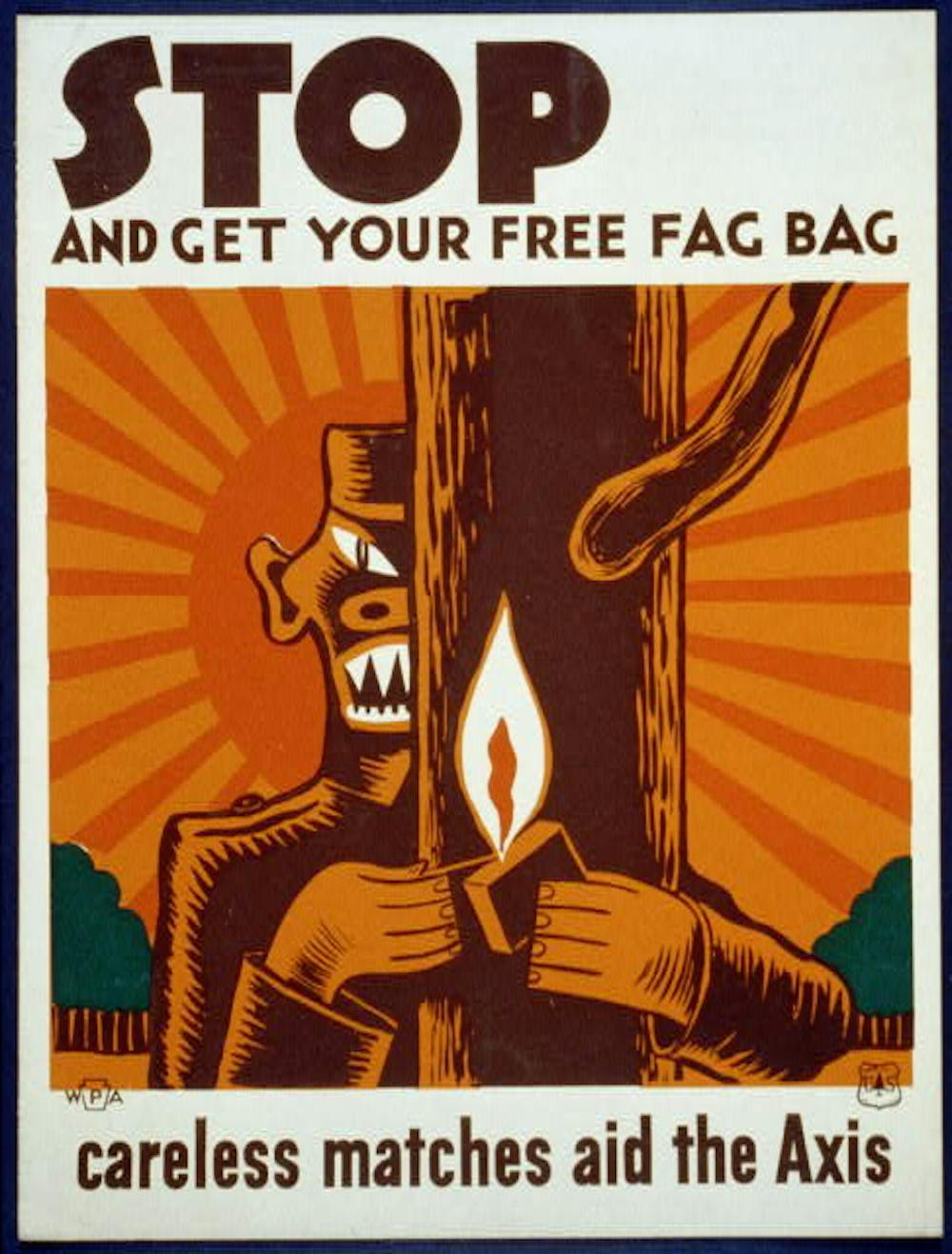
Some of the early posters harnessed the power of prejudice. One depicted a caricature of a Japanese soldier with a menacing grin as he held a lighted match against the backdrop of a forest, flanked by the slogan “Careless Matches Aid the Axis – Prevent Forest Fires!.” Another featured sinister renditions of Adolf Hitler and Japanese Prime Minister Hideki Tojo in front of a raging forest fire with the slogan, “Our Carelessness, Their Secret Weapon.”
With the war winding down in 1944, the Forest Service wanted the campaign to keep educating Americans about forest fire prevention, minus the scary imagery. After briefly featuring Bambi, the deer from the popular Walt Disney 1942 film, the Forest Service landed on a black bear. It hired New York artist Albert Staehle, who drew “Butch,” a floppy-eared cocker spaniel seen on Saturday Evening Post covers.
In 1944, Staehle created a tender-looking bear pouring a bucket of water over a campfire for the Forest Service. Three years later, came the well-known slogan that told Americans “only you can prevent forest fires.”
Whose land is it?
Sometimes, Smokey gets caught in the middle of the campaign’s roots in World War II patriotism, propaganda and racism.
Some scholars, including geographer Jake Kosek, who study anthropology and race even argue that the campaign is a symbol of white racist colonialism.
Kosek documented how the bear can trouble Native Americans, Chicanos and other people living off the land who are unhappy with the U.S. government’s land management policies.
In the forests of Northern New Mexico, local people see Smokey’s fire prevention message as a threat because they burn off small parts of the forest to plant crops or graze animals. Kosek found Smokey’s posters riddled with bullets in protest.
Kosek said the fire-suppression campaign reflects a belief, deeply rooted in the Forest Service’s history, that people who set fires in forests are deviants and evildoers.
A Smokey effect
There is also growing controversy about whether the campaign’s message contributes to the wildfire problem since research shows that some fires help forests.
To be sure, fire suppression as a policy didn’t originate with Smokey. It started after a disastrous fire in 1910.
In the 1930s there were 167,277 fires per year, according to a report from the Forest Service, other government agencies and the Ad Council. They credit Smokey for helping make that number fall to 106,306 in the 1990s. There may now be fewer fires, about 72,400 fires annually since 2000, but they have grown larger and more destructive in many regards.
Contrary to Smokey’s message, fires can be good for forests. There are forest management professionals who say the campaign interferes with the government’s ability to manage the problem by preventing small fires that clear out underbrush and tiny trees.
This is called “the Smokey Bear effect.”
The Forest Service itself said this phenomenon has made forests less healthy and increased the intensity of wildfires in some areas in its 2007 report, “Be Careful What You Wish For: The Legacy of Smokey Bear.”
Despite his critics, Smokey seems destined for an even longer career. That’s because the Insurance Information Institute says 90% of “wildland fires” in America are caused by people.
That could make Smokey’s message as important as ever.
Wendy Melillo, Associate Professor, American University School of Communication
This article is republished from The Conversation under a Creative Commons license. Read the original article.