 How to resolve AdBlock issue?
News
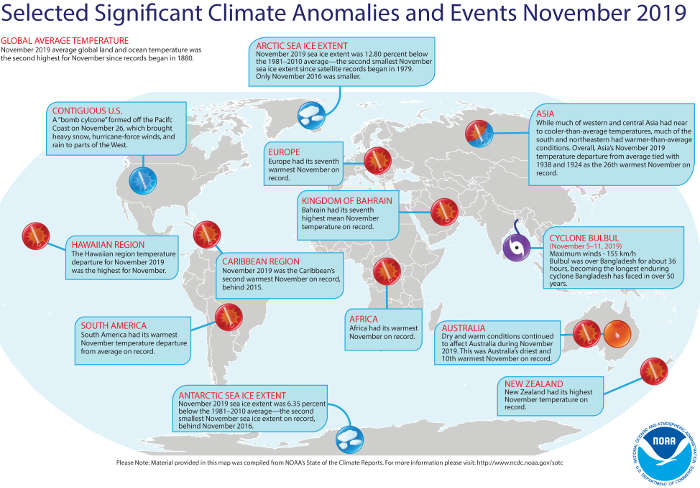
Mother Earth seems to be on repeat with another month of heat: November 2019 was the second-hottest November in the 140-year global climate record.
Moreover, both the season (September through November) and the year to date (January through November) were each the second hottest in recorded history, according to scientists at NOAA’s National Centers for Environmental Information.
The exceptional heat also was felt at both ends of the world: Sea ice coverage across the Arctic and Antarctic oceans fell to near-record lows in November.
Here’s more from NOAA’s latest monthly global climate report.
Climate by the numbers – November 2019
The average global land and ocean surface temperature for November 2019 was 1.66 degrees F (0.92 of a degree C) above the 20th-century average and the second-highest November temperature on record, just shy of November of 2015.
In fact, the world’s five hottest Novembers have all occurred since 2013.
The average global sea surface temperature in November was 1.39 degrees F (0.77 of a degree C) above average – the second-highest temperature for November on record, behind November 2015.
Year to date and seasonal statistics
The year-to-date global land and ocean surface temperature was 1.69 degrees F (0.94 of a degree C) above the 20th-century average, which made it the second-warmest period of January through November in the 140-year record – just behind the same period in 2016.
The season (autumn or spring, depending on the hemisphere) saw an average global land and ocean temperature 1.69 degrees F (0.94 of a degree C) above the 20th-century average of 57.1 degrees F (14 degrees C). It was the second-hottest September-through-November period on record behind 2015.
More notable climate events from this report
– Sea-ice coverage shrank to its second-lowest size on record for November in both the Arctic and Antarctic behind that observed in November 2016. Arctic sea ice coverage was 12.8 percent below the 1981–2010 average, while the Antarctic coverage was 6.35 percent below average.
– Continents and island regions sweated it out: It was the hottest November on record for South America, Africa and the Hawaiian Islands. The Caribbean had its second-hottest November, and Europe had its seventh-hottest on record.
– Warming of the ocean continued: The world’s average sea surface temperature ranked second warmest for the year to date – just 0.05 of a degree F (0.03 of a degree C) cooler than the record-breaking year of 2016.
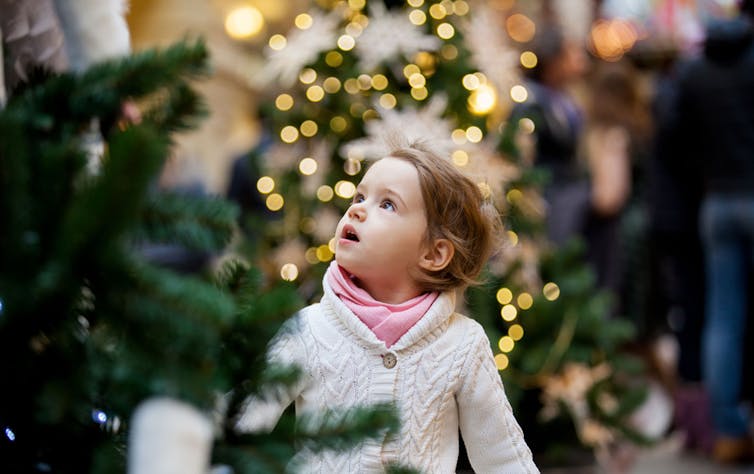
A few hundred years ago, who would have dreamed that the humble Christmas tree would one day be an immense global success? Certainly not Martin Luther, who is said to have decorated a tree with candles to celebrate the birth of Jesus Christ. Nor Prince Albert, who several centuries later set up the first Christmas tree in Windsor Castle. Who would have guessed that fir trees would be grown in Denmark especially for the export market, that others would be shipped by helicopter in Oregon, or that factories in China would produce plastic replicas?
So, let’s climb on the sleigh and take a ride around this seasonal item, so emblematic of the growth of market economics and world trade, for an informed choice between natural or artificial, locally or globally sourced.
O Tannenbaum
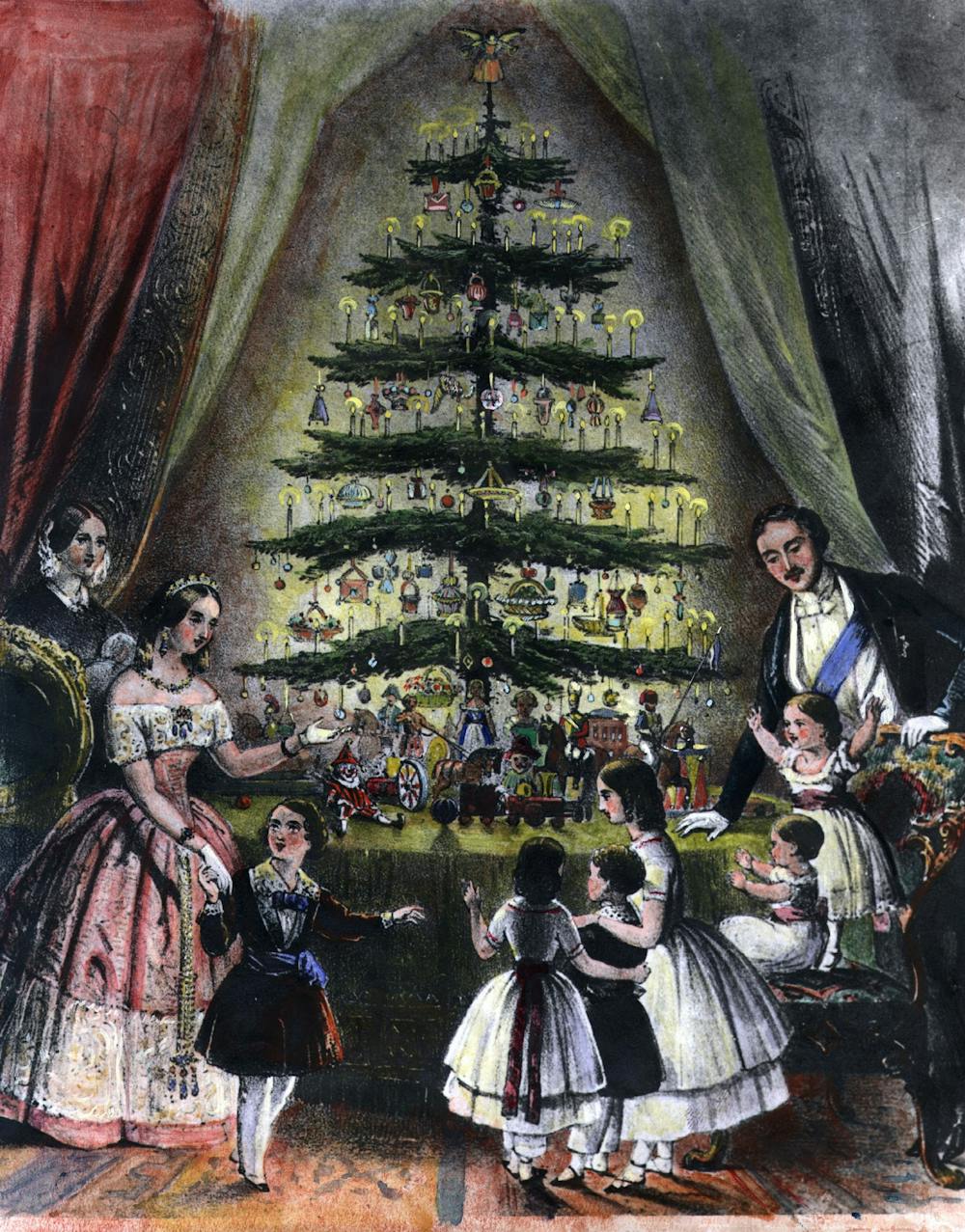
Legend has it that Martin Luther was strolling in the woods on Christmas Eve when he glimpsed stars twinkling among the branches of a fir tree. He cut down a sapling, took it home, decorated it with candles and told his son that it reminded him of how Christ descended from heaven to live among mortals on Earth. Since then, the trees around which revelers danced in medieval town squares in Germany have been brought indoors. Other Protestant countries followed suit, and the holiday evergreen was first featured in British homes in the 19th century, when gained popularity thanks to Queen Victoria’s Saxon husband, Prince Albert.
The Protestant origins of decorated fir trees at Yuletide draws on other influences too, much as the invention of Father Christmas. A range of ancient figures and beliefs converged to form Santa Claus, long accepted by the Catholic church – but not after some resistance. For example, on December 23, 1951, in Dijon, France, a red-jacketed mannequin was burned outside the city’s cathedral on the grounds that Saint Nick was a pagan character that did not exist in real life. (This incendiary statement prompted anthropologist Claude Lévi-Strauss to pen “The torture of Santa Claus”, a witty and thoughtful essay.)
Regardless of whether you see Christmas trees as a symbol of the winter solstice or the Nativity, the odds are good that you’ll be buying one this year. On Christmas night you will find them in 90% of UK homes, 77% of US households and nearly 25% of those in France – they even has a measure of popularity in Australia, where Christmas occurs during the summer vacation.
A Danish Nordmann for Sweden’s Ikea
Interestingly, most Christmas trees in Europe hail from the realm of Denmark. Why? Because the country grows them on a massive scale, making it the EU’s leading producer. But before going any further, we should explain that these trees are no longer harvested in forests but farmed. So fear not, you will do no damage to a real forest by purchasing a natural Christmas tree.
Indeed, it is precisely because they no longer grow in forests that Christmas trees come from neither Norway nor Sweden, despite these countries’ abundant timber resources. Two figures may help clear things up: Denmark produces about 10 million Christmas trees a year, with the domestic market only absorbing 10%. The potential of farming firs appeared in the 1990s when the country joined the European Union, with its system of farm subsidies.
Danish farmers were quick to adopt the Nordmann fir (Abies nordmanniana). While it was more expensive than the spruce (Picea abies) and doesn’t fill the room with a delicate smell of honey and resin, it sports bluish cones and a long-lasting foliage with a silvery underside. Little seen in modern homes in the 1960s, the Nordmann has gradually taken over.
If you’re European and buy your tree at the Swedish retailer Ikea, the world’s biggest purchaser and seller of Christmas trees, it will be Danish. The company goes so far as to make them a loss leader: You will pay only 29 euros for the tree itself, along with baubles of various sizes and prices that you had absolutely no intention of buying but which will somehow land in your cart. You will receive a 20-euro voucher, to be spent on your next visit (before the end of February), but that will almost certainly be spent on another bunch of goodies of various sizes and prices…
Size and price
The advantage with Ikea, though, is that it only sells one size of Christmas tree, 2 meters (roughly 6 feet) tall. So you don’t need to dither about getting a smaller, cheaper one, or a bigger, more expensive beast.
The theoretical relation between the size and price of a Christmas tree involves extremely complex equations. Were I to say that you should use a Hotelling-Faustmann type model you could be scarcely any the wiser, so perhaps I should offer some explanation. Harold Hotelling was a leading American economist and statistician, who established that the price of a natural resource should increase at the same pace as interest rates. The intuitive assumption is that the resource owner must choose between exploiting it today or tomorrow. If tomorrow’s price is lower than the amount they would earn from selling it today and putting the money in the bank, then they would obviously opt to sell it straight away. So the difference in price between a ten-year old Nordmann fir, that stands 0.6 feet taller, and a nine-year-old tree depends on the rate of interest.
This is where Martin Faustmann, a German forester, comes in. He pointed out that trees can be replanted once they have been cut down, something that’s clearly not the case for coal or oil. If a farmer sells their firs after ten years rather than nine, they lose one year’s growth on the saplings they would have planted on the same plot of land. If this sparks your curiosity and you like equations, take a look at the article in the American Journal of Agricultural Economics, “A Hotelling-Faustmann Explanation of the Structure of Christmas Tree Prices”. (US economists are marvelous because they publish papers on all sorts of subjects.)
Oregon, helicopters and Mexican trucks
It will come as no surprise that the United States both produces and consumes the most Christmas trees. For instance, the Noble Mountain Tree Farm grows the Noble fir (Abies procera), the Douglas fir (Pseudotsuga menziesii) and the Scots pine (Pinus sylvestris) on almost 2,000 hectares. Once felled, they are removed by helicopter, loaded onto trucks or refrigerated containers, and shipped to the rest of the United States, to Central America and even to places as far afield such as Doha, Singapore and Ho Chi Minh City.

On the other hand, you are less likely to know that Oregon-grown Christmas trees have become entangled in a trade dispute between the United States and Mexico. It started with a long argument about allowing Mexican trucks onto US highways. Under the North American Free Trade Association they were set to gain access to the road network in 2000.
For reasons that are more or less convincing (safety issues with vehicles, inexperienced truckers, trafficking of drugs and illegal immigrants, among others), the federal authorities dragged their feet and its trading partner finally lost patience. In 2009 the Mexican government imposed several billion dollars’ worth of import surtaxes on about 100 categories of goods, including Christmas trees. But why, you may wonder, did they bother with the little firs? It was all the fault of two Congressmen from Oregon. So there is a certain logic behind the targeting of retaliatory measures.
Chinese manufacturing
Christmas trees are also caught up in the trade war opposing the United States and China. To be exact, it has more to do with fairy lights and other seasonal decorations than it does with fir trees. The PRC does not grow them, nor does it celebrate Christmas. What’s more, the Chinese New Year is symbolized by an animal and the dominant colour is red, not green. (Next in line is the year of the rat, which starts on February 5.) But China does manufacture and export plastic Christmas trees and all the associated trimmings. Indeed it by far the world’s largest producer.
As soon as the conflict erupted, Washington slapped 10% extra duty on imports of Christmas decorations, but did not touch PVC or polyurethane trees. Don’t ask me to explain this difference in treatment, as I haven’t a clue. Nor could I say why the surcharge on trimmings was lifted last summer. Perhaps Donald Trump was upset by the idea that kids at home would find their trees a little bare…
Of course, there is only the faintest connection between nursery tales and Chinese factories churning out Christmas decorations: no elves with pointed ears nor mischievous imps assisting Santa Claus. Rather, assembly-line workers and automated machines slicing PVC into countless synthetic pine needles. Manufacturing is not located somewhere north of the Polar Circle, but 300 kilometres southwest of Shanghai, in a city called Yiwu. Almost 1,000 firms making Christmas goods are based there. They account for 60% of global output of plastic fir trees and Christmas lights, gilded stars and those inevitable baubles. If you would like to see the fan belts and choppers of this workshop of the Nativity world in action, then watch the National Geographic video, “I Did Not Know That: How Christmas Trees Are Made”. (It’s probably better to put the little ones to bed first, though.)
The pros and cons of natural or artificial trees
In the United States, the volume of fake Christmas tree sales is close to that of the real thing, and rising steadily. Its attractive price – use it two years running and you start saving – is apparently not the reason for this trend. Indeed a dip in demand only marginally benefits their natural rival. Instead, their success in the United States seems a matter of convenience: no early-December shopping run, no needles to vacuum after the holidays.
In contrast, in France the market share of artificial trees is pretty steady, stuck at about 20%. Which is just as well for local growers, as Danish and other imports only account for a fifth of overall volume. The French seem attached to their home-grown Christmas trees.

But which tree is “greener”, natural or artificial? At first glance a real tree seems a better bet: photosynthesis drives plant growth, capturing carbon dioxide. The synthetic alternative causes emissions, through oil extraction and PVC production, both of which consume large amounts of energy. But two key parameters may wipe out this advantage: the years the artificial tree is used and how far it is shipped (transportion also producing emissions).
The longer you keep your plastic tree, the less it will matter that it was made in China or that you bought it miles from your home. But the further your natural Christmas tree travelled, the worse its carbon budget will be. This ecological contest depends on other factors too, such as end-of-life processing (landfill or recycling) and environmental damage other than CO2 emissions (in particular, the impact of pesticides and biodiversity). The results of the life-cycle analysis of the two commodities vary depending on the relevant parameters and values. For instance, the tipping point regarding re-use may be 5 years or 20 years, depending on the sources. In short, it’s hard to tell.
For what it’s worth, I would advise you to opt for a natural fir tree, on the condition that you don’t just trash it, but take it to the nearest recycling centre. If in doubt, get a locally sourced tree or better yet, an organic one.
Whatever happens, don’t make the same mistake as the envious little tree in the Hans-Christian Andersen story, unable to appreciate living in the present.
“Out in the woods stood a nice little Fir Tree. The place he had was a very good one: the sun shone on him: as to fresh air, there was enough of that, and round him grew many large-sized comrades, pines as well as firs. But the little Fir wanted so very much to be a grown-up tree…”
And with this thought we wish you a very happy Christmas, with or without a tree decked with Chinese-made decorations.
François Lévêque recently published “Competition’s New Clothes” (“Les vêtements neufs de la concurrence”), Éditions Odile Jacob.
François Lévêque, Professeur d’économie, Mines ParisTech
This article is republished from The Conversation under a Creative Commons license. Read the original article.
The latest forecast issued by the National Weather Service for this holiday week is calling for a combination of rain and colder temperatures.
The forecast says that there will be patchy fog on Monday and Tuesday, with a 50-percent chance of showers on Christmas Eve night.
On Christmas Day, there is a 40-percent chance of rain, with reduced chances of rain on Christmas night, the forecast said.
From Thursday morning through Saturday morning, conditions are anticipated to be clear and sunny. That change in the weather is due to a high pressure system moving in over the region.
The National Weather Service said that, by the end of the weekend or beginning of next week, there could be more wet weather on the way. Chances of showers are forecast from Saturday night through Sunday.
This week, daytime temperatures will range between the high 40s and low 50s, with nighttime temperatures hovering in the low 30s.
On Christmas, temperatures are expected to hover in the mid 40s, dropping into the low 30s at night, the National Weather Service reported.
Email Elizabeth Larson at
During the hustle and bustle of the holidays, leave the dashing to the reindeer and take your time to ensure you arrive safely at your destination.
Another way to stay safe on the road during a time that may include increased celebrations is to designate a non-drinking driver.
Unfortunately, more than 1,000 drivers did not heed this advice prior to the Christmas Day Maximum Enforcement Period, or MEP, in 2018, resulting in 1,166 arrests by CHP officers for driving under the influence.
“Our goal at the CHP is for everyone to get home safe. When a person chooses to drink and drive, it not only puts their safety at risk, but it endangers the life of everyone on the road with them,” said CHP Commissioner Warren Stanley. “We encourage the public to help us save lives and remove these dangerous drivers from the roadway by reporting them to 9-1-1.”
According to data from the CHP’s Statewide Integrated Traffic Records System, at least 16 people were killed and nearly 350 others were injured in collisions involving impaired drivers in California throughout the 102-hour holiday enforcement period last year.
This year’s Christmas MEP begins at 6 p.m. on Tuesday, Dec. 24, and concludes at 11:59 p.m. on Wednesday, Dec. 25.
During that time, all available officers will be on the road for enhanced enforcement and to assist any drivers who need help.
Whether your holiday travel includes destinations near or far, it will likely mean increased traffic on the roadways.
It is important to practice safe driving habits, including getting plenty of rest, avoiding distractions, and always buckling up.
The following cats and kittens at the Lake County Animal Care and Control shelter have been cleared for adoption.

Male domestic longhair
This male domestic longhair has a lynx point coat and blue eyes.
He is in cat room kennel No. 116, ID No. 13365.

“Oreo” is a female domestic short hair with an all-black coat and green eyes.
She has been spayed.
She is in cat room kennel No. 121, ID No. 13312.

Female domestic longhair
This female domestic longhair cat has a tortie coat and gold eyes.
She is in cat room kennel No. 142, ID No. 13347.
Lake County Animal Care and Control is located at 4949 Helbush in Lakeport, next to the Hill Road Correctional Facility.
Office hours are Monday through Friday, 11 a.m. to 5 p.m., and 11 a.m. to 3 p.m., Saturday. The shelter is open from 11 a.m. to 4 p.m. Monday through Friday and on Saturday from 11 a.m. to 3 p.m.
Visit the shelter online at http://www.co.lake.ca.us/Government/Directory/Animal_Care_And_Control.htm .
For more information call Lake County Animal Care and Control at 707-263-0278.
Email Elizabeth Larson at
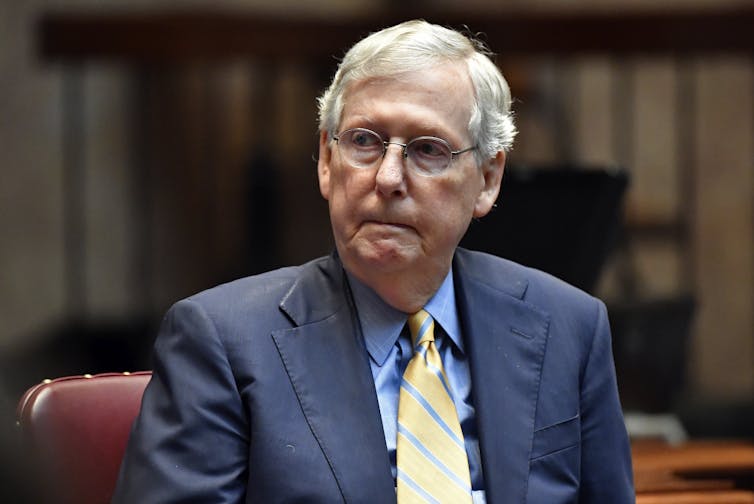
Editor’s Note: The House of Representatives has impeached President Donald Trump. Attention now turns to the Senate. Majority Leader Mitch McConnell, a Kentucky Republican, is known as a master of the Senate’s rules, and has been raising campaign donations with ads touting the power he would have over impeachment proceedings. Constitutional scholar Sarah Burns from the Rochester Institute of Technology answers some crucial questions already arising about what McConnell might be able to do, to either slow down the processor speed things along.
1. Will the Senate even take up a House impeachment?
The Constitution does not give any details about exactly how an impeachment trial should proceed. Instead, the Senate itself has set rules that govern the process. The first of those rules says the Senate must receive members of the House of Representatives to present the articles of impeachment – which McConnell has said he will do.
The rules go on to say that senators have 24 hours to “proceed to consideration of such articles” and must continue until they reach a “final judgment.”
However, the Senate can adapt or change its rules, often by a simple majority vote. That means McConnell and other senators are much more free to take actions that influence the trial than members of a jury or even the judge in a standard criminal proceeding.
McConnell has said he will try to agree on the rules with Senate Minority Leader Chuck Schumer, but if that fails, the Republicans may make the rules on their own.
2. Once it’s part of the Senate’s business, who is in charge?
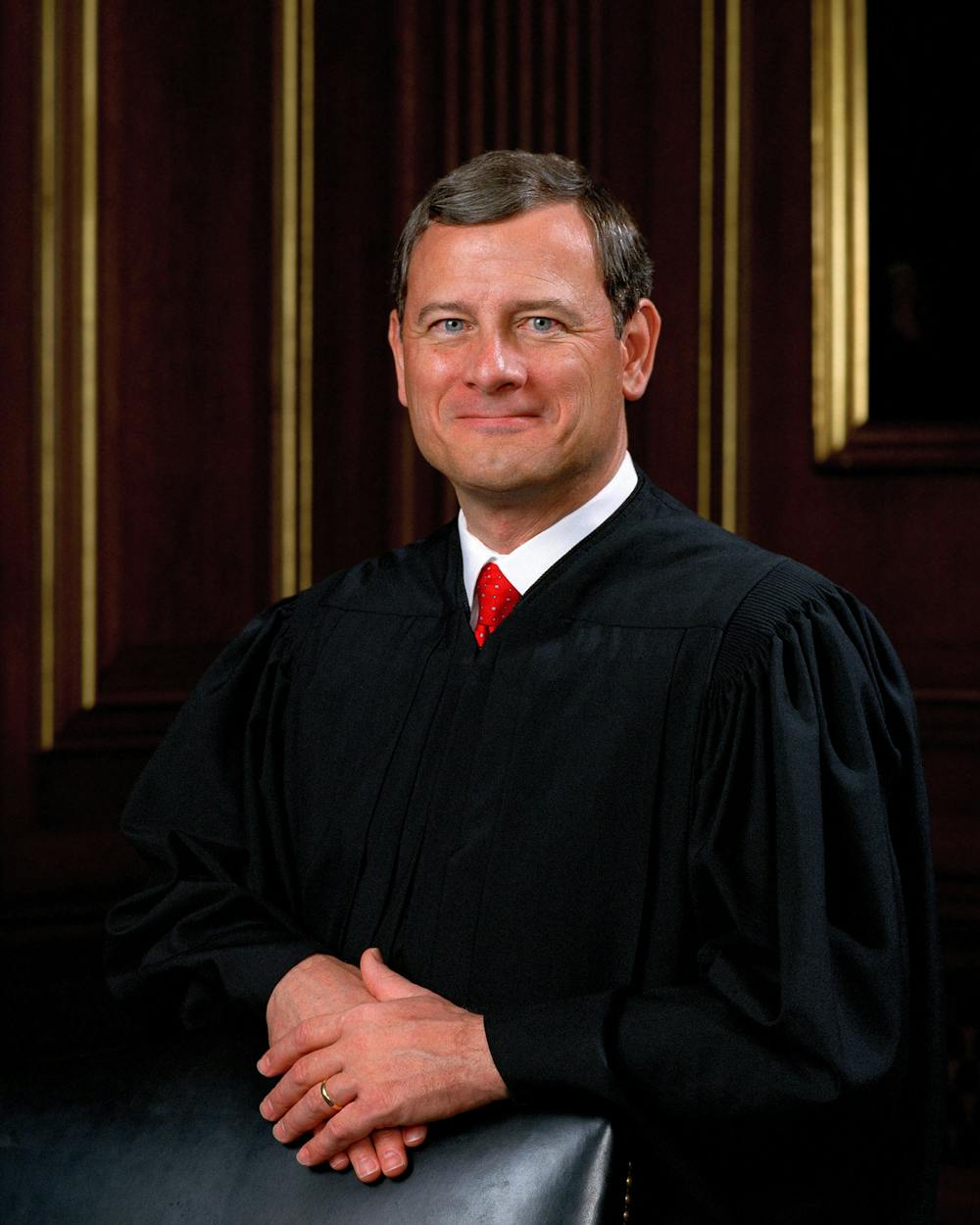

The Constitution requires that when the Senate is conducting an impeachment trial of the president, the chief justice of the United States, in this case John Roberts, presides over the proceedings.
However, McConnell – or in fact any senator – could intervene at this early stage. Senate impeachment Rule VII lets senators pose questions about the process and vote themselves on what the answers should be.
They could, for instance, ask Roberts to dismiss the case, effectively ending the trial before it begins. Even if he refused, as long as they didn’t call for a formal change to the rules (which needs a two-thirds majority to pass), the senators could overrule him with a simple majority vote.
In 1999, Democrats used this method in an effort to dismiss the impeachment charges against Bill Clinton. However, the vote failed in a Republican-controlled Senate. A similar tactic today would likely pass on partisan lines.
3. Could McConnell slow things down?
If the Senate did end up conducting a trial, Rule VII gives Chief Justice Roberts control over procedural aspects of the trial, including issuing orders for specific people to testify and making decisions about disputed points of the law.
However, that same rule lets McConnell circumvent Roberts’ control, potentially in ways that could limit, or expand, the impeachment process. For instance, if the House members presenting the case wanted to subpoena a witness who might give evidence against Trump – as Senate Minority Leader Chuck Schumer has already suggested – senators could ask Roberts to block the subpoena. If he refused, they could overrule him, again by a simple majority in a Republican-controlled Senate.
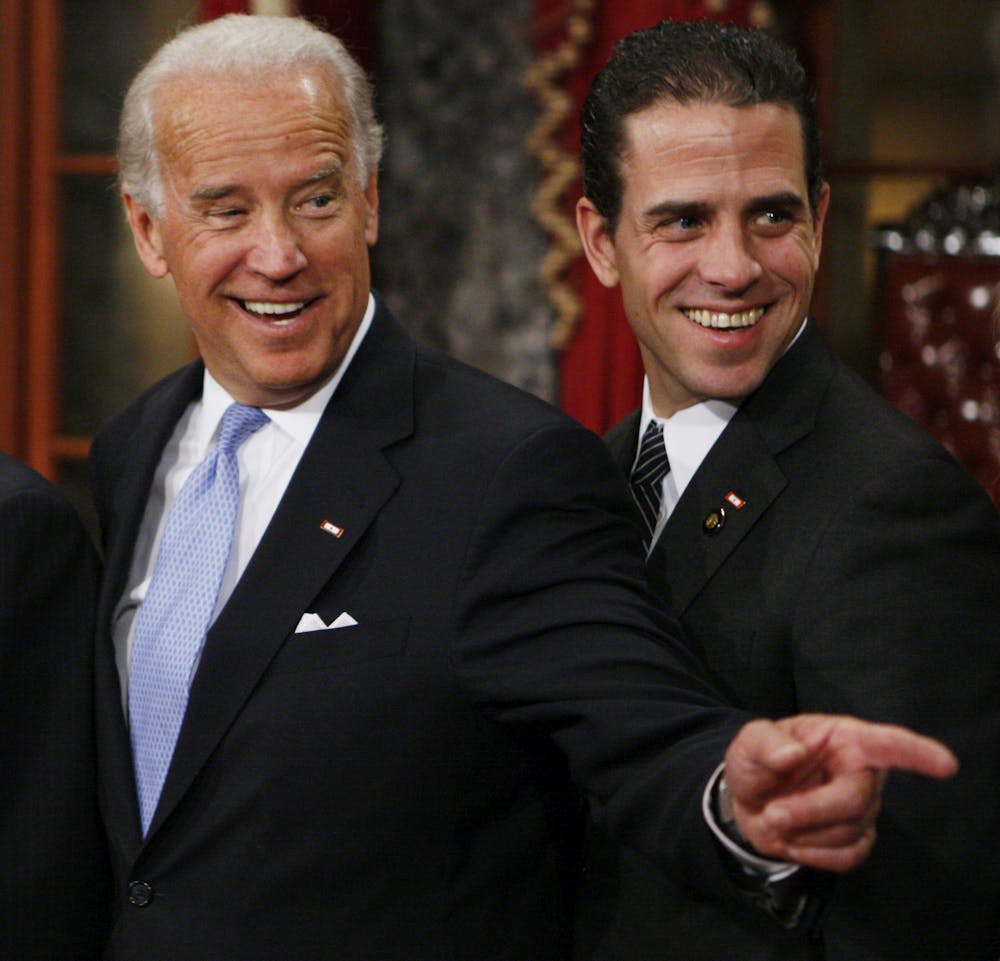
McConnell could also use Rule VII to introduce into the trial new information that would be to Trump’s political benefit – such as asking Roberts to subpoena Joe Biden and his son Hunter, which could heighten the partisan divide, and distract or confuse the public about who is on trial for what. If Roberts declined, again the senators themselves could vote to issue the subpoenas.
4. Could McConnell speed things up?
It’s not certain that McConnell would block an impeachment trial at every turn. He has already surprised members of his own party by allowing the Senate to vote on whether the whistleblower’s complaint should be heard by the congressional intelligence committees.
He could limit his own intervention and let the process unfold. However, McConnell might find it advantageous to speed things up, for instance if evidence or public opinion cause him to think a fast vote would lead to acquittal.
5. Could he create political chaos?
According to the Senate rules on impeachment, McConnell could let Trump – the prospective defendant – avoid appearing before the Senate. The Senate must inform the accused of the charges and offer them the opportunity to appear, but Rules VIII and X do not require that the person actually show up. There’s not even a requirement that the person have representatives, like lawyers on a defense team, who appear to contest the charges.
Avoiding public testimony could stop the president from making his situation worse by either lying or further incriminating himself – which his attorneys feared during the Mueller investigation.
Those same rules give the Senate – and thereby McConnell – the power to demand either or both of the Ukraine whistleblowers testify without the protection of anonymity. That would set up a conflict with federal whistleblower protection laws, which require that federal officials not unmask people who alert the Inspector General of the Intelligence Community to potential wrongdoing.
Depending on how McConnell chooses to act, he could create a situation that highlights the inherent conflicts of the constitutional system, by using rules created by the Senate to affect a trial of the president.


However, as new facts emerge, McConnell’s political calculation may change. Senators in the GOP who are up for reelection but have started to view the actions of the president as impeachable offenses may worry that taking a public position would spark a primary challenge from Trump supporters. After filing deadlines pass for prospective candidates, incumbents may express their thinking more clearly.
Wider public opinion matters too. The American people may ultimately favor impeachment proceedings, as they did with Richard Nixon after a certain point. Or they might see impeachment as a smear campaign carried out by the opposition party, as they did with Bill Clinton. Public opinion polls on impeachment have barely moved in months, showing a deep national divide. Now that it has gotten to the Senate, Mitch McConnell will play a huge role in what happens next.
Editor’s note: This is an updated version of an article originally published on Oct. 15, 2019.
[ Like what you’ve read? Want more? Sign up for The Conversation’s daily newsletter. ]
Sarah Burns, Associate Professor of Political Science, Rochester Institute of Technology
This article is republished from The Conversation under a Creative Commons license. Read the original article.