 How to resolve AdBlock issue?
News
State, unions and workers reach settlement with Sutter Health over alleged anticompetitive practices
The settlement resolves allegations by the attorney general, the United Food and Commercial Workers International Union and Employers Benefit Trust, and class action plaintiffs, that Sutter’s anticompetitive practices led to higher health care costs for patients in Northern California compared to other places in the state.
As a result of the settlement, Sutter will pay $575 million in compensation and make significant changes in its operations and practices to restore competition in Northern California’s health care market.
There is no admission of wrongdoing on the part of Sutter Health, and no court has found that Sutter violated any laws, the company reported.
The Attorney General’s Office said the settlement constitutes one of the largest legal actions in the country attacking anticompetitive behavior in the health care sector and includes unprecedented levels of injunctive relief to restore competition in the market.
“When one health care provider can dominate the market, those who shoulder the cost of care — patients, employers, insurers — are the biggest losers,” said Attorney General Becerra. “Today’s settlement will be a game changer for restoring competition in our health care markets. Sutter has agreed to pay over half a billion dollars to compensate those who challenged its billing practices. It must operate with more transparency. It must stop practices that drive patients into more expensive health services and products. And it must operate under the watchful eye of a court-approved monitor selected by the Attorney General’s Office for at least 10 years.”
Becerra said the first-in-the-nation comprehensive settlement should send a clear message to the markets: “If you’re looking to consolidate for any reason other than efficiency that delivers better quality for a lower price, think again. The California Department of Justice is prepared to protect consumers and competition, especially when it comes to health care.”
Sutter Health Senior Vice President and General Counsel Flo Di Benedetto said the settlement “enables Sutter Health to maintain our integrated network and ability to provide patients with access to affordable, high-quality care.”
Di Benedetto added, “Together with the attorney general, the parties selected an experienced monitor who will oversee the agreement, which specifies parameters for contracting between Sutter Health and insurance companies going forward. There were no claims that Sutter’s contracting practices with insurance companies affected patient care or quality. In fact, Sutter’s quality of care is nationally recognized with the majority of our hospitals and care facilities outperforming state and national averages in nearly every measure of quality.”
Over the past decade, Sutter Health has invested nearly $10 billion in new technologies and state-of-the-art facilities to increase access to safe, high-quality care in the communities it serves, De Benedetto said. “
“We have rebuilt hospitals to withstand earthquakes, taken care of millions of Medicare and Medi-Cal patients, expanded services in rural communities and spread new life-saving technologies and best practices across our integrated network. As an organization, we will have to evaluate future capital investments based on the impact of the settlement,” Di Benedetto said.
“Sutter Health is committed to keeping our care connected so patients continue to receive affordable, high-quality, personalized and coordinated care. Despite the increasing cost of care and operating in high-wage markets, we remain focused on making health care more affordable for our patients,” Di Benedetto concluded.
This litigation against Sutter began in 2014 when the United Food and Commercial Workers International Union and Employers Benefit Trust and numerous individual plaintiffs – later consolidated into a class action – filed a lawsuit challenging Sutter’s practices in rendering services and setting prices.
They sought compensation for what they alleged were unlawful, anticompetitive business practices, which caused them to pay more than necessary for health care services and products.
In March of 2018, Attorney General Becerra filed a similar lawsuit against Sutter on behalf of the people of California principally seeking injunctive relief to compel Sutter to correct its anticompetitive business practices moving forward. The separate lawsuits were combined by the court into one case.
In October, on the eve of trial, the parties reached an agreement to settle the lawsuits. The settlement must be approved by the court. The court has set a hearing on the settlement for Feb. 25.
Under the terms of the settlement, Sutter will be required to:
– Pay $575 million to compensate employers, unions, and others covered under the class action and to cover costs and fees associated with the legal efforts;
– Limit what it charges patients for out-of-network services, helping ensure that patients visiting an out-of-network hospital do not face outsized, surprise medical bills;
– Increase transparency by permitting insurers, employers and self-funded payers to provide plan members with access to pricing, quality, and cost information, which helps patients make better care decisions;
– Halt measures that deny patients access to lower-cost plans, thus allowing health insurers, employers and self-funded payers to offer and direct patients to more affordable health plan options for networks or products;
– Stop all-or-nothing contracting deals, thus allowing insurers, employers and self-funded payers to include some but not necessarily all of Sutter’s hospitals, clinics, or other commercial products in their plans’ network. Sutter must also make facilities such as their rural hospitals, the Alta Bates Summit Medical Center, and Sutter hospitals in San Francisco available to insurers, employers, and self-funded payers as part of commercial health care benefit plans;
– Cease anticompetitive bundling of services and products which forced insurers, employers, and self-funded payers to purchase for their plan offerings more services or products from Sutter than were needed. Sutter must now offer a stand-alone price that must be lower than any bundled package price to give insurers, employers, and self-funded payers more choice;
– Cooperate with a court-approved compliance monitor to ensure that Sutter is following the terms of the settlement for at least 10 years. The monitor will receive and investigate complaints and may present evidence to the court; and
– Clearly set definitions on clinical integration and patient access considerations. The settlement makes clear that for Sutter to claim it has clinically integrated a system, it must meet strict standards beyond regional similarities or the mere sharing of an electronic health record, and must be integrating care in a manner that takes into consideration the quality of care to the patient population. This is important because clinical integration can be used to mask market consolidation efforts by hospital systems, when in fact there is no true integration of a patient’s care. For example, saying that hospitals are regionally close or that the hospitals are sharing electronic health records is not enough, there must be close coordination that will lead to less costly, higher quality care for local communities.
The Sutter network consists of some 24 acute care hospitals, 36 ambulatory surgery centers, and 16 cardiac and cancer centers. It also includes some 12,000 physicians and over 53,000 employees. In addition, Sutter negotiates contracts on behalf of the Palo Alto Medical Foundation and many affiliated physician groups.
A number of studies have shown how overconsolidation drives up prices for consumers. For example, a University of California Berkeley report found that outpatient cardiology procedures in Southern California cost nearly $18,000 compared to almost $29,000 in Northern California.
For inpatient hospital procedures, the cost in Southern California is nearly $132,000 compared to more than $223,000 in Northern California, a more than $90,000 difference.
A 2016 study found that a cesarean delivery in Sacramento, where Sutter is based, cost more than $27,000, nearly double what it cost in Los Angeles or New York, making Northern California one of the most expensive places in the country to have a baby.
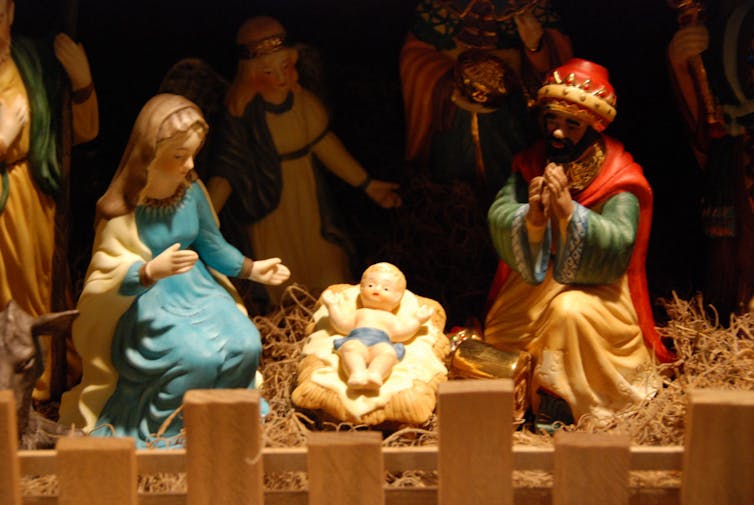
Around the Christmas season, it is common to see a display of the Nativity scene: a small manger with the baby Jesus and his family, shepherds, the three wise men believed to have visited Jesus after his birth and several barnyard animals.
One might ask, what are the origins of this tradition?
Biblical description
The earliest biblical descriptions, the Gospel of Matthew and the Gospel of Luke, written between A.D. 80 and 100, offer details of Jesus’ birth, including that he was born in Bethlehem during the reign of King Herod.
The Gospel of Luke says that when the shepherds went to Bethlehem, they “found Mary and Joseph, and the baby, who was lying in the manger.” Matthew tells the story of the three wise men, or Magi, who “fell down” in worship and offered gifts of gold, frankincense and myrrh.
But as my research on the relationship between the New Testament and the development of popular Christian traditions shows, the earliest biblical descriptions do not mention the presence of any animals. Animals first start to appear in religious texts around the seventh century.
A series of early Christian stories that informed popular religious devotion, including what’s known as the Infancy Gospel of Matthew, attempted to fill in the gap between Christ’s infancy and the beginning of his public ministry. This text was the first to mention the presence of animals at Jesus’ birth. It described how the “most blessed Mary went forth out of the cave and entering a stable, placed the child in the stall, and the ox and the ass adored Him.”
This description, subsequently cited in several medieval Christian texts, created the Christmas story popular today.
Start of Nativity scenes
But the Nativity scene now recreated in town squares and churches worldwide was originally conceived by St. Francis of Assisi.
Much of what scholars know about Francis comes from “Life of St. Francis,” written by the 13th-century theologian and philosopher St. Bonaventure.
Francis was born into a merchant family in the Umbrian town of Assisi, in modern-day Italy, around 1181. But Francis rejected his family wealth early in his life and cast off his garments in the public square.
In 1209, he founded the mendicant order of the Franciscans, a religious group that dedicated themselves to works of charity. Today, Franciscans minister by serving the material and spiritual needs of the poor and socially marginalized.
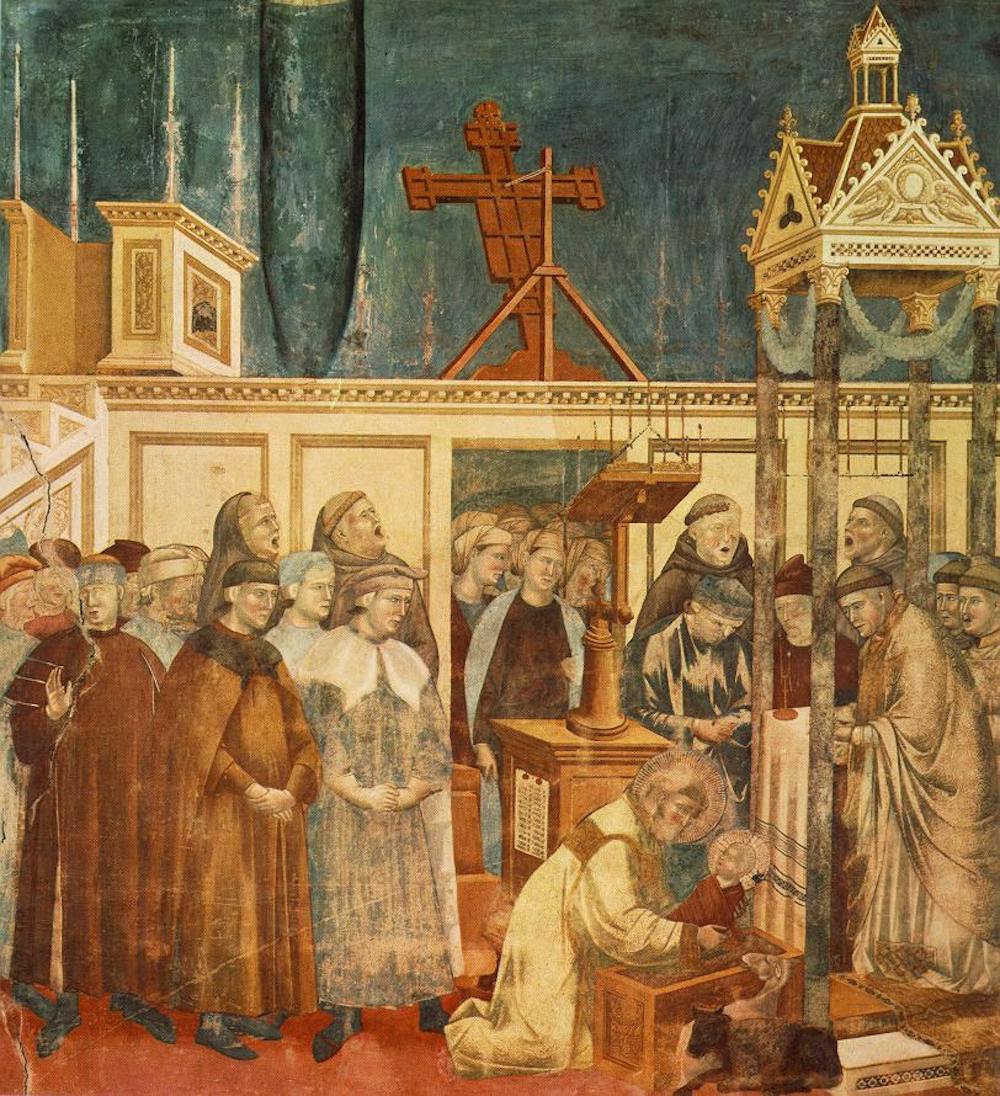
According to Bonaventure, Francis in 1223 sought permission from Pope Honorious III to do something “for the kindling of devotion” to the birth of Christ. As part of his preparations, Francis “made ready a manger, and bade hay, together with an ox and an ass,” in the small Italian town of Greccio.
One witness, among the crowd that gathered for this event, reported that Francis included a carved doll which cried tears of joy and “seemed to be awakened from sleep when the blessed Father Francis embraced Him in both arms.”
This miracle of the crying doll moved all who were present, Bonaventure writes. But Francis made another miracle happen, too: The hay that the child lay in healed sick animals and protected people from disease.
Nativity imagery in art

The Nativity story continued to expand within Christian devotional culture well after Francis’ death. In 1291, Pope Nicholas IV, the first Franciscan pope, ordered that a permanent Nativity scene be erected at Santa Maria Maggiore, the largest church dedicated to the Virgin Mary in Rome.
Nativity imagery dominated Renaissance art.
This first living Nativity scene – which was famously depicted by Italian Renaissance painter Giotto di Bondone in the Arena Chapel of Padua, Italy – ushered in a new tradition of staging the birth of Christ.
In the tondo, a circular painting of the Adoration of the Magi by 15th-century painters Fra Angelico and Filippo Lippi, not only are there sheep, a donkey, a cow and an ox, there is even a colorful peacock that peers over the top of the manger to catch a glimpse of Jesus.
Political turn of Nativity scenes
After the birth of Jesus, King Herod, feeling as though his power was threatened by Jesus, ordered the execution of all boys under two years old. Jesus, Mary and Joseph were forced to flee to Egypt.
In an acknowledgment that Jesus, Mary and Joseph were refugees themselves, in recent years, some churches have used their Nativity scenes as a form of political activism to comment on the need for immigrant justice. Specifically, these “protest nativities” have criticized President Donald Trump’s 2018 executive order on family separation at the U.S.-Mexico border.
For example, in 2018, a church in Dedham, Massachusetts, placed baby Jesus, representing immigrant children, in a cage. This year, at Claremont United Methodist Church in California, Mary, Joseph and the baby Jesus have all been placed in separate barbed-wire cages in their outdoor Nativity scene.
These displays, which call attention to the plight of immigrants and asylum seekers, bring the Christian tradition into the 21st century.
Vanessa Corcoran, Adjunct Professor of History, Academic Counselor, Georgetown University
This article is republished from The Conversation under a Creative Commons license. Read the original article.

When a revocable living trust is established certain important powers – i.e., to amend or to revoke the trust – are usually reserved to the settlor (i.e., the person who established the trust).
Unless the trust expressly allows someone other than the settlor to exercise these powers then only the settlor – while alive and competent -- can exercise them.
The power to amend or to revoke a revocable trust are fundamental rights typically reserved to the settlor personally.
Amending a trust, however, encompasses a wide variety of changes. It could mean changing who acts as a successor trustee or it could mean changing the distribution (gifting) of assets when the settlor dies.
Some powers to amend the trust, such as the power to amend who acts as successor trustee, may be granted to persons other than the settlor(s) in the event that the settlor is incapacitated or deceased.
A power holder may be authorized to hire and replace successor trustees for trust administration. This is useful if the person named as successor trustee is not available or is not performing their duties properly.
In a joint trust between spouses, the settlors often allow each other to exercise their powers to amend and to revoke the trust if either spouse is incapacitated.
This is typically so when the trust leaves all assets to the surviving spouse at the death of the first settlor. That way the well spouse can make necessary changes to the trust provisions due to changed circumstances.
Sometimes, however, the well spouse may have to go to court to authorize changes.
In California, if the trust holds community property assets then the well spouse can petition the Superior Court to authorize a particular transaction.
For example, if the well spouse is trying to qualify the incapacitated spouse for long-term Medi-Cal, by transferring assets to the well spouse, the well spouse may ask the court to make all trust assets the well spouse’s own separate property.
Next, consider a trust with separate property assets belonging to an incapacitated settlor that allows the settlor’s conservator to exercise the settlor’s power to amend or to revoke the trust.
In California, exercising such powers would then entail a conservatorship of the incapacitated settlor’s estate and a petition by a conservator for substituted judgment. If, however, the trust makes such powers personal to the settlor only then even that approach is not available.
Sometimes a trust allows other persons to exercise the settlor’s authority. That is, the trust may say that the settlor’s agent under a power of attorney, the settlor’s spouse, or the conservator of the settlor’s estate can amend or revoke the trust.
For settlor’s agent to exercise the settlor’s powers to control the trust the power of attorney itself also needs to authorize the agent to exercise such powers.
For example, consider a trust that allows the settlor’s agent to direct the trustee to gift trust assets to certain family members (if the settlor is incompetent). The power of attorney itself must authorize the agent to instruct the trustee to make such gifts. If any gifting is to the agent then the power of attorney must waive the conflict of interest created by the agent authorizing a gift to himself.
What cannot be accomplished by a trust amendment once a trust becomes irrevocable, however, can sometimes be accomplished by a trust modification. In certain situations trust modifications may be accomplished by court petition.
More recently, under California’s new so-called “Decanting” law, certain trust modifications of an irrevocable trust may be done without court petition through other procedures. The types of modifications that can be made by Decanting depend on the type of powers granted to the trustee and how the trust is drafted.
Anyone confronting any of these issues should consult with a qualified attorney for guidance.
Dennis A. Fordham, attorney, is a State Bar-Certified Specialist in estate planning, probate and trust law. His office is at 870 S. Main St., Lakeport, Calif. He can be reached at
NASA’s Solar Dynamics Observatory has observed a magnetic explosion the likes of which have never been seen before.
In the scorching upper reaches of the Sun’s atmosphere, a prominence — a large loop of material launched by an eruption on the solar surface — started falling back to the surface of the Sun.
But before it could make it, the prominence ran into a snarl of magnetic field lines, sparking a magnetic explosion.
Scientists have previously seen the explosive snap and realignment of tangled magnetic field lines on the Sun — a process known as magnetic reconnection — but never one that had been triggered by a nearby eruption.
The observation, which confirms a decade-old theory, may help scientists understand a key mystery about the Sun’s atmosphere, better predict space weather, and may also lead to breakthroughs in the controlled fusion and lab plasma experiments.
“This was the first observation of an external driver of magnetic reconnection,” said Abhishek Srivastava, solar scientist at Indian Institute of Technology (BHU), in Varanasi, India. “This could be very useful for understanding other systems. For example, Earth’s and planetary magnetospheres, other magnetized plasma sources, including experiments at laboratory scales where plasma is highly diffusive and very hard to control.”
Previously a type of magnetic reconnection known as spontaneous reconnection has been seen, both on the Sun and around Earth.
But this new explosion-driven type — called forced reconnection — had never been seen directly, thought it was first theorized 15 years ago. The new observations have just been published in the Astrophysical Journal.
The previously-observed spontaneous reconnection requires a region with just the right conditions — such as having a thin sheet of ionized gas, or plasma, that only weakly conducts electric current — in order to occur.
The new type, forced reconnection, can happen in a wider range of places, such as in plasma that has even lower resistance to conducting an electric current.
However, it can only occur if there is some type of eruption to trigger it. The eruption squeezes the plasma and magnetic fields, causing them to reconnect.
While the Sun’s jumble of magnetic field lines are invisible, they nonetheless affect the material around them — a soup of ultra-hot charged particles known as plasma.
The scientists were able to study this plasma using observations from NASA’s Solar Dynamics Observatory, or SDO, looking specifically at a wavelength of light showing particles heated 1-2 million kelvins (1.8-3.6 million F).
The observations allowed them to directly see the forced reconnection event for the first time in the solar corona — the Sun’s uppermost atmospheric layer. In a series of images taken over an hour, a prominence in the corona could be seen falling back into the photosphere. En route, the prominence ran into a snarl of magnetic field lines, causing them to reconnect in a distinct X shape.
Spontaneous reconnection offers one explanation for how hot the solar atmosphere is — mysteriously, the corona is millions of degrees hotter than lower atmospheric layers, a conundrum that has led solar scientists for decades to search for what mechanism is driving that heat.
The scientists looked at multiple ultraviolet wavelengths to calculate the temperature of the plasma during and following the reconnection event. The data showed that the prominence, which was fairly cool relative to the blistering corona, gained heat after the event.
This suggests forced reconnection might be one way the corona is heated locally. Spontaneous reconnection also can heat plasma, but forced reconnection seems to be a much more effective heater — raising the temperature of the plasma quicker, higher, and in a more controlled manner.
While a prominence was the driver behind this reconnection event, other solar eruptions like flares and coronal mass ejections, could also cause forced reconnection.
Since these eruptions drive space weather — the bursts of solar radiation that can damage satellites around Earth — understanding forced reconnection can help modelers better predict when disruptive high-energy charged particles might come speeding at Earth.
Understanding how magnetic reconnection can be forced in a controlled way may also help plasma physicists reproduce reconnection in the lab. This is ultimately useful in the field of laboratory plasma to control and stabilize them.
The scientists are continuing to look for more forced reconnection events. With more observations they can begin to understand the mechanics behind the reconnection and often it might happen.
“Our thought is that forced reconnection is everywhere,” Srivastava said. “But we have to continue to observe it, to quantify it, if we want to prove that.”
Mara Johnson-Groh works for NASA’s Goddard Space Flight Center, Greenbelt, Maryland.
CLEARLAKE, Calif. – The Clearlake City Council has approved a plan to offer monetary incentives to increase the hiring pool for the police department.
The council approved the proposal at its Dec. 12 meeting.
The discussion begins at the 44:24 mark in the video above.
Police Chief Andrew White said the agency’s top priority has been recruitment and retention, but it has been a challenge.
“Quite simply, we can’t get our job done without having the human capital within the department to make that happen,” White said.
Over the past 18 months, the department has hired six officers and promoted two others. However, despite those efforts and creativity, White said the Clearlake Police Department is seeing the same thing that’s occurring elsewhere across the country – a reduction of the candidacy pool.
White said the department has 24.5 full-time equivalent police officer positions and currently has two vacancies, which are having an impact including overtime. He said that the agency’s exceptionally high call volume and efforts to reduce crime are negatively impacted by any vacancies.
Hiring bonuses have been used in other agencies, White said.
Locally, the Lake County Sheriff’s Office offers a $5,000 incentive and the Lakeport Police Department offers $6,000 in the form of academy training, he said.
His written report notes that, statewide, hiring bonuses go as high as $30,000.
White recommended a hiring bonus of $15,000 for new academy graduates and lateral police officers through the end of the fiscal year. City Manager Alan Flora would have to approve such offers.
In addition, White recommended that Flora be able to advance sick pay and vacation balances to qualified lateral candidates, which is another bonus other agencies offer.
White said he thinks the bonuses will increase the pool of candidates, explaining that training for an academy graduate can easily exceed $20,000. Once hired, they have another 16 weeks of training with a field training officer.
Besides those hiring bonuses, White sought approval for a $1,500 referral bonus for existing employees recommending officer candidates. It would not be applicable for anyone involved in the hiring process.
“We’re seeing an almost unprecedented time in terms of recruitment efforts,” said White.
While the department believes the incentives will be effective, it will take time to see if it will work, he said.
White said the funding for the incentive program will come out of salary savings in the police department’s budget for the current fiscal year.
Councilman Phil Harris asked what would happen if an officer doesn’t stay with the department for a reasonable amount of time.
White said the city manager would look at a two-year commitment window. If an officer only stayed for a year, the amount that would be owed the city would be reduced. However, White added that all of the details haven’t been worked out yet.
Harris said he favored the incentive proposal, and wanted to go further to offer down payment assistance for police officers to buy homes and stay in the community. Vice Mayor Dirk Slooten said he agreed with Harris’ suggestion.
Clearlake Police Sgt. Rodd Joseph told the council that he came to the agency 12 years ago from another Northern California department. He said he was fortunate to have the financial ability to move here, however, “A lot of people don’t,” with some living paycheck to paycheck and having to pay for their academy education.
“In my experience, I think this would be a great tool,” Joseph said.
Flora asked if the council wanted to take action then on the down payment assistance or have staff bring it back.
Harris said he wanted staff to bring it back, and he suggested $10,000 for down payment assistance.
The council agreed to bring back that part. Harris moved to approve the remainder of the proposal, for the hiring and referral bonuses, with Councilman Russ Perdock seconding and the council approving it 5-0.
Email Elizabeth Larson at
Following recent rains, an algae bloom was noted in the southern edge of Blue Lakes on Dec. 12, the county of Lake reported.
Samples were collected and sent for testing. The laboratory has confirmed a low level of a toxin called anatoxin at 0.17 µg/l.
Anatoxin is a chemical produced by the algae that can cause severe nerve problems.
While such blooms are more common in warmer weather, the State Water Board said caution should be used throughout the year.
Caution signs have been posted in the affected area, in accordance with state recommendations responsive to detection of any level of anatoxin.
Lake County Public Health recommends the public take note of the bloom and the presence of the anatoxin.
Small children and pets are especially at risk; please keep children and dogs away from the material on the beach and avoid letting them swim or play in the water until this bloom subsides.
Under a caution advisory, fishing is allowed but our guidance is to throw away the guts (and liver) and clean and rinse the fillets with tap or bottled water before cooking. Shellfish should not be eaten under a caution advisory.
The Clear Lake cyanobacteria monitoring program run by the Big Valley Band of Pomo Indians and Elem Indian Colony funded the analysis. Their program has been routinely collecting a water sample at the Upper Blue Lakes as part of their monitoring program.
Further testing will be performed in order to monitor ongoing risk. Public Health said this program has been highly beneficial to the health of the Lake County community.
For current cyanotoxin lab results, visit the Big Valley Band of Pomo Indians cyanotoxin monitoring website at https://www.bvrancheria.com/clearlakecyanotoxins.
For more information and resources, visit the County’s cyanobacteria pages at http://www.lakecountyca.gov/cyanobacteria/ and http://www.lakecountyca.gov/cyanohealth/ .