 How to resolve AdBlock issue?
News
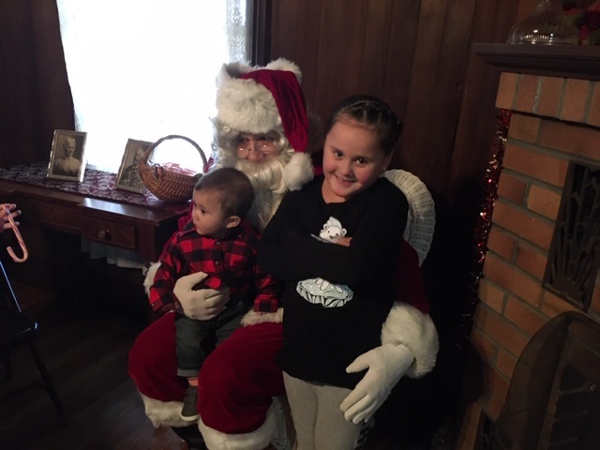
LOWER LAKE, Calif. – More than 250 people visited Anderson Marsh State Historic Park during the 30th annual “Christmas at the Ranch” open house on Saturday, Dec. 14.
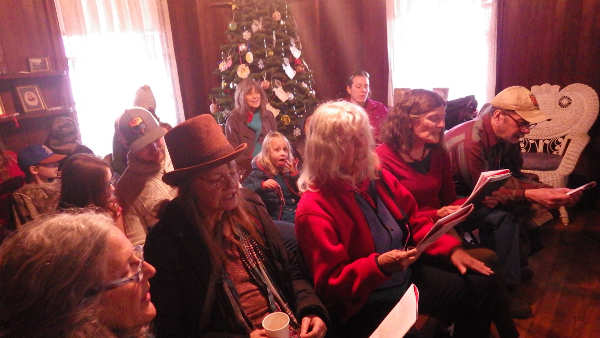
Santa was on hand to greet children of all ages, guests sang Christmas carols accompanied by local musicians and were treated to hot drinks and baked goodies, all courtesy of the Anderson Marsh Interpretive Association.
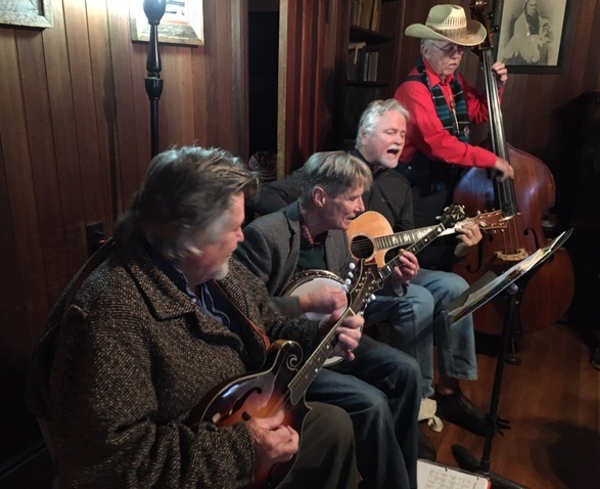
AMIA is the nonprofit association cooperating with the California Department of Parks and Recreation to promote educational activities at the park.
For information about Anderson Marsh State Historic Park, AMIA and how you can help, go to www.andersonmarsh.org or contact AMIA at either
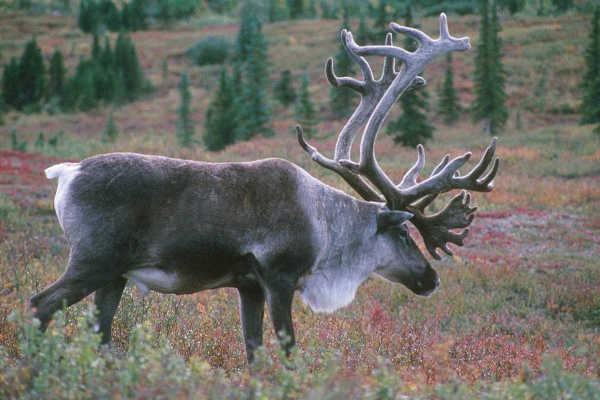
Caribou, North America’s wild reindeer, have lives apart from their famous role on Christmas Eve.
To learn more about how these Arctic antler-bearers spend the other 364 days of the year, we talked to USGS caribou expert Dr. Layne Adams, who has studied these animals for more than 35 years.
Caribou, North America’s wild reindeer, are much more interesting than their famous holiday role suggests. Reindeer and caribou (Rangifer tarandus) are large, cold-adapted, herding herbivores related to deer, elk and moose.
To learn more about the biology behind these not-so “mythical” Arctic creatures, we turn to our colleagues at the USGS Alaska Science Center who conduct a wide variety of earth- and ecological-science surveys throughout our northernmost state.
We asked USGS caribou (and large mammal) expert Layne Adams, Ph.D., about the lives of caribou during the other 364 days of the year not known as Christmas. Adams has studied caribou, other hoofed animals, and their predators in Denali National Park and elsewhere in Alaska for more than 35 years, helping land managers understand the best ways to manage these important species. Adams, a wildlife biologist, did an online chat with the Washington Post a few years ago that we wanted to share with you:
Here are other questions about reindeer that Dr. Adams answered.
Why are reindeer sometimes called caribou and caribou sometimes called reindeer?
“Reindeer” and “caribou” are two common names for the same species - Rangifer tarandus, which occurs throughout the circumpolar North.
“Reindeer” is the common name for Rangifer in Europe and Asia, whereas “caribou” is the North American name.
The name “caribou” is a French derivative of a Native American word that means snow shoveler, which is a reference to the fact that caribou are often pawing through the snow to find food underneath.
What are reindeer or caribou?
Caribou and reindeer are part of the deer family — related to deer, moose, and elk. They are the only deer species where males and females both grow antlers. Females and young males have antlers that are similar in size, but males older than 2 or 3 years have much larger antlers.
Caribou and reindeer have been around for more than a million years; their ancestors lived at the same time as now-extinct woolly mammoths and saber-toothed cats.
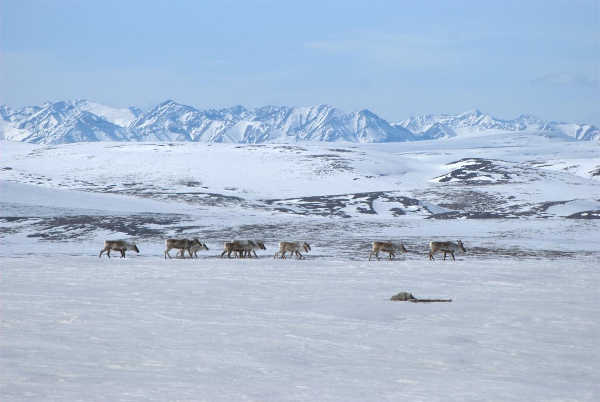
Caribou are migratory and widely distributed across northern North America, ranging from Alaska and the Canadian High Arctic islands to the mountains and boreal forests of the Canadian southern provinces.
What are domesticated reindeer?
Reindeer were domesticated across northern Europe and Asia several thousand years ago and became the basis of herding cultures in those regions.
Domesticated reindeer are also found in Alaska and Canada. A little more than a century ago, 1300 reindeer were imported from Siberia to northwest Alaska in an attempt to establish a herding economy among the Native people in the region. At the time, caribou were scarce along the northwest coast of Alaska.
Reindeer herding expanded widely across the west and north coasts of Alaska, as well as into northern Canada, such that around 600,000 domesticated reindeer were present throughout Alaska by the 1930s. During the Great Depression, the reindeer industry in Alaska collapsed and retracted primarily to the Seward Peninsula of northwest Alaska where it continues today.
While the main purpose of domesticated reindeer has been to provide meat and hides to local people, reindeer have been trained to pull sleds by some cultures.
What do they eat?
Caribou forage on a variety of plants throughout the year. During winter, lichens are their most frequently sought food, with shrubs and grass or sedges making up the rest.
On alpine and Arctic tundra ranges, caribou primarily feed on terrestrial lichens, sometimes called reindeer moss, that occur within the low-growing grasses and shrubs that make up the tundra vegetation.
In southern mountain or boreal forest ranges, where caribou winter in deep snow, arboreal lichens that grow on trees are the predominant caribou forage.
During summer, caribou shift to eating a wide variety of green plants including grasses or sedges, growing shrubs, and a variety of small forbs or flowering plants. In some regions, abundant late-summer mushrooms are an important food for caribou.
What do caribou do in the fall and winter?
In the fall, some caribou herds start migrating to their winter ranges. The timing of migration is dictated by cues in changing day length in combination with the onset of snowfall as the long winter begins. Fall is also the breeding season when mature bulls compete for opportunities to breed with females, as the females become receptive.
Arctic caribou generally migrate south to winter ranges along the northern fringe of the boreal forest or onto tundra winter ranges where terrestrial lichens are abundant. Some larger caribou herds migrate long distances of 300-400 miles between their winter ranges and their calving and summer ranges.
Smaller mountain populations migrate out of the higher mountains onto lower elevation tundra and forest ranges, while small boreal forest populations are generally sedentary throughout the year. Once on their winter range, caribou remain there from about early October to late April.
How do they thrive in such cold temperatures?
Caribou are well adapted to living in cold regions and thrive in areas where winter temperatures can reach 70 or 80 degrees below zero. These animals are well insulated with a dense haircoat made up of wooly underfur and hollow guard hair over their entire body (except the very tip of their nose). They also have relatively large, wide hooves for walking and digging through snow.
What do caribou do in the summer?
After the females give birth, caribou generally gather together in large groups to help them better avoid predators and to escape incredibly bothersome mosquitoes and parasitic flies that are abundant in early summer.
The different herds of caribou stay together in the high mountains and along the Alaskan seacoasts, where the winds and cooler temperatures help protect them from summer heat and those pesky insects.
After the number of insects declines in mid-summer, the caribou herds scatter into smaller groups. This is an important time for caribou — they use the time before winter arrives to feed as much as possible on remaining green grasses and sedges, willow leaves, and even mushrooms to gain weight.
How big are calves?
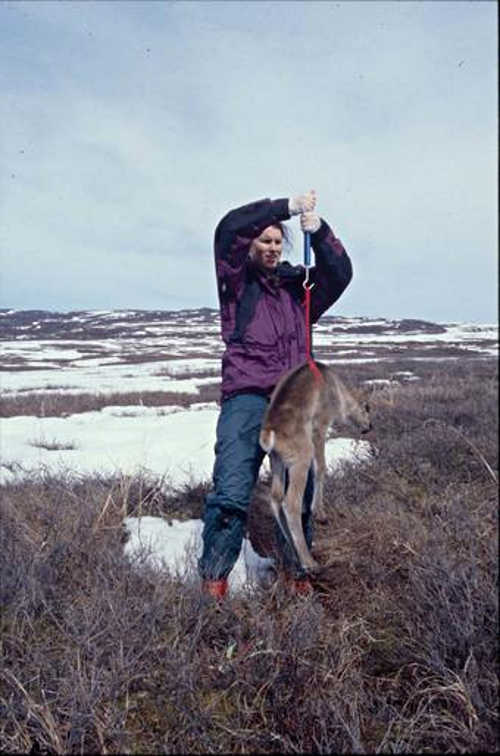
We’ve weighed quite a few newborn calves in Denali and on average they weigh about 17 pounds. Calves are born in May and early June throughout Alaska, with most calves being born in any herd within about a 10-day period.
Caribou cows produce one calf each year and generally begin producing calves when they are 2 to 4 years old depending on their nutritional status.
In small herds, such as the Denali Caribou Herd, calves are subject to intense predation primarily by wolves and grizzly bears — fewer than half survive beyond 2 weeks of age.
In the large, migratory populations, early calf survival is markedly higher because the huge number of calves born over a brief interval overwhelms local predators’ ability to kill as many.
How big are adult caribou?
In Denali National Park, mature adult males average about 500 pounds but can weigh more than 600 pounds. Adult females are about half as big, averaging about 240 pounds (225- to 320-pound range).
In large migratory herds, caribou are smaller, with adult males and females averaging about 400 pounds for males and 200 pounds for females.
How many herds are in Alaska?
There are 32 caribou herds recognized in Alaska, with 7 large migratory populations each numbering from 15,000 to 260,000 animals. These herds currently total about 700,000 animals and account for about 97 percent of the caribou in the State. The remaining 25 herds are much smaller, ranging from about 30 to 3500 animals each, adding up to about another 20,000 caribou.
Overall, Alaska’s caribou population was relatively low in the mid-1970s, numbering around 250,000 statewide. Caribou numbers increased to about 950,000 by the mid-1990s, as a couple of the large herds grew to historically high numbers. Since then, caribou numbers have declined to around 720,000 today. Such wide fluctuations in caribou numbers over the time scale of decades are not unusual.
Can you talk a little more about predators — what eats caribou?
In general, the primary predators of caribou in Alaska are grizzly bears and wolves. Grizzly bears are very effective at killing young caribou calves less than a couple of weeks old, although they also kill older caribou on occasion. Wolves are important predators of both young calves and older caribou. Other caribou predators include black bears, golden eagles, wolverine, and coyotes.
Humans are also important predators of caribou. Caribou are a mainstay of local subsistence in Bush Alaska, and they are a sought-after quarry for other Alaskan residents and sport hunters from all over the world. On average, people harvest about 22,000 caribou each year in Alaska.
Predation affects the number of caribou, particularly in the smaller, more sedentary populations. The large, migratory herds are able to reduce the negative effects of predation to some degree just due to their sheer numbers; the tradeoff is that they are more likely to be affected by the nutritional limitations of their ranges compounded by competition with their herd mates.
Caribou are more vulnerable in deep snow
A main goal of my research has been to understand the interrelationships of caribou and wolves in Denali National Park. For caribou, an important factor that affects how many are killed by wolves is the amount of snow during winter.
In years with less snow, caribou have large expanses of wind-blown, snow-free land to seek their food, and they commonly make it through the winter in good shape. They can also more easily evade wolves because they can run unimpeded across the bare, frozen tundra. During such times, wolves primarily kill caribou that are old, injured, not in good shape, or just plain unlucky. During low snow years, when caribou are more evasive, we’ve found that wolf packs tend to be smaller.
But the balance shifts in favor of wolves when there is a lot of snow.
Caribou then have a harder time finding enough to eat because they have to dig through deep or crusted snow or must seek food on wind-blown high mountain ridges where there is little snow, but also little food.
The caribou also have a harder time escaping from wolves in deep snow. In fact, wolves will sometimes chase caribou into areas with deep snow where the caribou are very vulnerable even if they are in good shape.
In heavy snow years, wolf packs tend to be bigger and some packs produce more pups. In contrast, our caribou research shows that after severe winters, not only are young (2-4 years old) and very old cows (≥ 14 years old) less likely to breed, but calves born are lighter, grow more slowly, and are more likely to be killed by predators in the weeks after they are born.
Is climate change affecting caribou?
We know from our studies that weather may be the most important factor affecting the yearly cycles of caribou and their predators.
However, the longer-term effects of climate change are much more complex. Unlike polar bears, which are highly dependent on sea ice that is declining due to warming temperatures, caribou are likely influenced by a wide variety of factors that will be affected by a warming climate, and some effects will be positive and some negative.
For example, with a warming climate, we expect the growing season to be longer and provide caribou with green, nutritious forage earlier and for a longer period of time for a positive effect. Our recent studies on Alaska’s Arctic Coastal Plain have been geared toward understanding how a warming climate is affecting the plants that caribou eat during summer; this information will help managers forecast how future habitat conditions might affect the well-being of these large herbivores.
However, we have also done research that indicates that with increasing temperatures we can expect more fires on boreal forest winter ranges for caribou that will likely result in a reduced availability of lichen, their primary winter forage, which tends to not grow back for about 70 to 80 years after a fire.
The overall effect of a warming climate on caribou will be dependent on how these and many other climate-related effects interact and that is very difficult to predict. Further, responses to climate change are likely to differ among the various caribou populations across North America.
What does the current caribou research conducted by USGS focus on?
We are currently investigating how caribou select summer habitat based upon forage quality and weather on Alaska’s Arctic Coastal Plain. This information is important for evaluating the effects of current and proposed oil development there, as well as improving our understanding of the potential responses of those caribou populations to a warming climate.
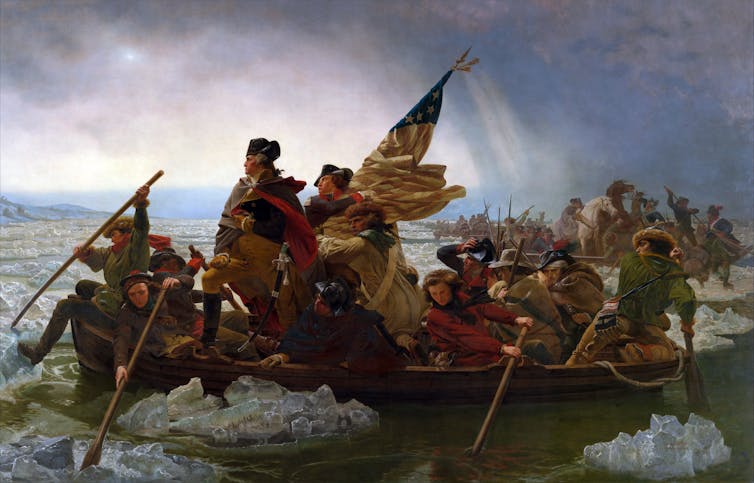

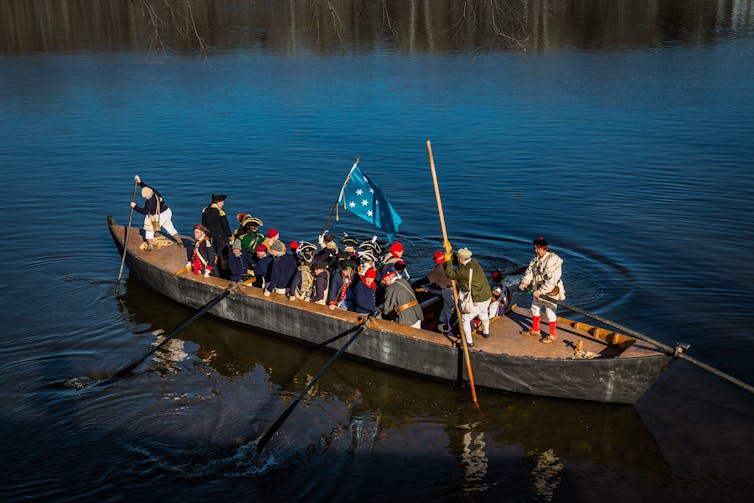
For most people today, Christmas is a time of food, family and festivities, when attention turns from work and woes to fellowship and celebration. Yet it has not always been so. In fact, Christmas of 1776 marked one of the most harrowing days in American history – when the fate of the fledgling republic itself hung in the balance.
Often remembered as Washington’s crossing of the Delaware, it pitted the ragtag Continental Army against perhaps the most feared fighting force on Earth, the German Hessians, whose services had been paid for by Britain. Yet the outcome would ultimately hinge as much on cold, ice and disease as on fighting prowess.
America’s waning prospects
Washington’s forces needed some good news. After they ran the British out of Boston in March of 1776, things began going from bad to worse. The British chased Washington out of New York, then across New Jersey. By year’s end, Washington’s army was shrinking, and morale was low.
The British troops were ensconced in New York, well-fed and warm. They left German troops in charge of Trenton, New Jersey. Washington was expecting the forces of Generals Horatio Gates and Charles Lee to join him, but they were delayed by winter weather and lack of confidence.
The tide begins to turn
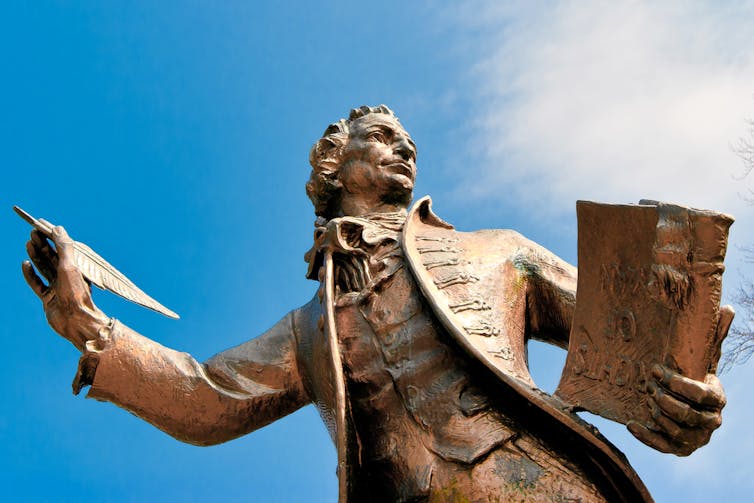
The first hint of reprieve arrived in the form of Thomas Paine’s “The American Crisis,” published on Dec. 19, with its famous lines, “These are the times that try men’s souls… . Tyranny, like hell, is not easily conquered… but the harder the conflict, the great the triumph.” Washington ordered it read to the men.
Finally, the troops of Gates and Lee arrived, followed by militiamen from Philadelphia, providing Washington with a total force of about 6,000, many whose enlistments would expire at year’s end. On Christmas Eve, provisions arrived, further enhancing morale.
Crossing the Delaware
Washington’s plan was to make multiple crossings of the Delaware River in boats. On Christmas morning, he ordered the troops three days’ food and fresh arms. The crossing would begin as soon as darkness fell. However, the weather deteriorated over the course of the evening, as drizzle changed into freezing rain and snow.
Henry Knox, Washington’s chief of artillery, had organized the crossing, which would be imperiled by floating ice. Men who got wet faced grave risks of frostbite and freezing to death. Because of the ice and bad weather, the crossing, which was to be complete at midnight, was not finished until early the next morning.
The Battle of Trenton
The commander of the German troops in Trenton had received warning that an attack was coming, but he dismissed it, in part because lone farmers had been harrying the Germans for days, alternately drawing them out with gunshot and then retreating.
Against all odds, the Dec. 26 surprise attack succeeded, throwing the Germans into confusion. When they tried to organize a counterattack, the Americans fired on them with muskets, killing their commander and sowing further discord.
As a result of the battle, the Americans captured about 900 Germans and a large cache of supplies. Against orders, many American troops began enjoying captured rum, with the result that some fell into the water as they returned across the river.
Further crossings
While the attack and another foray a few days later did little to imperil the British forces in New York, they did restore the morale of the American troops. Many whose terms of service were ending elected, thanks in part to a congressional bounty, to remain.
After a third successful crossing, Washington and his men made their way to Princeton, where another successful attack forced the enemy back to New Brunswick. Thereafter the Continental Army established its winter encampment in Morristown in early January.
The real killers
Yet the seasonal cessation of hostilities did not bring an end to suffering and death. Throughout the Revolutionary War, far more troops died of disease than in battle. Common scourges included smallpox, typhus, dysentery and malaria. Of course, enemy troops were subject to the same diseases.
Factors such as poor sanitation and crowded living conditions created a favorable environment for the transmission of infectious disease, while poor hygiene and malnutrition lowered host resistance to infection.
In this respect, the war reprised a perennial theme of history – disease took more lives than combat. In his seminal book, “Plagues and Peoples,” historian William McNeill demonstrates the decisive historical role of diseases such as smallpox in Mexico, bubonic plague in China and typhoid fever in Europe.
Disease also deviled the American troops the following winter at Valley Forge, again multiplied by poor living conditions. The winters of 1779 and 1780 in Morristown were still worse, due to supply shortages and yet harsher weather. Several regiments even mutinied – a fate Washington had previously managed to avoid.
Victory in perseverance
Against great odds, Washington managed to keep the army together, and eventually the Americans triumphed, as much through dodging decisive defeats and refusing to surrender as through any military prowess.
As such chapters in the War of Independence illustrate, America has known many bleak Christmases, and when it comes to negotiating difficult times, the stubborn spirit of its people has often proved its redemption.
[ You’re smart and curious about the world. So are The Conversation’s authors and editors. You can get our highlights each weekend. ]
Richard Gunderman, Chancellor's Professor of Medicine, Liberal Arts, and Philanthropy, Indiana University
This article is republished from The Conversation under a Creative Commons license. Read the original article.
Christmas Eve, 1968. As one of the most turbulent, tragic years in American history drew to a close, millions around the world were watching and listening as the Apollo 8 astronauts – Frank Borman, Jim Lovell and Bill Anders – became the first humans to orbit another world.
As their command module floated above the lunar surface, the astronauts beamed back images of the moon and Earth and took turns reading from the book of Genesis, closing with a wish for everyone "on the good Earth."
"We were told that on Christmas Eve we would have the largest audience that had ever listened to a human voice," recalled Borman during 40th anniversary celebrations in 2008. "And the only instructions that we got from NASA was to do something appropriate."
"The first 10 verses of Genesis is the foundation of many of the world's religions, not just the Christian religion," added Lovell. "There are more people in other religions than the Christian religion around the world, and so this would be appropriate to that and so that's how it came to pass."
The mission was also famous for the iconic "Earthrise" image, snapped by Anders, which would give humankind a new perspective on their home planet. Anders has said that despite all the training and preparation for an exploration of the moon, the astronauts ended up discovering Earth.
The rest of us can better imagine what it was like for the crew when they made that iconic photo, thanks to a 2013 NASA visualization which draws on richly detailed maps of the moon's surface made from data gathered by NASA's Lunar Reconnaissance Orbiter.
Also in 2013, the first ever "Earthrise" photo, taken by NASA's Lunar Orbiter 1 in 1966 and restored and enhanced by the Lunar Orbiter Image Recovery Project in 2008, was sent to NASA's Lunar Atmosphere and Dust Environment Explorer mission in lunar orbit, using the Lunar Laser Communication Demonstration system.
‘There is a Santa Claus’
The Apollo 8 astronauts got where they were that Christmas Eve because of a bold, improvisational call by NASA.
With the clock ticking on President Kennedy's challenge to land on the moon by decade's end, delays with the lunar module were threatening to slow the Apollo program.
So NASA decided to change mission plans and send the Apollo 8 crew all the way to the moon without a lunar module on the first manned flight of the massive Saturn V rocket.
The crew rocketed into orbit on Dec. 21, and after circling the moon 10 times on Christmas Eve, it was time to come home.
On Christmas morning, mission control waited anxiously for word that Apollo 8's engine burn to leave lunar orbit had worked. They soon got confirmation when Lovell radioed, "Roger, please be informed there is a Santa Claus."
The crew splashed down in the Pacific on Dec. 27. A lunar landing was still months away, but for the first time ever, humans from Earth had visited the moon and returned home safely.
That includes $5.7 million for two Lake County projects.
“Californians expect their transportation system to be well maintained, efficient and multimodal,” said Caltrans Director Toks Omishakin. “This funding will keep us safely moving motorists, bicyclists, pedestrians and transit users across the state.”
The 27 SB 1 funded SHOPP projects will replace or improve 305 lane miles, 27 bridges, 204 congestion reducing devices, and repair 32 culverts to prevent flooding on highways.
In Lake County, $1.1 million has been allocated for a traffic management system elements project that will improve traffic monitoring and data transmission on Highway 20 at Red Rock Road, Del Way and Highway 53, on Highway 29 at Lake Street, Main Street, Wardlaw Street, Butts Canyon Road, Hartmann Road, Highway 53, Main Street, Lee Barr Drive and Live Oak Drive, on Highway 53 at Dam Road, 18th Avenue, Lakeshore Drive, Polk Avenue, Olympic Avenue and Ogulin Canyon Road, and on Highway 175 at Red Hills Road, Emerford Road, Bottle Rock Road, Brookhill Road and Dry Creek Cutoff.
In addition, a $4.6 million traffic management system elements project will improve traffic monitoring and data transmission on Highway 20 at George's Last Change, Bridge Arbor, Government, Nice/Lucerne Roundabout, Rosemont Drive and Clearlake Oaks maintenance yard, on Highway 29 at Seigler Canyon Road, Point Lakeview, Red Hills Road, Cole Creek, Highland Springs, Soda Bay Road, Caltrans Lakeport maintenance Yard and Highway 29 traffic monitoring station, on Highway 101 at Old River Road and Hopland, on Highway 175 at McDowell Creek, Woolridge Ranch Road and north of Red Hills Road, and on Highway 281 at Fairway Drive, in Lake and Mendocino counties.
Other area projects allocated SB 1 funds include a $38.8 million bridge project that will replace Panther Creek Bridge No. 01-0025 and Hunter Creek Bridge No. 01-0003 on US Highway 101 near Klamath in Del Norte County.
The CTC also approved an allocation of more than $42 million for 35 locally administered Active Transportation Program projects, 16 of which received $8.3 million in funding from SB 1. These projects range from improving sidewalks and bicycle lanes to creating safer routes to school for children who ride their bicycles or walk to school.
Additionally, more than $21 million of SB 1 funding was allocated to the Local Partnership Program to help match road and transit investments that local communities have made in their region through voter-approved transportation tax measures.
Since SB 1 was signed into law April 2017, Caltrans has repaired or replaced 299 bridges and paved nearly 2,400 lane miles of the state highway system. Caltrans has completed 176 SB 1 projects to date, with 455 projects in the works statewide.
SB 1 invests approximately $5 billion per year to fix roads, freeways and bridges in communities across California as well as strategically investing in transit. These funds are split equally between state and local projects and will allow Caltrans to fix more than 17,000 lane miles of pavement, 500 bridges and 55,000 culverts on the state highway system by 2027.
SHOPP is the state highway system’s "fix-it-first" program that funds safety improvements, emergency repairs, highway preservation and operational highway upgrades. A significant portion of the funding for this program comes from SB 1.
Caltrans is committed to conducting its business in a fully transparent manner and detailing its progress to the public. For complete details on SB 1, visit http://www.rebuildingca.ca.gov/.
More information and updates on these and other projects can be found on Caltrans’ social media channels: http://www.dot.ca.gov/paffairs/social-media.html.
In support of the department’s mission of providing the highest level of safety, service, and security, the California Highway Patrol is highlighting several new laws passed this year.
Except where noted, these laws are effective Jan. 1, 2020.
License points for distracted driving (AB 47, Daly): Current law prohibits a person from driving a motor vehicle while using a wireless telephone in a handheld manner; if found in violation, the offense is punishable by a fine. However, beginning July 1, 2021, this new law will levy an additional penalty on a driver found in violation of California’s hands-free law: a point will be added on to a driver’s record for each hands-free violation occurring within 36 months of a prior conviction for the same offense.
Peace officer use of deadly force (AB 392, Weber): Beginning Jan. 1, 2020, this new law revises the standards for use of deadly force by peace officers. The use of deadly force by a peace officer is justifiable when the officer reasonably believes it is necessary. Section 835a of the Penal Code amends the reasonable force standard to “objectively reasonable force.”
Law enforcement: use of deadly force: training: policies (SB 230, Caballero): With the enactment of AB 392, this new law requires law enforcement agencies to rewrite use of force policy and provide mandatory training to all peace officers in order to comply with the new law.
Traffic control devices: bicycles (AB 1266, Rivas): This new law allows bicycles to travel straight through a right or left-hand turn-only lane while at an intersection, if an official traffic control device indicates the movement is permitted. The Department of Transportation would be required to develop standards to implement the provisions.
Transportation: omnibus bill (AB 1810, Committee on Transportation): Amends Section 34621 of the California Vehicle Code (CVC) allowing motor carriers of property to continue operating for 30 days past their permit expiration date, under specified circumstances. This legislation also provided for an amendment to Section 23229 CVC. California law will now prohibit the consumption of cannabis, in any manner, by passengers in a bus, taxicab, pedicab, limousine, housecars, or camper. This exemption is now only applicable to alcoholic beverages consumed by passengers in these types of vehicles.
Wildlife salvage permits (SB 395, Archuleta): Directs the Department of Fish and Wildlife to conduct a wildlife-collision data collection pilot program to support wildlife conservation efforts. Additionally, this bill would authorize the Fish and Game Commission, in consultation with the CHP and other stakeholders, to establish a wildlife salvage pilot program authorizing the issuance of a permit for the removal and recovery of deer, elk, pronghorn antelope, and wild pigs killed because of a collision with a vehicle, if the wild game meat is used for human consumption.