 How to resolve AdBlock issue?
News
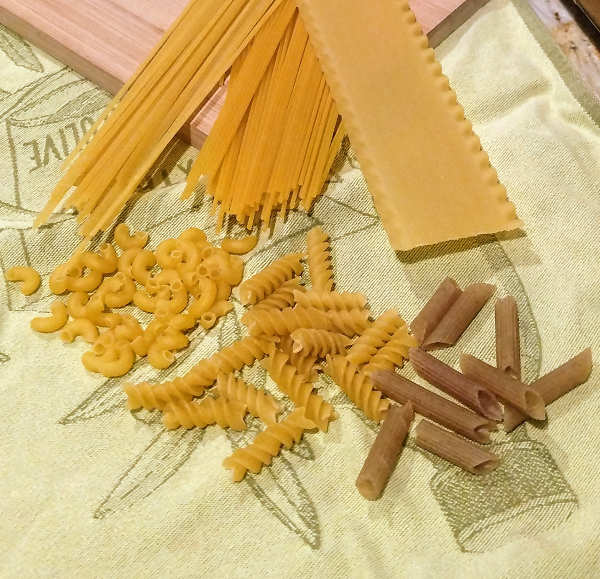
It was a splendid moment when I was first introduced to pasta made fresh at home. Though it was more than 30 years ago, I still remember the wonder of its taste and texture.
It happened on a random weeknight when a friend invited me to her apartment for dinner. I was looking forward to spending time with her, but had no idea that the delicate, hand-cut noodles she had made that afternoon would bring me such joy.
She and I haven’t been in touch for many years, but the memory of that meticulously and lovingly made meal still lingers.
My friend incorporated her amazing noodles into an Eastern European dish, beef stroganoff. Despite that wonderful memory, Asian or Italian dishes most often come to my mind when thinking of noodles.
That’s not surprising. Those two regions have made the most of the art of noodle-making, though nearly every country in the world has its own form of noodle.
There’s spaetzle in Germany, orzo in Greece, pierogi in Poland and couscous in the Middle East, to name just a few.
In Asia, noodles are broadly divided into three types: wheat noodles, rice noodles, and glass or cellophane noodles, and within these categories there are countless varieties.
Not surprisingly, China, where there are thousands of types of noodles, is the world’s largest consumer of them.
In Italy, noodles are referred to as pasta, which translates to “paste,” a reference to the dough used in making them.
There are an estimated 350 different pasta shapes in Italy and about four times as many names for them. Names can vary from place to place, and many regions have pasta shapes and names unique to them.
Endings such as -ini, -elli, -illi, -etti, -ine or -elle on Italian pasta names denote “little,” and if -oni or -one ends the name, it means “large.”
Sometimes these suffixes can be applied to the same form of pasta to delineate a size range, such as spaghettini (smallest), spaghetti (regular), or spaghettoni (largest).
Some pasta shapes are designed to hold the sauce in the best way possible, such as with ridges, as in rigatoni or penne.
Noodles have an ancient history and it’s difficult to know in exactly part of the world they originated. More specifically, was it in China or Italy?
There is evidence of early consumption of noodles in both regions, as well as in the Middle East, but not enough information exists to make a definitive declaration as to whether one region influenced another.
There have been some inaccurate stories about the introduction of pasta to Italy, perhaps the most common being that Venetian merchant, writer and explorer Marco Polo brought noodles to Italy from China via the Silk Road in the 13th century.
In actuality, the story is a 1929 marketing ploy by the National Macaroni Manufacturers Association.
The earliest written record of noodles is in a book that dates to the Han Dynasty in China in the third century B. C. It was about five centuries later that a written reference to them is found in the western part of the world.
In an exciting 2005 discovery, scientists unearthed 4000-year-old noodles at an archeological site in Lajia, China. The long yellow strands were preserved within a bowl that was encased under ten feet of mud.
This represents the earliest example of the noodle in history. Even so, it’s possible that noodles originated in two or more places unrelated to each other.
American food writer Jen Lin-Liu, who went on a six-month noodle fact-finding trip along the ancient Silk Road from China to Italy, said, “We aren’t sure if the noodle developed in the west separately, after it appeared in the east or if pasta, as we know it, even relates to the noodles that were first eaten in China. There could have been two different food traditions that developed side-by-side in opposite parts of the world.”
For now, it’s an unsolved mystery.
In Japan, noodles are incorporated into tea ceremonies, and noodle making there is considered a form of art.
Noodles became more important in Japan after World War II when food shortages were rampant. Dried foods such as noodles were sometimes the only available nourishment.
In China, noodles are a symbol of longevity and special ones are served to celebrate birthdays. The name for these “birthday noodles” is shoumain, which literally translates to “long-life noodles.” The longer the noodles, the bigger the wish for long life.
Such noodles are considered lucky when eaten during the Chinese New Year. They represent longevity and happiness.
In almost every Asian culture, noodles are associated with long-term well-being.
According to Peter Song, who excels at making hand-pulled noodles in Japan (he can make up to 500 bowls of noodles a day, far more than the 100 per day to be considered a master), the first step is to ensure that the flour and water are perfectly balanced. There are no exact measurements; it’s based on experience through touch. For example, the temperature of the room makes a difference. If cold, more water is needed; if warm, less.
Similarly, in Italy, experienced pasta makers, whether grandmas or chefs, use their sense of touch to discern when pasta dough is ready.
While the ingredients that go into noodle or pasta making are simple – just flour and liquid (water or egg) – the process is something that can take years to master.
I ran across a YouTube chef named Helen Rennie who rightly says that unless a beginning pasta maker has someone in the same room to teach them, trying to gauge the readiness of the dough by feel is difficult. If a culinary class isn’t in your future, I’d recommend her tutorials if you’d like to try your hand at making pasta at home.
Today’s recipe is for one of my favorite pasta dishes, pasta pomodoro. Pomodoro means tomato in Italian, and this dish is full of them, along with one of their favorite companions, basil.
The red and green of the dish compliment the season, and it could make a tasty, if unusual, addition to your Christmas table. I also love the way the colors in the dish mimic the Italian flag.
Though basil is a summer herb, it can be found year-round in stores, thanks to producers who utilize green houses.
Canned whole plum tomatoes may be substituted for fresh, if desired.
Enjoy!
From Italy: Pasta Pomodoro
This recipe serves two to four, depending on serving size.
Esther’s Tip: The basil leaves and garlic left after the oil is strained may be blended into a paste and used to flavor sauces and soups. If stored in a tightly covered container, it should last in the fridge about a week.
Ingredients:
8 fresh Italian plum (Roma) tomatoes
1 cup extra virgin olive oil
1 generous bunch fresh basil, leaves removed and slightly crushed (first reserve several leaves for later)
10 garlic cloves, peeled and slightly crushed
¼ teaspoon dried chili flakes
1 – 9-ounce package fresh fettuccini, linguine or angel hair pasta
Salt and pepper to taste
Fresh parmesan to taste
Instructions:
Combine olive oil, garlic cloves, basil leaves (other than those reserved), and red pepper flakes in small saucepan. Simmer over low heat until flavors are infused into oil.
Prepare tomatoes by dipping in boiling water to loosen skins. Allow to cool, and then peel and seed them. Dice them and cook slowly in saucepan, mashing as they soften.
Strain infused oil into tomato sauce. Season as desired with salt and pepper.
Cook pasta in boiling salted water until al dente. (Be careful not to overcook.)
Drain (but don’t rinse) pasta and add to sauce. Toss pan or stir to combine.
Finely slice reserved basil leaves and add to pasta.
Grate parmesan into pasta and mix well.
Adjust seasonings as needed and enjoy!
Recipe by Esther Oertel.
Esther Oertel is a writer and passionate home cook from a family of chefs. She grew up in a restaurant, where she began creating recipes from a young age. She’s taught culinary classes in a variety of venues in Lake County and previously wrote “The Veggie Girl” column for Lake County News. Most recently she’s taught culinary classes at Sur La Table in Santa Rosa, Calif. She lives in Middletown, Calif.
Of 17 climate models published between the early 1970s and the late 2000s, 14 were quite accurate in predicting the average global temperature in the years after publication, said Zeke Hausfather, a doctoral student in UC Berkeley’s Energy and Resources Group and lead author of a new paper analyzing the models.
“The real message is that the warming we have experienced is pretty much exactly what climate models predicted it would be as much as 30 years ago,” he said. “This really gives us more confidence that today's models are getting things largely right as well.”
The results were published Dec. 4 in the journal Geophysical Research Letters and will appear, with Hausfather as a contributing author, as part of the first chapter of the next climate assessment by the Intergovernmental Panel on Climate Change, due out in 2021.
Hausfather and his colleagues at the Massachusetts Institute of Technology and the NASA Goddard Institute for Space Studies evaluated the models based on how well they predicted the actual global mean temperature – Earth’s average temperature – based on the levels of carbon dioxide, methane and other greenhouse gases in the atmosphere.
Greenhouse gases, primarily from the burning of fossil fuels, are responsible for a rise of nearly 1.4 degrees Fahrenheit in global mean temperatures since 1880, two-thirds of that since 1975.
The researchers examined both how well models projected future temperatures and how well they matched the relationship between warming and changes in levels of greenhouse gases after they were published.
This second approach accounts for the fact that climate modelers can’t necessarily predict future emissions, which are driven by human behavior rather than atmospheric physics.
“We did not focus on how well their crystal ball predicted future emissions of greenhouse gases, because that is a question for economists and energy modelers, not climate scientists,” Hausfather said. “It is impossible to know exactly what human emissions will be in the future. Physics we can understand, it is a deterministic system; future emissions depend on human systems, which are not necessarily deterministic.”
One of the iconic climate models, and one that first brought the issue of climate change to broad public attention, was published by James Hansen of NASA in 1988. However, his predictions for temperatures after 1988 were 50 percent higher than the actual global mean temperatures in those years.
That is in part because Hanson did not anticipate the Montreal Protocol, a treaty that went into effect in 1989 and which banned chlorofluorocarbons, which are potent greenhouse gases. His estimates of future methane emissions were also off, Hausfather said.
“If you account for these and look at the relationship in his model between temperature and radiative forcing, which is CO2 and other greenhouse gases, he gets it pretty much dead on,” he said. “So the physics of his model was right. The relationship between how much CO2 there is in the atmosphere and how much warming you get, was right. He just got the future emissions wrong.”
Most of the other models also accurately predicted the average temperature when they were given real-world greenhouse gas levels.
Climate models continue to improve, Hausfather said, as they incorporate more and more of the physics and chemistry of the atmosphere, clouds, oceans and land. But it is too early to assess how well the current models predict future temperatures because the global mean temperature has a natural variation that can obscure the overall trend. It’s even too early to judge the IPCC’s fourth assessment, which was published in 2007.
Nevertheless, these models have been tested in other ways, including how well they would have predicted past climate variation: what’s called hindcasting.
“Climate models are a really important way for us to understand how the climate could change in the future, and now that we have taken a detailed look at how well past climate models have held up in terms of their projections, we are far more confident that our current generation of models are getting it right,” Hausfather said.
Hausfather’s coauthors are Henri Drake, who is with the Woods Hole Oceanographic Institution Joint Program in Oceanography at Woods Hole and MIT, Tristan Abbott of MIT and Gavin Schmidt of NASA Goddard.
Robert Sanders writes for the UC Berkeley News Center.
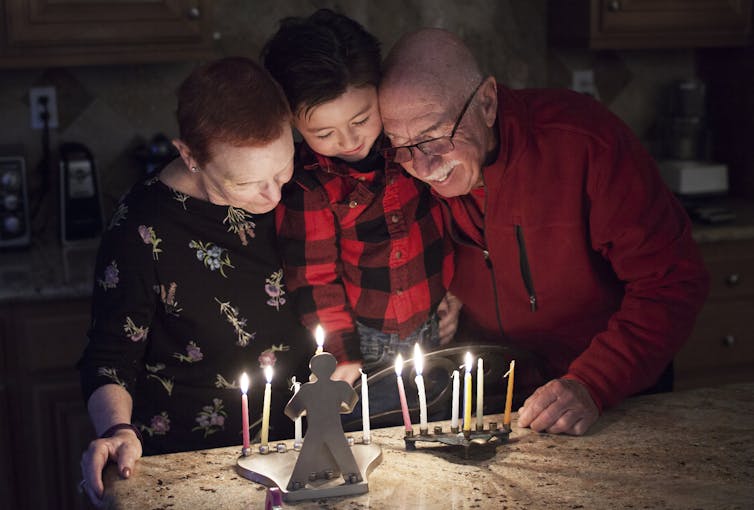
Hanukkah may be the best known Jewish holiday in the United States. But despite its popularity in the U.S., Hanukkah is ranked one of Judaism’s minor festivals, and nowhere else does it garner such attention. The holiday is mostly a domestic celebration, although special holiday prayers also expand synagogue worship.
So how did Hanukkah attain its special place in America?
Hanukkah’s back story
The word “Hanukkah” means dedication. It commemorates the rededicating of the ancient Temple in Jerusalem in 165 B.C. when Jews – led by a band of brothers called the Maccabees – tossed out statues of Hellenic gods that had been placed there by King Antiochus IV when he conquered Judea. Antiochus aimed to plant Hellenic culture throughout his kingdom, and that included worshipping its gods.
Legend has it that during the dedication, as people prepared to light the Temple’s large oil lamps to signify the presence of God, only a tiny bit of holy oil could be found. Yet, that little bit of oil remained alight for eight days until more could be prepared. Thus, each Hanukkah evening, for eight nights, Jews light a candle, adding an additional one as the holiday progresses throughout the festival.
Hanukkah’s American story
Today, America is home to almost 7 million Jews. But Jews did not always find it easy to be Jewish in America. Until the late 19th century, America’s Jewish population was very small and grew to only as many as 250,000 in 1880. The basic goods of Jewish religious life – such as kosher meat and candles, Torah scrolls, and Jewish calendars – were often hard to find.
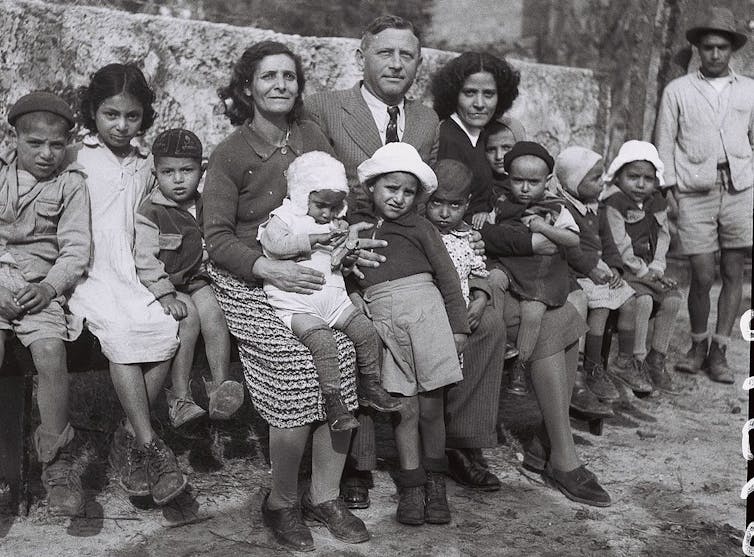

In those early days, major Jewish religious events took special planning and effort, and minor festivals like Hanukkah often slipped by unnoticed.
My own study of American Jewish history has recently focused on Hanukkah’s development.
It began with a simple holiday hymn written in 1840 by Penina Moise, a Jewish Sunday school teacher in Charleston, South Carolina. Her evangelical Christian neighbors worked hard to bring the local Jews into the Christian fold. They urged Jews to agree that only by becoming Christian could they attain God’s love and ultimately reach Heaven.
Moise, a famed poet, saw the holiday celebrating dedication to Judaism as an occasion to inspire Jewish dedication despite Christian challenges. Her congregation, Beth Elohim, publicized the hymn by including it in their hymnbook.
This English language hymn expressed a feeling common to many American Jews living as a tiny minority. “Great Arbiter of human fate whose glory ne'er decays,” Moise began the hymn, “To Thee alone we dedicate the song and soul of praise.”
It became a favorite among American Jews and could be heard in congregations around the country for another century.
Shortly after the Civil War, Cincinnati Rabbi Max Lilienthal learned about special Christmas events for children held in some local churches. To adapt them for children in his own congregation, he created a Hanukkah assembly where the holiday’s story was told, blessings and hymns were sung, candles were lighted and sweets were distributed to the children.
His friend, Rabbi Isaac M. Wise, created a similar event for his own congregation. Wise and Lilienthal edited national Jewish magazines where they publicized these innovative Hanukkah assemblies, encouraging other congregations to establish their own.
Lilienthal and Wise also aimed to reform Judaism, streamlining it and emphasizing the rabbi’s role as teacher. Because they felt their changes would help Judaism survive in the modern age, they called themselves “Modern Maccabees.” Through their efforts, special Hanukkah events for children became standard in American synagogues.
20th-century expansion
By 1900, industrial America produced the abundance of goods exchanged each Dec. 25. Christmas’ domestic celebrations and gifts to children provided a shared religious experience to American Christians otherwise separated by denominational divisions. As a home celebration, it sidestepped the theological and institutional loyalties voiced in churches.
For the 2.3 million Jewish immigrants who entered the U.S. between 1881 and 1924, providing their children with gifts in December proved they were becoming American and obtaining a better life.
But by giving those gifts at Hanukkah, instead of adopting Christmas, they also expressed their own ideals of American religious freedom, as well as their own dedication to Judaism.
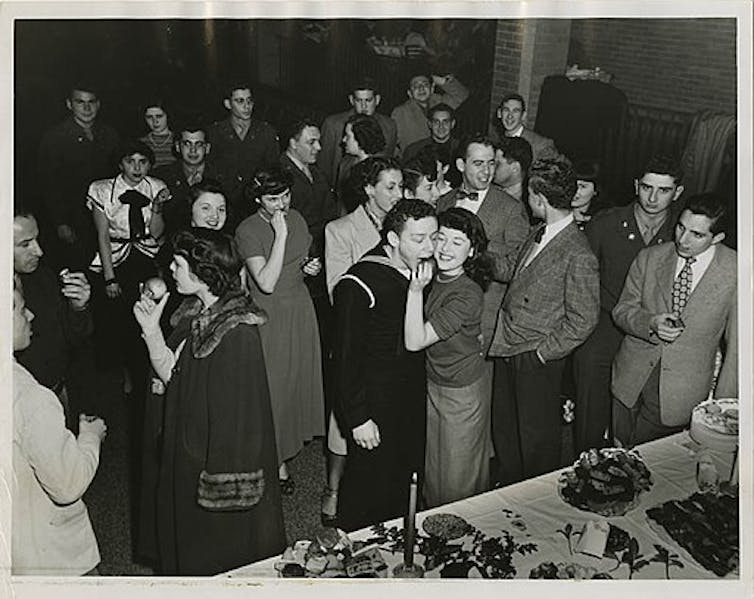
After World War II, many Jews relocated from urban centers. Suburban Jewish children often comprised small minorities in public schools and found themselves coerced to participate in Christmas assemblies. Teachers, administrators and peers often pressured them to sing Christian hymns and assert statements of Christian faith.
From the 1950s through the 1980s, as Jewish parents argued for their children’s right to freedom from religious coercion, they also embellished Hanukkah. Suburban synagogues expanded their Hanukkah programming.
As I detail in my book, Jewish families embellished domestic Hanukkah celebrations with decorations, nightly gifts and holiday parties to enhance Hanukkah’s impact. In suburbia, Hanukkah’s theme of dedication to Judaism shone with special meaning. Rabbinical associations, national Jewish clubs and advertisers of Hanukkah goods carried the ideas for expanded Hanukkah festivities nationwide.
In the 21st century, Hanukkah accomplishes many tasks. Amid Christmas, it reminds Jews of Jewish dedication. Its domestic celebration enhances Jewish family life. In its similarity to Christmas domestic gift-giving, Hanukkah makes Judaism attractive to children and – according to my college students – relatable to Jews’ Christian neighbors. In many interfaith families, this shared festivity furthers domestic tranquility.
In America, this minor festival has attained major significance.
Dianne Ashton, Professor of Religion, Rowan University
This article is republished from The Conversation under a Creative Commons license. Read the original article.
Dogs available for adoption this week include mixes of Australian Shepherd, bluetick coonhound, cattle dog, German Shepherd, pit bull, Rhodesian Ridgeback, Shiba Inu and treeing walker coonhound.
Dogs that are adopted from Lake County Animal Care and Control are either neutered or spayed, microchipped and, if old enough, given a rabies shot and county license before being released to their new owner. License fees do not apply to residents of the cities of Lakeport or Clearlake.
If you're looking for a new companion, visit the shelter. There are many great pets hoping you'll choose them.
The following dogs at the Lake County Animal Care and Control shelter have been cleared for adoption (additional dogs on the animal control Web site not listed are still “on hold”).

Male Labrador Retriever
The male Labrador Retriever mix has a short brown and white coat.
He is in kennel No. 4, ID No. 13360.

Female German Shepherd
This female German Shepherd has a medium-length black and brown coat.
She’s in kennel No. 8, ID No. 13352.

Male pit bull terrier
This male pit bull terrier has a short blue and white coat.
He is in kennel No. 10, ID No. 13345.

Female Shiba Inu
This female Shiba Inu has a medium-length black and tan coat.
She is in kennel No. 12a, ID No. 13362.
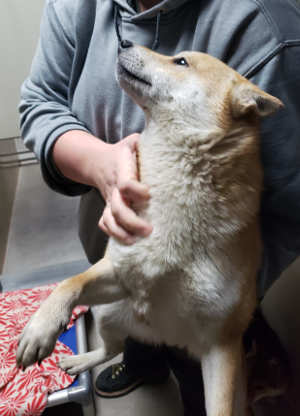
Male Shiba Inu
This male Shiba Inu has a medium-length tan coat.
He is in kennel No. 12b, ID No. 13372.

‘Patsy’
“Patsy” is a female treeing walker coonhound/bluetick coonhound mix with a short tricolor coat.
She is in kennel No. 20, ID No. 13290.
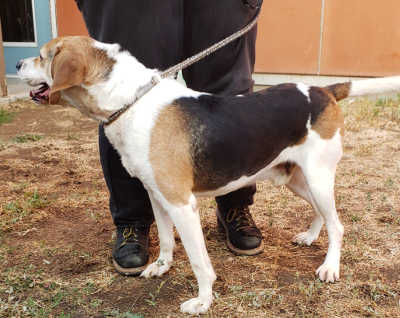
‘Max’
“Max” is a male bluetick coonhound-treeing walker coonhound with a short tricolor coat.
He is in kennel No. 25, ID No. 13289.
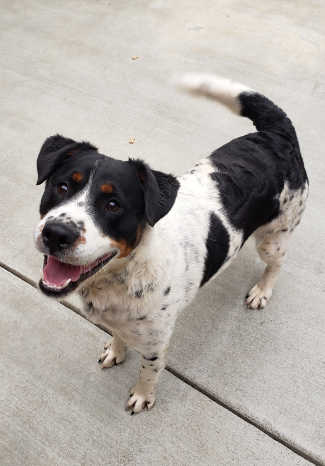
‘Hazel’
“Hazel” is a female cattle dog with a medium-length tricolor coat.
She has been spayed.
She’s in kennel No. 27, ID No. 13255.
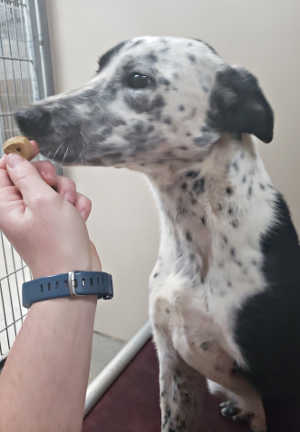
Male Australian Shepherd
This male Australian Shepherd has a long black and white coat.
He is in kennel No. 28, ID No. 13250.
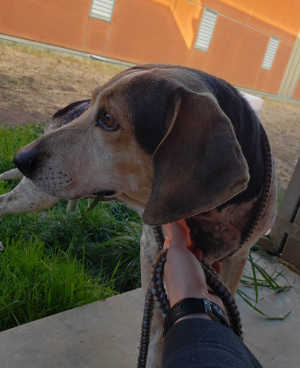
‘Daisey’
“Daisey” is a female treeing walker coonhound/bluetick coonhound mix with a short tricolor coat.
She is in kennel No. 29, ID No. 13291.
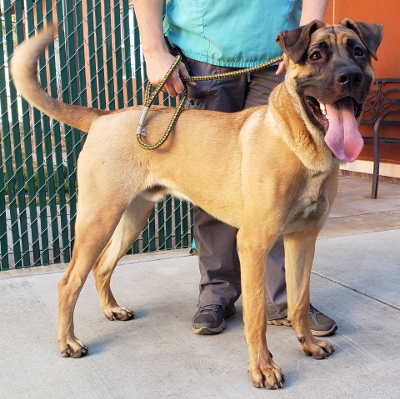
‘Goofy’
“Goofy” is a young male Rhodesian Ridgeback with a short tan and black coat.
Shelter staff said this boy is great with other dogs, although he is high energy and would benefit from obedience training. He would love to go jogging everyday, he is very food motivated and willing to learn new things.
Goofy has been at the shelter since Nov. 5. He was originally taken from someone in Upper Lake and found on the highway in Clearlake. If anyone has any information on his owner please contact the shelter.
He’s in kennel No. 33, ID No. 13210.
Lake County Animal Care and Control is located at 4949 Helbush in Lakeport, next to the Hill Road Correctional Facility.
Office hours are Monday through Friday, 11 a.m. to 5 p.m., and 11 a.m. to 3 p.m., Saturday. The shelter is open from 11 a.m. to 4 p.m., Monday through Friday and on Saturday from 11 a.m. to 3 p.m.
Visit the shelter online at http://www.co.lake.ca.us/Government/Directory/Animal_Care_And_Control.htm.
For more information call Lake County Animal Care and Control at 707-263-0278.
Email Elizabeth Larson at
Mars may be a rocky planet, but it is not a hospitable world like Earth. It’s cold and dry with a thin atmosphere that has significantly less oxygen than Earth’s.
But Mars likely once had liquid water, a key ingredient for life. Studying the history of water can help uncover how the Red Planet lost water and how much water it once had.
“We already knew that Mars was once a wet place,” said Curtis DeWitt, scientist at the Universities Space Research Association’s SOFIA Science Center. “But only by studying how present-day water is lost can we understand just how much existed in the deep past.”
Some of this research can be conducted without leaving Earth using SOFIA, the Stratospheric Observatory for Infrared Astronomy.
The world’s largest flying observatory can find molecules and atoms in deep space and on planets — like forensic analysis for astronomy — because it flies above 99% of Earth’s infrared-blocking water vapor.
To learn more about how Mars lost its water, and how modern-day water vapor might vary seasonally, SOFIA studied how water vapor evaporates differently during two Martian seasons.
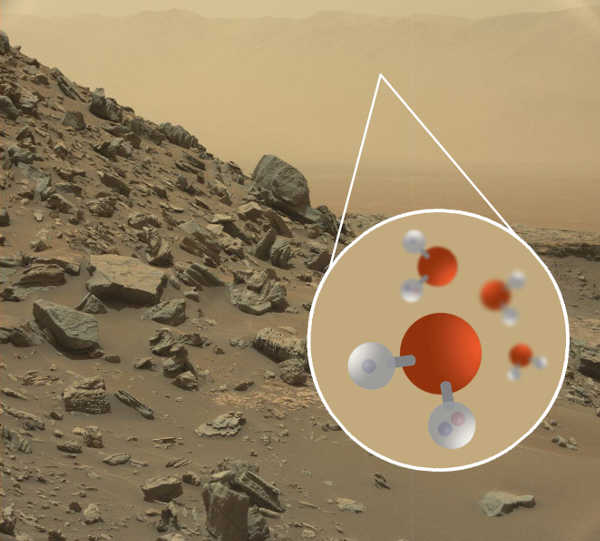
Water is also known by its chemical name H2O because it’s made of two hydrogen atoms and one oxygen atom. But with special instruments, scientists can detect two types: regular water, H2O, and deuterated water, HDO, which has an extra neutrally-charged particle called a neutron in one of the hydrogen atoms making it heavier.
Deuterated water evaporates less efficiently than regular water, so more of it remains as liquid water evaporates. Therefore, studying the ratio of deuterated water to regular water, which scientists call the D/H ratio, in existing water vapor can retrace the history of liquid water evaporation — even if it no longer flows. But it’s not clear if this ratio is affected by seasonal changes on the Red Planet.
Mars has ice caps at its poles. They are covered with carbon-dioxide ice and snow that expand and shrink with the Martian seasons.
As the planet’s Northern Hemisphere approaches its own Summer Solstice, the ice cap shrinks as temperatures warm — causing some of the ice to evaporate and expose water ice.
The southern ice cap, however, is covered with carbon-dioxide ice even during the summer. Scientists were not sure if these seasonal changes could affect the ratio of heavy water to regular water in the Martian atmosphere.
Previous measurements of the D/H water ratio used different instruments, resulting in slightly different measurements across Martian seasons and locations. Researchers on SOFIA used the same instrument, the Echelon-Cross- Echelle Spectrograph, or EXES, to get consistent measurements over two seasons and locations: summer in the planet’s Northern Hemisphere and summer in its Southern Hemisphere.
So far, after comparing observations between the two hemispheres, they have not found any seasonal variations in the water ratio on Mars between seasons and locations. This is helping scientists more accurately trace the history of water on Mars.
“If we can eliminate seasonal dependence as a factor in this ratio, then we're one step closer to getting an answer to how much water was originally present on Mars,” said DeWitt.
The results are published in Astronomy and Astrophysics. Further observations are underway to monitor different Martian seasons. Examining Mars’ history and geology is important as NASA moves forward with plans to send humans to the Moon, with the eventual goal of crewed missions to Mars.
SOFIA, the Stratospheric Observatory for Infrared Astronomy, is a Boeing 747SP jetliner modified to carry a 106-inch diameter telescope.
It is a joint project of NASA and the German Aerospace Center, DLR. NASA’s Ames Research Center in California’s Silicon Valley manages the SOFIA program, science and mission operations in cooperation with the Universities Space Research Association headquartered in Columbia, Maryland, and the German SOFIA Institute at the University of Stuttgart.
The aircraft is maintained and operated from NASA’s Armstrong Flight Research Center Building 703, in Palmdale, California.
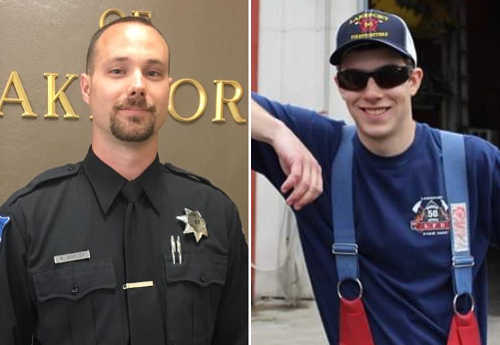
LAKEPORT, Calif. – Two local first responders have completed an educational course to help them respond to terrorist incidents.
Last week Lakeport Police Officer Ryan Cooley and Lakeport Fire Protection District Firefighter Brandon Morin successfully completed the Federal Incident Response to Terrorist Bombings Course, or IRTB, at New Mexico Tech Energetic Materials Research and Testing Center in Socorro, New Mexico.
This training was paid for under the United States Department of Homeland Security’s Federal Emergency Management Agency Homeland Security National Training Program Cooperative Agreement.
Officer Cooley and Firefighter Morin joined approximately 50 other law enforcement officers, firefighters and emergency management personnel from throughout the United States in the IRTB course, which provides first responders with the knowledge and skills necessary to safely respond to terrorist incidents involving explosives.
The IRTB course focuses on first responder health and safety by addressing personal protection issues that arise when responding to terror incidents involving commercial and homemade explosives.
Additionally, the course includes information on the recognition of improvised explosive devices; terrorist organizations, both foreign and domestic; and lessons learned from past terrorist incidents. This information better prepares first responders to safely recognize and respond to terrorist bombing threats.
In addition to classroom training, Cooley and Morin spent considerable time on the bomb range where various small and large scale explosive devices were detonated to train students.
Cooley and Morin are now certified to conduct explosive response awareness safety training for other law enforcement, fire, emergency management and school staff.
Lakeport Police Chief Brad Rasmussen and Lakeport Fire Chief Rick Bergem both said that they were appreciative to have local public safety staff who can now coordinate and train others in safely responding to these types of incidents should they occur in our community.