 How to resolve AdBlock issue?
News
The National Weather Service said another series of weather systems is heading to the region this week.
The systems are forecast to be mostly weaker, but a much stronger system is expected to build off the Pacific Northwest coast on Friday before moving inland Saturday and Saturday night.
The Lake County forecast calls for a cloudy Monday, with chances of rain every day for the rest of the week.
There also is the potential for snow in the higher elevations, such as Cobb, on Tuesday, the forecast said.
Light winds are predicted on Monday, building up to wind speeds on Tuesday of 21 miles per hour and gusts of 24 miles per hour in the south county, based on the forecast.
Daytime temperatures will range from the mid 40s to low 50s, with nighttime temperatures ranging from the mid 30s to the high 40s, forecasters said.
Email Elizabeth Larson at
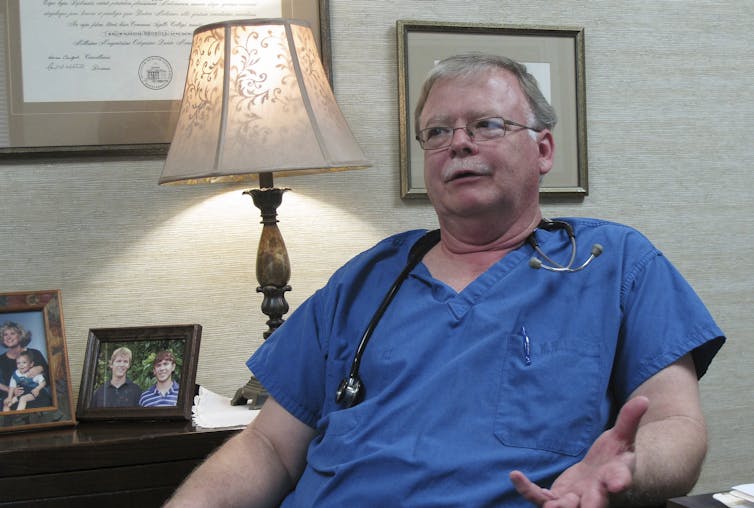
Living in rural America certainly comes with a number of benefits. There is less crime, access to the outdoors, and lower costs of living.
Yet, not everything is rosy outside the city limits. Rural communities face growing infrastructure problems like decaying water systems. And they have more limited access to amenities ranging from grocery stores to movie theaters, lower quality schools, and less access to high-speed internet.
Yet perhaps most daunting are the tremendous health disparities rural Americans face, in terms of both their own health and accessing care.
As a number of my recent studies indicate, these disparities may be exacerbated by insurance carriers and the networks they put together for their consumers.
A sick system that’s getting worse
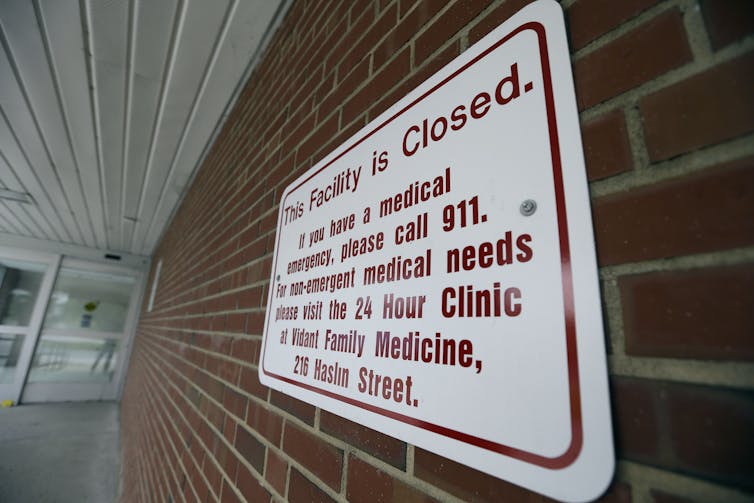
At the turn of the last century, cities were known to be cesspools rampant with disease. Much has changed since then. Today, health care disparities between urban and rural America have indeed reversed. And they are growing wider.
Part of the problem is demographic. Over the last several decades, many rural areas have lost a large share of their residents. In many areas, the young are moving away, leaving an aging population behind.
Besides being older, those staying behind are poorer and have lower levels of education. To make things worse, they are also more likely to be uninsured. And they tend to be sicker, exhibiting higher rates of cancer, heart disease, stroke and chronic lower respiratory disease. It comes as no surprise that their life expectancy is generally lower as well.
The demographic challenges are made worse by the limitations posed by the health care system. For one, rural areas are experiencing tremendous health care provider shortages. Access is often particularly limited for specialty care. But much more mundane health care services that most of us take for granted, like hospitals – including public hospitals and maternity wards – are also affected.
Politics have made rural access challenges worse in many places. Partisan opposition to the Affordable Care Act has led many states with large rural populations, like Texas and Kansas, to refuse to expand their Medicaid programs or support enrollment in Affordable Care Act marketplaces. This stance is particularly damaging because the program provides a crucial lifeline to rural providers.
A stark divide
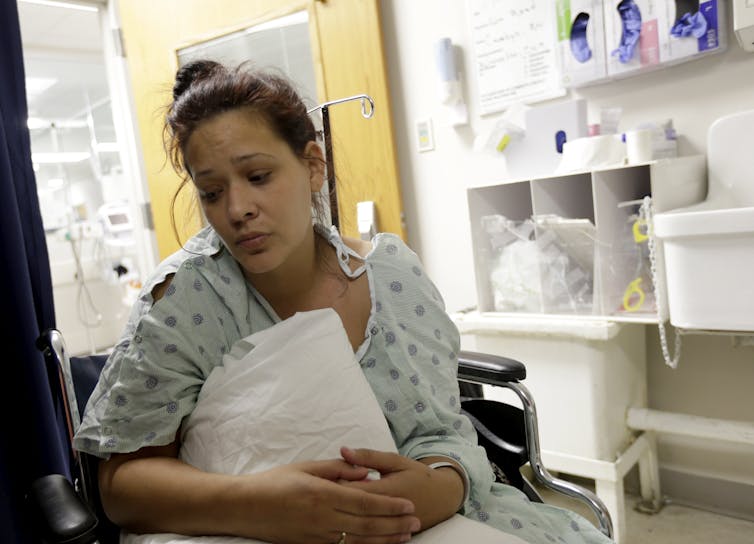
Rural communities across the country face tremendous health care access issues. And as recent study my colleagues and I did of access to cardiologists, endocrinologists, OB-GYNs and pediatricians shows, insurance plans may further complicate the issue.
Focusing on California, we compared access between plans sold under the Affordable Care Act and commercially available plans. We also made comparisons to a hypothetical plan that included all of the state’s providers. In theory, this would be the plan available to consumers under various Medicare-for-All proposals.
Overall, we found that consumers living in large metropolitan areas faced only very limited access challenges. However, as distance from cities increased, access worsened significantly. Consumers had fewer providers to choose from, and had to travel further to see them.
One of our starkest findings was the existence of what we called “artificial provider deserts” – areas where providers are practicing and seeing patients, but insurance carriers do not include any of them in their networks. Without access to local providers, some rural residents are forced to travel 120 miles or more to reach in-network care.
Our findings hold for both Affordable Care Act plans and those commercially available, which fared only slightly better.
The problems we found in this study extend well past plans sold on the Affordable Care Act marketplaces. Two of my other studies found similar, if not worse problems, for rural consumers of Medicare Advantage plans in New York and California.
More protections for rural Americans
There are many reasons for the growing disparities between urban and rural America. Many of these aren’t always easily or quickly remedied through government intervention. Indeed, some may be inherent to living outside of metropolitan areas.
Yet when it comes to health care access, our recent work indicates that decisions by insurance carriers may further worsen the situation. Conceivably, insurers may limit access to providers to push sicker populations to enroll with other insurers.
However, the fault may not exclusively lie with insurers. Rural providers may also demand large fees to enter into contracts with insurers, leading insurers to exclude them from their networks.
While regulating provider networks comes with a slew of challenges, it seems apparent to me that our current approach is not working for Rural America. It is time to rethink how we provide and regulate health care access to millions of Americans living in rural areas.
[ You’re smart and curious about the world. So are The Conversation’s authors and editors. You can get our highlights each weekend. ]
Simon F. Haeder, Assistant Professor of Public Policy, Pennsylvania State University
This article is republished from The Conversation under a Creative Commons license. Read the original article.
The California Highway Patrol’s Clear Lake Area office did not release the name of the 65-year-old man in its report on the crash, pending notification of family.
The CHP said the crash occurred at 12:35 p.m. Friday.
The driver was in his 1992 Dodge Ram 3500 pickup, traveling northbound on Waldo Lane north of Soda Bay Road, at between 15 and 20 miles per hour, the CHP said.
For unknown reasons, the man allowed his pickup to leave the roadway. The CHP said the pickup hit a fence and a coop before coming to a stop.
A nearby individual heard the collision and called 911 to report the incident, the CHP said.
The CHP said emergency responders arrived on scene and found the driver unresponsive.
The man, who was not wearing his seat belt, was pronounced dead at the scene by medical personnel, the CHP said.
Neither drugs nor alcohol are suspected as factors in the crash, according to the CHP.
Email Elizabeth Larson at
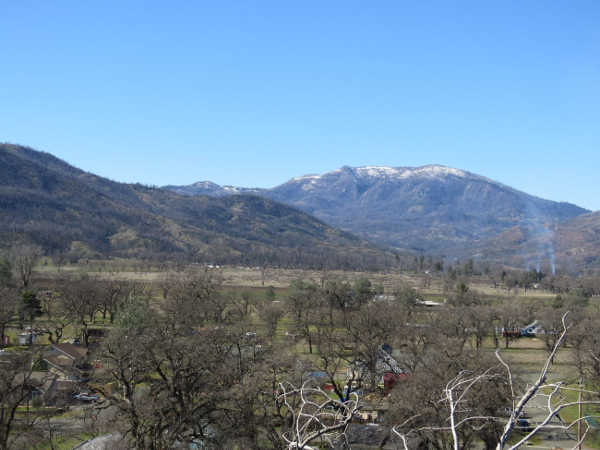
COBB, Calif. – The mountains of Lake County are many and varied, situated as we are here in this land of contrasts.
Cobb Mountain is located at a lofty 4,720 feet, making it the highest in the Mayacamas mountain range.
According to the Lake County Historical Society's Pomo Bulletin (now named Konocti Chronicles), the mountain was named for John Cobb, who hailed from Henry County, Kentucky.
Cobb, born on May 19, 1814, arrived in the Cobb Valley in the month of October in 1853. Prior to arriving in the Cobb area, which was then part of Napa County, he was a river boater and farmer in and around Kentucky.
His first wife and both of his children passed away before 1848 was over. Cobb then married Esther E. Deming from Ohio and they raised six children together.
The great West was calling him, so, along with his wife and one of his children they set off for California in the spring of 1850.
After stopping over in several places, they finally arrived in California in July of 1851. Cobb was voted in as assessor of Napa County in 1854. After he resided in what we now call Cobb Valley for around five years, he moved down to the Middletown area, in the Callayomi Valley where he farmed.
When Lake County was divided from Napa County, Cobb worked the Callayomi and Guenoc Land Grants for Robert Waterman.
At about that same time Cobb moved to the Stone House in what is now Hidden Valley, where he farmed, as well as leased some of the lands to settlers.
Cobb moved around throughout the years, but ended up residing in Little High Valley at the Lea Neu Ranch.
He died Nov. 13, 1893, and rests forever at the Lower Lake Cemetery.
Geographically speaking, Cobb Mountain's area encompasses about 74 square miles of mixed and pine forests, oak woodlands as well as chaparral.
Geologically, Cobb resides in the Franciscan assemblage with its mish-mash of sandstone, chert, shale, serpentinite and greenstone rock.
Cobb Mountain possesses peaks which are volcanic in nature, such as Mount Hannah at 3,978 feet in elevation, Boggs Mountain at 3,720 feet and Seigler Mountain at 3,692 feet. The relatively nearby Mount Konocti is 4,299 feet high.
Cobb Mountain dresses up in snow a few times a year, matching some of the other tall peaks in Lake County, such as Mount Saint Helena and Snow Mountain.
Most of Cobb Mountain resides in the Clear Lake and Cache Creek watersheds. Much of the mountain's melt waters and creeks at its eastern side create the headwaters of Putah Creek, which flows on into the Sacramento River, then into the San Francisco Bay, all the way to the great Pacific Ocean.
At its southwest section Cobb Mountain's flow runs into Cobb Creek, and next pours into Big Sulphur Creek to the Russian River and again into the Pacific.
Along Cobb's northwest the moisture is diverted into Alder Creek, on into Kelsey Creek, Clear Lake to Cache Creek to the Sacramento River.
From south county's Middletown looking west it is easy to see that Cobb Mountain stretches out to the world famous Geysers Geothermal Field.
Some of Cobb Mountain's other claims to fame have been its resorts and small communities of Hobergs, Cobb, Loch Lomond and Whispering Pines.
Other distinctions it held was its timber lands, as well as its refreshing spring waters belonging to Cobb Mountain Spring Water and bottled as Mayacamas Mountain Spring Water.
Although the nightmare 2015 Valley fire devastated much of Cobb Mountain, the area still remains a crest of beauty with its abundant wildlife in the mountain's riparian and wetland communities, such as blacktail deer, coyote, black tailed jackrabbit, western grey squirrel, black bear and even mountain lions.
Cobb possesses unique vernal pools which host rare or endangered plant species like orcuttia grass, Boggs Lake hedge-hyssop and delicate dimorphic snapdragons.
Kathleen Scavone, M.A., is a retired educator, potter, freelance writer and author of “Anderson Marsh State Historic Park: A Walking History, Prehistory, Flora, and Fauna Tour of a California State Park” and “Native Americans of Lake County.”
BERKELEY, Calif. – Fiber-optic cables that constitute a global undersea telecommunications network could one day help scientists study offshore earthquakes and the geologic structures hidden deep beneath the ocean surface.
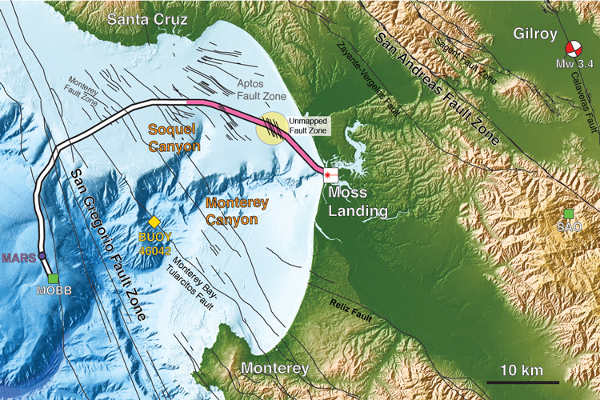
In a paper appearing in the journal Science, researchers from the University of California, Berkeley, Lawrence Berkeley National Laboratory, Monterey Bay Aquarium Research Institute, or MBARI, and Rice University describe an experiment that turned 20 kilometers of undersea fiber-optic cable into the equivalent of 10,000 seismic stations along the ocean floor.
During their four-day experiment in Monterey Bay, they recorded a 3.5 magnitude quake and seismic scattering from underwater fault zones.
Their technique, which they had previously tested with fiber-optic cables on land, could provide much-needed data on quakes that occur under the sea, where few seismic stations exist, leaving 70 percent of Earth’s surface without earthquake detectors.
“There is a huge need for seafloor seismology. Any instrumentation you get out into the ocean, even if it is only for the first 50 kilometers from shore, will be very useful,” said Nate Lindsey, a UC Berkeley graduate student and lead author of the paper.
Lindsey and Jonathan Ajo-Franklin, a geophysics professor at Rice University in Houston and a faculty scientist at Berkeley Lab, led the experiment with the assistance of Craig Dawe of MBARI, which owns the fiber-optic cable.
The cable stretches 52 kilometers offshore to the first seismic station ever placed on the floor of the Pacific Ocean, put there 17 years ago by MBARI and Barbara Romanowicz, a UC Berkeley professor of the graduate school in the Department of Earth and Planetary Science.
A permanent cable to the Monterey Accelerated Research System (MARS) node was laid in 2009, 20 kilometers of which were used in this test while off-line for yearly maintenance in March 2018.
“This is really a study on the frontier of seismology, the first time anyone has used offshore fiber-optic cables for looking at these types of oceanographic signals or for imaging fault structures,” said Ajo-Franklin. “One of the blank spots in the seismographic network worldwide is in the oceans.”
The ultimate goal of the researchers’ efforts, he said, is to use the dense fiber-optic networks around the world – probably more than 10 million kilometers in all, on both land and under the sea – as sensitive measures of Earth’s movement, allowing earthquake monitoring in regions that don’t have expensive ground stations like those that dot much of earthquake-prone California and the Pacific Coast.
“The existing seismic network tends to have high-precision instruments, but is relatively sparse, whereas this gives you access to a much denser array,” said Ajo-Franklin.
Photonic seismology
The technique the researchers use is Distributed Acoustic Sensing, which employs a photonic device that sends short pulses of laser light down the cable and detects the backscattering created by strain in the cable that is caused by stretching. With interferometry, they can measure the backscatter every 2 meters (6 feet), effectively turning a 20-kilometer cable into 10,000 individual motion sensors.
“These systems are sensitive to changes of nanometers to hundreds of picometers for every meter of length,” Ajo-Franklin said. “That is a one-part-in-a-billion change.”
Earlier this year, they reported the results of a six-month trial on land using 22 kilometers of cable near Sacramento emplaced by the Department of Energy as part of its 13,000-mile ESnet Dark Fiber Testbed. Dark fiber refers to optical cables laid underground, but unused or leased out for short-term use, in contrast to the actively used “lit” internet. The researchers were able to monitor seismic activity and environmental noise and obtain subsurface images at a higher resolution and larger scale than would have been possible with a traditional sensor network.
“The beauty of fiber-optic seismology is that you can use existing telecommunications cables without having to put out 10,000 seismometers,” Lindsey said. “You just walk out to the site and connect the instrument to the end of the fiber.”
During the underwater test, they were able to measure a broad range of frequencies of seismic waves from a magnitude 3.4 earthquake that occurred 45 kilometers inland near Gilroy, California, and map multiple known and previously unmapped submarine fault zones, part of the San Gregorio Fault system. They also were able to detect steady-state ocean waves – so-called ocean microseisms – as well as storm waves, all of which matched buoy and land seismic measurements.
“We have huge knowledge gaps about processes on the ocean floor and the structure of the oceanic crust because it is challenging to put instruments like seismometers at the bottom of the sea,” said Michael Manga, a UC Berkeley professor of earth and planetary science who is not a co-author of the paper. “This research shows the promise of using existing fiber-optic cables as arrays of sensors to image in new ways. Here, they’ve identified previously hypothesized waves that had not been detected before.”
According to Lindsey, there’s rising interest among seismologists to record Earth's ambient noise field caused by interactions between the ocean and the continental land: essentially, waves sloshing around near coastlines.
“By using these coastal fiber optic cables, we can basically watch the waves we are used to seeing from shore mapped onto the seafloor, and the way these ocean waves couple into the Earth to create seismic waves,” he said.
To make use of the world’s lit fiber-optic cables, Lindsey and Ajo-Franklin need to show that they can ping laser pulses through one channel without interfering with other channels in the fiber that carry independent data packets. They’re conducting experiments now with lit fibers, while also planning fiber-optic monitoring of seismic events in a geothermal area south of Southern California’s Salton Sea, in the Brawley seismic zone.
The research was funded by the U.S. Department of Energy through Berkeley Lab’s Laboratory Directed Research and Development program, the National Science Foundation (DGE 1106400) and the David and Lucille Packard Foundation. The final analysis was supported by the Department of Energy’s National Energy Technology Laboratory as part of the GoMCarb project (DE-AC02-05CH11231).
Robert Sanders writes for the UC Berkeley News Center.
Dogs available for adoption this week include mixes of Australian Shepherd, bluetick coonhound, cattle dog, Doberman Pinscher, pit bull, poodle, Rhodesian Ridgeback, terrier and treeing walker coonhound.
Dogs that are adopted from Lake County Animal Care and Control are either neutered or spayed, microchipped and, if old enough, given a rabies shot and county license before being released to their new owner. License fees do not apply to residents of the cities of Lakeport or Clearlake.
If you're looking for a new companion, visit the shelter. There are many great pets hoping you'll choose them.
The following dogs at the Lake County Animal Care and Control shelter have been cleared for adoption (additional dogs on the animal control Web site not listed are still “on hold”).
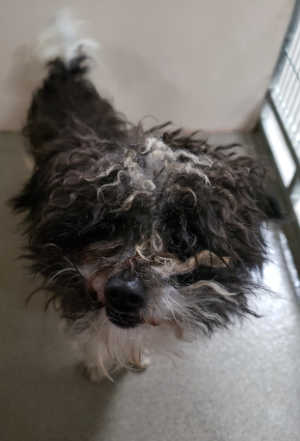
Male poodle
This senior male poodle has a long black and white coat.
He is in kennel No. 2, ID No. 13343.
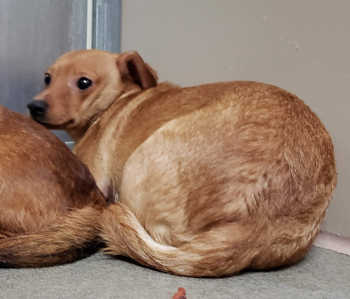
Male terrier
This young male terrier has a short brown coat.
He is in kennel No. 3a, ID No. 13349.
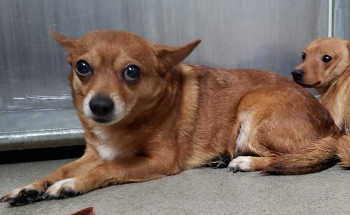
Male terrier
This young male terrier has a short red coat.
He is in kennel No. 3b, ID No. 13350.
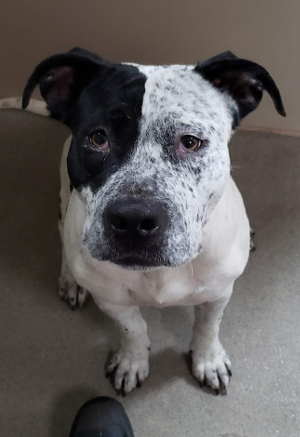
Female boxer-pit bull mix
This female boxer-pit bull mix has a short black and white coat.
She is in kennel No. 5, ID No. 13338.
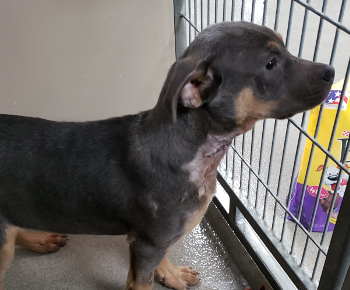
Female Doberman Pinscher
This young female Doberman Pinscher has a short gray and tan coat.
She is in kennel No. 6, ID No. 13335.
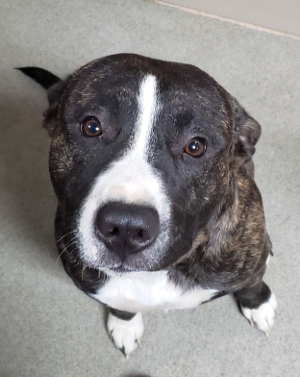
Male pit bull terrier
This young male pit bull terrier has a short brown brindle coat.
He was found in the Lower Lake area. He is reported to be good in vehicles and good with cats.
He is in kennel No. 7, ID No. 13342.
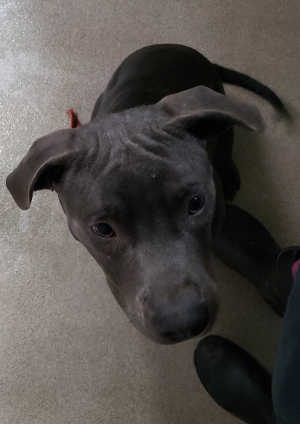
Male pit bull terrier
This male pit bull terrier has a short blue and white coat.
He is in kennel No. 10, ID No. 13345.
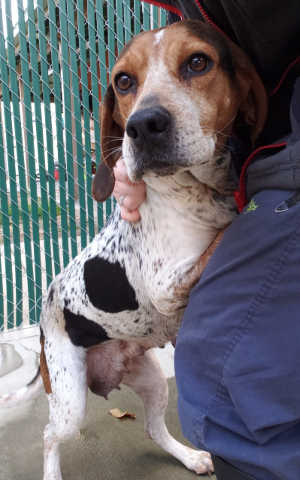
‘Patsy’
“Patsy” is a female treeing walker coonhound/bluetick coonhound mix with a short tricolor coat.
She is in kennel No. 20, ID No. 13290.
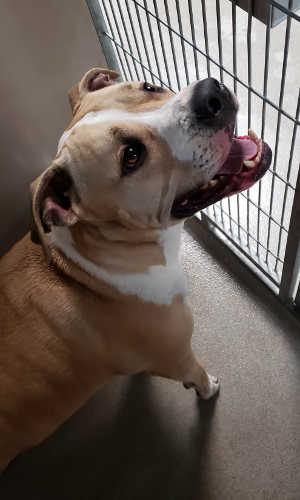
‘Max’
“Max” is a male pit bull terrier with a short tan and white coat.
He has been neutered.
He’s in kennel No. 23, ID No. 13173.
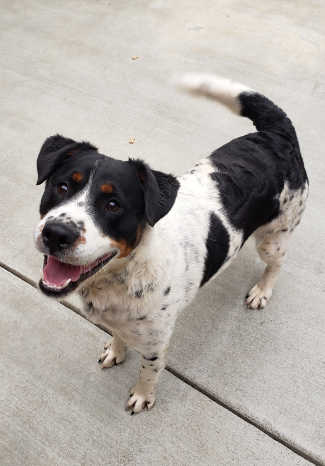
‘Hazel’
“Hazel” is a female cattle dog with a medium-length tricolor coat.
She has been spayed.
She’s in kennel No. 27, ID No. 13255.
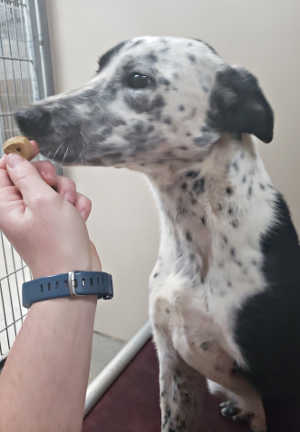
Male Australian Shepherd
This male Australian Shepherd has a long black and white coat.
He is in kennel No. 28, ID No. 13250.
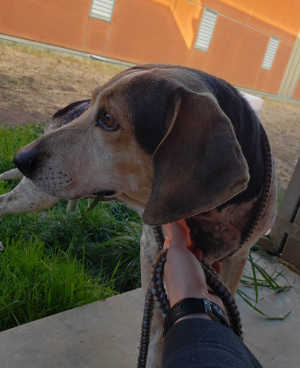
‘Daisey’
“Daisey” is a female treeing walker coonhound/bluetick coonhound mix with a short tricolor coat.
She is in kennel No. 29, ID No. 13291.
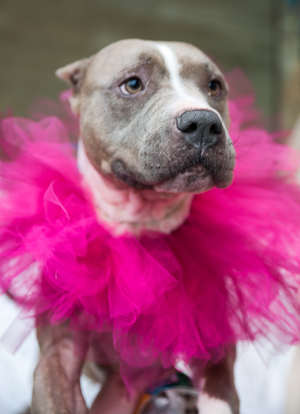
‘Lucy’
“Lucy” is a female pit bull terrier with a short brindle coat and cropped ears.
She has been spayed.
She’s in kennel No. 30, ID No. 13263.
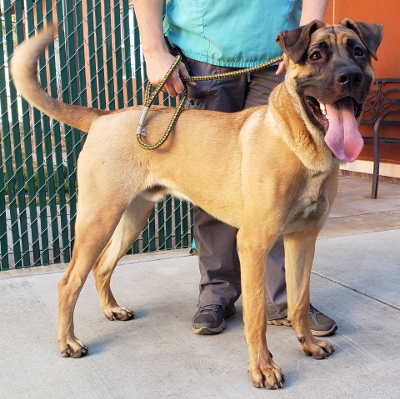
‘Goofy’
“Goofy” is a male Rhodesian Ridgeback with a short tan and black coat.
He’s in kennel No. 33, ID No. 13210.
Lake County Animal Care and Control is located at 4949 Helbush in Lakeport, next to the Hill Road Correctional Facility.
Office hours are Monday through Friday, 11 a.m. to 5 p.m., and 11 a.m. to 3 p.m., Saturday. The shelter is open from 11 a.m. to 4 p.m., Monday through Friday and on Saturday from 11 a.m. to 3 p.m.
Visit the shelter online at http://www.co.lake.ca.us/Government/Directory/Animal_Care_And_Control.htm .
For more information call Lake County Animal Care and Control at 707-263-0278.
Email Elizabeth Larson at