 How to resolve AdBlock issue?
News
- Details
- Written by: Elizabeth Larson
Frank Stuart Kountz, 57, from Willows died in the crash, said Lauren Berlinn, the sheriff’s public information officer.
Kountz was driving a 2013 Kenworth tanker truck westbound on Highway 20 east of Clearlake Oaks shortly after 6 a.m. Saturday when the tanker overturned while he was negotiating a right-hand curve in the roadway, the California Highway Patrol’s Clear Lake Area office reported.
The truck, which was carrying a load of milk, crossed the eastbound lane before traveling down an embankment south of the highway, the CHP said.
Kountz died of his injuries at the scene, where reports from the scene indicated that it took until Saturday evening to remove the truck, respond to the milk spill and clear the incident.
Email Elizabeth Larson at
- Details
- Written by: Rayna M. Letourneau, University of South Florida
Despite a national nursing shortage in the United States, over 80,000 qualified applications were not accepted at U.S. nursing schools in 2020, according to the American Association of Colleges of Nursing.
This was due primarily to a shortage of nursing professors and a limited number of clinical placements where nursing students get practical job training. Additional constraints include a shortage of experienced practitioners to provide supervision during clinical training, insufficient classroom space and inadequate financial resources.
Although the 80,000 may not account for students who apply to multiple nursing schools, it clearly suggests that not all qualified students are able to enroll in nursing school.
I am a nurse researcher, professor of nursing and founding director of WIRES, an office at the University of South Florida that focuses on the well-being of the health care workforce. I’ve found that the nursing shortage is a complex issue that involves many factors – but chief among them is the shortage of faculty to train future nurses.
Growing demand for nurses
There are not enough new nurses entering the U.S. health care system each year to meet the country’s growing demand. This can have serious consequences for patient safety and quality of care.
Nationally, the number of jobs for registered nurses is projected to increase by 9% between 2020 and 2030.
Some states project an even higher demand for registered nurses because of their population and their needs. Florida, for example, will need to increase its number of registered nurses by 16% over the next decade.
The U.S. Bureau of Labor Statistics estimates there will be about 194,500 openings for registered nurses each year over the next decade to meet the demands of the growing population, and also to replace nurses who retire or quit the profession. This means the U.S. will need about 2 million new registered nurses by 2030.
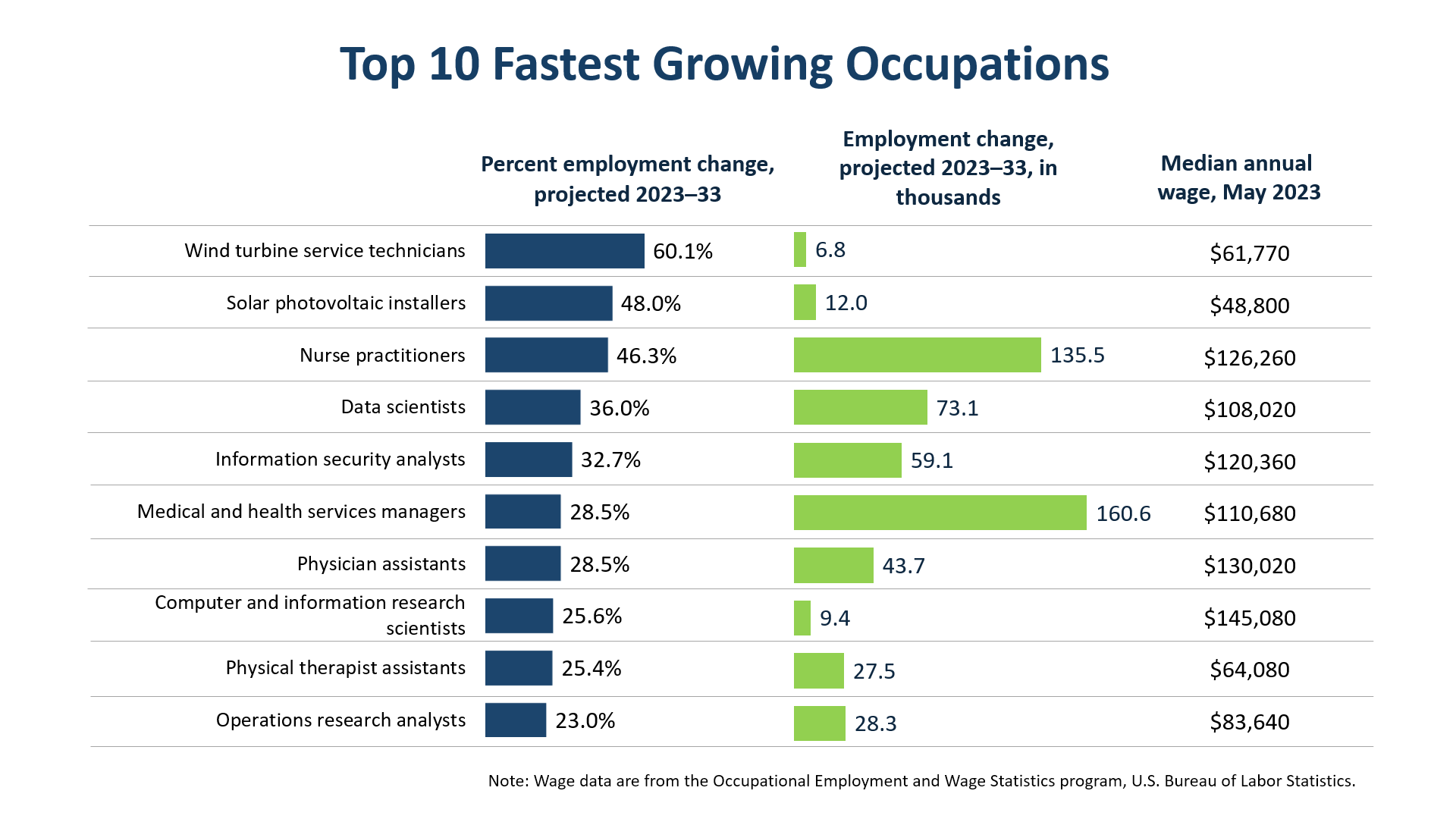
In addition to a shortage of registered nurses, there is also a shortage of nurse practitioners. Nurse practitioner is identified as the second fastest-growing occupation in the next decade, after wind turbine technicians, with a projected increase of 52.2%. Nurse practitioners have an advanced scope of practice compared with registered nurses. They must complete additional clinical hours, earn a master’s or doctoral degree in nursing, and complete additional certifications to work with specific patient populations.
The COVID-19 pandemic has exacerbated the health and wellness problems of the nursing workforce. Despite these problems, student enrollment in nursing schools increased in 2020. The pandemic has not turned people away from wanting to pursue a career in nursing. However, without enough nursing faculty and clinical sites, there will not be enough new nurses to meet the health care demands of the nation.
Need for more nursing faculty
Currently, the national nurse faculty vacancy rate is 6.5%. This is slightly improved from the 2019 rate of 7.2%. More than half of all nursing schools report vacant full-time faculty positions. The highest need is in nursing programs in Western and Southern states.
Nursing education in clinical settings requires smaller student-to-faculty ratios than many other professions in order to maintain the safety of patients, students and faculty members. Regulatory agencies recommend at least one faculty member to no more than 10 students engaged in clinical learning.
The faculty shortage is also affected by the fact that many current nursing faculty members are reaching retirement age. The percentage of full-time nursing faculty members aged 60 and older increased from roughly 18% in 2006 to nearly 31% in 2015.
The American Association of Colleges of Nursing reports the average ages of doctorally prepared nurse faculty members at the ranks of professor, associate professor and assistant professor were 62.6, 56.9 and 50.9 years, respectively.
[More than 140,000 readers get one of The Conversation’s informative newsletters. Join the list today.]
Another factor that contributes to the nursing faculty shortage, and the most critical issue related to faculty recruitment, is compensation. The salary of a nurse with an advanced degree is much higher in clinical and private sectors than it is in academia.
According to a survey by the American Association of Nurse Practitioners, the median salary of a nurse practitioner, across settings and specialties, is $110,000. By contrast, the AACN reported in March 2020 that the average salary for master’s-prepared assistant professors in nursing schools was just under $80,000.
Fixing the faculty shortage
Innovative strategies are needed to address the nursing faculty shortage. The Title VIII Nursing Workforce Reauthorization Act of 2019 was a start. The act provides funding for nursing faculty development, scholarships and loan repayment for nurses, and grants for advanced nursing education, nursing diversity initiatives and other priorities.
The Build Back Better Act that passed the U.S. House of Representatives in November 2021 includes funding to help nursing schools across the country recruit and retain diverse nursing faculty and enroll and retain nursing students. The act is now before the U.S. Senate.
In addition to national strategies, individual states are addressing the shortage at the local level. Maryland, for example, awarded over $29 million in grants to 14 higher education institutions with nursing programs in Maryland to expand and increase the number of qualified nurses.
Finally, offering faculty salaries comparable to those in clinical settings may attract more nurses to use their expertise to train and expand the next generation of health care workers.
Rayna M. Letourneau, Assistant Professor of Nursing, University of South Florida
This article is republished from The Conversation under a Creative Commons license. Read the original article.
- Details
- Written by: California Department of Public Health
California has been a leader in the nation’s vaccination efforts, administering more than 62 million doses since the first dose was administered in the state on Dec. 14, 2020.
As the nation braces for an increase in case rates and hospitalizations this winter, some parts of the state that continue to have low vaccination rates are experiencing higher rates of transmission, placing individuals and communities at greater risk for COVID-19.
CDPH’s Vaccinate ALL 58 campaign and local partners will host a series of events and activities in vulnerable communities throughout the week promoting the state’s public health measures, harm reduction best practices, and whole family vaccinations for Californians aged 5 and older and boosters for everyone now eligible.
CDPH’s week of action and public health measures coincide with a 14% increase in COVID-19-related hospitalizations since the Thanksgiving holiday.
“Many of our hospitals are at a tipping point, and even a small winter surge can have serious consequences for our health care system,” said Dr. Tomás J. Aragón, CDPH director and state Public Health officer.
“By broadening the mask requirement to be universal, we have 30 days to slow the spread of COVID-19 and help prevent the devastating impact on our hospitals, health care workers, and patients that we experienced during last winter’s deadly surge,” Aragón said. “We are urging all Californians to get fully vaccinated and boosted, wear their masks in all indoor public settings, get tested if exposed, have symptoms or when traveling, and to stay home when feeling sick. Together, our collective actions can help save lives and protect access and quality health care this holiday season and keep the state’s fight against this virus strong in 2022.”
California remains focused on increasing vaccine accessibility and outreach to vulnerable communities. CDPH and community partners will host mobile vaccination clinics and conduct outreach during the week to motivate all eligible Californians to get fully vaccinated, boosted and tested if they have been exposed or have symptoms.
Prominent California public health officials and leading medical experts will also discuss the importance of full family vaccination with media and online platforms around the state.
The week of action is part of California's ongoing commitment to combating the pandemic. The state’s Vaccinate ALL 58 campaign will launch new creative content ahead of the holidays. The campaign is also continuing its robust partnerships with community-based organizations, working closely with trusted messengers to address vaccine hesitancy through door knocking and outreach, scheduling appointments, and providing transportation options.
So far, the state’s community-based organization network has connected with more than three million Californians through phone banking, canvassed over 700,000 households, and has facilitated or referred over one million appointments in hardest-hit communities throughout the state.
The COVID-19 vaccine and boosters are free-for-all Californians regardless of insurance and immigration status.
Californians can visit MyTurn.ca.gov or call 1-833-422-4255 to make an appointment or find a walk-in clinic and learn more about eligibility.
- Details
- Written by: Elizabeth Larson
Forecasters issued a winter weather advisory that notes dropping snow levels that are expected overnight and into Tuesday, with minor snowfall accumulations as low as 1,000 feet by Tuesday morning.
That weather is expected to include the highway summits through Mendocino and Lake County, and moderate to heavy snow accumulations for elevations as low 1,500 to 2,000 feet on
Wednesday.
During the day on Monday there was rainfall that ranged from under an inch near Lower Lake to more than 2 inches in Middletown. Combined with Sunday’s precipitation, the National Weather Service’s observation stations reported top rainfall amounts at nearly 3 inches in Bartlett Springs and Hidden Valley Lake, with more than 3 inches in Whispering Pines.
The rain is slowly raising Clear Lake’s level, which was at -1.27 feet Rumsey, the special measure just for the lake, just before 1 a.m. on Tuesday, an improvement of about a tenth of a foot since the previous day.
Monday’s wet conditions led to numerous reports of roadway hazards around Lake County, from downed trees on Bottle Rock Road and Wight Way in Kelseyville and Seigler Canyon Road in Lower Lake, mud and rocks in the roadway on Highway 175 in Whispering Pines, as well as noninjury car crashes, the California Highway Patrol reported.
More rain plus snow could fall across Lake County on Tuesday and Wednesday, when the National Weather Service says another storm system will move over the area, potentially bringing more snow in lower elevations.
The forecast models show chilly weather into the weekend, when there is the potential for another storm system to arrive and impact Lake County into next week.
Daytime temperatures will range from the mid-40s to low 50s, while nighttime conditions are expected to drop into the low 30s, bringing nighttime freezes.
Email Elizabeth Larson at