How to resolve AdBlock issue?
News
- Details
- Written by: Yuba Community College District
The board will meet virtually in a regular meeting at 5 p.m. Thursday, Dec. 16.
The link to the meeting is available here.
Every 10 years, following the federal Census, the boundaries of the areas by which the Yuba Community College District Governing Board is elected is subject to change.
At the Oct. 14 regular board meeting, the governing board received a presentation from Cooperative Strategies, YCCD’s demographers, highlighting changes in the YCCD population since the 2010 Census.
Cooperative Strategies also informed the governing board that due to population growth within YCCD’s boundaries since the 2010 Census, under state and federal voting rights laws, the governing board should redraw its trustee area boundaries to satisfy population variance standards between the most and least populated trustee areas.
At the Nov. 10 regular board meeting, the YCCD Governing Board reviewed and considered map options that ensure compliance with state and federal voting rights laws.
After receiving public and trustee feedback on the proposed map options, the board will review and consider a second round of map options at the Dec. 16 regular board meeting.
Any changes to the YCCD trustee areas need to be approved by the YCCD Governing Board by Feb. 28.
The governing board encourages public participation throughout this process. The public can view the current trustee area maps and the draft maps outlining change options the board will consider on Dec. 16 here.
- Details
- Written by: Peter Kasson, University of Virginia
Scientists around the world have been racing to learn more about the new omicron strain of SARS-CoV-2, first declared a “variant of concern” on Nov. 26, 2021 by the World Health Organization. Officials cautioned that it would take several weeks before they’d know whether the recently emerged coronavirus variant is more contagious and causes more or less serious COVID-19 than delta and other earlier variants, and whether current vaccines can ward it off.
Peter Kasson is a virologist and biophysicist at the University of Virginia who studies how viruses such as SARS-CoV-2 enter cells and what can be done to stop them. Here he explains what lab-based scientists are doing to help answer the outstanding questions about omicron.
Does prior immunity protect against omicron?
These are the key lab results everyone is waiting for: How effective are the antibodies people already have at fighting off omicron? If you got the booster shot, are you protected? Or if you had COVID-19 and then were vaccinated?

The goal is to see how well antibodies from real people who have had COVID-19 or have been vaccinated against it can hold off omicron in petri dishes in the lab. Scientists expect that antibodies from people exposed to other variants won’t work as well against omicron because of its mutations, but they need to measure how much less well and whether it’s still enough to stop the virus.
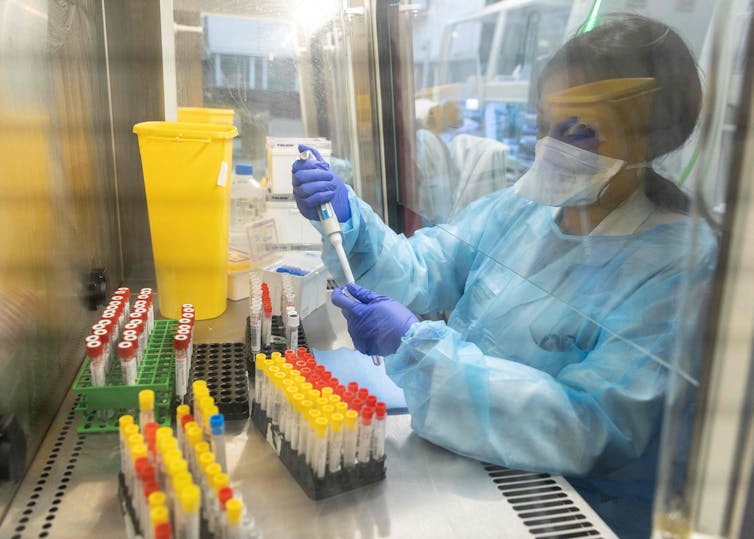
To answer these questions, most researchers first make a version of the SARS-CoV-2 virus that can enter cells but not reproduce. A few specialized labs with extra levels of biosecurity use the actual virus. Scientists add antibodies from the blood of people vaccinated against or recovered from COVID-19 to the virus. They then mix this with human lung cells to see whether the antibodies can stop the virus from infecting the cells.
My laboratory performs this kind of work with SARS-CoV-2 and other emerging viruses. Researchers have used these well-established techniques to test out antibodies after COVID-19 recovery, as well as different vaccines and different variants.
If antibodies people made against prior variants can’t stop omicron from infecting lung cells in the lab, then those antibodies probably won’t protect people out in the world either.
The very first early results are starting to come back, and it looks like antibodies against earlier variants are less successful at blocking omicron. Researchers took antibodies from six people who each had two doses of vaccine and from six other people who each had two doses of vaccine and had also recovered from an earlier COVID-19 infection. Antibodies from both groups of people were about 40 times worse at stopping omicron than original SARS-COV-2 strains, based on how much antibody was needed to prevent infection. But the people whose immune systems had seen the virus three times – that is, were doubly vaccinated and had also recovered from COVID-19 – had antibody levels that were high enough to still stop infection.
I’d expect people who have received booster vaccines will have similar or greater levels of immunity and will be at least moderately protected from omicron. But it will need to be tested. Pfizer has said their early results agree with this prediction, but the data is not yet publicly available. All of this work is not yet peer reviewed and still very preliminary.
Scientists will need to determine how a drop in “neutralization titer,” or how good antibodies are at blocking the virus in the lab, corresponds to a drop in “vaccine effectiveness” or how likely a vaccinated person is to get COVID-19 compared to an unvaccinated one. Scientists know that better antibodies correspond to more effective vaccines, but the precise numerical relationships need to be determined.
How contagious is omicron compared to delta?
The past pandemic year has shown that contagiousness, or transmissibility, has been the key factor in determining whether a coronavirus variant becomes dominant. Delta’s transmissibility has made it the current dominant variant because it simply outran others. But that situation may change with time.
The basic elements of the viral “life” cycle are getting into cells, making more virus, and getting out. Scientists can measure each of these stages in the lab and report what aspects of a variant make it more or less transmissible. In addition to binding to human cells better, some mutations enhance the packaging of new virus and the delivery of its genes once the virus gets into the cell.
While lab-based science can help people understand the biology behind just why a variant is more or less contagious, right now nature is doing a much bigger real-world experiment. Disease surveillance data from the U.K. and other countries where delta has been dominant suggest that omicron is gaining share and may eventually displace delta.
Exactly how this plays out may differ from one country to another, depending on factors like the number of vaccinated people and which variants were previously in circulation, but this news about how good omicron is at spreading is concerning.
Does omicron make people more or less sick?
This is again a question that will be answered much more quickly by the thousands of people infected with omicron than by work in the lab. It’s important to remember, though, that nature’s experiments are not as carefully controlled as lab experiments. Precise lab work will help explain why omicron might be different, but the first answers here will come from hospitals.
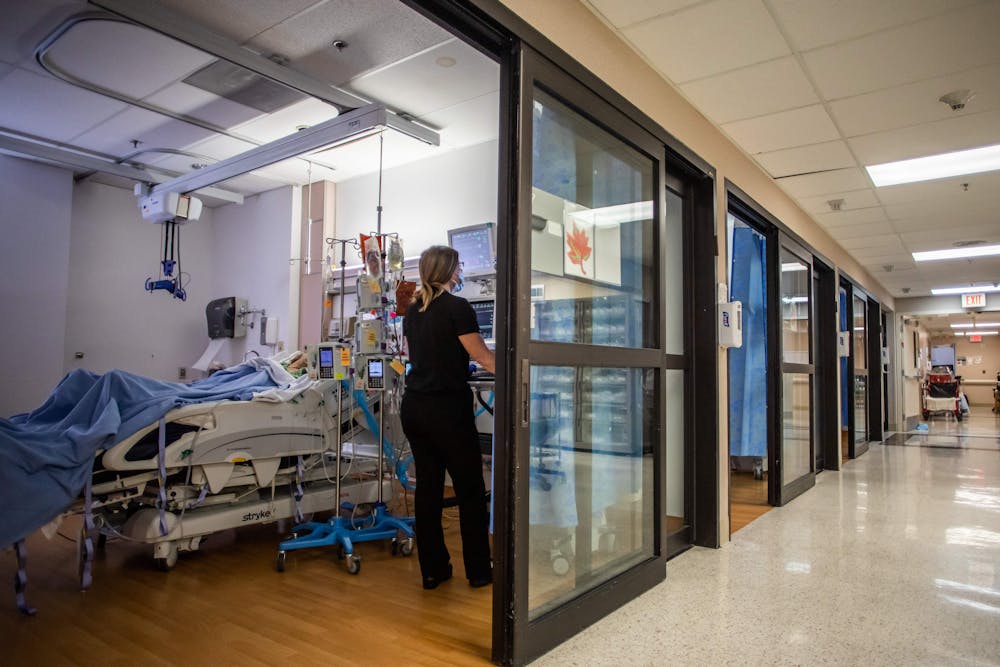
Lab-based scientists will be working with hospitals to analyze what makes some patients more or less sick once they contract omicron. Some early numbers suggest that the first omicron cases are mostly mild, but public health officials urge caution: Most cases of all COVID-19 variants are mild, and many of those infected so far with omicron are younger. Hospitalization counts tend to increase somewhat after the initial increase in cases. So this question will take time to answer.
How are lab data and public health data complementary?
Laboratories will provide the first results on immune protection against omicron, although this will be followed up with public health data that will likely confirm the lab results. Public health data will bring the first results on contagiousness and disease severity, which will then be explained by laboratory results.
Once the initial answers from public health data are in, laboratory results are still important to understand why these changes happened and to help predict what future variants will do. How do officials declare a variant of concern in the first place? It’s a combination of public health data and understanding from the lab.
What do we know already?
Variants of SARS-CoV-2 don’t change the laws of physics and biology. They cannot leap tall buildings in a single bound. Physical barriers like high-grade masks and good ventilation will still stop the virus. And, very likely, vaccines will continue to provide some amount of protection. The question is how much, and whether the world needs to change the current vaccines or just provide more of them.
[Research into coronavirus and other news from science Subscribe to The Conversation’s new science newsletter.]
Peter Kasson, Associate Professor of Molecular Physiology and Biomedical Engineering, University of Virginia
This article is republished from The Conversation under a Creative Commons license. Read the original article.
- Details
- Written by: Elizabeth Larson
Call Lake County Animal Care and Control at 707-263-0278 or visit the shelter online for information on visiting or adopting.
The following cats at the shelter have been cleared for adoption.
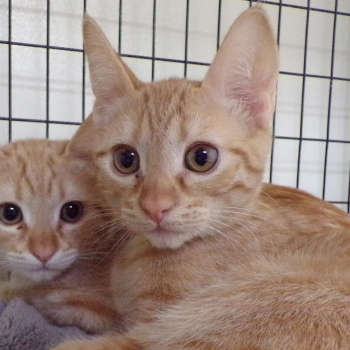
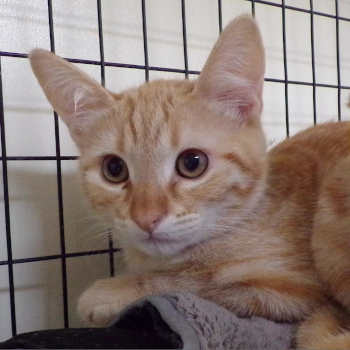
Male domestic shorthair kitten
This male domestic shorthair kitten has an orange tabby coat.
He is in cat room kennel No. 96a, ID No. LCAC-A-1871.
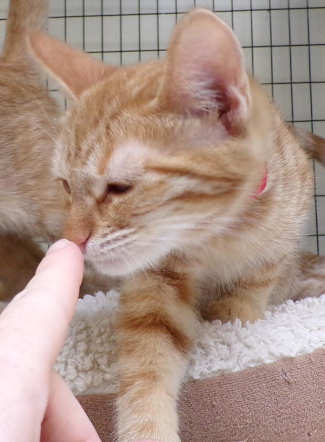
Male domestic shorthair kitten
This male domestic shorthair kitten has an orange tabby coat.
He is in cat room kennel No. 96c, ID No. LCAC-A-1873.
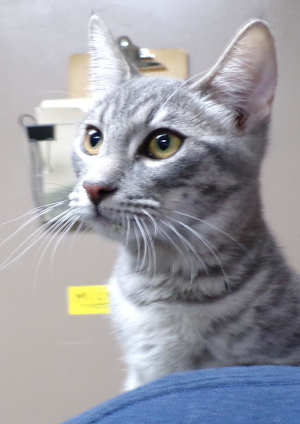
Female domestic shorthair kitten
This female domestic shorthair kitten has an orange tabby coat.
She is in cat room kennel No. 96d, ID No. LCAC-A-1874.
Female domestic shorthair kitten
This female domestic shorthair kitten has a gray tabby coat.
She is in cat room kennel No. 101a, ID No. LCAC-A-1945.
Email Elizabeth Larson at
- Details
- Written by: Elizabeth Larson
LAKE COUNTY, Calif. — An organization that’s working to raise the profile of Lake County as an arts destination is debuting a new series of sculptures in the city of Clearlake.
The Lake County Rural Arts Initiative, or LCRAI, is a small but big-thinking organization that is building a portfolio of public art work projects throughout Lake County.
In recent months, LCRAI has installed two sculptures of bass in Clearlake, with plans for another two to be placed in the coming year.
Martha Mincer, an LCRAI Board member, said one of the group’s main goals is to use the arts for economic development.
“We believe this county could be a dramatic arts designation,” she said.
Studies have shown that a focus on public art isn’t just good for the soul, it has a measurably positive impact on the communities where it’s offered.
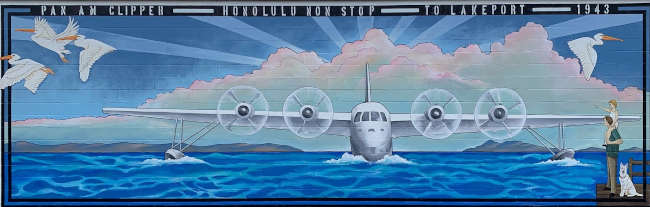
There is an understanding that outdoor art and making a commitment to a community “really raises even the community’s feeling about itself,” said Mincer, adding, “which is what we want to do.”
Mincer said that in the group’s three and a half years it has raised awareness in Clearlake and Lakeport of what can be accomplished with an arts destination.
The group also has a mandate to support art in schools. In 2020, they gave out grants to county teachers to cover art supplies. Mincer said fundraising is ongoing to continue that work.
She said they believe strongly that art nourishes a part of the brain that nothing else does, especially for children, citing a Harvard study about how art lights up the brain.
Mincer said putting arts in the school raises scores in every single subject. “I have a real passion for it.”
Mincer, who came to Lake County from the East Coast, said people are looking to retire in places that stay rural, a fact that positions Lake County to attract new residents.
If a community makes upgrades through art, Mincer suggested that people are OK with it otherwise remaining rough around the edges.
She also pointed to places like Taos, New Mexico, that have unique geographic and cultural character. Lake County, similarly, has its own character and natural beauty that lend themselves to art.
Mincer said Lake County’s community members need to celebrate who they are and art is a powerful way to do that.
“It’s been powerful since we were in caves,” Mincer said, noting that art influences how we think about ourselves.
“It’s very additive in terms of its ability in terms of shaping success in a community,” and has a unique ability to drive thinking in ways that are powerful and successful, she said.
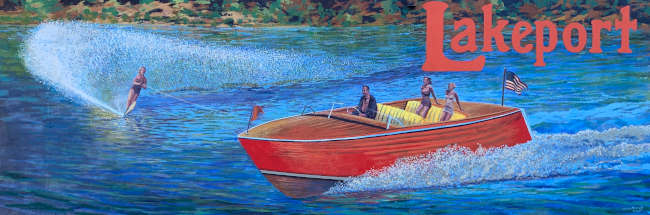
The mural trail
LCRAI already has carried out other noteworthy projects, supporting artwork that emphasizes what’s unique about Lake County — including Pomo history and culture, wildlife and Clear Lake, at the county’s heart and center.
One project that already has drawn significant notice is the Lakeport murals project, which is the focus of the group’s mural trail.
Mincer said the city came to LCRAI to ask about the murals, and wanted them to be historic and lake-related. LCRAI additionally wanted them to be “buzzworthy.”
LCRAI pitched the idea of starting a mural trail and the city agreed. So Mincer said the group reached out to local artists and muralists.
Mincer said her favorite mural is the 1949 airplane landing on the lake, painted on a building across from City Hall. Other highlights on the trail are a native Pomo woman on the wall of the Silveira Community Center, painted by Michael and Violet Divine, skiers by Robert Minuzzo and birds by muralist Gloria De La Cruz, whose work can be seen around Lake County.
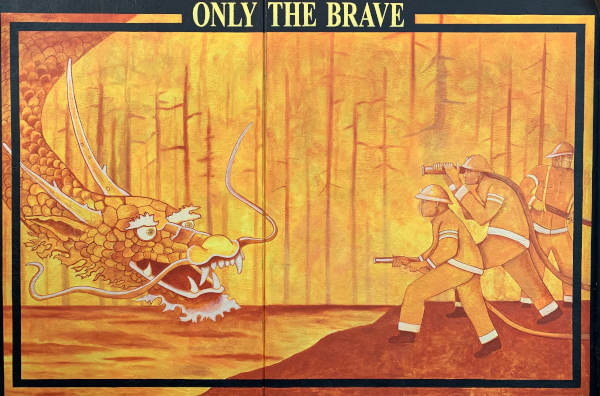
LCRAI also got donors for murals on fire stations on Lakeport and Kelseyville to pay homage to the bravery of firefighters and how they put their lives in danger to protect us “from the ravages of a pretty formidable enemy,” Mincer said.
A mural of a bass by the Divines can be found at Redbud Park in Clearlake.
Mincer said there are more murals in the mix, some of which will include a focus on history. Hope Rising in Clearlake wants one for its building.
“We’re a little overwhelmed,” said Mincer.
However, that hasn’t kept LCRAI from continuing to move forward with more work.
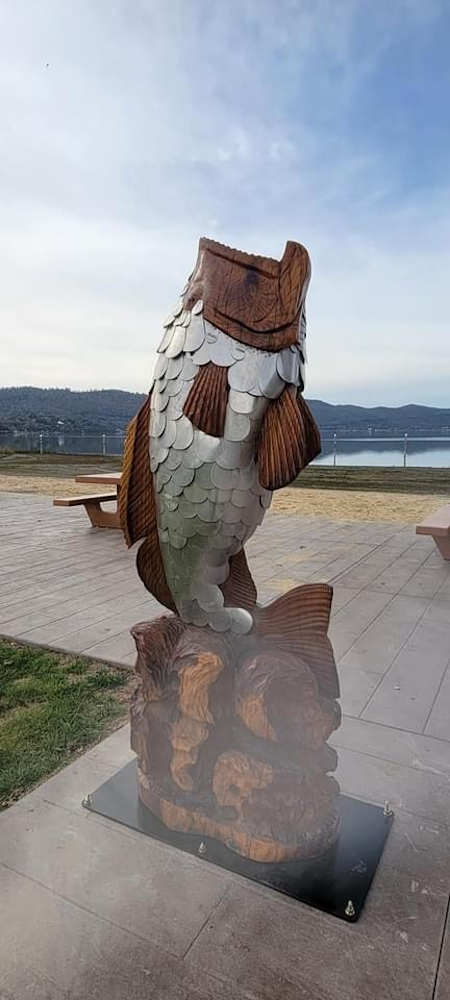
Bass statues placed in Clearlake
The group’s latest endeavor is the placement of bass statues in Clearlake.
Mincer said Supervisor Bruno Sabatier has been a real supporter of art in the county. He also helped create the bass statue project.
Mincer said he brought the idea to LCRAI, presenting them with the iconic image of a bass that they should start to put around the county after they are made artistic.
“I originally thought of the idea when I traveled through Wyoming and saw buffalo forms everywhere,” Sabatier said. “I’ve seen similar things in Sonoma County and Napa County with roosters and cows. So I thought, what is Lake County famous for, and I thought of our bass. I've never seen our bass really illustrated in our county, so I approached RAI and they took my idea and made it happen.”
Mincer said Sabatier has helped by reaching out to donors, including the cannabis community.
Sabatier said he approached cannabis businesses both in Clearlake and around the county to see if they were interested in donating to the project, and they donated funds directly to LCRAI, “and now we're finally seeing the results of those actions.”
Six cannabis companies donated to the project: Benmore Valley Project, Triple C Collective, Napa Valley Fume, Jed Morris, Lake Investments and Lakeside Herbal Solutions.
Mincer said the project has had a bit of lag time because of the pandemic.
Originally, the idea was to put the bass statutes around Lake County. However, the city of Clearlake wanted all of them, Mincer said.
She said it’s become part of an effort to take an area and make an immersive art destination theme as part of changing the narrative.
“They have a lot going for them,” she said of Clearlake, which also plans to work with LCRAI to extend the concept of Main Street art, noting the city has put a considerable amount of money toward it.
Mincer said they want to make something that’s dramatic and unique, adding that it will be surprising.
The project is drawing on Lake County’s deep and extraordinary amount of artistic talent, which is one of the reasons Mincer said LCRAI felt the project was doable.
Renowned wood sculptor Mark Colp — known for winning chain saw carving competitions — created three large wood fish based on the image designed by D.B. vanSteenburgh and carved out of redwood trees harvested from the Valley fire.
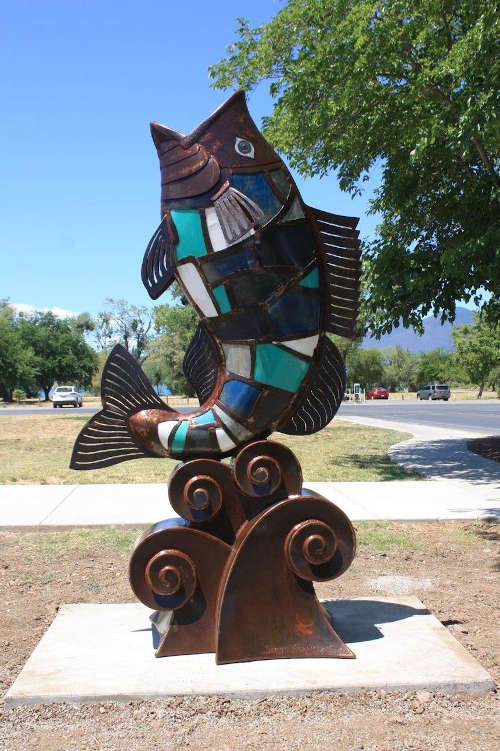
The artists chosen to decorate and enhance the wood sculptured images are Judson Eden and the Divines, with Diego Harris using the bass image to create a full metal sculpture.
Harris, of Upper Lake, is known for his unique sculptures — fantastical creatures, trees and shapes — that look as if they were lifted from a dreamscape.
Mincer said Harris, whose mother Sherry also is an accomplished local artist who works in mediums including basketry, is becoming more well known. His sculpture took several months for the creation process.
Diego Harris wanted to do his sculpture from scratch if he mimicked the image and Mincer said OK. His has been placed in Austin Park, while Eden’s is at Austin Beach.
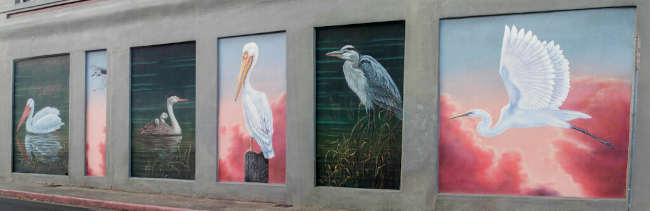
“They’re glorious looking,” and people love them, said Mincer. “They look at them and find them to be magnificent, which they are.”
Then there are the Divines, whose previous work in Lake County includes the fish mural at Redbud Park and the mural of the Pomo women on the Silveira Community Center.
Violet Divine grew up in Southern California and has connections to the Burning Man festival, and did her graduate degree at UC Irvine. They bought a home in Lake County in 2016.
Divine said she’s hacked on the wooden base made by Colp quite a bit. She’s doing a stone mosaic as part of her creation, using small concrete appliqués and locally sourced obsidian for the kids, with the body of Brazilian quartz.
“It’s very tedious,” Divine said of the construction process.
But she is nothing if not determined.
When she first pitched the project to the Clearlake Marketing Committee, she had a locally sourced obsidian stone and serpentine to discuss her project with them.
At one point, the sharp obsidian sliced her finger and, despite bleeding, she continued with her presentation. Finally, City Clerk Melissa Swanson asked if she could get her a bandage.
Divine is working with her husband on another bass statue, which will be adorned with materials collected off the beach such as driftwood.
Their statues will be placed at Highlands Park and Redbud Park. Mincer said the Divines’ fish are set for installation in the spring.
Like Mincer and the LCRAI founders, Divine sees the chance for economic benefits to emerge from the project. She said he hopes to entice entrepreneurship to come into the area, and is working with a team of people to carry out that goal.
LCRAI also is acting as a strategic partner and helping the city write a Clean California grant that will focus on art and beautification, Mincer said.
Earlier this month, Gov. Gavin Newsom announced the availability of $300 million in grants for the program, with cities, counties, transit agencies, tribal governments and other governmental entities able to submit proposals of up to $5 million to beautify their communities and address trash and debris.
Mincer said the project is expected to include installation of trash cans, creation of a mascot and the potential for more murals, with art development opportunities along Highway 53.
To support LCRAI in its efforts to improve art and life in Lake County, visit its website and reach out through the group’s contact page.
Email Elizabeth Larson at