 How to resolve AdBlock issue?
News
- Details
- Written by: ESTHER OERTEL
Turning our eyes to alternative local sources can alleviate these uncertainties.
Even in rural Lake County, shopping options abound, whether a family-owned storefront, farm, winery, craft fair or artist studio.
Farmers’ markets are another, perhaps surprising, resource. We currently have two in the county, and in addition to seasonal produce, both offer opportunities to find creative and unique gifts.
I spent last Saturday morning perusing stalls at the farmers’ market near Kelseyville, and I can be found most Friday evenings at the farmers’ market in Middletown. Both offer a variety of handcrafted items, from jewelry, birdhouses and works of art to soaps, candles, baskets and jams.
Local honey, baked goods and oils (both olive and walnut) are among the foodstuffs offered and make appealing gifts, especially because they’re handcrafted or harvested locally.
Cornelia Sieber-Davis is the market manager for the Lake County Farmers’ Finest market, and she tells me that this Saturday, Dec. 18, will be a special one themed for the holidays.
The Saturday morning market is now year-round and is back at the old Steele Wines facility on Thomas Lane at the corner of Highway 29 between Kelseyville and Lakeport.
The property has been purchased by Shannon Wines, and a major remodeling of the tasting room, dubbed The Mercantile, is now finished and also offers gifts.
The market is open from 10 a.m. to 1 p.m. and is located at the winery’s side lot.
The DeJulius family, with a farm near Middletown, spearheaded the creation of Middletown’s Friday night farmers’ market, which opened in the spring of this year.
As a resident of Middletown, it has been a thrill to see the market thrive. It’s held on the massive lawn in front of the library-senior center complex on Highway 29.
I’ve so often reveled in the energy there, with kids running around, music, dinner options and the large number of vendors lining walkways under the oaks. With darker days upon us now, the time for the market has shifted an hour earlier, from 4 to 7 p.m.
This Friday, Dec. 17, is the last market of this season, but I look forward to its reopening next year.
What follows is a pictorial essay of the farmers’ market in Kelseyville to showcase the variety of gift items that were on offer there last Saturday. Some of the vendors are a constant presence, while others pop in on occasion.
The Middletown market offers equally creative options, and a few of the vendors appear at both markets.
Esther Oertel is a writer and passionate home cook from a family of chefs. She grew up in a restaurant, where she began creating recipes from a young age. She’s taught culinary classes in a variety of venues in Lake County and previously wrote “The Veggie Girl” column for Lake County News. Most recently she’s taught culinary classes at Sur La Table in Santa Rosa. She lives in Middletown, California.
- Details
- Written by: Thomas Adam, University of Arkansas

Each season, the celebration of Christmas has religious leaders and conservatives publicly complaining about the commercialization of the holiday and the growing lack of Christian sentiment. Many people seem to believe that there was once a way to celebrate the birth of Christ in a more spiritual way.
Such perceptions about Christmas celebrations have, however, little basis in history. As a scholar of transnational and global history, I have studied the emergence of Christmas celebrations in German towns around 1800 and the global spread of this holiday ritual.
While Europeans participated in church services and religious ceremonies to celebrate the birth of Jesus for centuries, they did not commemorate it as we do today. Christmas trees and gift-giving on Dec. 24 in Germany did not spread to other European Christian cultures until the end of the 18th century and did not come to North America until the 1830s.
Charles Haswell, an engineer and chronicler of everyday life in New York City, wrote in his “Reminiscences of an Octoganarian” that in the 1830s German families living in Brooklyn dressed up Christmas trees with lights and ornaments. Haswell was so curious about this novel custom that he went to Brooklyn in a very stormy and wet night just to see these Christmas trees through the windows of private homes.
The first Christmas trees in Germany
Only in the late 1790s did the new custom of putting up a Christmas tree decorated with wax candles and ornaments and exchanging gifts emerge in Germany. This new holiday practice was completely outside and independent of Christian religious practices.
The idea of putting wax candles on an evergreen was inspired by the pagan tradition of celebrating the winter solstice with bonfires on Dec. 21. These bonfires on the darkest day of the year were intended to recall the sun and show her the way home. The lit Christmas tree was essentially a domesticated version of these bonfires.
The English poet Samuel Taylor Coleridge gave the very first description of a decorated Christmas tree in a German household when he reported in 1799 about having seen such a tree in a private home in Ratzeburg in northwestern Germany. In 1816 German poet E.T.A. Hoffmann published his famous story “Nutcracker and Mouse King.” This story contains the very first literary record of a Christmas tree decorated with apples, sweets and lights.
From the onset, all family members, including children, were expected to participate in the gift-giving. Gifts were not brought by a mystical figure, but openly exchanged among family members – symbolizing the new middle-class culture of egalitarianism.
From German roots to American soil
American visitors to Germany in the first half of the 19th century realized the potential of this celebration for nation building. In 1835 Harvard professor George Ticknor was the first American to observe and participate in this type of Christmas celebration and to praise its usefulness for creating a national culture. That year, Ticknor and his 12-year-old daughter Anna joined the family of Count von Ungern-Sternberg in Dresden for a memorable Christmas celebration.
Other American visitors to Germany – such as Charles Loring Brace, who witnessed a Christmas celebration in Berlin nearly 20 years later – considered it a specific German festival with the potential to pull people together.
For both Ticknor and Brace, this holiday tradition provided the emotional glue that could bring families and members of a nation together. In 1843 Ticknor invited several prominent friends to join him in a Christmas celebration with a Christmas tree and gift-giving in his Boston home.
Ticknor’s holiday party was not the first Christmas celebration in the United States that featured a Christmas tree. German-American families had brought the custom with them and put up Christmas trees before. However, it was Ticknor’s social influence that secured the spread and social acceptance of the alien custom to put up a Christmas tree and to exchange gifts in American society.
The introduction of Santa Claus
For most of the 19th century, the celebration of Christmas with Christmas trees and gift-giving remained a marginal phenomenon in American society.
Most Americans remained skeptical about this new custom. Some felt that they had to choose between older English customs such as hanging stockings for presents on the fireplace and the Christmas tree as proper space for the placing of gifts.
It was also hard to find the necessary ingredients for this German custom. Christmas tree farms had first to be created. And ornaments needed to be produced.
The most significant steps toward integrating Christmas into popular American culture came in the context of the American Civil War.
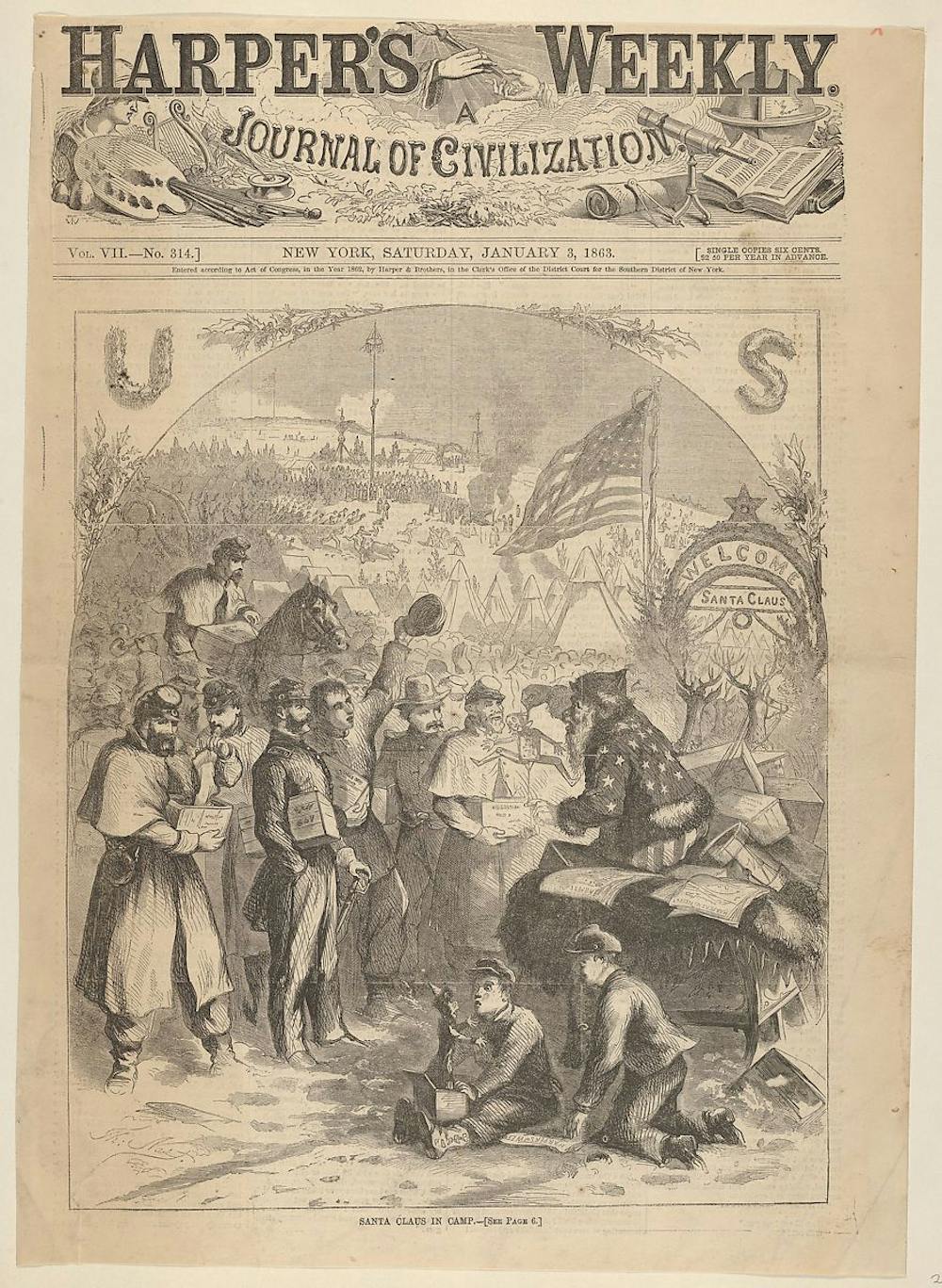
In January 1863 Harper’s Weekly published on its front page the image of Santa Claus visiting the Union Army in 1862. This image, which was produced by the German-American cartoonist Thomas Nast, represents the very first image of Santa Claus.
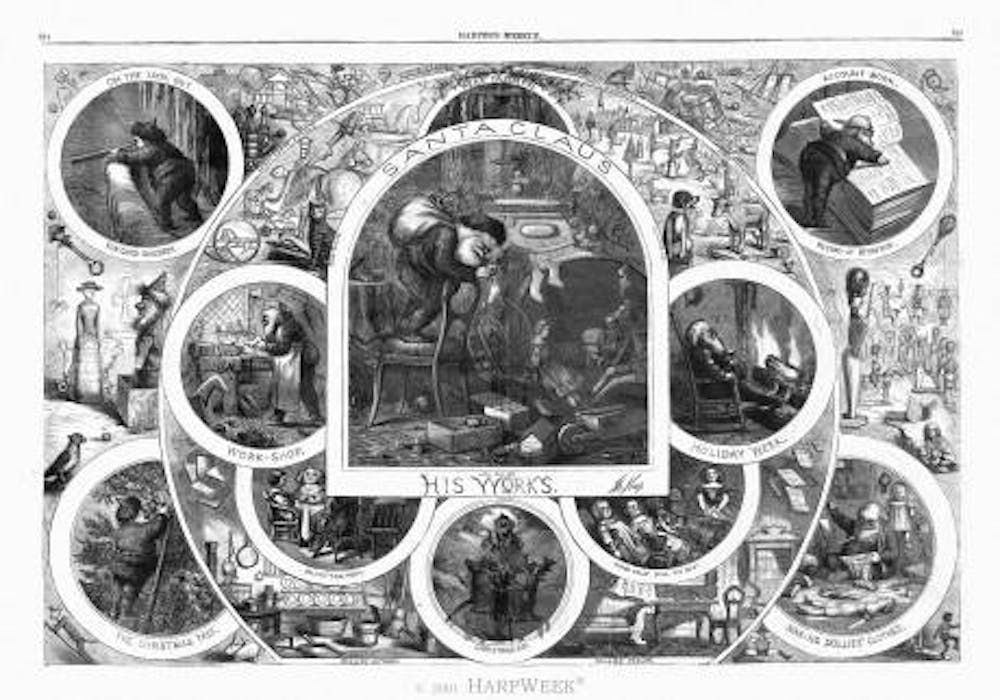
In the following years, Nast developed the image of Santa Claus into the jolly old man with a big belly and long white beard as we know it today. In 1866 Nast produced “Santa Claus and His Works,” an elaborate drawing of Santa Claus’ tasks, from making gifts to recording children’s behavior. This sketch also introduced the idea that Santa Claus traveled by a sledge drawn by reindeer.
Declaring Christmas a federal holiday and putting up the first Christmas tree in the White House marked the final steps in making Christmas an American holiday. On June 28, 1870, Congress passed the law that turned Christmas Day, New Year’s Day, Independence Day, and Thanksgiving Day into holidays for federal employees.
[Over 140,000 readers rely on The Conversation’s newsletters to understand the world. Sign up today.]
And in December 1889 President Benjamin Harrison began the tradition of setting up a Christmas tree at the White House.
Christmas had finally become an American holiday tradition.
Thomas Adam, Associate Professor of International and Global Studies, University of Arkansas
This article is republished from The Conversation under a Creative Commons license. Read the original article.
- Details
- Written by: Elizabeth Larson
Dogs available for adoption this week include mixes of German shepherd, husky, Labrador retriever, mastiff and pit bull.
Dogs that are adopted from Lake County Animal Care and Control are either neutered or spayed, microchipped and, if old enough, given a rabies shot and county license before being released to their new owner. License fees do not apply to residents of the cities of Lakeport or Clearlake.
The following dogs at the Lake County Animal Care and Control shelter have been cleared for adoption (additional dogs on the animal control website not listed are still “on hold”).
Call Lake County Animal Care and Control at 707-263-0278 or visit the shelter online for information on visiting or adopting.

Male German shepherd
This 1-year-old male German shepherd has a black and tan coat.
He is in kennel No. 12, ID No. LCAC-A-1892.

Labrador-pit bull mix
This 5-year-old female chocolate Labrador retriever-pit bull mix has a short chocolate-colored coat.
She is in kennel No. 13, ID No. LCAC-A-1769.

Female mastiff
This 3-year-old female mastiff has a short brindle coat.
She is in kennel No. 15, ID No. LCAC-A-1868.

Male husky
This 1-year-old male husky has a black and white coat with bright blue eyes.
He is in kennel No. 16, ID No. LCAC-A-2190.
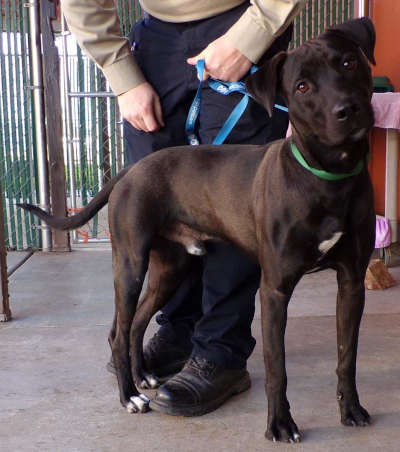
‘Snuffy’
“Snuffy” is a 1-year-old black Labrador retriever mix.
He is in kennel No. 24, ID No. LCAC-A-2152.
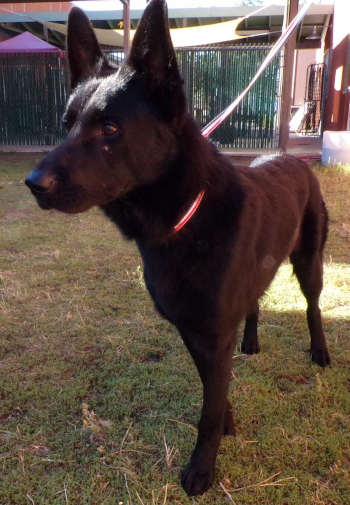
Male German shepherd
This 2-year-old male German shepherd has a black and tan coat.
He is in kennel No. 26, ID No. LCAC-A-1903.

Male shepherd mix
This 2-year-old male shepherd mix has a short black and tan coat.
He is in kennel No. 28, ID No. LCAC-A-1743.

Female German shepherd
This female German shepherd has a black coat.
She is in kennel No. 33, ID No. LCAC-A-2169.
Email Elizabeth Larson at
- Details
- Written by: UNIVERSITY OF MINNESOTA

If you ever wanted to be an astronomer, now is your chance. A new citizen science project, led by researchers at the University of Minnesota with support from NASA, allows volunteers to play an important role in learning more about the Sun by using their personal computers.
Participants will help identify bursts of plasma coming off the Sun, called solar jets, in thousands of images captured over the last 11 years by NASA’s Solar Dynamic Observatory.
The project, called Solar Jet Hunter, is the newest citizen science project under the Zooniverse platform originated at the University of Minnesota. Zooniverse is the world’s largest and most popular people-powered online research platform with more than two million volunteers from around the world. These volunteers act as armchair scientists and archivists helping academic research teams with their projects from the comfort of their own homes.
In this project, citizen scientists will detect solar jets by looking at short movies made from a sequence of still images. They decide if a solar jet is visible in any of the movies and provide information about the jets by annotating the images where solar jets are found.
By building a database of solar jets, the volunteers help narrow down the vast amount of data about the Sun to the most important information for further review by solar researchers.
Solar Jet Hunter is the newest citizen science project under the Zooniverse platform. In this project, citizen scientists will detect solar jets by looking at short movies made from a sequence of still images. They decide if a solar jet is visible in any of the movies and provide information about the jets by annotating the images where solar jets are found. Credit: Solar Jet Hunter, Zooniverse
“These solar jets are sort of like a million hydrogen bombs going off on the star that’s actually not that far away from us, so it is important that we try to understand more about how that happens,” said Lindsay Glesener, a University of Minnesota associate professor of physics and astronomy. “But with our small research team, it would probably take a decade or more to look through all these images ourselves so we’re asking for help.”
The team decided that the project would be perfect for the Zooniverse citizen science platform.
“Solar jets are very difficult to identify in any sort of automatic way,” said Sophie Musset, a research fellow at the European Space Agency and former University of Minnesota postdoctoral researcher who is leading the Solar Jet Hunter project. “You can’t just write a piece of code that will tell the computer to search and find all of the solar jets, but it's very easy to see with human eyes.”
Musset and Glesener said the information they get from the citizen scientists will not only be used to study the Sun but will also help to write a computer algorithm that could speed future identification of solar jets by combining computer help with human expertise.
Glesener also said that the University of Minnesota was the perfect place for solar research and citizen science to come together.
“We have both the expertise in studying solar jets and the Zooniverse team here at the University of Minnesota,” Glesener said. “You can’t just throw some random images up on a website and expect that you're going to get the information from the citizen scientists that you need. It takes people who really know how to make it work.”
Lucy Fortson, a fellow University of Minnesota physics and astronomy professor and one of the founders of the Zooniverse platform, is one of those experts.
“While Zooniverse has been involved in all kinds of citizens projects from the humanities to biology, this project brings us back to our astrophysics roots,” Fortson said. “Our partnership with NASA and the Adler Planetarium has expanded our capacity to take on important projects like this one and increased the acceptance of citizen science as a valid research methodology within the scientific community. This is real proof that citizen science has come of age as a research tool.”
In addition to Musset, Glesener, and Fortson, the Solar Jet Hunter international research team includes co-investigators Gregory Fleishman, a professor in the Center for Solar-Terrestrial Research at the New Jersey Institute of Technology; and Navdeep Panesar, a research scientist at Lockheed Martin Solar & Astrophysics Laboratory and Bay Area Environmental Research Institute.
Other members of the team include Erik Ostlund, a Zooniverse web developer at the University of Minnesota; Suhail Alnahari, a data scientist in the University of Minnesota’s School of Physics and Astronomy; University of Minnesota graduate students Yixian Zhang and Charlie Kapsiak; Mariana Jeunon, graduate student at Catholic University of America in Washington, D.C.; and Paloma Jol, a master student at Leiden University in The Netherlands.
The Solar Jet Hunter citizen science project is funded by NASA under the Heliophysics Guest Investigators program, and has supported students under a U.S. National Science Foundation CAREER grant.
To join the project, go to the Solar Jet Hunter website.