 How to resolve AdBlock issue?
News
- Details
- Written by: LYNDA LEE AND DERICK C. MOORE
For many people, the holidays are a time of togetherness, celebration and traditions like a holiday meal.
Census Bureau statistics show that thousands of employees and several food industry sectors make this possible.
To give you a taste, we trace holiday food fare every step of the way from agriculture and manufacturing to distribution by wholesalers and retailers.
Manufacturing
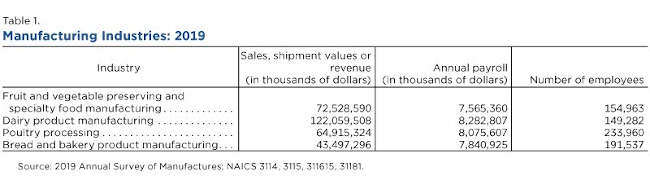
There were 233,960 employees with an annual payroll of $8.1 billion in the poultry (turkey, chicken, and duck) processing industry in 2019, according to the most recent data available in the Annual Survey of Manufactures (ASM), 2019. This includes poultry frozen, canned, cooked, or prepared fresh. The reported value of shipments that year: $64.9 billion.
The dairy industry is another important part of the holiday food ecosystem. Establishments that manufacture dairy products reported $122.1 billion in value of shipments and 149,282 employees in 2019.
Produce and dairy
Fruit and vegetable manufacturers across the country labor to provide fresh produce for the holidays. In California, the nation’s top fruit and vegetable manufacturer by sales and number of employees, the industry employed about 25,209 people with shipments valued at about $11.4 billion in 2019, according to the ASM.
In 2019, of the 149,282 people employed by U.S. dairy manufacturers, about 74.8% were production workers. Production workers that year spent about 227.4 million hours manufacturing dairy products.
Wisconsin is the top producer of dairy by sales and value of shipment which explains the nickname “Cheeseheads” for Wisconsin residents. The industry employed 23,664 workers in 2019. California, another leading dairy producer, employed about 18,536 dairy workers.
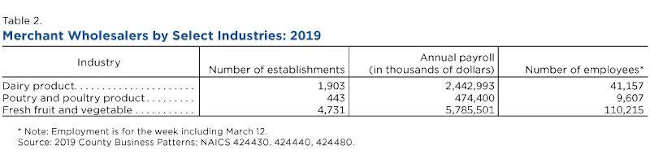
Wholesale workers play an important role in the distribution of holiday goods from farm to table. In 2019, there were 4,731 U.S. wholesale establishments (employing about 110,215 workers) that primarily distributed fresh fruits and vegetables, according to the Census Bureau’s 2019 County Business Patterns (CBP).
Dairy and poultry product wholesalers employed about 41,157 and 9,607 people, respectively, in 2019.
Grocery stores
In 2019, there were 62,932 supermarkets and other grocery stores in the U.S. employing about 2.6 million workers, according to the CBP.
These establishments typically employ workers in the double digits as cashiers, stock people and managers, and to perform other duties in special departments.
In some states, a large percentage of grocery stores have fewer than five employees. The state with the most small grocers is New York, where 63.9% of the grocery stores are establishments with fewer than five employees, according to the 2019 CBP.
Evergreen establishments
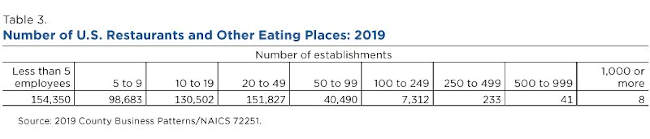
Restaurants and other eating establishments are lifesavers for those who opt for the no-fuss no-mess holiday meals. In 2019, there are 583,446 restaurants in the United States, employing about 11.1 million workers, according to the 2019 County Business Patterns .
These establishments ranged in size, with about 26.5% of the eateries employing fewer than five employees in 2019.
Meat consumption
Americans consume more than three times as much pork as turkey, according to the U.S. Department of Agriculture. In 2021, per capita meat consumption in the U.S. was projected to be about 225 pounds, including 51.6 pounds of pork and 15.7 pounds of turkey.
More data on agricultural projections is available from the USDA.
Lynda Lee is a supervisory survey statistician in the Census Bureau’s Data User and Trade Outreach Branch. Derick C. Moore is a senior communications specialist in the Census Bureau's Communications Directorate.
- Details
- Written by: Elizabeth Larson
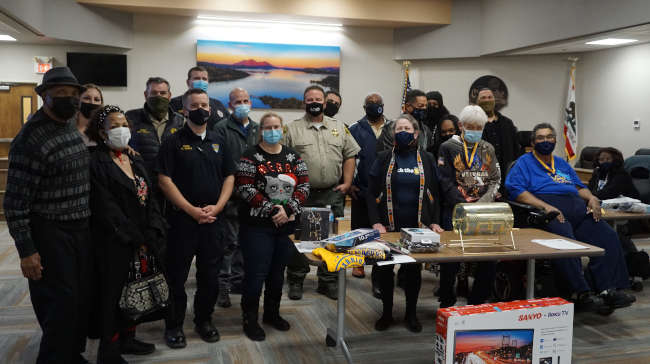
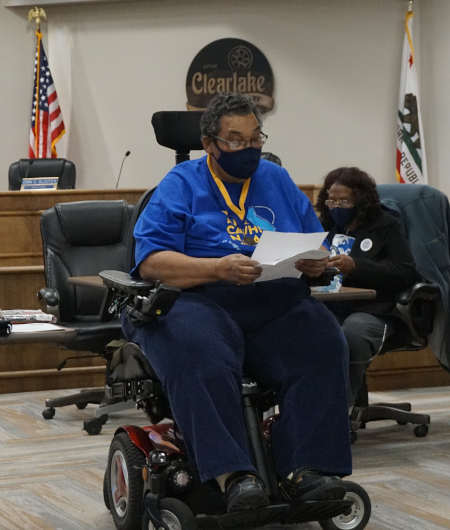
CLEARLAKE, Calif. — A group of Lake and Mendocino county leaders gathered with the local chapter of the NAACP this week to mark the end of a fundraiser that will help the organization pursue a number of key projects in the coming year.
The little ceremony took place at Clearlake City Hall on Monday afternoon.
NAACP President Rick Mayo was joined by a number of dignitaries who have shown up for the group over the years to show their support.
Mayo said the chapter represents Lake and Mendocino counties and the St. Helena portion of Napa County.
The Lake County NAACP branch was formed in 1982. Mayo has been president of the group for 34 of its nearly 40 years.
The group that gathered on Monday included leadership from the California-Hawaii NAACP State Conference.
Making the trip to Clearlake were North Area Director Capt. David Smith and Vallejo NAACP Branch President Jimmie Jackson. They joined Mayo and his branch leadership Kenneth Bagsby, Bessie Bell, Paul Kolb and Greta Zeit.
Smith said he sees a sense of community that makes him proud every time he comes to Lake County, and so he considers it a pleasure to visit. He said people in Lake County don’t mind getting out and getting their hands dirty.
Jackson said it’s good to see camaraderie and people talking with each other, adding that Mayo is a good NAACP president and he wouldn’t have driven to Lake County in the rainy weather for anyone else.
The group also included Mendocino County Sheriff Matt Kendall and Lake County Sheriff Brian Martin, both of whom serve on the chapter’s executive committee; Clearlake Police Chief Andrew White and Clearlake Police Officers Association President Trevor Franklin; District 2 Supervisor Bruno Sabatier and District 3 Supervisor EJ Crandell; and Clearlake city staffers Tina Viramontes and Mark Roberts.
White thanked everyone for coming. “Rick keeps us all in line.”
Kendall said Martin introduced him to Mayo after he became sheriff of Mendocino County.
“When you don’t have enough to go around, everyone has to help everyone out,” Kendall said, explaining the partnerships forged among local and regional organizations.
He said Mayo has been a voice of support, telling him when he’s had questions that he knows the right thing to do and to do it.
“It’s about all of us supporting each other,” Kendall said.
Sabatier said Mayo makes sure community leaders open their eyes to what is not obvious, and he’s looking forward to his continued leadership.
Bell said COVID-19 has stopped some of the branch’s efforts but they are getting back to work. She noted, she kind of likes “this Zoom thing.”
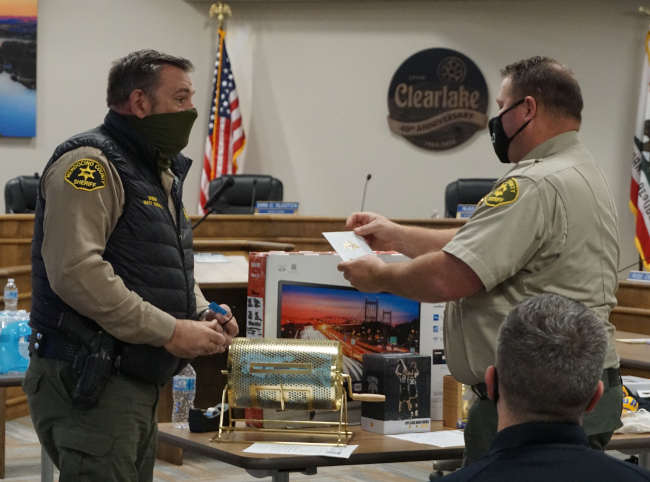
The point of the gathering was to draw tickets for a raffle that will fund the local NAACP branch’s future activities.
Like Bell, Mayo said COVID-19 has presented a challenge to the group.
So it’s planning activities including educating the community about the virus, advocating for the Voting Rights Act, working on housing and on Americans with Disabilities Act issues in the city and county.
Mayo said 1,000 tickets had been sold, but as of Monday they did not have the total amount of funds raised.
Mayo said the fundraiser was a great community effort.
“It was a great turnout. I’m really happy with it,” said Mayo, noting they’re looking forward to doing it again in the near future.
Kendall himself sold an estimated 200 of the tickets, which won a variety of prizes, from shirts and trophies to a smart television. Businesses that donated to support the raffle included Griffin’s Furniture, Lakeview Market, Big O Tires, Kevin Ness Jewelers and Walmart, among others.
Both Kendall and Martin helped with choosing the tickets, along with the dignitaries in attendance.
Mayo said any winners not in attendance would be contacted with the information on their tickets.
Email Elizabeth Larson at
- Details
- Written by: LAKE COUNTY NEWS REPORTS
As part of a multiyear, statewide energy policy to create a cleaner energy future for California, PG&E said it will move approximately 7,140 eligible residential electric customers in Lake County currently on a tiered rate plan called E-1 to a time-of-use, or TOU, rate plan in April 2022.
On the time-of-use — peak pricing from 4 to 9 p.m. daily — rate plan when customers use energy is as important as how much they use.
The transition to this time-of-use rate plan will occur by geographical region and affect approximately 2.5 million customers in PG&E’s service area in stages through 2022.
PG&E spokeswoman Deanna Contreras told Lake County News that the 7,140 customers in Lake County who will be transitioned to the TOU rate plan are residential customers who are eligible.
To help manage use and cost, customers can see hour-by-hour use via their online account and can view an estimate of their bill, compared to the previous year’s use, Contreras said.
Customers in Lake County will receive a series of notifications by mail starting this month to allow them ample time to make a choice if they prefer another rate plan. Customers can choose another rate plan at any time.
All California investor-owned electric utilities are required to automatically transition customers to the time-of-use rate plan to support a cleaner, healthier, and more reliable energy grid. PG&E does not profit from this change.
Customers can choose an alternate time-of-use rate plan or another rate plan, including the tiered rate plan, at any time. Customers enrolled in the Medical Baseline program will not be part of the automatic transition.
“To ensure our customers are fully aware of the transition to the time-of-use rate and how the program works, we’re communicating this change more than 90 days ahead, and we’ll continue to share information before each regional transition takes place,” said Marlene Santos, PG&E’s chief customer officer. “And, customers can choose the rate plan that best fits their needs and lives at any time.”
Customers who automatically transition to this time-of-use rate plan will receive risk-free bill protection for the first 12 months on the delivery portion of the bill.
If a customer pays more on the TOU rate plan than they would have on their current rate plan, PG&E will also automatically credit the customer the difference for the first year on the generation side.
More about time-of-use rate plans
Customers on these rate plans can choose to shift and reduce some energy use to lower-cost time periods (19 hours) every day, including weekends and holidays. The hours of 4 to 9 p.m. are higher priced (peak times). All other times are lower priced (off-peak). Environmental advocacy groups such as the Natural Resources Defense Council support the transition to TOU rates as the plans help build healthier communities.
“TOU rates help Californians take advantage of less expensive, cleaner and more plentiful electricity during periods when a greater share of renewable energy is flowing through the grid. Combined with energy efficiency, electrification, and demand response programs, TOU helps customers reduce energy costs and their carbon footprints by using appliances when more emissions-free electricity is available,” said Alejandra Mejia Cunningham, NRDC building decarbonization advocate.
Starting in 2018, approximately 150,000 residential customers from across PG&E’s service area representing diversity in climate, household size and energy use were randomly selected as part of the first phase of transitions.
Eighty percent of those customers stayed on the new time-of-use rate plan for more than a year. PG&E incorporated feedback from this initial group into the plans for the full rollout.
For more information about the transition to time-of-use rates and bill protection eligibility, customers can visit www.pge.com/toutransition. To view a customized rate plan comparison, customers can visit their account online at www.pge.com/TOUchoice.
Dedicated rate plan specialists are available at 1-866-743-7945 to answer questions and help customers choose a rate plan.
- Details
- Written by: Governor's Office
Newsom’s office said the COVID-19 booster requirement for health care workers will mitigate potential staffing shortages while helping to safeguard the state’s hospital capacity and protect the health and safety of Californians.
Combined with the new federal policies announced on Tuesday, the Governor’s Office said these actions will help ensure everyone in California has access to testing throughout the holiday season and that K-12 public school students can return to school safely.
“As the Omicron variant spreads rapidly across the country and circulates in all regions of the state, we’re taking immediate, proactive steps to protect Californians with boosters and expanded access to testing,” said Newsom. “The state is also redoubling our efforts to keep kids safe and keep schools open. We will help prevent the spread of COVID-19 in our communities by making at-home testing kits available to every K-12 public school student as they head back to the classroom from winter break.”
By February 1, 2022, health care workers and all employees in high-risk congregate settings, including nursing homes, will be required to get their booster. In the interim, all health care staff that have not received their booster must test for COVID-19 twice weekly until they are up to date on their vaccines.
To help mitigate the spread of COVID-19 in our schools, the state is also increasing the availability of at-home COVID-19 tests across California so K-12 public-school students can be tested as they return to school from winter break.
In early December, the California Department of Public Health, or CDPH, distributed approximately two million tests to schools for this purpose.
CDPH will expand those efforts by providing one to two rapid tests for every student. The agency also will work with local education and health partners to distribute those test kits as quickly and efficiently as possible.
“As we fight Omicron, there is nothing more important for our kids than keeping schools safely open — that means deploying rapid tests,” said State Superintendent of Public Instruction Tony Thurmond. “Over the holiday break, CDE will be working closely with the governor and California's public health and emergency management personnel to get testing supplies to families, districts and schools.”
To ensure every Californian has access to testing, the state will also be expanding antigen test availability and expanding hours of operation at state-sponsored OptumServe sites that are already at capacity.
Today, 90% of the population lives within a 30-minute driving distance of a site. Over the course of the pandemic, the state has established 6,288 testing sites statewide, comprising 31% of the nation’s testing sites.
In support of this effort, since August, the state has purchased over 12 million over-the-counter tests. CDPH is distributing an additional six million tests to community partners serving disproportionately impacted Californians and four million to local health jurisdictions.
California has implemented the most robust vaccination and testing programs in the country. To date, California has administered over 64 million vaccination doses and over 116 million tests, with an average turn around of just 48 hours.
In recent months, Gov. Newsom implemented a series of measures to slow the spread of COVID-19, including first-in-the-nation vaccine and masking measures requiring that workers in health care settings be fully vaccinated, announcing plans to add the COVID-19 vaccine to the list of vaccinations required to attend school in-person when fully approved, requiring masking in schools and implementing a standard that all school staff and all state workers either show proof of full vaccination or be tested.
As a result of these actions, California has been labeled the safest state to live in during COVID-19 and a national leader in preventing school closures.
"California’s determination to use every available tool to keep our children safe during this pandemic has allowed us to keep schools open and case rates low — a key to their physical and mental health as well as learning,” said Dr. Linda Darling-Hammond, State Board of Education president. “Ensuring boosters and testing in the new year will continue this commitment to keeping our children’s welfare front and center."
While we are still learning about the severity of illness caused by Omicron, it is clear that individuals who are up to date on their vaccines, including a booster, are most protected, the Governor’s Office reported.
To help slow the spread of COVID-19, Californians are encouraged to get vaccinated, get boosted, wear a mask indoors and get tested if sick.