How to resolve AdBlock issue?
News
- Details
- Written by: LAKE COUNTY NEWS REPORTS

LAKE COUNTY, Calif. — The U.S. Fish and Wildlife Service is proposing Endangered Species Act protections for four geographically and genetically distinct population segments of the foothill yellow-legged frog, but is not planning listings for the frog in areas of California including Lake County.
The foothill yellow-legged frog, named for its yellow belly and underside of its rear legs, is found from the Willamette Valley in Oregon to the Santa Lucia mountain range in Southern California and from the Pacific coast to the western slopes of the Cascade and Sierra Nevada.
The agency said the amphibian faces several threats, including altered water flows related to water infrastructure; competition with and predation by nonnative species; disease; precipitation and temperature changes related to climate change; high-severity wildfires; water-related recreation; and habitat conversion and degradation.
“We closely examined the condition of each DPS and the threats they face. Using the best available science, we determined which populations warranted protections under the ESA and where future recovery efforts should be focused,” said Michael Fris, field supervisor of the Service’s Sacramento Fish and Wildlife Office.
The six distinct population segments, or DPS, in California are the North Coast, the region in which Lake County is located; Central Coast; North Feather; North Sierra; South Coast; and South Sierra.
To assess the condition of each DPS, the U.S. Fish and Wildlife evaluated data collected on the frog’s occupancy of streams in its historical range.
U.S. Fish and Wildlife said four of those segments warrant protection for the frog.
The service is proposing to list the South Coast DPS and South Sierra DPS as endangered due to a strong pattern of declining stream occupancy, as well as rapid reductions in occupied range.
The North Feather DPS and Central Coast DPS are proposed to be listed as threatened due to decreasing levels of stream occupancy and the potential for a variety of threats to cause additional declines.
The North Coast DPS and North Sierra DPS are not warranted for listing after the data showed high levels of occupancy in streams located throughout their ranges, making them more resilient to environmental changes and catastrophic events.
“Our goal is to help the foothill yellow-legged frog recover across its range,” said Fris. “Ongoing collaboration with a number of partners will result in positive conservation gains and put this frog on the road to recovery.”
The service is working closely with partners at the Oakland Zoo, U.S. Forest Service, Garcia and Associates, Pacific Gas and Electric and California Department of Fish and Wildlife to raise foothill yellow-legged frogs in captivity and release them into Plumas National Forest.
The first group of captive-reared frogs, 115 in total, was released in July 2020. A second group of 36 was released in April 2021.
A copy of the finding published in the Federal Register on Dec. 28.
The service plans to develop and propose critical habitat at a later date.
The public can submit comments on the proposed listing and read supporting information at www.regulations.gov by searching Docket Number FWS — R8 — ES — 2021—0108.
Comments should be submitted by Feb. 28, 2022.
- Details
- Written by: Robin Marks
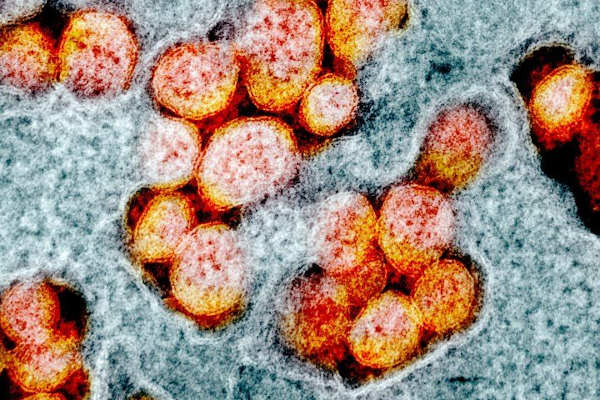
The Alpha variant of SARS-CoV-2 — the first variant of concern — evolved mutations that allowed it to more efficiently suppress the immune system’s early response to infection, according to a new study led by scientists at the UC San Francisco’s Quantitative Biosciences Institute, or QBI, and University College London.
The researchers have discovered that the variant has ramped up production of a protein that it uses to stifle infected cells’ immune-stimulating signals.
The mutations responsible for this change likely help the Alpha variant evade immune detection and accelerates its transmission, and importantly similar mutations exist in Omicron.
The findings are reported in the Dec. 23 issue of Nature.
The team, led by senior authors Nevan Krogan, Ph.D., of UCSF and Claire Jolly and Greg Towers, Ph.D., of University College, London, found that Alpha’s enhanced infectivity arose from mutations outside of “spike,” the proteins that have attracted much of scientists’ attention since the start of the pandemic.
Spike, which the virus uses to enter the cells of its host, is critical to infection and is the target of all available COVID-19 vaccines. But it is just one of many tools that the virus uses to manipulate its host.
While scientists have closely monitored mutations in the spike region of new variants — Omicron has over 30 — Krogan emphasized that changes in other regions might also have important impact.
“The mutations in spike allow the virus to get into cells more effectively. But what about after the virus gets into cells? There may be other mutations that allow it to replicate more,” said Krogan, who also leads UCSF’s QBI and its Coronavirus Research Group, or QCRG).
After it was first detected in the United Kingdom in late 2020, Alpha spread rapidly around the world, suggesting it was significantly more transmissible than the original virus.
But experiments in Towers’ lab indicated that the new variant replicated no faster than its predecessor. Seeking an explanation, the QCRG set out to learn if the new variant interacted differently with the cells it infected.
The team, which also included researchers at the Massachusetts Institute of Technology (MIT), European Molecular Biology Laboratory (EMBL) and the Icahn School of Medicine at Mount Sinai, compared the variant’s impact on host cells to that of virus isolated early in the pandemic.
To do so, postdoctoral scholar Mehdi Bouhaddou, Ph.D., QBI senior scientist Lorena Zuliani-Alvarez, Ph.D., both colead authors on the study, measured the activity of each gene and monitored protein levels in lab-grown cells infected by the virus.
They also surveyed the phosphorylation status of the proteins — an analysis that detects chemical modifications that can temporarily adjust proteins’ function.
Using this data to compare the response to infection with Alpha and the original virus, the researchers found that many of the significant differences involved the innate immune response, the body’s first line of defense against pathogens. Many of the genes involved in rallying this defense were barely activated in the presence of the SARS-CoV-2 Alpha variant.
In addition, the team discovered that the Alpha-infected cells contained large amounts of three viral proteins known to help the virus evade the body’s immune response. Further experiments showed that one of them, called Orf9b, accomplishes that task by latching on to a protein that switches on immune-stimulating genes.
The findings suggest it may be possible to help the immune system fight SARS-CoV-2 by developing drugs that block this interaction and offer a potential strategy for doing so.
Alpha has since been outpaced by newer variants whose mutations spur even more aggressive transmission. “The virus will keep evolving and adapting to the host, and every time it will adapt better and better,” Zuliani-Alvarez said.
Both the Delta and Omicron appear to be cousins of Alpha, each having mutations in two of the three regions the team studied, suggesting they may have similar effects on the innate immune system.
The findings demonstrate the value of understanding the full scope of changes shaping the behavior of viral variants. “Studying the variants of concern gives us ideas about how SARS-CoV-2 evolves,” said Bouhaddou. “Now we have a sense of the proteins that are mutating most frequently, and the biological consequences of those mutations. I think this helps us prepare for what might come next.”
The University of California, San Francisco, or UCSF, is exclusively focused on the health sciences and is dedicated to promoting health worldwide through advanced biomedical research, graduate-level education in the life sciences and health professions, and excellence in patient care.
UCSF Health, which serves as UCSF’s primary academic medical center, includes top-ranked specialty hospitals and other clinical programs, and has affiliations throughout the Bay Area.
QBI fosters collaborations across the biomedical and the physical sciences, seeking quantitative methods to address pressing problems in biology and biomedicine. Motivated by problems of human disease, QBI is committed to investigating fundamental biological mechanisms, because ultimately solutions to many diseases have been revealed by unexpected discoveries in the basic sciences. Learn more at qbi.ucsf.edu.
Robin Marks writes for the University of California, San Francisco.
- Details
- Written by: GOVERNOR’S OFFICE
“In partnership with the Legislature, we’ve advanced hundreds of new bills this year to make meaningful progress on an array of issues that matter deeply to Californians across the state,” said Gov. Newsom. “I thank Pro Tem Atkins and Speaker Rendon for their leadership in advancing historic measures to improve the lives of Californians, including new tools to boost our housing supply, improve workplace conditions and build a stronger state. As we head into the new year, I look forward to our continued work to expand opportunity for all Californians.”
Among the new laws taking effect Jan. 1 are protections for workers and measures to increase the state’s supply of affordable housing, create a more inclusive state, expand voter access and protect consumers and the environment from harmful chemicals.
AB 701 by Assemblymember Lorena Gonzalez (D-San Diego) establishes nation-leading transparency measures for companies to disclose warehouse production quota descriptions and prohibits the use of algorithms that disrupt basic worker rights.
SB 62 by Sen. María Elena Durazo (D-Los Angeles) ends the garment industry’s practice of piece-rate compensation and expands fashion brands’ liability for unpaid wages.
SB 8 by Sen. Nancy Skinner (D-Berkeley) extends the provisions of the Housing Crisis Act of 2019 through 2030 to accelerate the approval process for housing projects and curtail local governments’ ability to downzone, among other provisions.
SB 9 by State Senate President pro Tempore Toni G. Atkins (D-San Diego) facilitates the process for homeowners to build a duplex or split their current residential lot.
SB 10 by Sen. Scott Wiener (D-San Francisco) creates a voluntary process for local governments to implement streamlined zoning for new multiunit housing near transit or in urban infill areas.
SB 2 by Senate President pro Tempore Toni Atkins (D-San Diego) and Sen. Steven Bradford (D-Gardena) creates a system within the Commission on Peace Officer Standards and Training, or POST, to investigate and revoke or suspend peace officer certification for serious misconduct.
SB 16 by Sen. Nancy Skinner (D-Berkeley) expands public access to police misconduct records related to unreasonable or excessive use of force, discriminatory or prejudiced behavior and other misconduct.
AB 338 by Assemblymember James C. Ramos (D-Highland) allows the placement of a monument in Capitol Park honoring Sacramento-area tribes, replacing the sculpture of missionary Junipero Serra.
AB 855 by Assemblymember James C. Ramos (D-Highland) removes Columbus Day as a judicial holiday and replaces it with Native American Day in September.
AB 600 by Assemblymember Joaquin Arambula (D-Fresno) ensures that crimes targeting people due to their immigration status are considered a hate crime.
AB 37 by Assemblymember Marc Berman (D-Menlo Park) makes permanent the measure implemented last year to send a vote-by-mail ballot to every active registered voter.
SB 389 by Sen. Bill Dodd (D-Napa) allows restaurants, bars, breweries and wineries that sell food to continue offering to-go alcoholic beverages with food orders, building on state regulatory relief announced in June.
AB 1084 by Assemblymember Evan Low (D-Campbell) requires retail department stores to provide a gender-neutral section for toys and child care items.
AB 652 by Assemblymember Laura Friedman (D-Glendale) bans the use of toxic PFASs in products for children, such as car seats and cribs, and AB 1200 by Assemblymember Philip Ting (D-San Francisco) prohibits their use in disposable food packaging.
In October, Gov. Newsom acted on the final bills of 2021, which advanced his California Comeback Plan featuring the most robust small business relief package in the country, direct financial and rent relief for Californians, the largest increase in homeless housing in state history, universal Pre-K and a historic $15 billion climate package to advance California’s nation-leading climate agenda.
Gov. Newsom also signed historic measures that took effect immediately this year, such as SB 796 by Sen. Steven Bradford (D-Gardena), which authorized Los Angeles County to return Bruce’s Beach property to the Bruce family nearly a century after the land was wrongfully taken from them.
Since then, the California Department of Parks and Recreation has amended the property deed, removing restrictions, and the Los Angeles County Board of Supervisors voted to accept the amended property deed, officially allowing the transfer of the property to the Bruce Family.
SB 65, the California Momnibus Act by Sen. Nancy Skinner (D-Berkeley) will go into effect in August 2022, helping tackle racial and ethnic disparities in maternal health outcomes by improving research and data collection.
And AB 101 by Assemblymember Jose Medina (D-Riverside) which — upon appropriation of funds by the Legislature — requires high schools to provide ethnic studies starting in academic year 2025-26 and make completion of a one-semester course a high school graduation requirement beginning with students graduating in 2029-2030.
Gov. Newsom additionally signed the following notable bills which will take effect on Jan. 1:
AB 118 by Sen. Sydney Kamlager (D-Los Angeles) — Department of Social Services: C.R.I.S.E.S. Grant Pilot Program.
AB 215 by Assemblymember David Chiu (D-San Francisco) — Planning and Zoning Law: housing element: violations.
AB 245 by Assemblymember David Chiu (D-San Francisco) — Educational equity: student records: name and gender changes.
AB 286 by Assemblymember Lorena Gonzalez (D-San Diego) — Food delivery: purchase prices and tips.
AB 977 by Assemblymember Jesse Gabriel (D-Encino) — Homelessness program data reporting: Homeless Management Information System.
AB 1003 by Assemblymember Lorena Gonzalez (D-San Diego) — Wage theft: grand theft.
AB 1220 by Assemblymember Luz Rivas (D-Arleta) — Homelessness: California Interagency Council on Homelessness.
AB 1405 by Assemblymember Buffy Wicks (D-Oakland) — Debt settlement practices.
SB 1 by Sen. Toni G. Atkins (D-San Diego) — Coastal resources: sea level rise.
SB 41 by Sen. Thomas Umberg (D-Santa Ana) — Privacy: genetic testing companies.
SB 109 by Sen. Bill Dodd (D-Napa) — Department of Forestry and Fire Protection: Office of Wildfire Technology Research and Development.
SB 221 by Sen. Scott Wiener (D-San Francisco) — Health care coverage: timely access to care.
SB 224 by Sen. Anthony Portantino (D-La Cañada Flintridge) — Pupil instruction: mental health education.
SB 331 by Sen. Connie Leyva (D-Chino) — Settlement and nondisparagement agreements.
SB 343 by Sen. Ben Allen (D-Santa Monica) — Environmental advertising: recycling symbol: recyclability: products and packaging.
SB 352 by Sen. Susan Talamantes Eggman (D-Stockton) — The military: sexual harassment.
SB 395 by Sen. Anna Caballero (D-Salinas) — Excise tax: electronic cigarettes: Health Careers Opportunity Grant Program: Small and Rural Hospital Relief Program.
SB 510 by Sen. Richard Pan (D-Sacramento) — Health care coverage: COVID-19 cost sharing. A signing message can be found here.
SB 552 by Sen. Robert Hertzberg (D-Van Nuys) — Drought planning: small water suppliers: nontransient noncommunity water systems.
SB 639 by Sen. María Elena Durazo (D-Los Angeles) — Minimum wages: persons with disabilities.
For full text of the legislation, visit: http://leginfo.legislature.ca.gov.
- Details
- Written by: Elizabeth Larson
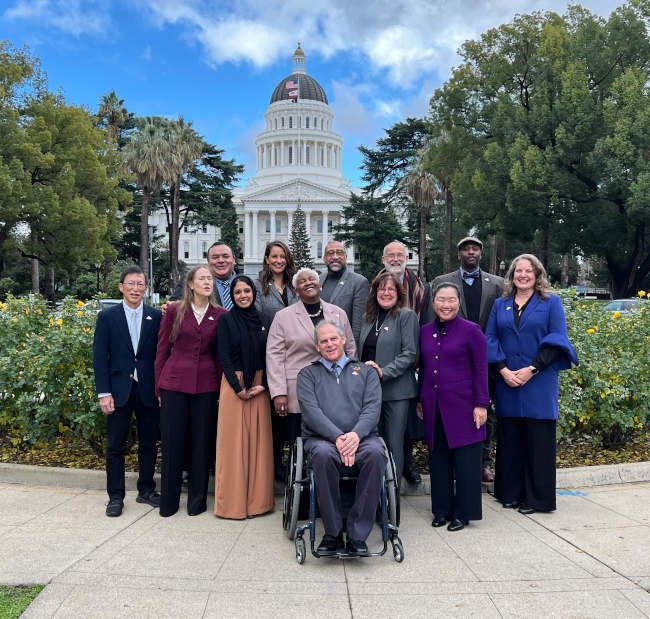
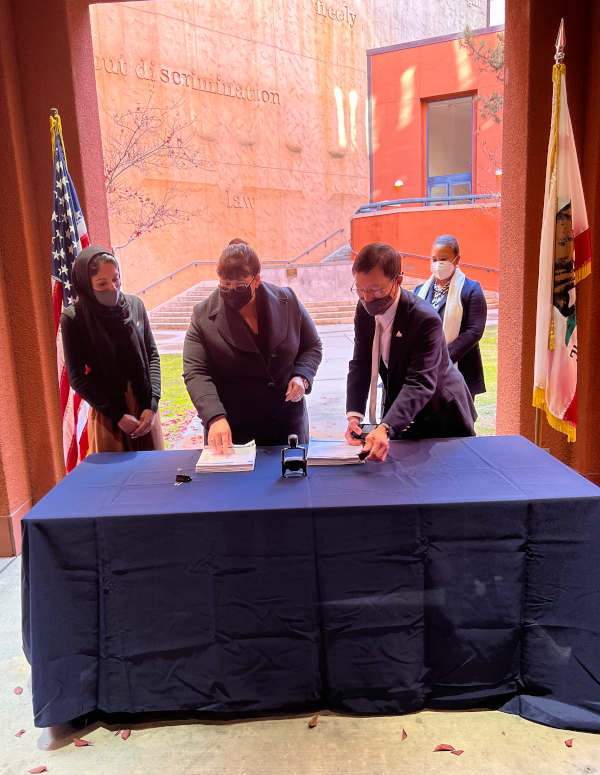
On Monday, the California Citizens Redistricting Commission delivered California’s final congressional, State Senate, Assembly and Board of Equalization district maps to the California Secretary of State, finalizing a process that was impacted by the pandemic and which sought to balance the interests of millions of state residents.
Monday was the deadline set by the California Supreme Court for the commission’s final maps.
“I want to thank the redistricting commissioners for their hard work under challenging circumstances. We will now send these maps to the Legislature and to all 58 counties for implementation,” said California Secretary of State Dr. Shirley N. Weber.
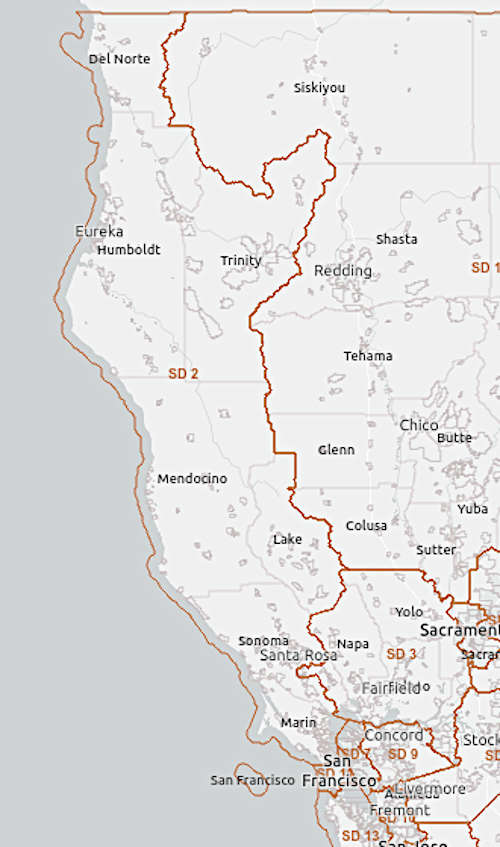
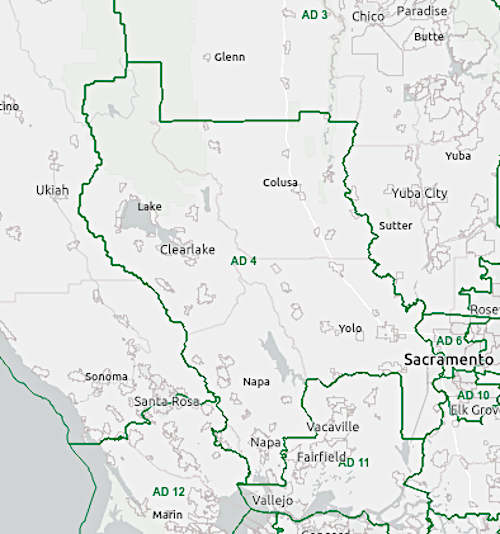
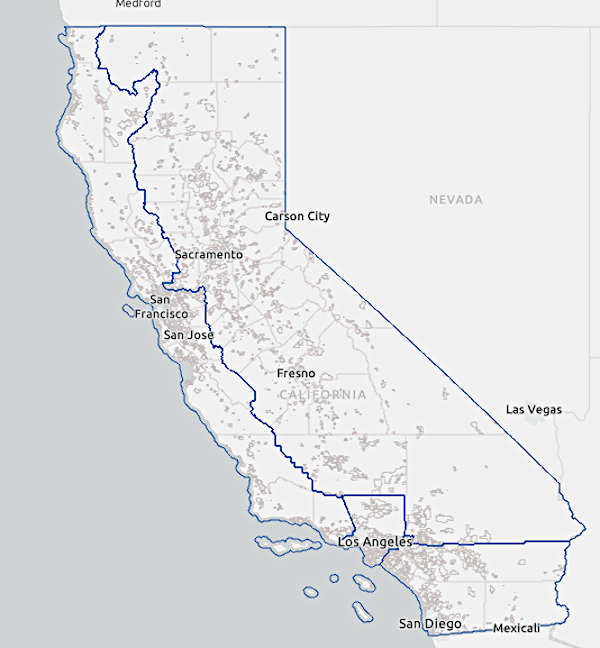
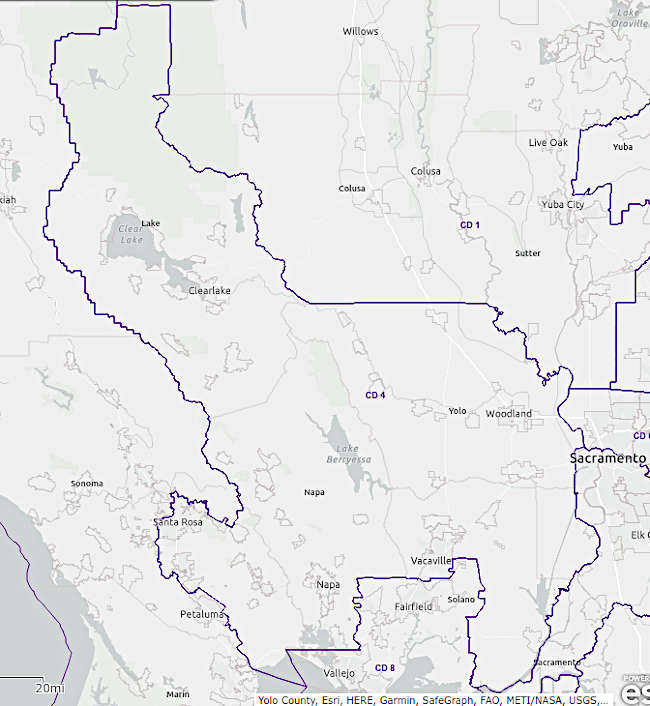
The final maps place Lake County in Congressional District 4, State Senate District 2, Assembly District 4 and Board of Equalization District 2.
Every 10 years, with the completion of a new census, California must redraw electoral district boundaries to ensure the state’s population is even distributed among the new districts.
The 14-member commission — including five Democrats, five Republicans and four members who are unaffiliated — drew four Board of Equalization districts, 52 congressional districts, 40 Senate districts and 80 Assembly districts, which determine how funding and other resources are allocated to communities.
Commission Chair Isra Ahmad said the group represented a variety of personal and professional backgrounds and different parts of the state.
“We drew district maps in an open and transparent manner that did more than merely allow public input — we actively sought and encouraged broad public participation in the process through a massive education and outreach program, afforded to us by the delay in receiving the census data,” said Ahmad, who lives in San Jose.
“Serving on the commission has allowed us to work to expand the circle of opportunity for more and more people across California. Our communities are changing faster than ever. We all worked to ensure that all communities had fair, just and equitable representation. And we did so in a transparent manner, while working hard to engage all communities, especially voices who have been historically excluded. Representation matters, and representation is only truly possible in all communities actively engaged,” said Commissioner Pedro Toledo, who lives in Petaluma.
The commissioners were seated in August 2020 and began months of preparation for their work with meetings, planning, organization, outreach and public education.
On Aug. 12, the U.S. Census Bureau delivered to the state the local level data, however, the Statewide Database needed until Sept. 20 to further prepare the information in order to allow for the state’s incarcerated population to be counted with the communities of their last known residence and reformat the data for use by the commission.
Due to the delays in the process, the state redistricting commission asked the California Supreme Court to push back its Dec. 15 deadline by a month, to Jan. 14. Instead, the state Supreme Court gave the commission until Dec. 27.
In addition to Ahmad and Toledo, the commission includes Linda Akutagawa of Huntington Beach, Jane Andersen of Berkeley, Alicia Fernández of Clarksburg, Neal Fornaciari of Tracy, J. Ray Kennedy of Morongo Valley, Antonio Le Mons of Studio City, Sara Sadhwani of La Cañada Flintridge, Patricia S. Sinay of Encinitas, Derric Taylor of Los Angeles, Trena Turner of Stockton, Angela Vázquez of Los Angeles and Russell Yee of Oakland.
In 2008, California voters passed the Voters First Act, authorizing the creation of the independent California Citizens Redistricting Commission to draw new State Senate, State Assembly and State Board of Equalization district lines.
In 2010, the Voters First Act for Congress gave the Commission the responsibility of drawing new Congressional districts following every census.
Email Elizabeth Larson at