 How to resolve AdBlock issue?
News
- Details
- Written by: Elizabeth Larson
The City of Clearlake Animal Association also is seeking fosters for the animals waiting to be adopted.
Call the Clearlake Animal Control shelter at 707-273-9440, or email
Visit Clearlake Animal Control on Facebook or on the city’s website.

‘Andy’
“Andy” is a male American pit bull mix with a short gray and white coat.
He is dog No. 48995415.
‘Arnold’
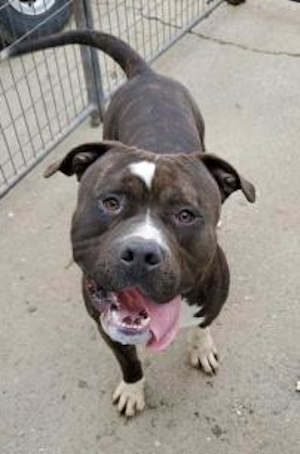
“Arnold” is a male American Staffordshire terrier mix with a short brindle coat with white markings.
He is dog No. 49029348.
‘Bear’
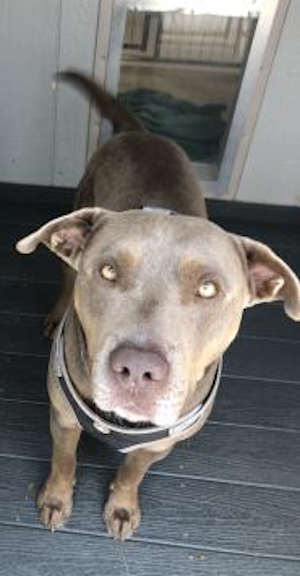
“Bear” is a male Labrador retriever-American pit bull mix with a short charcoal and fawn coat.
He has been neutered.
He is dog No. 48443153.
‘Bear No. 2’
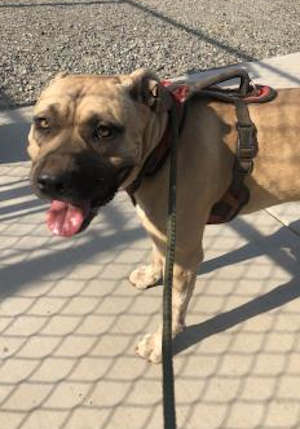
“Bear No. 2” is a male American pit bull mix with a short tan coat.
He has been neutered.
He is dog No. 48731556.

‘Bella’
“Bella” is a female American pit bull mix with a short gray brindle coat.
She has been spayed.
She is dog No. 48448381.
‘Gingy’
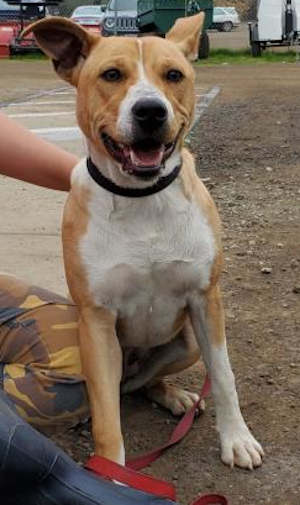
“Gingy’ is a female terrier mix with a tan and white coat.
She is dog No. 49228146.
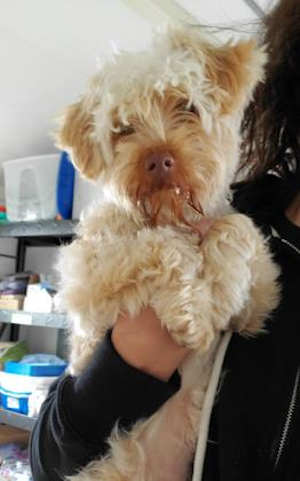
‘Holly’
“Holly” is a female terrier mix with a beige coat.
She is dog No. 49159116.
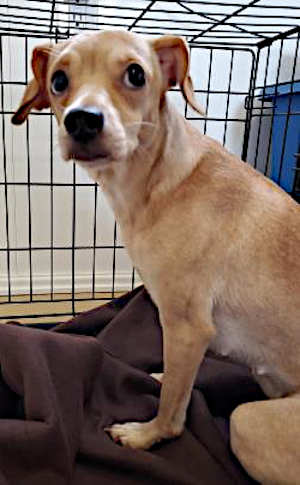
‘Isabella’
“Isabella” is a female Chihuahua mix with a short tan coat.
She is dog No. 49292130.

‘Levi’
“Levi” is a male golden retriever-Labrador retriever mix.
He has a short golden coat.
He is dog No. 48975687.
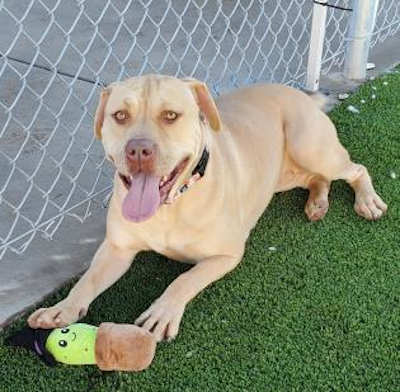
‘Maria’
“Maria” is a female Shar-Pei mix with a short tan coat.
She is dog No. 49047315.
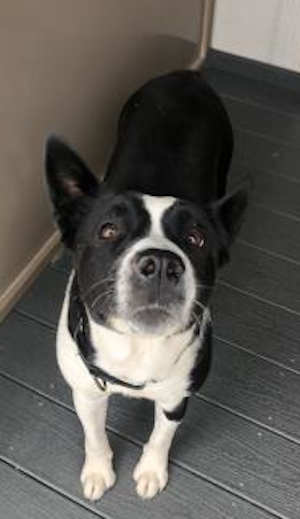
‘Mitzi’
“Mitzi” is a female Australian cattle dog mix with a medium-length black and white coat.
She has been spayed.
She is dog No. 48443306.
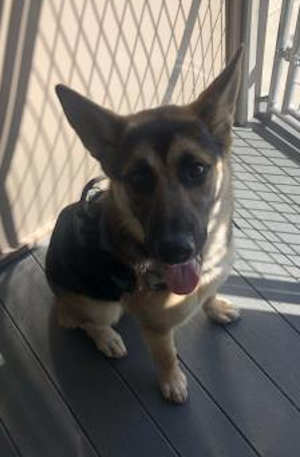
‘Nala’
“Nala” is a 1-year-old female German shepherd mix.
She has a medium-length black and tan coat.
She is dog No. 48289638.
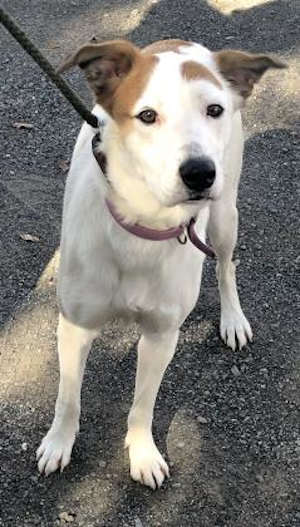
‘Priscilla’
“Priscilla” is a female Brittany spaniel mix with a white and copper coat.
She is dog No. 49089138.
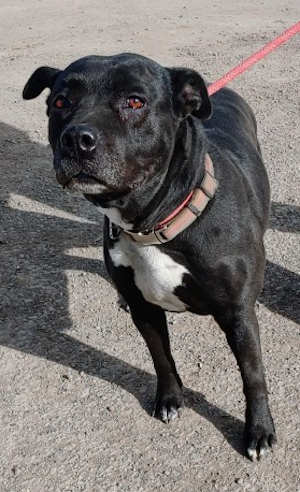
‘Sassy’
“Sassy” is a female American pit bull mix with a short black coat.
She has been spayed.
She is dog No. 48443128.
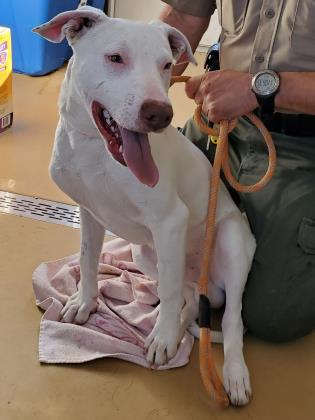
‘Snowball’
“Snowball” is a male American Staffordshire mix terrier with a white coat.
He is dog No. 49159168.
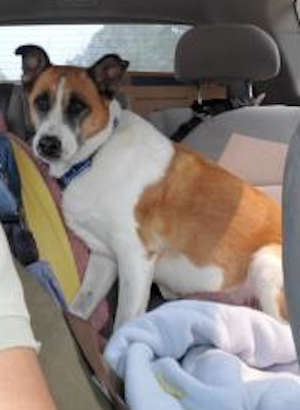
‘Tanisha’
“Tanisha” is a female Australian cattle dog mix with a short red and white coat.
She has been spayed.
She is dog No. 48443302.
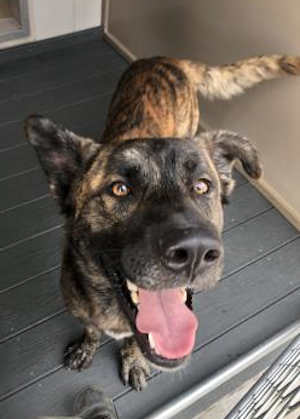
‘Terry’
“Terry” is a male shepherd mix with a short brindle coat.
He is dog No. 48443693.
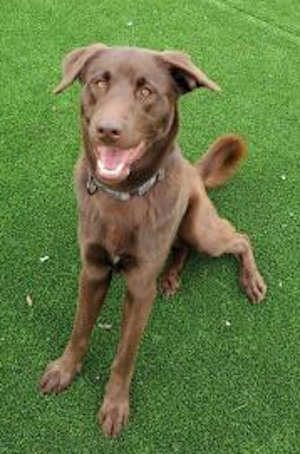
‘Turk’
“Turk” is a male chocolate Labrador retriever mix.
He is dog No. 48911836.
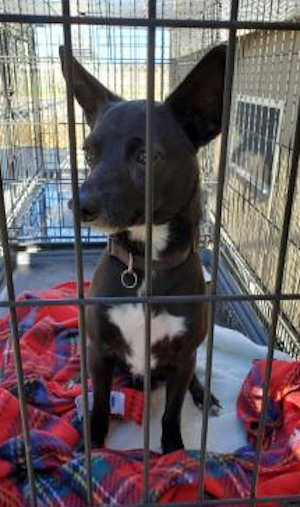
‘Willie’
“Willie” is a male Chihuahua mix with a short black coat and white markings.
He is dog No. 49141640.
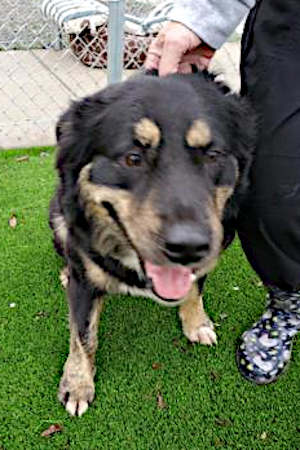
‘Winnie’
“Winnie” is a female Doberman pinscher-Australian shepherd mix with a short tricolor coat.
She has been spayed.
She is dog No. 49228128.
Email Elizabeth Larson at
- Details
- Written by: DENNIS FORDHAM
Without a valid will a person’s estate passes to their surviving heirs under intestate succession (i.e., “succession without a will”).
A valid will can determine who inherits assets in a decedent’s estate, who is the executor of the estate, what powers the executor has over the estate, and more (or less).
Litigation over the validity of a will can occur if an heir is unhappy because they inherit less under the will than under the laws of intestacy or if a beneficiary inherits less under the current will than the prior will.
To be valid, a will must be properly executed by a person who, at the time he or she signs the will, is of sound mind and is acting both with testamentary intent and voluntarily, that is without duress, menace, fraud or undue influence (which the law sometimes presumes exists in certain untrustworthy situations, like gifts to paid caregivers).
In California, a will is properly executed if it satisfies any one of various standards, as relevant, to the document’s execution (section 6113 of the Probate Code).
First, a will is valid if it either satisfies the standard will requirements or there is clear and convincing evidence supporting a will that does not meet the standard requirements (section 6110 of the Probate Code). Otherwise, a handwritten will is valid if it satisfies the holographic (handwritten) will requirements (section 6111 of the Probate Code).
The standard will requirements are that the will be signed by the testator, i.e. the person making the will, and be witnessed by two persons at the same time. The two witnesses must see the testator either sign the will or else acknowledge the will in their presence and the witnesses must understand that it is the testator’s will.
Otherwise, failing to meet all standard requirements, the will may still be valid if, “clear and convincing evidence” is provided to the probate court to show that, “at the time the testator signed the will, the testator intended the will to constitute the testator’s will.”
Alternatively, the testator may write a holographic (handwritten) will with the material provisions in his or her own handwriting; no witnesses are required. The holographic will should demonstrate testamentary intent, i.e., the testator’s intention to gift property at death, and be signed and dated by the testator.
Second, the will is also valid if it takes the form of a California Statutory Will set out in section 6200 et. seq of the Probate Code. California’s statutory will form allows for a person to select from amongst different distribution scenarios by signing his or her name in the associated box to indicate a choice of distribution and by writing in relevant information, such as the names of the beneficiaries and the specific gifts.
The statutory will must be signed and dated by the testator in the presence of two witnesses who sign and date a witness declaration.
Third, a will is also valid in California if it was validly executed elsewhere under another state’s law or was validly executed, either at the time of executing the will or at the time of the testator’s death, under the laws of the place where the testator was domiciled (i.e., usually lived as a permanent resident), had a dwelling (i.e., including a part time residence), or was a national (section 6113c of the Probate Code).
Next, an adult person of sound mind may execute a will in California (section 6100 of the Probate Code). A person is presumed to have capacity to execute a will, unless the presumption is rebutted (section 810 of the Probate Code).
More specifically, California requires the testator (1) to understand the nature of making a will; (2) understand and remember the nature and situation of their property; and (3) remember and understand their relations to their living family and those whose interests are affected by the will (section 6100.5 of the Probate Code).
The foregoing is not legal advice. Consult an attorney if confronting these issues.
Dennis A. Fordham, attorney, is a State Bar-Certified Specialist in estate planning, probate and trust law. His office is at 870 S. Main St., Lakeport, Calif. He can be reached at
- Details
- Written by: Marcia Rieke, University of Arizona
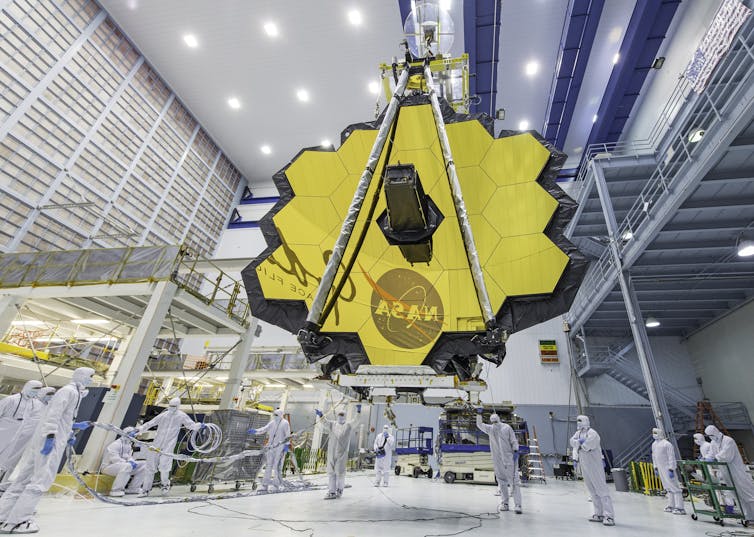
The James Webb Space Telescope was launched into space on Dec. 25, 2021, and with it, astronomers hope to find the first galaxies to form in the universe, will search for Earthlike atmospheres around other planets and accomplish many other scientific goals.
I am an astronomer and the principal investigator for the Near Infrared Camera – or NIRCam for short – aboard the Webb telescope. I have participated in the development and testing for both my camera and the telescope as a whole.
To see deep into the universe, the telescope has a very large mirror and must be kept extremely cold. But getting a fragile piece of equipment like this to space is no simple task. There have been many challenges my colleagues and I have had to overcome to design, test and soon launch and align the most powerful space telescope ever built.
Young galaxies and alien atmospheres
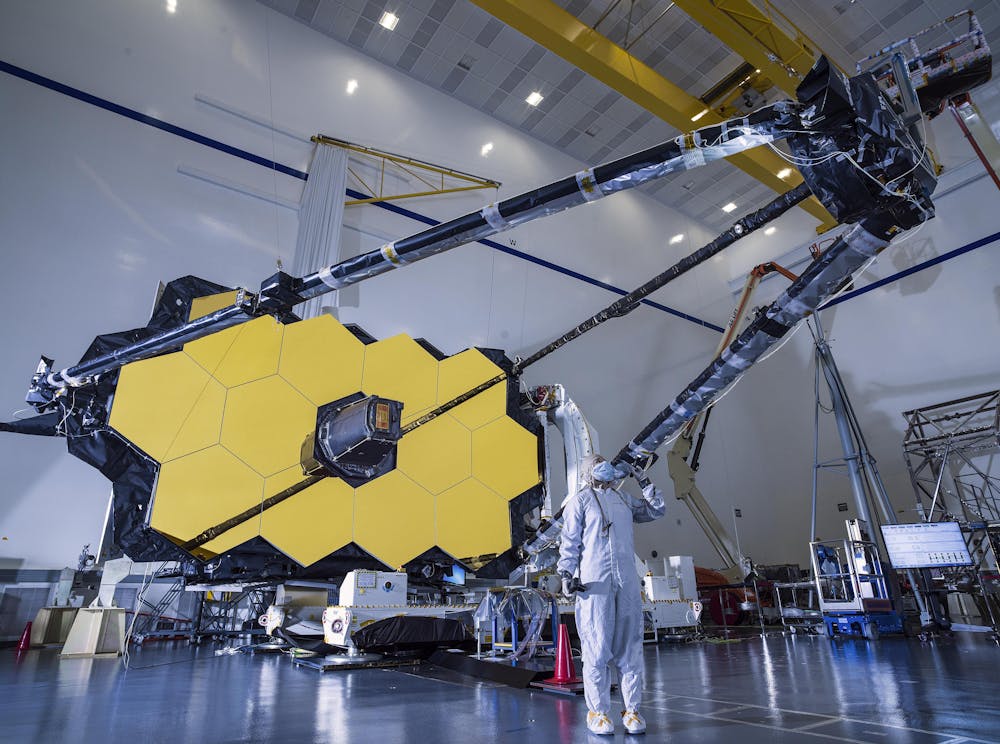
The Webb telescope has a mirror over 20 feet across, a tennis-court sized sun shade to block solar radiation and four separate camera and sensor systems to collect the data.
It works kind of like a satellite dish. Light from a star or galaxy will enter the mouth of the telescope and bounce off the primary mirror toward the four sensors: NIRCam, which takes images in the near infrared; the Near Infrared Spectrograph, which can split the light from a selection of sources into their constituent colors and measures the strength of each; the Mid-Infrared Instrument, which takes images and measures wavelengths in the middle infrared; and the Near Infrared Imaging Slitless Spectrograph, which splits and measures the light of anything scientists point the satellite at.
This design will allow scientists to study how stars form in the Milky Way and the atmospheres of planets outside the Solar System. It may even be possible to figure out the composition of these atmospheres.
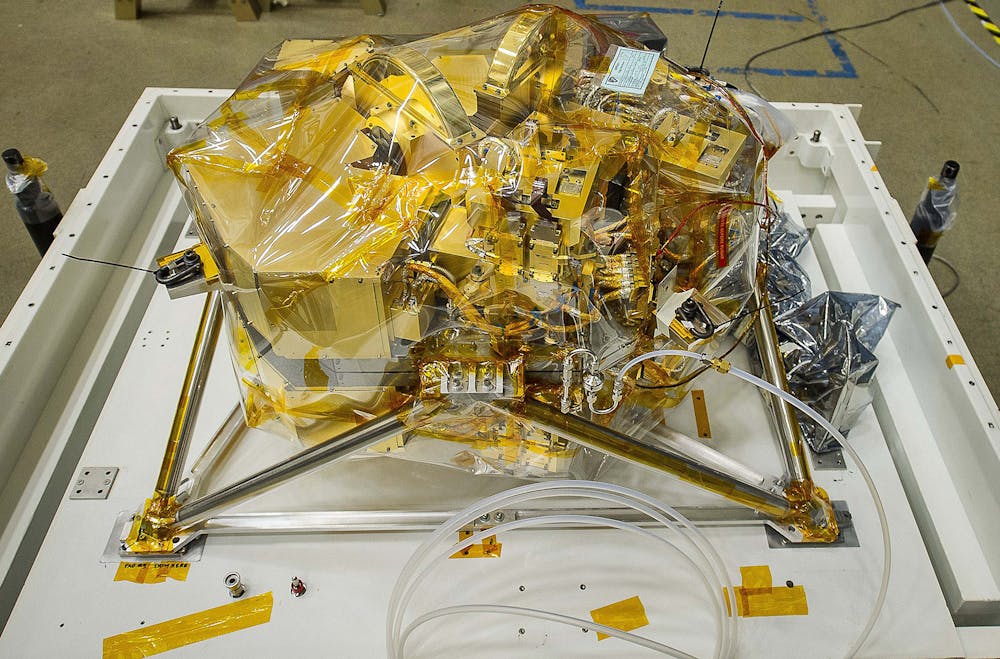
Ever since Edwin Hubble proved that distant galaxies are just like the Milky Way, astronomers have asked: How old are the oldest galaxies? How did they first form? And how have they changed over time? The Webb telescope was originally dubbed the “First Light Machine” because it is designed to answer these very questions.
One of the main goals of the telescope is to study distant galaxies close to the edge of observable universe. It takes billions of years for the light from these galaxies to cross the universe and reach Earth. I estimate that images my colleagues and I will collect with NIRCam could show protogalaxies that formed a mere 300 million years after the Big Bang – when they were just 2% of their current age.
Finding the first aggregations of stars that formed after the Big Bang is a daunting task for a simple reason: These protogalaxies are very far away and so appear to be very faint.
Webb’s mirror is made of 18 separate segments and can collect more than six times as much light as the Hubble Space Telescope mirror. Distant objects also appear to be very small, so the telescope must be able to focus the light as tightly as possible.
The telescope also has to cope with another complication: Since the universe is expanding, the galaxies that scientists will study with the Webb telescope are moving away from Earth, and the Doppler effect comes into play. Just like the pitch of an ambulance’s siren shifts down and becomes deeper when it passes and starts moving away from you, the wavelength of light from distant galaxies shifts down from visible light to infrared light.
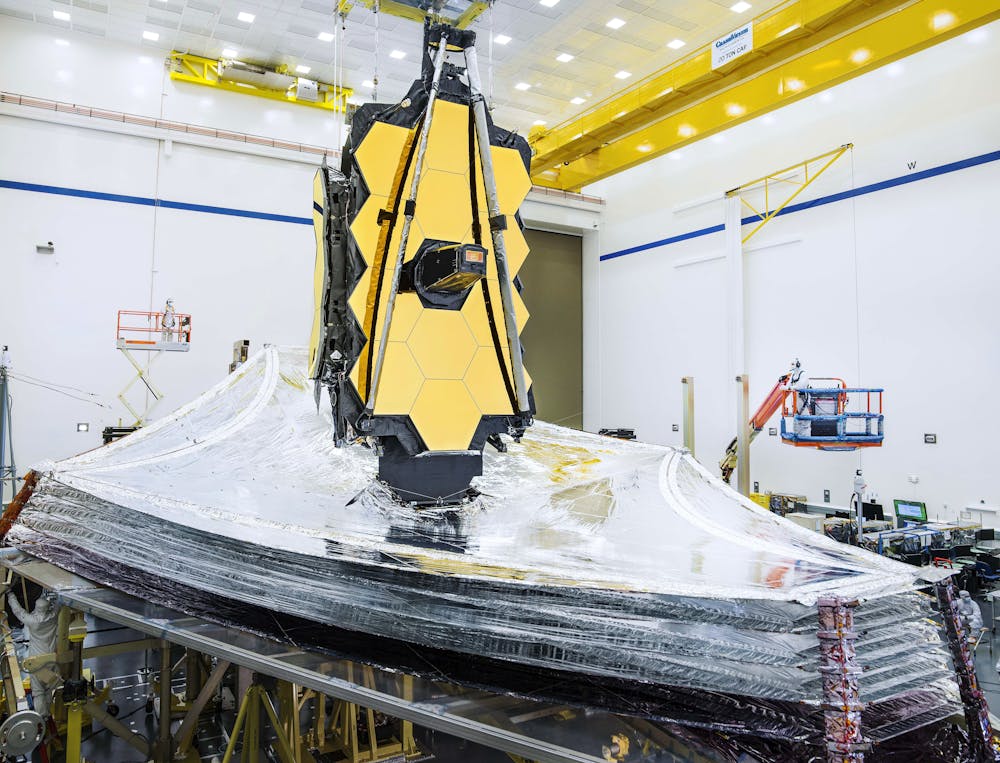
Webb detects infrared light – it is essentially a giant heat telescope. To “see” faint galaxies in infrared light, the telescope needs to be exceptionally cold or else all it would see would be its own infrared radiation. This is where the heat shield comes in. The shield is made of a thin plastic coated with aluminum. It is five layers thick and measures 46.5 feet (17.2 meters) by 69.5 feet (21.2 meters) and will keep the mirror and sensors at minus 390 degrees Fahrenheit (minus 234 Celsius).
The Webb telescope is an incredible feat of engineering, but how does one get such a thing safely to space and guarantee that it will work?
Test and rehearse
The James Webb Space Telescope will orbit a million miles from Earth – about 4,500 times more distant than the International Space Station and much too far to be serviced by astronauts.
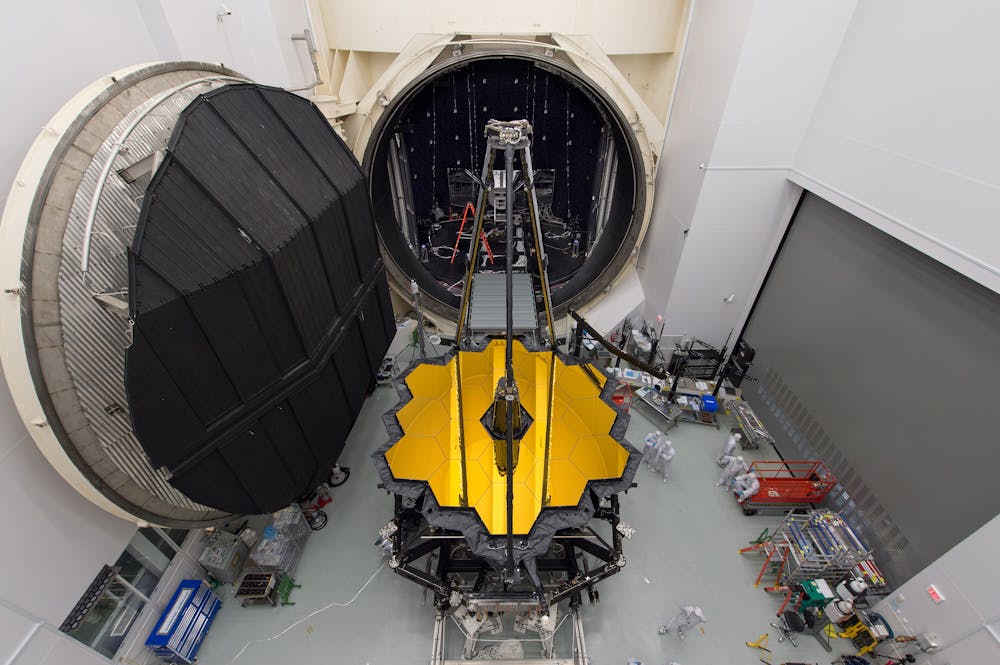
Over the past 12 years, the team has tested the telescope and instruments, shaken them to simulate the rocket launch and tested them again. Everything has been cooled and tested under the extreme operating conditions of orbit. I will never forget when my team was in Houston testing the NIRCam using a chamber designed for the Apollo lunar rover. It was the first time that my camera detected light that had bounced off the telescope’s mirror, and we couldn’t have been happier – even though Hurricane Harvey was fighting us outside.
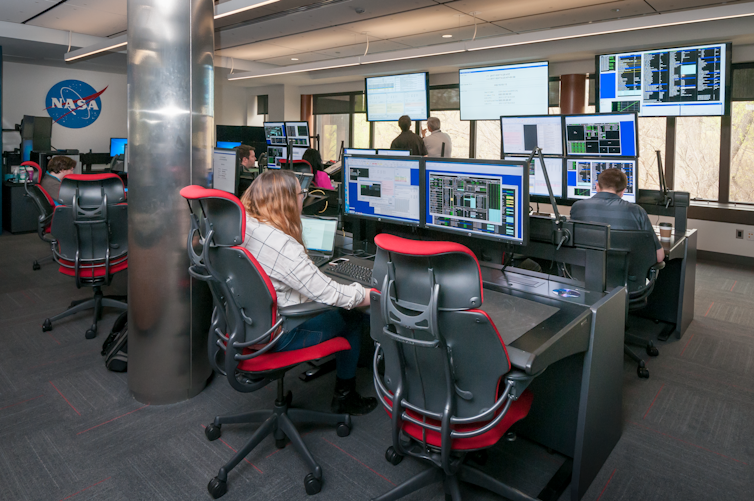
After testing came the rehearsals. The telescope will be controlled remotely by commands sent over a radio link. But because the telescope will be so far away – it takes six seconds for a signal to go one way – there is no real-time control. So for the past three years, my team and I have been going to the Space Telescope Science Institute in Baltimore and running rehearsal missions on a simulator covering everything from launch to routine science operations. The team even has practiced dealing with potential problems that the test organizers throw at us and cutely call “anomalies.”
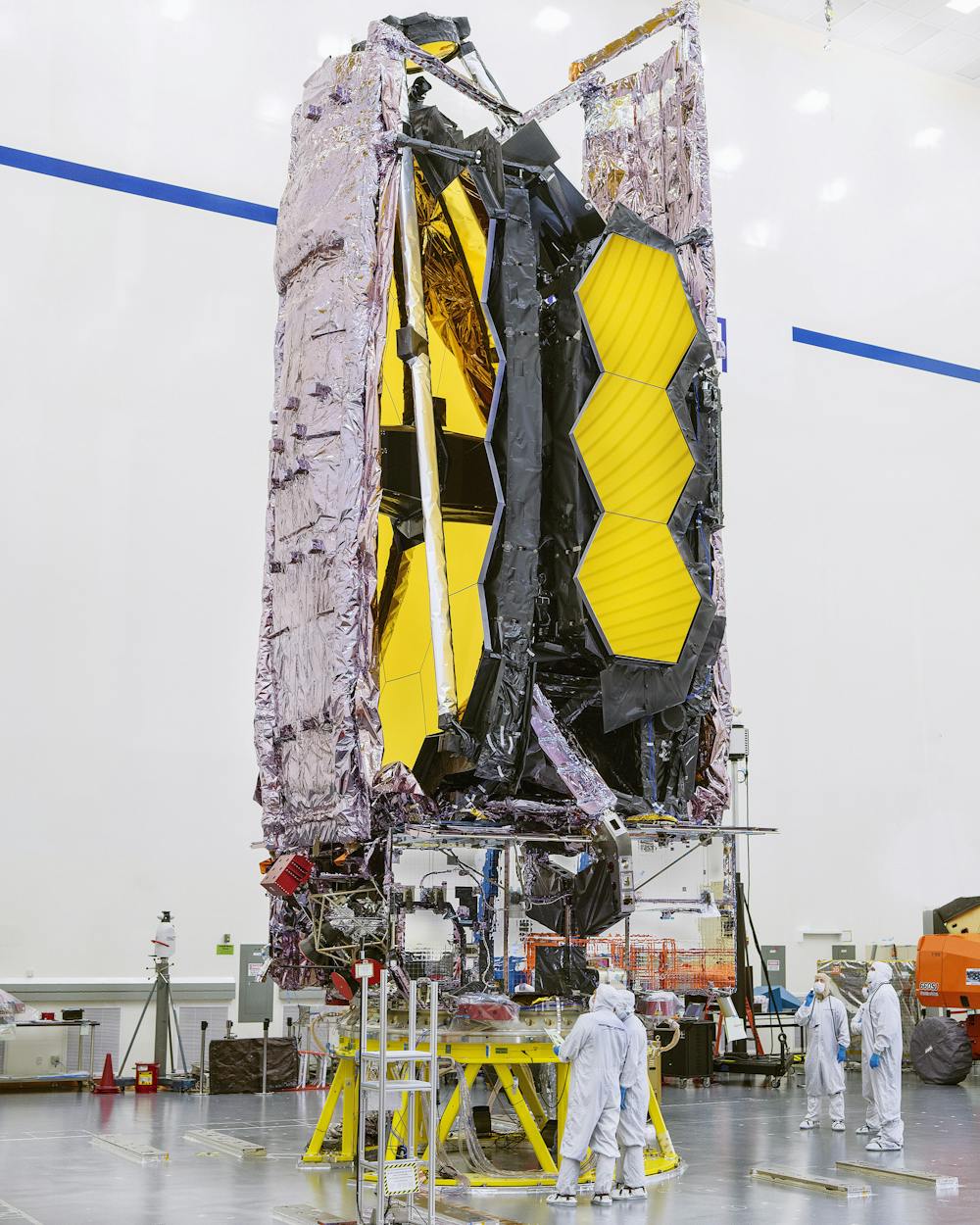
Some alignment required
The Webb team continued to rehearse and practice until the launch date, but our work is far from done now.
[Understand new developments in science, health and technology, each week. Subscribe to The Conversation’s science newsletter.]
We need to wait 35 days after launch for the parts to cool before beginning alignment. After the mirror unfolds, NIRCam will snap sequences of high-resolution images of the individual mirror segments. The telescope team will analyze the images and tell motors to adjust the segments in steps measured in billionths of a meter. Once the motors move the mirrors into position, we will confirm that telescope alignment is perfect. This task is so mission critical that there are two identical copies of NIRCam on board – if one fails, the other can take over the alignment job.
This alignment and checkout process should take six months. When finished, Webb will begin collecting data. After 20 years of work, astronomers will at last have a telescope able to peer into the farthest, most distant reaches of the universe.
This story was updated with the launch.
Marcia Rieke, Regents Professor of Astronomy, University of Arizona
This article is republished from The Conversation under a Creative Commons license. Read the original article.
- Details
- Written by: Elizabeth Larson
Newsom proclaimed a state of emergency in Alameda, Amador, Calaveras, El Dorado, Humboldt, Lake, Los Angeles, Marin, Monterey, Napa, Nevada, Orange, Placer, Sacramento, San Bernardino, San Luis Obispo, San Mateo, Santa Cruz, Sierra and Yuba counties to support the ongoing response to the recent storms, which have included heavy rainfall and snow.
The proclamation notes that, beginning on or about Dec. 10, 16 and 21, “a series of winter storm systems struck California, bringing substantial precipitation, including record-breaking snowfall, damaging winds, and flooding, and storms continue to impact significant portions of the state.”
Lake County has not been as hard hit as other areas. While some snow has fallen down to the lake level it quickly melted off. Deeper snowfall has taken place at higher elevations, with the mountains ringing Clear Lake capped with snow on Thursday.
In other parts of the state, the situation has been more severe.
This week, Caltrans urged drivers to avoid traveling to the Sierra due to record snowfall.
Caltrans also has closed 45 state highways since Dec. 24 due to record snowfall in the Sierra Nevada. Most of those highways have reopened although there are areas where chain controls and delays continue.
Newsom’s Thursday emergency proclamation supports response and recovery efforts, including expanding access to state resources for counties under the California Disaster Assistance Act to support their recovery and response efforts, directing Caltrans to request immediate assistance through the Federal Highway Administration's Emergency Relief Program in order to obtain federal assistance for highway repairs or reconstruction, and easing access to unemployment benefits for those unemployed as a result of the storms.
“This order clears regulatory hurdles and increases the states capacity to rapidly respond to the impact of these storms and will bolster long term recovery,” said Mark Ghilarducci, director of the California Governor’s Office of Emergency Services, or Cal OES.
Ghilarducci said the governor activated the State Operations Center to monitor storm conditions and coordinate the states response and support requests for assistance from local governments.
“We are also closely coordinating with and supporting the work of state partners like Caltrans, the California Highway Patrol, Cal Fire and others to rapidly respond to issues as they arise,” he said.
Caltrans has 1,350 field staff clearing mountain highways, working around the clock in 12-hour shifts and has deployed more than 600 snowplows statewide, Ghilarducci said, while the CHP is monitoring road conditions, responding to calls for assistance and working to keep travelers safe.
The state also is working to ensure supply chain continuity and to make sure utility companies restore power as quickly as possible with support to the most vulnerable in the community , he said.
Other efforts include staging fire and rescue resources near burn scar areas in case of significant new weather events, which Ghilarducci said will allow teams to quickly mobilize in the event of mud flows, avalanches or flash floods.
The full proclamation is below.
WHEREAS beginning on or about December 10, 2021, December 16, 2021, and December 21, 2021, a series of winter storm systems struck California, bringing substantial precipitation, including record-breaking snowfall, damaging winds, and flooding, and storms continue to impact significant portions of the state; and
WHEREAS these storms affected communications and other critical infrastructure, resulted in power outages to thousands of households and businesses, and caused trees and free limbs to fall, damaging structures and obstructing major highways and local roads; and
WHEREAS these storms damaged and forced the closure of dozens of major highways and local roads, including primary corridors into the Tahoe Basin; and
WHEREAS these storms have resulted in the threat of mud and debris flows, particularly on burn scars from recent wildfires, necessitating the prepositioning of emergency response resources; and
WHEREAS under the provisions of Government Code section 8558(b), I find that conditions of extreme peril to the safety of persons and property exist due to these storms; and
WHEREAS under the provisions of Government Code section 8558(b), I find that the conditions caused by these storms, by reason of their magnitude and combined impact, are or are likely to be beyond the control of the services, personnel, equipment, and facilities of any single local government and require the combined forces of a mutual aid region or regions to appropriately respond; and
WHEREAS under the provisions of Government Code section 8625(c), I find that local authority is inadequate to cope with the magnitude of the damage caused by these storms; and
WHEREAS under the provisions of Government Code section 8571, I find that strict compliance with various statutes and regulations specified in this Proclamation would prevent, hinder, or delay the mitigation of the effects of these storms.
NOW, THEREFORE, I, GAVIN NEWSOM, Governor of the State of California, in accordance with the authority vested in me by the State Constitution and statutes, including the California Emergency Services Act, and in particular, Government Code section 8625,
HEREBY PROCLAIM A STATE OF EMERGENCY to exist in Alameda, Amador, Calaveras, El Dorado, Humboldt, Lake, Los Angeles, Marin, Monterey, Napa, Nevada, Orange, Placer, Sacramento, San Bernardino, San Luis Obispo, San Mateo, Santa Cruz, Sierra, and Yuba counties due to these storms.
IT IS HEREBY ORDERED THAT:
1. All agencies of the state government utilize and employ state personnel, equipment, and facilities for the performance of any and all activities consistent with the direction of the Office of Emergency Services and the State Emergency Plan. Also, all residents are to obey the direction of emergency officials with regard to this emergency in order to protect their safety
2. The Office of Emergency Services shall provide assistance, if appropriate, under the authority of the California Disaster Assistance Act, Government Code section 8680 et seq., and California Code of Regulations, Title 19, section 2900 et seq.
3. As necessary to assist local governments and for the protection of public health and the environment, state agencies shall enter into contracts to arrange for the procurement of materials, goods, and services necessary to quickly assist with the response to and recovery from the impacts of these storms. Applicable provisions of the Government Code and the Public Contract Code, including but not limited to travel, advertising, and competitive bidding requirements, are suspended to the extent necessary to address the effects of these storms.
4. The provisions of Unemployment Insurance Code section 1253 imposing a one-week waiting period for unemployment insurance applicants are suspended as to all applicants who are unemployed as a direct result of these storms and who applied for unemployment insurance benefits during the time period beginning December 10, 2021 and ending on the close of business on June 21, 2022, and who are otherwise eligible for unemployment insurance benefits.
5. The California Department of Transportation shall formally request immediate assistance through the Federal Highway Administration's Emergency Relief Program, United States Code, Title 23, section 125, in order to obtain federal assistance for highway repairs or reconstruction.
I FURTHER DIRECT that as soon as hereafter possible, this Proclamation be filed in the Office of the Secretary of State and that widespread publicity and notice be given of this proclamation.
IN WITNESS WHEREOF I have hereunto set my hand and caused the Great Seal of the State of California to be affixed this 30th day of December 2021.
GAVIN NEWSOM
Governor of California
ATTEST:
SHIRLEY N. WEBER, PH.D.
Secretary of State
Email Elizabeth Larson at