 How to resolve AdBlock issue?
News
- Details
- Written by: Elizabeth Larson
Call Lake County Animal Care and Control at 707-263-0278 or visit the shelter online at http://www.co.lake.ca.us/Government/Directory/Animal_Care_And_Control.htm for information on visiting or adopting.
The following cats at the shelter have been cleared for adoption.

‘Mom’
“Mom” is a 2-year-old female domestic shorthair cat with an orange and white coat.
She is in cat room kennel No. 3, ID No. LCAC-A-4080.

Female domestic shorthair
This 2-year-old female domestic shorthair cat has a gray tabby coat.
“She is an adult cat with some playful kitten tendencies when toys are brought out. She has a sweet little meow and likes to have playful chats with you,” shelter staff said.
She is in cat room kennel No. 10, ID No. LCAC-A-3661.

Male domestic shorthair
This 3-year-old male domestic shorthair cat has an orange tabby coat.
“This guy can be shy at first, but once he knows that you are all about the pets, he will roll right over and start his purr machine. He has a unique curly tail which he flicks around when curious,” shelter staff said.
He is in cat room kennel No. 13, ID No. LCAC-A-4021.

Female domestic shorthair kitten
This 3-month-old female domestic shorthair kitten has a gray and white coat.
Staff said the kitten is outgoing and all about fun and games. “She loves to play with toys and enjoys cuddle time. She also enjoys playing with the other kittens and cats.”
She is in cat room kennel No. 36, ID No. LCAC-A-4085.

Female domestic shorthair
This 2-year-old female domestic shorthair cat has a Siamese coat with reddish points and blue eyes.
Shelter staff said she came in as an injured stray. “When we met her, even in obvious distress, she was purring and happy to see us.”
After successful surgery to repair a rectal prolapse due to a large bladder stone, “she has continued to have a wonderful attitude and would make a lovely cuddle partner,” staff said, noting she is very sweet and talkative.
In her adoptive home, staff recommends she continue on a specific bladder health diet in order to prevent the possibility of future bladder stones.
She is in cat room kennel No. 73, ID No. LCAC-A-4090.
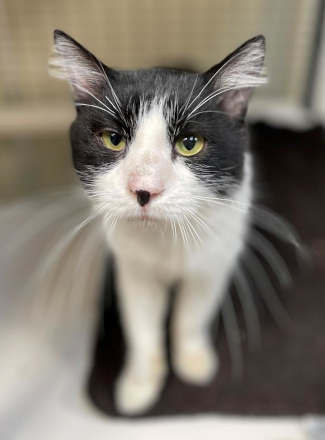
Male domestic longhair cat
This 1-year-old male domestic longhair cat has a black and white coat.
“This guy had a hard start, but has a lot of love to give once he warms up to you,” shelter staff said.
Staff said he also loves brushing and shows his appreciation with purring and head bumps.
He is in kennel No. 107, ID No. LCAC-A-4023.
Email Elizabeth Larson at
- Details
- Written by: NATIONAL OCEANIC AND ATMOSPHERIC ADMINISTRATION
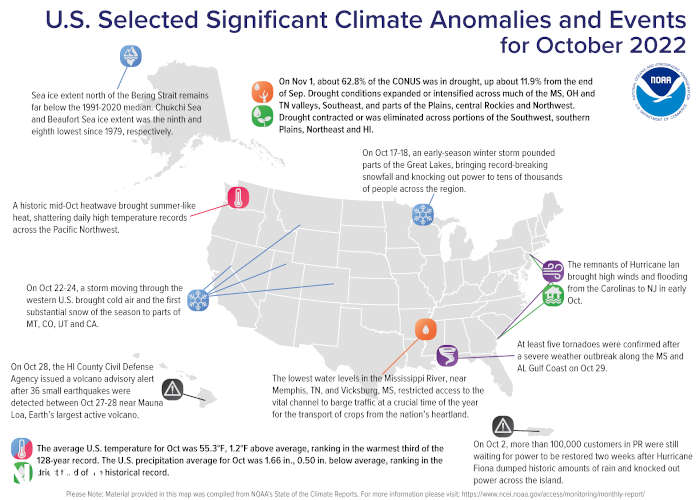
Below-normal rainfall and above-average temperatures intensified drought conditions, broadening the geographic areas of drought across the U.S. in October 2022.
Those dry conditions were also felt along the Mississippi River, where some locations reported their lowest water levels in 10 years.
Here are more highlights from NOAA’s latest monthly U.S. climate report:
Climate by the numbers
October 2022
The average October temperature across the contiguous U.S. was 55.3 degrees F, 1.2 degrees above the 20th-century average, ranking in the warmest third in the climate record.
Several states had a top-10 warm October. Looking at the western U.S., Washington saw its warmest October on record, Oregon its second warmest, and California its seventh warmest. Along the eastern U.S., Maine had its sixth-warmest October.
The average precipitation was 1.66 inches — 0.50 of an inch below average — placing the month in the driest third of Octobers on record.
Florida had its eighth-driest October on record while California and Minnesota each saw their 11th driest. Conversely, an abundance of precipitation during the month gave New Jersey its 10th-wettest October on record.
Year to date (YTD, January through October 2022)
The average U.S. temperature for the YTD was 56.7 degrees F, 1.7 degrees above the 20th-century average, ranking as the 13th-warmest such YTD in the climate record. California saw its third warmest while Oregon saw its sixth warmest.
The U.S. precipitation total for the YTD was 23.19 inches — 2.17 inches below average — ranking as the 15th-driest such YTD on record. California had its driest, Nebraska ranked fourth and Nevada saw its eighth driest on record for this 10-month period.
Other notable climate events
The Mississippi River ran historically low: The Mississippi River dropped to its lowest water levels in a decade near Memphis, Tennessee, and Vicksburg, Mississippi, closing off a vital channel to barge traffic at a crucial time of year for crop transportation. In October 2022, the U.S. Coast Guard reported a total of eight barges that ran aground, along with a long backup of 144 vessels and 2,253 barges trying to access narrow river passages.
More of the nation impacted by drought: According to the Nov. 1, 2022, U.S. Drought Monitor report, about 62.8% of the contiguous U.S. was in drought, up approximately 11.9% from the end of September. Drought conditions expanded or intensified across much of the Southeast and Mississippi, Ohio and Tennessee valleys, and parts of the Plains, central Rockies and Northwest. Drought conditions shrank or were eliminated across portions of the Southwest, southern Plains, Northeast and Hawaii.

- Details
- Written by: David Howell, University of Colorado Anschutz Medical Campus
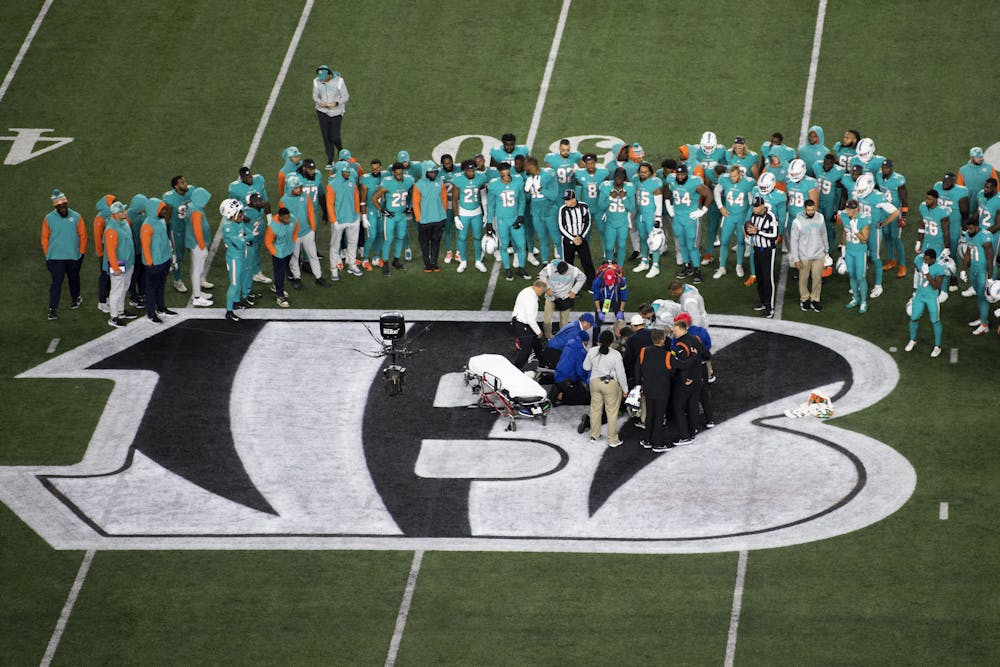
The repeat concussions suffered by Miami Dolphins quarterback Tua Tagovailoa less than a week apart in September 2022 have brought the seriousness of traumatic brain injury back into the public eye and triggered scrutiny of the NFL’s concussion protocols. And the upcoming World Cup soccer competition, which begins Nov. 20, 2022, will likely include highly visible head injuries.
The Conversation asked David Howell, director of the Colorado Concussion Research Laboratory at the University of Colorado School of Medicine, to explain the latest science behind concussions and why a recently injured brain is more vulnerable to repeat injury. Howell’s work focuses on the many different areas of concussion-related dysfunction and recovery, including movement deficits, sleep problems and rehabilitation.
How widespread are concussions?
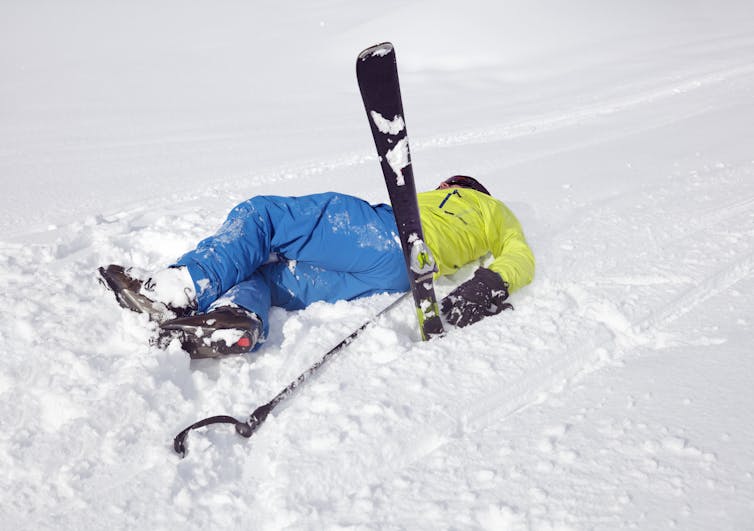
The word concussion can evoke a variety of different images for different people. While concussions are most visible during high-profile sporting events, they can also occur on the playground, during the junior varsity football team practice or on the ski slope. The effects can be just as severe for children and teens as for high-profile athletes.
Concussion effects range from mild to severe, from short term to long term, and can affect many different facets of life. A concussion is defined as a traumatic brain injury caused by an impact to the head, resulting in an alteration of brain function.
A concussion often leads to disruptions to everyday life – whether it be a job, academics, sports, physical activity or sleep. Given how unique people’s brains are and how differently they may respond to the injury, concussion recognition, diagnosis and treatment remain challenging for patients and clinicians alike.
What happens to the brain during a concussion?
There is a complex set of events that occur within the brain during and after a concussion occurs.
As a result of the trauma to the brain, brain cells – or neurons – stop functioning as they typically do when healthy. Generally there is not one specific area of the brain that is affected by a concussion. Instead, the injury can affect a widespread set of brain regions, not necessarily at the impact point. Thus, each person may experience a unique set of symptoms or functional problems following the injury.
One main problem that arises following a concussion is an energy crisis of sorts. This occurs when the brain requires a large volume of energy, in the form of glucose delivered by blood flow to the brain, to restore the injured processes. The body also may have trouble delivering blood to the brain because of a brain blood flow disruption caused by the injury, at the very time the brain needs extra energy to restore the injured areas. This mismatch can produce a variety of different symptoms people experience following a concussion.
What signs should you look for if you suspect a concussion?
Concussions produce a wide range of signs and symptoms, such as problems with walking and balance, dizziness, mood changes, disruptions to sleep and more.
Some of the main signs that health care providers look for following an impact to the head or body include unsteadiness of gait, loss of consciousness, seizures or other concussion symptoms like headache, cognitive impairment or problems with vision or balance.
It is critical that if a concussion is suspected, individuals cease playing their sport or activity. A simple mantra of “If in doubt, sit them out” should always be applied, regardless of the setting.
Why is the injured brain more vulnerable to repeat injury?
Miami Dolphins quarterback Tua Tagovailoa, who was carted off the field in late September 2022 after his second head injury in less than a week, serves as an example of how vulnerable the brain can be to additional trauma following an initial concussion.
Research shows that the rate of second concussions is highest in the immediate days following an initial concussion. In addition, recent studies have found that athletes who continue to play following a concussion experience longer recovery times and more severe symptoms.
While athletes of all ages may want to continue competing after a concussion, relying on a person with an injured brain to determine whether their brain is healthy enough to continue playing is flawed logic. Qualified health care professionals should always make these sorts of decisions for an athlete, rather than someone with a vested interest such as the athletes themselves or their coaches.
Given the energy crisis described above that occurs following a head injury, the brain simply cannot handle the added and cumulative stress of two injuries occurring in short succession. A second insult to the brain is often simply too much for the brain to handle, and the brain will preserve its most basic functions, such as breathing, above all else.
This is why it is imperative that athletes who experience a concussion be removed from the field of play and allowed to recover fully before returning to unrestricted sport participation. This often involves a stepwise reintegration approach, which allows for a gradual and safe reintroduction into physical activity at first, and an appropriately safe return to play under medical care.
You’ve had a concussion – now what?
The first step following a concussion is to stop playing sports and to rest for a day or two. Sleep is critically important in the days following a concussion.
A myth that continues to persist is that a person should be woken up every hour following a concussion. This is simply not supported by science. In fact, poor sleep after a concussion has been widely documented as being a predictor of poor outcomes, including longer recovery times and more severe anxiety, depression or cognitive symptoms. Waking someone up every hour applies to more severe brain injuries that would be ruled out by a health care provider during diagnosis.
In addition, recent guidelines and past research suggest that complete physical and cognitive rest, which is sometimes called cocoon therapy, can actually be harmful to recovery.
Therefore, it is important to keep a balanced approach in mind. Following a day or two of physical rest, people with a concussion should begin resuming light physical and cognitive activity that does not provoke or exacerbate ongoing symptoms.
When a person begins to feel better following a concussion, they should gradually add in higher intensity and greater amounts and duration of exercise, dictated by whether their symptoms are not significantly provoked. Recent studies have focused on the value of an individualized aerobic exercise program in the week following a concussion. Past work suggests that performing aerobic exercise at a heart rate just below the level at which symptoms are exacerbated is safe and effective for recovery.
It is important to note that the effects of a concussion may also result in secondary conditions, such as anxiety or depression due to the biological, social or psychological effects of the injury. A recent study showed that adolescents who sustained a concussion have a higher risk of mental health issues compared to those with an orthopedic injury.
David Howell, Assistant Professor of Orthopedics,, University of Colorado Anschutz Medical Campus
This article is republished from The Conversation under a Creative Commons license. Read the original article.
- Details
- Written by: Elizabeth Larson
Dogs available for adoption this week include mixes of basset hound, German shepherd, hound, husky, Labrador retriever and pit bull.
Dogs that are adopted from Lake County Animal Care and Control are either neutered or spayed, microchipped and, if old enough, given a rabies shot and county license before being released to their new owner. License fees do not apply to residents of the cities of Lakeport or Clearlake.
The following dogs at the Lake County Animal Care and Control shelter have been cleared for adoption.
Call Lake County Animal Care and Control at 707-263-0278 or visit the shelter online for information on visiting or adopting.
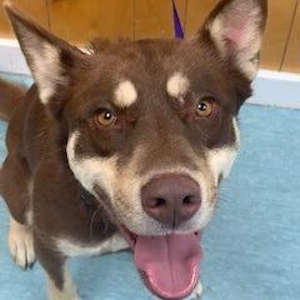
Female husky
This 2-year-old female husky has a short brown coat with white markings.
She is in kennel No. 11, ID No. LCAC-A-4269.
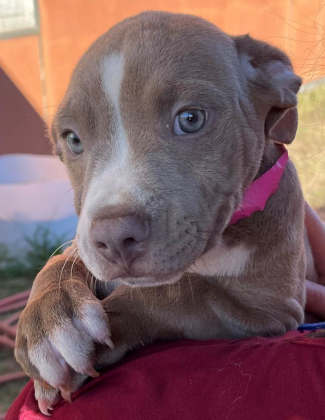
Male pit bull puppy
This 3-month-old male pit bull terrier has a short brown and white coat.
He is in kennel No. 24a, ID No. LCAC-A-4118.

‘Chief’
“Chief” is a 4-year-old male pit bull terrier with a brown and white coat.
He is in kennel No. 28, ID No. LCAC-A-4169.

‘Ruby’
“Ruby” is a 6-month-old female hound mix with a brindle coat.
She is in kennel No. 5, ID No. LCAC-A-3753.

Female pit bull
This 3-year-old female pit bull terrier has a fawn-colored coat.
She is in kennel No. 8, ID No. LCAC-A-4210.

‘Arlo’
“Arlo” is a 3-year-old male basset hound-Labrador retriever mix with a short brown coat.
He is in kennel No. 9, ID No. LCAC-A-4164.

Female Labrador retriever
This 3-month-old female Labrador retriever has a short black coat.
She is in kennel No. 13, ID No. LCAC-A-4162.

Male Labrador retriever
This 2-year-old male Labrador retriever has a short black coat.
He is in kennel No. 14, ID No. LCAC-A-4112.

Male Labrador retriever
This 3-month-old male Labrador retriever has a short black coat.
He is in kennel No. 15, ID No. LCAC-A-4163.

Male hound mix
This 2-year-old male hound mix has a short tan coat.
He is in kennel No. 20, ID No. LCAC-A-4176.

Female pit bull puppy
This 2-month-old female pit bull puppy has a short white and red coat.
She is in kennel No. 24b, ID No. LCAC-A-4121.

Male German shepherd
This 1-year-old male German shepherd has a short black and tan coat.
He is in kennel No. 33, ID No. LCAC-A-4204.
Email Elizabeth Larson at