 How to resolve AdBlock issue?
News
- Details
- Written by: Elizabeth Larson
The district, which includes Woodland Community College and its Lake County campus in Clearlake, is seeking a permanent chancellor to succeed Dr. Douglas B. Houston, who left the college last year.
Since July 1, 2021, Dr. James L.J. Houpis has served as interim chancellor.
Documents for the district board’s meeting last Thursday, Nov. 10, explained that the governing board approved the chancellor’s job announcement at its July 14 meeting.
It was developed based on a districtwide survey conducted in September 2021.
At the board’s meeting last week, board Vice President Juan Delgado reported that the search committee met again recently to review applicants.
The committee will meet again to review the first round of applicants on Dec. 5, he said. At that point, committee members also will review potential questions in order to prepare for the interviews.
Delgado said the search committee will begin reviewing applications at the end of January.
The district is accepting applications until Jan. 16. The initial screening of applicants will take place on Jan. 20.
At staff’s suggestion, the board approved the revised chancellor job announcement as presented with a unanimous vote.
More information is available on the chancellor’s search page.
Email Elizabeth Larson at
- Details
- Written by: LAKE COUNTY NEWS REPORTS
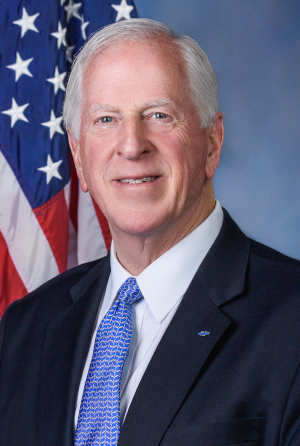
One of Lake County’s members of Congress reported he has tested positive for COVID-19.
Rep. Mike Thompson (CA-05) revealed his diagnosis on Wednesday.
“After taking a regular PCR test, I have tested positive for COVID-19,” he said in the Wednesday statement.
“Thanks to being fully vaccinated and receiving both booster shots, I am experiencing only mild symptoms. I will be working from home and my office remains fully open to serve the people of our district,” Thompson said.
“As COVID-19 continues to evolve, I recommend every American to get their updated COVID-19 vaccine and booster to stay healthy and protect their friends and families,” he added.
Thompson currently represents California’s Fifth Congressional District, which includes all or part of Contra Costa, Lake, Napa, Solano and Sonoma counties.
Last week, Thompson was elected to the newly redrawn Fourth Congressional District, which will include all of Lake County, rather than just the county’s southern half, as his current district does.
- Details
- Written by: GOVERNOR’S OFFICE
State officials said no economy in the world, much less the soon-to-be fourth largest, has put forth such a comprehensive roadmap to reach carbon neutrality.
This updated plan follows Gov. Gavin Newsom’s push to move faster to achieve new, ambitious climate goals, setting new targets for renewable energy, clean buildings, carbon removal, and clean fuels in the transportation sector.
If adopted by the California Air Resources Board, or CARB, this plan will be a critical component of Gov. Newsom’s California Climate Commitment — a set of world-leading actions to build out a 100% clean energy grid, achieve carbon neutrality by 2045, ramp up carbon removal and sequestration, protect Californians from harmful oil drilling, and invest $54 billion to forge an oil-free future while building sustainable communities throughout the state.
The updated Scoping Plan would achieve carbon neutrality by 2045, in addition to:
• Cutting air pollution by 71%.
• Slashing greenhouse gas emissions 85% by 2045: That includes a 48% reduction of greenhouse gasses by 2030, surpassing the statutory mandate to reduce emissions 40% below 1990 levels in 2030;
• Reducing fossil fuel consumption to less than one-tenth of what we use today, a 94% drop in demand for oil and 86% drop in demand for all fossil fuels.
• Creating four million new jobs.
• Saving Californians $200 billion in health costs due to pollution.
“California is drastically cutting our dependence on fossil fuels and cleaning our air — this plan is a comprehensive roadmap to achieve a pollution-free future,” said Gov. Newsom. “It’s the most ambitious set of climate goals of any jurisdiction in the world, and if adopted, it’ll spur an economic transformation akin to the industrial revolution. While big polluters focus on increasing their profits at our expense, California is protecting communities, creating jobs and accelerating our transition to clean energy.”
The plan would also raise the stakes for clean energy and climate resiliency, calling for:
• At least 20 GW offshore wind capacity built by 2045;
• 3 million climate-friendly homes by 2030 and 7 million by 2035;
• 6 million heat pumps deployed by 2030;
• Carbon removal/capture targets of 20 million metric tons CO2 equivalent (MMTCO2e) by 2030 and 100 MMTCO2e by 2045;
• Achieve 20% non-combustion in the aviation sector by 2045, with the remaining demand met with sustainable aviation fuel;
• Light-duty vehicle miles traveled target of 25% per capita below 1990 levels by 2030 and 30% per capita below 1990 levels by 2045.
Wednesday’s release follows the latest Greenhouse Gas Inventory, showing that 2020 had the steepest recorded drop in pollution in California history due to the pandemic, and including updated data showing California reached its 2020 climate targets six years ahead of schedule in 2014 rather than the initially estimated four.
- Details
- Written by: Elizabeth Larson
Peter Schellinger of Waterstone Residential received a 3-1 vote from the council, with Councilman Michael Froio voting no due to concerns about the project’s potential effect on the residents of the existing homes at Parkside Subdivision.
Schellinger’s Parkside Residential Project at build out will include 128 new apartment units and 48 cluster homes on the 15.16-acre property at 1310 Craig Ave.
It’s on a portion of the 96-lot Schellinger Subdivision, approved in three phases in 2005. The first phase consisted of 31 lots, where 17 homes were built by Schellinger Brothers, Peter Schellinger’s father and uncle.
Community Development Director Jenni Byers, who noted the City Council had seen the project twice before, said it had been revised to focus on converting 3.42 acres of the property from R-1, or low density residential, to R-3, high density residential.
The council’s action on Tuesday clears the way for Schellinger to move forward with building a 64-unit apartment community in the project’s southern phase. Waterstone will separately seek approval for a tentative parcel map creating four separate parcels for the entire project site, including the other 64 apartments and the 48 cluster homes, meant to be middle market housing.
Schellinger told the council he planned to come back in early 2023 to seek the approvals for the cluster homes. He anticipates that he would start work on building those cluster homes during the 16 to 18 months it would take to build the first 64 apartments.
Byers said California Attorney General Rob Bonta issued guidance to local governments in October regarding mitigating wildfire risk from proposed developments in fire-prone areas.
That guidance focuses on areas including project density, project location, water supply and infrastructure, evacuation and emergency access, and fire hardening structures and homes.
Byers said that the project location is outside of the wildland urban interface and based on Bonta’s guidelines, it’s an appropriate building site.
In August, the Lakeport Planning Commission discussed the project and recommended the council’s approval of it.
The Lakeport City Council heard it first in September, at which time the council approved introducing its zone change ordinance and scheduled a public hearing for Sept. 20 for the ordinance and adoption of the mitigated negative declaration and general plan amendment Schellinger was seeking.
The council took that action after hearing from the neighbors at the Parkside Subdivision, who brought up concerns including traffic, noise, a lack of consistency in planning and housing types, impact on quality of life and ongoing issues with their current subdivision, such as lighting.
When the project came back for the second hearing, Schellinger asked the council to continue the public hearing for the general plan and zoning changes while he continued to meet with the neighbors to discuss the plans. At the same time, he said he was moving forward with seeking state financing for the project.
Schellinger said that, in hindsight, the request for a continuance was a pretty good idea. He said he’s spent a lot of time with city staff and the neighbors to talk through a lot of different issues.
That resulted in Schellinger pulling back on the development concept and concluding it was probably premature to try to develop it all at once.
About 10 days after the last hearing, Schellinger advanced a proposal to develop the southern phase, with plans to pull back the general plan amendment request for the northern phase.
He said over the following weeks he decided to come back with specific development applications when the funding is available for those phases.
In the meantime, “We have a clear line of sight” for the first 64 apartments, said Schellinger, who is optimistic that they will get Cal Home funding for the 38 cluster homes, at which time they will come back to the city for approval.
Schellinger said he would delay planning efforts on the remainder of the homes on the northern portion of the property until he knows the market conditions. He said he couldn’t imagine that would happen within the next three years.
Mark Borghesani, owner of Kelseyville Lumber, said it comes down to how the market and the demand has changed, noting the cost of development has put the private sector out of business for now.
He said he would like to see his employees and young people have the opportunity to purchase the homes Schellinger wants to build.
Through his business he’s dealt with the Schellingers in Lake County and in Santa Rosa. “They’re a good group,” Borghesani said. “They’re well respected up here and in Sonoma County.”
Parkside Subdivision resident Kim Costa submitted to the city another lengthy letter raising various issues with Schellinger’s project. She said the city “has been quite the cheerleader for this project” and neighbors’ concerns have been “relatively squashed.”
Costa said the project isn’t consistent with the general plan, and they don’t favor apartments in that area. “We’re not opposed to housing, we just think a high number of units out there doesn't fit.”
Christina Price of Lakeport, who also is a member of the Lake County Planning Commission, said she didn’t want people to lose sight of what’s going on. “This is a rezone.”
Price said the focus needs to be on housing and the ripple effect a project like Schellinger’s can have on the city and the county.
“It seems to me those apartments don’t belong there,” Councilman Froio said during the discussion.
The council also received a letter in support of the project from the Lake County Chamber of Commerce, read into the record by Assistant City Manager/Finance Director Nick Walker.
The letter, signed by Chamber Board President Bobby Dutcher, said the community is lucky that a company such as Waterstone Residential wants to develop here.
“The objections to this project are the usual thing,” the letter noted, pointing to issues such as roads and noise.
During the council discussion, Councilman Kenny Parlet bristled at the suggestion made by one of the Parkside Subdivision residents that the council members already had made up their minds about the project and were rubber-stamping it. Parlet said the staff had gone to significant effort to analyze the project and respond to concerns.
Froio said he didn’t think the apartment project would preserve the neighborhood. He also didn’t think it was a good infill development because he believed it would have a detrimental effect on the current residents.
He didn’t like putting high density housing next to a high fire area and could not agree that the project’s traffic impacts had been adequately mitigated. “The proposed project does not make Lakeport a better place to live.”
Mayor Stacey Mattina said there are things she likes about the project and things that make her nervous, but the city needs housing.
She recounted describing the project to her husband and her daughter, a college graduate, jumped into the conversation asking, “Wait, you mean there would be a place for me to actually live here?”
Mattina said neighborhoods will not look the same in the future, “because nobody can afford them.”
In three separate motions, all of them offered by Parlet, the council adopted the mitigated negative declaration and mitigated monitoring and reporting program, approved the
general plan amendment and introduced the proposed zone change ordinance, and scheduled a public hearing for the second reading of the zone change ordinance on Dec. 6. Froio was the lone dissenter on each of the votes.
Spurr said he decided to vote yes because this aspect of the project is a good starting point to see if it will turn out the way Schellinger is proposing.
“I hope I didn’t make a mistake,” Spurr said.
In other business on Tuesday, the council welcomed new Public Works employees Cody Morland and Lucy Avilez, and held a public hearing to introduce the draft ordinance modifying city guidelines for outdoor dining design, voted to set a second reading for Dec. 6 and adopt the draft resolution establishing the outdoor dining design guidelines.
The council also voted to adopt a resolution authorizing the city to submit an application to the California Department of Housing and Community Development for funding under the CPLHA Competitive Permanent Local Housing Allocation Program.
Email Elizabeth Larson at