How to resolve AdBlock issue?
News
- Details
- Written by: Rebecca S.B. Fischer, Texas A&M University and Annette Regan, University of San Francisco

Every fall and winter, viral respiratory illnesses like the common cold and seasonal flu keep kids out of school and social activities. But this year, more children than usual are ending up at emergency departments and hospitals.
In California, the Orange County health department declared a state of emergency in early November 2022 due to record numbers of pediatric hospitalizations for respiratory infections. In Maryland, emergency rooms have run out of beds because of the unusually high number of severe respiratory syncytial virus, or RSV, infections. So emergency departments there are having to refer patients across state lines for care.
In the U.S., the winter respiratory virus season started earlier than usual this year. Since peak infections usually occur in late December or January, this uncharacteristic early wave suggests that the situation could get much worse for people of all ages, particularly children.
We are epidemiologists with expertise in epidemic analysis for emerging disease threats, including respiratory infections. We watch patterns in these infections closely, and we pay particular attention when the patterns are unusual. We’ve grown increasingly concerned about the amount of pediatric hospitalizations over the last few months and the pattern that is emerging.
The ‘triple threat’
In early November, the Centers for Disease Control and Prevention issued a health advisory about increased activity in respiratory infections – especially among children. The CDC and other health experts are warning of the so-called “triple threat” of respiratory illness from RSV, influenza – or the seasonal flu – and COVID-19.
The underlying reasons for the convergence of these viruses and the increase in infections so early in the season are not yet clear. But health experts have some clues about contributing factors and what it could mean for the coming months.
When it comes to COVID-19, 2022 is expected to usher in another winter wave of infections, similar to patterns seen in 2020 and 2021. Previous winter surges stemmed from a combination of factors, including the emergence and spread of new viral variants, more people gathering indoors rather than distanced outside, and people coming together for the holidays.
But unlike previous pandemic winters, most COVID-19 precautions – such as using masks in public areas or avoiding group activities – are more relaxed than ever. Together with the looming threat of new variants, it is difficult to predict how big the next COVID-19 wave could be.
And while the seasonal flu has proved somewhat unpredictable during the COVID-19 pandemic, it nearly always hits during late October. Flu season also arrived about a month early and in greater numbers than in recent history. By our read of the data, pediatric flu hospitalizations are nearing 10 times what has been seen for this time of year for more than a decade.
RSV infections tend to follow a similar seasonal pattern as the flu, peaking in winter months. But this year, there was an unexpected summer wave, well before the start of the typical fall respiratory virus season.
In typical years, RSV garners little media attention. It’s incredibly common and usually causes only mild illness. In fact, most children encounter the virus before age 2.
But RSV can be a formidable respiratory infection with serious consequences for children under 5, especially infants. It is the most common cause of lower respiratory infections in young children, and more severe illnesses can lead to pneumonia and other complications, often requiring hospitalization.
Why children are particularly at risk
Children, especially young children, tend to get sicker from flu and RSV than other age groups. But infants younger than 6 months old stand to suffer the most, with nearly double the risk of RSV-related death compared to other children younger than 5. COVID-19 hospitalization rates are also four to five times higher for infants than older children.
One reason the youngest children are at greater risk is that their immune systems are not yet fully developed and don’t produce the robust immune response seen in most adults. What’s more, infants younger than 6 months – who are most at risk of severe disease – are still too young to be vaccinated against influenza or COVID-19.
These viruses present challenges on their own, but their co-circulation and coinciding surges in infections create a perfect storm for multiple viruses to infect the same person at once. Viruses might even act together to evade immunity and cause damage to the respiratory tract.
Such co-infections are typically uncommon. However, the likelihood of co-infection is substantially higher for children than adults. Co-infections can be difficult to diagnose and treat, and can ultimately lead to greater disease severity, complications, hospitalization and death.
Factors behind the triple threat
There are a few reasons why the U.S. may be seeing a surge in pediatric respiratory infections. First, COVID-19 protection strategies actually help prevent the transmission of other respiratory pathogens. School and daycare closures likely also minimized exposures children normally have to various respiratory viruses.
These and other efforts to prevent the spread of COVID-19 seem to have suppressed the broad circulation of other viruses, including influenza and RSV. As a result, the U.S. saw an overall drop in non-COVID respiratory infections – and an almost nonexistent flu season in the winter of 2020.

The decreased viral activity means that children missed out on some exposures to viruses and other pathogens that typically help build immunity, particularly during the first few years of life. The resulting so-called “immunity debt” may contribute to an excess of pediatric respiratory infections as we continue into this season.
To further complicate the picture, the changing nature of viruses, including theemergence of new COVID-19 variants and the natural evolution of seasonal influenza viruses, means that we could be seeing a unique combination of particularly transmissible strains or strains that cause more severe illness.
Proactive steps people can take
The early surge in respiratory infections with high rates of hospitalization highlights the importance of prevention. The best tool we have for prevention is vaccination. Vaccines that protect against COVID-19 and influenza are available and recommended for everyone over 6 months of age. They have been shown to be safe and effective, and they can and do save lives.
In particular, most recent data on the newly updated bivalent COVID-19 booster vaccine suggests that it produces a more rigorous antibody response against the current circulating omicron variants than the original COVID-19 vaccines.
The best way to protect infants younger than 6 months old against flu and COVID-19 is by vaccination during pregnancy. When a pregnant mother is vaccinated, maternal antibodies cross the placenta to the baby, reducing the risk of COVID-19 hospitalization in young infants by 61%. Vaccination of other caregivers, family and friends can also help protect infants.
Other preventive measures, like hand-washing, covering sneezes and coughs, staying at home and isolating when sick, can help to protect the community from these viruses and others. Paying attention to local public health advisers can also help people to have the most up-to-date information and make informed decisions to keep themselves and others – of all ages – safe.
Rebecca S.B. Fischer, Assistant Professor of Epidemiology, Texas A&M University and Annette Regan, Assistant Professor of Epidemiology, University of San Francisco
This article is republished from The Conversation under a Creative Commons license. Read the original article.
- Details
- Written by: Elizabeth Larson
The City of Clearlake Animal Association also is seeking fosters for the animals waiting to be adopted.
Call the Clearlake Animal Control shelter at 707-273-9440, or email
Visit Clearlake Animal Control on Facebook or on the city’s website.
The following dogs are available for adoption.
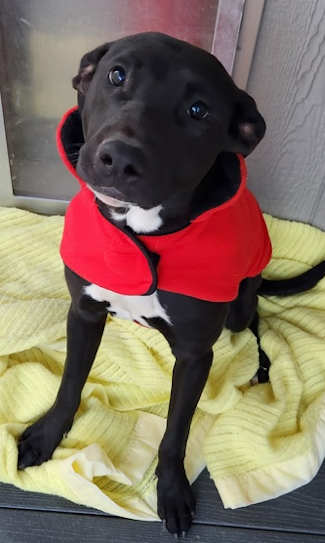
‘Zeda’
“Zeda” is a female Labrador retriever mix.
She has been spayed.
She is dog No. 51108916.
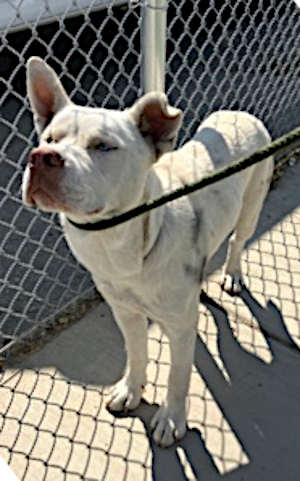
‘Aoki’
“Aoki” is a male Siberian husky mix with a white coat.
He has been neutered.
He is dog No. 50905477.

‘Athena’
“Athena” is a female American pit bull mix terrier with a short brindle coat.
She has been spayed.
She is dog No. 49934476.

‘Babs’
“Babs” is a female Labrador retriever mix with a short black coat.
She has been spayed.
She is dog No. 49505856.

‘Baby’
“Baby” is a female American pit bull mix with a white coat.
She has been spayed.
She is dog No. 50933640.

‘Bruce’
“Bruce” is a 2-year-old American pit bull mix with a short gray coat with white markings.
He has been neutered.
He is dog No. 50684304.

‘Buster’
“Buster” is a male pit bull mix with a short tan coat.
He has been neutered.
He is dog No. 50762164.

‘Domino’
“Domino” is a male terrier mix with a short white coat.
He has been neutered.
He is dog No. 50815541.

‘Eros’
“Eros” is a male Rottweiler mix with a short black and tan coat.
He has been neutered.
He is dog No. 50754504.

‘Foxie’
“Foxie” is a female German shepherd with a red, black and white coat.
She has been spayed.
She is dog No. 49702845.

‘Goliath’
“Goliah” is a male Rottweiler mix with a short black and tan coat.
He is dog No. 50754509.

‘Hakuna’
“Hakuna” is a male shepherd mix with a tan coat.
He has been neutered.
He is dog No. 50176912.

‘Herman’
“Herman” is a 7-year-old male American pit bull terrier mix with a brown coat.
He has been neutered.
He is dog No. 51236411.

‘Hondo’
“Hondo” is a male Alaskan husky mix with a buff coat.
He has been neutered.
He’s dog No. 50227693.

‘Jack’
“Jack” is a 9-month-old male terrier mix with a short black and brindle coat.
He has been neutered.
He is dog No. 50992658.

‘Little Boy’
“Little Boy” is a male American pit bull terrier mix with a short tan coat.
He has been neutered.
He is dog No. 50075256.

‘Luciano’
“Luciano” is a male Siberian husky mix with a short black and white coat.
He has been neutered.
He is dog No. 50596272.
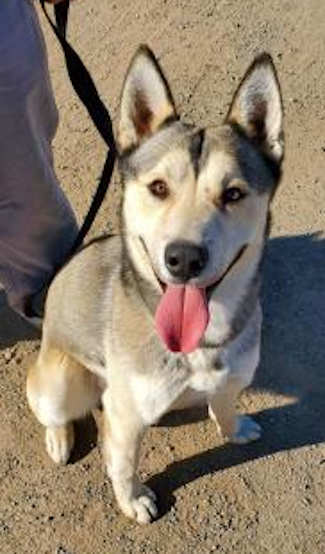
‘Mamba’
“Mamba” is a male Siberian husky mix with a gray and cream-colored coat.
He has been neutered.
He is dog No. 49520569.
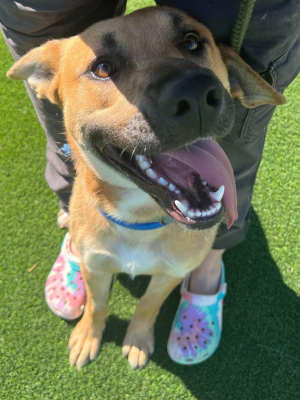
‘Matata’
“Matata” is male shepherd mix with a tan coat.
He has been neutered.
He is dog No. 50176912.
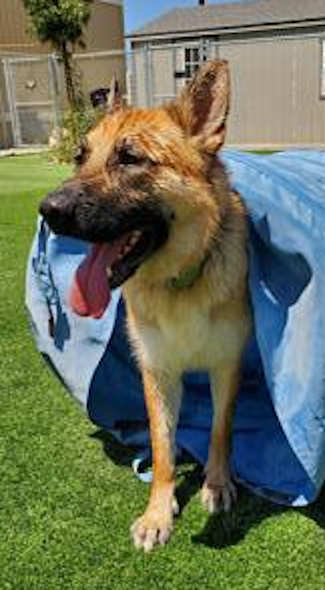
‘Maya’
“Maya” is a female German shepherd with a black and tan coat.
She has been spayed.
She is dog No. 50428151.

‘Mikey’
“Mikey” is a male German shepherd mix with a short brown and tan coat.
He has been neutered.
He is dog No. 51012855.
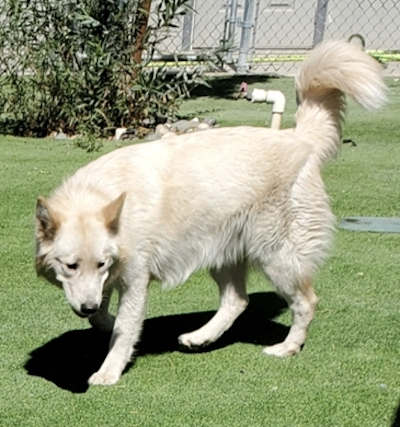
‘Molly’
“Molly” is a female Samoyed mix with a long white coat.
She has been spayed.
She is dog No. 50933031.

‘Paige’
“Paige” is a female American pit bull mix with a short brown coat.
She has been spayed.
She is dog No. 51194668.

‘Poppa’
“Poppa” is a 3-year-old male American pit bull terrier mix with a short red and white coat.
He has been neutered.
He is dog No. 50773597.
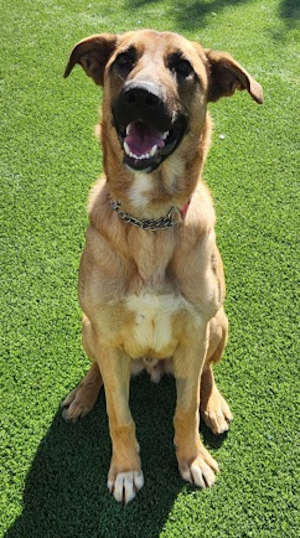
‘Rascal’
“Rascal” is a male shepherd mix with a black and brown coat.
He has been neutered.
He is dog No. 50806384.
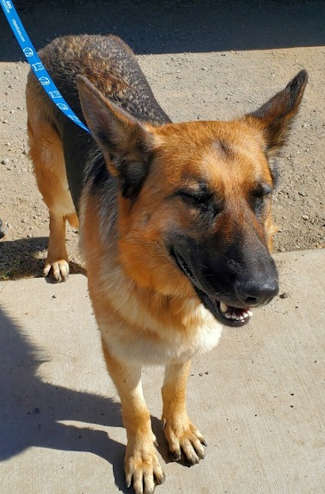
‘Reese’
“Reese” is a female German Shepherd with a black and an coat.
She has been spayed.
She is dog No. 50884542.

‘Sadie’
“Sadie” is a female German shepherd mix with a black and tan coat.
She has been spayed.
She is dog No. 49802563.

‘Snowball’
“Snowball is a 1 and a half year old male American Staffordshire terrier mix with a short white coat.
He has been neutered.
He is dog No. 49159168.
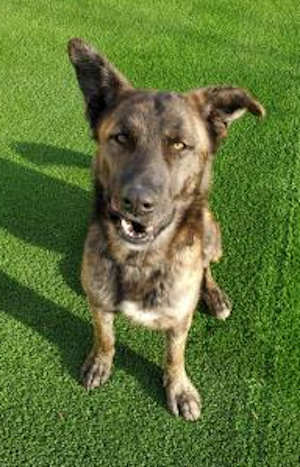
‘Terry’
“Terry” is a handsome male shepherd mix with a short brindle coat.
He gets along with other dogs, including small ones, and enjoys toys. He also likes water, playing fetch and keep away.
Staff said he is now getting some training to help him build confidence.
He is dog No. 48443693.

‘Trike’
“Trike” is a male border collie-Australian shepherd mix with a black and white coat and blue eyes.
He has been neutered.
He is dog No. 51029972.

‘Willie’
“Willie” is a male German shepherd mix with a black and tan coat.
He has been neutered.
He is dog No. 50596003.
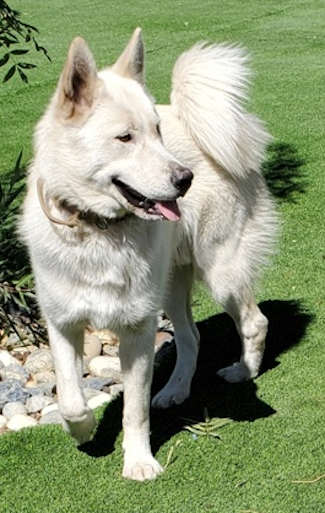
‘Zeus’
“Zeus” is a male Samoyed mix with a long white coat.
He has been neutered.
He is dog No. 50933068.
Email Elizabeth Larson at
- Details
- Written by: NATIONAL AERONAUTICS AND SPACE ADMINISTRATION

The powerful NASA/ESA/CSA James Webb Space Telescope has found an unexpectedly rich “undiscovered country” of early galaxies that has been largely hidden until now.
A few days after officially starting science operations, the NASA/ESA/CSA James Webb Space Telescope propelled astronomers into a realm of early galaxies, previously hidden beyond the grasp of all other telescopes.
Webb is now unveiling a very rich Universe where the first forming galaxies look remarkably different from the mature galaxies seen around us today. Researchers have found two exceptionally bright galaxies that existed approximately 300 and 400 million years after the Big Bang.
Their extreme brightness is puzzling to astronomers. The young galaxies are transforming gas into stars as fast as they can and they appear compacted into spherical or disc shapes that are much smaller than our Milky Way galaxy. The onset of stellar birth may have been just 100 million years after the Big Bang, which happened 13.8 billion years ago.
“Everything we see is new. Webb is showing us that there’s a very rich Universe beyond what we imagined,” said Tommaso Treu of the University of California at Los Angeles, a co-investigator on one of the Webb programmes. “Once again the Universe has surprised us. These early galaxies are very unusual in many ways.”
The results are from Webb’s GLASS-JWST Early Release Science Program (Grism Lens-Amplified Survey from Space), and Cosmic Evolution Early Release Science Survey, or CEERS.
Two research papers, led by Marco Castellano of the National Institute for Astrophysics in Rome, Italy, and Rohan Naidu of the Center for Astrophysics | Harvard & Smithsonian and the Massachusetts Institute of Technology in Cambridge, Massachusetts have been published in the Astrophysical Journal Letters.
In just four days of analysis, researchers found two exceptionally bright galaxies in the GLASS-JWST images. These galaxies existed approximately 450 and 350 million years after the Big Bang (with redshifts of approximately 10.5 and 12.5, respectively), which future spectroscopic measurements with Webb will help confirm.
“With Webb, we were amazed to find the most distant starlight that anyone had ever seen, just days after Webb released its first data,” said Rohan Naidu of the more distant GLASS galaxy, referred to as GLASS-z12, which is believed to date back to 350 million years after big bang. The previous record holder is galaxy GN-z11, which existed 400 million years after the big bang (redshift 11.1), and identified in 2016 by Hubble and Keck Observatory in deep-sky programmes.
“Based on all the predictions, we thought we had to search a much bigger volume of space to find such galaxies,” said Castellano.
“These observations just make your head explode. This is a whole new chapter in astronomy. It’s like an archaeological dig, when suddenly you find a lost city or something you didn’t know about. It’s just staggering,” added Paola Santini, fourth author of the Castellano et al. GLASS-JWST paper.
“While the distances of these early sources still need to be confirmed with spectroscopy, their extreme brightnesses are a real puzzle, challenging our understanding of galaxy formation,” noted Pascal Oesch of the University of Geneva in Switzerland.
The Webb observations nudge astronomers toward a consensus that an unusual number of galaxies in the early Universe were much brighter than expected. This will make it easier for Webb to find even more early galaxies in subsequent deep sky surveys, say researchers.
“We’ve nailed something that is incredibly fascinating. These galaxies would have had to have started coming together maybe just 100 million years after the Big Bang. Nobody expected that the dark ages would have ended so early,” said Garth Illingworth of the University of California at Santa Cruz. “The primal Universe would have been just one hundredth of its current age. It’s a sliver of time in the 13.8-billion-year-old evolving cosmos.”
Naidu/Oesch team member Erica Nelson of the University of Colorado noted that “our team was struck by being able to measure the shapes of these first galaxies; their calm, orderly discs question our understanding of how the first galaxies formed in the crowded, chaotic early Universe.” This remarkable discovery of compact discs at such early times was only possible because Webb’s images are so much sharper, in infrared light, than Hubble’s.
“These galaxies are very different from the Milky Way or other big galaxies we see around us today,” said Treu.
Illingworth emphasised that the two bright galaxies found by these teams have a lot of light. He said one option is that they could have been very massive, with lots of low-mass stars, like later galaxies. Alternatively, they could be much less massive, consisting of far fewer extraordinarily bright stars, known as Population III stars. Long theorised, they would be the first stars ever born, blazing at blistering temperatures and made up of only primordial hydrogen and helium; only later would stars cook up heavier elements in their nuclear fusion furnaces. No such extremely hot, primordial stars are seen in the local Universe.
“Indeed, the most distant source is very compact, and its colours seem to indicate that its stellar population is particularly devoid of heavy elements and could even contain some Population III stars. Only Webb spectra will tell,” said Adriano Fontana, second author of the Castellano et al. paper and a member of the GLASS-JWST team.
Present Webb distance estimates to these two galaxies are based on measuring their infrared colors. Eventually, follow-up spectroscopy measurements showing how light has been stretched in the expanding Universe will provide independent verification of these cosmic yardstick measurements.
Webb is the largest, most powerful telescope ever launched into space. Under an international collaboration agreement, ESA provided the telescope’s launch service, using the Ariane 5 launch vehicle. Working with partners, ESA was responsible for the development and qualification of Ariane 5 adaptations for the Webb mission and for the procurement of the launch service by Arianespace.
ESA also provided the workhorse spectrograph NIRSpec and 50% of the mid-infrared instrument MIRI, which was designed and built by a consortium of nationally funded European Institutes (The MIRI European Consortium) in partnership with JPL and the University of Arizona.
Webb is an international partnership between NASA, ESA and the Canadian Space Agency.
- Details
- Written by: Elizabeth Larson
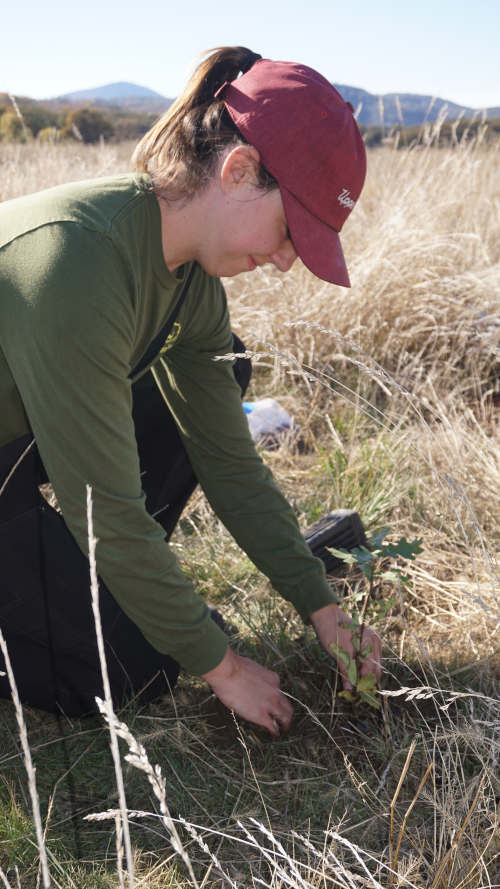
CLEARLAKE, Calif. — In the years to come, Lake County residents should see dozens of newly planted valley oaks trees becoming part of the landscape at Anderson Marsh State Historic Park, their canopies growing broad and tall over a life span marked in centuries.
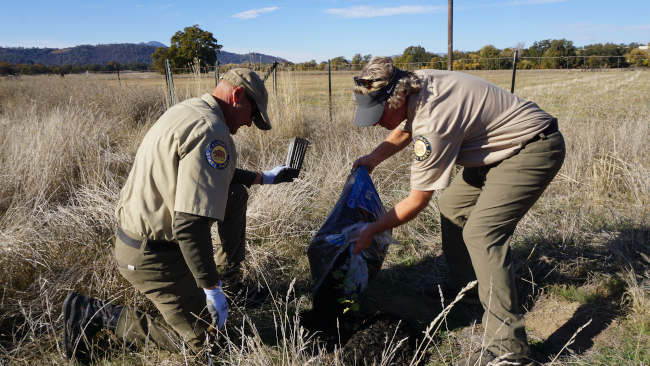
This week, State Parks staff planted 100 valley oak seedlings over three locations at Anderson Marsh State Historic Park.
It’s part of a collaborative project between State Parks, the city of Clearlake and Anderson Marsh Interpretive Association.
“We’re excited,” Ryan Martin, the natural resources manager for the State Parks division that includes Lake County, said of the project.
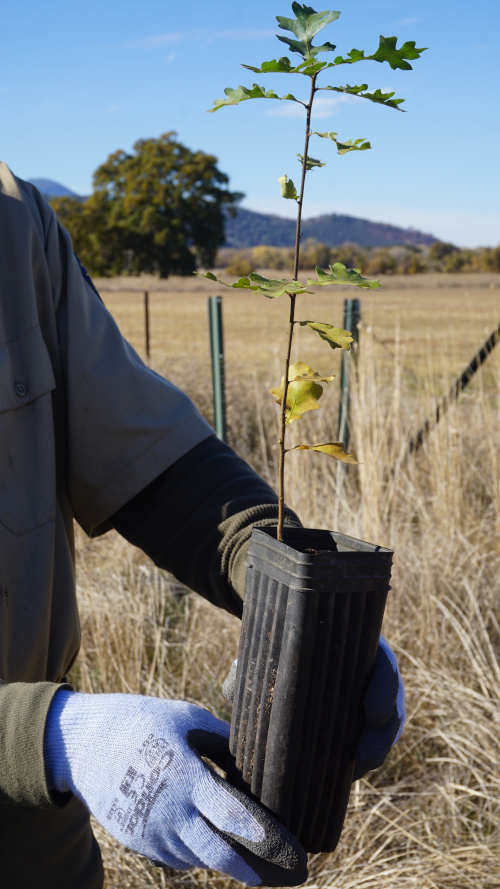
The 1-year-old valley oak seedlings were sourced locally from Native Nursery, owned by Larry Ray. Chad Mackie, a State Parks forestry aide, picked up the trees on Tuesday.
A team of five planted the trees in just two days, starting with 77 on Wednesday and the remaining trees on Thursday.
The trees were planted along Seigler Canyon Creek, across Highway 53 from the park’s ranch house, as well as on the North Flat area and in the grassland around the ranch house itself.
Planting 100 trees in two days was “quite a feat,” said Chaye VanKeuren, a State Parks environmental scientist.
The recent rains softened the ground and offered the right conditions for planting.
“We’ve been waiting for rain to really pull the trigger,” said VanKeuren.
Valley oaks, known by their scientific name as Quercus lobata, are native to California and the largest oaks to grow in North America.
The little trees, now about 1 foot tall, could someday reach 100 feet in height and could live as long as 600 years.
Anderson Marsh Interpretive Association Board member Henry Bornstein said State Parks staff settled on 100 trees as the number that would work best for the area.
“Planting trees is always a good idea,” said Bornstein.
VanKeuren said they placed the trees in areas where they thought they would do best, including areas along hillsides.
Rosie Blackburn, a State Parks environmental services intern who mapped where the trees would be located, helped plant the last of the trees on Thursday.
Blackburn said the trees were planted in clusters of six. She said they will be monitoring the seedlings and will base their watering schedule on conditions after winter.
Mackie said cages will be placed around the little trees before spring.
The Anderson Marsh Interpretive Association will eventually do the watering, weeding and maintenance for the seedlings.
Two educational panels about the trees, at North Flat and near the ranch house, eventually will be installed.
In June, the city announced that it would provide $21,000 to the planting project at Anderson Marsh from $100,000 in tree mitigation fees paid by the developer of the 102-unit Konocti Gardens, an affordable housing project being built by CSI Construction at 3930 Old Highway 53.
City Manager Alan Flora, who along with Mayor Dirk Slooten came out to check out the last of the plantings on Thursday, said the Konocti Gardens project removed close to 100 oak trees, some of them very large.
While the state has made affordable housing projects statutorily exempt from review under the California Environmental Quality Act, the city was able to require mitigation.
That’s because the city of Clearlake is the only jurisdiction in the county to have an oak tree protection ordinance that requires developers who cut down native oak trees to either replant trees of the same species or choose to pay a fee to fund replanting by the city.
That ordinance, which the Clearlake City Council passed in April 2008, established regulations to protect certain native trees — blue oak, valley oak, interior live oak, California black oak, canyon live oak and Oregon white oak, as well as any tree the Clearlake City Council designates as a “heritage tree” — in order to enhance the attractiveness and livability of the city
Koi tribal monitor Yolanda Sanchez was on the site on Thursday to make sure they didn’t dig into archaeological sites. Another tribal monitor, Fabian Romero, also had assisted with the project on Wednesday.
Bornstein said no one really knows if there were oaks in the planting areas before.
He said that the Army Corps of Engineers has done numerous projects along Cache Creek over the years, including straightening the creek and taking a foot off the Grigsby riffle. Even with those alterations, Bornstein said portions of the park, including along the Cache Creek trail, still flood during high water years.
There is the potential for more projects in the future, but nothing ready to go yet, said Flora. “We still have some funding but we haven’t identified anything.”
Flora said the city also is looking at possible conservation easements or acquiring property for future planting projects.
Correction: The article has been corrected to state that this was a collaborative project between State Parks, the city of Clearlake and Anderson Marsh Interpretive Association, not Anderson Marsh State Historic Park.
Email Elizabeth Larson at