 How to resolve AdBlock issue?
News
- Details
- Written by: CALIFORNIA HIGHWAY PATROL
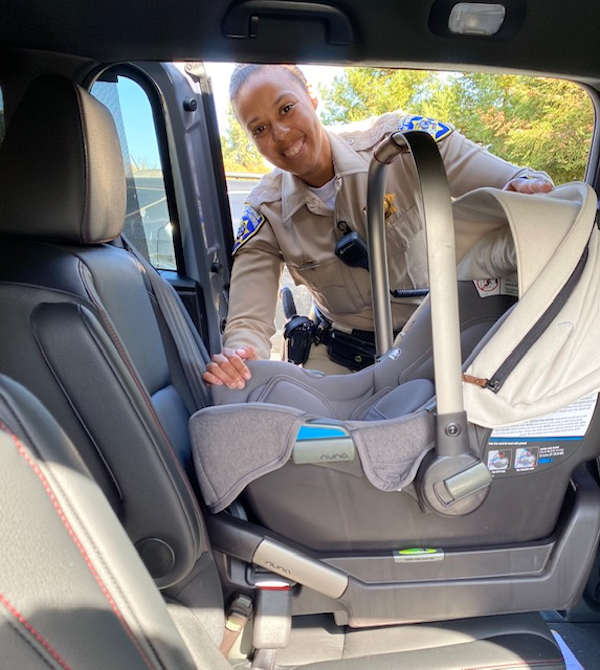
The California Highway Patrol is continuing its efforts to ensure infants and children are safe while traveling California’s roadways with the “California Restraint Safety Education and Training VI,” or CARSEAT, campaign funded by the California Office of Traffic Safety.
This CARSEAT campaign, which runs through Sept. 20, 2023, focuses on reducing the number of injuries and deaths resulting from unrestrained and improperly restrained infants and children.
As part of the campaign, the CHP will host certification training for first responders to educate the public during child passenger safety seat inspections and community events.
These efforts will highlight the importance of properly using seat belts and child passenger restraints, and provide education related to the proper installation of child passenger safety seats.
California law requires all infants and children under 2 years of age ride in a rear-facing child car seat unless the child weighs 40 or more pounds or is 40 or more inches tall.
Additionally, state law requires children under the age of 8 be properly restrained in an appropriate car seat or booster seat in the back seat of a vehicle.
While California law dictates minimum guidelines for keeping infants and children safe while riding in a vehicle, parents and caregivers are encouraged to continue to use their current child passenger safety seat up to the height and weight limits of the manufacturer’s guidelines. It is recommended all passengers ride in the back seat of a vehicle until age 13.
For further information about safety guidelines, please visit the National Highway Traffic Safety Administration website at www.nhtsa.gov.
“The CHP remains focused on educating parents and caregivers about the proper installation and safe use of child passenger safety seats,” said CHP Commissioner Amanda Ray. “The best way to protect your child is to use a properly installed car seat or booster seat every trip, regardless of the distance.”
For more information regarding seat belts, seat belt regulations, child passenger safety, or to make an appointment for a free car seat installation, please contact your local CHP Area office at https://www.chp.ca.gov/find-an-office.
The Clear Lake Area office in Kelseyville can be reached at 707-279-0103.
- Details
- Written by: Elizabeth Larson
Call Lake County Animal Care and Control at 707-263-0278 or visit the shelter online at http://www.co.lake.ca.us/Government/Directory/Animal_Care_And_Control.htm for information on visiting or adopting.
The following cats at the shelter have been cleared for adoption.
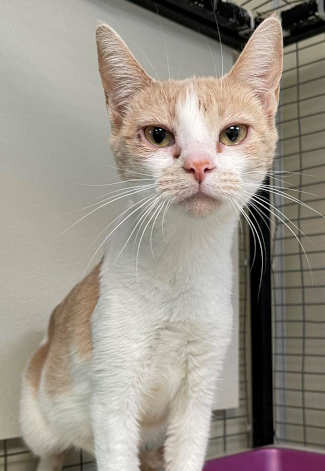
‘Mom’
“Mom” is a 2-year-old female domestic shorthair cat with an orange and white coat.
She is in cat room kennel No. 3, ID No. LCAC-A-4080.

Female domestic shorthair
This 2-year-old female domestic shorthair cat has a gray tabby coat.
“She is an adult cat with some playful kitten tendencies when toys are brought out. She has a sweet little meow and likes to have playful chats with you,” shelter staff said.
She is in cat room kennel No. 10, ID No. LCAC-A-3661.

Male domestic shorthair
This 3-year-old male domestic shorthair cat has an orange tabby coat.
“This guy can be shy at first, but once he knows that you are all about the pets, he will roll right over and start his purr machine. He has a unique curly tail which he flicks around when curious,” shelter staff said.
He is in cat room kennel No. 13, ID No. LCAC-A-4021.

Female domestic shorthair kitten
This 3-month-old female domestic shorthair kitten has a gray and white coat.
Staff said the kitten is outgoing and all about fun and games. “She loves to play with toys and enjoys cuddle time. She also enjoys playing with the other kittens and cats.”
She is in cat room kennel No. 36, ID No. LCAC-A-4085.
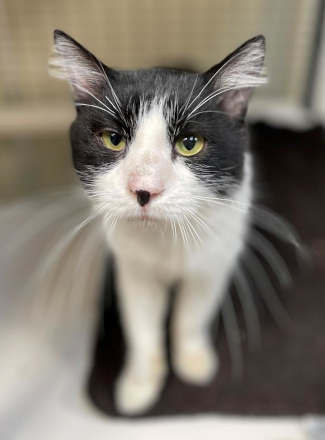
Male domestic longhair cat
This 1-year-old male domestic longhair cat has a black and white coat.
“This guy had a hard start, but has a lot of love to give once he warms up to you,” shelter staff said.
Staff said he also loves brushing and shows his appreciation with purring and head bumps.
He is in kennel No. 107, ID No. LCAC-A-4023.
Email Elizabeth Larson at
- Details
- Written by: U.S. CENSUS BUREAU
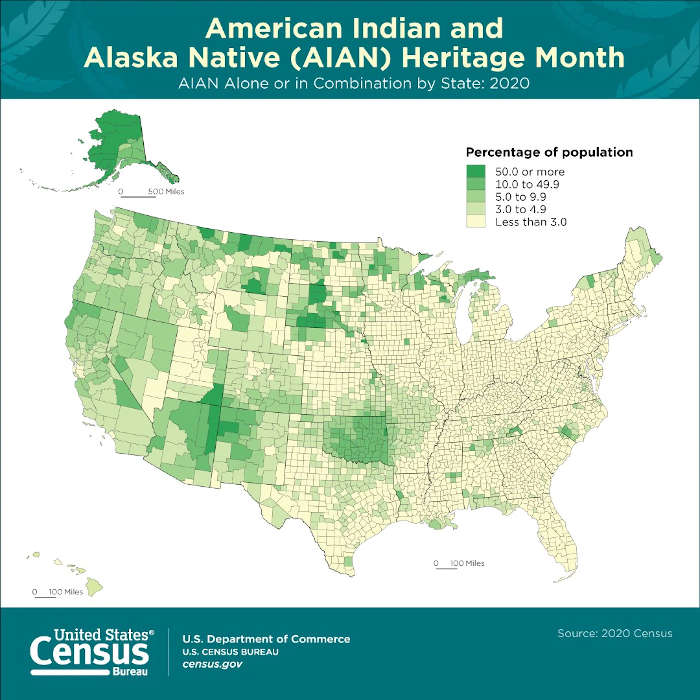
November is American Indian and Alaska Native Heritage Month, a time to honor the nation’s tribal cultures and history.
The first American Indian Day was celebrated in May 1916, in New York. The event culminated an effort by Red Fox James, a member of the Blackfeet Nation, who rode across the nation on horseback seeking approval from 24 state governments to have a day to honor American Indians.
In 1990, more than seven decades later, then-President George H.W. Bush signed a joint congressional resolution designating the month of November “National American Indian Heritage Month.”
Similar proclamations have been issued every year since 1994 to recognize what is now called “American Indian and Alaska Native Heritage Month.”
In Lake County, the Board of Supervisors presented a proclamation for Native American Heritage Month at its Nov. 8 meeting.
The American Indian and Alaska Native population is one of the six major race categories defined by the U.S. Office of Management and Budget.
The following facts are possible thanks to responses to the U.S. Census Bureau’s surveys.
DID YOU KNOW?
3.7 million
The nation's American Indian and Alaska Native population alone in 2020. This population group identifies as AIAN only and did not identify with any other race.
10.1 million
The projected American Indian and Alaska Native population alone or in combination with other race groups on July 1, 2060, about 2.5% of the projected total U.S. population.
3,438
The American Indian and Alaska Native population alone or in combination with other race groups in Lake County, California, for 2021, or about 5% of the county’s entire population.
324
The number of distinct, federally recognized American Indian reservations in 2022, including federal reservations and off-reservation trust land.
574
The number of federally recognized Indian tribes in 2022.
7
The number of federally recognized Indian tribes in Lake County, California, in 2022. They are the Big Valley Band of Pomo Indians of the Big Valley Rancheria, Elem Indian Colony of Pomo Indians of the Sulphur Bank Rancheria, Habematolel Pomo of Upper Lake, Koi Nation of Northern California, Middletown Rancheria of Pomo Indians of California, Robinson Rancheria and Scotts Valley Band of Pomo Indians of California.
120,944
The number of single-race American Indian and Alaska Native veterans of the U.S. Armed Forces in 2021.
- Details
- Written by: Maria Garcia, University of California, San Francisco
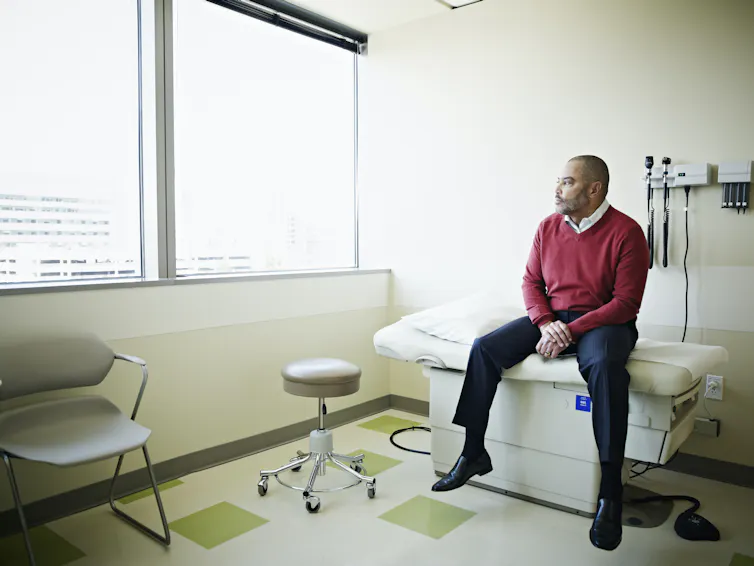
Depression is a costly and debilitating condition that profoundly influences a person’s quality of life. In 2020, more than 21 million adults in the U.S. reported having at least one major depressive episode in the previous year. Depression symptoms increased dramatically during the COVID-19 pandemic, and now affect nearly 1 in 3 American adults.
There are also many disparities in access to depression treatment. Clinicians are less likely to recognize and treat depressive symptoms in certain groups, including racial and ethnic minorities, men, older adults and people with language barriers. These disparities may be driven by poor patient-physician communication about mental health, cultural differences in discussing depressive symptoms, stigma around mental illness and limited available treatment options.
Limited time to discuss mental health symptoms in depth in primary care settings may also contribute to the depression treatment gap. As a researcher and primary care physician focused on improving access to mental health treatment, I have seen many patients struggle to have their depressive symptoms recognized by their clinicians and access quality care. Depression screening often only occurs when a clinician suspects the patient may have depression or when the patient specifically requests mental health care.
But making depression screening a routine practice could help reduce treatment disparities. In January 2016, the U.S. Preventive Services Task Force began recommending depression screening for all adults. In October 2022, given the mental health effects of the pandemic, it extended the recommendation to include screening all adolescents age 12 and up for depression and suicide risk during routine wellness checkups.
In our recent study, my team and I found that implementing universal, routine depression screening for adults in primary care is one way to make detection more equitable.
Depression screening in one large health system
The goal of our study was to evaluate whether the six primary care practices in the University of California, San Francisco health system had adopted routine depression screening for all their adult patients, and whether traditionally undertreated or untreated groups were being screened.
Medical assistants were asked to administer the screening test before patients saw their clinician. The clinician, after reviewing and discussing the results with the patient, could then arrange a follow-up appointment, prescribe a depression medication or submit a referral to a behavioral health specialist.
After two years, we analyzed data for 52,944 adult patients who had an appointment at one of the primary care clinics in that period. Screening rates were initially low – only 40.5% of patients were screened. Furthermore, men, older adults, racial and ethnic minorities, those with public health insurance, and those with language barriers were all less likely to be screened. For example, patients who spoke a Chinese language were almost half as likely to be screened as patients who spoke English.
However, with the UCSF health system’s coinciding focus on equity, screening rates increased to 88.8% by 2019. UCSF Health established a task force that met over the course of the project to discuss its progress, share best practices across primary care clinics and actively make adjustments to address screening disparities.
Overall, screening rates dramatically increased over those two years for all groups at risk of having their depression go unrecognized and untreated.
Improving depression care for all patients
Depression is a leading cause of disability worldwide. It can affect a person’s ability to manage other chronic conditions, and can lead to worsened disability and earlier death.
Our research found that increasing universal screening efforts can help reach groups that are less likely to be screened and treated for depression. We ensured that screening tools were available in other languages, clinical staff were periodically trained, and screening was integrated with routine clinical tasks. We also made sure that our efforts were aligned with the UCSF health system’s priorities, quality improvement efforts and reimbursement policies to reduce the burden of implementation and ensure sustainability.
While depression screening is necessary, it is not sufficient on its own to decrease care disparities for depression. Additional research is needed to see whether improved screening will lead to increased treatment and care engagement among at-risk groups.
Our team’s next steps are to evaluate whether a positive screen led to initiation of treatment for depression, and whether all patient groups were equally likely to engage in treatment. Our hope is that the lessons we learned from implementing routine depression screening in our primary care practices can encourage other health care systems around the country to do the same, and help better serve diverse patient populations.
Maria Garcia, Assistant Professor of Medicine, University of California, San Francisco
This article is republished from The Conversation under a Creative Commons license. Read the original article.