 How to resolve AdBlock issue?
News
- Details
- Written by: Elizabeth Larson
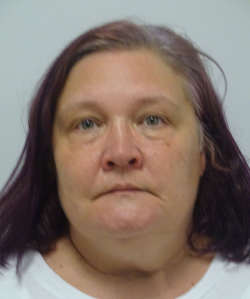
LAKE COUNTY, Calif. — A jury on Thursday convicted a Clearlake Oaks woman of first-degree murder for the fatal July 2021 shooting of her ex-boyfriend.
Tammy Sue Grogan-Robinson, 58, is facing decades in prison following the verdict, handed down in Judge Andrew Blum’s courtroom on Thursday afternoon.
The six-man, six-woman jury decided the case at the end of deliberations that had begun on Thursday morning following a four-week trial, said Deputy District Attorney Rich Watson, who prosecuted the case.
Grogan-Robinson was found guilty of the killing of 56-year-old Charles Vernon McClelland of Rohnert Park, her on-again, off-again boyfriend of five years who the prosecution said she had planned to shoot after he rejected her attempts to get back together.
McClelland was shot at the Clearlake Oaks home he owned, part of which was rented to Grogan-Robinson, on the morning of July 7, 2021.
Grogan-Robinson told authorities that she killed McClelland after he sexually assaulted her at gunpoint. However, within weeks, those claims started to fall apart as the Lake County Sheriff’s Office conducted follow-up investigations.
“Charles McClelland did not sexually assault her,” Watson said.
“Not only did she kill him, she tried to smear his name in the worst way possible,” Watson added.
Grogan-Robinson took the stand during her trial, but her testimony did not appear to sway the jury, Watson said.
Watson said the jury convicted Grogan-Robinson of first-degree murder, finding to be true special allegations of intentionally discharging a firearm causing death, use of a handgun in committing the crime and inflicting great bodily injury or death.
She also was convicted on a second count of assault with a firearm, as well as a special allegation to that charge of committing great bodily injury on McClelland.
Watson said Grogan-Robinson is facing terms of 25 years to life for the first-degree murder conviction and 25 years to life for the gun use enhancement.
Sentencing will take place at 1:30 p.m. Monday, Dec. 12, in Judge Blum’s Department 3 courtroom at the Lakeport courthouse.
“Ms. Grogan Robinson is very disappointed in the outcome. She continues to maintain her innocence,” Mitchell Hauptman, Grogan-Robinson’s attorney, told Lake County News in a Thursday afternoon email.
Hauptman said an appeal of the verdict will “absolutely” be filed.
The facts of the case
Watson said McClelland had been married for 15 years, he and his wife grew apart and they divorced. He raised a son, now 21.
After his divorce, McClelland and Grogan-Robinson had dated on and off over the course of five years. Watson said McClelland had decided he wasn’t willing to commit to a long-term relationship with Grogan-Robinson and they broke up in March 2021.
However, Watson said Grogan-Robisnon was obsessed with McClelland, and while he made clear that he didn’t want to continue their relationship, she didn’t get the message.
That was borne out in the investigation, Watson said. “We went through 1,600 text messages between the two of them.”
While McClelland kept telling Grogan-Robinson that he wanted her to move on and be happy, she “was relentless,” Watson said, and continued to text him, sending messages including one wishing him a happy anniversary.
Ultimately, the prosecution argued that Grogan-Robinson killed McClelland because of her jealousy.
During the 2021 Independence Day weekend, McClelland came up to spend the weekend at the lake. Grogan-Robinson lived in the main house on his property and he used an apartment there as his vacation home, Watson said.
On that weekend, Watson said McClelland had friends with him. “When he gets there, she starts texting him, sending him salacious pictures.”
She continued to pursue McClelland over that weekend. Watson said McClelland’s friends went home on July 4, leaving Grogan-Robinson and McClelland alone at the home.
Watson said they started chatting, and he argued Grogan-Robinson was getting her hopes up that they would reunite.
They spent time together on July 5 and then on July 6 Grogan-Robinson, according to her trial testimony, said she fixed them dinner.
Watson said it was on that evening, McClelland’s last night alive, that the mood changed.
He said Grogan-Robinson became angry when she found out McClelland was texting his new girlfriend.
It was at that point that Grogan-Robinson started texting a male friend, Kenneth Hobbs, telling him that she was going to shoot McClelland in the face, according to testimony given at her November 2021 preliminary hearing. She later asked Hobbs to delete those texts.
Watson said Grogan-Robinson and Hobbs were texting from about 6:30 p.m. to 11 p.m. that evening. In those texts, Hobbs was trying to dissuade her from harming McClelland.
The next morning, July 7, Grogan-Robinson shot McClelland four times with her own 9 millimeter handgun, Watson said.
While Watson said he didn’t know exactly when the shooting occurred, he believes it was sometime between her first correspondence with her workplace, Adventist Health, at 6:39 a.m. and when she left her home at 7:45 a.m., which was shown on her door camera.
She later told Hobbs that McClelland had entered through her bedroom window at around midnight, that he struggled with her for her handgun, which was on the nightstand, that he had sexually assaulted her and she shot him, claims that the investigation would disprove.
Watson said Grogan-Robinson told investigators that she drove into Clearlake, made a couple of phone calls, including to Adventist Health, which directed her to Sutter Lakeside Hospital for the sexual assault exam. That’s where sheriff’s deputies first spoke with her.
Grogan-Robinson told investigators that after she shot McClelland, she smoked a cigarette and walked around the house, packed a bag, but didn’t call anyone to report the shooting or to ask for help for McClelland, Watson said.
“She just got in her car and left,” Watson said.
Watson said authorities immediately started a full sexual assault investigation which disproved Grogan-Robinson’s story.
“As the evidence started to come back, it showed that her story didn’t line up,” he said.
The DNA evidence excluded McClelland from having touched the grip of the handgun that she had claimed he held on her.
“This was an exclusion, which was huge for his name,” Watson said.
Watson said the DNA testing from the sexual assault testing and from McClelland’s autopsy showed that they had not had sex, and so he had not committed the sexual assault that she had claimed.
That matched the evidence reported to a deputy who, when collecting the sexual assault kit at Sutter Lakeside Hospital, was told by a nurse that there were no physical findings of sexual assault.
After the murder, Grogan-Robinson went to Missouri, where she has family. She was arrested there in August 2021 and extradited back to Lake County in September 2021. She has remained in custody since then.
She pleaded not guilty to McClelland’s killing in an October 2021 court appearance and in November 2021, following a preliminary hearing, Judge J. David Markham ordered her to stand trial for McClelland’s murder.
The trial
Watson said the trial began with jury selection on Oct. 19. The presentation of evidence began on Oct. 26.
Testimony at trial included the appearance of Dr. Bennet Omalu, who conducted the autopsy and concluded that McClelland died of the gunshot wounds and that his injuries were consistent with defensive wounds. Omalu is well-known for his work in studying concussion injuries in professional football players.
Also during the trial, Grogan-Robinson herself took the stand, giving her own version of events, Watson said.
While it’s uncommon for defendants in criminal prosecutions to testify during their trials, Watson said he wasn’t surprised when she took the stand.
“It was believed that she wanted to take the stand the whole time,” he said. “She wanted to tell her story.”
However, Watson said he didn’t think it helped her case. She showed no emotion whatsoever while giving her testimony.
Neither did her version of events appear to sway the jury.
During his cross examination of Grogan-Robinson, Watson asked her why she left McClelland to die while she smoked a cigarette. He said she denied doing that.
Rather, she testified that she caused injury to McClelland in the abdomen and in her experience as a surgical technician working in surgical rooms, she has seen people survive the same type of injury, Watson said.
Watson argued that her statements before and actions after killing McClelland showed her state of mind.
Following closing arguments, the jury got the case at 4 p.m. Wednesday. Watson said that rather than start deliberations then, the jury started fresh at 9 a.m.Thursday.
At 10 a.m. Thursday, the jury asked to review evidence in the form of video, including the interview the sheriff’s office conducted with Grogan-Robinson at the hospital and subsequent interviews.
Watson said altogether the jury watched about two hours of video before breaking for lunch at noon.
They came back and continued deliberations, and at 2 p.m. he got the notice that they had reached a verdict.
During the verdict reading, Grogan-Robinson again showed no emotion.
For the type of case it was, Watson said the verdict came quickly.
Regarding the decades of prison time Grogan-Robinson is potentially facing at next month’s sentencing, Watson said she needs to be held accountable.
As for McClelland, victimized both in his killing and in Grogan-Robinson’s attempt to destroy his reputation as a justification, “His name needs to be cleared, too,” Watson said.
Email Elizabeth Larson at
- Details
- Written by: U.S. Census Bureau
Congress passed a resolution in 1926 making it an annual observance, and it became a national holiday in 1938.
Sixteen years later, then-President Dwight D. Eisenhower signed legislation changing the name to Veterans Day to honor all those who served their country during war or peacetime.
On this day, the nation honors military veterans — living and dead — with parades and other observances across the country and a ceremony at the Tomb of the Unknown Soldier at Arlington National Cemetery in Virginia.
The following facts are based on responses to U.S. Census Bureau surveys.
Veteran population
Did you know?
16.5 million
The number of military veterans in the United States in 2021.
1.7 million
The number of female veterans in the United States in 2021.
1.9%
The percentage of veterans in 2021 who were Asian American. Additionally, 73.0% of veterans were non-Hispanic white; 8.2% Hispanic or Latino (of any race); 12.3% African American; 0.7% American Indian or Alaska Native; 0.2% Native Hawaiian or Other Pacific Islander; and 2.7% were Some Other Race. (The numbers include only those reporting a single race.)
24.4%
The percentage of veterans ages 75 and older in 2021. At the other end of the age spectrum, 8.2% of veterans were younger than age 35.
7.2%
The percentage of veterans living in Lake County, California, as of 2020.
- Details
- Written by: OFFICE OF CONGRESSMAN MIKE THOMPSON
The Joint Fire Science Program is accepting applications for grants to research innovative fuels treatments and post-fire rehabilitation efforts through Dec. 20, 2022, for fiscal year 2023.
The Bipartisan Infrastructure Law is bringing much-needed support to communities across the country to increase the resilience of lands facing the threat of wildland fires and to better support federal wildland firefighters.
“The Bipartisan Infrastructure Law is delivering much needed funding to assist our communities in combating the impact of climate change,” said Thompson. “As California remains on the front lines of the climate crisis, wildfires pose a significant risk and it remains a top priority to provide the funding we need to mitigate the risk of wildfires and protect our communities.”
“With increasing wildfire activity due to climate change, it is imperative we fund research to better understand how to manage fire prone landscapes now and into the future,” said Grant Beebe, Bureau of Land Management assistant director of fire and aviation, based at the National Interagency Fire Center. “The Joint Fire Science Program brings the science and management community together in a unique, collaborative manner so that research can be used to make sound decisions on the ground.”
This funding is in addition to $3.4 billion in wildfire suppression and mitigation included in the Bipartisan Infrastructure Law.
This includes investments such as:
• $600 million to increase federal firefighter salaries by up to $20,000/year and convert at least 1,000 seasonal firefighters to year-round positions.
• $500 million for hazardous fuels mitigation.
• $500 million for prescribed fires.
• $500 million for communities to implement their community wildfire defense plan, a collaborative plan to address local hazards and risks from wildfire.
• $500 million for developing control locations and installing fuel breaks.
• $100 million for preplanning fire response workshops and workforce training.
• $40 million for radio frequency interoperability and to create Reverse-911 systems.
• $20 million for NOAA to create a satellite that rapidly detects fires in areas the federal government has financial responsibility.
• $10 million to procure real-time wildfire detection and monitoring equipment in high-risk or post-burn areas.
Funding opportunities for wildland fire research priorities are posted on the Joint Fire Science Program’s website.
Thompson represents California’s Fifth Congressional District, which includes all or part of Contra Costa, Lake, Napa, Solano and Sonoma counties.
- Details
- Written by: Elizabeth Larson
LAKE COUNTY, Calif. — Community members and landowners are invited to a two-day workshop that will focus on the work to protect communities from wildfire and to restore lands damaged by fires.
FireScape Mendocino will host the in-person “Collaborative Planning Workshop for Wildfire Resilience and Post-fire Restoration” workshop on Wednesday, Nov. 16, and Thursday, Nov. 17.
The workshop is free. Participants should plan to attend both days and should register in advance online at https://bit.ly/Firescape-14.
FireScape Mendocino is a collaborative of private citizens and public organizations focused on creating more fire-resilient landscapes in and around the Mendocino National Forest. This is the 14th workshop hosted by the organization.
The group said private landowners and land managers interested in learning potential operational delineations, or PODs, for wildfire resilience and the Mendocino National Forest’s post-fire restoration strategy should attend.
The group said speakers from tribes, local and federal agencies will be presenting information and looking for public feedback.
Topics planned for the workshop include forest restoration and resiliency on the Upper Lake Ranger District, potential operational delineations, or PODs, planning process and values at risk and ecologically-based post-fire restoration for Mendocino National Forest.
The workshop schedule includes a field trip to the Upper Lake Ranger District on Nov. 16. Participants should meet at the Robinson Rancheria Resort and Casino, 1545 E. State Hwy 20, Nice, Calif., at 8:30 am before carpooling to the forest.
On Nov. 17, the workshop will be conducted at the Robinson Rancheria Resort and Casino from 8:30 am to 4 pm.
Bob Schneider is working with FireScape Mendocino on the workshop and is co-lead on the core management team. He generally works to represent the conservation community and general public.
Schneider said California is being subdivided into PODS, a management tool for fire and fuel that also can help with fire restoration and planning. POD boundaries are never finalized, but constantly updated and refined.
He said the concept came out of the Rocky Mountain Research Station.
The U.S. Forest Services explains that PODs are “fire management and planning units whose boundaries are defined by potential control features (e.g., roads, natural barriers), and within which fire risk to values can be quantified and summarized.”
From a firefighter perspective, Schneider said PODs include ridges, roads and areas where firefighters can manage, control or direct fires.
The PODs concept extends beyond physical boundaries, but also what an area includes — such as cultural and important biological resources, Schneider said. “It’s kind of a preplanning management tool.”
As an example, with the 2018 Ranch fire, when it was burning north, Schneider said firefighters felt they would be able to use Brushy Ridge as a control line. “That actually worked at that location.”
Schneider said PODs are being used throughout Lake County, including by Cal Fire.
“I don’t think Lake County per se has had any workshops or involvement with PODs to date, so this is one of the first opportunities,” he said.
While this workshop is about the Mendocino National Forest, it also will inform people about what might happen in Lake County to manage wildfire if it occurs, Schneider said.
Schneider said he attended a workshop at Pepperwood Preserve in Santa Rosa almost a year ago in which they were discussing the west side of the Mendocino National Forest. However, he felt they needed to be doing something for the whole forest, and that became the genesis of this month’s workshop.
He pointed out that in Lake County, all along the Northshore, the top of the ridge is bordered by the Mendocino National Forest.
The question is, how should these areas be best managed for the values of the communities and the forest, and prevent fires from moving back and forth between them, Schneider said, explaining the Nov. 16 field trip will look at that aspect.
The workshop will then move to forest resilience and management and what kind of forest to work toward. “We kinda have this blank slate right now,” Schneider said.
At the workshop, Schneider said they will have two means of engagement for the public — paper maps as well as the link to the online map, available on this page, for people to access, consider and to use for submitting comments in sharing their interests and values.
He said FireScape Mendocino can’t make decisions but can provide information to the forest, which can then take the suggestions and use them for planning and restoration projects.
Schneider said this process is an opportunity to come together to address fire in the region. “It can lead to an ability to have more prescribed fire.”
Email Elizabeth Larson at