 How to resolve AdBlock issue?
News
- Details
- Written by: Robert Brecha, University of Dayton

Russia’s war on Ukraine has cast a shadow over this year’s United Nations climate summit in Sharm el-Sheikh, Egypt, where officials from around the world are discussing the costs of climate change and how to cut emissions that remain near record highs.
The war has dramatically disrupted energy markets the world over, leaving many countries vulnerable to price spikes amid supply shortages.
Europe, worried about keeping the heat on through winter, is outbidding poor countries for natural gas, even paying premiums to reroute tanker ships after Russia cut off most of its usual natural gas supply. Some countries are restarting coal-fired power plants. Others are looking for ways to expand fossil fuel production, including new projects in Africa.
These actions are a long way from the countries’ pledges just a year ago to rein in fossil fuels, and they’re likely to further increase greenhouse gas emissions, at least temporarily.
But will the war and the economic turmoil prevent the world from meeting the Paris climate agreement’s long-term goals?

There are reasons to believe that this may not be the case.
The answer depends in part on how wealthy countries respond to a focus of this year’s climate conference: fulfilling their pledges in the Paris Agreement to provide support for low- and middle-income countries to build clean energy systems.
Europe speeds up clean energy plans
A key lesson many countries are taking away from the ongoing energy crisis is that, if anything, the transition to renewable energy must be pushed forward faster.
I work with countries as they update national climate pledges and have been involved in evaluating the compatibility of global emissions reduction scenarios with the Paris Agreement. I see the energy crisis affecting countries’ plans in different ways.
About 80% of the world’s energy is still from fossil sources. Global trade in coal, oil and natural gas has meant that even countries with their own energy supplies have felt some of the pain of exorbitant prices. In the U.S., for example, natural gas and electricity prices are higher than normal because they are increasingly tied to international markets, and the U.S. is the world’s largest exporter of liquefied natural gas.
The shortage has led to a scramble to find fossil fuel suppliers in the short term. European countries have offered to help African countries produce more natural gas and have courted authoritarian regimes. The Biden administration is urging companies to extract more oil and gas, has tried to pressure Saudi Arabia to produce more oil, and considered lifting sanctions against Venezuela.
However, Europe also has a growing renewable energy supply that has helped cushion some of the impact. A quarter of the European Union’s electricity comes from solar and wind, avoiding billions of euros in fossil fuel costs. Globally, investments in the clean energy transition increased by about 16% in 2022, the International Energy Agency estimates.
Developing countries face complex challenges
If Russia’s invasion of Ukraine is a wake-up call to accelerate the clean energy transition in wealthier countries, the situation is much more complex in developing countries.
Low-income countries are being hit hard by the impact of Russia’s war, not only by high energy costs, but also by decreases in grain and cooking oil exports. The more these countries are dependent on foreign oil and gas imports for their energy supply, the more they will be exposed to global market gyrations.
Renewable energy can reduce some of that exposure.
The costs of solar and wind energy have dropped dramatically in the last decade and now represent the cheapest sources of energy in most regions. But advances in expanding access to clean electricity have been set back by the war. Borrowing costs can also be a barrier for low-income countries, and those costs will increase as countries raise interest rates to fight inflation.
As part of the Paris Agreement, wealthy countries were supposed to make good on promises to make US$100 billion per year available for climate finance, but the actual amounts provided have fallen short.
To achieve the Paris Agreement targets, coal, oil and natural gas consumption must decrease dramatically in the next decade or two. International cooperation will be necessary to help poorer countries expand energy access and transition to low-emissions development pathways.
Africa’s fossil fuels and stranded asset risks
A number of developing countries have their own fossil fuel resources, and some in Africa have been calling for increasing production, although not without pushback.
Without a strong alternative within local contexts for sustainable energy resources, and with wealthy countries scrambling for fossil fuels, developing countries will exploit fossil resources – just as the wealthiest countries have done for over a century. For example, Tanzania’s energy minister, January Makamba, told Bloomberg during the U.N. climate conference that his country expects to sign agreements with Shell and other oil majors for a $40 billion liquefied natural gas export project.
While this intersection of interests could boost some developing countries, it can also set up future challenges.
Encouraging the construction of new fossil-fuel infrastructure in Africa – presumably to be earmarked for Europe in the short to medium term – may help ameliorate some near-term supply shortages, but how long will those customers need the fuel? And how much of that income will benefit the people of those countries?
The IEA sees natural gas demand plateauing by 2030 and oil and coal demand falling, even without more ambitious climate policies. Any infrastructure built today for short-term supplies risks becoming a stranded asset, worthless in a low-emissions world.
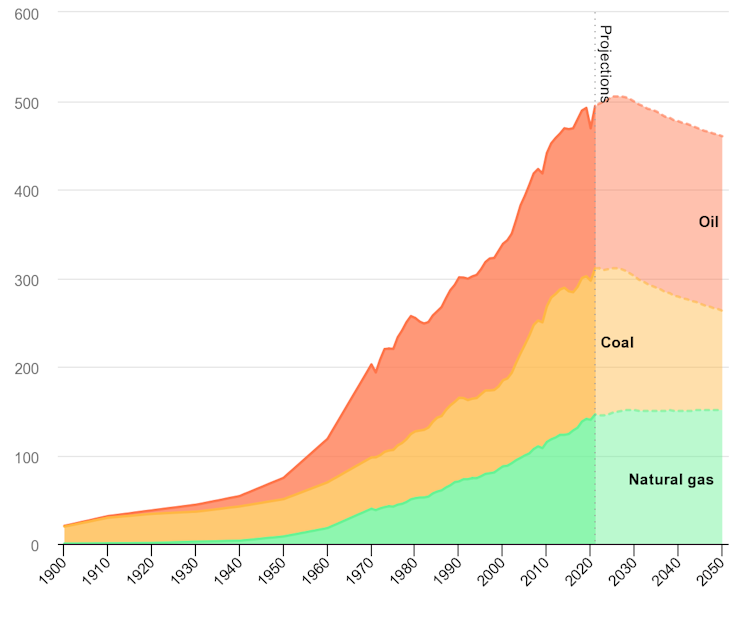
Encouraging developing countries to take on debt risk to invest in fossil fuel extraction for which the world will have no use would potentially do these countries a great disservice, taking advantage of them for short-term gain.
The world has made progress on emissions in recent years, and the worst warming projections from a decade ago seem to be highly unlikely now. But every tenth of a degree has an impact, and the current “business-as-usual” path still leads the planet toward warming levels with climate change costs that are hard to contemplate, especially for the most vulnerable countries. The outcomes from the climate conference will give an indication of whether the global community is willing to accelerate the transition.
Robert Brecha, Professor of Sustainability, University of Dayton
This article is republished from The Conversation under a Creative Commons license. Read the original article.
- Details
- Written by: DENNIS FORDHAM

Preserving estate planning documents is important to their future implementation. The original documents need to be readily available, altogether and accessible when the time comes.
An original will needs to be preserved and be available to the named executor. In California, the law presumes that if the decedent’s original will was last in the decedent’s possession but is now lost that the will was revoked by the decedent. This is because a will can be revoked by the testator simply destroying the will (e.g., tearing it up). Thus, a copy of a will is a mere photocopy.
That said, a photocopy of a will can still be used to prove the will’s content when attached to a petition to probate a lost will; if the petitioner believes that the original was simply lost but not destroyed.
While an original trust should be preserved, a copy is nonetheless sufficient for its administration.
Typically, all estate planning documents are kept together in the one binder, which is kept in a safe location, like a bank safe.
Also, knowledge of the documents location and the access protocols should be given to persons who will need them. If a bank safe is used the account associated with the safe should be titled in the name of the trust.
It is important to keep an original power of attorney Unless the power of attorney itself says that a copy may be relied upon the same as the original, a person or a business may refuse to accept (honor) the copy and insist on seeing the original or a certified copy of the original power of attorney.
Obtaining a certified copy of a power of attorney, itself requires presenting the original power of attorney document either to a licensed attorney or a notary public for certification. The power of attorney is usually kept in the same binder as the will and trust.
Fortunately, copies of advanced health care directives and HIPAA releases (which allow confidential medical information to be disclosed) are treated the same as originals.
That said, a copy of one’s health care directive and HIPAA release should be given to one’s health care provider and to any hospital at time of admission. The original should be kept with one’s power of attorney.
If a deed (such as a trust transfer deed) was recorded with the county recorder’s office, a copy of the recorded deed can be obtained from the county. The original recorded deed (once returned by the recorder’s office) is typically kept, along with other asset title documents (e.g., an assignment to one’s trust), in the estate planning binder.
Having one’s affairs in order gives one peace of mind. Keeping one’s estate planning documents altogether in a single binder, stored in a safe location and known to and accessible when needed is usually the best approach.
Keeping electronic backup copies of the original documents in a separate location should also be seriously considered and used if appropriate.
The foregoing discussion is not legal advice.
Dennis A. Fordham, attorney, is a State Bar-Certified Specialist in estate planning, probate and trust law. His office is at 870 S. Main St., Lakeport, Calif. He can be reached at
- Details
- Written by: Willow Reed
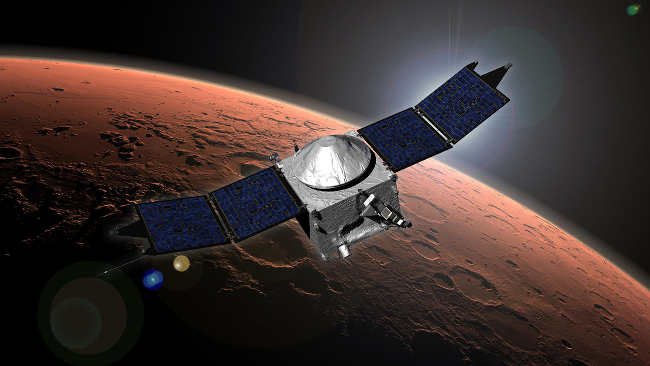
For the first time in its eight years orbiting Mars, NASA’s MAVEN mission witnessed two different types of ultraviolet aurorae simultaneously, the result of solar storms that began on Aug. 27.
MAVEN — the Mars Atmosphere and Volatile Evolution mission — is the only asset at Mars able to observe the Sun’s activity and the response of the thin Martian atmosphere at the same time.
Real-time analysis and simulations of the solar eruptions from NASA’s Moon to Mars Space Weather Analysis Office also allowed the MAVEN team to correctly predict when the developing solar storm would reach the Red Planet.
Accurate space weather forecasting is critical to help protect current missions and future human explorers at the Red Planet because unlike Earth, Mars lacks a global magnetic field to shield against the damaging radiation solar storms can bring.
It started with the Sun
On Aug. 27, an active region on the Sun produced a series of solar flares, which are intense bursts of radiation. The flare activity was accompanied by a coronal mass ejection, or CME, a massive explosion of gas and magnetic energy that leaves the Sun and propagates through space. This interplanetary CME impacted Mars a few days later.
This CME produced one of the brightest solar energetic particle, or SEP, events that the MAVEN spacecraft has ever observed. The SEPs that were accelerated ahead of the CME were observed at Mars by MAVEN’s SEP detector on Aug. 27.
In fact, many of MAVEN’s instruments were collectively able to measure the strength of the solar storm, including the Extreme Ultraviolet Monitor, the Magnetometer, the Solar Wind Ion Analyzer, and the Solar Wind Electron Analyzer.
“By utilizing space weather models of CME propagation, we determined when the structure would arrive and impact Mars,” said Christina Lee, a space physicist at the University of California, Berkeley, who is a member of the MAVEN mission team and is collaborating with the Moon to Mars Space Weather Analysis Office scientists. “This allowed the MAVEN team to anticipate some exciting disturbances in Mars’ atmosphere from the impacts of the interplanetary CME and the associated SEPs.”
Catching the Martian light show
Particles unleashed by the solar storm bombarded Mars’ atmosphere, causing bright auroras at ultraviolet wavelengths. MAVEN’s Imaging Ultraviolet Spectrograph (IUVS) instrument observed two types: diffuse aurora and proton aurora.
Part of the reason that this incredible duo was observed simultaneously came down to timing. Mars is at the end of dust storm season, which occurs every Mars year during its closest approach of the Sun.
These dust storms warm the atmosphere enough to allow water vapor to reach high altitudes, where it is broken up by solar ultraviolet radiation, releasing hydrogen atoms in the process. When the incoming solar wind hits all this extra hydrogen, the dayside of the planet lights up with ultraviolet emissions.
These “proton aurora” just happened to coincide with the arrival of even more dynamic energic particles that penetrated deeper into the atmosphere, creating diffuse aurora visible across the entire nightside.
Sumedha Gupta, a postdoctoral researcher with the IUVS team at the Laboratory for Atmospheric and Space Physics at the University of Colorado Boulder, first noticed the coincidence during her routine check of incoming data a few days after the event.
“I was so surprised to see proton aurora at the same time as diffuse aurora, because it had never happened before,” she said. “They’re both increasing with solar activity, so we hope it keeps happening!”
A sign of the storms to come
This light show is a sign of things to come for Mars and for the MAVEN team. The Sun is growing more and more active with events, such as flares and CMEs, as it approaches solar maximum in 2024-2025.
Solar maximum is when the height of solar activity peaks in the Sun’s 11-year solar cycle, meaning CMEs and SEPs are expected to increase in frequency and continue to impact Mars’ atmosphere.
“It’s exciting to still be observing ‘firsts’ like these simultaneous aurora so many years into the mission. We have so much to learn about the atmosphere and how solar storms affect the Red Planet,” said Shannon Curry, MAVEN’s principal investigator at the University of California, Berkeley. “Our team cannot wait for the next few years of observing the most extreme conditions during the MAVEN mission’s lifetime.”
MAVEN’s principal investigator is based at the University of California, Berkeley, while NASA’s Goddard Space Flight Center in Greenbelt, Maryland, manages the MAVEN mission. Lockheed Martin Space built the spacecraft and is responsible for mission operations. NASA’s Jet Propulsion Laboratory in Southern California provides navigation and Deep Space Network support.
The Laboratory for Atmospheric and Space Physics at the University of Colorado Boulder is responsible for managing science operations and public outreach and communication.
Willow Reed is MAVEN Communications Lead for the Laboratory for Atmospheric and Space Physics, University of Colorado Boulder.
- Details
- Written by: Elizabeth Larson

CLEARLAKE, Calif. — Clearlake’s police chief is preparing to move on to his next big assignment.
Chief Andrew White has accepted a position with the Martinez Police Department.
The Martinez City Council is set to approve his new employment contract at its meeting on Wednesday, Nov. 16.
His first day on the job in Martinez will be Jan. 3. He succeeds Chief of Police Manjit Sappal who retired in March.
The news of White’s departure follows by two weeks Lake County Sheriff Brian Martin’s announcement that he will retire at year’s end.
White, 38, has been chief in Clearlake since July of 2018 after serving 16 years with Suisun City. He had been commander and second-in-charge at the Suisun City Police Department when he was hired to lead the Clearlake Police Department.
“It has been an honor leading the members of the police department to make Clearlake a cleaner, safer city,” White said in a Thursday statement from the city. “I am proud of the work the department, in partnership with the community, have done to improve our city — the city I have called home since moving here in 2018. Although my time here is coming to an end, I am confident the department is well positioned to build upon our successes and overcome any challenges that lie ahead.”
“I couldn’t be more proud of the impact Chief White has had on the city during his time here,” said City Manager Alan Flora. “His leadership has enabled our department to excel in a way that is critical to the ongoing transformation of Clearlake.”
White currently oversees a department with a $7 million budget that includes 24.5 sworn positions, as well as code enforcement and animal control staff.
The California Department of Finance’s latest population estimates put the city of Clearlake’s population at 16,500 residents, compared to 36,908 in Martinez, located in Contra Costa County.
The Martinez Police Department is reported to have 37 sworn officers and 15 full-time professional staff, with an annual operating budget of $12 million.
White’s annual salary with the Clearlake Police Department is $169,000. The proposed contract between White and the city of Martinez calls for White to be paid an annual salary of $238,771.46, or $19,897.62 per month, a nearly $70,000 increase over his Clearlake Police salary.
The new contract also gives him 25 days of vacation per year, with the opening balance of 80 hours; a standard sick rate accrual with an opening balance of 40 hours; holiday pay at the same rate as other employees; and he becomes eligible for the California Public Employees’ Retirement System 3% at age 55 retirement plan.
In his report for the Martinez City Council’s Nov. 16 meeting, acting City Manager Michael Chandler explained the “rigorous pre-screening process” that a select group of candidates went through, which included being interviewed by three separate panels of public safety executives, civil leaders and an internal staff panel consisting of the city of Martinez’s executive management team.
Chandler said he selected White for the police chief job, noting White impressed them at all stages of the interview process and met the bench marks of the city’s ideal candidate.
Creative solutions and collaboration
During his tenure with Clearlake, Chief White spearheaded what city officials called “a robust effort” to address crime and blight that incorporated community engagement, collaboration and creative problem solving that has seen crime drop to historic lows and significantly reduced blight.
He advanced a department culture of excellence, accountability and wellness that dramatically and positively impacted retention and recruitment, reducing turnover to historic lows and increased community satisfaction.
White also has overseen the building of the new animal shelter and upgraded animal control services in the city. An animal lover himself, he’s even fostered some dogs in his own home.
During his tenure, the city had to respond to disasters, including flooding in 2019 and the 2021 Cache fire that destroyed dozens of homes.
Then there was the challenge of COVID-19, the lengthy sheltering in place requirements it brought and the specific impact on the justice system — from jails to the courts — that affected law enforcement.
White’s important work wasn’t just limited to the city. He also collaborated with other agencies and local governments, offering increased assistance in times of need.
White’s first day on the job in Lake County found him at Lakeport City Hall, assisting staff there with the response to the Mendocino Complex fire, which has caused the entire city to be placed under mandatory evacuation.
During this past summer, the Clearlake and Lakeport city councils approved a supplemental law enforcement services agreement between the two cities’ police departments. That agreement allowed for Clearlake Police officers to help Lakeport Police with policing duties in the city while Lakeport dealt with short staffing.
White also did double duty as police chief and finance director from 2020 to 2021 as the city was recruiting a permanent finance director.
Flora said of White, “He will be deeply missed by the City Council, police department staff, the entire organization, community members, and me personally. However, I know that his efforts have positioned the department in a way that enables us to move forward and carry on the goals and efforts set into place. We know he will serve the community of Martinez with honor and integrity, and wish him and Charlotte our very best.”
White thanked everyone for their support, including the City Council, Flora, city and department staff, public safety partners and the community. “I will miss everyone, but I also look forward to hearing about the many great things that are to come in Clearlake!”
Email Elizabeth Larson at