How to resolve AdBlock issue?
News
- Details
- Written by: LAKE COUNTY NEWS REPORTS
The bill requires the Federal Crop Insurance Corp., or FCIC, to carry out research and implement a crop insurance product that covers losses due to smoke exposure.
“Winegrapes are essential to economies across our country, and states like California, Oregon, and Washington have been disproportionately exposed to wildfires leading to smoke exposure impacting our winegrapes,” said Thompson. “Researching the impact that smoke has on our winegrapes and other crops is essential in advancing solutions that will protect these key economic drivers from future natural disasters. Proud to work with Rep. Newhouse and Sen. Padilla to introduce legislation that strengthens crop insurance for winegrowers and helps fully capture the risks associated with growing in these smoke- and wildfire-prone states.”
“Washington state’s wine industry produces some of the best wine in the nation and we need to keep it that way. Right now, the industry faces billions of dollars in losses from wildfires and smoke exposure. I am proud to co-sponsor this critical legislation that will ensure our wine grape growers and producers get the necessary funding to be resilient and continue to produce high-quality wine,” said Newhouse.
“As climate change intensifies and wildfires become more frequent and extreme, we need to protect winegrape growers and consumers against the damage caused by prolonged smoke exposure. Winegrape growing regions are critical to our economy, especially in California. Growers, vintners, and consumers alike have a stake in the sustainability of winegrowing communities — these bills will help growers make informed decisions about harvesting and selling their crops,” said Padilla.
“Washington state is the second-largest wine producing state in the country, creating thousands of jobs and fueling tourism across the state,” said Senator Murray. “Washington is also seeing an alarming increase in wildfires year after year, which creates a serious smoke exposure problem for winegrape growers across the West Coast. Vineyards in Washington state and all the way down to California need a crop insurance policy for smoke-exposed winegrapes, rather than being forced to rely on ad-hoc disaster assistance from year to year — and that’s what this legislation will provide. I’m proud that research at Washington State University has played a leading role in studying the impacts of smoke exposure, and this bill takes a critical and needed step to protect our state’s vital wine industry.”
"The profound losses experienced by growers due to impacts of wildfire smoke underscore the pressing need for research and have highlighted the necessity for improvements to crop insurance to safeguard growers,” said Natalie Collins, President of the California Association of Winegrape Growers. “We commend Congressman Thompson for recognizing the long-lasting ramifications of wildfires on the winegrape industry, and for prioritizing solutions to ensure a more sustainable future for an industry that serves as a vital economic force," she said.
“The wildfires in 2020 were especially detrimental to our winegrape crop given the timing in the harvest season. Our farmers invest all year in growing the crop and when it cannot be harvested, It can be financially devastating. Crop insurance and support is crucial for the long term preservation of agriculture in these uncertain times,” said Karissa Kruse, President of Sonoma County Winegrowers.
Winegrapes exposed to smoke from wildfires can introduce compounds into the winemaking process that cause smoky, ash-like flavors and result in wines unfit for commercial sale. These off-aromas and flavors become more pronounced over time as wine ages. In 2020 alone, industry sources estimate between 165,000 and 325,000 tons of California winegrapes were lost due to actual or perceived smoke damage, and financial estimate place losses at over $600 million.
The legislation introduced by Reps. Thompson and Newhouse and Senators Padilla and Murray requires research and development of a crop insurance product that provides comprehensive coverage for smoke-impacted winegrape growers, and helps to mitigate future financial losses in these key regions of production.
Thompson represents California’s Fourth Congressional District, which includes all or part of Lake, Napa, Solano, Sonoma and Yolo counties.
- Details
- Written by: Elizabeth Larson

CLEARLAKE, Calif. — Clearlake Animal Control has dozens of dogs ready for adoption.
Among the dogs available this week are “Ella,” a female Rottweiler mix with a short black and tan coat.
There also is “Ivy,” a female Labrador retriever mix with a short tan coat.

The shelter is located at 6820 Old Highway 53. It’s open from 9 a.m. to 6 p.m. Tuesday through Saturday.
For more information, call the shelter at 707-762-6227, email
This week’s adoptable dogs are featured below.
Email Elizabeth Larson at
- Details
- Written by: Annalisa Bracco, Georgia Institute of Technology
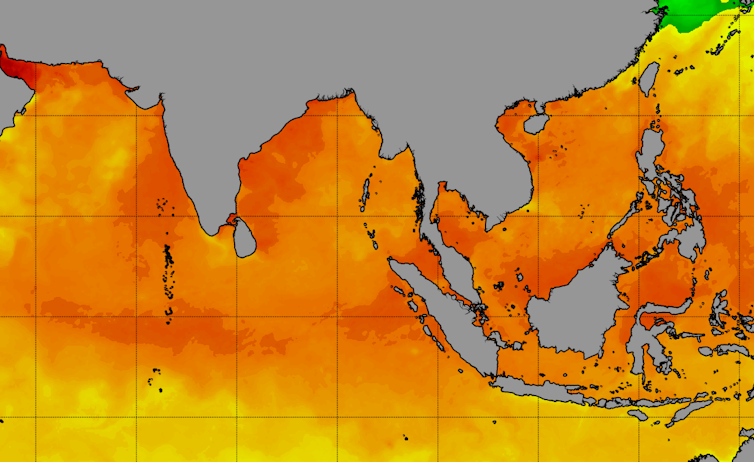
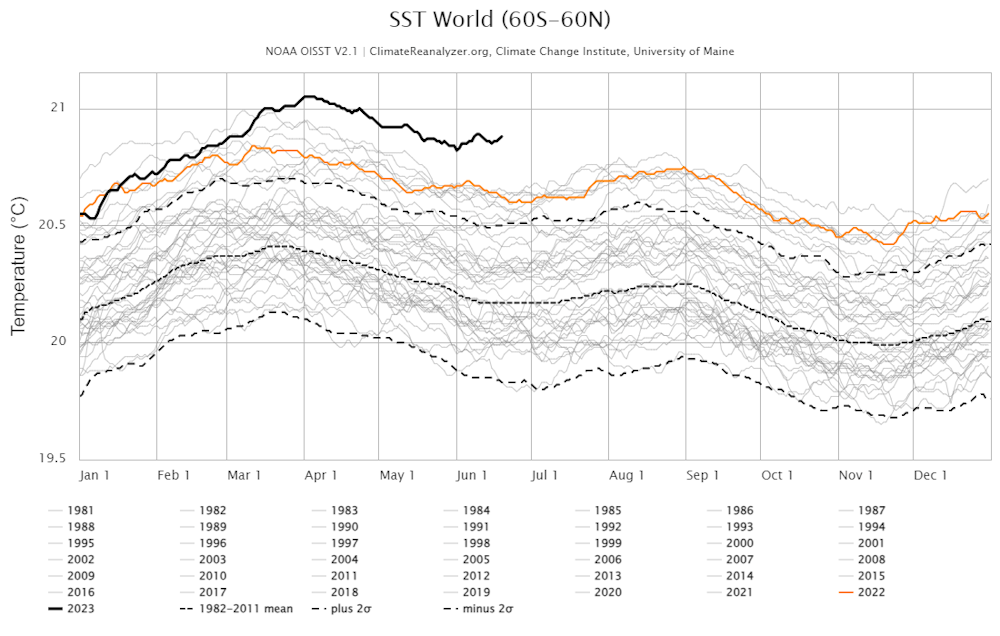
Ocean temperatures have been off the charts since mid-March 2023, with the highest average levels in 40 years of satellite monitoring, and the impact is breaking through in disruptive ways around the world.
The sea of Japan is more than 7 degrees Fahrenheit (4 degrees Celsius) warmer than average. The Indian monsoon, closely tied to conditions in the warm Indian Ocean, has been well below its expected strength.
Spain, France, England and the whole Scandinavian Peninsula are also seeing rainfall far below normal, likely connected to an extraordinary marine heat wave in the eastern North Atlantic. Sea surface temperatures there have been 1.8 to 5 F (1 to 3 C) above average from the coast of Africa all the way to Iceland.
So, what’s going on?
El Niño is partly to blame. This climate phenomenon, now developing in the equatorial Pacific Ocean, is characterized by warm waters in the central and eastern Pacific, which generally weakens the trade winds in the tropics. This weakening of those winds can affect oceans and land around the world.
But there are other forces at work on ocean temperatures.
Underlying everything is global warming – the continuing rising trend of sea surface and land temperatures for the past several decades as human activities have increased greenhouse gas concentrations in the atmosphere.
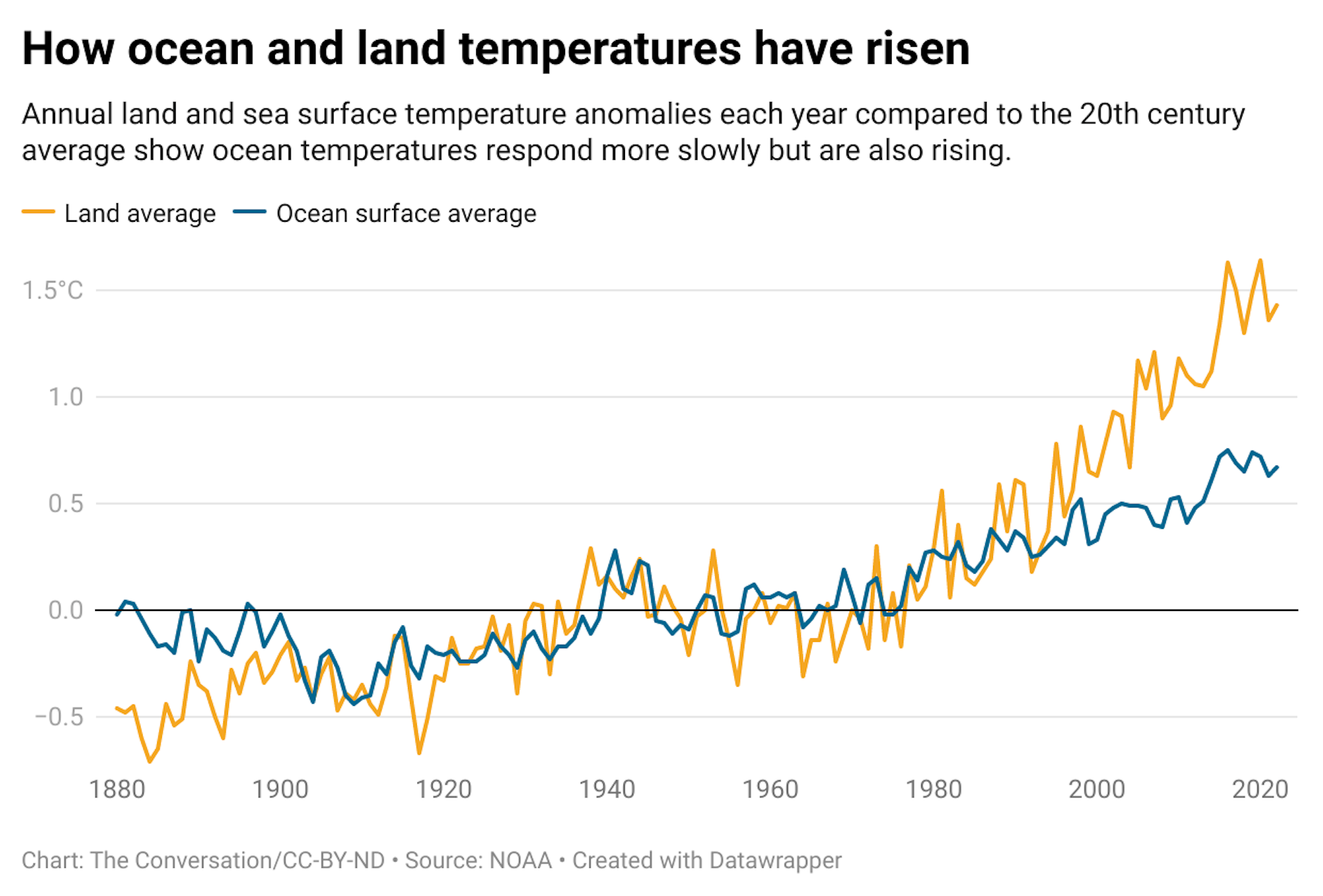
The world just came off three straight years of La Niña – El Niño’s opposite, characterized by cooler waters rising in the equatorial Pacific. La Niña has a cooling effect globally that helps keep global sea surface temperatures in check but can also mask global warming. With that cooling effect turned off, the heat is increasingly evident.
Arctic sea ice was also unusually low in May and early June, and it may play a role. Losing ice cover can increase water temperatures, because dark open water absorbs solar radiation that white ice had reflected back into space.
These influences are playing out in various ways around the world.
The effects of extraordinary Atlantic heat
In early June 2023, I visited the NORCE climate center in Bergen, Norway, for two weeks to meet with other ocean scientists. The warm waters and mild winds across the eastern North Atlantic brought a long stretch of sunny, warm weather in a month when more than 70% of days normally would have been downpours.
The whole agricultural sector of Norway is now bracing for a drought as bad as the one in 2018, when yield was 40% below normal. Our train from Bergen to Oslo had a two-hour delay because the brakes of one car overheated and the 90 F (32 C) temperatures approaching the capital were too high to allow them to cool down.
Many scientists have speculated on the causes of the eastern North Atlantic’s unusually high temperatures, and several studies are underway.
Weakened winds caused the Azores high, a semi-permanent high pressure system over the Atlantic that affects Europe’s weather, to be especially weak and brought less dust from the Sahara over the ocean during the spring, which may have increased the amount of solar radiation reaching the water. A decrease in human-produced aerosol emissions in Europe and in the United States over the past few years – which has succeeded in improving air quality – may also have reduced the cooling effect such aerosols have.
A weakened monsoon in South Asia
In the Indian Ocean, El Niño tends to cause a warming of the water in April and May that can dampen the crucial Indian monsoon.
That may be happening – the monsoon was much weaker than normal from mid-May to mid-June 2023. That can be a problem for a large part of South Asia, where most of the agriculture is still rain-fed and depends heavily on the summer monsoon.

The Indian Ocean also saw an intense, slow-moving cyclone in the Arabian Sea this year that deprived land of moisture and rainfall for weeks. Studies suggest storms can sit for longer over warmer waters, gaining strength and pulling moisture to their core, and that can deprive surrounding land masses of water, increasing the risk of droughts, wildfires and marine heat waves.
North American hurricane season up in the air
In the Atlantic, the weakening trade winds with El Niño tend to tamp down hurricane activity, but warm Atlantic temperatures can supercharge those storms. Whether the ocean heat, if it persists into fall, will override El Niño’s effects remains to be seen.
Risk of marine heat waves in South America
Marine heat waves can also have huge impacts on marine ecosystems, bleaching coral reefs and causing the death or movement of entire species. Coral-based ecosystems are nurseries for fish that provide food for 1 billion people around the world.
The reefs of the Galapagos Islands and those along the coastlines of Colombia, Panama and Ecuador are already at risk of severe bleaching and mortality from this year’s El Nino. Meanwhile, the Japan Sea and the eastern Mediterranean Sea are both losing their biodiversity to invasive species – giant jellyfish in Asia and lionfish in the Mediterranean – that can thrive in warmer waters.
These kinds of risks are increasing
Spring 2023 was exceptional, with several chaotic weather events accompanying the formation of El Niño and the exceptionally warmer temperatures in many parts of the world. At the same time, the warming of the oceans and atmosphere increase the chances for this kind of ocean warming.
To lower the risk, the world needs to reduce baseline warming by limiting excess greenhouse gas emissions, like fossil fuels, and move to a carbon-neutral planet. People will have to adapt to a warming climate in which extreme events are more likely and learn how to mitigate their impact.
Annalisa Bracco, Professor of Ocean and Climate Dynamics, Georgia Institute of Technology
This article is republished from The Conversation under a Creative Commons license. Read the original article.
- Details
- Written by: LAKE COUNTY NEWS REPORTS

LAKE COUNTY, Calif. — More than 400 people of all ages showed up to participate in a walking school bus event on May 31 hosted by Konocti Unified School District in partnership with the city of Clearlake and Blue Zones Project — Lake County.
Students and their families, KUSD teachers and staff, community members and elected leaders walked from Austin Park to Pomo Elementary School to highlight the need for walkable neighborhoods and to encourage federal funding for the effort.
“Sometimes we get so used to our surroundings, we forget we can change them,” KUSD Superintendent Becky Salato said. “We know health is important, and many of us grew up walking to school, but when parents look around and see how dangerous it would be for their kids to walk, they put them on a bus or drive them to school–even when they only live a few blocks away.”
To make the walking school bus event safe, the city of Clearlake closed one lane of Lakeshore Drive and provided traffic control, so no one had to dodge cars while they walked. Blue Zones Project — Lake County provided water and T-shirts.
Many community members provided moral support by walking alongside the kids, including Clearlake City Manager Alan Flora, Lake County Supervisor Bruno Sabatier, Clearlake City Council Member Dirk Slooten, Clearlake Chief of Police Tim Hobbs, Lake County Fire Protection District Battalion Chief Marc Hill, Adventist Health Director of Wellbeing Don Smith and Blue Zones Project — Lake County Director Jamey Gill.
Parents joined in to support their children, often pushing younger siblings in strollers. The festive mood created by kids talking and laughing together brought people outside to see what all the commotion was about.
Gill said, “Neighbors came out of their homes to see the parade. One woman shouted, ‘This day will go down in history.’ Another man brought his little kids outside to watch and wave.”
Blue Zones Project — Lake County Public Policy Advocate Greg Damron explained that by creating a “built environment” that encourages walking, especially safe routes to school, it is easier for people to develop healthy habits. With the current lack of sidewalks and proximity to busy traffic, most parents are not comfortable sending their children to school on foot.
Before the walking school bus crowd left Austin Park, Superintendent Salato asked students to raise their hands if they had ever walked to school. Fewer than 20 kids raised their hands.
She challenged them to use all their senses as they walked, to pay attention to what they saw, heard, smelled, and felt. When they arrived, she asked if their minds and bodies felt ready to learn.
“Do you feel more energized?!” she asked. “Yes!” they responded. She then asked who wanted to walk to school from now on, and all hands went up. This is when first graders started chanting, “We want sidewalks. We want sidewalks!”
Salato knows that creating a safe, walkable community cannot happen overnight, but that “it can and should happen.” She says she will continue to collaborate with local officials and Blue Zones Project partners to advocate for state and federal funding for sidewalks and other local health initiatives.
Blue Zones Projects across the nation support the Safe Routes to School movement that works to make it safer and easier for students to walk and bike to school. Research confirms that students benefit from improved health and learning when they get physical exercise on the way to school. In Clearlake, however, those benefits must be measured against the risks of navigating unsafe routes.
The walking school bus event is only one example of the partnership between Konocti Unified and Blue Zones — Lake County.
KUSD is working toward becoming the first school district to be a Blue Zones Project Certified workplace and each school is working toward becoming a Blue Zones Approved school.

Damron shared his enthusiasm about the partnership, saying, “I have worked in community development for close to 30 years, and spent the last five years supporting public health in schools. In all that time, Becky Salato is the most progressive and innovative superintendent I have ever worked with. She is focused on moving the needle at all levels, from statewide advocacy to engaging students in the classroom. As a member of the Blue Zones Project team, I can tell you we are pretty well-funded and well-connected, and at times, we find ourselves trying to keep up with Becky.”
Next year, KUSD will continue to embrace the core tenants of the Blue Zones Project, including providing more opportunities for students and staff to exercise and increasing access to healthy food (some of which will be grown at school gardens).
Salato is also dedicated to tackling one of Lake County’s most intransigent problems: dependence on alcohol, tobacco and other drugs.
Lake County has among the highest adult smoking rates in California, and vaping (using electronic devices to inhale nicotine and other substances) has reached epidemic proportions among students, with some starting as early as first grade.
Salato says she is encouraged by the turnout at the walking school bus event and that she will continue to work with community members to support children’s physical and emotional well-being, even when faced with the occasional naysayer.
One parent admitted that he was not sure how the walking school bus event would go.
“So close to the end of school when kids are tired and antsy, I wasn’t sure if there would be eye-rolling or if kids would get into it. Turns out, it was spectacular. Hundreds of kids were eager to participate and super energetic. I was stunned. What a tribute to the school district and city of Clearlake. This was epic,” he said.