How to resolve AdBlock issue?
News
- Details
- Written by: LAKE COUNTY NEWS REPORTS
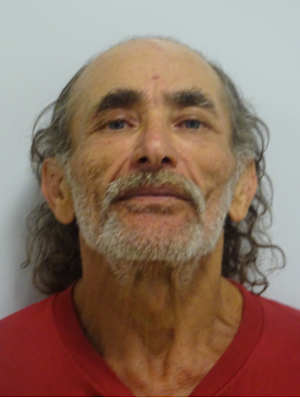
LAKE COUNTY, Calif. — An Upper Lake man is expected to spend the rest of his life in prison for a brutal domestic violence case.
On June 14, Arturo Pedro Gutierrez, 62 , was sentenced for an extremely violent assault on his 53-year-old girlfriend, Chief Deputy District Attorney Richard Hinchcliff said.
On Aug. 19, 2022, Lake County Sheriff’s officers, as a result of a 911 call, responded to a residence at 6:30 a.m. between Lakeport and Upper Lake, and contacted the victim at the 911 caller’s residence, Hinchcliff said.
Hinchcliff said the victim was covered in bruises and had been severely beaten. Officers had the victim transported to the hospital.
Upon further investigation officers learned that the victim and Gutierrez had been in a relationship for one year, Hinchcliff said.
The previous night the victim had gone to Gutierrez’s residence on Bridge Arbor Road, according to Hinchcliff’s report. The victim said Gutierrez began drinking alcohol the night before and became angry. He grabbed her by the hair, and the victim began asking Gutierrez not to hurt her.
Gutierrez continued to grab her by the hair, began spitting on her, and physically restrained her. Gutierrez then hit her in the face and began hitting her all over her body, according to the investigation.
Hinchcliff said Gutierrez continued to grab her by her hair, continued beating her, and threatened to kill her and her daughter. Gutierrez then covered her mouth with his hand causing her to become dizzy and fear for her life. He also choked her several times.
At one point the victim escaped outside where Gutierrez followed her and tackled her to the ground. Hinchcliff said she was finally able to escape, but ended up outside in the dark in a field, suffering from blurry vision because of the assault. The victim eventually laid down in the field in the cold, wearing only underwear, and fell asleep until it got light the next morning.
A nearby neighbor said that morning he was awakened by the sound of the victim yelling for help outside his residence. The neighbor said the victim was obviously injured and scared and he took her inside and called 911.
The victim was covered with severe bruising all over her body and had a fracture underneath her right eye socket from the assault, Hinchcliff said.
The District Attorney’s Office charged Gutierrez with numerous felonies, including spousal abuse, assault, terrorist threats, false imprisonment and causing great bodily injury. Gutierrez was also charged with having two prior “strike” convictions — one in 1994 for attempted murder, and one in 2012 for kidnapping.
Gutierrez had spent numerous years in prison, approximately 20, because of his prior criminal history.
Senior Deputy District Attorney James Gandy was the assigned prosecutor for the case for the District Attorney’s Office, and Thomas Feimer was the public defender appointed to represent Gutierrez. David J. Markham was the presiding judge.
After an unsuccessful attempt to settle the case, it went to trial on April 19. On April 26, the jury returned with verdicts of guilty on all charges, and found the special allegation of committing great bodily injury to be true. The “strike” allegations were also found to be true by the judge, Hinchcliff said.
Prior to sentencing Gutierrez made a Marsden motion to have his attorney relieved and a new attorney appointed. That motion was denied by Judge Markham.
The sentencing took place on June 14. The victim was present, and the victim’s sister read a statement to the court from the victim.
Judge Markham, noting the seriousness of Gutierrez’s conduct, the violence involved, as well as the significant physical and emotional injuries inflicted on the victim, sentenced Gutierrez to 40 years to life.
“Hopefully the significant penalty imposed in this case will have some kind of deterrent effect on potential future spousal abusers. And, hopefully, it will convince and encourage future domestic violence victims to report domestic violence, and to cooperate with law enforcement investigations and prosecutions, in order to hold the abusers accountable for their conduct,” Hinchcliff said.
- Details
- Written by: Chanell Washington, Thomas Gryn, Lydia Anderson and Rose M. Kreider
Multigenerational households — three or more generations under one roof — made up 4.7% of all U.S. households but 7.2% of family households in 2020, an increase from 2010.
Family households are those with at least one person related to the householder by birth, marriage or adoption.
There were 6.0 million U.S. multigenerational households in 2020, up from 5.1 million in 2010, according to 2020 Census data released recently.
Lake County, California, was in the highest quartile for multigenerational households.
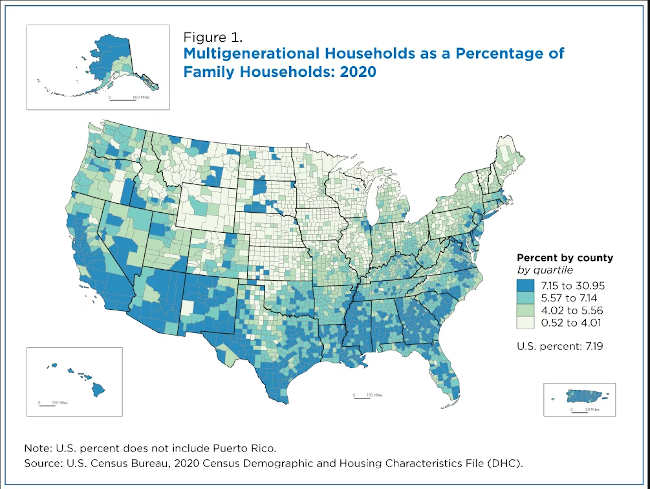
Multigenerational households were not equally distributed across the nation and the map below (Figure 1) shows the percentage of all family households that were multigenerational in 2020 by county.
While 2020 Census data show that 7.2% of all family households were multigenerational nationwide, county level percentages are wide-ranging, from 0.5% to 31.0%.
Multigenerational households were more prevalent throughout the South, Puerto Rico and some western states. This is consistent with 2010 data that also showed a higher percentage of multigenerational households throughout the South and West.
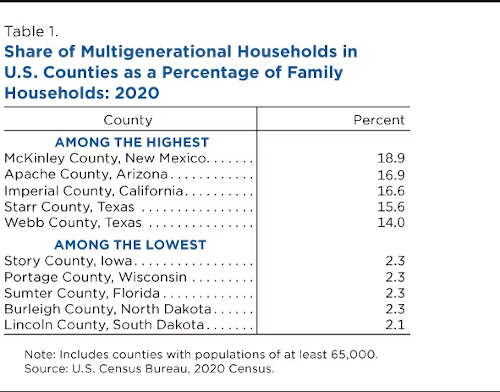
In 2020, many counties in Alaska, California, Hawaii, Nevada, Oregon and Washington, for example, had a high percentage of multigenerational households (Table 1). However, other states in the West like Idaho, Montana and Wyoming, had many counties with a lower prevalence of multigenerational households. These households were also less common in the Midwest and Northeast.
Children living with grandparents
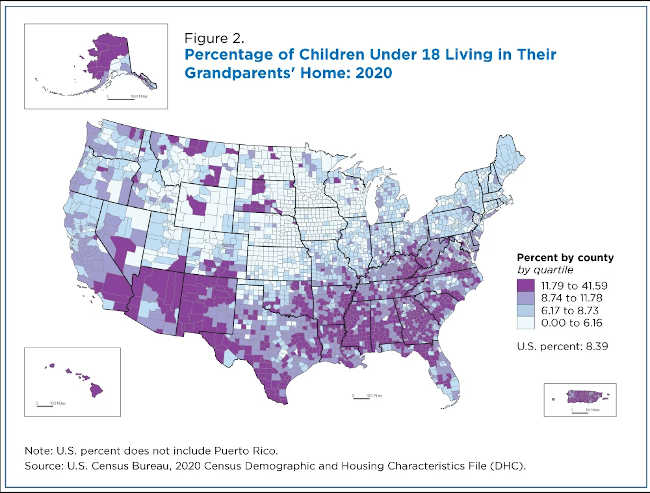
In 2020, 6.1 million or 8.4% of children under age 18 lived in their grandparents’ home (Figure 2), up from 5.8 million in 2010.
Counties in Puerto Rico and throughout states in the South and West tended to have a greater share of children living in their grandparents’ home while counties in the Midwest – particularly in Iowa, Kansas, Minnesota and Wisconsin – had a smaller share.
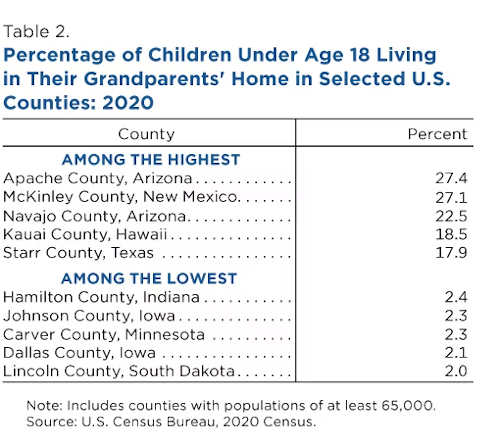
The five counties with the greatest shares of children living with their grandparents were predominantly in the West, and those with the smallest shares were all in the Midwest.
Chanell Washington, Thomas Gryn, Lydia Anderson and Rose M. Kreider are family demographers in the Fertility and Family Statistics Branch of the Social, Economic, and Housing Statistics Division.
- Details
- Written by: Jason Vogel, University of Washington and Brian G. Henning, Gonzaga University
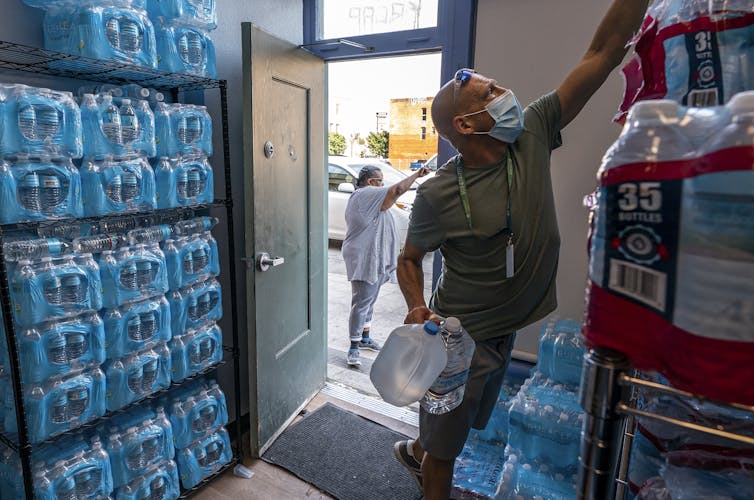
The heat dome that descended upon the Pacific Northwest in late June 2021 met a population radically unprepared for it.
Almost two-thirds of households earning US$50,000 or less and 70% of rented houses in Washington’s King, Pierce and Snohomish counties had no air conditioning. In Spokane, nearly one-quarter of survey respondents didn’t have in-home air conditioning, and among those who did, 1 in 5 faced significant, often financial, barriers to using it.
Imagine having no way to cool your home as temperatures spiked to 108 degrees Fahrenheit (43 Celsius), and 120 F (49 C) in some places. People in urban heat islands – areas with few trees and lots of asphalt and concrete that can absorb and radiate heat – saw temperatures as much as 14 F (7.8 C) higher than that.
Extreme heat disasters like this are becoming increasingly common in regions where high heat used to be rare. Blackouts during severe heat waves can also leave residents who believe they are protected because they have in home air conditioners at unexpected risk. To prepare, cities, neighborhoods, companies and individuals can take steps now that can reduce the harm.
In a new report, written with colleagues at universities and the Washington State Department of Health and released ahead of the two-year anniversary of the heat wave, we show how municipal planning agencies, parks departments, local health agencies, community-based organizations like churches and nonprofits, multiple state agencies, hospitals, public health professionals and emergency response personnel, as well as individuals and families, can play a vital role in reducing risk.
The 2021 heat dome was Washington’s deadliest weather disaster on record. It contributed to 441 deaths in the state between June 27 and July 3, our research shows. Medical systems were overwhelmed.
There are numerous ways to avoid this deadly of an outcome in the future. Many emerge from thinking about extreme heat as long-term risk reduction, not just short-term emergency response.
Designing environments for cooling
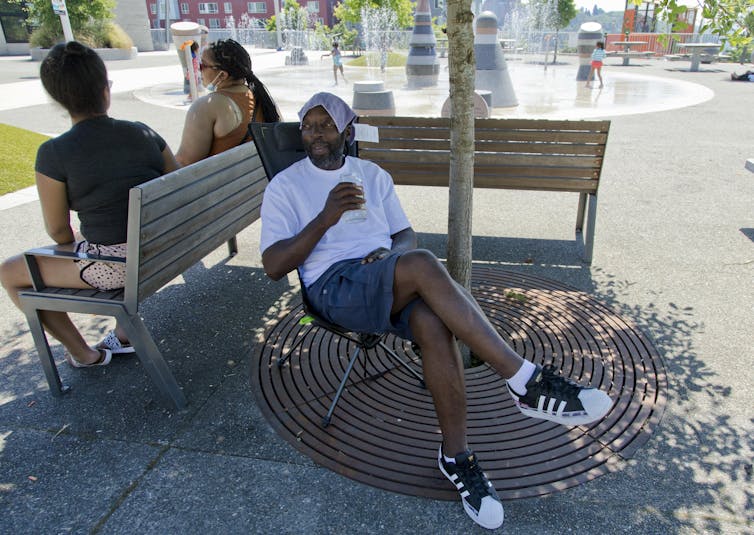
Greening the urban environment can reduce heat exposure and save lives. For example, planting trees and building shade structures where people are most exposed to heat can provide local relief from extreme temperatures. That includes providing shade at buildings without air conditioning and exposed public spaces, such as bus stops and parks.
Planting rooftops with vegetation, known as green roofs, or painting them white so they reflect heat rather than absorb it, can also lower roof temperatures by tens of degrees. Used widely, they can reduce an entire neighborhood’s heat island effect by several degrees.
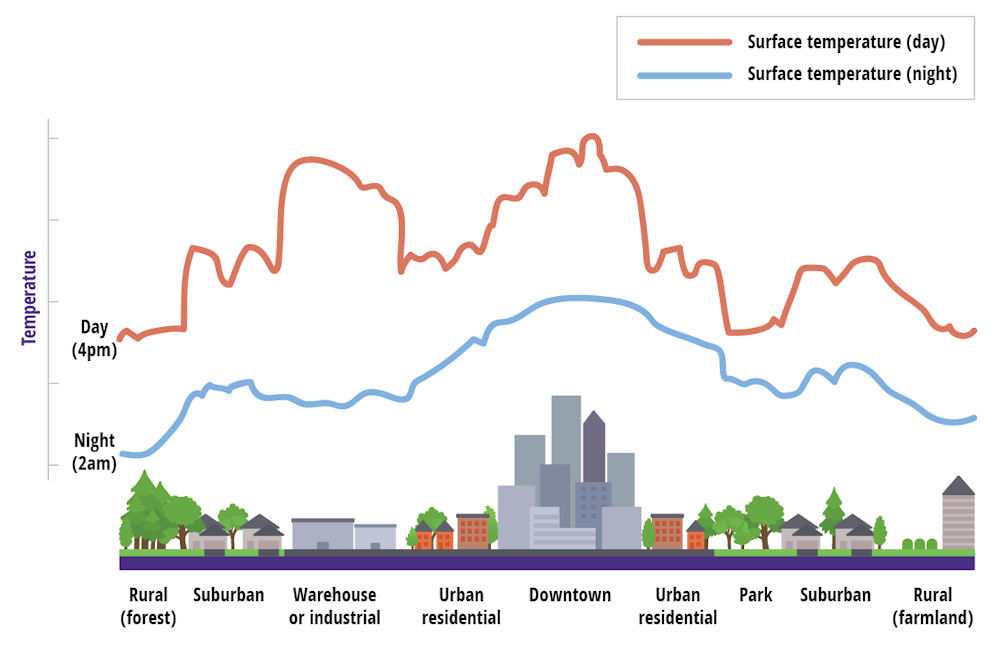
Efforts like these, along with tree planting campaigns in public parks and rights of way, and ordinances requiring shade trees for parking lots and private development projects, can transform the urban heat landscape.
Reaching vulnerable people
When heat waves are coming, culturally nuanced outreach efforts focused on the most vulnerable populations – and involving sources they trust – can save lives.
Government heat advisories in traditional media like radio, newspapers, TV and the internet have been shown to have limited success in changing people’s behavior. In the 2022 Spokane survey, 88% of respondents indicated they were unlikely to leave their home during an extreme heat event to go to a cooling center, for example. The reasons varied, including misperception of personal risk, fear of leaving homes unoccupied, not wanting to leave pets behind and mistrust of government.
Culturally specific resources led by community-based organizations can get around the government trust issue and can be tailored to the local population.
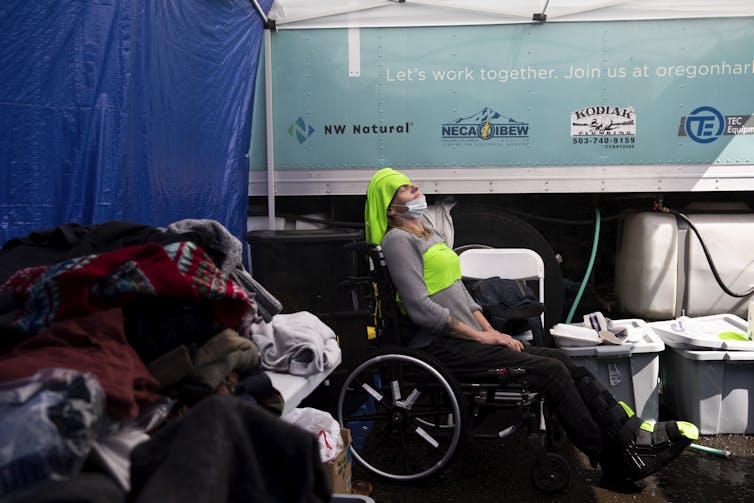
That might mean opening cooling centers in churches or common community gathering places and launching heat awareness campaigns driven by trusted community messengers. New York City developed a door-to-door wellness check program that uses neighborhood volunteers to check on elderly and other at-risk residents.
Under this model, churches, libraries, community centers and community nonprofits take center stage, supported with resources from local and state governments. Baltimore developed more than a dozen “resiliency hubs” using this model to provide water, cooling, power for charging devices and other support.
Community-based organizations can also direct energy assistance to lower-income community members. In Spokane, one community organization created a “cooling fund” to provide portable air conditioners to those who cannot afford one.
Our report lays out many other strategies to achieve long-term heat risk reduction.
Landlords, employers and utilities have a role
Addressing extreme heat over the long term requires the participation of many other groups not tasked with protecting public health.
For example, landlords of multifamily housing and rental homes have an important role to play. After the 2021 heat wave, Oregon passed a law prohibiting landlords from restricting tenants’ ability to install window air conditioners.
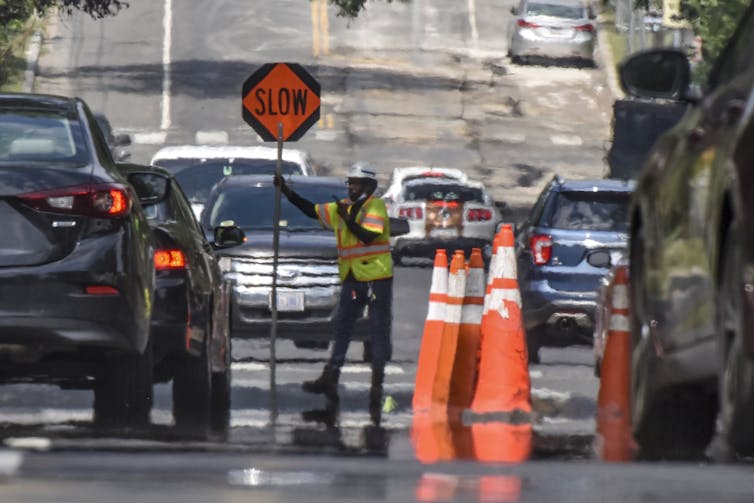
Employers of people who work outdoors, or indoors in buildings without air conditioning, can protect workers by allowing more breaks, providing shade and water and adjusting work hours to avoid heat exposure – although concerns persist about rule enforcement and reduced pay.
Utilities can make a difference by ensuring the power stays on during high-demand periods, particularly in vulnerable neighborhoods, and working with communities to reduce costs for vulnerable people that may prevent them from using air conditioning.
Ultimately, reducing extreme heat vulnerability through multiple strategies is crucial because lives are at stake.
Coordination is essential
Extreme heat waves are forecast to occur more frequently across the globe as greenhouse gas emissions continue to warm the climate. Between 1971 and 2021, Washington state experienced an average of three extreme heat days per year. By the 2050s, climate models project that will rise to between 17 and 30 extreme heat days per year – a fivefold increase.
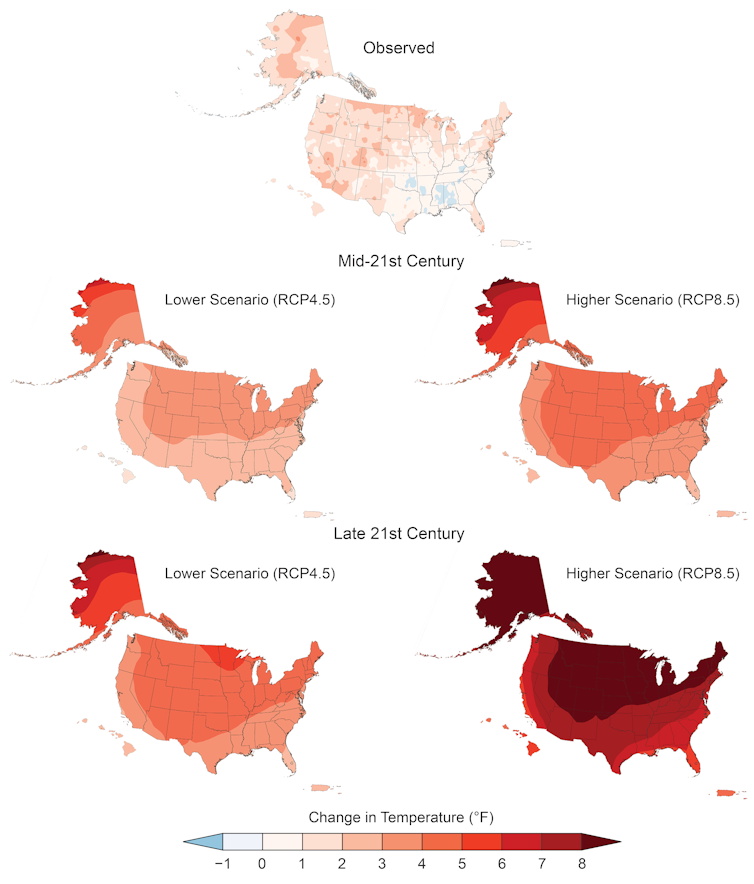
In the end, saving lives from extreme heat is a complicated challenge requiring coordination across multiple levels of government, agencies and the civic and private sectors.
Some cities, including Phoenix, are experimenting with heat offices tasked with this coordination. But individuals have an important role to play as well.
In addition to knowing how to protect themselves, their loved ones and their neighbors, individuals can add their voices to the rising chorus calling on all levels of government and the private and civic sectors to take urgent steps to reduce heat risk.
Jason Vogel, Interim Director, Climate Impacts Group, University of Washington and Brian G. Henning, Professor of Philosophy and Environmental Studies, Gonzaga University
This article is republished from The Conversation under a Creative Commons license. Read the original article.
- Details
- Written by: Elizabeth Larson
LAKE COUNTY, Calif. — A fire captain who lost his life last week in an off-duty motorcycle crash was officially brought home by his friends and colleagues on Tuesday morning.
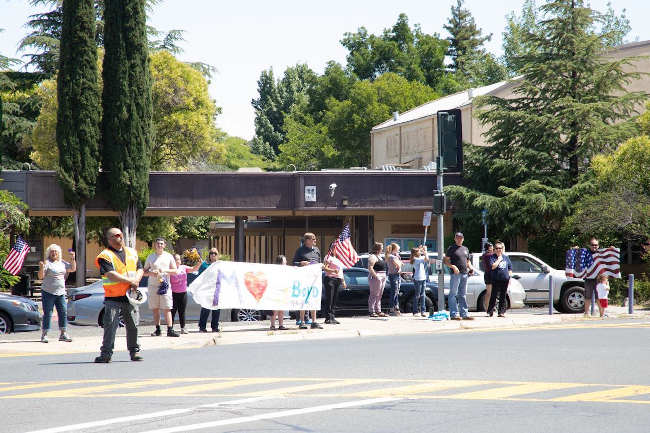
Cal Fire Capt. Ronnie Boyd was honored with the procession, which over the course of more than two hours traveled from the Napa County Coroner’s Office, through the south county to Lower Lake.
Boyd, 51, a longtime Clearlake resident, died on June 11 following a solo-vehicle motorcycle crash in Napa County. His wife, Dena Boyd, 52, who was riding with him, died two days later of her injuries.
The couple’s many friends across the county and beyonds are remembering them for their contributions to the community.
Ronnie Boyd had been with Cal Fire for the last 20 years, having served as a volunteer firefighter with the Lakeshore Fire Department — later Lake County Fire — beginning in the late 1990s.
At the time of his death, he was a fire captain in Cal Fire’s Humboldt-Del Norte Unit.
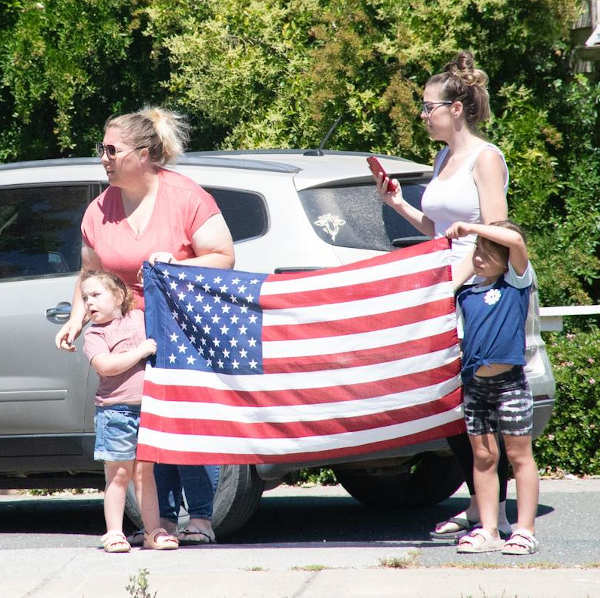
Joining the procession were a host of fire and law enforcement agencies, including Cal Fire, Lake County Fire, South Lake County Fire, the U.S. Forest Service, California Highway Patrol, Clearlake Police Department and the Lake County Sheriff’s Office.
Those riding in the procession included dozens of motorcyclists.
In Middletown, community members came out to line the route, holding flags and signs.
Middletown High School teacher Patrick McFarlane brought his class to watch the procession as it passed through the town mid-morning.
McFarlane’s students held a banner honoring Boyd as they waited alongside Highway 29 in front of the high school.
When the procession arrived in Lower Lake shortly before noon, Main Street was closed down to allow the group to pass.
The Boyd family is expected to release details about memorial services in the coming days.
Gemini Garcia contributed to this report.
Email Elizabeth Larson at