 How to resolve AdBlock issue?
News
- Details
- Written by: Emily Wakild, Boise State University
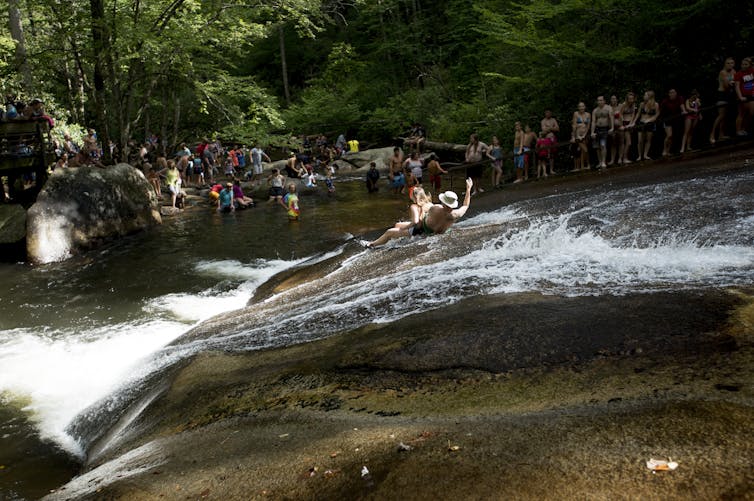
Outdoor recreation is on track for another record-setting year. In 2022, U.S. national parks logged more than 300 million visits – and that means a lot more people on roads and trails.
While research shows that spending time outside is good for physical and mental health, long lines and gridlocked roads can make the experience a lot less fun. Crowding also makes it harder for park staff to protect wildlife and fragile lands and respond to emergencies. To manage the crowds, some parks are experimenting with timed-entry vehicle reservation systems and permits for popular trails.
For all of their popularity, national parks are just one subset of U.S. public lands. Across the nation, the federal government owns more than 640 million acres (2.6 million square kilometers) of land. Depending on each site’s mission, its uses may include logging, livestock grazing, mining, oil and gas production, wildlife habitat or recreation – often, several of these at once. In contrast, national parks exist solely to protect some of the most important places for public enjoyment.
In my work as a historian and researcher, I’ve explored the history of public land management and the role of national parks in shaping landscapes across the Americas. Many public lands are prime recreational territory and are also becoming increasingly crowded. Finding solutions requires visitors, gateway communities, state agencies and the outdoor industry to collaborate.
Alternatives to national parks
The U.S. government is our nation’s largest land manager by far. Federal property makes up 28% of surface land area across the 50 states. In Western states like Nevada, the federal footprint can be as large as 80% of the land. That’s largely because much of this land is arid, and lack of water makes farming difficult. Other areas that are mountainous or forested were not initially viewed as valuable when they came under U.S. ownership – but values have changed.
Public lands are more diverse than national parks. Some are scenic; others are just open space. They include all kinds of ecosystems, from forests to grasslands, coastlines, red rock canyons, deserts and ranges covered with sagebrush. They also include battlefields, rivers, trails and monuments. Many are remote, but others are near or within major metropolitan areas.
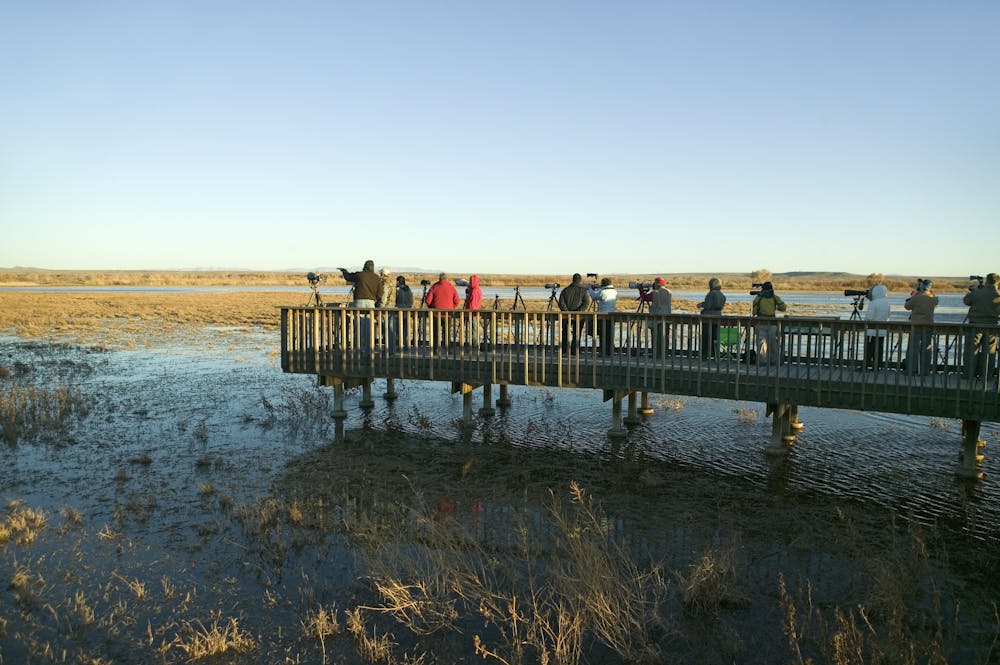
Many people who love hiking, fishing, backpacking or other outdoor activities know that national parks are crowded, and they often seek other places to enjoy nature, including public lands. That trend intensified during the COVID-19 pandemic, when lockdowns and social distancing protocols motivated people to get outside wherever they could.
The rise of remote work has also fueled a population shift toward smaller Western towns with access to open space and good internet access for videoconferencing. Popular remote work bases like Durango, Colorado, and Bend, Oregon, have become known as “Zoom towns” – a fresh take on the old boomtowns that brought people west in the 19th century.
With these new populations, gateway communities close to popular public lands face critical decisions. Outdoor recreation is a powerful economic engine: In 2021, it contributed an estimated US$454 billion to the nation’s economy – more than auto manufacturing and air transport combined.
But embracing recreational tourism can lead local communities into the amenity trap – the paradox of loving a place to death. Recreation economies that fail to manage growth, or that neglect investments in areas like housing and infrastructure, risk compromising the sense of place that draws visitors. But planning can proactively shape growth to maintain community character and quality of life.
Broadening recreation
People use public lands for many activities beyond a quiet hike in the woods. For instance, the Phoenix District of the federal Bureau of Land Management operates more than 3 million acres across central Arizona for at least 14 different recreational uses, including hiking, fishing, boating, target shooting, rock collecting and riding off-road vehicles.
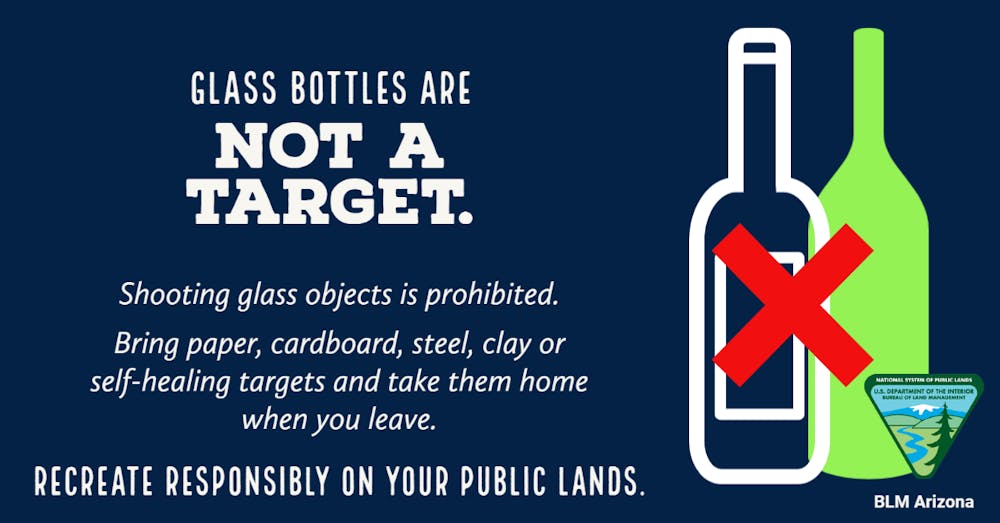
Not all of these activities are compatible, and many have not traditionally been rigorously managed. For example, target shooters sometimes bring objects like old appliances or furniture to use as improvised targets, then leave behind an unsightly mess. In response, the Phoenix District has designated recreational shooting sites where it provides targets and warns against shooting at objects containing glass or hazardous materials, as well as cactuses.
Skiing also can pose crowding challenges. Many downhill skiing facilities in the West operate on public land with permits from the managing agency – typically, the U.S. Forest Service.
One example, Bogus Basin Mountain Recreation Area is a nonprofit ski slope 16 miles from Boise, Idaho. Demand surges on winter weekends with fresh powder, creating long lift lines and crowded slopes.
The mountain is open for 12 hours a day, and Bogus Basin uses creative pricing structures for lift tickets to spread crowds out. For example, it draws younger skiers with discounted night skiing and retired skiers during the week. As a result, the parking lot only filled up once in the 2022-2023 season.
Local governments can help find ways to balance access with creative crowd management. In Seattle, King County launched Trailhead Direct to provide transit-to-trails services from Seattle to the Cascade Mountains. This approach expands access to the outdoors for city residents and reduces traffic on busy Interstate 90 and crowding in trailhead parking lots.
Other towns have partnered with federal land agencies to maintain trail systems, like the Ridge to Rivers network outside Boise and the River Reach trails near Farmington, New Mexico. This helps the towns provide better nearby outdoor opportunities for residents and attract new businesses whose employees value quality of life. Creating corridors from the “backyard to the backcountry,” as the Bureau of Land Management puts it, can help create vibrant communities.
A less-extractive view of public lands
For many years, Western communities have viewed public lands as places to mine, log and graze sheep and cattle. Tensions between states and the federal government over federal land policy often reflect state resentment over decisions made in Washington, D.C. about local resources.
Now, land managers are seeing a pivot. While federal control will never be welcome in some areas, Western communities increasingly view federal lands as amenities and anchors for immense opportunities, including recreation and economic growth. For example, Idaho is investing $100 million for maintenance and expanded access on state lands, mirroring federal efforts.
As environmental law scholar Robert Keiter has pointed out, the U.S. has a lot of laws governing activities like logging, mining and energy development on public lands, but there’s little legal guidance for recreation. Instead, agencies, courts and presidents are developing what Keiter calls “a common law of outdoor recreation,” bit by bit. By addressing crowding and the environmental impacts of recreation, I believe local communities can help the U.S. move toward better stewardship of our nation’s awe-inspiring public lands.
Emily Wakild, Cecil D. Andrus Endowed Professor for the Environment and Public Lands, Boise State University
This article is republished from The Conversation under a Creative Commons license. Read the original article.
- Details
- Written by: Elizabeth Larson
Dogs available for adoption this week include mixes of Anatolian shepherd, Catahoula leopard dog, German shepherd, husky, Labrador retriever, mastiff, pit bull, plott hound and terrier.
Dogs that are adopted from Lake County Animal Care and Control are either neutered or spayed, microchipped and, if old enough, given a rabies shot and county license before being released to their new owner. License fees do not apply to residents of the cities of Lakeport or Clearlake.
The following dogs at the Lake County Animal Care and Control shelter have been cleared for adoption.
Call Lake County Animal Care and Control at 707-263-0278 or visit the shelter online for information on visiting or adopting.
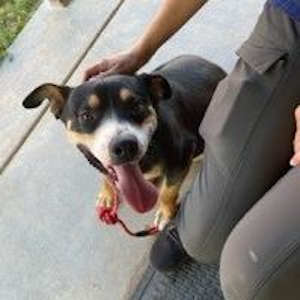
“Jojo” is a one and a half year old female pit bull terrier with a short tricolor coat.
She is in kennel foster care, ID No. LCAC-A-5312.
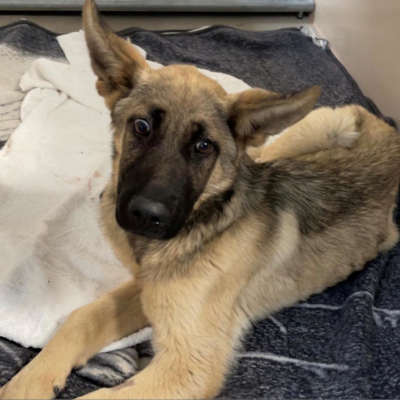
Male German shepherd puppy
This 6-month-old male German shepherd puppy has a black and tan coat.
He is in kennel No. 2, ID No. LCAC-A-5315.
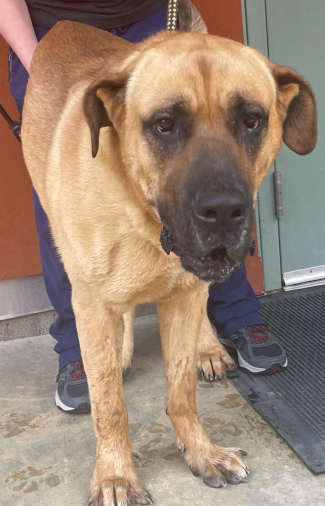
‘Zeus’
“Zeus” is a 2-year-old male mastiff with a short brown coat.
He is in kennel No. 3, ID No. LCAC-A-5070.
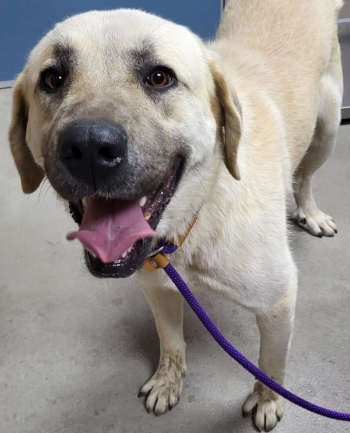
Anatolian shepherd-mastiff mix
This 3-year-old male Anatolian shepherd-mastiff mix has a short fawn coat.
He is in kennel No. 5, ID No. LCAC-A-5276.
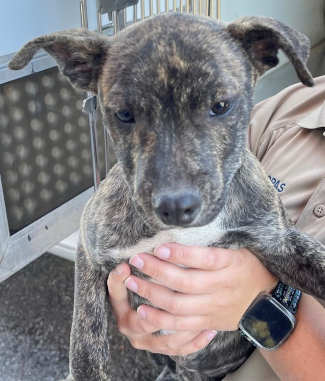
Male pit bull puppy
This 3-month-old male pit bull puppy has a short brindle coat.
He is in kennel No. 6, ID No. LCAC-A-5266.
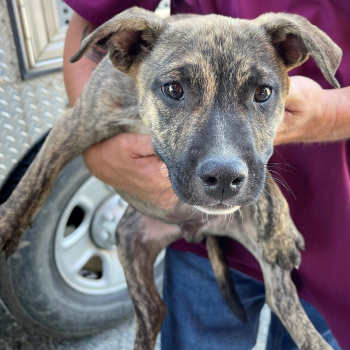
Male pit bull terrier
This 3-month-old male pit bull terrier has a short brindle coat.
He is in kennel No. 7, ID No. LCAC-A-5265.
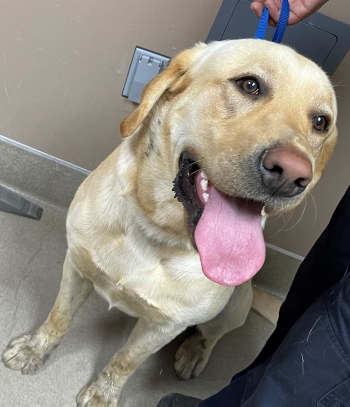
Male yellow Labrador retriever
This male yellow Labrador retriever is a year and a half old.
He is in kennel No. 8, ID No. LCAC-A-5361.
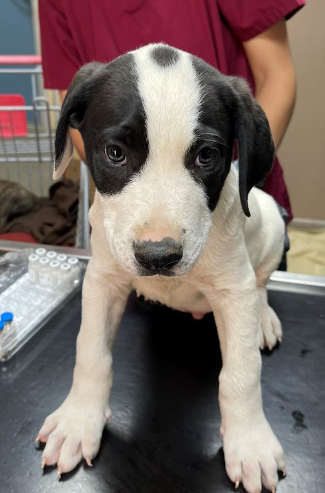
Male Catahoula leopard dog
This 2-month-old male Catahoula leopard dog has a short black and white coat.
He is in kennel No. 9a, ID No. LCAC-A-5249.
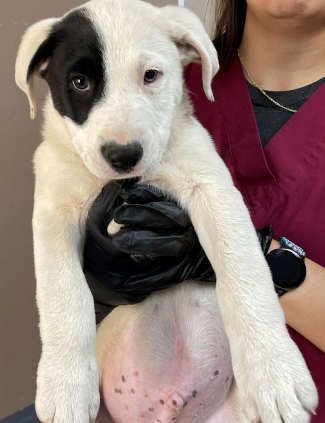
Male Catahoula leopard dog
This 2-month-old male Catahoula leopard dog has a short black and white coat.
He is in kennel No. 9b, ID No. LCAC-A-5247.

Male pit bull
This 1-year-old male pit bull terrier has a short black coat.
He is in kennel No. 11, ID No. LCAC-A-5258.

Male Catahoula leopard dog puppy
This 2-month-old male Catahoula leopard dog puppy has a short brindle coat with white markings.
He is in kennel No. 12b, ID No. LCAC-A-5245.

Female Catahoula leopard dog puppy
This 2-month-old female Catahoula leopard dog puppy has a short brindle coat with white markings.
She is in kennel No. 12c, ID No. LCAC-A-5246.
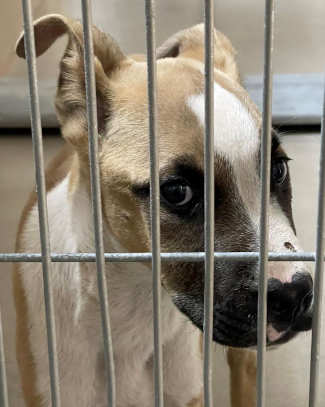
Male Catahoula leopard dog puppy
This 3-month-old male Catahoula leopard dog puppy has a short tan and white coat.
He is in kennel No. 13, ID No. LCAC-A-5354.

Female pit bull
This 9-year-old female pit bull has a gray coat.
She is in kennel No. 14, ID No. LCAC-A-5349.
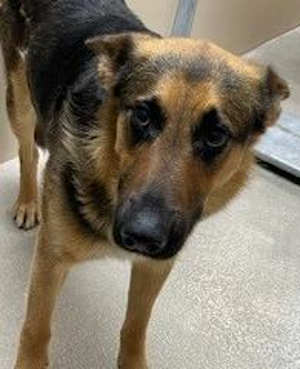
Male German shepherd
This two and a half year old male German shepherd has a black and tan coat.
He is in kennel No. 16, ID No. LCAC-A-5337.
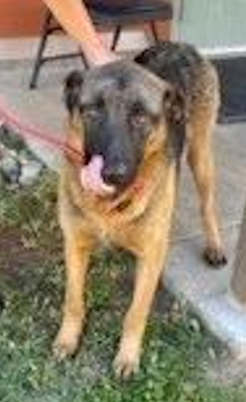
Male German shepherd
This 1 year old male German shepherd has a black and tan coat.
He is in kennel No. 17, ID No. LCAC-A-5324.
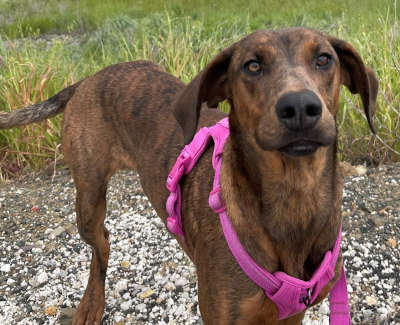
Male plott hound
This 2-year-old male plott hound has a short brown coat.
He is in kennel No. 18, ID No. LCAC-A-5143.

Female pit bull terrier
This 5-year-old female pit bull terrier has a short gray and white coat.
She is in kennel No. 19, ID No. LCAC-A-5321.
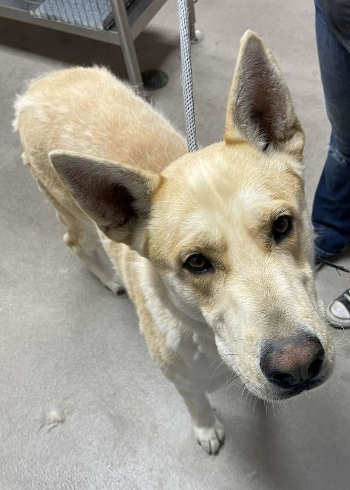
Male shepherd
This 2-year-old male shepherd has a tan and white coat.
He is in kennel No. 22, ID No. LCAC-A-5223.
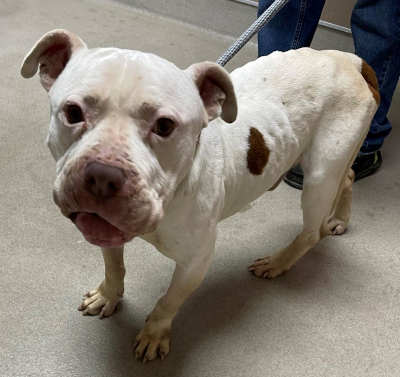
Male pit bull terrier
This 5-year-old male pit bull terrier has a short white coat with red markings.
He is in kennel No. 23, ID No. LCAC-A-5322.
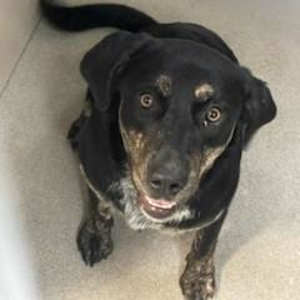
Female pit bull terrier
This 2-year-old female pit bull terrier has a short tricolor coat.
She is in kennel No. 24, ID No. LCAC-A-5333.
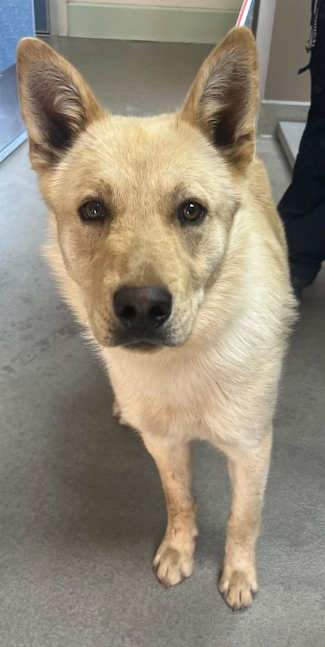
Male shepherd
This 1-year-old male shepherd has a tan coat.
He is in kennel No. 25, ID No. LCAC-A-5303.
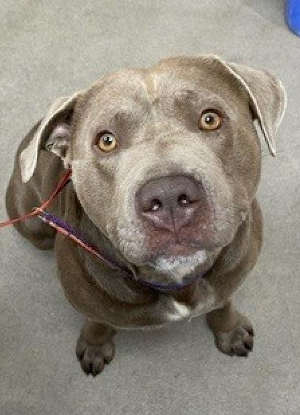
Male pit bull terrier
This 2-year-old male pit bull terrier has a short gray coat.
He is in kennel No. 26, ID No. LCAC-A-5394.

Male pit bull terrier
This 1-year-old male pit bull terrier has a black coat with white markings.
He is in kennel No. 27, ID No. LCAC-A-5203.

Male pit bull terrier
This 1-year-old male pit bull terrier has a black coat with white markings.
He is in kennel No. 28, ID No. LCAC-A-5334.
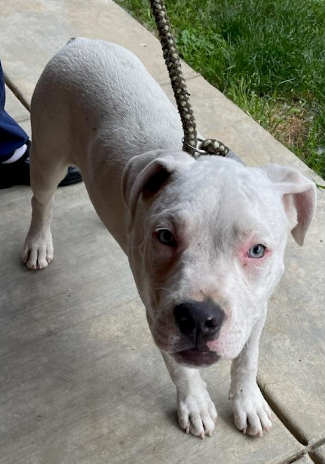
Male pit bull puppy
This 5-month-old male pit bull puppy has a white coat.
He is in kennel No. 29, ID No. LCAC-A-5325.
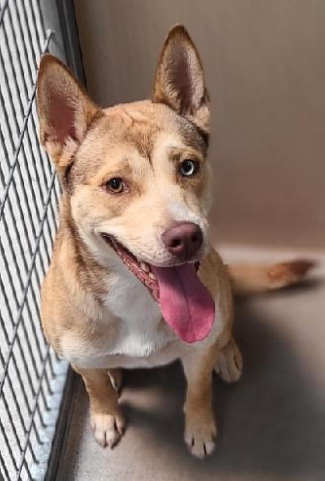
‘Luna’
“Luna” is a 1-year-old female husky with a red, tan and white coat.
She is in kennel No. 30, ID No. LCAC-A-5270.
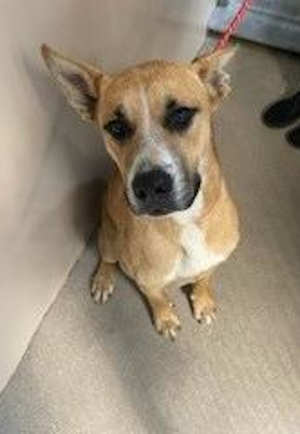
Male shepherd
This 2-year-old male shepherd has a short tan coat with white markings.
He is in kennel No. 31, ID No. LCAC-A-5344.
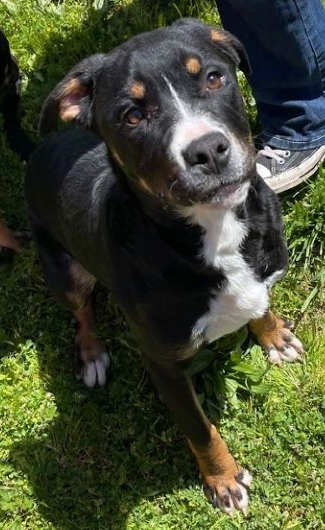
Female pit bull-shepherd puppy
This 5-month-old female pit bull-shepherd puppy has a short tricolor coat.
She is in kennel No. 32, ID No. LCAC-A-5072.
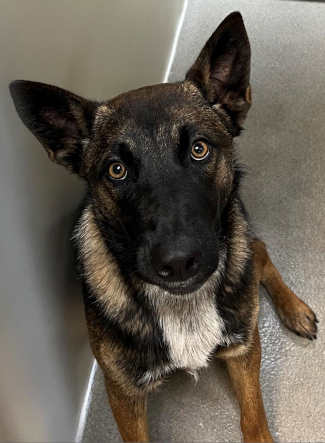
Male shepherd
This 1-year-old male shepherd has a tricolor coat.
He is in kennel No. 33, ID No. LCAC-A-5310.
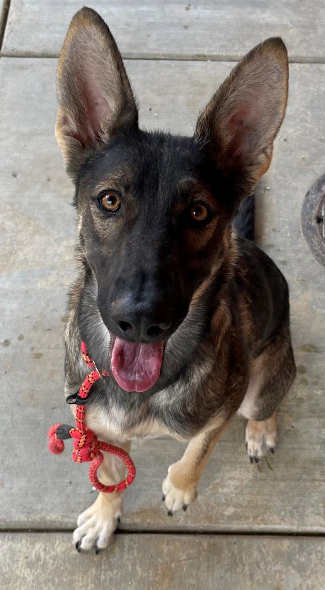
Female shepherd
This 10-month-old female shepherd has a tricolor coat.
She is in kennel No. 34, ID No. LCAC-A-5323.
Email Elizabeth Larson at
- Details
- Written by: NATIONAL AERONAUTICS AND SPACE ADMINISTRATION

An international team of researchers has used NASA’s James Webb Space Telescope to calculate the amount of heat energy coming from the rocky exoplanet TRAPPIST-1 c. The result suggests that the planet’s atmosphere – if it exists at all – is extremely thin.
With a dayside temperature of roughly 380 kelvins (about 225 degrees Fahrenheit), TRAPPIST-1 c is now the coolest rocky exoplanet ever characterized based on thermal emission. The precision necessary for these measurements further demonstrates Webb’s utility in characterizing rocky exoplanets similar in size and temperature to those in our own solar system.
The result marks another step in determining whether planets orbiting small red dwarfs like TRAPPIST-1 – the most common type of star in the galaxy – can sustain atmospheres needed to support life as we know it.
“We want to know if rocky planets have atmospheres or not,” said Sebastian Zieba, a graduate student at the Max Planck Institute for Astronomy in Germany and first author on results being published today in Nature. “In the past, we could only really study planets with thick, hydrogen-rich atmospheres. With Webb we can finally start to search for atmospheres dominated by oxygen, nitrogen, and carbon dioxide.”
“TRAPPIST-1 c is interesting because it’s basically a Venus twin: It’s about the same size as Venus and receives a similar amount of radiation from its host star as Venus gets from the Sun,” explained co-author Laura Kreidberg, also from Max Planck. “We thought it could have a thick carbon dioxide atmosphere like Venus.”
TRAPPIST-1 c is one of seven rocky planets orbiting an ultracool red dwarf star (or M dwarf) 40 light-years from Earth. Although the planets are similar in size and mass to the inner, rocky planets in our own solar system, it is not clear whether they do in fact have similar atmospheres. During the first billion years of their lives, M dwarfs emit bright X-ray and ultraviolet radiation that can easily strip away a young planetary atmosphere. In addition, there may or may not have been enough water, carbon dioxide, and other volatiles available to make substantial atmospheres when the planets formed.
To address these questions, the team used MIRI (Webb’s Mid-Infrared Instrument) to observe the TRAPPIST-1 system on four separate occasions as the planet moved behind the star, a phenomenon known as a secondary eclipse. By comparing the brightness when the planet is behind the star (starlight only) to the brightness when the planet is beside the star (light from the star and planet combined) the team was able to calculate the amount of mid-infrared light with wavelengths of 15 microns given off by the dayside of the planet.
This method is the same as that used by another research team to determine that TRAPPIST-1 b, the innermost planet in the system, is probably devoid of any atmosphere.
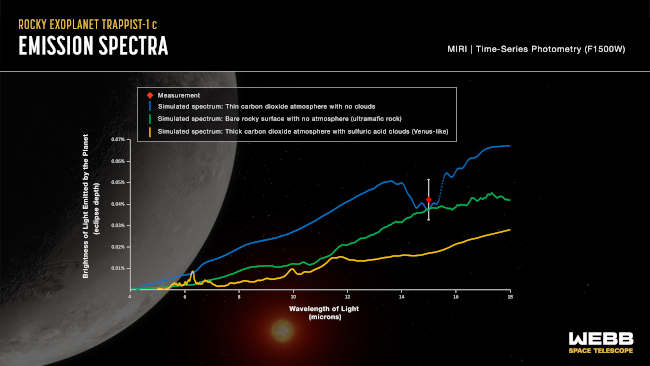
The amount of mid-infrared light emitted by a planet is directly related to its temperature, which is in turn influenced by atmosphere. Carbon dioxide gas preferentially absorbs 15-micron light, making the planet appear dimmer at that wavelength. However, clouds can reflect light, making the planet appear brighter and masking the presence of carbon dioxide.
In addition, a substantial atmosphere of any composition will redistribute heat from the dayside to the nightside, causing the dayside temperature to be lower than it would be without an atmosphere. (Because TRAPPIST-1 c orbits so close to its star – about 1/50th the distance between Venus and the Sun – it is thought to be tidally locked, with one side in perpetual daylight and the other in endless darkness.)
Although these initial measurements do not provide definitive information about the nature of TRAPPIST-1 c, they do help narrow down the likely possibilities. “Our results are consistent with the planet being a bare rock with no atmosphere, or the planet having a really thin CO2 atmosphere (thinner than on Earth or even Mars) with no clouds,” said Zieba. “If the planet had a thick CO2 atmosphere, we would have observed a really shallow secondary eclipse, or none at all. This is because the CO2 would be absorbing all of the 15-micron light, so we wouldn’t detect any coming from the planet.”
The data also shows that it is unlikely the planet is a true Venus analog with a thick CO2 atmosphere and sulfuric acid clouds.

The absence of a thick atmosphere suggests that the planet may have formed with relatively little water. If the cooler, more temperate TRAPPIST-1 planets formed under similar conditions, they too may have started with little of the water and other components necessary to make a planet habitable.
The sensitivity required to distinguish between various atmospheric scenarios on such a small planet so far away is truly remarkable. The decrease in brightness that Webb detected during the secondary eclipse was just 0.04 percent: equivalent to looking at a display of 10,000 tiny light bulbs and noticing that just four have gone out.
“It is extraordinary that we can measure this,” said Kreidberg. “There have been questions for decades now about whether rocky planets can keep atmospheres. Webb’s ability really brings us into a regime where we can start to compare exoplanet systems to our solar system in a way that we never have before.”
This research was conducted as part of Webb’s General Observers (GO) program 2304, which is one of eight programs from Webb’s first year of science designed to help fully characterize the TRAPPIST-1 system. This coming year, researchers will conduct a follow-up investigation to observe the full orbits of TRAPPIST-1 b and TRAPPIST-1 c. This will make it possible to see how the temperatures change from the day to the nightsides of the two planets and will provide further constraints on whether they have atmospheres or not.
The James Webb Space Telescope is the world's premier space science observatory. Webb will solve mysteries in our solar system, look beyond to distant worlds around other stars, and probe the mysterious structures and origins of our universe and our place in it. Webb is an international program led by NASA with its partners, ESA (European Space Agency), and CSA (Canadian Space Agency). MIRI was contributed by NASA and ESA, with the instrument designed and built by a consortium of nationally funded European Institutes (the MIRI European Consortium) and NASA’s Jet Propulsion Laboratory, in partnership with the University of Arizona.
- Details
- Written by: LAKE COUNTY NEWS REPORTS
Zonehaven AWARE is changing its name to Genasys Protect, effective June 27.
For the last several years, the Lake County Sheriff’s Office has used Zonehaven to map evacuation zones across Lake County, which typically are used during fire emergencies.
The name change has raised concerns about confusion for the public.
Lauren Berlinn, the sheriff’s office’s community outreach officer, told Lake County News that the agency — and multiple other law enforcement and fire agencies — fought the name change “at every turn.”
“However,” she added, “the corporate decision makers went ahead with the rebrand.”
Berlinn said she has woven the name change into her fire season social media campaign, which kicked off this week.
In a letter to the sheriff’s office that Berlinn shared with Lake County News, Richard S. Danforth, chief executive officer of Genasys Inc., said, regarding what has changed with the name conversation, “We’re now able to better assist you and your organization in using data to optimize how you protect and inform your community — before, during, and after a critical event. We’re also able to help you better tell the Genasys story to your stakeholders, including the media, as you increase awareness and build support for your initiatives.”
Regarding what hasn’t changed, Danforth said the company will still provide the same level of support and transparency, and reliable products.
For more about the service and what your zone is during an emergency, visit the Lake County Sheriff’s Office website here.