 How to resolve AdBlock issue?
News
- Details
- Written by: Elizabeth Larson
The meeting will take place at 9 a.m. Friday, June 30, in the council chambers in Clearlake City Hall, 14050 Olympic Drive.
The meeting will be broadcast live on the city's YouTube channel or the Lake County PEGTV YouTube Channel. Community members also can participate via Zoom or can attend in person.
The webinar ID is 834 4287 6954; the pass code is 455599.
One tap mobile is available at +16694449171,,83442876954# US.
The agenda can be found here.
Comments and questions can be submitted in writing for City Council consideration by sending them to City Clerk Melissa Swanson at
To give the council adequate time to review your questions and comments, please submit your written comments before 4 p.m. Friday, June 30.
On Friday, Lisa Westwood, vice president and director of cultural resources for ECORP Consulting, will give a presentation on AB 52, the law requiring tribal consultation on projects.
As part of the meeting’s consent agenda, the council will adopt Resolution No. 2023-32, approving a temporary street closure for the annual July 4 parade.
Email Elizabeth Larson at
- Details
- Written by: LAKE COUNTY NEWS REPORTS
As Lake County News first reported last week, Zonehaven AWARE changed its name to Genasys Protect, effective June 27, over the objections of the Lake County Sheriff’s Office and other law enforcement agencies.
The Lake County Sheriff’s Office uses Zonehaven to map evacuation zones across Lake County, which typically are used during fire emergencies.
This week, officials said only the company’s name is changing.
There will be no change for zone information and zone numbers.
At this time, all QR codes and other web addresses/URLs (aware.zonehaven.com and community.zonehaven.com), past information provided by the Sheriff’s Office, and zone information are still relevant, still work and will continue to function, the county reported.
Starting in 2024, the URL will be consolidated to protect.genasys.com, only.
Do you know your zone?
A Zone look-up tool is available on www.lakesheriff.com and http://www.lakesheriff.com/about/oes.
Sign up for LakeCoAlerts, and review other valuable preparedness resources, while visiting these webpages.
Lake County residents are encouraged to prepare now, and connect with your families and neighbors to help ensure needs can quickly be understood and met in the event of a disaster.
- Details
- Written by: Antonia Hadjimichael, Penn State
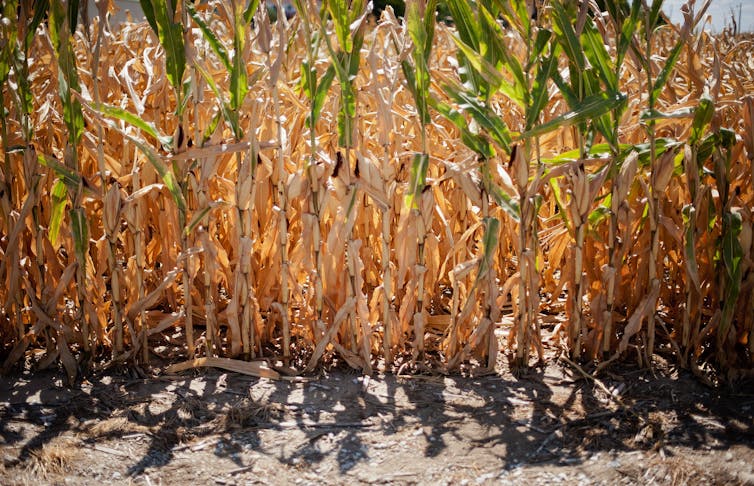
Many people are familiar with flash floods – torrents that develop quickly after heavy rainfall. But there’s also such a thing as a flash drought, and these sudden, extreme dry spells are becoming a big concern for farmers and water utilities.
Flash droughts start and intensify quickly, over periods of weeks to months, compared to years or decades for conventional droughts. Still, they can cause substantial economic damage, since communities have less time to prepare for the impacts of a rapidly evolving drought. In 2017, a flash drought in Montana and the Dakotas damaged crops and grasses that served as forage for cattle, causing US$2.6 billion in agricultural losses.
Flash droughts also can increase wildfire risks, cause public water supply shortages and reduce stream flow, which harms fish and other aquatic life.
Less rain, warmer air
Flash droughts typically result from a combination of lower-then-normal precipitation and higher temperatures. Together, these factors reduce overall land surface moisture.
Water constantly cycles between land and the atmosphere. Under normal conditions, moisture from rainfall or snowfall accumulates in the soil during wet seasons. Plants draw water up through their roots and release water vapor into the air through their leaves, a process called transpiration. Some moisture also evaporates directly from the soil into the air.
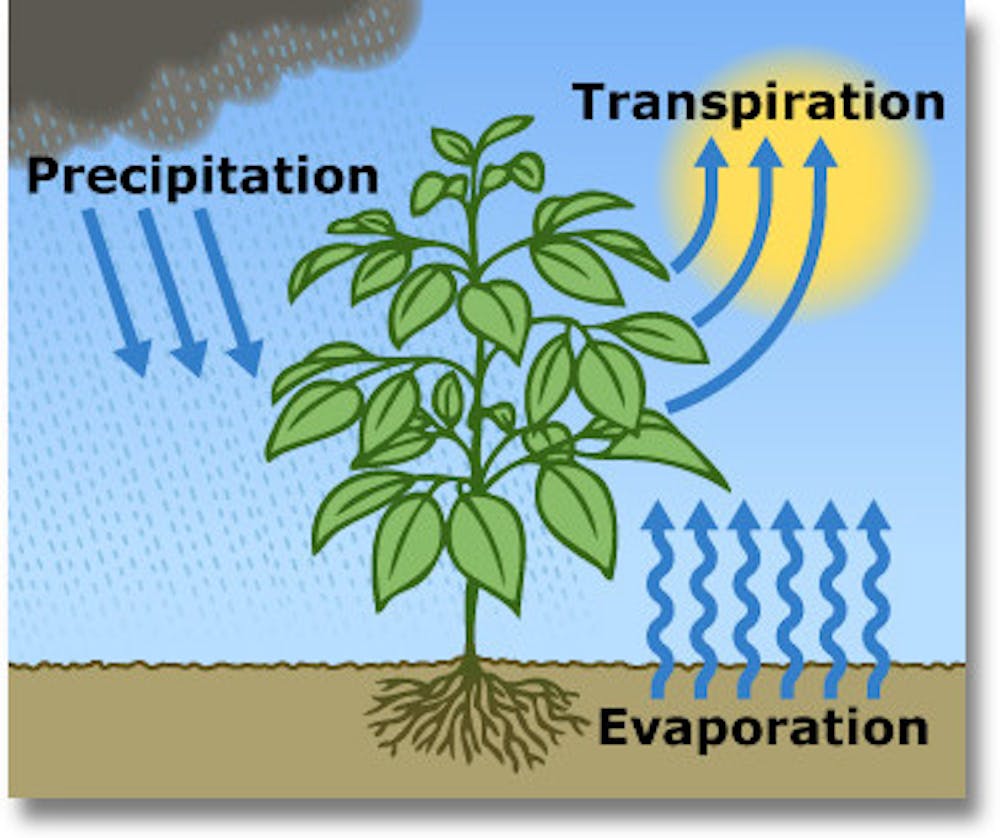
Scientists refer to the amount of water that could be transferred from the land to the atmosphere as evaporative demand – a measure of how “thirsty” the atmosphere is. Higher temperatures increase evaporative demand, which makes water evaporate faster. When soil contains enough moisture, it can meet this demand.
But if soil moisture is depleted – for example, if precipitation drops below normal levels for months – then evaporation from the land surface can’t provide all the moisture that a thirsty atmosphere demands. Reduced moisture at the surface increases surface air temperatures, drying out the soil further. These processes amplify each other, making the area increasingly hot and dry.
Moist regions can have flash droughts
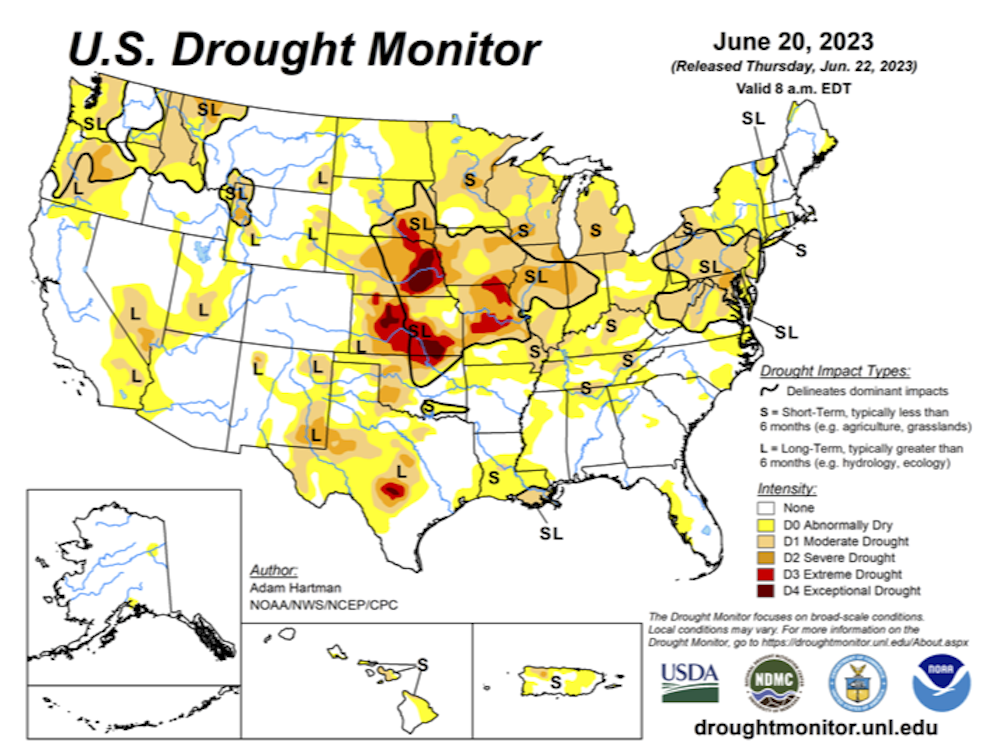
Flash droughts started receiving more attention in the U.S. after notable events in 2012, 2016 and 2017 that reduced crop yields and increased wildfire risks. In 2012, areas in the Midwest that had had near-normal precipitation conditions through May fell into severe drought conditions in June and July, causing more than $30 billion in damages.
New England, typically one of the wetter U.S. regions, experienced a flash drought in the summer of 2022, with areas including Boston and Rhode Island receiving only a fraction of their normal rainfall. Across Massachusetts, critically low water levels forced towns to issue mandatory water restrictions for residents.
Planning for flash droughts in a changing climate
Conventional droughts, like the Dust Bowl of the 1930s or the current 22-year drought across the southwestern U.S., develop over periods of years. Scientists rely on monitoring and prediction tools, such as measurements of temperature and rainfall, as well as models, to forecast their evolution.
Predicting flash drought events that occur on monthly to weekly time scales is much harder with current data and tools, largely due to the chaotic nature of weather and limitations in weather models. That’s why weather forecasters don’t typically make projections beyond 10 days – there is a lot of variation in what can happen over longer time spans.
And climate patterns can shift from year to year, adding to the challenge. For example, Boston had a very wet summer in 2021 before its very dry summer in 2022.
Scientists expect climate change to make precipitation even more variable, especially in wetter regions like the U.S. Northeast. This will make it more difficult to forecast and prepare for flash droughts well in advance.
But new monitoring tools that measure evaporative demand can provide early warnings for regions experiencing abnormal conditions. Information from these systems can give farmers and utilities sufficient lead time to adjust their operations and minimize their risks.
Antonia Hadjimichael, Assistant Professor of Geosciences, Penn State
This article is republished from The Conversation under a Creative Commons license. Read the original article.
- Details
- Written by: Elizabeth Larson
In a special meeting on June 13, the board supported the request from Chief Patrick Reitz to purchase two Jet Skis and a trailer for the district’s water rescue program.
District officials said the special meeting was necessary because the item had inadvertently been left off the agenda for the regular meeting that took place immediately before it.
The district is purchasing two 2015 Yamaha VX Cruiser WaveRunners and a trailer from Mike Pate of Lockeford.
In his report, Reitz said the goal was to purchase the equipment before the end of June, in order to keep it within the 2022-23 fiscal year.
The equipment was found in an advertisement and a good faith deposit of $500 was put down on it before the purchase was finalized by the board.
Reitz said the purchase, expected to be completed by June 20, totaled $22,000.
That’s over his $20,000 spending limit, which required Reitz to go to the board for final approval.
Email Elizabeth Larson at