 How to resolve AdBlock issue?
News
- Details
- Written by: Lake County News reports
The ceremonies will take place at five cemeteries around Lake County beginning at 9 a.m. sharp on Saturday, Dec. 16.
They will be held at the Hartley, Kelseyville, Lower Lake, Middletown and St. Mary’s cemeteries.
This year the theme is, “Serve and Succeed.”
Wreaths Across America has three goals: To remember the fallen, honor those who serve and their families, and teach children the value of freedom.
Youth and veterans organizations have volunteered to conduct the Wreaths Across America ceremonies this year.
Eight ceremonial wreaths will be placed to remember all soldiers, sailors, airmen and marines who served, honor their sacrifices and teach our younger generations about the high cost of our freedoms.
Wreaths Across America pursues its mission with nationwide wreath-laying events amid the holiday season, and year-round educational outreach inviting all Americans to appreciate our freedoms and the cost at which they are delivered.
Specially designated wreaths for the Army, Marines, Navy, Air Force, Coast Guard, Merchant Marine, Space Force and POW/MIA will be placed on memorials during a ceremony that will be coordinated simultaneously at over participating locations all across the country and overseas.
In 2022, more than 2.7 million veteran wreaths were placed on headstones at 3,702 participating cemeteries around the country in honor of the service and sacrifices made for our freedoms, with each name said out loud.
More than 644 truckloads of wreaths were delivered across the country by hundreds of volunteer professional truck drivers.
Every person has something to give, whether it is their time, ideas, compassion or resources. Mother Teresa said it best: “The greatest good is what we do for one another.”
Take an hour amid the hustle and bustle of this holiday season, bring your families to one of these heartfelt ceremonies on Saturday and help lay a wreath as part of remembering and honoring our veterans and teaching our children the value of the sacrifices that have been made.
- Details
- Written by: Lake County News reports
The PG&E Foundation has awarded $500,000 to five grantees — one in each of PG&E’s five regions — through its Better Together Nature Positive Innovation Grant Program.
The projects selected are meant to preserve California’s unique biodiversity, focusing on land, air quality and water stewardship.
On the North Coast, Middletown Rancheria of Pomo Indians is receiving a Better Together Nature Positive Innovation grant to develop and implement a project to protect native plants and animals on tribal land in Lake County.
“Middletown Rancheria looks forward to bringing increased community engagement, cultural understanding, respect, and protection of its ancestral territories' native species and habitats, and providing local environmental stewardship, through the tribe's Natural Biodiversity Project’s goals of education, outreach, and promotion of cultural keystone species and habitats in the region,” said Tribal Chair Moke Simon, who also serves on the Lake County Board of Supervisors.
“Tribal ecological knowledge sharing and outreach in our vulnerable communities can lead to a better understanding of the human effects on the natural landscape and its plants and animals. With the funding opportunity provided by The PG&E Corporation Foundation, the tribe will continue to work in support of a more comprehensive understanding of the region's biodiversity needs and struggles through this project,” Simon said.
Other Better Together program award recipients are Farm Discovery at Live Earth of Watsonville, Little Manila Foundation of Stockton, Maidu Summit Consortium of Chester and the Marine Science Institute of Redwood City.
These grants are funded by The PG&E Corporation Foundation. Charitable donations come from PG&E shareholders and other sources, not PG&E customers.
- Details
- Written by: Troy Bickham, Texas A&M University
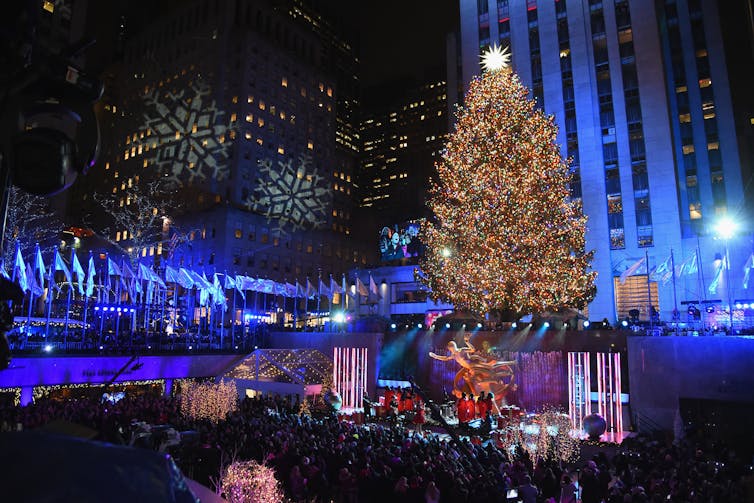
Why, every Christmas, do so many people endure the mess of dried pine needles, the risk of a fire hazard and impossibly tangled strings of lights?
Strapping a fir tree to the hood of my car and worrying about the strength of the twine, I sometimes wonder if I should just buy an artificial tree and do away with all the hassle. Then my inner historian scolds me – I have to remind myself that I’m taking part in one of the world’s oldest religious traditions. To give up the tree would be to give up a ritual that predates Christmas itself.
A symbol of life in a time of darkness
Almost all agrarian societies independently venerated the Sun in their pantheon of gods at one time or another – there was the Sol of the Norse, the Aztec Huitzilopochtli, the Greek Helios.
The solstices, when the Sun is at its highest and lowest points in the sky, were major events. The winter solstice, when the sky is its darkest, has been a notable day of celebration in agrarian societies throughout human history. The Persian Shab-e Yalda, Dongzhi in China and the North American Hopi Soyal all independently mark the occasion.
The favored décor for ancient winter solstices? Evergreen plants.
Whether as palm branches gathered in Egypt in the celebration of Ra or wreaths for the Roman feast of Saturnalia, evergreens have long served as symbols of the perseverance of life during the bleakness of winter, and the promise of the Sun’s return.
Christmas slowly emerges
Christmas came much later. The date was not fixed on liturgical calendars until centuries after Jesus’ birth, and the English word Christmas – an abbreviation of “Christ’s Mass” – would not appear until over 1,000 years after the original event.
While Dec. 25 was ostensibly a Christian holiday, many Europeans simply carried over traditions from winter solstice celebrations, which were notoriously raucous affairs. For example, the 12 days of Christmas commemorated in the popular carol actually originated in ancient Germanic Yule celebrations.
The continued use of evergreens, most notably the Christmas tree, is the most visible remnant of those ancient solstice celebrations. Although Ernst Anschütz’s well-known 1824 carol dedicated to the tree is translated into English as “O Christmas Tree,” the title of the original German tune is simply “Tannenbaum,” meaning fir tree. There is no reference to Christmas in the carol, which Anschütz based on a much older Silesian folk love song. In keeping with old solstice celebrations, the song praises the tree’s faithful hardiness during the dark and cold winter.
Bacchanal backlash
Sixteenth-century German Protestants, eager to remove the iconography and relics of the Roman Catholic Church, gave the Christmas tree a huge boost when they used it to replace Nativity scenes. The religious reformer Martin Luther supposedly adopted the practice and added candles.
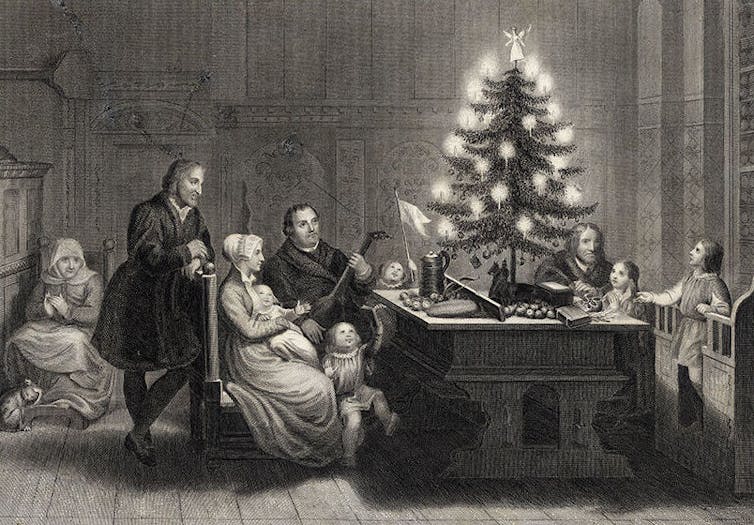
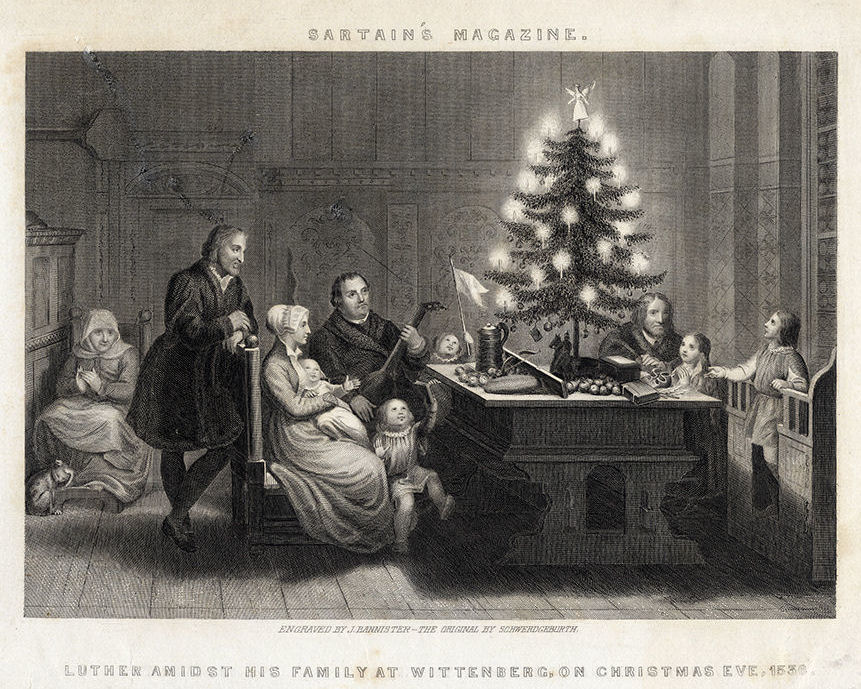
But a century later, the English Puritans frowned upon the disorderly holiday for lacking biblical legitimacy. They banned it in the 1650s, with soldiers patrolling London’s streets looking for anyone daring to celebrate the day. Puritan colonists in Massachusetts did the same, fining “whosoever shall be found observing Christmas or the like, either by forbearing of labor, feasting, or any other way.”
German immigration to the American colonies ensured that the practice of trees would take root in the New World. Benjamin Franklin estimated that at least one-third of Pennsylvania’s white population was German before the American Revolution.
Yet, the German tradition of the Christmas tree blossomed in the United States largely due to Britain’s German royal lineage.
Taking a cue from the queen
Since 1701, English kings had been forbidden from becoming or marrying Catholics. Germany, which was made up of a patchwork of kingdoms, had eligible Protestant princes and princesses to spare. Many British royals privately maintained the familiar custom of a Christmas tree, but Queen Victoria – who had a German mother as well as a German grandmother on her father’s side – made the practice public and fashionable.
Victoria’s style of rule both reflected and shaped the outwardly stern, family-centered morality that dominated middle-class life during the era. In the 1840s, Christmas became the target of reformers like novelist Charles Dickens, who sought to transform the raucous celebrations of the largely sidelined holiday into a family day in which the people of the rapidly industrialized nation could relax, rejoice and give thanks.
His 1843 novella, “A Christmas Carol,” in which the miserly Ebenezer Scrooge found redemption by embracing Dickens’ prescriptions for the holiday, was a hit with the public. While the evergreen décor is evident in the hand-colored illustrations Dickens specially commissioned for the book, there are no Christmas trees in those pictures.
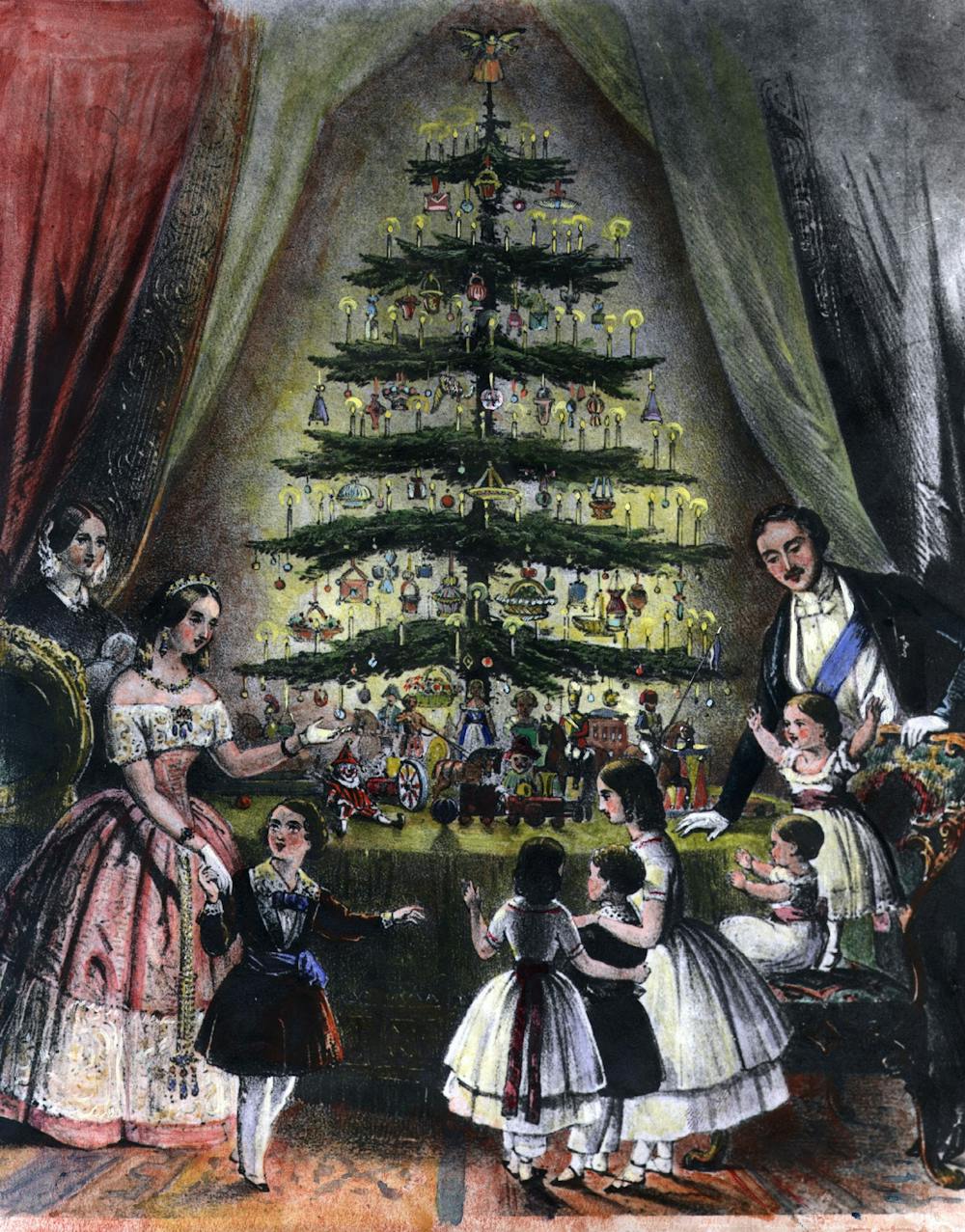

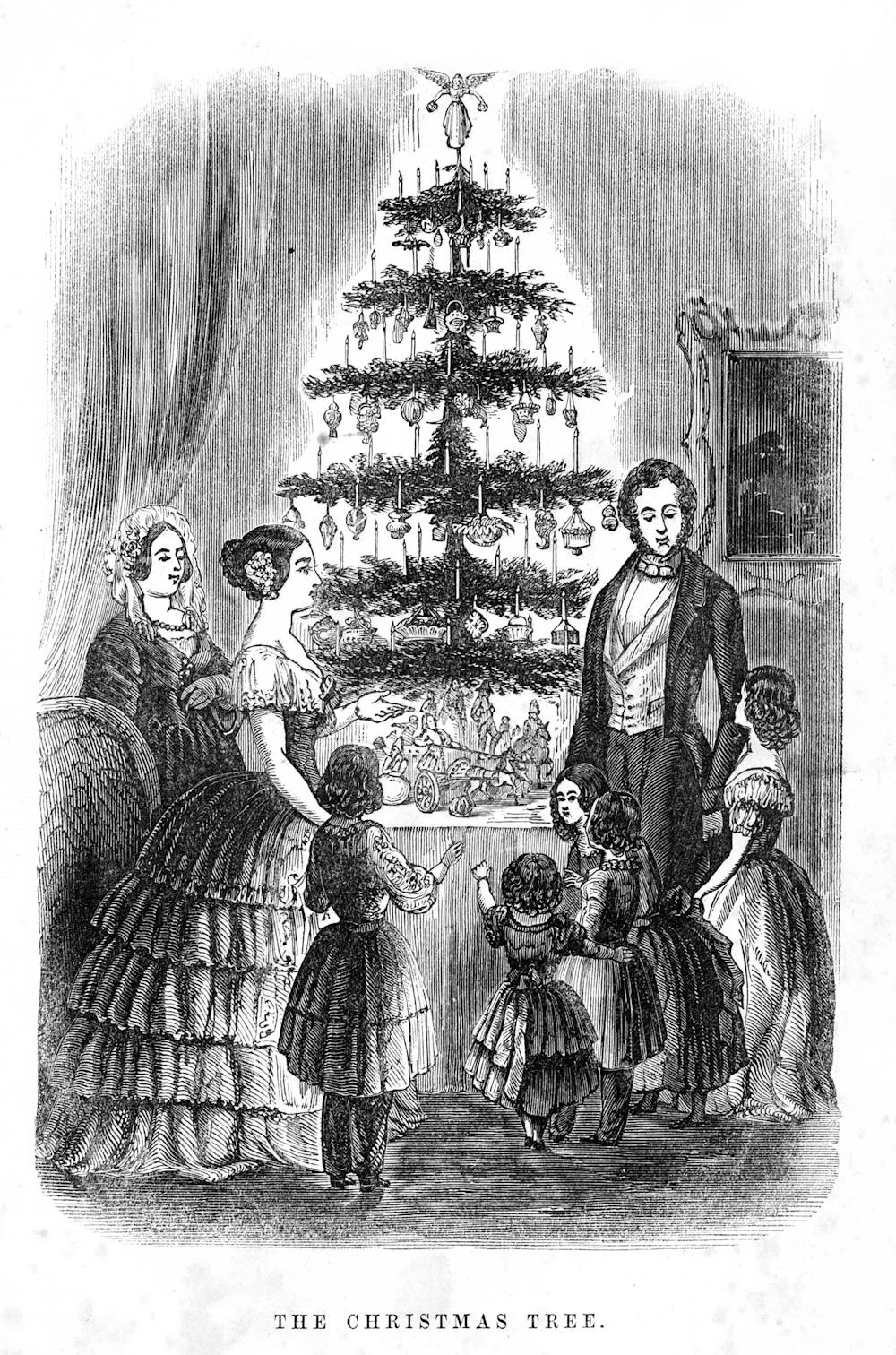
Victoria added the fir tree to family celebrations five years later. Although Christmas trees had been part of private royal celebrations for decades, an 1848 issue of the London Illustrated News depicted Victoria with her German husband and children decorating one as a family at Windsor Castle.

The cultural impact was almost instantaneous. Christmas trees started appearing in homes throughout England, its colonies and the rest of the English-speaking world. Dickens followed with his short story “A Christmas Tree” two years later.
Adopting the tradition in America
During this period, America’s middle classes generally embraced all things Victorian, from architecture to moral reform societies.
Sarah Hale, the author most famous for her children’s poem “Mary had a Little Lamb,” used her position as editor of the best-selling magazine Godey’s Ladies Book to advance a reformist agenda that included the abolition of slavery and the creation of holidays that promoted pious family values. The adoption of Thanksgiving as a national holiday in 1863 was perhaps her most lasting achievement.

It is closely followed by the Christmas tree.
While trees sporadically adorned the homes of German immigrants in the U.S., it became a mainstream middle-class practice when, in 1850, Godey’s published an engraving of Victoria and her Christmas tree. A supporter of Dickens and the movement to reinvent Christmas, Hale helped to popularize the family Christmas tree across the pond.

Only in 1870 did the United States recognize Christmas as a federal holiday.
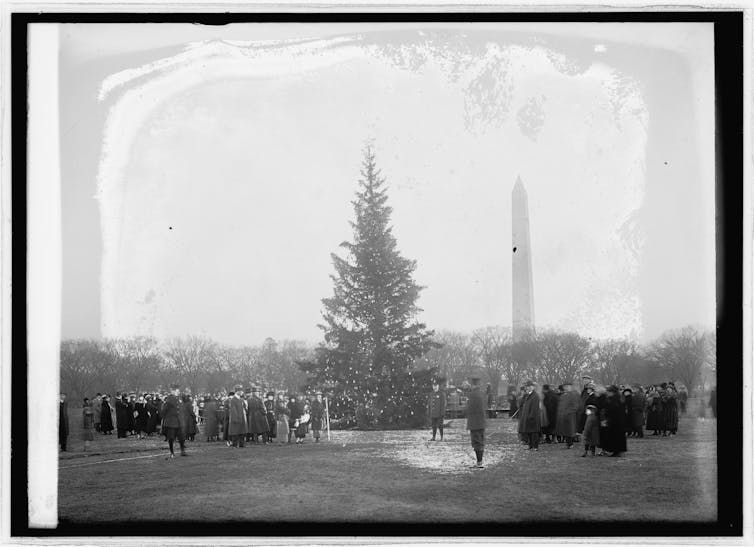
The practice of erecting public Christmas trees emerged in the U.S. in the 20th century. In 1923, the first one appeared on the White House’s South Lawn. During the Great Depression, famous sites such as New York’s Rockefeller Center began erecting increasingly larger trees.

Christmas trees go global
As both American and British cultures extended their influence around the world, Christmas trees started to appear in communal spaces even in countries that are not predominately Christian. Shopping districts in Dubai, United Arab Emirates, Hong Kong and Tokyo now regularly erect trees.
The modern Christmas tree is a universal symbol that carries meanings both religious and secular. Adorned with lights, they promote hope and offer brightness in literally the darkest time of year for half of the world.
In that sense, the modern Christmas tree has come full circle.
Troy Bickham, Professor of History, Texas A&M University
This article is republished from The Conversation under a Creative Commons license. Read the original article.
- Details
- Written by: Elizabeth Larson

NORTHERN CALIFORNIA — This week, the Yuba Community College District Board is set to discuss the contract with the new president of Woodland Community College, a selection which is expected to have a significant impact on the district’s campus in Lake County.
The board will meet in closed session at 3 p.m. Thursday, Dec. 14, with the board holding an annual organization meeting at 4:45 p.m. to select its leadership for the new year before the regular meeting begins at 5 p.m. at Yuba College, 2088 N. Beale Road, Building 300-Flavors, Marysville.
Members of the public can attend the meeting virtually through this Zoom link.
The Zoom Meeting ID is 846 7971 9357; the call-in number is 1-669-900-6833.
The agenda can be found here.
Last month, Dr. Lizette Navarette accepted the job of Woodland Community College president, as Lake County News has reported.
The selection of the new president has been cited as key by district leadership in setting the course not just for Woodland Community College but for the campuses aligned with it, including the Lake County Campus in Clearlake.
Community leaders, students and faculty — past and present — voiced their concerns to the board in early November about how Woodland's administration has starved the Lake County Campus of critical resources.
The Full-time Faculty Association of Yuba Community College District has issued a welcome to Navarette and is hopeful that they can work with her to rebuild trust and morale throughout the district.
The contract calls for Navarette to receive a base salary of $205,569 plus a doctoral stipend of $3,300 for a total contractual salary of $208,869.
Email Elizabeth Larson at