 How to resolve AdBlock issue?
News
- Details
- Written by: Robert Sanders
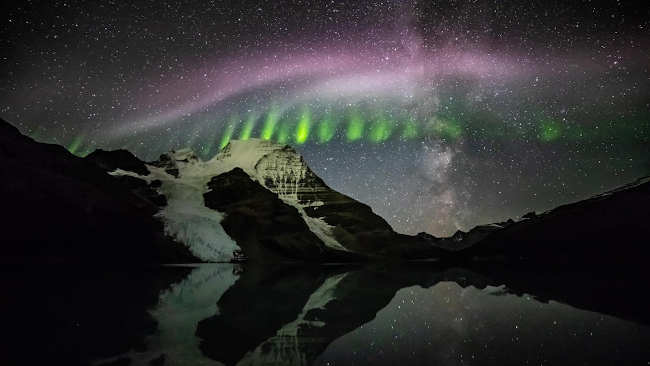
Phenomena called “Steve” and “picket fence” are masquerading as auroras, graduate student argues
BERKELEY, Calif. — The shimmering green, red and purple curtains of the northern and southern lights — the auroras — may be the best-known phenomena lighting up the nighttime sky, but the most mysterious are the mauve and white streaks called Steve and their frequent companion, a glowing green "picket fence."
First recognized in 2018 as distinct from the common auroras, Steve — a tongue-in-cheek reference to the benign name given a scary hedge in a 2006 children's movie — and its associated picket fence were nevertheless thought to be caused by the same physical processes. But scientists were left scratching their heads about how these glowing emissions were produced.
Claire Gasque, a University of California, Berkeley, graduate student in physics, has now proposed a physical explanation for these phenomena that is totally different from the processes responsible for the well-known auroras. She has teamed up with researchers at the campus's Space Sciences Laboratory, or SSL, to propose that NASA launch a rocket into the heart of the aurora to find out if she's correct.
Vibrant auroras and glowing phenomena such as Steve and the picket fence are becoming more common as the sun enters the active period of its 11-year cycle, and November was a good month for Steve observations in the northern latitudes.
Because all these transient luminous phenomena are triggered by solar storms and coronal mass ejections from the sun, the approaching solar maximum is an ideal time to study rare events like Steve and the picket fence.
Gasque described the physics behind the picket fence in a paper published last month in the journal Geophysical Research Letters and will discuss the results on Dec. 14 in an invited talk at the American Geophysical Union meeting in San Francisco.
She calculated that in a region of the upper atmosphere farther south than that in which auroras form, electric fields parallel to Earth's magnetic field could produce the color spectrum of the picket fence. If correct, this unusual process has implications for how physicists understand energy flow between Earth's magnetosphere, which surrounds and protects Earth from the solar wind, and the ionosphere at the edge of space.
"This would upend our modeling of what creates light and the energy in the aurora in some cases," Gasque said.
"The really interesting thing about Claire's paper is that we've known for a couple of years now that the Steve spectrum is telling us there's some very exotic physics going on. We just didn't know what it was," said Brian Harding, a co-author of the paper and an SSL assistant research physicist. "Claire's paper showed that parallel electric fields are capable of explaining this exotic spectrum."
The paper was a side project from Gasque's Ph.D. thesis, which is focused on the connection between events like volcanoes on Earth's surface and phenomena in the ionosphere 100 kilometers or more above our heads.
But after hearing about Steve — which has now become an acronym for Strong Thermal Emission Velocity Enhancement — at a conference in 2022, she couldn't resist looking into the physics behind Steve and the picket fence.
"It's really cool," she said. "It's one of the biggest mysteries in space physics right now."
The physics of Steve and picket fence
The common auroras are produced when the solar wind energizes particles in Earth's magnetosphere, often at altitudes higher than 1,000 kilometers above the surface. These energized particles spiral around Earth's magnetic field lines toward the poles, where they crash into and excite oxygen and nitrogen molecules in the upper atmosphere. When those molecules relax, oxygen emits specific frequencies of green and red light, while nitrogen generates a bit of red, but primarily a blue, emission line.
The colorful, shimmering curtains that result can extend for thousands of kilometers across the northern or southern latitudes.
Steve, however, displays not individual emission lines, but a broad range of frequencies centered around purple or mauve. And unlike auroras, neither Steve nor the picket fence emit blue light, which is generated when the most energetic particles hit and ionize nitrogen. Steve and the picket fence also occur at lower latitudes than the aurora, potentially even as far south as the equator.
Some researchers proposed that Steve is caused by ion flows in the upper atmosphere, referred to as subauroral ion drift, or SAID, though there's no well accepted physical explanation for how SAID could generate the colorful emissions.
Gasque's interest was sparked by suggestions that the picket fence's emissions could be generated by low-altitude electric fields parallel to Earth's magnetic field, a situation thought to be impossible because any electric field aligned with the magnetic field should quickly short out and disappear.
Using a common physical model of the ionosphere, Gasque subsequently showed that a moderate parallel electric field — around 100 millivolts per meter — at a height of about 110 km could accelerate electrons to an energy that would excite oxygen and nitrogen and generate the spectrum of light observed from the picket fence. Unusual conditions in that area, such as a lower density of charged plasma and more neutral atoms of oxygen and nitrogen, could potentially act as insulation to keep the electric field from shorting out.
"If you look at the spectrum of the picket fence, it's much more green than you would expect. And there's none of the blue that's coming from the ionization of nitrogen," Gasque said. "What that's telling us is that there's only a specific energy range of electrons that can create those colors, and they can't be coming from way out in space down into the atmosphere, because those particles have too much energy."
Instead, she said, "the light from the picket fence is being created by particles that have to be energized right there in space by a parallel electric field, which is a completely different mechanism than any of the aurora that we've studied or known before."
She and Harding suspect that Steve itself may be produced by related processes. Their calculations also predict the type of ultraviolet emissions that this process would produce, which can be checked to verify the new hypothesis about the picket fence.
Though Gasque's calculations don't directly address the on-off glow that makes the phenomenon look like a picket fence, it's likely due to wavelike variations in the electric field, she said. And while the particles that are accelerated by the electric field are probably not from the sun, the scrambling of the atmosphere by solar storms probably triggers Steve and the picket fence, as it does the common aurora.
Enhanced auroras exhibit a picket fence-like glow
The next step, Harding said, is to launch a rocket from Alaska through these phenomena and measure the strength and direction of the electric and magnetic fields. SSL scientists specialize in designing and building instruments that do just that. Many of these instruments are on spacecraft now orbiting Earth and the sun.
Initially, the target would be what's known as an enhanced aurora, which is a normal aurora with picket fence-like emissions embedded in it.
"The enhanced aurora is basically this bright layer that's embedded in the normal aurora. The colors are similar to the picket fence in that there's not as much blue in them, and there's more green from oxygen and red from nitrogen. The hypothesis is that these are also created by parallel electric fields, but they are a lot more common than the picket fence," Gasque said.
The plan is not only "to fly a rocket through that enhanced layer to actually measure those parallel electric fields for the first time," she said, but also send a second rocket up to measure the particles at higher altitudes, "to distinguish the conditions from those that cause the auroras." Eventually, she hopes for a rocket that will fly directly through Steve and the picket fence.
Harding, Gasque and colleagues proposed just such a sounding rocket campaign to NASA this fall and expect to hear back regarding its selection in the first half of 2024. Gasque and Harding consider the experiment an important step in understanding the chemistry and physics of the upper atmosphere, the ionosphere and Earth’s magnetosphere, and a proposal in line with the Low Cost Access to Space (LCAS) program sponsored by NASA for projects like this.
"It's fair to say that there's going to be a lot of study in the future about how those electric fields got there, what waves they are or aren't associated with, and what that means for the larger energy transfer between Earth's atmosphere and space," Harding said. "We really don't know. Claire's paper is the first step in the chain of that understanding."
Gasque expressed appreciation for the input from people who study the middle ionosphere, or mesosphere, and the stratosphere, whose ideas helped her puzzle out the solution.
"With this collaboration, we were able to make some really cool progress in this field," she said. "Honestly, it was just following our nose and being excited about it."
In addition to Harding, her other co-authors are Reza Janalizadeh of Pennsylvania State University in University Park, Justin Yonker of the Applied Physics Laboratory at Johns Hopkins University in Laurel, Maryland, and D. Megan Gillies of the University of Calgary in Alberta, Canada.
Partial support for this work was provided by the National Science Foundation (AGS-2010088), National Aeronautics and Space Administration (80NSSC21K1386) and Robert P. Lin Fellowship at UC Berkeley.
Robert Sanders writes for the UC Berkeley News Center.
City of Clearlake, Elem Indian Colony form collaborative agreement for new travel center development
- Details
- Written by: Elizabeth Larson
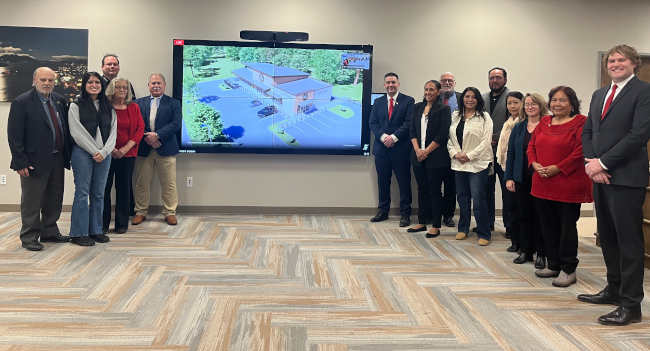
CLEARLAKE, Calif. — The Clearlake City Council last week unanimously approved a new agreement with the Elem Indian Colony in support of the tribe’s new travel center development in the city.
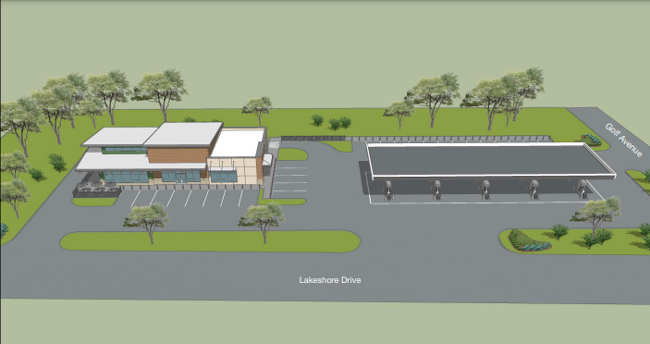
The project will be built on a 1.1-acre property consisting of two parcels at 14825 and 14855 Lakeshore Drive, near Redbud Park and formerly the site of Mario’s Restaurant and Silk’s Bar and Grill.
City officials and the tribe were complimentary of each other and their efforts to work together, and both said the project will be economically beneficial for the community.
The tribe’s leadership said at the Dec. 7 council meeting that they worked hard to understand the city’s concerns and to be consistent with the city’s vision.
Blue Stone Consulting Group, working on behalf of the tribe, reported that the building style is “modern mountain design,” with high ceilings and natural light.
It will feature a 4,650-square-foot building with a convenience store, an in-house food facility with offerings including sandwiches and salads plus fresh coffee, office space and an all-access drive through, along with both indoor and outdoor eating areas.
While there will be a tobacco stand, the tribe has agreed to follow California regulations for tobacco sales, which it is not required to do.
There also will be a total of 20 gas pumps — of which four will be for diesel fuel — and 10 dispensing stations, plus four to six electric vehicle charging stations.
In an effort to make the project as green as possible, the design includes solar panels on the top of the gas station.
The tribe is ready to break ground as soon as possible. Construction is expected to be completed in January or February of 2025.
Elem purchased the property in 2019 from receivership. In February, the Bureau of Indian Affairs approved Elem’s request to place the land in trust, which means the tribe does not have to pay taxes on operations or seek city approval on the project.
City Manager Alan Flora said the city had concerns about the project, especially with it being in trust. “The city has essentially no jurisdiction over that sovereign land.”
However, in spite of those concerns, he said the city and the tribe have developed what he called “a very strong relationship.”
Flora said the tribe came to the city and wanted to address its concerns, including how it might impact city operations. That “positive and collaborative way” of responding to the city’s concerns resulted in the memorandum of agreement before the council that night.
The agreement covers several key areas, among them, tax revenue, which the tribe is not required to pay because transactions on tribal lands are not subject to federal, state or local taxes.
Despite that, Flora said Elem has agreed to pay the city an equal amount of tax receipts that would be generated by the city’s two tax measures, Measure P, which supports the police department, and Measure V, the road sales tax. The tribe will contribute 60% of the city’s sales tax rate, increasing it by 10% annually until it reaches 100%.
Flora said the tribe is doing everything it can to make the travel center consistent with city ordinances and plans, despite no obligation to do so. The city’s engineers, which are working on a project on Lakeshore Drive, are sharing their information with the tribe and their team.
Although the city does not have permitting jurisdiction over the project — projects on tribal lands are not subject to review and approval for building, grading and other types of permits — Elem has agreed to submit the plans to the city for review, comment and recommendation.
Flora said the Clearlake Police Department will provide law enforcement services for the property until such time as the tribe decides to develop a tribal police force.
In response to concerns about tobacco use, the tribe agreed to adopt the state ban on flavored tobacco sales.
Other key aspects of the agreement include Elem’s pledge to establish a public benefit fund with an initial grant of $100,000 to assist with projects benefiting the community at large. Two city and two tribal representatives will jointly determine the projects to support.
The agreement also includes a tribal/city advisory committee. Flora said the tribe asked the city to participate in that committee, which also will include two representatives each from the city and tribe in order to have regular discussions and work through any issues that might arise.
“It’s been a very positive working relationship,” said Flora, adding he was proud of how they came together.
Elem Chairman Agustin Garcia said Elem is a historic tribe both in Clearlake Oaks and in Clearlake.
The other land the tribe has in trust is in Clearlake Oaks, next to the Sulphur Bank mercury mine, which is a federal Superfund site that is about to undergo a major cleanup.
Garcia said being next to that mine has devastated the tribe, adding it’s hard to build on contaminated land.
“We sought out other lands. We made a choice to purchase this property here in the city of Clearlake,” Garcia said.
He said the tribe has had a great experience working with Flora, with everything falling into place.
“We want to settle whatever notion that you have that we're just going to be one of these tribes that’s going to come in, develop this site and not work with you guys. That's not going to happen,” Garcia said, noting the agreement nails down everything the tribe was there to pledge they would do.
He added, “It’s a great steppingstone because we plan to invest in the city.”
His mother, Sarah Garcia, has been Elem’s secretary/treasurer since she was 21 years old. She recounted traveling with her father since she was a teenager, and how that the tribe didn’t get electricity at its Clearlake Oaks rancheria until 1965, and waited until 1973 to get running water.
She said she’s thrilled with the new clinic — an apparent reference to Lake County Tribal Health’s new facility that opened in Clearlake earlier this year — and now the travel center.
“Now I can begin to think about retiring and let the younger generation move forward,” she said.
Council members lauded the tribe for their effort to work with the city and for investing in the community.
“We really appreciate the collaborative effort to get this project off the ground. It’s a good thing for both. We really appreciate that,” said Councilman Dirk Slooten.
“Thank you. Thank you for investing in our shared community. Even if we didn't have an agreement, that investment alone means so much to the people here,” said Councilman David Claffey.
“The visuals are stunning,” Claffey added, noting he’s going to try to get Flora to include modern mountain design for the City Hall upgrades.
Councilman Russell Cremer moved to approve the agreement, with Councilwoman Joyce Overton seconding and the council approving it 5-0.
Following the vote there was a round of applause from the chambers.
In a following statement issued jointly by the tribe and the city, Elem Chair Agustin Garcia said “this agreement is the culmination of the tribe's desire for economic development in the city the tribe calls home. We appreciate the city’s commitment to work collaboratively with us to create a project that reflects both the tribe’s and city’s vision for Clearlake and Lake County that will stand for generations. The agreement also reflects what can happen when all issues are placed on the table and both parties work toward common goals. The Elem Indian Colony thanks city leaders for their support and trust in approving the agreement.”
Flora said that the city “can’t express enough how much we appreciate the interest in benefiting the community by Elem tribal leadership throughout this process.”
He added, “In many cases, negotiations like this are combative and end up in court. But Elem considered our needs and concerns and addressed them in a meaningful way. We see this as a long and cooperative relationship with Elem that will benefit the Clearlake community and support tribal sovereignty.”
The situation with Elem stands in contrast to the city’s legal challenges with the Koi Nation, a Lower Lake tribe that has sued over the city’s 18th Avenue improvement project and the Burns Valley sports complex. Last month a judge ruled against the Koi’s 18th Avenue suit and earlier this week denied the Koi a continued stay on that project.
Email Elizabeth Larson at

- Details
- Written by: Lake County News reports
Those who stayed in the Cobb Mountain area are working through the Cobb Area Council, Seigler Springs Community Redevelopment Association and other organizations towards economic development, a return of tourism, “more local fun” and attracting new residents.
Giant Step, a new local nonprofit, has organized the return of a much-beloved Cobb tradition, a holiday lights contest and tree lighting. A list of participating addresses and voting forms are available at Cobb Mountain High Coffee and Books, as well as Cobb Mountain Pizza, both located on Highway 175 in Cobb’s Meadow Springs shopping center.
The public is invited to a festive announcement of the winners at a Christmas tree lighting followed by holiday refreshments at Mountain Meadows Golf Course and Venue (corner of Highway 175 and Golf Road, Cobb) on Friday, Dec. 22, starting at 5 p.m.
The event is hosted by Giant Step and Mountain Meadows Golf Course and Venue at 16451 Golf Road.
Cobb Mountain High Coffee and Books, Cobb Mountain Pizza and Young’s Family Wreaths and Centerpieces donated prizes for the Holiday Lights winners (top three best houses).
Cobb Mountain Family Christmas Trees donated a 14’ silvertip for the lighting ceremony.
Giant Step is a Cobb nonprofit providing help for disabled teens as well as activities and events for the Cobb Community. Currently they host a family friendly movie at Mountain Meadow on Friday nights.
Winter brings more than just ugly sweaters – here’s how the season can affect your mind and behavior
- Details
- Written by: Michael Varnum, Arizona State University and Ian Hohm, University of British Columbia
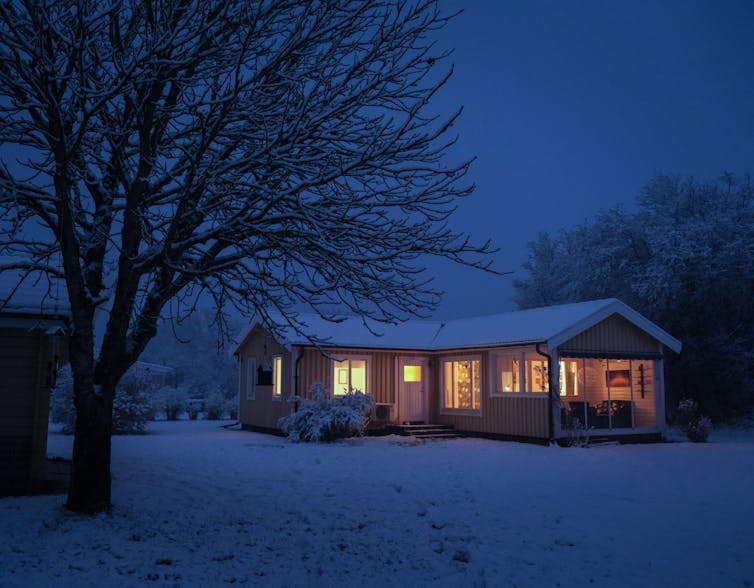
What comes to mind when you think about winter? Snowflakes? Mittens? Reindeer? In much of the Northern Hemisphere, winter means colder temperatures, shorter days and year-end holidays.
Along with these changes, a growing body of research in psychology and related fields suggests that winter also brings some profound changes in how people think, feel and behave.
While it’s one thing to identify seasonal tendencies in the population, it’s much trickier to try to untangle why they exist. Some of winter’s effects have been tied to cultural norms and practices, while others likely reflect our bodies’ innate biological responses to changing meteorological and ecological conditions. The natural and cultural changes that come with winter often occur simultaneously, making it challenging to tease apart the causes underlying these seasonal swings.
With our colleagues Alexandra Wormley and Mark Schaller, we recently conducted an extensive survey of these findings.
Wintertime blues and a long winter’s nap
Do you find yourself feeling down in the winter months? You’re not alone. As the days grow shorter, the American Psychiatric Association estimates that about 5% of Americans will experience a form of depression known as seasonal affective disorder, or SAD.
People experiencing SAD tend to have feelings of hopelessness, decreased motivation to take part in activities they generally enjoy, and lethargy. Even those who don’t meet the clinical threshold for this disorder may see increases in anxiety and depressive symptoms; in fact, some estimates suggest more than 40% of Americans experience these symptoms to some degree in the winter months.
Scientists link SAD and more general increases in depression in the winter to decreased exposure to sunlight, which leads to lower levels of the neurotransmitter serotonin. Consistent with the idea that sunlight plays a key role, SAD tends to be more common in more northern regions of the world, like Scandinavia and Alaska, where the days are shortest and the winters longest.
Humans, special as we may be, are not unique in showing some of these seasonally linked changes. For instance, our primate relative the Rhesus macaque shows seasonal declines in mood.

Some scientists have noted that SAD shows many parallels to hibernation – the long snooze during which brown bears, ground squirrels and many other species turn down their metabolism and skip out on the worst of winter. Seasonal affective disorder may have its roots in adaptations that conserve energy at a time of year when food was typically scarce and when lower temperatures pose greater energetic demands on the body.
Winter is well known as a time of year when many people put on a few extra pounds. Research suggests that diets are at their worst, and waistlines at their largest, during the winter. In fact, a recent review of studies on this topic found that average weight gains around the holiday season are around 1 to 3 pounds (0.5 to 1.3 kilograms), though those who are overweight or obese tend to gain more.
There’s likely more going on with year-end weight gain than just overindulgence in abundant holiday treats. In our ancestral past, in many places, winter meant that food became more scarce. Wintertime reductions in exercise and increases in how much and what people eat may have been an evolutionary adaptation to this scarcity. If the ancestors who had these reactions to colder, winter environments were at an advantage, evolutionary processes would make sure the adaptations were passed on to their descendants, coded into our genes.
Sex, generosity and focus
Beyond these winter-related shifts in mood and waistlines, the season brings with it a number of other changes in how people think and interact with others.
One less discussed seasonal effect is that people seem to get friskier in the winter months. Researchers know this from analyses of condom sales, sexually transmitted disease rates and internet searches for pornography and prostitution, all of which show biannual cycles, peaking in the late summer and then in the winter months. Data on birth rates also shows that in the United States and other countries in the Northern Hemisphere, babies are more likely to be conceived in the winter months than at other times of the year.

Although this phenomenon is widely observed, the reason for its existence is unclear. Researchers have suggested many explanations, including health advantages for infants born in late summer, when food may historically have been more plentiful, changes in sex hormones altering libido, desires for intimacy motivated by the holiday season, and simply increased opportunities to engage in sex. However, changes in sexual opportunities are likely not the whole story, given that winter brings not just increased sexual behaviors, but greater desire and interest in sex as well.
Winter boosts more than sex drive. Studies find that during this time of year, people may have an easier time paying attention at school or work. Neuroscientists in Belgium found that performance on tasks measuring sustained attention was best during the wintertime. Research suggests that seasonal changes in levels of serotonin and dopamine driven by less exposure to daylight may help explain shifts in cognitive function during winter. Again, there are parallels with other animals – for instance, African striped mice navigate mazes better during winter.
And there may also be a kernel of truth to the idea of a generous Christmas spirit. In countries where the holiday is widely celebrated, rates of charitable giving tend to show a sizable increase around this time of year. And people become more generous tippers, leaving about 4% more for waitstaff during the holiday season. This tendency is likely not due to snowy surroundings or darker days, but instead a response to the altruistic values associated with winter holidays that encourage behaviors like generosity.
People change with the seasons
Like many other animals, we too are seasonal creatures. In the winter, people eat more, move less and mate more. You may feel a bit more glum, while also being kinder to others and having an easier time paying attention. As psychologists and other scientists research these kinds of seasonal effects, it may turn out that the ones we know about so far are only the tip of the iceberg.
Michael Varnum, Associate Professor of Psychology, Arizona State University and Ian Hohm, Graduate Student of Psychology, University of British Columbia
This article is republished from The Conversation under a Creative Commons license. Read the original article.