 How to resolve AdBlock issue?
News
- Details
- Written by: Mary Magnuson, The Conversation
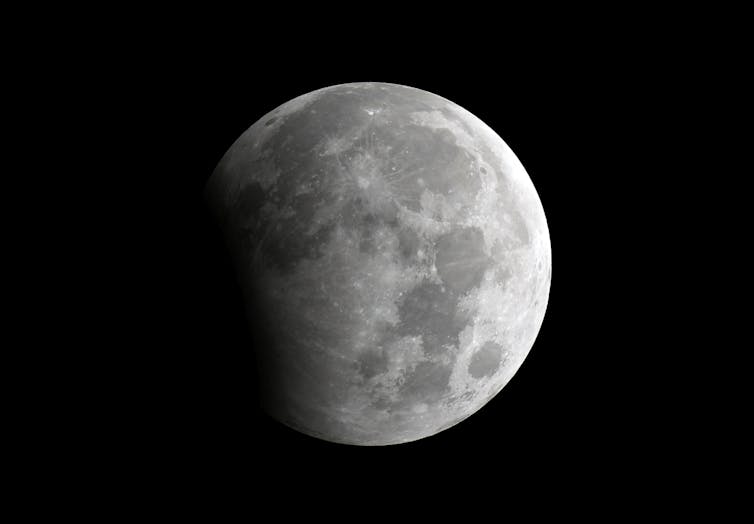
The year 2023 proved a big one for lunar science. India’s Chandrayaan-3 spacecraft landed near the south pole of the Moon, a huge accomplishment for a country relatively new to the space scene, especially after its Chandrayaan-2 craft crashed in 2019.
At the same time, NASA’s been gearing up for a host of Moon-related missions, including its Artemis program. In 2023, the agency gained nine signatories to the Artemis Accords, an international agreement for peaceful space exploration, for a total of 32 countries that have signed so far.
As Georgia Tech’s Mariel Borowitz explains, the U.S. now has widespread bipartisan political support for spacefaring – for the first time since the 1970s – and returning missions to the Moon is the first natural target.
Here are five stories that The Conversation U.S. has published over the past year about lunar exploration, including why people want to go back to the Moon, what Chandrayaan-3 found during its initial foray across the lunar surface and the ever-growing problem of lunar space junk.
1. Why shoot for the Moon?
Missions to the Moon hold potential benefits for a variety of sectors, including commercial, military and geopolitical.
“Ever since humans last left the Moon in 1972, many have dreamed about the days when people would return. But for decades, these efforts have hit political roadblocks,” wrote Borowitz. “This time, the United States’ plans to return to the Moon are likely to succeed – it has the cross-sector support and the strategic importance to ensure continuity, even during politically challenging times.”
While some of these potential uses are incredibly far off – from mining the Moon for resources to sending out military satellites to orbit around the Moon – missions to the Moon in the near term will help inform scientists and stakeholders of future possibilities.
2. Searching for sulfur
India’s Chandrayaan-3 lander touched down on the Moon’s surface, just a few miles away from the lunar south pole, in late August 2023.
Its rover, called Pragyan, took measurements of the lunar surface and found the soil near the south pole contains a surprise – sulfur.
As Jeffrey Gillis-Davis, a physicist at Washington University in St. Louis, wrote, future Moon missions or a future Moon base could use lunar sulfur as an ingredient in everything from fuel and fertilizer to concrete.
3. Water in ice
But sulfur’s not the only resource the lunar south pole could have to offer. For several years, scientists have predicted that the lunar south pole might have water in the form of ice. And Chandrayaan-3’s sulfur discovery gives scientists more insight into how and how recently ice might have formed on the surface.
Comets or volcanic activity could have brought water to the Moon years ago. If volcanic activity is the culprit for water’s appearance, scientists would also expect to see sulfur in higher levels, wrote Paul Hayne, an assistant professor of astrophysical and planetary sciences at the University of Colorado Boulder.
A host of future missions to the Moon, including NASA’s VIPER mission planned for 2024, will continue to investigate where ice could be hiding on the Moon.
4. Moon debris
With all the Moon missions, both current and upcoming, some experts have raised concerns about the increased space junk in the “cislunar space” – or the space between Earth and the Moon and around the Moon.
NASA doesn’t currently track the space junk left behind from its missions, and this lack of oversight has many people worried.
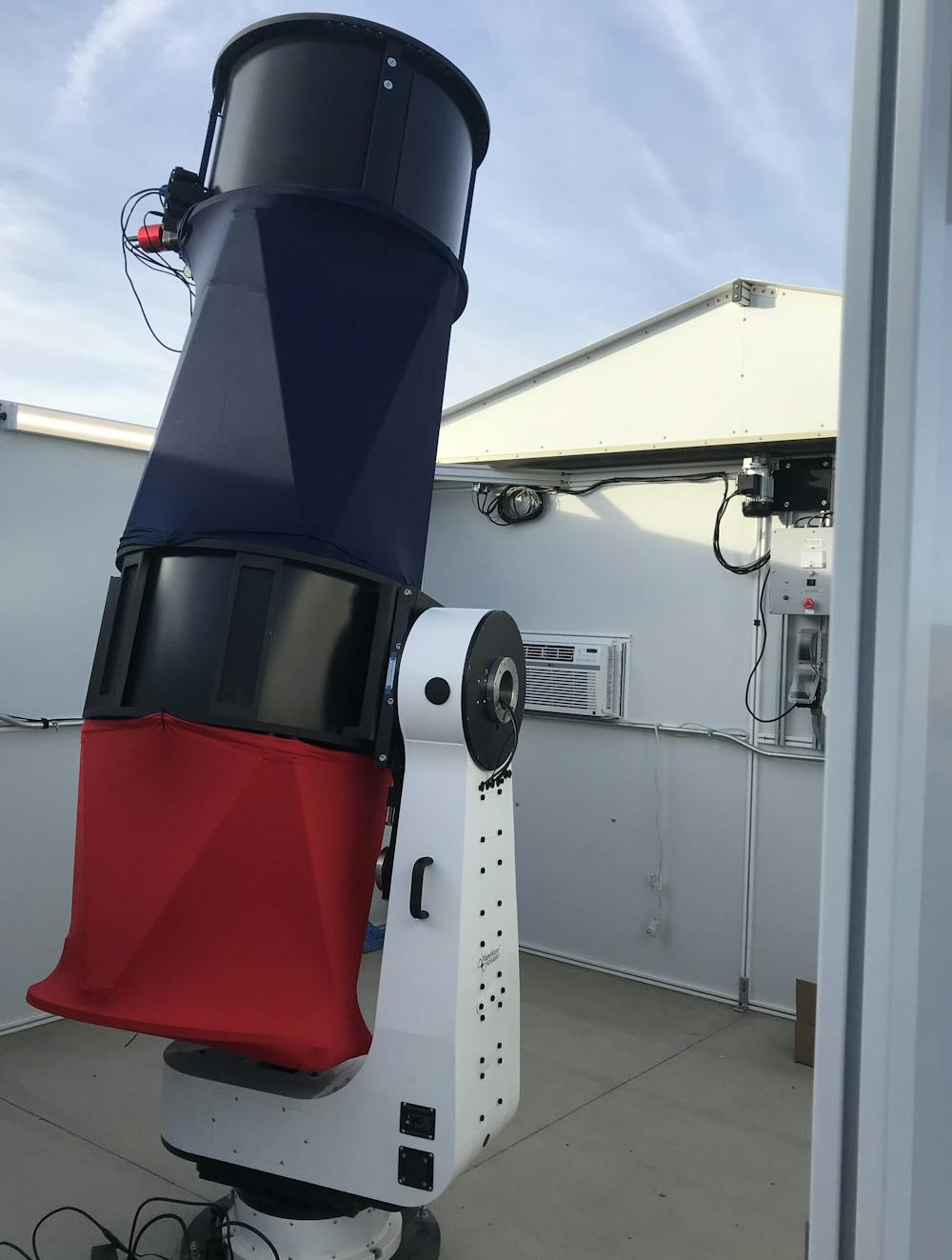
One team at the University of Arizona has started building a catalog of debris left in this space. Team members started off by identifying a few large objects, and as their methods got better, they were able to see objects as small as a cereal box. The team hopes this work will one day improve the sustainability of future lunar missions.
“While there is still a long way to go, these efforts are designed to ultimately form the basis for a catalog that will help lead to safer, more sustainable use of cislunar orbital space as humanity begins its expansion off of the Earth,” writes Vishnu Reddy, a professor of planetary science at the University of Arizona.
5. Future flyers
Early this year, NASA announced who will make up the crew of their Artemis II mission. Set for late 2024, Artemis II will fly by the Moon and test the technology and equipment planned for use in future missions. It will also mark the first time people are close to the lunar surface in over 50 years.

Three of the four crew members have spent time in space, with the fourth having spent lots of time in spaceflight simulations. Each started their careers as a military pilot, just like all the astronauts of the Apollo missions. But this crew represents more racial and gender diversity than the astronauts of the Apollo era.
“Unlike the Apollo program of the 1960s and 1970s, with Artemis, NASA has placed a heavy emphasis on building a politically sustainable lunar program by fostering the participation of a diverse group of people and countries,” wrote Wendy Whitman Cobb, a professor of strategy and security studies at Air University.
This story is a roundup of articles from The Conversation’s archives.
Mary Magnuson, Assistant Science Editor, The Conversation
This article is republished from The Conversation under a Creative Commons license. Read the original article.
- Details
- Written by: Lake County News reports

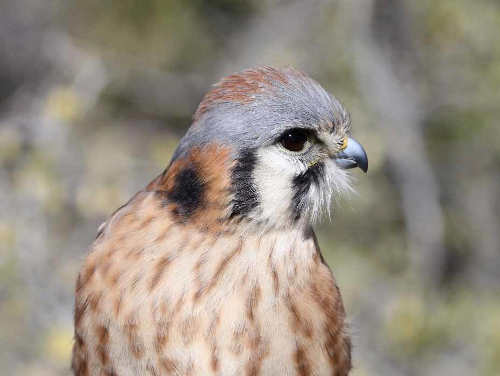
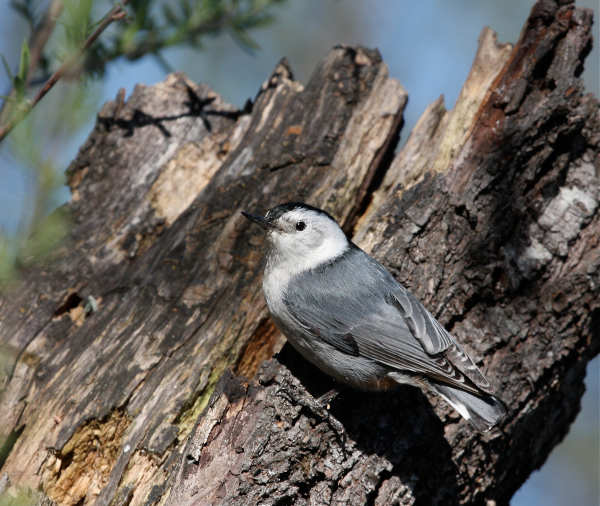
LAKE COUNTY, Calif. — The Redbud Audubon Society will conduct its 49th annual Christmas Bird Count, or CBC, on Saturday, Dec. 16. The Christmas Bird Count is a traditional project of Audubon societies around the county.
Previous participants have been sent information about meeting times and places by the count organizers, Brad and Kathy Barnwell, but new participants are welcome.
They can meet at either Anderson Marsh State Historic Park or Clear Lake State Park at 8 a.m. or may participate in smaller individual groups. Email
Participants are invited to gather at 5 p.m. at Kelseyville Pizza for a “Count Dinner,” hosted by Redbud Audubon.
National Audubon has been holding a Christmas Bird Count for 126 years. The official count period usually starts around the middle of December and ends the first week of January.
Local Audubon Societies can decide what day they conduct their counts within this time frame. Every individual bird and species encountered during the day is recorded.
Each count group has a designated circle of 15 miles in diameter and tries to cover as much ground as possible within a certain period of time.
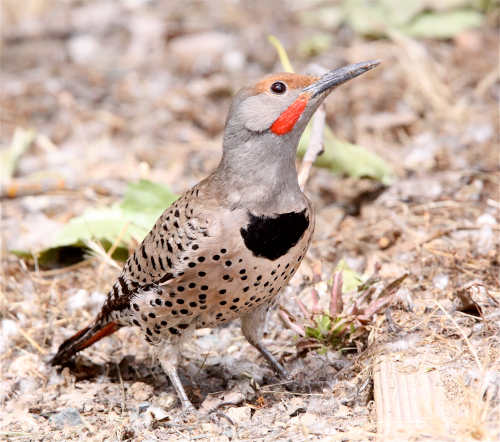
Count volunteers follow specified routes through the designated 15-mile (24-km) diameter circle, counting every bird they see or hear all day. It's not just a species tally — all birds are counted all day, giving an indication of the total number of birds in the circle that day.
The data collected by each count group are then sent to the National Audubon Headquarters in New York and is made available online. Scientists rely on the remarkable trend data of Audubon’s CBC to better understand how birds and the environment are faring throughout North America – and what needs to be done to protect them.
- Details
- Written by: Lake County News reports
“Providing students with more options to receive their education helps to make education more accessible,” said Thompson. “The grant from USDA will help Upper Lake students receive the education they need to live a successful life. I look forward to seeing this grant benefit the students and teachers of the Upper Lake Unified School District.”
“Thank you to Congressman Mike Thompson for being a champion of Lake County education,” said Superintendent Giovanni Annous. “The grant from the Department of Agriculture will help us better serve our students in Upper Lake by providing them with additional means to pursue their education. We look forward to continuing to provide our students with the best opportunity to succeed.”
The grant will be used to equip one hub site and three end-user sites throughout Lake County in north central California with interactive touchscreen computers, teleconferencing software and computer networking equipment.
Instructors at Upper Lake Elementary, Upper Lake Middle School and Upper Lake High School will provide distance learning courses to three locations benefitting 970 students.
The total project cost is $825,840 with ULUSD contributing $107,731.
- Details
- Written by: Lake County News reports
Currently, more than 60 state parks will be participating, with over 70 guided hikes taking place across the state.
The participating state parks include Anderson Marsh State Historic Park and Clear Lake State Park.
Californians and visitors from around the world can hike amongst the gentle redwoods or learn about the geology of the desert or catch a glimpse of bald eagles and other unique wildlife — California has some of the most unique and iconic parks in the country for everyone to explore.
First Day Hikes is a national-led effort that encourages individuals and families to experience, with a seasoned guide, the beautiful natural and cultural resources found in the outdoors and in doing so may inspire them to take advantage of these treasures throughout the year and an individual’s lifetime.
With more than 70 guided hikes taking place in California’s State Park System on Jan. 1, distance and difficulty will vary per hike or activity. Visitors are encouraged to check out details of start times and description of hikes.
This year’s First Day Hikes webpage is more interactive, as the public can search a map of locations by park name, county and region.
Visitors are also able to see the status of the hike and the last time it was updated, and by zooming into the map, they can find hikes taking place near that region of the map. Additionally, the webpage provides information on new hiking opportunities around the holiday.
Most parks require a parking fee for the hikes. However, if visitors have checked out the State Library Parks Pass or have qualified for the Golden Bear Pass, they can enter for free at participating parks.
Additionally, parents of fourth graders are invited to download the California State Park Adventure Pass that allows free entrance to visit park units including Anderson Marsh State Historic Park and Clear Lake State Park. Learn more about these free passes at http://parks.ca.gov/OutdoorsForAll.
As with any outing, it is important for all visitors to recreate responsibly. Below are helpful tips to stay safe during First Day Hikes and all year long:
Know Before You Go: Prior to leaving home, check the status of the park unit you want to visit to find out what restrictions and guidelines are in place. Have a backup plan in case your destination is crowded. Stay home if you are sick.
Play It Safe: Find out what precautions you should take when exploring the outdoors, especially if this is your first time visiting the State Park System. For example, make sure to dress in layers, bring plenty of snacks and water, and wear appropriate hiking shoes.
Leave No Trace: Leave areas better than how you found them by staying on designated trails and packing out all trash. Do not disturb wildlife or plants.
For more safety tips, please visit http://parks.ca.gov/SafetyTips.
Visitors can also use apps to stay safe and enhance their experience in the outdoors with:
what3words: Use the what3words app to communicate precise locations within any of the 280 state parks using just three words. This tool aids dispatchers in emergency situations, enabling assistance to those in need. Share locations with family and friends, and provide directions to events, trails or campsites using this convenient app. To learn more on how the app works, visit parks.ca.gov/what3words.
OuterSpatial: Discover the ultimate guide to California's state parks with the OuterSpatial app. Navigate through interactive maps, receive real-time updates and stay connected with fellow outdoor enthusiasts. Enhance your exploration by monitoring visits, completing challenges like the Passport to Your California State Parks and sharing memorable experiences.
Visitors are encouraged to share their experiences on social media using the hashtags: #HikeInto2024, #FirstDayHikes, #HikeWithCAStateParks and #CAStateParks.