 How to resolve AdBlock issue?
News
- Details
- Written by: Lake County News reports

NORTHERN CALIFORNIA — At a community meeting in Woodland on Wednesday hosted by the Bureau of Land Management and the USDA Forest Service, attendees called on President Joe Biden to expand Berryessa Snow Mountain National Monument.
Nada Wolff Culver, principal deputy director at the Bureau of Land Management, Karen Mouritsen of BLM California, and Wade McMaster, Mendocino National Forest supervisor, representing Regional Forester Jennifer Eberlien attended the meeting and heard from over 75 speakers who unanimously expressed their support.
Attendees included tribal leaders, local elected officials, scientists, conservation advocates, outdoor recreationists, and local residents and community members.
Over 88,000 supporters have signed a petition urging President Biden to use the Antiquities Act to expand the monument.
The proposed expansion area - Molok Luyuk - is located on the eastern edge of the existing monument and includes 13,753 acres of BLM-managed public lands in Lake and Colusa County.
Expanding the monument will help safeguard lands that are sacred to the Yocha Dehe Wintun Nation, and preserve important wildlife corridors and the area’s distinct biodiversity.
“Many of the plant and animal species within Molok Luyuk are traditionally important to the lifeways of the Patwin people, and we consider their protection and stewardship to be part of our sacred responsibility to the land,” said Yocha Dehe Tribal Chairman Anthony Roberts.
The Yocha Dehe Wintun Nation, which is requesting the expansion, has a long and significant connection to Molok Luyuk, stretching back thousands of years. The ridge includes areas where religious ceremonies are practiced and sites that were central to vital trading routes.
A key goal of this effort is also to establish co-management with federally recognized Tribes and to return to an Indigenous name for these lands. Molok Luyuk is Patwin for “Condor Ridge” and is a name provided by the Yocha Dehe Wintun Nation. Currently, the area is referred to as “Walker Ridge.”
“Molok Luyuk is a special and sacred place for area tribes and for many local residents who enjoy recreation activities like hiking and mountain biking,” said Lake County Supervisor E.J. Crandell, a member of the Robinson Rancheria Tribe. “The natural beauty of our home also drives tourism, which is key to the economic vitality of the region. Protecting these beautiful lands would be a gift to future generations.”
Berryessa Snow Mountain National Monument stretches from Napa County in the south to Mendocino County in the north, encompassing 330,780 acres of public lands managed by the Bureau of Land Management and the U.S. Forest Service.
President Barack Obama designated the national monument in 2015 using the Antiquities Act, a 1906 law that grants U.S. presidents the ability to designate federal public lands, waters, and cultural and historical sites as national monuments.
Earlier this year, elected officials, community leaders, and residents joined Senator Padilla, the late Senator Dianne Feinstein, Representative John Garamendi, Representative Mike Thompson and the Yocha Dehe Wintun Nation in calling on President Biden to expand Berryessa Snow Mountain National Monument using the Antiquities Act.
Northern California tribes, local elected officials, businesses, neighboring landowners, and over 300 scientists support the proposed expansion.
Supporters consider the Wednesday meeting a critical step forward in the effort to protect Molok Luyuk and follows a September visit to the area from Interior Secretary Deb Haaland and Bureau of Land Management Director Tracy Stone-Manning.
“Molok Luyuk is a gem of rich cultural heritage and history, diverse wildlife and rare plants, stunning natural beauty, and accessible recreational activities,” said Sandra Schubert, Executive director of Tuleyome, leader of a local conservation organization. “We are deeply grateful to BLM Deputy Director Nada Culver and Wade McMaster of the USFS for spending the time to listen to our community's desire to protect these special lands right in their backyard. We urge President Biden to expand the existing monument and permanently protect the entirety of Molok Luyuk.”
The proposed expansion area includes oak woodlands, rocky outcroppings, wildflower meadows, the largest known stand of McNab cypress, and dozens of rare plant species. Protecting the landscape would help the state of California and the Biden Administration meet their shared goals of protecting 30% of lands and waters by 2030.
“As an avid OHV recreationist, I strongly support expanding Berryessa Snow Mountain National Monument to include Molok Luyuk,” said Don Amador, former chair of the CA State Park Off-Highway Motor Vehicle Recreation Commission and one of three OHV users who spoke at the meeting in favor of the expansion. “The permanent protection of Molok Luyuk will improve the management of these lands and increase public access to recreation opportunities. This is a win-win for our community and I add my voice in support of President Biden using the Antiquities Act to expand the monument.”
To learn more about this effort and to sign a petition in support of the expansion of the Berryessa Snow Mountain National Monument, visit www.expandberryessa.org.
- Details
- Written by: LAKE COUNTY ASSOCIATION OF REALTORS
Over the month of October, a total of 78 single family homes were sold through the multiple listing service, compared to 65 in September and 83 sold a year ago during the month of October 2022. These include traditionally built “stick-built” houses as well as manufactured homes on land, the association, or LCAOR, reported.
There were nine sales of mobile homes in parks in October, compared to six in September and seven sold during the month of October 2022.
For bare land (lots and acreage) 24 were sold in October, which is the same number of closed sales in September and lower than the 27 during October 2022.
As of the end of November, there were 427 “stick built” and manufactured homes on the market right now. If the rate of sales stays the same at 78 homes sold per month, there are currently 5.47 months of inventory on the market at the moment. That means that if no new homes are brought to the market for sale, in 5.47 months, all of these homes would be sold and there would be none available.
Less than 6 months of inventory is generally considered to be a “sellers’ market” while more than 6 months of inventory is often called a “buyers’ market.”
October’s data is a shift from September’s, where more than six months of inventory were available.
Agents are reporting a drop in requests for property tours, and fewer clients writing offers, which is consistent with the national home sales data.
The total percentage of homes bought for all cash in October was as follows: 31% (compared to 45% for September and 25% for October 2022); 32% were financed by Fannie Mae or Freddie Mac (“conventional loans”) compared to 26% for September and 42% for the October 2022; 23% were financed by FHA (the same as September as well as for October 2022); 6% were financed by the VA or CalVet (unchanged from September and compared to 5% for October 2022); 3% had other financing such as private loans, USDA, or seller financed notes (compared to 0% in September, and compared to 1% for October 2022).
There is a new entry for buyer financing: 1% of the sales had an assumable loan, meaning that the buyers were able to take over the existing financing, which was probably with an extremely low interest rate.
The homes in October sold at an average of 96% of the asking price at the time the property went under contract, but an average of 93% when compared to the original asking price when the property first came on the market.
This means that the asking home prices had been reduced from their original asking prices on the homes that sold before they actually sold. (In September homes sold for 97% of the asking price at the time the property went under contract, and 92% of the original asking price.)
A year ago in October, homes were selling at 97% of the asking price at the time the property went under contract and 89% when compared to the original asking price.
The median time on the market in October was 36 days, compared to 40 days in September and 37 days in October 2022.
The median sale price of a single family home in Lake County in October was $318,750, which is higher than the $249,000 median sale price for September but lower than the median sale price of $330,000 during October 2022.
This indicates that in October, the higher priced homes were selling in greater numbers to bring the median sale price up compared to September 2023, but in October 2022 the higher priced homes were selling at an even higher clip.
The median asking price of homes on the market right now is $372,000, which is a slight drop from October's $375,850.
In October, 40% of homes sold had seller concessions for an average concession of $9,069; these numbers are almost identical to September 2023, with 40% of homes sold having seller concessions for an average concession of $9,033.
In October 2022, 45% of homes sold had an average seller concession of $9,035.
Also in October, average concessions were higher for FHA ($9,749), while cash sales showed an average concession of $3,570, and buyers with a conventional loan had an average concession of $2,704.
- Details
- Written by: Nicholas Dagen Bloom, Hunter College
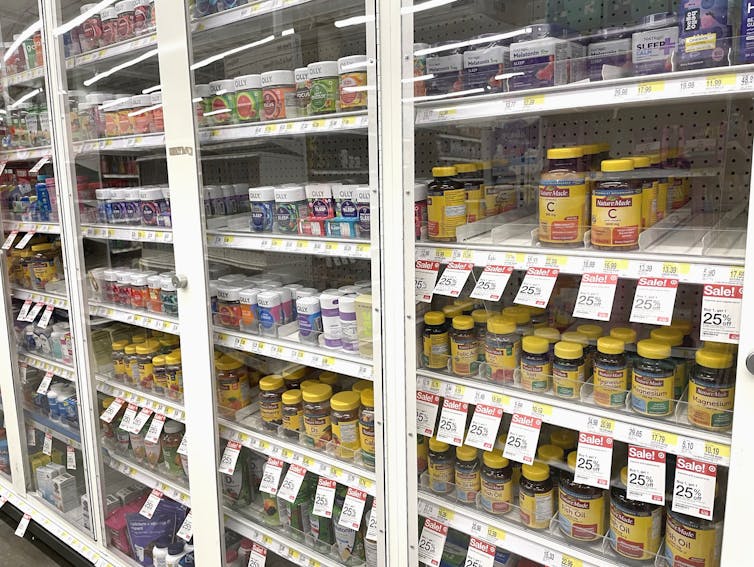
Holiday shopping is in full swing, but city dwellers may have fewer options for buying in person than they did a few years ago. That’s because many large chain stores are pulling out of central cities.
This trend has been building for several years. Target made national headlines in 2018 when it closed its store in a predominantly Black Baltimore neighborhood after just 10 years of operation. COVID-19 sped things up by cutting foot traffic in city centers and boosting online commerce.
Target has closed additional stores in Chicago, Milwaukee, New York, San Francisco, Seattle and Portland, Oregon. Walmart, CVS, Rite Aid and Walgreens have also closed many urban stores.
Closures have spread to many suburbs and small towns. Retailers saddled with high debt, overexpansion, shoplifting losses, slumping sales and online competition are shedding stores fast. But this contraction lopsidedly affects city dwellers, who often lack the shopping options and price competition suburbanites enjoy.
Many news reports, particularly from conservative outlets, have blamed lawlessness and weak leadership by progressive city governments. In my view, however, there’s another important factor: flawed corporate strategies.
The self-service revolution
The concept of letting shoppers serve themselves dates back to 1879, when Frank W. Woolworth opened his first store in Utica, New York. Its successors grew into the F.W. Woolworth chain of “five-and-dime” discount dry goods stores, which became fixtures of hundreds of cities, suburbs and small towns in the early 20th century.
Food stores followed suit in the early 1900s, beginning with the Alpha Beta chain in California in 1914 and Piggly Wiggly in Tennessee in 1916. Instead of having clerks gather customers’ orders from store shelves, these stores let shoppers loose in the aisles, then allowed them to pay at the end of their visit.
This approach seeded the meteoric rise of “big box” stores like Walmart and Target in the mid-20th century. With their low manufacturing costs, streamlined logistics, minimally staffed stores, national advertising and vast inventories, big-box chains drove many small retailers out of business – and most Woolworth stores, too.
Self-service came to rule the suburbs, where big chains could build mega-stores with plenty of parking. But they were rare in central cities for most of the 20th century, except for a few affluent enclaves, such as West Los Angeles or Chicago’s North Side. Generally, these chains avoided poor neighborhoods and many downtowns altogether.
As shoppers increasingly gravitated to suburban malls, many urban neighborhoods became retail deserts, with few vendors meeting local needs. Those that endured, often run by small-scale entrepreneurs, typically were businesses that offered a single type of product, such as grocery stores, delicatessens or pharmacies.
Chains discover downtowns
Harvard management professor Michael Porter drew attention to the lack of retail services in densely populated urban neighborhoods in a seminal 1995 article, “The Competitive Advantage of the Inner City.” Economic development, Porter argued, was key to revitalizing inner cities – and these zones housed a lot of potential customers.
“Even though average inner city incomes are relatively low, high population density translates into an immense market with substantial purchasing power,” Porter wrote. “Ultimately, what will attract the inner city consumer more than anything else is a new breed of company that is not small and high-cost but a professionally managed major business employing the latest in technology, marketing, and management techniques.”
Chains of many kinds began to rediscover the central city market in the early 2000s. Tax breaks and subsidized redevelopment projects often greased the wheels. Urban gentrifiers were reliably drawn to new urban chain stores like Target, Walmart and Whole Foods.
Many small retail shops now faced a juggernaut of national chains. One example was independent pharmacies: Between 2009 and 2015, 1 in 4 urban pharmacies in low-income neighborhoods closed.
And chain stores often failed to generate major benefits for their new neighborhoods. Employees had few chances for advancement beyond minimum-wage hourly work. Clustering of chain stores in prosperous neighborhoods and business districts failed to address “food deserts” in impoverished areas.
Broken big boxes
Certain qualities that made chains so successful – national sales strategies, self-service stores and brand awareness – are proving to be liabilities in today’s more complicated and divided urban context.
Retail executives and their trade associations have cited excessive shoplifting losses and weak law enforcement as factors in urban store closures, even though they have conspicuously failed to provide shoplifting data by location. There are signs, moreover, that shoplifting is receding, except for in a few large cities like New York.
In my opinion, there are three reasons why city chain stores are closing at such a high rate compared with those in suburbs.
First, despite job recovery in many cities since the pandemic, low-income urban households remain in crisis, with high rents and inflation driving up the cost of essentials. According to the nonprofit Brookings Institution, 9.6% of suburban residents lived in poverty in 2022, compared with about 16.2% in primary cities. Widespread poverty in a city like Baltimore, for instance, is reflected in the concentration of food banks on the west and east sides.
Less disposable income, compounded by shoplifting losses, can lead to store closures – especially since national chains like Target and Walmart expect the dollar value of sales from stores that have been open for more than a year to increase steadily over time.
Second, urban chains clustered too many of their own branches close together or too near other chains – usually in high-income residential or business districts. Manhattan below 96th Street is a clear example of this pattern. With affluent customers shifting to online shopping, and reduced foot traffic overall thanks to remote work, this aggressive strategy has failed.
Third, widely distributed media images of rampant shoplifting send a message at odds with these chains’ powerful brand images of order, safety and standardization. A small but rising share of shoplifting incidents since 2019 have involved assaults or other crimes. These events have the potential to scare executives concerned about employee lawsuits. Chains want urban locations but not “urban” reputations.
Retail flight
Large retail chains have finally figured out that cities aren’t suburbs. Those that remain are adding staff, scaling back self-checkout, checking receipts at exits and locking down higher-priced goods – essentially, abandoning the self-service model. However, these costly measures won’t bring back online-addicted shoppers or daily commuters, nor will they put more money in struggling consumers’ pockets.
Responding to retail association pressure, some city and state governments are imposing stricter punishments for shoplifting and cracking down on black-market vending on sites like Amazon and eBay. However, it isn’t clear that this get-tough approach can or should rescue the big-box model, since these stores failed to create safe, secure shopping environments in the first place.
As I see it, the urban chain store implosion raises questions about whether suburban-style retail really does much for cities. These stores are mediocre job creators, undercut local entrepreneurs, often pay relatively low property taxes and build ugly parking lots. They also don’t provide the kind of “eyes on the street” local security that small-scale shopkeepers do. In fact, their parking lots and open aisles seem to attract disorder.
Shoehorning suburban-style stores into urban neighborhoods now looks like a Band-Aid for much deeper urban problems. In my view, city leaders would do better to focus on building local capacity and protecting smaller stores that usually have greater local wealth-building potential, more reasonable growth expectations and the kind of personal service that naturally deters shoplifting.
Nicholas Dagen Bloom, Professor of Urban Policy and Planning, Hunter College
This article is republished from The Conversation under a Creative Commons license. Read the original article.
- Details
- Written by: Elizabeth Larson

LAKE COUNTY, Calif. — Lake County’s latest crop report shows the continued dominance of winegrapes, with cannabis numbers included in the report for the first time.
Agricultural Commissioner Katherine VanDerWall presented the new report to the Board of Supervisors at its meeting Tuesday morning.
For Lake County, which has agriculture among its key industries, the report gives an in-depth view of top crops, valuations and changes in acreage.
The estimated gross production value for agriculture in Lake County in 2022 totaled $107,098,745, a 28% increase from 2021. VanDerWall said nursery and timber production was down and there were no participants in industrial hemp; in 2021, there had been three hemp growers and eight acres harvested.
New this year was the first-ever inclusion of cannabis-related statistics, which while basic are meant to be a starting point for further information and study in the coming year, VanDerWall told the board.
That cannabis insert did not give values for the county’s crop. It represented the square footage for both mixed light and outdoor cultivation, information that VanDerWall thanked the tax collector and Community Development Departments for helping the ag department gather.
VanDerWall also looked back through old crop reports over 50 years to offer a comparison of how Lake County’s agriculture and its main commodities have changed over the years.
Looking at the main commodities over the past five decades, VanDerWall said that in 1972, there were 7,025 acres of pears, 270 acres of winegrapes, 9,643 acres of walnuts, 181,022 acres of field and seed crop — which includes pasture, hay, grain crops — and 9,505 head of cows and calves.
In 2022, pears were down to 1,376 acres, winegrapes had grown to 10,987 acres, walnuts totaled 3,485 acres, field and seed crops were at 91,150 acres, and there were 1,624 heads of cattle and calves.
VanDerWall’s report showed that, last year, the top five commodities by value were as follows:
1. Winegrapes: $84,756,086; increase of 43% from 2021. The total tonnage was 45,637 and the total grape acreage was 10,987 acres.
2. Pears: $16,286,443; decrease of 8%. The total tonnage was 16,371 and total pear acreage was 1,375.5 acres.
3. Field and seed crops: $2,294,500; 28% increase.
4. Cattle and calves: $1,509,610; 5.8% increase.
5. Miscellaneous livestock (goats, sheep, hogs, meat birds, etc.): $763,354; 6.4% decrease.
VanDerWall reported that there were increases in livestock and poultry products, 41%; livestock production, 11%; and vegetables, 20%.
There were decreases in walnuts, 65%; nursery production, 45%; and timber production, 91%.
For the next crop report, VanDerWall said her office is looking forward to working with the cannabis industry to expand on the data that we’re going to include and provide. She hopes to mirror traditional agriculture with reporting on production values and different categories, rather than just square footage.
The 2022 cannabis production in Lake County totaled 330,758 square feet, or 7.6 acres, for mixed light cultivation and 7,757,765 square feet, or 178 acres, for outdoor cultivation.
Supervisor Michael Green said that, although it’s bare bones, he was excited to see the cannabis information in the crop report, noting it’s a first step.
Green said he doesn’t know how other industries report, but he hoped the cannabis industry would help with getting that information.
Noting the size of the acreage, he said he would like to see the numbers higher, adding that Lake County’s discretionary use permit process has made this a slow growth industry.
He said he would love to see future reporting formatted so that there can be comparisons to other crops and to signal that cannabis is not out of control, as some have suggested it is.
“It is just a fraction of acreages that are devoted to traditional crops in this county and probably will remain that way for some time,” he said.
VanDerWall noted that her office is doing surveys and reaching out to growers, and so they’re reporting the information they can get.
Supervisor Bruno Sabatier said it’s difficult to track cannabis because there are so many ways it’s sold. He said he’s looking forward to seeing what additional information VanDerWall can get in the future.
VanDerWall’s report also showed that pest detection activities resulted in no trapping of key pests, ranging from Mediterranean fruit fly to European grapevine moth and vine mealybug, among numerous others.
During public comment at Tuesday’s meeting, Eric McCarrick, vice president of the Lake County Cannabis Alliance, thanked the county for the numbers, adding she was glad to see cannabis being integrated into the annual report.
Regarding the crop acres for cannabis, she said it’s only about 1% of winegrapes.
Sabatier moved to approve the crop report as presented, with Vice Chair Moke Simon seconding and the board approving it 5-0.
Email Elizabeth Larson at
2022 Crop Report by LakeCoNews on Scribd