 How to resolve AdBlock issue?
News
This survey was conducted from May 1 through May 8 and results include answers from 4,605 respondents.
The survey was emailed out to constituents via Thompson’s mail records list as well as circulated via press reports and Thompson’s social media accounts. Respondents were chosen by self-selection.
“Despite social distancing guidelines that keep us apart, I want to ensure I am doing everything I can to connect with people in our community and ensure their needs are met during this crisis,” said Thompson. “That’s why I launched my Coronavirus Relief Survey and why I am glad to have input from more than 4,000 people in our district.”
He added, “The results are clear – people want more support from the federal government. Nearly everyone polled supports expanding the programs started in the CARES Act, such as the Paycheck Protection Program and the expanded unemployment insurance program. The vast majority also favor a cautious approach to opening up our community to ensure the health and safety of our neighbors and friends. Know that these results will inform my continued work to bring Federal relief back to our district.”
Full results of Thompson’s Coronavirus Relief Survey are as follows.
Have you been hurt financially by the COVID-19 pandemic?
Yes, somewhat: 43.8%
No, not at all: 30.2%
Yes, very much: 26%
Have you received a stimulus payment?
Yes: 42.3%
No, but I'm expecting a payment: 30.5%
No, I'm not eligible: 21%
No, the IRS website is unable to find my information: 6.3%
If yes, have you experienced any issues receiving the amount for which you are eligible? If you answered no to the previous question, skip this question.
No: 76.5%
Not sure: 14.9%
Yes: 8.7%
Which CARES Act programs (if any) have helped you or your family?
Stimulus payment: 35.1%
None: 33.8%
Expanded unemployment insurance: 10.7%
Small business assistance (PPP, EIDL, etc.): 7.1%
Student loan relief: 4.7%
Not sure: 3.9%
Mortgage forbearance: 3.2%
Other: 1.7%
Which CARES Act programs (if any) do you think should be extended or increased?
Small business assistance (PPP, EIDL, etc.): 22%
Expanded unemployment insurance: 21%
Stimulus payment: 16.8%
Student loan relief: 15.6%
Mortgage forbearance: 15.6%
Not sure: 3.3%
Other: 3%
None: 2.6%
Are you waiting to hear back on any CARES Act relief you have applied for?
No: 65.9%
Yes, waiting for information or a check from the IRS: 15.1%
Yes, waiting for information on unemployment benefits: 10.4%
Yes, waiting to hear back on a small business loan: 8.6%
How would you like to see the “re-opening” of our communities play out?
More cautiously to prioritize protecting public health: 69.3%
More quickly to prioritize getting people back to work: 23.9%
Not sure: 3.8%
Other: 3%
Do you think Congress should provide more funds to help schools, hospitals, paramedics, police departments, and other services in future coronavirus legislation?
Yes: 74.8%
Not sure: 12.9%
No: 12.2%
Thompson represents California’s Fifth Congressional District, which includes all or part of Contra Costa, Lake, Napa, Solano and Sonoma counties.
The Institute for Health Metrics and Evaluation, or IHME, is an independent global health research organization at the University of Washington School of Medicine. During the COVID-19 pandemic, the institute has released ongoing projections as Lake County News has reported.
IHME’s updated death projections total 137,184 cumulative COVID-19 deaths – the estimate range is from 102,783 to 223,489 – through the beginning of August. This follows the Institute’s May 4 forecast of 134,475 deaths.
“The increase is explained primarily by people’s movements, as captured in anonymous mobility data from cell phones,” said IHME Director Dr. Christopher Murray. “We’re also seeing fewer deaths expected in some states; however, we’re now forecasting slower downward trajectories in deaths after states hit their peaks in daily deaths.”
Murray noted that IHME’s models are not yet predicting a resurgence or “return to exponential growth” of the epidemic in the US.
IHME said its forecasts will change as it acquires and analyzes new data. In addition, the organization’s modeling assumes that mandates currently in place will stay in place until infections are minimized.
Other positive indications come from increasing testing, the presumption that those testing positive are self-isolating, as well as increases in temperature.
IHME has found that when the outdoor temperature increases 1 degree Celsius, there is evidence the rate of virus transmission drops between 2 and 3 percent.
The findings also show that, over the last few weeks, five states – Montana, North Dakota, Minnesota, South Dakota, and Georgia – have seen at least a 20 percentage point increase in mobility patterns.
In addition, 13 states have experienced between a 15 and 20 percentage point increase: Alabama, Alaska, Idaho, Iowa, Kansas, Louisiana, Mississippi, Ohio, Oklahoma, South Carolina, Tennessee, Wisconsin and Wyoming.
“While at least some of these patterns may be related to formal easing of social distancing policies, this upward trend in movement began in several places long before state-level mandates were relaxed,” Murray said. “Unless and until we see accelerated testing, contact tracing, isolating people who test positive, and widespread use of masks in public, there is a significant likelihood of new infections.”
Among other new findings:
– New York: Forecasting 31,620 deaths (estimate range of 30,105 to 33,954) through August 4, down from May 4 projection of 32,132 deaths
– Michigan: Forecasting 6,217 deaths (estimate range of 5,394 to 8,036) through August 4, down from May 4 projection of 7,080 deaths
– California: Forecasting 6,086 deaths (estimate range of 4,187 to 9,855) through August 4, up from May 4 projection of 4,666 deaths
– Texas: Forecasting 2,567 deaths (estimate range of 1,513 to 5,487) through August 4, down from May 4 forecast of 3,632
– Florida: Forecasting 5,440 deaths (estimate range of 3,027 to 11,592) through August, up from May 4 projection of 3,971 deaths
– New Jersey: Forecasting 14,752 deaths (estimate range of 12,255 to 19,594) through August 4, down from May 4 projection of 16,044 deaths
– Georgia: Forecasting 3,596 deaths (estimate range of 2,139 to 7,078) through August 4, down from May 4 projection of 4,913
IHME’s current forecasting lasts through Aug. 4.
Subsequent projections likely will extend into October and will include potential effects of students returning to school.
The new death projections for the US and all states are available in the Institute’s COVID-19 data visualization at https://covid19.healthdata.org/united-states-of-america .
The board will meet virtually beginning at 9 a.m. Tuesday, May 12, in the board chambers on the first floor of the Lake County Courthouse, 255 N. Forbes St., Lakeport.
The meeting can be watched live on Channel 8 and online at https://countyoflake.legistar.com/Calendar.aspx . Accompanying board documents, the agenda and archived board meeting videos also are available at that link.
Because the meeting will be held virtually, members of the public are asked to submit comments on items to
At 9:02 a.m., Public Health Officer Dr. Gary Pace will give the board his weekly update on the COVID-19 pandemic.
At 11:15 a.m., the board will consider the “Great Plates Delivered” program, a state-authorized program for delivering meals to eligible older adults.
In other business, at 11:30 a.m. Treasurer-Tax Collector Barbara Ringen will give the board an update on a tax-defaulted land sale that had been set for the end of May. Ringen’s report said the sale has been canceled due to the governor's executive order.
The full agenda follows.
TIMED ITEMS
4.2, 9:02 a.m.: Consideration of update on COVID-19.
4.3, 11 a.m.: Consideration of amendment to the agreement between the county of Lake and the Skylark Shores Resort for COVID-19 emergency isolation housing and authorize the chair to sign.
4.4, 11:15 a.m.: Consideration of COVID-19 “Great Plates Delivered” program.
4.5, 11:30 a.m.: Consideration of status update on tax-defaulted land sale 157 due to the COVID-19 crisis.
4.6, 1 p.m.: Presentation of Employee Service Awards.
4.7, 1:15 p.m.: Presentation of proclamation designating the week of May 10 to 16, 2020, as Wildfire Preparedness Week in Lake County.
4.8, 1:20 p.m.: Presentation of annual report by Lake County PEG TV.
4.9, 1:45 p.m.: Second reading, consideration of an ordinance amending Chapter 21, Article 27 of the Lake County Code pertaining to commercial cannabis cultivation.
4.10, 1:50 p.m.: Consideration of resolution to initiate amendments to the zoning ordinance to amend regulations and development standards for commercial cannabis cultivation.
4.11, 2 p.m.: Consideration of advisory board appointment: South Lake County Fire Protection District Board of Directors.
UNTIMED ITEMS
5.1: Adopt proclamation designating the week of May 10 to 16, 2020, as Wildfire Preparedness Week.
5.2: Approve minutes of the Board of Supervisors meetings from April 21, 2020, and April 28, 2020.
5.3: Adopt resolution approving cooperative Agreement No. 20-73-06-0256-RA with the USDA to provide an Animal Damage Control Program for the county of Lake.
5.4: Adopt resolution adopting Agreement No. 19-0994-005-SF with California Department of Food and Agriculture for compliance with the European Grapevine Moth detection program and authorization execution thereof.
5.5: (a) Waive the formal bidding process, pursuant to Lake County Code Section 38.2 as it is not in the public interest due to the unique nature of goods or services; and (b) approve agreement between the county of Lake and BHC Sierra Vista Hospital for acute inpatient psychiatric hospital services and professional services associated with acute inpatient psychiatric hospitalizations for fiscal year 2019-20 in the amount of $25,454.00 and authorize the board chair to sign the agreement.
5.6: (a) Waive the formal bidding process, pursuant to Lake County Code Section 38.2, as it is not in the public interest due to the unique nature of goods or services; and (b) approve Amendment No. 1 between the county of Lake and LocumTenens.com LLC for telepsychiatry services for fiscal year 2019-20 for an increase to the contract maximum to $390,000 and authorize the board chair to sign the agreement.
5.7: (a) Waive the formal bidding process, pursuant to Lake County Code Section 38.2, as it is not in the public interest due to the unique nature of goods or services; and (b) approve the first amendment to the agreement between the county of Lake and Charis Youth Center for specialty mental health services for fiscal year 2019-20 to increase the contract maximum to $45,000 and authorize the board chair to sign.
5.8: Approve waiver of the 900-hour extra help limit for Records Technician Von Morshed.
5.9: Approve the electronic submission of the grant application for the US Department of Justice Coronavirus Supplemental Funding Program and authorize the chairman to sign the documents.
5.10: Approve the purchase of kitchen equipment from Myers Food Service Equipment Supply and authorize the sheriff to issue a purchase order in the amount of $9,545.34.
5.11: Approve the Standard Agreement #19-5006 between the county of Lake and the California Department of Social Services for quality assurance services in the amount of $108,695 for the term of July 1, 2019, to June 30, 2024.
5.12: Approve contract between the county of Lake and North Coast Opportunities Inc. for the Housing Support Program in the amount of $415,540, from July 1, 2019, to June 30, 2020, and authorize the chair to sign.
5.13: Approve addendum to agreement by and between the county of Lake and Megabyte Systems Inc. to purchase the transient occupancy tax module for the amount of $25,000 and authorize the chair to sign.
5.14: Sitting as the Lake County Watershed Protection District Board of Directors, adopt resolution authorizing the Water Resources director to sign the notice of completion for the 2019 Evaluation of Levee Culverts Project, Upper Lake, CA Bid No. WR 19-01.
Email Elizabeth Larson at
As such, motorcycle-involved crashes in California continue to be a major concern for the California Highway Patrol.
From January 2018 through December 2018, provisional statistical data revealed there were 22 injury crashes involving motorcycles and one fatal crash involving motorcycles in the CHP Clear Lake Area jurisdiction.
In an effort to reduce the number of motorcycle incidents or crashes resulting from unsafe speed, following too closely, unsafe lane changes, improper turning, and other violations by both motorcyclists and other drivers, the CHP’s Clear Lake Area will deploy additional officers on Highway 20 and Highway 29.
The operation will commence on May 22 and May 25.
To assist the CHP in this traffic safety effort, the Office of Traffic Safety, through the National Highway Traffic Safety Administration, has awarded a grant titled “Get Educated and Ride Safe II.”
With the grant-funding, the Clear Lake Area will continue to deploy additional enforcement efforts through Sept. 30.
The Summer Reading Program is a fun way to challenge yourself to read more over the summer. For students, reading over summer break can prevent summer learning loss and help them start the next school year out on the right page.
The library has programs for pre-K, kids, teens, and adults. Children who can't quite read on their own can still sign up and parents can record the books that you read together.
No matter which program you choose, you will log your reading for points. The only differences between the programs are the prizes you might win, the recommended reading lists, and the activities and games available online.
Once sign-ups start on May 16 you can register on our special Summer Reading website and at any time during the program. Just head to the library website at http://library.lakecountyca.gov and click Summer Reading. Create an account for yourself and your family, register for the program that's right for you, and let the fun begin.
Once you’re signed up you can start reading books and logging your reading online to get points. You get points by logging your reading.
When you log books, each book is worth 40 points. When you log pages, each page read is worth 1 point.
As you get more points you unlock digital badges, games, and activities. At 1,000 points you complete the reading log and the Friends of the Library will donate a book to the library. The book will have your name inside commemorating your achievement and you will be the first person to check it out.
August 29 is the last day to log points on your account.
You can also read eBooks or listen audiobooks to participate. The library offers an array of digital eBooks and audiobooks through Hoopla, Overdrive and Enki, all accessible with your Lake County Library card.
Reading is its own reward, but we also offer prizes to make the program more fun. There will be prize drawings throughout the summer. The more points you have the greater chance you have to win.
There are also missions, which are fun activities that award a digital badge if you complete them. It's a rumor that missions might help you win prizes!
Participating in a summer reading program helps encourage habits that make reading a lifelong habit. Reading over the summer helps children keep their skills up and generates interest in books and literacy.
If you have other questions contact the library at 707-263-8817. Leave a message and the next available employee will reply.
With a library card, patrons can access the library’s array of digital services without the need to visit a local branch. If you need a library card, you can create an online card with the application form on the library website. If you have a question about an existing library account, call 707-263-8817 and leave a message. Library staff will be available by phone during normal operating hours to assist with the digital resources. The Lake County Library continues to offer services during the COVID19 stay at home. If you want to keep up with library news, sign up for free weekly email updates on the library’s homepage.
Jan Cook is a library technician for the Lake County Library.
I, like many Americans, miss the pre-pandemic world of hugging family and friends, going to work and having dinner at a restaurant. A protective vaccine for SARS-Cov2 is likely to be the most effective public health tool to get back to that world.
Anthony Fauci, director of the National Institute of Allergy and Infectious Diseases, cautiously estimates that a vaccine could be available in 12 to 18 months.
I am a professor of microbiology and immunology and study how the immune system develops. I think Dr. Fauci’s estimate is an optimistic one, but possible.
Traditional vaccine development is a long and complicated process. Only about 6% of vaccine candidates are eventually approved for public use, and the process takes 10.7 years, on average.
But these are not traditional times. Researchers around the world are innovating the process of vaccine development in real time to develop a vaccine as fast as possible. So how close are we to a vaccine?
A step-by-step process
Vaccines prevent disease by boosting a person’s natural immune response against a microbe that they have not encountered before. There are a number of different types of vaccines in development for SARS-CoV-2 and they fall into three broad categories: traditional killed-virus vaccines, protein-based vaccines and gene-based vaccines. No matter the type, every single vaccine candidate must go through the same vetting process before it can be put into use.
Once researchers have developed a potential candidate, they begin the first step of testing in laboratories, called preclinical studies. Scientists use laboratory animals to examine if the candidate vaccine induces an immune response to the virus and to check whether the vaccine causes any obvious medical problems.
Once a vaccine is proven safe in animals, researchers begin human testing. This is where the federal Food and Drug Administration begins to regulate the process.
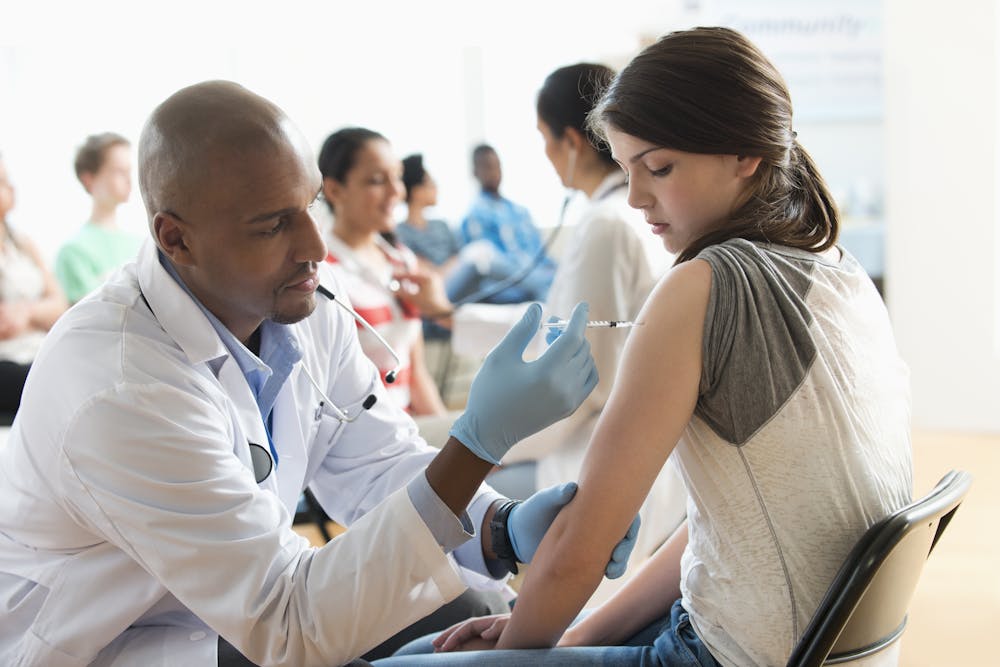
Phase 1 studies test for safety and proof-of-concept. Researchers give a small number of human volunteers the vaccine. Then they look for medical problems and see if it induces some sort of immune response.
In Phase 2 studies, researchers give the vaccine to hundreds of volunteers to determine the optimal vaccine composition, dose and vaccination schedule.
The final step before a vaccine is approved by the FDA for broad use is a Phase 3 trial. These involve thousands of volunteers and provide data on how good the vaccine is at preventing infection. These large trials will also uncover rarer side effects or health issues that may not show up in the smaller trials.
If in any of these phases a vaccine candidate appears to be ineffective or cause harm to people, the researchers must start over with a new candidate.
After a vaccine candidate successfully completes these clinical trials, a medical regulatory panel in the FDA looks at the evidence, and if the vaccine is effective and safe, approves it for general use. Experts estimate that the whole process costs between US$1 billion and $5 billion.
But approval is not the only hurdle. As has been demonstrated by the severe lack of coronavirus testing, easy and fast production of a test or vaccine is as critical as having one that works.
Both clinical efficacy and ease of production must be considered when asking how long until a vaccine is ready.
Current promising candidates
As of April 30, 2020, there were eight vaccine candidates currently in Phase 1 (or joint Phase 1/Phase 2) clinical trials and 94 vaccines candidates in preclinical studies.
Three of the eight are traditional vaccines that use inactivated or killed virus. Two of the others are protein-based vaccines that use a modified cold virus to deliver the protein that will stimulate the immune response.
The final three vaccines in Phase 1 or 2 trials, and the only two in the U.S., are gene-based vaccines. To me, these seem like the most promising.
Gene-based vaccines contain a gene or part of a gene from the virus that causes COVID-19, but not the virus itself. When a person is injected with one of these vaccines, their own cells read the injected gene and make a protein that is a part of the coronavirus. This one protein isn’t dangerous by itself, but it should trigger an immune response that would lead to immunity from the coronavirus.
Gene-based vaccines come in DNA form, like the vaccine in Phase 1 clinical trials from Inovio Pharmaceuticals in the U.S., or in RNA form, like the vaccine in a simultaneous Phase 1/Phase 2 trial from the German company BioNTech and the vaccine in Phase 1 trials from the U.S.-based Moderna.
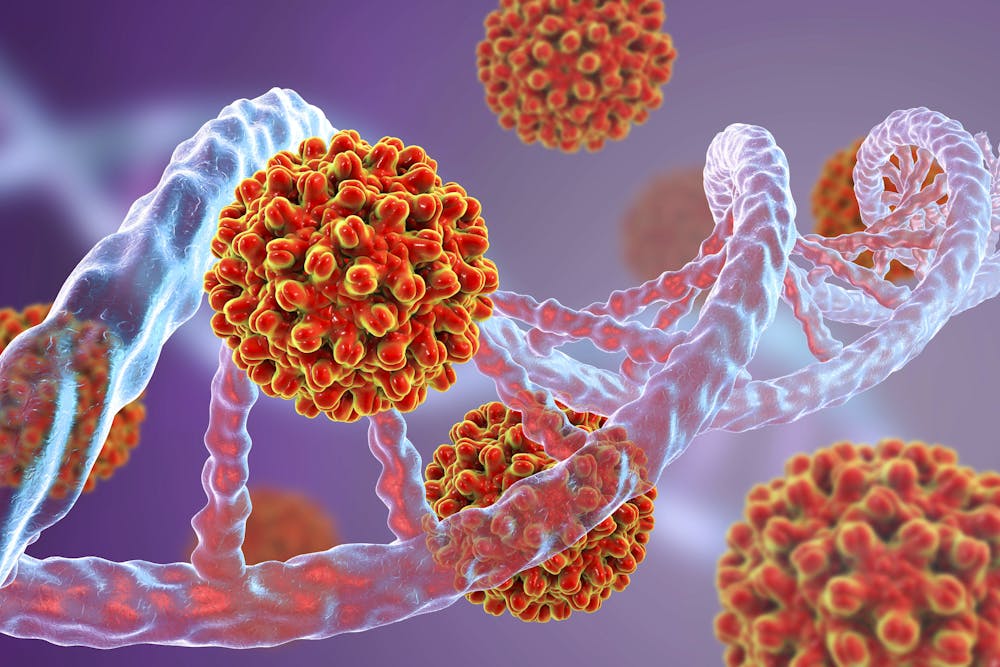
No gene-based vaccines have ever been approved for human use, but DNA vaccines are used on animals, and a few were in clinical trials for the Zika virus.
In the past, researchers have struggled to develop DNA vaccines that produce strong immune responses, but new techniques look promising. RNA vaccines tend to be more effective in animal studies but have also required innovations before human use. It may be that the time of gene-based vaccines has arrived.
Another benefit of gene-based vaccines is that manufacturers would likely be able to produce large amounts much faster than traditional vaccines. DNA and RNA vaccines would also be more shelf–stable than conventional vaccines since they don’t use ingredients like cell components or chicken eggs. This would make distribution, especially to rural areas, easier.
Still a long road to implementation
The three gene-based vaccines and the five other candidates face many challenges before you or I will be vaccinated. The fact that they are in Phase 1 and 2 trials is encouraging, but the very point of clinical trials is to reveal any problems with a vaccine candidate.
And there are a lot of potential problems. The preclinical results in laboratory animals might not translate well to people. The level of immune protection might be low. And people may react adversely when injected with the vaccine.
Any coronavirus vaccine could also produce a dangerous reaction called immune enhancement, where the vaccine actually worsens the symptoms of a coronavirus infection. This is rare, but has happened with past vaccine candidates for dengue fever and other viruses.
So, how long before we have a vaccine against the COVID-19 virus?
No vaccines have made it through Phase 1 or Phase 2 trials yet, and Phase 3 trials generally take between one and four years. If researchers get lucky and one of these first vaccines is both safe and effective, we are still at least a year away from knowing that. At that point manufacturers would need to start producing and distributing the vaccine at a massive scale.
It is unclear what percent of the population would need to be vaccinated against SARS-CoV-2, but in general, you need to immunize between 80% and 95% of the population to have effective herd immunity. Depending on what the virus does in the coming months, that might not be necessary, but if it is, that’s 260-300 million people in the U.S. alone.
Researchers are doing everything they can to develop a vaccine as fast as possible while still making sure it is effective and safe. Manufacturers can help by preparing flexible systems that could be ready to produce whichever candidate gets across the finish line first.
If everything goes well, Fauci’s 12- to 18-month prediction may be right. If so, it will be thanks to the tireless work of scientists, the support of international organizations and manufacturers all innovating and working together to fight this virus.
[Research into coronavirus and other news from science Subscribe to The Conversation’s new science newsletter.]
Marcos E. García-Ojeda, Professor of Molecular and Cell Biology, University of California, Merced
This article is republished from The Conversation under a Creative Commons license. Read the original article.