 How to resolve AdBlock issue?
News
Currently, there are over 700,000 Californians who still aren’t within an hour’s drive of a testing site after a commitment was made by the state that all Californians will be within a one hour drive of a site. This is unacceptable to both the Assembly member and senator.
Sen. McGuire and Assemblymember Aguiar-Curry have been working hand in hand over the past several weeks with county officials and the California Department of Public Health to get a state testing site secured for local residents.
“If we are truly going to be a California For All, we need Testing For All,” Sen. Mike McGuire said. “The road to reopening our economy and our schools is built off of data, science and a robust testing program in all corners of this state. Assemblymember Aguiar-Curry and I have been working overtime to ensure testing equity and an additional state testing site here in Lake will be a huge boost. We are grateful to the county, California Department of Public Health and Governor Newsom for their partnership with this critical initiative.”
“I appreciate the partnership with the state, and the constant engagement from Lake County leaders to make sure that our reopening comes with the ability to track new developments with the virus at the county level. A testing site in Lake County is essential to reopening the local economy,” said Aguiar-Curry. “Safe reopening means having the ability to test and track the virus. Successful reopening will come when we can ensure a safe environment for patrons to go back out and support our local businesses.”
A state-sponsored testing site will be up and running in Lake County soon. Specific details and logistics on the site are currently being organized between the county and the California Department of Public Health. More information will be provided from the county of Lake in the coming days.
“From day one of the COVID-19 crisis, my priority has been keeping Lake County residents safe,” said Moke Simon, chair of the Lake County Board of Supervisors. “It has been deeply frustrating to get calls from people with mild-moderate symptoms that just can’t access testing, and as we proceed through the coming stages of recovery, testing will only be increasingly important. With 23 percent of our population over the age of 65, and an even greater percentage in at-risk categories, we all have loved ones we’re concerned about, and lives are at stake.”
“We cannot allow lagging indicators to lead in rural California,” said County Administrative Officer, Carol J. Huchingson. “More than 15,000 Lake County residents are at high risk of severe COVID-19 complications, and we have 50 staffed hospital beds and eight intensive care unit beds. It is not acceptable to wait until we have an acute crisis to understand the extent to which infection may be permeating Lake County’s communities. Greater surveillance testing capacity is overdue, and we are grateful our State representatives understood the problem, and we are on the precipice of addressing it.”
“Thanks to Senator McGuire and Assemblymember Aguiar-Curry’s tireless efforts, on behalf of and alongside Lake County’s leaders, we will soon know better where we stand in this fight,” said Supervisor Simon. “We’ve been fortunate, so far, but we have to be informed as well. Broader testing is critical to responsibly restarting our economy, and taking meaningful steps to recover from this crisis.”
The virtual town hall will take place from 4:30 to 5:30 p.m.
This event will be held over Zoom and interested participants must email Thompson’s office at
Interested participants will be notified via email with instructions on how to join. The event will also be streamed on Facebook Live via Thompson’s page, https://www.facebook.com/RepMikeThompson/ .
This is the fifth in a series of virtual town halls where Thompson and experts from across the district are answering questions on the response to the fallout from coronavirus.
For this week’s virtual town hall, Thompson will be joined by Solano County Supervisor Erin Hannigan and Solano County Health Officer Dr. Bela Matyas.
All constituents of California’s Fifth Congressional District and members of the press are invited to join.
Thompson represents California’s Fifth Congressional District, which includes all or part of Contra Costa, Lake, Napa, Solano and Sonoma counties.
Just over a month ago, the governor set an ambitious goal to increase testing to 25,000 tests a day by the end of April – and daily testing has averaged more than 35,000 in the past few days.
“Ramping up our testing capacity is critical as we begin modifying our stay at home order,” said Gov. Newsom. “In addition to standing up more than 80 new testing sites across the state in under-served communities, soon Californians will be able to get tested when they pick up their prescriptions at some pharmacies across the state.”
Ensuring the state has sufficient capacity to test for COVID-19 and ability to conduct contact tracing when outbreaks surface are key indicators in the state’s gradual efforts to modify the stay at home order, as laid out in the Resilience Roadmap.
Gov. Newsom also announced that the California Department of Consumer Affairs and State Board of Pharmacy will allow pharmacists to collect specimens for COVID-19 tests and order tests for consumers.
The specimens will be delivered to and processed at public health, university or commercial labs.
The state has also created a new “Medi-Nurse” line available for Medi-Cal patients without a health plan (fee for service) and uninsured Californians.
The line – 1-877-409-9052 – is available 24/7 for COVID-19 concerns or for general medical issues.
Those who have health insurance may visit www.covid19.ca.gov and use the telehealth zip code finder to access their health insurance plan’s telehealth and nurse helplines.
Increasing testing is one of the six critical indicators guiding California’s Resilience Roadmap. California’s six indicators for modifying the stay-at-home order are:
– The ability to monitor and protect our communities through testing, contact tracing, isolating, and supporting those who are positive or exposed;
– The ability to prevent infection in people who are at risk for more severe COVID-19;
– The ability of the hospital and health systems to handle surges;
– The ability to develop therapeutics to meet the demand;
– The ability for businesses, schools, and child care facilities to support physical distancing; and
– The ability to determine when to reinstitute certain measures, such as the stay-at-home orders, if necessary.
On April 4, Gov. Newsom announced the COVID-19 Testing Task Force, a public-private collaboration working with stakeholders across the state to significantly boost California’s testing capacity.
The Task Force is co-chaired by Dr. Charity Dean, assistant director of the California Department of Public Health, and Blue Shield of California President and CEO Paul Markovich.
Nurses are heroes of the COVID-19 crisis. May 12 is International Nurses Day, which commemorates the birthday of Florence Nightingale, the first “professional nurse.” The World Health Organization also named this year the “Year of the Nurse” in honor of Nightingale’s 200th birthday.
To nurses everywhere, this day and this year have great significance. Nurses, who are being recognized as heroes, have long awaited recognition as health care professionals in their own right and not ancillary to physicians. It’s wonderful to be recognized now in the context of coronavirus, but nurses have always been at the forefront – during war, epidemics and other times of disaster.
I have been a nurse for 40 years and a nurse practitioner for 17 of those years. An active clinician, researcher, scholar and educator, I currently serve as dean of the Solomont School of Nursing at the University of Massachusetts Lowell. Throughout my career, nurses have typically been relegated to a secondary role, and if mentioned at all, we are described as assisting doctors. Nurses today are still asked why they didn’t become doctors instead. Aren’t we smart enough?
Many people don’t realize that nursing and doctoring are entirely different professions with different purposes. We are proud to work alongside doctors and other health professionals, but we have never worked behind them. Not all nurses work at the bedside, but we all touch the lives of patients.
Many nurses have doctoral degrees. They conduct research that advances the quality of patient care. Nurses change health care policy. For example, nurses play a significant role in health care reform and advise Congress on proposed health care rules and regulations. They also guide organizations regarding health care technology and care coordination and sit on executive boards of health care organizations. Nursing is both an art and a science.
The role of the nurse has evolved, but some things haven’t changed. Nurses have always cared for the sick, the well and the dying. We promote health and prevent illness. We interpret what is happening so that patients understand it. We are there for the entire patient experience from birth to old age, from wellness to illness, and throughout age and illness toward a peaceful and dignified death.
Our history provides many examples.
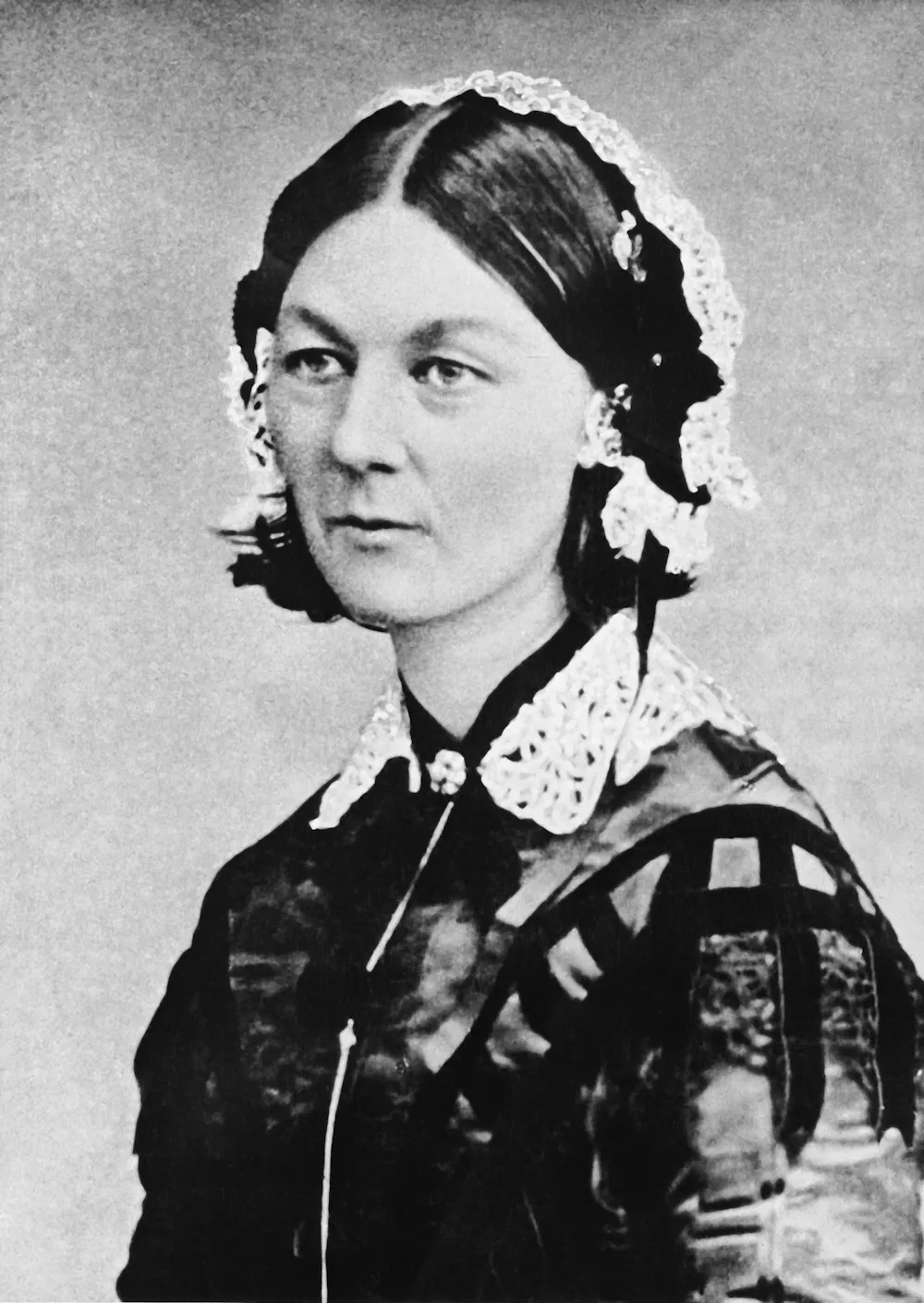
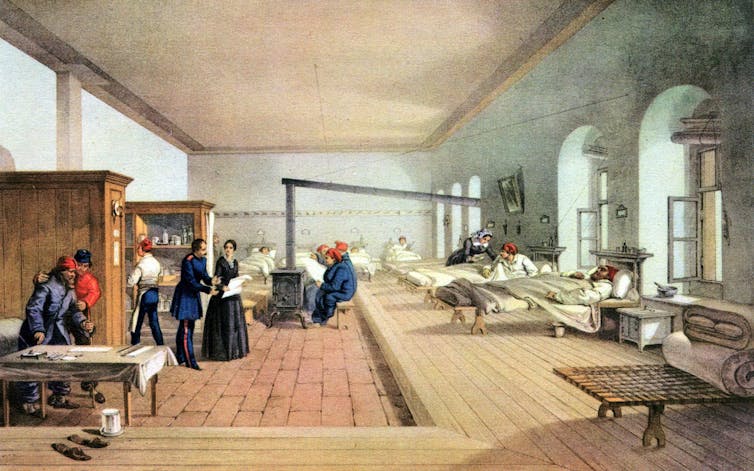
In 1854, Florence Nightingale brought 38 volunteer nurses to care for soldiers during the Crimean War. The cause of the conflict focused on the rights of Christians in the Holy Land and involved Russia, the Ottoman Empire, France, Sardinia and the United Kingdom. Male nurses provided care as far back as the Knights Hospitaller in the 11th century. But prior to Nightingale’s involvement, male and female nurses consisted of untrained family members or soldiers who cared for the ill and infirm.
Nightingale was the first to organize nurses and provide standardized roles and responsibilities for the profession. As such, she is credited with founding modern professional nursing. She was also an expert statistician, collecting data on patients and what did and didn’t work to make them better. Nightingale and her nurses improved sanitation, hygiene and nutrition. They provided care and comfort. Their work had a major impact on the survival of soldiers.
The American Civil War in the 1860s brought thousands of trained nurses to the battlefront, risking their lives to care for soldiers on both sides of the conflict. The most famous were Dorothea Dix, an advocate for indigenous populations and the mentally ill; Clara Barton, founder of the American Red Cross; and Louisa May Alcott, the author of “Little Women.”
Nurses again answered the call with the yellow fever epidemic of 1878, rushing from all over the country to Tennessee. The epidemic ultimately killed 18,000 people, and many nurses died while caring for the sick.
The U.S. recruited more than 22,000 trained nurses to treat Americans overseas and back at home from 1917 to 1919 during World War I. The war brought death from combat to about 53,000 Americans, while about 40 million civilians and military died worldwide. Time after time, nurses have left the warmth, comfort and safety of their homes to care for others.
Nurses were also among the millions who died from the 1918 influenza pandemic. Fifty million people died worldwide. This pandemic is probably most comparable to what we are experiencing today with COVID-19. But epidemics, such as polio, off and on from 1916 to 1954; the global pandemic of influenza A, 1957-1958; swine flu, 2009-2010; Ebola, 2014-2016; and Zika, 2015-2020, have also required constant nursing care.
I remember the AIDS pandemic, which began in 1981. I was a visiting nurse and saw many patients in their homes, from homeless shelters to penthouse apartments. Everyone suffered not only because of the physical and mental effects of the disease but also because of the stigma. People, even their families, were afraid to touch patients, kiss them or be near them. It was a lonely time for these patients. I watched them deteriorate and die. Nurses were often the only ones to hold the hands of these patients, so they wouldn’t die alone.
Nurses were also there during 9/11. They were among the courageous first responders who risked their lives to save others. Many have chronic diseases because of their exposure to Ground Zero.
Every year, nurses are voted first among the professions the public trusts the most, according to Gallup. We work hard to earn and maintain that trust. You will find us caring for people in their homes, in public health departments, in nursing homes and skilled care facilities, in rehabilitation hospitals, in prisons and correctional institutions, caring for the mentally ill and providing health care advice over phones and computers. Nurses work wherever there are people.
What do we ask in return? It’s simple. We don’t consider ourselves heroes, but we do deserve respect. Public images of the nurse in a sexy uniform or as a handmaiden to a doctor are wrong and insulting. We are professionals. Once the COVID-19 crisis is over, please don’t forget that we are always here for you. Always have been. Always will be.
Leslie Neal-Boylan, Dean of the Solomont School of Nursing, University of Massachusetts Lowell
This article is republished from The Conversation under a Creative Commons license. Read the original article.
Lake County and other parts of northwest California are under a hazardous weather outlook until Sunday due to rain, cooler temperatures and snow levels down to between 5,000 to 5,500 feet.
The cooler conditions are following a temperature spike late last week that felt like early summer.
The National Weather Service previously had predicted rain for Monday and Tuesday, with that precipitation forecast now extending to Thursday.
There were several hours of steady but not very heavy rain on Monday. The National Weather Service’s observation stations reported the following 24-hour rainfall totals, through 12 a.m. Tuesday, in inches:
– Bartlett Springs: 0.18.
– Colusa County line: 0.11.
– Hidden Valley Lake: 0.23.
– High Glade Lookout (above Upper Lake): 0.14.
– Indian Valley Reservoir: 0.16.
– Kelseyville: 0.13.
– Knoxville Creek: 0.25.
– Lakeport: 0.13.
– Lower Lake: 0.05.
– Lyons Valley: 0.11.
– Soda Creek (near Lake Pillsbury): 0.17.
– Upper Lake: 0.22.
– Whispering Pines: 0.28.
For the rest of this week, temperatures are forecast to be 5 to 15 degrees below normal, with more showers likely.
“Significantly cooler temperatures and light rain are possible this week as an upper level trough moves into the area,” according to the forecast.
The long-term forecast also suggests that the coming weekend could see still more rainfall.
The Lake County forecast calls for chances of rain through Monday, with a break from Thursday night through Friday night.
Daytime temperatures are expected to fluctuate between the high 50s and high 60s during much of the week, peaking in the low 70s on Friday, while nighttime temperatures will drop into the low 40s.
Gusty winds of more than 20 miles per hour are possible on Tuesday, with lighter winds through Wednesday night, according to the forecast.
Email Elizabeth Larson at
The board approved the policy as part of an urgency ordinance at its May 5 meeting in a unanimous vote.
Lake County Public Health Officer Dr. Gary Pace has so far not required masking generally in the county, although he has continued to strongly urge people to use masks to reduce transmission of COVID-19.
With that guidance in mind, on April 21, the board approved a temporary policy requiring county employees to wear masks in county facilities as a precautionary measure due to the COVID-19 pandemic.
Last week, County Administrative Officer Carol Huchingson and County Counsel Anita Grant brought to the board an updated urgency ordinance with changes suggested at the board’s April 28, as Lake County News has reported.
Among the updates to the language is a disclaimer that the masking requirement is meant to reduce the likelihood of COVID-19 transmission, but that it’s not a guarantee, and that rules for the courts – which are housed on the building’s fourth floor – would ultimately be determined by the judiciary, the latter suggestion coming from Supervisor Rob Brown.
The urgency ordinance, which went into effect on May 5, said that the safety practices it requires must be observed “while the present COVID-19 State of Emergency continues to exist, or until otherwise ordered by the Board of Supervisors.”
It requires the following:
– “a. Absent the option of a minimum six-foot separation or the use of protective shielding, persons entering a County facility who engage in in-person interactions, face-to-face meetings, or must work together in close proximity, shall wear face masks/coverings of their own devise or wear a face mask provided free of charge by the County of Lake during that period of interaction. In addition, when in lobbies, hallways, stairwells or using restrooms of County
facilities, all persons are strongly urged to wear masks.”
– “b. All persons who enter a County facility who utilize an elevator shall wear face masks/coverings of their own devise or wear a face mask provided to them free of charge by the County of Lake while in the elevator.”
– “c. Notwithstanding the above-described requirements, the safety precautions in the County superior courts shall be determined by the local judiciary.”
As part of the safety precautions the county is implementing, the county will make face masks available to the public at the front entrance areas of all county facilities, at the customer service counters of all county facilities and at elevator entrances.
Visitors to the courthouse who refuse to use face masks may be refused service, according to the policy.
Huchingson said one of the primary issues with pursuing the policy is the cost and availability of masks.
She said that an estimated 1,000 people per month visit the courthouse, a number her office got in working with the court security staff.
During the meeting, it was reported that another 6,000 people a month are visiting other facilities such as the Social Services Department.
Huchingson reported later in the meeting that the rough annual estimate for providing masks to the public at all county facilities is $48,000. The county is planning to seek state and federal reimbursement for those costs.
County facilities still haven’t reopened for in-person services to the general public, which is part of the latter phase of Stage 2 – which began late last week – in Gov. Gavin Newsom’s Resilience Roadmap.
County Deputy Administrative Officer Matthew Rothstein told Lake County News that the state criteria will require Dr. Pace to attest to the county’s readiness to progress to the latter phases. Rothstein said he expects that matter to come up during Pace’s Tuesday update to the board.
“The date county facilities resume serving the public will be informed by this discussion,” Rothstein said.
In the meantime, Rothstein said the county’s preparations for reopening facilities and implementing the masking protocols remain in progress.
“Work began last week to place masks, and signage has been developed,” Rothstein said Monday.
Email Elizabeth Larson at