 How to resolve AdBlock issue?
News
The new site allows Californians to quickly search for testing sites by current location, address, city or zip code and schedule an appointment.
It also features an interactive map of testing sites across the state.
The testing locator website features community testing locations, including sites operated by Verily and OptumServe, which are open to Californians who meet current testing guidelines.
Testing is free for all individuals, including those who are uninsured or undocumented. Individual testing results are confidential.
“As testing continues to ramp up at a rapid pace across the state, we want to make sure Californians know how to schedule an appointment, which can easily be done online for many locations,” said Dr. Charity Dean, assistant director of the California Department of Public Health and co-chair of the California COVID-19 Testing Task Force. “With the launch of new community testing sites and significantly expanded testing criteria, more Californians will be tested – and in locations much closer to their homes.”
One goal of the Testing Task Force is to ensure that more than 90 percent of Californians are within 60 minutes driving distance of COVID-19 testing sites.
“We are taking another crucial step toward helping to solve this unprecedented public health crisis – ensuring Californians have access to testing and knowing where the nearest testing sites are located in their community,” said Paul Markovich, president and CEO of Blue Shield of California and co-chair of the Testing Task Force. “Our public-private collaboration in tackling the pandemic continues to make a difference in delivering the results California deserves.”
To date, Verily has launched eight testing locations statewide, and a total of 80 OptumServe sites will be launched by next week in 36 counties. The California COVID-19 Testing Task Force worked with county leaders statewide to identify appropriate testing sites with a focus on underserved communities in both rural and urban areas.
The testing locator application was designed for California by Esri, a mapping and location analytics company, in collaboration with GIS Corps, which is mapping community test sites.
“Using a map to help Californians locate and access testing sites near their current location is critical to ensuring those who need testing will receive it as quickly as possible,” said Amy Leung, Technical Consultant with Esri. “Esri is proud to provide mapping and location intelligence for the State of California’s ongoing response to the pandemic and for the COVID-19 Testing Task Force.”
For more information about testing and preventing the spread of COVID-19, visit www.covid19.ca.gov .
Additional resources
California Testing Task Force: http://testing.covid19.ca.gov
Esri: www.esri.com/en-us/home
GIS Corps: www.giscorps.org

LAKEPORT, Calif. – The Lake County Library is currently closed to the public due to the shelter in place order and to assist community efforts in limiting the spread of COVID-19.
With libraries and schools closed, parents might be looking for ways to occupy their home-bound children. The library can help.
Online library services to both entertain and inform children and teens continue while the physical branches of the Lake County Library are closed. With a library card, patrons can access the library’s array of digital services without the need to visit a local branch.
If you need a library card, you can create an online card with the application form on the library website. If you have a question about an existing library account, call 707-263-8817 and leave a message. Library staff will be available by phone during normal operating hours to assist with the digital resources.
The library website is http://library.lakecountyca.gov . Go to the website and click Digital Content to see all the digital services available.
To entertain and inform kids, the library offers a variety of online services that require nothing more than a library card to access. On Hoopla you can activate kids mode by signing in and then clicking Kids. Hoopla has movies, television shows, music and audiobooks for kids.
On Libby or on the Overdrive website you can find kids’ content by clicking the Kids tab at the top. Libby by Overdrive has ebooks, audiobooks and special read along books.
Creativebug’s many classes include arts and crafts designed for children to do.
For children and teens the library also offers three online services ABCmouse, Britannica, and TeachingBooks.
ABCmouse.com is the leading and most comprehensive fun digital learning resource for children ages 2 through 8. Britannica School and Britannica Escolar are both educational sites for students to use for homework help, projects, or learning at home or at the library.
TeachingBooks.net is a multimedia website that generates enthusiasm for books and reading with engaging author programs and K-12 book resources for children and teens.
Patrons can check out ABCmouse accounts for home use on their computers or devices. The award-winning ABCmouse.com curriculum, created by Age of Learning, Inc., is designed to help young children ages 2 through 8 and beyond build a strong foundation for future academic success. ABCmouse.com is 100 percent educational, with more than 8,500 learning activities across all major subject areas-reading, math, science, social studies, art, and music. ABCmouse is one effective early learning resource that’s available for you to check out from the library and use with your children at home.
When you check out an ABCmouse account from the library with Bring Learning Home, you will get full access to ABCmouse from the convenience of your home or anywhere you have an internet connection. You will also have access to the Assessment Center, which allows you to track your child’s progress in key early literacy and math skills over time. Funding for the ABCmouse Bring Learning Home program was provided by Doug & Laurie Dohring, Bell Haven Resort.
Britannica School and Britannica Escolar are both educational sites for students to use for homework help, projects, or learning at home or at the library.
Britannica School is the go-to site for research – the core of any inquiry learning model – offering thousands of up-to-date, curated, and curriculum-relevant articles, images, videos, audio clips, primary sources, maps, research tools, recommended Web sites, and three separate databases. Britannica Escolar is the leading knowledge-building resource that is universally trusted for accurate and age-appropriate content in Spanish.
Choose from two or three levels of learning – Elementary, Middle, and High School – for a wealth of unique content to explore. Select an article and adjust its complexity with a single click while maintaining the age-appropriate look – ideal for classes of students at multiple reading levels! Read-aloud functionality and a font size changer are just a few of the features specifically helpful for students with special needs.
Nonfiction, cross-curricular content in Britannica School is updated daily by the editorial team with new and revised articles and multimedia – at least 1,200 entries per month – to keep users informed and engaged. Britannica offers accurate, up-to-date content aligned to the common core and state standards.
Use handy how-to-conduct-research tools to build essential information literacy skills. Group together related content types for activities or projects using the easy-to-use Content Collector. For educators, review and adapt ready-made lessons on various subjects or create your own with the intuitive Lesson Plan Builder. Access to Britannica School and Escolar is provided by the California State Library.
TeachingBooks is a dynamic, PreK–12 reading and library service that strives to deepen everyone's connections to the books they are reading. With 170,000+ engaging video, audio, and online resources, TeachingBooks brings to life the books that are enjoyed in your community.
TeachingBooks is a database of resources for children's and young adult books and their authors and illustrators. Use TeachingBooks to search titles, authors and illustrators, and find resources to engage readers. The resource collection includes short movies, audio book readings, book discussion guides, and more.
Access to TeachingBooks.net is provided for Lake County Library by the California State Library in conjunction with Riverside COE.
Jan Cook is a library technician with the Lake County Library.
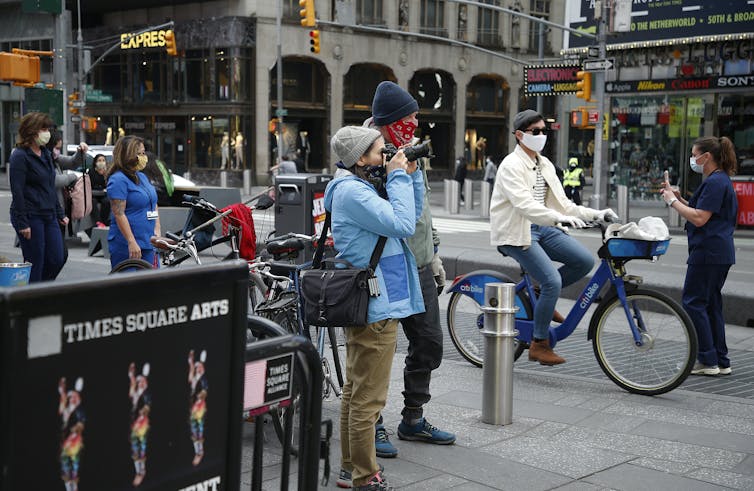
Blood tests that check for exposure to the coronavirus are starting to come online, and preliminary findings suggest that many people have been infected without knowing it. Even people who do eventually experience the common symptoms of COVID-19 don’t start coughing and spiking fevers the moment they’re infected.
William Petri is a professor of medicine and microbiology at the University of Virginia who specializes in infectious diseases. Here, he runs through what’s known and what isn’t about asymptomatic cases of COVID-19.
How common is it for people to contract and fight off viruses without knowing it?
In general, having an infection without any symptoms is common. Perhaps the most infamous example was Typhoid Mary, who spread typhoid fever to other people without having any symptoms herself in the early 1900s.
My colleagues and I have found that many infections are fought off by the body without the person even knowing it. For example, when we carefully followed children for infection by the parasite Cryptosporidia, one of the major causes of diarrhea, almost half of those with infections showed no symptoms at all.
In the case of the flu, estimates are that anywhere from 5% to 25% of infections occur with no symptoms.
For the most part, symptoms are actually a side effect of fighting off an infection. It takes a little time for the immune system to rally that defense, so some cases are more aptly considered presymptomatic rather than asymptomatic.
How can someone spread coronavirus if they aren’t coughing and sneezing?
Everyone is on guard against the droplets that spray out from a coronavirus patient’s cough or sneeze. They’re a big reason public health officials have suggested everyone should wear masks.
But the virus also spreads through normal exhalations that can carry tiny droplets containing the virus. A regular breath may spread the virus several feet or more.
Spread could also come from fomites – surfaces, such as a doorknob or a grocery cart handle, that are contaminated with the coronavirus by an infected person’s touch.
What’s known about how contagious an asymptomatic person might be?
No matter what, if you’ve been exposed to someone with COVID-19, you should self-quarantine for the entire 14-day incubation period. Even if you feel fine, you’re still at risk of spreading the coronavirus to others.
Most recently it has been shown that high levels of the virus are present in respiratory secretions during the “presymptomatic” period that can last days to more than a week prior to the fever and cough characteristic of COVID-19. This ability of the virus to be transmitted by people without symptoms is a major reason for the pandemic.
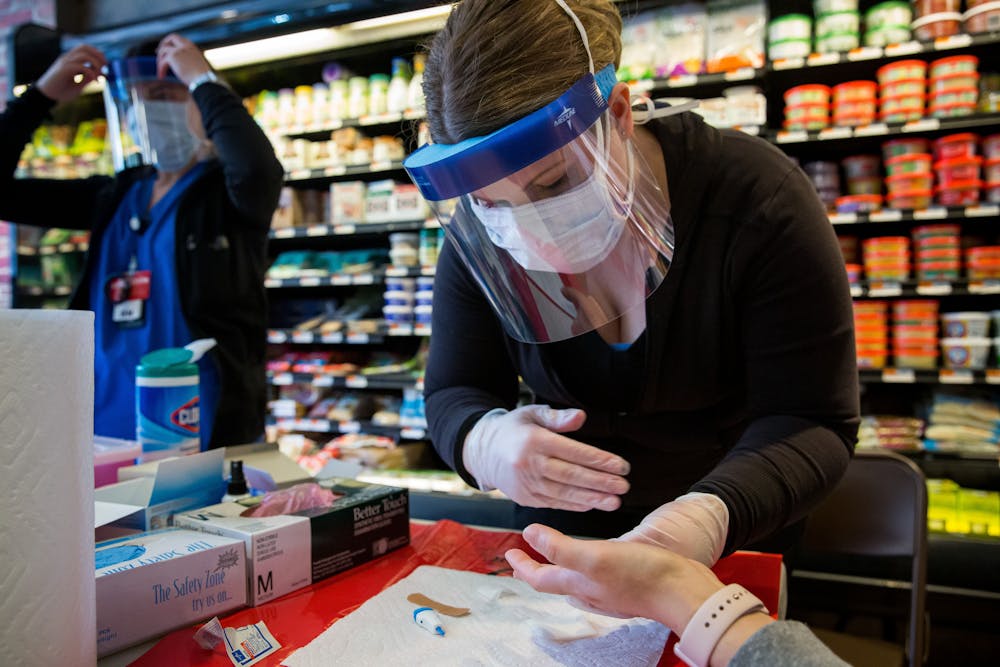
After an asymptomatic infection, would someone still have antibodies against SARS-CoV-2 in their blood?
Most people are developing antibodies after recovery from COVID-19, likely even those without symptoms. It is a reasonable assumption, from what scientists know about other coronaviruses, that those antibodies will offer some measure of protection from reinfection. But nothing is known for sure yet.
Recent serosurveys in New York City that check people’s blood for antibodies against SARS-CoV-2 indicate that as many as one in five residents may have been previously infected with COVID-19. Their immune systems had fought off the coronavirus, whether they’d known they were infected or not – and many apparently didn’t.
How widespread is asymptomatic COVID-19 infection?
No one knows for sure, and for the moment lots of the evidence is anecdotal.
For a small example, consider the nursing home in Washington where many residents became infected. Twenty-three tested positive. Ten of them were already sick. Ten more eventually developed symptoms. But three people who tested positive never came down with the illness.
When doctors tested 397 people staying at a homeless shelter in Boston, 36% came up positive for COVID-19 – and none of them had complained of any symptoms.
In the case of Japanese citizens evacuated from Wuhan, China and tested for COVID-19, fully 30% of those infected were aymptomatic.
An Italian pre-print study that has not yet been peer-reviewed found that 43% of people who tested positive for COVID-19 showed no symptoms. Of concern: The researchers found no difference in how potentially contagious those with and without symptoms were, based on how much of the virus the test found in indiduals’ samples.
The antibody serosurveys getting underway in different parts of the country add further evidence that a good number – possibly anywhere from around 10% to 40% – of those infected might not experience symptoms.
Asymptomatic SARS-CoV-2 infection appears to be common – and will continue to complicate efforts to get the pandemic under control.
[Research into coronavirus and other news from science. Subscribe to The Conversation’s new science newsletter.]
William Petri, Professor of Medicine, University of Virginia
This article is republished from The Conversation under a Creative Commons license. Read the original article.
The 3-year-old girl was located shortly after 3:15 p.m. Wednesday, according to radio reports confirmed by the Lake County Sheriff’s Office.
Lt. Corey Paulich said the girl was found and is safe.
The girl had been reported missing earlier in the afternoon in the area of Hacienda Court.
Lake County Sheriff’s deputies, California Highway Patrol officers and firefighters were joined by community members in the search.
Email Elizabeth Larson at

LAKE COUNTY, Calif. – A search is underway in Hidden Valley Lake for a small child reported missing on Wednesday afternoon.
Sheriff Brian Martin confirmed that his deputies were on the scene on Wednesday.
Also reported to be responding to Hidden Valley Lake to assist are California Highway Patrol officers and firefighters.
The sheriff’s office said shortly before 3 p.m. that the 3-year-old girl was last seen in the area of Hacienda Court.
She is described as 3 feet tall, 30 pounds, with brown hair and brown eyes.
Radio reports indicated she may not have been wearing a shirt or shoes.
If she’s seen, please contact the Lake County Sheriff’s Office Dispatch through 911 or 707-263-2690.
Email Elizabeth Larson at
Pace’s update on COVID-19 to the council – following a lengthy discussion with the Board of Supervisors on Tuesday morning – took up about half of the council’s two-hour meeting.
On the national level, Pace said there are still high case numbers, with more than 1,000 deaths a day. That’s projected to go up over the next few months, and he said the nation could see more than 3,000 deaths a day in the summer.
There was an expectation that the virus’ numbers would drop over the summer. “The current thinking is, that’s probably not going to happen,” said Pace.
He said he suspects there will be a “whack a mole” experience of cases popping up throughout the summer and fall. While the virus’ impacts have been more severe in urban areas, it has moved into rural areas as restrictions relax and people start traveling more.
Of Lake County’s eight cases so far, six have completed their isolation, while Pace said the two most recent cases – including one involving a jail inmate confirmed on Monday – remain in isolation. In the jail case, he said they are tracing contacts and testing those who came in contact with the individual, including other inmates and staff.
“Jail outbreaks are very concerning. It’s a vulnerable population,” Pace said.
Testing has remained a challenge. Pace said more than 600 county residents have been tested for the virus, which he said is a fraction of what he wanted.
A Public Health nurse has conducted more than 100 tests over the past month, and on Tuesday Public Health held the county’s first drive-thru testing in Lakeport, Pace said. People who want to be tested have to call the agency and go through a screening process before being directed to the site.
Pace said they thought they would have help from the state to get the drive-thru testing started but ended up doing it on their own. The site was staffed by volunteers, with help from the fire department.
Forty tests were done on Tuesday, with Pace reporting a 50-test-per-day capacity. The next testing is planned for Thursday, with a goal of doing four testing events a week around the county.
Later, it can be transitioned to a state-run site, but until then, “We’re not waiting for them,” said Pace.
Stepping up testing capacity is important to meet guidelines set out by the governor which set a goal of between 60 and 100 tests per day for Lake County, Pace said.
Pace said Gov. Gavin Newsom is directing entry into “phase two” of the pandemic response, which allows some businesses and facilities to reopen if they can meet social distancing and health guidelines.
If the case numbers can be kept down locally and any outbreaks managed, Pace said Lake County can likely move through phase two and into phase three more quickly than other areas. He said a list of preconditions for business reopenings is still being worked out, and he expected he should get it on Thursday.
There is a template on the Public Health website to help businesses plan for reopening, he said.
Pace said large group activities are probably not going to happen any time in the near future. “It’s just too risky,” he said, explaining that “superspreader” events grow out of such activities.
Councilmember Stacey Mattina asked what is considered a large group.
“Right now, no groups can meet,” said Pace, explaining that groups of 50 or more aren’t likely to be able to meet for the rest of this year.
Mayor George Spurr asked about vaccines. Pace said many groups are working hard on a vaccine, but it could be a way off. He said the quickest vaccine ever developed was created in the 1950s, and there has never before been a coronavirus vaccine.
While there might be workable vaccines in a few months, there is then a testing requirement. Pace said most experts are estimating one to two years, maybe longer, for a vaccine to be produced.
“We are in some kind of altered state of society for the next year or two,” said Pace, and how loose or tight the rules will be will depend on people following social distancing guidelines.
During public comment, Barbara Breunig, president of the Lakeport Main Street Association, said the group won’t be doing its annual July 4 celebration downtown, but she asked if charity groups could continue to sell fireworks. Pace said he didn’t know, explaining that fireworks are an activity that brings people together.
Michael Green, a city resident and planning commissioner, suggested a “no mask, no service” policy should be more widely accepted, and that such a policy could accommodate local business. He said he believed that if more was done on the public policy side to encourage masking and social distancing, that even large events would be possible.
Pace, who strongly recommends community members use face masks, said it’s nonetheless new territory. He said it’s a matter of trying to walk a fine line between people feeling like the government is taking away their life and keeping people safe. “It’s a pretty tricky line.”
He added, “If I had my way, everybody would be wearing masks by now,” explaining that more masking will be needed as the backing off on restrictions continues.
Councilman Kenny Parlet said he believed mandatory masking would be a “blatant intrusion.”
“I think that people have been beaten up enough,” he said, adding that making masking mandatory will really cross the line.
Council considers whether to approve events
Pace sat in on the council’s discussion of how the city should handle upcoming events from May through September.
City Manager Margaret Silveira said the Lake County Chamber of Commerce had applied for its July Rhythm & Brews – which it was reported later in the meeting is likely to be moved to the fall – but with the city getting so many questions about events, she asked for a discussion about events as a whole so they can give people some direction.
The city’s popular Memorial Day parade and pancake breakfast already have been canceled, as has an upcoming art walk, Silveira said.
Organizers of the summer Concerts in the Park have asked to switch the first two concerts to the end of the summer lineup, but they hadn’t decided to cancel. “They’re awaiting your decision tonight,” said Silveira.
Councilman Tim Barnes, who previously owned businesses on Main Street in the downtown, said the summer business kept him going.
If they take the summer season away from Main Street, “There will be nothing left on Main Street,” said Barnes, who called the situation “terrifying.”
Mattina said she felt the city should defer to Pace’s guidelines, as he’s determined what people and can’t do.
City Attorney David Ruderman said the council had some discretion, from approving applications contingent on the event’s ability to comply with the health officer’s and governor’s orders to the more sweeping option of canceling every event through September.
During public comment, Green told the council, “This is where you get to push the envelope with public policy.”
He said people will have a chance to up their game. The county can’t be shut down forever, and he said the community has to start thinking about its response to COVID-19.
Chamber Chief Executive Officer Melissa Fulton said she and her board are in limbo in their planning for the evening.
“I hate to see anybody throw away the summer,” not just in Lake County but across the nation, she said.
Fulton said plans are still underway for the annual Seaplane Splash-In Sept. 17 and 18.
Lakeport’s Main Street has been hurting for a long time and the pandemic isn’t helping, Fulton added.
“I understand that this is the biggest letdown ever,” said Mattina, noting it’s hard not to cry over it, with favorite events being canceled. However, she said she also didn’t want people putting a lot of effort into events that would end up not taking place.
Pace said it’s almost impossible to know what it’s going to be like in August. He pointed to adaptations like those made by the organizers of Shakespeare at the Lake, who are moving their production entirely online.
“We’re having to make this up as we go along,” he said, and such changes will need to be addressed over the next few years.
Ruderman suggested the council could approve event applications contingent upon meeting requirements in the orders issued by Dr. Pace and Gov. Gavin Newsom.
Barnes moved to approve that proposal, with Councilwoman Mireya Turner seconding and the council approving it 5-0.
Silveira told the council that the police department is not planning to do its National Night Out event in August. She said the contract for the July 4 fireworks display is coming up and she will bring it to the council at its next meeting for consideration.
Also on Tuesday, the council approved the preparation of a Community Development
Block Grant application for $70,681 in aid through the federal Coronavirus Aid, Relief, and Economic Security, or CARES, Act, for commercial kitchen upgrades at the city’s community center at 500 N. Main St.
According to Assistant City Manager Kevin Ingram’s written report to the council, “The City is considering entering into a Memorandum of Understanding with the Lakeport Homeless Shelter, Lake County Public Health Office and possible additional community organizations to utilize this space in support of their COVID-19 related efforts.”
The adoption of the Eleventh Street Corridor Multimodal Engineered Feasibility Study was pulled from the agenda for reconsideration at a future meeting.
Email Elizabeth Larson at