 How to resolve AdBlock issue?
News
CLEARLAKE, Calif. – The Clearlake City Council this week will swear in its newly elected members, select the new year’s leadership and consider approving a hiring and retention program.
The council will meet beginning at 6 p.m. Thursday, Dec. 3.
Because of the county’s shelter in place order, Clearlake City Hall remains closed to the public, however, the virtual meeting will be broadcast live on the city's YouTube channel or the Lake County PEG TV YouTube Channel. Community members also can participate via Zoom.
The agenda can be found here.
Comments and questions can be submitted in writing for City Council consideration by sending them to Administrative Services Director/City Clerk Melissa Swanson atThis email address is being protected from spambots. You need JavaScript enabled to view it. . You can also visit the city’s town hall site and submit written comments at https://www.opentownhall.com/portals/327/forum_home. Identify the subject you wish to comment on in your email’s subject line or in your town hall submission.
To give the council adequate time to review your questions and comments, please submit your written comments prior to 4 p.m. on Thursday, Dec. 3.
Each public comment emailed to the city clerk will be read aloud by the mayor or a member of staff for up to three minutes or will be displayed on a screen. Public comment emails and town hall public comment submissions that are received after the beginning of the meeting will not be included in the record.
The meeting will include December’s adoptable dogs, a presentation by Retail Strategies and honors to be offered to outgoing Councilman Phil Harris.
The council will consider accepting the November election results and the prelude to administering the oath of office to the newly elected council members.
Based on preliminary election results – the final results were not available as of Tuesday night – incumbent Joyce Overton was returned for another term and David Claffey was elected to his first term. Both were on the ballot. The elections office has not reported on write-in candidates.
On Thursday, the council also will select the mayor and vice mayor for 2021.
The council will then move on to consider cosigning a letter that the Board of Supervisors sent to the governor regarding the state’s recent changes to COVID-19 restrictions.
The board sent a letter to the state on Nov. 17 raising issues with the new structure, which it said impacts rural counties more harshly, and asking the state to ease up.
Over the Thanksgiving weekend, Lake’s growing COVID-19 caseload landed it in the state’s most restrictive tier on the Blueprint for a Safer Economy.
Clearlake City Manager Alan Flora’s report said that Supervisor Bruno Sabatier, who wrote the board's letter, suggested that both the city councils of Clearlake and Lakeport sign onto the letter. On Tuesday, the Lakeport City Council offered its support for the board’s letter but chose not to sign onto it due to the developments in the last two weeks.
In other business Thursday, the council will consider a resolution to implement a hiring bonus and referral program in an effort to fill city job vacancies. The council approved such a program for police officers in 2019.
On the meeting's consent agenda – items that are not considered controversial and are usually adopted on a single vote – are warrant registers; minutes of the Oct. 14 Lake County Vector Control District Board meeting; minutes of the Oct. 15, Nov. 5 and Nov. 19 meetings; consideration of continuation of declaration of local emergency issued on Oct. 9, 2017, and ratified by council action Oct. 12, 2017; consideration of continuation of declaration of local emergency issued on March 14, 2020, and ratified by council action March 19, 2020; consideration of Resolution No. 2020-54, approving a temporary street closure for the annual Christmas Parade adopt resolution; second reading and adoption of Ordinance No. 248-2020, an Amendment to Chapter 18 of the Clearlake Municipal Code repealing and replacing the zoning ordinance hold second reading, read it by title only, waive further reading and adopt ordinance; annual calendar of meetings for 2021; consideration of amendment No. 2 to employment agreement with chief of police; and City Hall holiday closure.
After the open portion of the meeting, the council will hold a closed session to discuss existing litigation, Jane Wang v. City of Clearlake, et al. and City of Clearlake v. County of Lake, a political subdivision of the State of California, Board of Supervisors of the County of Lake, a public body of the County of Lake, Barbara C. Ringen, in her official capacity as the Treasurer-Tax Collector of the County of Lake; and Does 1 through 30, inclusive; the claim of Bliss X LLC., Robert Glasner; and property negotiations with Robert Adelman for property at 2890 Old Highway 53.
Email Elizabeth Larson atThis email address is being protected from spambots. You need JavaScript enabled to view it. . Follow her on Twitter, @ERLarson, or Lake County News, @LakeCo
The council will meet beginning at 6 p.m. Thursday, Dec. 3.
Because of the county’s shelter in place order, Clearlake City Hall remains closed to the public, however, the virtual meeting will be broadcast live on the city's YouTube channel or the Lake County PEG TV YouTube Channel. Community members also can participate via Zoom.
The agenda can be found here.
Comments and questions can be submitted in writing for City Council consideration by sending them to Administrative Services Director/City Clerk Melissa Swanson at
To give the council adequate time to review your questions and comments, please submit your written comments prior to 4 p.m. on Thursday, Dec. 3.
Each public comment emailed to the city clerk will be read aloud by the mayor or a member of staff for up to three minutes or will be displayed on a screen. Public comment emails and town hall public comment submissions that are received after the beginning of the meeting will not be included in the record.
The meeting will include December’s adoptable dogs, a presentation by Retail Strategies and honors to be offered to outgoing Councilman Phil Harris.
The council will consider accepting the November election results and the prelude to administering the oath of office to the newly elected council members.
Based on preliminary election results – the final results were not available as of Tuesday night – incumbent Joyce Overton was returned for another term and David Claffey was elected to his first term. Both were on the ballot. The elections office has not reported on write-in candidates.
On Thursday, the council also will select the mayor and vice mayor for 2021.
The council will then move on to consider cosigning a letter that the Board of Supervisors sent to the governor regarding the state’s recent changes to COVID-19 restrictions.
The board sent a letter to the state on Nov. 17 raising issues with the new structure, which it said impacts rural counties more harshly, and asking the state to ease up.
Over the Thanksgiving weekend, Lake’s growing COVID-19 caseload landed it in the state’s most restrictive tier on the Blueprint for a Safer Economy.
Clearlake City Manager Alan Flora’s report said that Supervisor Bruno Sabatier, who wrote the board's letter, suggested that both the city councils of Clearlake and Lakeport sign onto the letter. On Tuesday, the Lakeport City Council offered its support for the board’s letter but chose not to sign onto it due to the developments in the last two weeks.
In other business Thursday, the council will consider a resolution to implement a hiring bonus and referral program in an effort to fill city job vacancies. The council approved such a program for police officers in 2019.
On the meeting's consent agenda – items that are not considered controversial and are usually adopted on a single vote – are warrant registers; minutes of the Oct. 14 Lake County Vector Control District Board meeting; minutes of the Oct. 15, Nov. 5 and Nov. 19 meetings; consideration of continuation of declaration of local emergency issued on Oct. 9, 2017, and ratified by council action Oct. 12, 2017; consideration of continuation of declaration of local emergency issued on March 14, 2020, and ratified by council action March 19, 2020; consideration of Resolution No. 2020-54, approving a temporary street closure for the annual Christmas Parade adopt resolution; second reading and adoption of Ordinance No. 248-2020, an Amendment to Chapter 18 of the Clearlake Municipal Code repealing and replacing the zoning ordinance hold second reading, read it by title only, waive further reading and adopt ordinance; annual calendar of meetings for 2021; consideration of amendment No. 2 to employment agreement with chief of police; and City Hall holiday closure.
After the open portion of the meeting, the council will hold a closed session to discuss existing litigation, Jane Wang v. City of Clearlake, et al. and City of Clearlake v. County of Lake, a political subdivision of the State of California, Board of Supervisors of the County of Lake, a public body of the County of Lake, Barbara C. Ringen, in her official capacity as the Treasurer-Tax Collector of the County of Lake; and Does 1 through 30, inclusive; the claim of Bliss X LLC., Robert Glasner; and property negotiations with Robert Adelman for property at 2890 Old Highway 53.
Email Elizabeth Larson at
With California off to a dry start for the water year, the California Department of Water Resources on Tuesday announced an initial State Water Project allocation of 10 percent of requested supplies for the 2021 water year.
Initial allocations are based on conservative assumptions regarding hydrology and factors such as reservoir storage. Allocations are reviewed monthly and may change based on snowpack and runoff information. They are typically finalized by May.
“While we still have several months ahead of us, dry conditions persist,” said DWR Director Karla Nemeth. “As communities throughout California prepare to support their environment and economies through times of extended dry periods, state agencies plan together to support those communities. Californians can help by always using water carefully, inside and outside their homes and businesses.”
DWR’s eight precipitation stations in Northern California recorded a record-low 0 percent of average rainfall in October and 53 percent in November.
Most of the state’s major reservoirs are lower than the historical average to date compared to a year ago. Lake Shasta, the federal Central Valley Project’s largest reservoir, is at 75 percent compared to 119 percent its historical average to date in 2019.
Lake Oroville, the State Water Project’s largest reservoir, holds 61 percent compared to 90 percent of its historical average to date in 2019.
San Luis Reservoir, a joint-use facility for the State Water Project and Central Valley Project, now holds 76 percent compared to 72 percent of its historical average to date in 2019.
The 10 percent initial allocation amounts to 422,848 acre-feet of water, distributed among the 29 long-term State Water Project contractors who serve more than 27 million Californians and 750,000 acres of farmland.
Last year’s initial allocation was 10 percent, with a final allocation of 20 percent set in May.
Nearly all areas served by the State Water Project have sources of water other than the allocation, such as streams, groundwater, and local reservoirs.
DWR will conduct the season’s first snow survey at Phillips Station in the Sierra Nevada on December 30, 2020. On average, the snowpack supplies about 30 percent of California’s water needs as it melts in the spring and early summer.
For information on current water conditions at the state’s largest reservoirs and weather stations, visit the California Data Exchange Center website.
Initial allocations are based on conservative assumptions regarding hydrology and factors such as reservoir storage. Allocations are reviewed monthly and may change based on snowpack and runoff information. They are typically finalized by May.
“While we still have several months ahead of us, dry conditions persist,” said DWR Director Karla Nemeth. “As communities throughout California prepare to support their environment and economies through times of extended dry periods, state agencies plan together to support those communities. Californians can help by always using water carefully, inside and outside their homes and businesses.”
DWR’s eight precipitation stations in Northern California recorded a record-low 0 percent of average rainfall in October and 53 percent in November.
Most of the state’s major reservoirs are lower than the historical average to date compared to a year ago. Lake Shasta, the federal Central Valley Project’s largest reservoir, is at 75 percent compared to 119 percent its historical average to date in 2019.
Lake Oroville, the State Water Project’s largest reservoir, holds 61 percent compared to 90 percent of its historical average to date in 2019.
San Luis Reservoir, a joint-use facility for the State Water Project and Central Valley Project, now holds 76 percent compared to 72 percent of its historical average to date in 2019.
The 10 percent initial allocation amounts to 422,848 acre-feet of water, distributed among the 29 long-term State Water Project contractors who serve more than 27 million Californians and 750,000 acres of farmland.
Last year’s initial allocation was 10 percent, with a final allocation of 20 percent set in May.
Nearly all areas served by the State Water Project have sources of water other than the allocation, such as streams, groundwater, and local reservoirs.
DWR will conduct the season’s first snow survey at Phillips Station in the Sierra Nevada on December 30, 2020. On average, the snowpack supplies about 30 percent of California’s water needs as it melts in the spring and early summer.
For information on current water conditions at the state’s largest reservoirs and weather stations, visit the California Data Exchange Center website.
LAKE COUNTY, Calif. – An annual North Coast blood drive is back once again in December and January, making careful adaptations for COVID-19 as it seeks to keep hospitals supplied.
Vitalant, the nation’s second-largest community blood service provider, is hosting the 15th Annual Bucket Brigade Blood Drive Challenge.
It’s partnering with 21 fire agencies across Lake, Mendocino and Sonoma counties for this year’s event.
With the COVID-19 pandemic causing major disruptions, Kim Walsh, Vitalant’s donor recruitment representative, said the Bucket Brigade is even more important this year.
Vitalant reported that surges in COVID-19 cases, wildfires, hurricanes and other natural disasters combined with the cancellation of blood drives at schools, businesses and community organizations have brought the blood supply to a critical level on a national level.
Walsh said Vitalant supports 45 Bay Area hospitals.
While they’ve been able to supply those hospitals with what they need, “We’re in need of donors,” Walsh said.
Walsh said they are doing things very differently in response to COVID-19.
“We have had to cancel 2,000 blood drives in the Bay Area,” said Walsh.
On the local level, they’ve also stopped mobile blood drives. Instead, Walsh said they’re looking for spaces of 2,000 square feet and above to allow for social distancing.
She said they are fortunate that the fire stations chose to continue with this year’s Bucket Brigade. “That’s been a huge, huge relief.”
The Bucket Brigade is a friendly competition to see which fire department can host the largest blood drive between December and January.
Vitalant said the Bucket Brigade idea comes from the Great London Fire of 1666 that found community members in “brigades” as they passed buckets of water from the city’s water supply to the blaze that endangered their town and community.
Vitalant Senior Director of Donor Recruitment Andrea Casson brought the participating North Coast fire departments together 15 years ago with the idea of “creating a modern Bucket Brigade that gathers our community in an effort to save lives through blood donations.”
Since 2006, fire departments participating in the Bucket Brigade Challenge have recruited more than 11,000 participants, Vitalant reported.
For Lake, Mendocino and Sonoma counties, Walsh said 80 percent of the mobile blood drives in December have been Bucket Brigade events.
Walsh said Lake County’s participating fire agencies – Lakeport Fire and South Lake County Fire – typically perform very well and are consistently among the top drives in the Bucket Brigade.
Last year, Lakeport had 65 donors and placed fourth out of 21 competitors, while South Lake County came in seventh with 56 donors, Walsh said.
Lakeport Fire’s blood drive won’t take place in the downtown station’s truck bay as in past years. Walsh said this year it will be held in the larger – and heated – Silveira Community Center across N. Main Street.
As a special thank you, blood donors will receive an annual event T-shirt.
To find a drive near you, see the complete list of Bucket Brigade blood drive events published below.
Appointments for the Bucket Brigade are encouraged. Visit www.vitalant.com and use the sponsor code, Middletown or Lakeport, for the Lake County blood drive where you wish to donate.
For your donation, please arrive well-hydrated and well-nourished, with a face mask and photo identification.
Besides the Bucket Brigade, Walsh said Vitalant is in Lake County once a month to collect blood donations.
To make an appointment, get eligibility information and to learn more about how Vitalant is adjusting to the pandemic, visit www.vitalant.org or call 877-258-4825.
15th Annual Bucket Brigade Blood Drive events
Lake County
Saturday, Dec. 5
South Lake County Fire Protection District
10 a.m. to 3 p.m.
Station 60, 21095 State Highway 175, Middletown
Saturday, Dec. 19
Lakeport Fire Protection District
9:30 a.m. to 2 p.m.
Silveira Community Center, 500 N. Main St.
Mendocino County
Tuesday, Dec. 1
Ukiah Valley Fire Authority
1:30 to 5:45 p.m.
Community center, 200 School St., Ukiah
Monday, Dec. 28
Fort Bragg and Mendocino Volunteer Fire Department
1 to 5:30 p.m.
Town Hall, 363 N. Main St., Fort Bragg
Tuesday, Dec. 29
Fort Bragg and Mendocino Volunteer Fire Department
10 a.m. to 2:30 p.m.
Town Hall, 363 N. Main St., Fort Bragg
Wednesday, Jan. 13
Hopland Volunteer Fire Department
1 to 6 p.m.
Fire station, 21 Feliz Creek Road
Sonoma County
Tuesday, Dec. 15
Sebastopol Fire Department
1 to 6 p.m.
Fire station, 7425 Bodega Bay Ave.
Tuesday, Dec. 22
Graton Fire Protection District
1:30 to 6 p.m.
Fire station truck bay, 3750 Highway 116 North
Wednesday, Dec. 30
Forestville Fire Department
2 to 6:30 p.m.
Fire station: 6554 Mirabel Road
Sunday, Jan. 3
Rohnert Park Department of Public Safety
9:30 a.m. to 2:30 p.m.
SOMO Event Center, 1100 Valley House Drive
Wednesday, Jan. 6
Santa Rosa Fire Department
9:30 a.m. to 1:30 p.m.
Training center, 35 Stony Point Road
Saturday, Jan. 9
Healdsburg Fire Department
9:30 a.m. to 2:30 p.m.
Fire station, 601 Healdsburg Ave.
Thursday, Jan. 14
Sonoma County Fire District
1:30 to 6:30 p.m.
Rincon Valley Station Fire Station, 91 Middle Rincon Road, Santa Rosa
Friday, Jan. 15
Cloverdale Fire Protection District
1:30 to 6 p.m.
Fire station, 451 S. Cloverdale Blvd.
Wednesday, Jan. 20
Sonoma Valley Fire District
10 a.m. to 3 p.m.
Vintage House, 264 First St. East, Sonoma
Friday, Jan. 22
Northern Sonoma County Fire Protection District
1:30 to 6:30 p.m.
District fire station, 20975 Geyserville Ave., Geyserville
Monday, Jan. 25
Wilmar and San Antonio Volunteer Fire Departments
1 to 6 p.m.
Wilmar Fire Station, 3825 Bodega Ave., Petaluma
Tuesday, Jan. 26
Petaluma Fire Department and Rancho Adobe Fire District
1 to 6 p.m.
Petaluma Elks Lodge, 2105 S. McDowell Blvd., Petaluma
Wednesday, Jan. 27
Petaluma Fire Department and Rancho Adobe Fire District
10 a.m. to 3 p.m.
Petaluma Elks Lodge, 2105 S. McDowell Blvd., Petaluma
Saturday, Jan. 30
Sonoma County Fire District – Windsor Station
9:30 a.m. to 2:30 p.m.
Huerta Gym, 9291 Old Redwood Hwy #200, Windsor
Email Elizabeth Larson atThis email address is being protected from spambots. You need JavaScript enabled to view it. . Follow her on Twitter, @ERLarson, or Lake County News, @LakeCoNews.
Vitalant, the nation’s second-largest community blood service provider, is hosting the 15th Annual Bucket Brigade Blood Drive Challenge.
It’s partnering with 21 fire agencies across Lake, Mendocino and Sonoma counties for this year’s event.
With the COVID-19 pandemic causing major disruptions, Kim Walsh, Vitalant’s donor recruitment representative, said the Bucket Brigade is even more important this year.
Vitalant reported that surges in COVID-19 cases, wildfires, hurricanes and other natural disasters combined with the cancellation of blood drives at schools, businesses and community organizations have brought the blood supply to a critical level on a national level.
Walsh said Vitalant supports 45 Bay Area hospitals.
While they’ve been able to supply those hospitals with what they need, “We’re in need of donors,” Walsh said.
Walsh said they are doing things very differently in response to COVID-19.
“We have had to cancel 2,000 blood drives in the Bay Area,” said Walsh.
On the local level, they’ve also stopped mobile blood drives. Instead, Walsh said they’re looking for spaces of 2,000 square feet and above to allow for social distancing.
She said they are fortunate that the fire stations chose to continue with this year’s Bucket Brigade. “That’s been a huge, huge relief.”
The Bucket Brigade is a friendly competition to see which fire department can host the largest blood drive between December and January.
Vitalant said the Bucket Brigade idea comes from the Great London Fire of 1666 that found community members in “brigades” as they passed buckets of water from the city’s water supply to the blaze that endangered their town and community.
Vitalant Senior Director of Donor Recruitment Andrea Casson brought the participating North Coast fire departments together 15 years ago with the idea of “creating a modern Bucket Brigade that gathers our community in an effort to save lives through blood donations.”
Since 2006, fire departments participating in the Bucket Brigade Challenge have recruited more than 11,000 participants, Vitalant reported.
For Lake, Mendocino and Sonoma counties, Walsh said 80 percent of the mobile blood drives in December have been Bucket Brigade events.
Walsh said Lake County’s participating fire agencies – Lakeport Fire and South Lake County Fire – typically perform very well and are consistently among the top drives in the Bucket Brigade.
Last year, Lakeport had 65 donors and placed fourth out of 21 competitors, while South Lake County came in seventh with 56 donors, Walsh said.
Lakeport Fire’s blood drive won’t take place in the downtown station’s truck bay as in past years. Walsh said this year it will be held in the larger – and heated – Silveira Community Center across N. Main Street.
As a special thank you, blood donors will receive an annual event T-shirt.
To find a drive near you, see the complete list of Bucket Brigade blood drive events published below.
Appointments for the Bucket Brigade are encouraged. Visit www.vitalant.com and use the sponsor code, Middletown or Lakeport, for the Lake County blood drive where you wish to donate.
For your donation, please arrive well-hydrated and well-nourished, with a face mask and photo identification.
Besides the Bucket Brigade, Walsh said Vitalant is in Lake County once a month to collect blood donations.
To make an appointment, get eligibility information and to learn more about how Vitalant is adjusting to the pandemic, visit www.vitalant.org or call 877-258-4825.
15th Annual Bucket Brigade Blood Drive events
Lake County
Saturday, Dec. 5
South Lake County Fire Protection District
10 a.m. to 3 p.m.
Station 60, 21095 State Highway 175, Middletown
Saturday, Dec. 19
Lakeport Fire Protection District
9:30 a.m. to 2 p.m.
Silveira Community Center, 500 N. Main St.
Mendocino County
Tuesday, Dec. 1
Ukiah Valley Fire Authority
1:30 to 5:45 p.m.
Community center, 200 School St., Ukiah
Monday, Dec. 28
Fort Bragg and Mendocino Volunteer Fire Department
1 to 5:30 p.m.
Town Hall, 363 N. Main St., Fort Bragg
Tuesday, Dec. 29
Fort Bragg and Mendocino Volunteer Fire Department
10 a.m. to 2:30 p.m.
Town Hall, 363 N. Main St., Fort Bragg
Wednesday, Jan. 13
Hopland Volunteer Fire Department
1 to 6 p.m.
Fire station, 21 Feliz Creek Road
Sonoma County
Tuesday, Dec. 15
Sebastopol Fire Department
1 to 6 p.m.
Fire station, 7425 Bodega Bay Ave.
Tuesday, Dec. 22
Graton Fire Protection District
1:30 to 6 p.m.
Fire station truck bay, 3750 Highway 116 North
Wednesday, Dec. 30
Forestville Fire Department
2 to 6:30 p.m.
Fire station: 6554 Mirabel Road
Sunday, Jan. 3
Rohnert Park Department of Public Safety
9:30 a.m. to 2:30 p.m.
SOMO Event Center, 1100 Valley House Drive
Wednesday, Jan. 6
Santa Rosa Fire Department
9:30 a.m. to 1:30 p.m.
Training center, 35 Stony Point Road
Saturday, Jan. 9
Healdsburg Fire Department
9:30 a.m. to 2:30 p.m.
Fire station, 601 Healdsburg Ave.
Thursday, Jan. 14
Sonoma County Fire District
1:30 to 6:30 p.m.
Rincon Valley Station Fire Station, 91 Middle Rincon Road, Santa Rosa
Friday, Jan. 15
Cloverdale Fire Protection District
1:30 to 6 p.m.
Fire station, 451 S. Cloverdale Blvd.
Wednesday, Jan. 20
Sonoma Valley Fire District
10 a.m. to 3 p.m.
Vintage House, 264 First St. East, Sonoma
Friday, Jan. 22
Northern Sonoma County Fire Protection District
1:30 to 6:30 p.m.
District fire station, 20975 Geyserville Ave., Geyserville
Monday, Jan. 25
Wilmar and San Antonio Volunteer Fire Departments
1 to 6 p.m.
Wilmar Fire Station, 3825 Bodega Ave., Petaluma
Tuesday, Jan. 26
Petaluma Fire Department and Rancho Adobe Fire District
1 to 6 p.m.
Petaluma Elks Lodge, 2105 S. McDowell Blvd., Petaluma
Wednesday, Jan. 27
Petaluma Fire Department and Rancho Adobe Fire District
10 a.m. to 3 p.m.
Petaluma Elks Lodge, 2105 S. McDowell Blvd., Petaluma
Saturday, Jan. 30
Sonoma County Fire District – Windsor Station
9:30 a.m. to 2:30 p.m.
Huerta Gym, 9291 Old Redwood Hwy #200, Windsor
Email Elizabeth Larson at
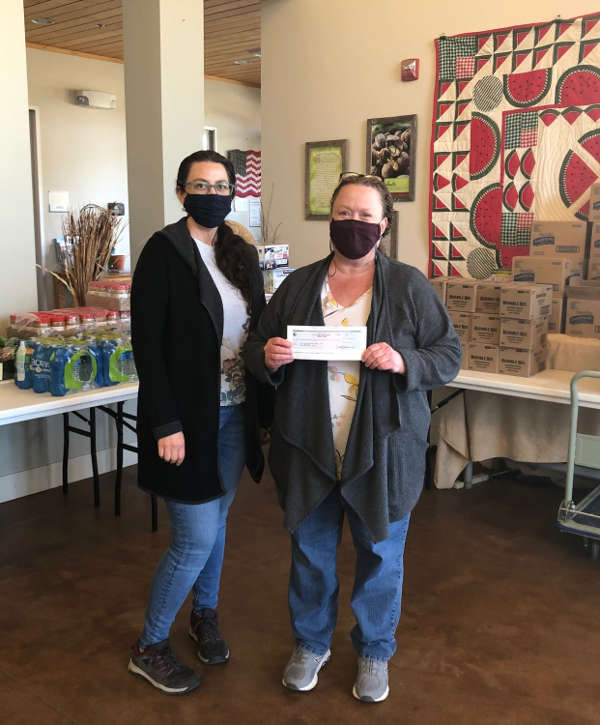
LAKE COUNTY, Calif. – For many of the nearly one-quarter of Lake County residents aged 65 and above, the COVID-19 pandemic has meant simple things like acquiring food have required greater thought and planning.
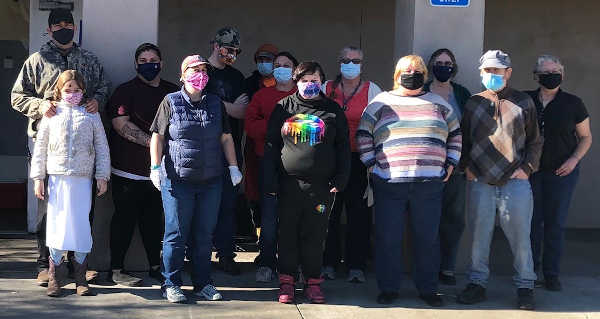
Four Lake County Senior Centers have stepped up to meet unprecedented needs.
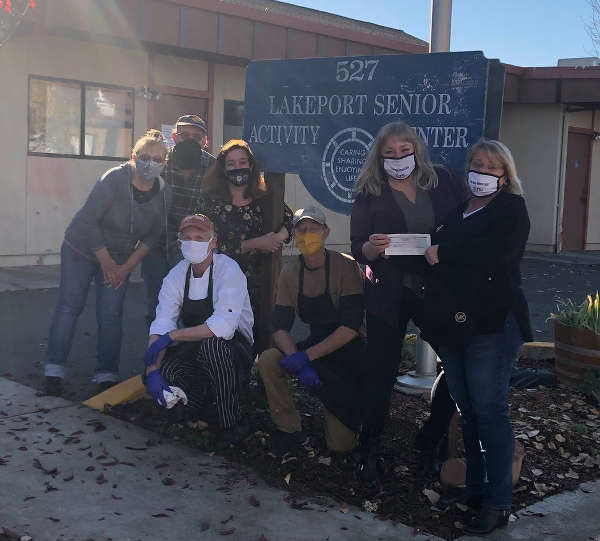
On Monday, Nov. 30, the county of Lake delivered checks totaling $96,582.28 to these four senior centers, located throughout the county:
· Lakeport Senior Center (provider of senior meal program services in the Lakeport, Kelseyville, Nice and Lucerne areas) was granted $28,687.59;
· Middletown Senior Center received $20,000;
· Live Oak Seniors Inc. (Clearlake Oaks), $17,287.31; and
· Highland Senior Services Center (Clearlake area) was awarded $30,607.38.
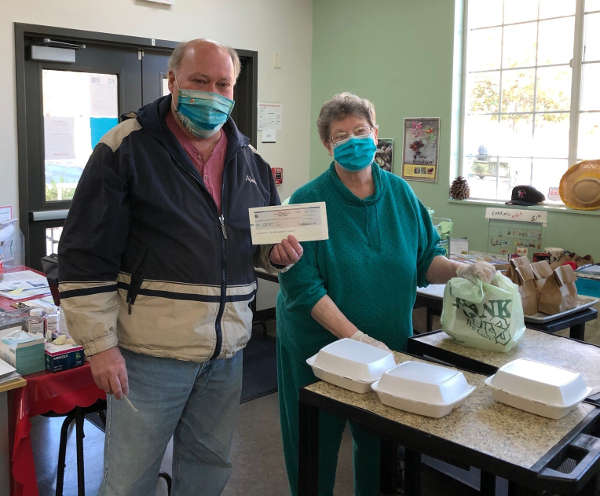
“We are very grateful to the Lake County Board of Supervisors for their decision to share [the County’s] CARES Act funds with senior centers,” said Lake Family Resource Center and Lakeport Senior Center Executive Director, Lisa Morrow. “These funds will facilitate much-needed meal support for our most vulnerable community members during the COVID-19 health emergency.”
The need for Meals on Wheels Drivers has never been greater. If you can be available to help our Senior Centers deliver meals, please contact them today:
· Highlands Senior Center, 707-994-3051.
· Lakeport Senior Center, 707-279-0563.
· Live Oak Seniors Inc., 707-998-1950.
· Middletown Senior Center, 707-987-3113.
NORTHERN CALIFORNIA – Acting Mendocino National Forest Supervisor Lauren Johnson has issued Forest Order No. 08-20-15 for the August Complex and Ranch fires, which opens the burned areas except for some campgrounds and trails.
The new order is effective Dec. 1, 2020, until Nov. 1, 2021.
The road system and trails in the August Complex/Ranch fire areas have been evaluated, many hazards have been removed and a considerable amount of fire suppression damage has been repaired.
While many hazards have been removed, there is no way to make the fire area entirely safe from all hazards.
Some hazards that visitors may encounter when traveling in the fire area are fire weakened trees falling, limbs dropping, burned-out “stump holes” giving way under you, during wet weather, water or mud building up quickly and large rocks dislodging and rolling without warning.
“It is important to reopen access to public lands where we can,” Johnson said. “However, we need to keep some trails and campgrounds closed as they sustained damage that will take some time to repair. We want visitors to be careful and aware of their surroundings while traveling in the burned area.”
Forest Order 08-20-15, including the order, map and list of closed trails and facilities is posted on the forest website, https://www.fs.usda.gov/Internet/FSE_DOCUMENTS/fseprd859571.pdf.
The new order is effective Dec. 1, 2020, until Nov. 1, 2021.
The road system and trails in the August Complex/Ranch fire areas have been evaluated, many hazards have been removed and a considerable amount of fire suppression damage has been repaired.
While many hazards have been removed, there is no way to make the fire area entirely safe from all hazards.
Some hazards that visitors may encounter when traveling in the fire area are fire weakened trees falling, limbs dropping, burned-out “stump holes” giving way under you, during wet weather, water or mud building up quickly and large rocks dislodging and rolling without warning.
“It is important to reopen access to public lands where we can,” Johnson said. “However, we need to keep some trails and campgrounds closed as they sustained damage that will take some time to repair. We want visitors to be careful and aware of their surroundings while traveling in the burned area.”
Forest Order 08-20-15, including the order, map and list of closed trails and facilities is posted on the forest website, https://www.fs.usda.gov/Internet/FSE_DOCUMENTS/fseprd859571.pdf.
The Opportunity Project, or TOP, is celebrating its fifth anniversary this year with four tech development “sprints’’ running simultaneously to address challenges in the natural and built environment
Former Federal Chief Information Officer Suzette Kent called the innovation program, led by the U.S. Census Bureau, “one of the most important accelerators in federal government.”
TOP is a key component of the Federal Data Strategy and the President’s Management Agenda, championed by Deputy Secretary of Commerce Karen Dunn Kelley.
Through 12-week technology development sprints – a method to rapidly prototype digital products – government, technology and community collaborators team up to create digital products that use federal open data. The goal is to serve the public and solve some of our nation’s greatest challenges.
These sprints focus on far-ranging topics such as the natural environment, the built environment, a first-ever cohort of university student participants, and the inaugural implementation of The Opportunity Project’s TOPx Toolkit, piloted by the Department of State.
Challenges TOP tackled this year:
– Reducing plastic pollution in oceans.
– Helping the public understand the effects of transportation emissions on local air quality.
– Enabling aerial and geospatial data to aid agricultural decision-making.
– Developing effective and efficient markets for recycled materials.
– Tracking the impact of emergency and disaster funding.
– Assisting recently resettled refugees.
– Paving a path to economic self-sufficiency for low-income families.
– Facilitating sustainable rural economic development.
– Reimagining civics education for a new generation.
This year’s efforts were co-led by the U.S. departments of State, Agriculture and Housing and Urban Development, the Environmental Protection Agency, the White House Office of Management and Budget, the Wilson Center, and USA for UNHCR, the UN Refugee Agency.
More than 35 tech teams are set to launch their products/digital solutions at our upcoming first-ever virtual Demo Week celebrating TOP’s five-year anniversary, including companies, universities, civic tech brigades and more.
What are some of the products being developed?
Esri, a pioneer in the world of GIS since 1969, has used data from the EPA, INTERPOL (International Criminal Police Organization), the Citizen Science portal and multiple national and international specialists to build an Esri Story Map
This interactive online narrative compiles tangible and novel data sets to energize public consciousness and provide new insights into the problem of ocean plastic pollution. It offers actions citizens and policymakers worldwide can take to solve the crisis.
Rutgers University’s Innovation, Design, and Entrepreneurship Academy (IDEA). A participant in the first-ever university sprint, IDEA has built “Better Air, Better Schools” – a website that uses EPA School Bus Rebate Program data to help teach students ages 7 to 10 about air pollution. The site demonstrates what students can do to reduce the harmful effects of idling and diesel emissions.
OPS1, a technology company dedicated to evolving organizational software, used federal open data, user advocate knowledge, and subject matter expertise to build the cloud-based EnVision application to help low-income families assess their strengths and weaknesses.
The app helps them identify support resources (service providers, mentors and coaches), set goals, create roadmaps, set up prompts to stay on track, and gain tangible rewards for increasing their economic self-sufficiency.
Center on Rural Innovation, or CORI, is a nonprofit dedicated to achieving economic success in rural America through partnership and strategy development. It used data from several sources including the Department of Education College Scorecard, Bureau of Labor Statistics, Bureau of Economic Analysis, and Census Bureau to build the Tech Talent tool.
The tool allows local development leaders and ecosystem builders to easily identify tech talent and employment in small communities.
These products created by technology teams are a small sample of the more than 35 tools that have been created through this innovative collaboration of federal agencies, tech leaders, nonprofits and advocacy groups from communities most affected by these challenges.
To date, more than 1,500 individuals, more than 30 federal agencies and hundreds of organizations have participated in The Opportunity Project, leading to more than 140 new open data digital tools, including apps, websites, mapping tools, data visualizations, games and more.
Want to see more?
Join in celebrating The Opportunity Project’s five-year anniversary at its first-ever virtual Demo Week, which takes place Dec. 9 to 11.
See the event schedule and build your own agenda here.
Want to get involved?
Sign up for emails to stay in the loop and learn more about upcoming sprints in 2021.
Lorena Molina-Irizarry is director of operations of Census Open Innovation Labs. Article courtesy of the US Census Bureau.
Former Federal Chief Information Officer Suzette Kent called the innovation program, led by the U.S. Census Bureau, “one of the most important accelerators in federal government.”
TOP is a key component of the Federal Data Strategy and the President’s Management Agenda, championed by Deputy Secretary of Commerce Karen Dunn Kelley.
Through 12-week technology development sprints – a method to rapidly prototype digital products – government, technology and community collaborators team up to create digital products that use federal open data. The goal is to serve the public and solve some of our nation’s greatest challenges.
These sprints focus on far-ranging topics such as the natural environment, the built environment, a first-ever cohort of university student participants, and the inaugural implementation of The Opportunity Project’s TOPx Toolkit, piloted by the Department of State.
Challenges TOP tackled this year:
– Reducing plastic pollution in oceans.
– Helping the public understand the effects of transportation emissions on local air quality.
– Enabling aerial and geospatial data to aid agricultural decision-making.
– Developing effective and efficient markets for recycled materials.
– Tracking the impact of emergency and disaster funding.
– Assisting recently resettled refugees.
– Paving a path to economic self-sufficiency for low-income families.
– Facilitating sustainable rural economic development.
– Reimagining civics education for a new generation.
This year’s efforts were co-led by the U.S. departments of State, Agriculture and Housing and Urban Development, the Environmental Protection Agency, the White House Office of Management and Budget, the Wilson Center, and USA for UNHCR, the UN Refugee Agency.
More than 35 tech teams are set to launch their products/digital solutions at our upcoming first-ever virtual Demo Week celebrating TOP’s five-year anniversary, including companies, universities, civic tech brigades and more.
What are some of the products being developed?
Esri, a pioneer in the world of GIS since 1969, has used data from the EPA, INTERPOL (International Criminal Police Organization), the Citizen Science portal and multiple national and international specialists to build an Esri Story Map
This interactive online narrative compiles tangible and novel data sets to energize public consciousness and provide new insights into the problem of ocean plastic pollution. It offers actions citizens and policymakers worldwide can take to solve the crisis.
Rutgers University’s Innovation, Design, and Entrepreneurship Academy (IDEA). A participant in the first-ever university sprint, IDEA has built “Better Air, Better Schools” – a website that uses EPA School Bus Rebate Program data to help teach students ages 7 to 10 about air pollution. The site demonstrates what students can do to reduce the harmful effects of idling and diesel emissions.
OPS1, a technology company dedicated to evolving organizational software, used federal open data, user advocate knowledge, and subject matter expertise to build the cloud-based EnVision application to help low-income families assess their strengths and weaknesses.
The app helps them identify support resources (service providers, mentors and coaches), set goals, create roadmaps, set up prompts to stay on track, and gain tangible rewards for increasing their economic self-sufficiency.
Center on Rural Innovation, or CORI, is a nonprofit dedicated to achieving economic success in rural America through partnership and strategy development. It used data from several sources including the Department of Education College Scorecard, Bureau of Labor Statistics, Bureau of Economic Analysis, and Census Bureau to build the Tech Talent tool.
The tool allows local development leaders and ecosystem builders to easily identify tech talent and employment in small communities.
These products created by technology teams are a small sample of the more than 35 tools that have been created through this innovative collaboration of federal agencies, tech leaders, nonprofits and advocacy groups from communities most affected by these challenges.
To date, more than 1,500 individuals, more than 30 federal agencies and hundreds of organizations have participated in The Opportunity Project, leading to more than 140 new open data digital tools, including apps, websites, mapping tools, data visualizations, games and more.
Want to see more?
Join in celebrating The Opportunity Project’s five-year anniversary at its first-ever virtual Demo Week, which takes place Dec. 9 to 11.
See the event schedule and build your own agenda here.
Want to get involved?
Sign up for emails to stay in the loop and learn more about upcoming sprints in 2021.
Lorena Molina-Irizarry is director of operations of Census Open Innovation Labs. Article courtesy of the US Census Bureau.