 How to resolve AdBlock issue?
News
Dogs available for adoption this week include mixes of husky, Labrador Retriever, pit bull, heeler and Shar Pei.
Dogs that are adopted from Lake County Animal Care and Control are either neutered or spayed, microchipped and, if old enough, given a rabies shot and county license before being released to their new owner. License fees do not apply to residents of the cities of Lakeport or Clearlake.
The following dogs at the Lake County Animal Care and Control shelter have been cleared for adoption (additional dogs on the animal control Web site not listed are still “on hold”).
Call Lake County Animal Care and Control at 707-263-0278 or visit the shelter online at http://www.co.lake.ca.us/Government/Directory/Animal_Care_And_Control.htm for information on visiting or adopting.
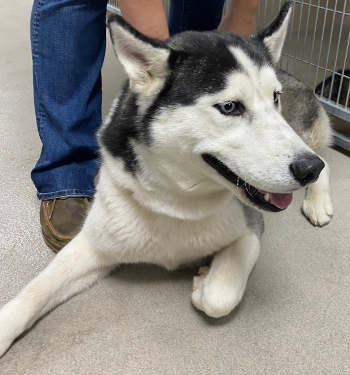
Male husky
This male husky has a medium-length black and white coat and blue eyes.
He’s in kennel No. 22, ID No. 14194.

Female pit bull terrier
This young female pit bull terrier has a short brown coat.
She is in kennel No. 25, ID No. 14181.

Male pit bull terrier
This male pit bull terrier has a short gray and brindle coat.
He is in kennel No. 26, ID No. 14138.

Male pit bull terrier
This young male pit bull terrier has a short blue and white coat.
He is in kennel No. 28, ID No. 14198.
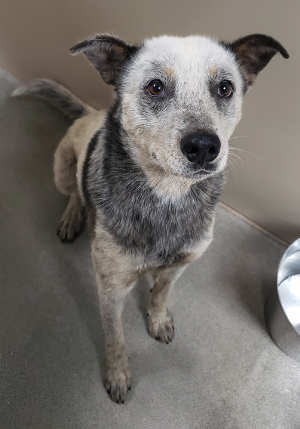
Male heeler-Labrador Retriever
This male heeler-Labrador Retriever mix has a short black and white coat.
He is in kennel No. 29, ID No. 14178.

Male pit bull-Shar Pei
This male pit bull-Shar Pei has a short brown coat.
He is in kennel No. 30, ID No. 14177.

‘Hugo’
“Hugo” is a male pit bull terrier with a medium-length black and white coat.
He has been neutered.
He’s in kennel No. 34, ID No. 14174.
Email Elizabeth Larson at

The hungriest of black holes are thought to gobble up so much surrounding material they put an end to the life of their host galaxy.
This feasting process is so intense that it creates a highly energetic object called a quasar – one of the brightest objects in the universe – as the spinning matter is sucked into the black hole’s belly.
Now, researchers have found a galaxy that is surviving the black hole’s ravenous forces by continuing to birth new stars – about 100 Sun-sized stars a year.
The discovery from NASA’s telescope on an airplane, the Stratospheric Observatory for Infrared Astronomy, can help explain how massive galaxies came to be, even though the universe today is dominated by galaxies that no longer form stars. The results are published in the Astrophysical Journal.
“This shows us that the growth of active black holes doesn’t stop star birth instantaneously, which goes against all the current scientific predictions,” said Allison Kirkpatrick, assistant professor at the University of Kansas in Lawrence Kansas and co-author on the study. “It’s causing us to re-think our theories on how galaxies evolve.”
SOFIA, a joint project of NASA and the German Aerospace Center, DLR, studied an extremely distant galaxy, located more than 5.25 billion light years away called CQ4479. At its core is a special type of quasar that was recently discovered by Kirkpatrick called a “cold quasar.”
In this kind of quasar, the active black hole is still feasting on material from its host galaxy, but the quasar’s intense energy has not ravaged all of the cold gas, so stars can keep forming and the galaxy lives on.
This is the first time researchers have a detailed look at a cold quasar, directly measuring the black hole’s growth, star birth rate, and how much cold gas remains to fuel the galaxy.
“We were surprised to see another oddball galaxy that defies current theories,” said Kevin Cooke, postdoctoral researcher at the University of Kansas in Lawrence, Kansas, and lead author of this study. “If this tandem growth continues both the black hole and the stars surrounding it would triple in mass before the galaxy reaches the end of its life.”
As one of the brightest and most distant objects in the universe, quasars, or “quasi-stellar radio sources,” are notoriously difficult to observe because they often outshine everything around them. They form when an especially active black hole consumes huge amounts of material from its surrounding galaxy, creating strong gravitational forces.
As more and more material spins faster and faster toward the center of the black hole, the material heats up and glows brightly. A quasar produces so much energy that it often outshines everything around it, blinding attempts to observe its host galaxy.
Current theories predict that this energy heats up or expels the cold gas needed to create stars, stopping star birth and driving a lethal blow to a galaxy’s growth. But SOFIA reveals there is a relatively short period when the galaxy’s star birth can continue while the black hole’s feast goes on powering the quasar’s powerful forces.
Rather than directly observing the newborn stars, SOFIA used its 9-foot telescope to detect the infrared light radiating from the dust heated by the process of star formation.
Using data collected by SOFIA's High-resolution Airborne Wideband Camera-Plus, or HAWC+ instrument, scientists were able to estimate the amount of star formation over the past 100 million years.
“SOFIA lets us see into this brief window of time where the two processes can co-exist,” said Cooke. “It’s the only telescope capable of studying star birth in this galaxy without being overwhelmed by the intensely luminous quasar.”
The short window of joint black hole and star growth represents an early phase in the death of a galaxy, wherein the galaxy has not yet succumbed to the devastating effects of the quasar.
Continued research with SOFIA is needed to learn if many other galaxies go through a similar stage with joint black hole and star growth before ultimately reaching the end of life.
Future observations with the James Webb Space Telescope, which is scheduled to launch in 2021, could uncover how quasars affect the overall shape of their host galaxies.
SOFIA is a joint project of NASA and the German Aerospace Center. NASA’s Ames Research Center in California’s Silicon Valley manages the SOFIA program, science, and mission operations in cooperation with the Universities Space Research Association, headquartered in Columbia, Maryland, and the German SOFIA Institute at the University of Stuttgart.
The aircraft is maintained and operated by NASA’s Armstrong Flight Research Center Building 703, in Palmdale, California. The HAWC+ instrument was developed and delivered to NASA by a multi-institution team led by NASA’s Jet Propulsion Laboratory.
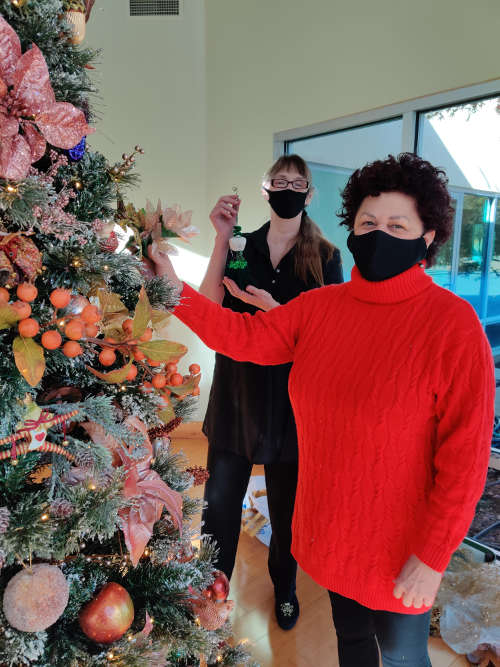
LAKEPORT, Calif. – COVID-19 may be disrupting our lives and forcing us to socially distance but it won’t dim our holiday spirit.
Hospice Services of Lake County has transformed the original “Festival of Trees” gala event into a public display of spectacularly designed Christmas trees and a virtual auction.
The fundraising event supporting the Wings of Hope Bereavement program for children and special needs of Hospice patients runs through Dec. 1.
Community members are invited to view the 27 beautifully designed trees at local businesses and visit the virtual auction site to bid on the uniquely designed trees and other auction items available.
The auction site may be viewed at https://hslcfestivaloftrees2020.ggo.bid.
Online bidding closes on Dec. 1 at 4 p.m.
“Photos of trees taken by local professionals are located on the bid site with a description of each tree and some include wonderful heartfelt stories of loved ones,” said event organizer and staff community relations manager, Beth Havrilla. “However an ‘in-person’ viewing of trees really captures the amazing detail that each designer has put into the decorations.”
Havrilla said business owners are adhering to COVID-19 precautions where trees are located for your safety.
All trees were donated and designed by local Lake County individuals and businesses.
“My family is dedicated to participating in this meaningful event each year,” said Hospice Services Board member Patty Brunetti. “I personally experienced the compassionate services Hospice of Lake County provides when the team cared for my mother at the end of her life. This is my way of supporting Hospice so they can continue providing the same wonderful care to other community members.”
Brunetti’s donated tree is on display at Red’s at The Skyroom in Lakeport.
On Saturday, Nov. 28, community members are encouraged to attend an “open air” open house in downtown Kelseyville highlighting the Festival of Trees from 3 to 6 p.m.
Many trees can be viewed with the full effects of holiday lighting throughout the downtown community.
During the event, meet new Hospice Executive Director Cindy Sobel at A+H General Store from 4 to 6 p.m.
There are 20 festive tabletop centerpieces available to purchase made by Hospice Services volunteers Peggy Landini and Nikka Deacon. Proceeds will support the “Joy in a Vase” project that distributes floral arrangements to Hospice patients and families. The auction site also includes an opportunity to donate directly to the Wings of Hope program.
Hospice Services a nonprofit health care organization is celebrating its 41st anniversary, providing compassionate comfort care for patients and families experiencing life-threatening conditions.
The Wings of Hope Bereavement camp and school-based counseling program is an opportunity for children in the community to receive professional support when someone special in their life has died. These services are available due to the generous support from community members and fundraising.
For more information about the Festival of Trees contact
Janine Smith Citron is director of development for Hospice Services of Lake County.
The anticipation of and preparation for holiday events, as well as the change in weather, is something with which we are all familiar.
This year, the holiday season is a bit different, as the coronavirus pandemic and related economic downturn continue to weigh heavily on communities across the country, state and Lake County.
“Here at Behavioral Health Services, we support the message of Public Health with regard to stopping the spread of the virus: stay at home and stay safe. We also recognize being isolated from friends and family during this time may be especially difficult,” said Lake County Behavioral Health Services Director Todd Metcalf.
Moreover, for individuals with disabilities, the elderly, and people with mental health issues, this time of year may feel even more challenging, Metcalf said.
Regardless of your situation, Metcalf said there are some helpful ways you can manage stress more effectively and feel better during this season and the entire year:
· Call or use technology to connect with friends and family while sheltering in place.
· If you don’t have anyone to reach out to, try giving the CalHOPE Warm Line a call when you’re feeling isolated: (833) 317-HOPE (4673).
· Treat your body kindly. Eat healthy foods, avoid excessive alcohol, and exercise or get some fresh air as you are able.
· Try a mindfulness exercise. If you’re feeling overwhelmed, take a moment to focus on your breath, without trying to control it. Just notice your breath going in and out.
If you find yourself feeling significantly overwhelmed or distressed in a way that interferes with your ability to get through day-to-day life, Metcalf said it may be appropriate to seek help.
You can schedule an appointment with your primary care provider to talk about what’s going on. You can also contact Lake County Behavioral Health Services for information on services and support at 707-274-9101 or 707-994-7090.
Lake County Behavioral Health Services provides recovery-oriented mental health and substance use disorder services to those in need.
If you are experiencing a mental health crisis, which can include thoughts or plans to hurt yourself or others, Metcalf urges you to contact his agency’s crisis line at 800-900-2075 or the North Bay Suicide Prevention Hotline of Lake County at 855-587-6373.
“Remember, you and your life are important. You matter a great deal to all of those connected with you, and all of us at Lake County Behavioral Health Services,” Metcalf said.
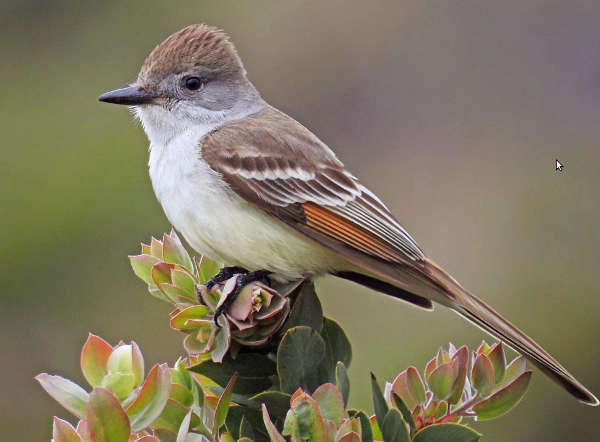
Human-produced noise and light pollution are troublesome to our avian neighbors, according to new research from a team at California Polytechnic State University, published Nov. 11 in Nature.
Using NASA satellite data, the researchers got a bird’s-eye view of how noise and light negatively affected bird reproduction in North America. The team also discovered that these factors might interact with or even mask birds’ responses to the effects of climate change.
Bird populations have declined by about 30 percent in the last few decades. Scientists and land managers seeking to understand what caused the decline and reverse the trend had largely overlooked the effects of noise and light pollution, until recent studies suggested that these stressors could harm certain types of birds.
Prior to the launch of the Visible Infrared Imaging Radiometer Suite (VIIRS) instrument aboard the joint NASA-National Oceanic and Atmospheric Association Suomi National Polar-orbiting Partnership satellite in 2011, high-resolution light pollution data didn’t exist on such a large scale. This new study has produced a continent-wide picture utilizing VIIRS data.
“Our study provides comprehensive evidence that noise and light can profoundly alter reproduction of birds, even when accounting for other aspects of human activities,” said Clint Francis, a biologist at California Polytechnic State University, San Luis Obispo, California, one of the lead authors on the study.
The research team looked at a vast collection of data sets – including those collected by citizen scientists through the NestWatch Program – to assess how light and noise affected the reproductive success of 58,506 nests from 142 bird species across North America.
They considered several factors for each nest, including the time of year when breeding occurred and whether at least one chick fledged – or flew – from the nest.
Birds’ reproduction coincides with peak food availability to feed their young, as daylight cues signal to breed around the same time each year.
The researchers found that light pollution causes birds to begin nesting as much as a month earlier than normal in open environments, such as grasslands or wetlands, and 18 days earlier in forested environments.
The consequence could be a mismatch in timing – for example, hungry chicks may hatch before their food is readily available. If that happens, these early season nests may be less successful at fledging at least one chick, but the situation is complicated by climate change.
As the planet warms, birds’ food is available earlier due to warmer weather. Birds that maintain their historical breeding times because their internal clocks are set to changes in daylength may have fewer chicks survive because the food source they rely on already came and went.
“We discovered that the birds that advanced the timing of their reproduction in response to increased light pollution actually have better reproductive success,” Francis said. “A likely interpretation of this response is that light pollution actually allows these birds to ‘catch up’ to the shift towards earlier availability of food due to climate change.”
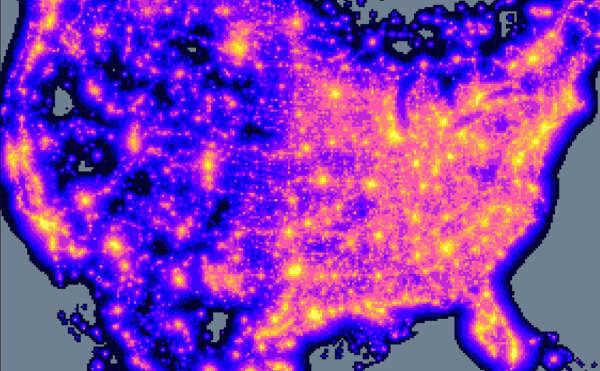
These findings suggest two conclusions about birds’ responses to climate change. First, at least temporarily, birds in lit conditions may be tracking climate change better than those in dark areas.
Second, when scientists thought birds were adjusting their reproductive timing to climate change, birds may have actually been instead responding to light cues since many studies were done in areas exposed to some light pollution.
When considering noise pollution, results showed that birds that live in forested environments tend to be more sensitive to noise than birds in open environments.
Researchers delved into greater detail in 27 different bird species, looking for physical traits that could explain the variations in species’ responses to light and noise. A bird’s ability to see in low light and the pitch of its call were related to species’ responses to light and noise pollution.
The more light a bird’s eye is capable of taking in, the more that species moved its breeding time earlier in the year in response to light pollution, and the more that species benefited from light pollution with improved nest success.
Noise pollution delayed nesting for birds’ whose songs are at a lower frequency and thus more difficult to hear through low-frequency human noise. Mating decisions are made based on the male’s song, and in some cases, females need to hear the male’s song to become physically ready to breed.
These trait and environment-specific results have strong implications for managing wild lands. Developers and land managers could use this study to understand how their plans are likely to affect birds. For example, Francis says, “Is it a forest bird? If so, it is likely that it is more sensitive to light and noise.”
The study is the first step toward a larger goal of developing a sensitivity index for all North American birds. The index would allow managers and conservationists to cross-reference multiple physical traits for one species to assess how factors such as light and noise pollution would affect each species.
Rachel Henry works for NASA.
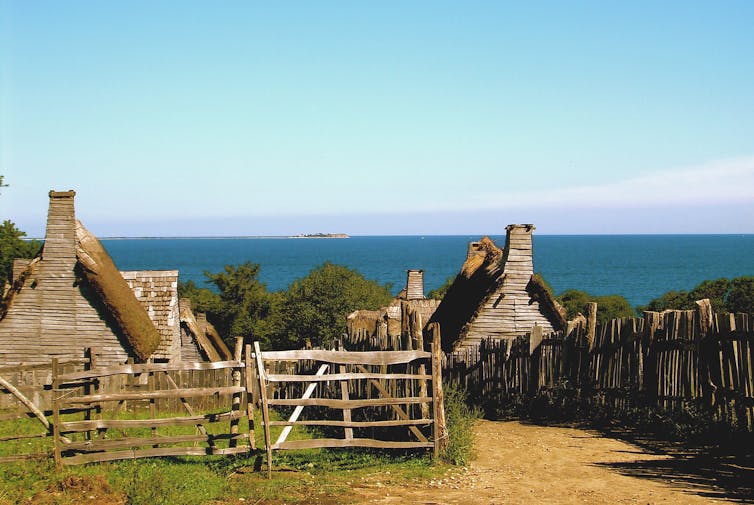

The 400th anniversary of the Pilgrims’ voyage to Plymouth will be celebrated on both sides of the Atlantic with a “remembrance ceremony” with state and local officials and a museum exhibit in Plymouth, England. An autonomous marine research ship named “The Mayflower” has been equipped with an AI navigating system that will allow the ship to trace the course of the original journey without any humans on board.
Yet as a scholar of early 17th-century New England, I’ve always been puzzled by the glory heaped on the Pilgrims and their settlement in Plymouth.
Native Americans had met Europeans in scores of places before 1620, so yet another encounter was hardly unique. Relative to other settlements, the colony attracted few migrants. And it lasted only 70 years.
So why does it have such a prominent place in the story of America? And why, until recently, did the more troubling aspects to Plymouth and its founding document, the Mayflower Compact, go ignored?
Prophets and profits
The establishment of Plymouth did not occur in a vacuum.
The Pilgrims’ decision to go to North America – and their deep attachment to their faith – was an outcome of the intense religious conflict roiling Europe after the Protestant Reformation. Shortly before the travelers’ arrival, the Wampanoag residents of Patuxet – the area in and around modern day Plymouth – had suffered a devastating, three-year epidemic, possibly caused by leptospirosis, a bacterial disease that can lead to meningitis, respiratory distress and liver failure.
It was during these two crises that the histories of western Europe and Indigenous North America collided on the shores of Massachusetts Bay.
Despite a number of advantages, including less competition for local resources because of the epidemic, Plymouth attracted far fewer English migrants than Virginia, which was settled in 1607, and Massachusetts, which was established in 1630.
The Pilgrims, as they told their story traveled so they could practice their religion free from persecution. But other English joined them, including some migrants seeking profits instead of heeding prophets. Unfortunately for those hoping to earn a quick buck, the colony never became an economic dynamo.
A shaky compact
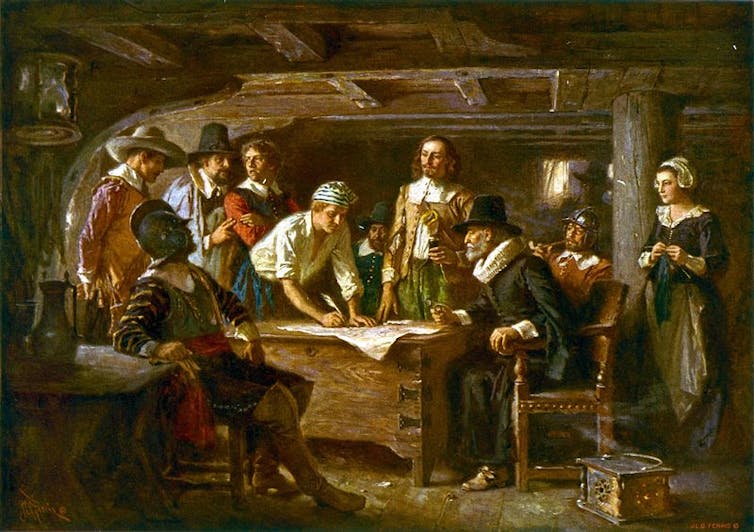
Plymouth nonetheless went on to attain a prominent place in the history of America, primarily due to two phenomena: It was the alleged site of the first Thanksgiving, and its founders drafted the Mayflower Compact, a 200-word document written and signed by 41 men on the ship.
Generations of American students have learned that the Compact was a stepping stone towards self-government, the defining feature of American constitutional democracy.
But did Plymouth really inspire democracy? After all, self-governing communities existed across Indigenous New England long before European migrants arrived. And a year earlier, in 1619, English colonists in Virginia had created the House of Burgesses to advance self-rule in North America for subjects of King James I.
So American self-government, however one defines it, was not born in Plymouth.
The Mayflower Compact nonetheless contained lofty ideals. The plan signed by many of the Mayflower’s male passengers demanded that colonists “Covenant & Combine ourselves into a Civil body politic, for our better ordering, & preservation.” They promised to work together to write “laws, ordinances, Acts, constitutions.” The signers pledged to work for the “advancement of the Christian faith.”

Yet as the years after 1620 bore out, the migrants did not adhere to such principles when dealing with their Wampanoag and other Algonquian-speaking neighbors. Gov. William Bradford, who began writing his history of Plymouth in 1630, wrote about the Pilgrims arriving in “a hideous and desolate wilderness, full of wild beasts and wild men” even though Patuxet looked more like a settled European farmland. The Pilgrims exiled an English lawyer named Thomas Morton, in part because he believed that Indigenous and colonists could peacefully coexist. And in 1637, Plymouth’s authorities joined a bloody campaign against the Pequots, which led to the massacre of Indigenous people on the banks of the Mystic River, followed by the sale of prisoners into slavery.
The Compact was even used by loyalists to the British crown to argue against independence. Thomas Hutchinson, the last royal governor of Massachusetts, pointed to the Pilgrims as proof that colonists should not rebel, highlighting the passage that defined the signers as “loyal subjects” of the English king.
History told by the victors
After the American Revolution, politicians and historians, especially those descended from Pilgrims and Puritans, were keen to trace the origins of the United States back to Plymouth.
In the process, they glossed over the Pilgrims’ complicated legacy.
In 1802, the future President John Quincy Adams spoke at Plymouth about the unique genius of the colony’s founders and their governing contract. He announced that the Pilgrims would arrive at the biblical day of judgment “in the whiteness of innocence” for having shown “kindness and equity toward the savages.”
In the mid-19th century, the historian George Bancroft claimed that it was in “the cabin of the Mayflower” where “humanity recovered its rights, and instituted government on the basis of ‘equal laws’ for ‘the general good.’”
Nineteenth-century anniversary celebrations focused on the colonists, their written Compact, and their contribution to what became the United States. In 1870, on the 250th anniversary, celebrants struck a commemorative coin: one side featured an open Bible, the other a group of Pilgrims praying on the shoreline.
Missing, not surprisingly, were the Wampanoags.

A more nuanced view of the past
By 1970, the cultural tide had turned. Representatives of the Wampanoag nation walked out of Plymouth’s public celebration of Thanksgiving that year to announce that the fourth Thursday in November should instead be known as the National Day of Mourning. To these protesters, 1620 represented violent conquest and dispossession, the twinned legacies of exclusion.
The organizers of an international group called “Plymouth 400” have stressed that they want to tell a “historically accurate and culturally inclusive history.” They’ve promoted both the General Society of Mayflower Descendants and an exhibit featuring 400 years of Wampanoag History. Unlike earlier generations of celebrants, the organizers have acknowledged the continued presence of Native residents.
Prior celebrations of Plymouth’s founding focused on the Pilgrims’ role in the creation of the United States. By doing so, these commemorations sustained an exclusionary narrative for over two centuries.
Perhaps this year a different story will take hold, replacing ancestor worship with a more clear-eyed view of the past.
[Deep knowledge, daily. Sign up for The Conversation’s newsletter.]
Peter C. Mancall, Andrew W. Mellon Professor of the Humanities, USC Dornsife College of Letters, Arts and Sciences
This article is republished from The Conversation under a Creative Commons license. Read the original article.