 How to resolve AdBlock issue?
News
On Thursday, Congressman John Garamendi (D-CA-3) joined President Joe Biden, Vice President Kamala Harris, Secretary of Transportation Pete Buttigieg, and a small bipartisan group of members of Congress in the Oval Office to discuss a path forward to pass a transportation infrastructure bill into law this year.
The bipartisan group of representatives consisted of House Transportation and Infrastructure Committee Chairman Peter DeFazio (D-OR) and Reps. Eleanor Holmes Norton (D-DC), John Garamendi (D-CA), Sharice Davids (D-KS), Garret Graves (R-LA), Rodney Davis (R-IL), John Katko (R-NY) and Brian Fitzpatrick (R-PA).
Garamendi, a senior member of the Transportation and Infrastructure Committee who represents a portion of Lake County in the House, led a discussion at the meeting on the need to advance “Buy American” policies in any forthcoming infrastructure bill.
He has championed Buy American legislation through his “Make it in America” agenda in Congress over the past 10 years.
Garamendi emphasized the importance of modernizing our nation’s outdated infrastructure and advancing the Biden Administration’s “Build Back Better” plan with American products made by American workers.
“It was an honor to join President Biden, Vice President Harris, Secretary Buttigieg, and this bipartisan group of Congressional leaders to discuss the ways we can pass much-needed infrastructure legislation to create American jobs and help our economy build back better,” Garamendi said.
“I am looking forward to working with the White House in the months ahead to rebuild our crumbling infrastructure with American workers and materials. As American businesses close due to the compounding COVID-19 crisis, the federal government must take every action it can to support American manufacturing and workers.” Garamendi continued.
“President Biden has a bold plan to modernize our nation’s outdated infrastructure that will create hundreds of thousands of good-paying jobs in the process. I look forward to working tirelessly in Congress to ensure that his plan is realized,” Garamendi said, offering his thanks to the president and vice president, the secretary and his colleagues in Congress.
The bipartisan group of representatives consisted of House Transportation and Infrastructure Committee Chairman Peter DeFazio (D-OR) and Reps. Eleanor Holmes Norton (D-DC), John Garamendi (D-CA), Sharice Davids (D-KS), Garret Graves (R-LA), Rodney Davis (R-IL), John Katko (R-NY) and Brian Fitzpatrick (R-PA).
Garamendi, a senior member of the Transportation and Infrastructure Committee who represents a portion of Lake County in the House, led a discussion at the meeting on the need to advance “Buy American” policies in any forthcoming infrastructure bill.
He has championed Buy American legislation through his “Make it in America” agenda in Congress over the past 10 years.
Garamendi emphasized the importance of modernizing our nation’s outdated infrastructure and advancing the Biden Administration’s “Build Back Better” plan with American products made by American workers.
“It was an honor to join President Biden, Vice President Harris, Secretary Buttigieg, and this bipartisan group of Congressional leaders to discuss the ways we can pass much-needed infrastructure legislation to create American jobs and help our economy build back better,” Garamendi said.
“I am looking forward to working with the White House in the months ahead to rebuild our crumbling infrastructure with American workers and materials. As American businesses close due to the compounding COVID-19 crisis, the federal government must take every action it can to support American manufacturing and workers.” Garamendi continued.
“President Biden has a bold plan to modernize our nation’s outdated infrastructure that will create hundreds of thousands of good-paying jobs in the process. I look forward to working tirelessly in Congress to ensure that his plan is realized,” Garamendi said, offering his thanks to the president and vice president, the secretary and his colleagues in Congress.
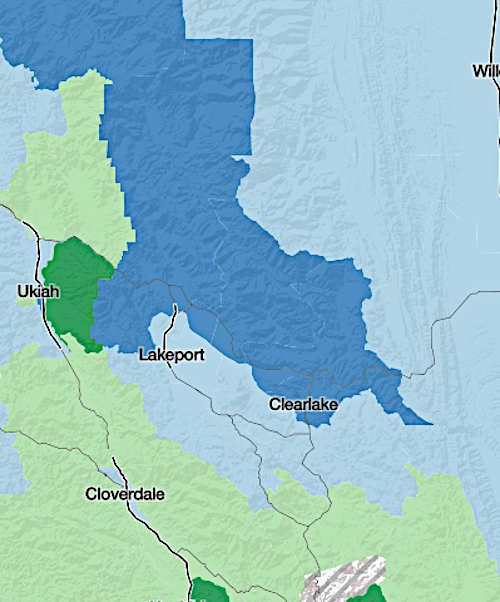
LAKE COUNTY, Calif. – State officials said Wednesday night that they are taking a new approach to vaccinating the state’s residents against COVID-19, placing focus on low income areas that could include Lake County.
Officials with Gov. Gavin Newsom’s administration said they are unveiling a vaccination plan focusing on equity, specifically, addressing the state’s lowest-income communities.
The state now intends to focus 40 percent of the vaccine supply in lower income and lower quartile communities, which include 400 zip codes where an estimated eight million Californians live.
That’s because state health officials have found that more than 40 percent of California’s disease burden – cases and deaths – have been shouldered by those living in the lowest quartiles in the California Healthy Places Index.
The index considers 25 community characteristics – among them, housing, education, economics and social factors – and creates a single score to help assess the health and well-being of each neighborhood in California, with the lowest scores in dark blue and the highest in dark green.
This new change in vaccination focus could prove particularly important to Lake County, a large portion of which the California Healthy Places Index shows is in the bottom quartile and among the lowest-ranked areas of the state.
The areas of Lake County ranked in the lowest quartile and marked out in dark blue stretch from the top of the county, north of Upper Lake, to west of Lakeport and east along the Northshore, including the communities of Nice, Lucerne and Clearlake Oaks, and down to the Clearlake area.
Lake County Public Health’s demographics breakdown shows that District 2, which includes most of the city of Clearlake and areas east, has consistently had the most cases, but it’s also a major population center in the county.
It’s followed by areas that rank higher in the Healthy Places Index: District 4, which includes Lakeport, and District 5, which includes the greater Kelseyville and Cobb areas.
District 3, which includes the Northshore communities that also have a low index ranking, is ranked fourth for case numbers and District 1, which includes portions of Clear Lake, Lower Lake, Anderson Springs, Hidden Valley Lake and Middletown, has the county’s lowest case numbers and the county’s best index ranking.
As of Wednesday, the California Department of Public Health said that 13,845 COVID-19 vaccine doses have been administered in Lake County, which has more than 64,000 residents and to date has had more than 3,100 cases and 41 deaths.
Focused vaccinations to be followed by tier adjustments
Over the next few weeks, the state will be focused on distributing the vaccines to two million residents in the 400 zip codes identified as being the state’s lowest-income communities. As of Wednesday night, those specific zip codes had not yet been released to the public.
Once they hit that threshold, the state will adjust the case rate threshold upward for the red tier on the Blueprint for a Safer Economy from seven to 10 cases per 100,000 people, which is expected to allow areas to drop out of the purple tier, which is the most restrictive on the blueprint.
Lake County remained in the purple tier this week, with its daily case rate at 11 per 100,000, down from 15 per 100,000 last week, according to the county’s epidemiologist, Sarah Marikos.
When the state hits the four million dose threshold, the numbers for the orange and yellow tiers also will be adjusted, officials said.
Additional information on the plan is expected over the next few days.
Administration officials also emphasized that they are in no way planning to abandon safety measures implemented in California during the pandemic, and are in fact doubling down and continuing with them.
On Thursday clearer guidance will be released on the critical role masks play in curbing COVID-19 transmission. Testing capacity also will remain a focus.
Even with proposed changes coming for the state’s tiers, officials said California will still maintain some of the strongest public health protections in the nation through its Blueprint for a Safer Economy.
Email Elizabeth Larson at
LAKE COUNTY, Calif. – Forecasters said rain and mountain snow are expected to impact the North Coast into next week.
The National Weather Service said a cold front moving over the North Coast beginning on Thursday will bring gusty winds from the south southeast and “light but consistent rain” over the region Friday morning through Friday evening.
There’s also the potential for more bouts of rain and mountain snow into early next week, the National Weather Service said.
On Thursday, winds are expected to be about 10 to 20 miles per hour with gusts of up to 25 miles per hour in Lake County, with increasing winds forecast through Friday morning.
As for rainfall, on Friday Lake County should expect to see between a half an inch to an inch with snow levels in the region’s mountains down to the 4,000 foot elevation mark, the forecast said.
On Saturday, forecasters said there could be some rain but conditions should be drier, with weather models so far showing the potential for another weather system to arrive on Sunday and for more wet weather.
The Lake County forecast shows the potential for rain from Friday through Saturday, with conditions clearing on Saturday night and into Sunday. Chances of rain are again in the forecast from Sunday night through Monday.
Rain is likely on Tuesday, the forecast said, and possible on Wednesday.
Cooler conditions are expected over the coming week, with temperatures dropping as low as the 40s during the day and the 30s at night, the National Weather Service said.
Rain is needed to bring Clear Lake’s level up to a more normal winter level.
Lake County Water Resources said Wednesday that the lake was at 1.03 feet Rumsey, the special measure used for the lake.
That’s compared to 4.59 feet Rumsey last March 3 and 9.90 feet Rumsey – which is into flood stage – on March 3, 2019.
Email Elizabeth Larson atThis email address is being protected from spambots. You need JavaScript enabled to view it. . Follow her on Twitter, @ERLarson, or Lake County News, @LakeCoNews.
The National Weather Service said a cold front moving over the North Coast beginning on Thursday will bring gusty winds from the south southeast and “light but consistent rain” over the region Friday morning through Friday evening.
There’s also the potential for more bouts of rain and mountain snow into early next week, the National Weather Service said.
On Thursday, winds are expected to be about 10 to 20 miles per hour with gusts of up to 25 miles per hour in Lake County, with increasing winds forecast through Friday morning.
As for rainfall, on Friday Lake County should expect to see between a half an inch to an inch with snow levels in the region’s mountains down to the 4,000 foot elevation mark, the forecast said.
On Saturday, forecasters said there could be some rain but conditions should be drier, with weather models so far showing the potential for another weather system to arrive on Sunday and for more wet weather.
The Lake County forecast shows the potential for rain from Friday through Saturday, with conditions clearing on Saturday night and into Sunday. Chances of rain are again in the forecast from Sunday night through Monday.
Rain is likely on Tuesday, the forecast said, and possible on Wednesday.
Cooler conditions are expected over the coming week, with temperatures dropping as low as the 40s during the day and the 30s at night, the National Weather Service said.
Rain is needed to bring Clear Lake’s level up to a more normal winter level.
Lake County Water Resources said Wednesday that the lake was at 1.03 feet Rumsey, the special measure used for the lake.
That’s compared to 4.59 feet Rumsey last March 3 and 9.90 feet Rumsey – which is into flood stage – on March 3, 2019.
Email Elizabeth Larson at
Moving around California three decades from now will be safer, cleaner and simpler with more mobility options under a plan Caltrans unveiled this week.
The California Transportation Plan, or CTP, 2050 details the state's long-range transportation vision and establishes a roadmap to improve mobility and accessibility in the state while reducing greenhouse gas, or GHG, emissions related to transportation.
“California’s transportation system connects 40 million residents to jobs, housing, vital services and recreation,” said Caltrans Director Toks Omishakin. “The plan sets a bold vision to foster economic vitality, protect our environment and meet the transportation needs of all Californians.”
The CTP 2050 is a comprehensive, ambitious plan that – as opposed to focusing on individual projects or budgets – examines wide-ranging policies and strategies to meet several key objectives, including:
– Expanding economic opportunities through the easy, integrated movement of people, freight and services;
– Creating a low-carbon transportation system that protects public and environmental health;
– Advancing transportation equity and improving quality of life for Californians;
– Responding to current and emerging trends and challenges, including demographic and economic shifts, land use changes, and other factors;
– Enhancing safety and security on bridges, highways and roads;
– Fostering healthy lifestyles through walking and bicycling paths;
– Harnessing potential changes in travel behavior, such as increased use of autonomous vehicles, shared mobility services and the effects of increased telework, telehealth and distance learning, to reduce our reliance on driving; and
– Supporting sustainable growth and affordable housing.
By 2050, California’s transportation system will need to support an estimated 45 million residents with an integrated, sustainable network of mobility options that provide safe, convenient and reliable access to jobs, education, health care and other services that improve quality of life in all areas of the state.
California must do this while also achieving its goal of reducing GHG emissions from transportation to 80 percent below 1990 emissions levels by 2050.
To make this a reality, Caltrans and local transportation agencies identified eight priorities in the CTP 2050 to guide policy and budget decisions and transportation planning in the years ahead:
Safety – Provide a safe and secure system designed to eliminate transportation-related fatalities and serious injuries and withstand natural disasters.
Climate – Achieve statewide GHG emission reduction targets and make the state’s transportation system more resilient to climate change.
Equity – Eliminate transportation barriers and expand access across all communities, particularly in low-income neighborhoods and communities of color and for people with disabilities.
Accessibility – Improve mobility across all modes of transportation, including transit, walking, biking and vehicle travel so all Californians can safely and easily reach their destination.
Quality of Life and Public Health – Enable vibrant, healthy communities through expanded walking and bicycling paths and convenient transit options to reduce GHG emissions and dependence on driving.
Economy – Support a vibrant, resilient economy by improving freight movement and access to housing and jobs.
Environment – Reduce the negative impacts of transportation by expanding low-carbon and sustainable mobility options.
Infrastructure – Maintain a reliable transportation system that is sustainable and resilient to climate change and natural disasters.
During the development of the CTP 2050, roadway congestion was initially reduced in many cities due to COVID-19. However, while the pandemic continues, vehicle traffic has returned to nearly pre-pandemic levels and is likely to worsen, especially if transit service and ridership remain well below pre-pandemic levels.
Expanding access to transit and safe walking and bicycle paths were priorities for Caltrans before the arrival of COVID-19 and remain essential to achieving a sustainable recovery.
The CTP 2050 seeks to advance racial and economic justice by redirecting resources to marginalized and underinvested communities and amplifying voices that have been historically excluded from the transportation decision-making process.
The plan emphasizes the importance of engagement and careful planning to ensure all Californians enjoy the benefits of transportation projects and are not subject to negative project impacts, particularly in historically underserved and underrepresented communities, such as Black and Latino neighborhoods. Improving engagement in transportation planning at the neighborhood level will limit those communities’ exposure to pollution from the transportation system, provide expanded mobility options, and enhance access to jobs, education, healthy food and transit.
Visit the California Transportation Plan page to view the report.
The California Transportation Plan, or CTP, 2050 details the state's long-range transportation vision and establishes a roadmap to improve mobility and accessibility in the state while reducing greenhouse gas, or GHG, emissions related to transportation.
“California’s transportation system connects 40 million residents to jobs, housing, vital services and recreation,” said Caltrans Director Toks Omishakin. “The plan sets a bold vision to foster economic vitality, protect our environment and meet the transportation needs of all Californians.”
The CTP 2050 is a comprehensive, ambitious plan that – as opposed to focusing on individual projects or budgets – examines wide-ranging policies and strategies to meet several key objectives, including:
– Expanding economic opportunities through the easy, integrated movement of people, freight and services;
– Creating a low-carbon transportation system that protects public and environmental health;
– Advancing transportation equity and improving quality of life for Californians;
– Responding to current and emerging trends and challenges, including demographic and economic shifts, land use changes, and other factors;
– Enhancing safety and security on bridges, highways and roads;
– Fostering healthy lifestyles through walking and bicycling paths;
– Harnessing potential changes in travel behavior, such as increased use of autonomous vehicles, shared mobility services and the effects of increased telework, telehealth and distance learning, to reduce our reliance on driving; and
– Supporting sustainable growth and affordable housing.
By 2050, California’s transportation system will need to support an estimated 45 million residents with an integrated, sustainable network of mobility options that provide safe, convenient and reliable access to jobs, education, health care and other services that improve quality of life in all areas of the state.
California must do this while also achieving its goal of reducing GHG emissions from transportation to 80 percent below 1990 emissions levels by 2050.
To make this a reality, Caltrans and local transportation agencies identified eight priorities in the CTP 2050 to guide policy and budget decisions and transportation planning in the years ahead:
Safety – Provide a safe and secure system designed to eliminate transportation-related fatalities and serious injuries and withstand natural disasters.
Climate – Achieve statewide GHG emission reduction targets and make the state’s transportation system more resilient to climate change.
Equity – Eliminate transportation barriers and expand access across all communities, particularly in low-income neighborhoods and communities of color and for people with disabilities.
Accessibility – Improve mobility across all modes of transportation, including transit, walking, biking and vehicle travel so all Californians can safely and easily reach their destination.
Quality of Life and Public Health – Enable vibrant, healthy communities through expanded walking and bicycling paths and convenient transit options to reduce GHG emissions and dependence on driving.
Economy – Support a vibrant, resilient economy by improving freight movement and access to housing and jobs.
Environment – Reduce the negative impacts of transportation by expanding low-carbon and sustainable mobility options.
Infrastructure – Maintain a reliable transportation system that is sustainable and resilient to climate change and natural disasters.
During the development of the CTP 2050, roadway congestion was initially reduced in many cities due to COVID-19. However, while the pandemic continues, vehicle traffic has returned to nearly pre-pandemic levels and is likely to worsen, especially if transit service and ridership remain well below pre-pandemic levels.
Expanding access to transit and safe walking and bicycle paths were priorities for Caltrans before the arrival of COVID-19 and remain essential to achieving a sustainable recovery.
The CTP 2050 seeks to advance racial and economic justice by redirecting resources to marginalized and underinvested communities and amplifying voices that have been historically excluded from the transportation decision-making process.
The plan emphasizes the importance of engagement and careful planning to ensure all Californians enjoy the benefits of transportation projects and are not subject to negative project impacts, particularly in historically underserved and underrepresented communities, such as Black and Latino neighborhoods. Improving engagement in transportation planning at the neighborhood level will limit those communities’ exposure to pollution from the transportation system, provide expanded mobility options, and enhance access to jobs, education, healthy food and transit.
Visit the California Transportation Plan page to view the report.
House Gun Violence Prevention Task Force Chairman Mike Thompson (CA-05), along with original cosponsors House Judiciary Committee Chairman Jerrold Nadler (D-NY), and Representatives Fred Upton (R-MI), Sheila Jackson Lee (D-TX), Christopher Smith (R-NJ), Robin Kelly (D-IL), Brian Fitzpatrick (R-PA), and Lucy McBath (D-GA), announced the introduction this week of the H.R. 8, Bipartisan Background Checks Act of 2021.
This landmark gun violence prevention legislation requires background checks on all firearm sales.
Click here to read bill text and here for a section by section.
H. R. 8, the Bipartisan Background Checks Act of 2021, was first introduced in January 2019 and passed in February 2019 and sat on then-Senate Leader Mitch McConnell’s desk for the rest of the 116th Congress despite urgent and strong pressure to take up this important legislation.
“The last two years have been a turning point in our longstanding fight to help prevent gun violence and we take another leap forward in helping to save lives. Joined by Democrats and Republicans, we introduce the Bipartisan Background Checks Act of 2021 to help keep guns out of the hands of those who may be a danger to themselves or others,” said Chairman Thompson. “Time and time again, we have seen that the American people want universal background checks, in fact public polling shows that the majority of people, Democrats, Republicans and Independents, support this. We began our work to combat the scourge of gun violence eight years ago after the tragedy at Sandy Hook Elementary School and will not stop until we deliver for the American people.”
“Every day, the epidemic of gun violence shatters lives in countless communities across the country,” said Speaker Nancy Pelosi. “With Gun Violence Prevention Task Force Chairman Mike Thompson’s reintroduction of H.R. 8, the Bipartisan Background Checks Act, the Democratic House is continuing its urgent action to end the epidemic. Guided by the voices of millions of young people marching for their lives and aided by the leadership of the Biden-Harris Administration, the Democratic Congress will continue our work to ensure H.R. 8 and other life-saving gun violence prevention measures are finally enacted into law. Enough is enough.”
Background checks are simple, easy, and they save lives. That's why more than 90 percent of Americans support our legislation to make sure no guns are sold in this country without a check,” said Senator Chris Murphy (D-CT), who introduced the companion Senate bill. “Joe Biden and hundreds of congressional candidates from both parties ran on the issue of background checks. This is the year to get this bill passed into law. And this legislation has the chance to bring this country together – even 85 percent of gun owners believe in expanding background checks, and a growing anti-gun violence movement, made up of both Democrats and Republicans, is demanding change. I look forward to working across the aisle to get background checks legislation across the finish line.”
“I am proud to support the Bipartisan Background Checks Act to extend the firearms background check requirement so that we can help keep guns out of the hands of felons and others who are legally prohibited from possessing them. No longer should those who are prohibited from owning a gun use gaps in the law like the online sale loophole and the gun show loophole to obtain these weapons,” said Chairman Nadler. “This bipartisan bill has the overwhelming support of the American people and it is time that we enact these critical improvements to our law so that we save lives. I thank Rep. Thompson for his leadership in advancing this legislation and look forward to supporting its passage.”
“After every tragic shooting, we say, ‘Enough is enough.’ But nothing changes. It’s past time for change. Sadly, while we cannot prevent every act of violence, certainly we can prevent many more. We owe it to our communities to try. The legislation we’re introducing today closes loopholes using technology that will make our southwest Michigan communities safer and still complies with the Second Amendment,” said Upton.
“I would like to thank Chairman Thompson for his persistent leadership in seeking to pass real gun safety legislation. As one of the Vice-Chairs of the Gun Task Force, I believe H.R. 8 will make a monumental difference in lowering the amount of gun violence in America and by providing a constitutionally protected approach to gun sales,” said Jackson Lee. “It is important to move this bill forward and to finally have a responsible manner for gun transfers in America. H.R. 8 will save lives!”
“Reasonable laws that protect Second Amendment rights while ensuring that felons, fugitives, domestic abusers and other dangerous individuals do not have access to guns help prevent violence and save lives,” said Smith. “This common-sense legislation would ensure that firearms are purchased, owned and used by responsible, law-abiding citizens by closing the ‘private sale loophole’ and listing all those prohibited from buying a firearm in the National Instant Criminal Background Check System.”
"The quickest and simplest step we can take to curb gun violence across our country is through expanding background checks on all gun sales," said Kelly. "The American people are tired of watching our brothers, sisters, cousins, friends and even our small children be taken from us by gun violence at the hands of those who should have never had access to a gun in the first place. We know that expanding background checks will help lessen gun violence and save lives. I will continue working with my colleagues to ensure that this and other common sense reforms to end gun violence advance through Congress."
“Background checks are a proven, effective measure in keeping our communities safe,” said Fitzpatrick. “This legislation protects the constitutional rights of law abiding Americans while seeking to prevent felons, domestic abusers, and the dangerously mentally ill from lawfully purchasing a firearm. Congress owes our nation’s families and children bipartisan gun safety reform, and the introduction of H.R. 8, the Bipartisan Background Checks Act of 2021 brings us closer towards fulfilling that obligation.”
“It has been two years since we stood together in the House chamber and voted to pass this common-sense bill. I voted ‘Yes’ for my son, Jordan Davis, and for all the lives lost to gun violence,” said McBath. “I promised I would take that sense of protection, that love a mother has for her son, and use it for my community. That I would dedicate my life for families like mine in Marietta, Georgia, who are terrified that they will send their kids to school and never see them come home. Terrified that they will one day be me. Today, we once again take an historic step to protect our children, to protect our communities, and to save American lives.”
The Gun Violence Prevention Task Force was established after the tragedy at Sandy Hook and has grown to a membership of more than 185.
This landmark gun violence prevention legislation requires background checks on all firearm sales.
Click here to read bill text and here for a section by section.
H. R. 8, the Bipartisan Background Checks Act of 2021, was first introduced in January 2019 and passed in February 2019 and sat on then-Senate Leader Mitch McConnell’s desk for the rest of the 116th Congress despite urgent and strong pressure to take up this important legislation.
“The last two years have been a turning point in our longstanding fight to help prevent gun violence and we take another leap forward in helping to save lives. Joined by Democrats and Republicans, we introduce the Bipartisan Background Checks Act of 2021 to help keep guns out of the hands of those who may be a danger to themselves or others,” said Chairman Thompson. “Time and time again, we have seen that the American people want universal background checks, in fact public polling shows that the majority of people, Democrats, Republicans and Independents, support this. We began our work to combat the scourge of gun violence eight years ago after the tragedy at Sandy Hook Elementary School and will not stop until we deliver for the American people.”
“Every day, the epidemic of gun violence shatters lives in countless communities across the country,” said Speaker Nancy Pelosi. “With Gun Violence Prevention Task Force Chairman Mike Thompson’s reintroduction of H.R. 8, the Bipartisan Background Checks Act, the Democratic House is continuing its urgent action to end the epidemic. Guided by the voices of millions of young people marching for their lives and aided by the leadership of the Biden-Harris Administration, the Democratic Congress will continue our work to ensure H.R. 8 and other life-saving gun violence prevention measures are finally enacted into law. Enough is enough.”
Background checks are simple, easy, and they save lives. That's why more than 90 percent of Americans support our legislation to make sure no guns are sold in this country without a check,” said Senator Chris Murphy (D-CT), who introduced the companion Senate bill. “Joe Biden and hundreds of congressional candidates from both parties ran on the issue of background checks. This is the year to get this bill passed into law. And this legislation has the chance to bring this country together – even 85 percent of gun owners believe in expanding background checks, and a growing anti-gun violence movement, made up of both Democrats and Republicans, is demanding change. I look forward to working across the aisle to get background checks legislation across the finish line.”
“I am proud to support the Bipartisan Background Checks Act to extend the firearms background check requirement so that we can help keep guns out of the hands of felons and others who are legally prohibited from possessing them. No longer should those who are prohibited from owning a gun use gaps in the law like the online sale loophole and the gun show loophole to obtain these weapons,” said Chairman Nadler. “This bipartisan bill has the overwhelming support of the American people and it is time that we enact these critical improvements to our law so that we save lives. I thank Rep. Thompson for his leadership in advancing this legislation and look forward to supporting its passage.”
“After every tragic shooting, we say, ‘Enough is enough.’ But nothing changes. It’s past time for change. Sadly, while we cannot prevent every act of violence, certainly we can prevent many more. We owe it to our communities to try. The legislation we’re introducing today closes loopholes using technology that will make our southwest Michigan communities safer and still complies with the Second Amendment,” said Upton.
“I would like to thank Chairman Thompson for his persistent leadership in seeking to pass real gun safety legislation. As one of the Vice-Chairs of the Gun Task Force, I believe H.R. 8 will make a monumental difference in lowering the amount of gun violence in America and by providing a constitutionally protected approach to gun sales,” said Jackson Lee. “It is important to move this bill forward and to finally have a responsible manner for gun transfers in America. H.R. 8 will save lives!”
“Reasonable laws that protect Second Amendment rights while ensuring that felons, fugitives, domestic abusers and other dangerous individuals do not have access to guns help prevent violence and save lives,” said Smith. “This common-sense legislation would ensure that firearms are purchased, owned and used by responsible, law-abiding citizens by closing the ‘private sale loophole’ and listing all those prohibited from buying a firearm in the National Instant Criminal Background Check System.”
"The quickest and simplest step we can take to curb gun violence across our country is through expanding background checks on all gun sales," said Kelly. "The American people are tired of watching our brothers, sisters, cousins, friends and even our small children be taken from us by gun violence at the hands of those who should have never had access to a gun in the first place. We know that expanding background checks will help lessen gun violence and save lives. I will continue working with my colleagues to ensure that this and other common sense reforms to end gun violence advance through Congress."
“Background checks are a proven, effective measure in keeping our communities safe,” said Fitzpatrick. “This legislation protects the constitutional rights of law abiding Americans while seeking to prevent felons, domestic abusers, and the dangerously mentally ill from lawfully purchasing a firearm. Congress owes our nation’s families and children bipartisan gun safety reform, and the introduction of H.R. 8, the Bipartisan Background Checks Act of 2021 brings us closer towards fulfilling that obligation.”
“It has been two years since we stood together in the House chamber and voted to pass this common-sense bill. I voted ‘Yes’ for my son, Jordan Davis, and for all the lives lost to gun violence,” said McBath. “I promised I would take that sense of protection, that love a mother has for her son, and use it for my community. That I would dedicate my life for families like mine in Marietta, Georgia, who are terrified that they will send their kids to school and never see them come home. Terrified that they will one day be me. Today, we once again take an historic step to protect our children, to protect our communities, and to save American lives.”
The Gun Violence Prevention Task Force was established after the tragedy at Sandy Hook and has grown to a membership of more than 185.
LAKE COUNTY, Calif. – The Board of Supervisors on Tuesday approved a list of several hundred properties to be used as the basis for a June tax-defaulted property sale.
On Tuesday afternoon, Treasurer-Tax Collector Barbara Ringen presented to the board a list of 490 properties proposed for tax sale from June 5 to 8 on the Bid4Assets website.
Minimum bids for all of those properties total $2,944,800, according to Ringen’s report.
Owners who are behind in their taxes have up until just before the auction to pay off their tax bill and redeem their properties.
Ringen said the properties won’t be available for view on Bid4Assets until 30 days before the auction.
The county held its last tax sale from Jan. 29 to Feb. 2.
The Bid4Assets site shows that 141 properties were listed, 63 were sold, 13 were withdrawn or postponed and 65 did not sell.
The specifics of that past sale, including the amount of money it brought in for the county, should become clearer soon; Ringen told Lake County News a preliminary report on the sale with more precise numbers is expected to be available on Wednesday.
Over the last few years, a dearth of tax sales has caused friction between Ringen and Board Chair Bruno Sabatier, as well as the city of Clearlake, which has sued the county over the issue and its allegations that Ringen has violated state law by not pursuing the sales in a more timely manner. The city also has argued that not having enough sales amounts to millions in lost revenue.
The city of Clearlake appealed to state agencies to address the issue and on Dec. 15 State Controller Betty T. Yee wrote to Ringen about her office’s inquiry.
Yee concluded by offering two recommendations to Ringen:
– Identify in the tax-default property listing all paper subdivisions and other properties that are unlikely to sell at a tax sale to provide perspective on the challenges of selling tax-defaulted properties.
– Offer to sell 1,000 tax-defaulted properties per year in order to be in compliance with Revenue Taxation Code section 3962 in about six years. That code section requires that if a property is not sold at a recent tax-default sale because there were no acceptable bids, the tax collector is required to attempt to sell the property at intervals of no more than six years until the property is sold.
Board supports proposal
“I think 490 is a decent start,” Supervisor Jessica Pyska said of the number of properties to be offered in the June sale.
With the expectation that many properties will be redeemed, Pyska asked about the strategy for getting the county to a higher number of properties for sale.
Ringen said she expects to have 1,000 properties for sale a year, which will be the total number that she’ll bring to the board.
She said her department sends notifications to taxpayers on an ongoing basis to get them to pay their property taxes. They also notify them of payment plans when they’re eligible. “Offering them a tax sale would be our last option,” she said.
Pyska estimated that based on the number of properties that have been redeemed in the past, that about 500 properties would actually be sold.
Ringen said the goal is to have property owners redeem property and not sell them. She said the parcels to be offered in June are land only or unoccupied structures that may be red-tagged and are not as desirable as some of the properties, but that 1,000 properties per year would be the maximum.
Pyska asked if there is a way to increase it. “We’ve got such a backlog,” she said of tax-defaulted properties.
Ringen said no, the number couldn’t be increased. She said she believes there are 4,600 properties countywide eligible for tax sale but most of them are in the paper subdivisions – lots that are small and unbuildable. She said she plans to bring a report on those properties to the board.
“I have been pretty tough on you this past two years,” said Sabatier, noting that he’s really pleased about the list of 490 properties.
He admitted to being hesitant that Ringen would be able to get such a high number of properties ready for tax auction in the short period of time since the last auction.
Sabatier said he was pleased that people are paying off their taxes. “Our goal is not to have this amount of tax defaults.”
If people pay it off their taxes, it’s a win, if the county sells the properties, it’s a win, he said, because the number in tax default will be reduced.
“I think that this is a very good step forward,” he said, telling Ringen he appreciated the work her department had done. “I hope that this is a page-turning moment.”
He said part of the board’s approval of the list included allowing the minimum bids for 74 properties that haven’t been previously sold to be reduced in order to sell them.
The 74 properties to have their minimum prices reduced originally totaled $1.9 million, but a $1.1 million reduction has put those total minimum bids down to $790,000, he said.
Sabatier asked Ringen her about one property on Emory Avenue in Clearlake that was reduced by $161,000 from an original minimum bid of $181,500. Ringen said the property has been in tax default since 2009 and had been offered for sale several times, beginning in 2017, but hadn’t sold. Originally there was a structure on the property, it has had two nuisance abatement liens placed on it totaling about $59000, plus taxes and penalties and delinquent sewer fees of $2,000.
Sabatier asked if Ringen’s plan is to have another tax auction of about the same size in early 2022. Ringen said they may be doing one larger tax sale later in that year – rather than two smaller ones – due to a staffer who is expected to be out for several months.
Supervisor EJ Crandell said the tax sales will make a difference in his community and his Northshore district, where there are many tax-defaulted and problem properties.
“This is the path to solving it,” he said.
Crandell offered the resolution, which the board approved 5-0.
Email Elizabeth Larson atThis email address is being protected from spambots. You need JavaScript enabled to view it. . Follow her on Twitter, @ERLarson, or Lake County News, @LakeCoNews.
On Tuesday afternoon, Treasurer-Tax Collector Barbara Ringen presented to the board a list of 490 properties proposed for tax sale from June 5 to 8 on the Bid4Assets website.
Minimum bids for all of those properties total $2,944,800, according to Ringen’s report.
Owners who are behind in their taxes have up until just before the auction to pay off their tax bill and redeem their properties.
Ringen said the properties won’t be available for view on Bid4Assets until 30 days before the auction.
The county held its last tax sale from Jan. 29 to Feb. 2.
The Bid4Assets site shows that 141 properties were listed, 63 were sold, 13 were withdrawn or postponed and 65 did not sell.
The specifics of that past sale, including the amount of money it brought in for the county, should become clearer soon; Ringen told Lake County News a preliminary report on the sale with more precise numbers is expected to be available on Wednesday.
Over the last few years, a dearth of tax sales has caused friction between Ringen and Board Chair Bruno Sabatier, as well as the city of Clearlake, which has sued the county over the issue and its allegations that Ringen has violated state law by not pursuing the sales in a more timely manner. The city also has argued that not having enough sales amounts to millions in lost revenue.
The city of Clearlake appealed to state agencies to address the issue and on Dec. 15 State Controller Betty T. Yee wrote to Ringen about her office’s inquiry.
Yee concluded by offering two recommendations to Ringen:
– Identify in the tax-default property listing all paper subdivisions and other properties that are unlikely to sell at a tax sale to provide perspective on the challenges of selling tax-defaulted properties.
– Offer to sell 1,000 tax-defaulted properties per year in order to be in compliance with Revenue Taxation Code section 3962 in about six years. That code section requires that if a property is not sold at a recent tax-default sale because there were no acceptable bids, the tax collector is required to attempt to sell the property at intervals of no more than six years until the property is sold.
Board supports proposal
“I think 490 is a decent start,” Supervisor Jessica Pyska said of the number of properties to be offered in the June sale.
With the expectation that many properties will be redeemed, Pyska asked about the strategy for getting the county to a higher number of properties for sale.
Ringen said she expects to have 1,000 properties for sale a year, which will be the total number that she’ll bring to the board.
She said her department sends notifications to taxpayers on an ongoing basis to get them to pay their property taxes. They also notify them of payment plans when they’re eligible. “Offering them a tax sale would be our last option,” she said.
Pyska estimated that based on the number of properties that have been redeemed in the past, that about 500 properties would actually be sold.
Ringen said the goal is to have property owners redeem property and not sell them. She said the parcels to be offered in June are land only or unoccupied structures that may be red-tagged and are not as desirable as some of the properties, but that 1,000 properties per year would be the maximum.
Pyska asked if there is a way to increase it. “We’ve got such a backlog,” she said of tax-defaulted properties.
Ringen said no, the number couldn’t be increased. She said she believes there are 4,600 properties countywide eligible for tax sale but most of them are in the paper subdivisions – lots that are small and unbuildable. She said she plans to bring a report on those properties to the board.
“I have been pretty tough on you this past two years,” said Sabatier, noting that he’s really pleased about the list of 490 properties.
He admitted to being hesitant that Ringen would be able to get such a high number of properties ready for tax auction in the short period of time since the last auction.
Sabatier said he was pleased that people are paying off their taxes. “Our goal is not to have this amount of tax defaults.”
If people pay it off their taxes, it’s a win, if the county sells the properties, it’s a win, he said, because the number in tax default will be reduced.
“I think that this is a very good step forward,” he said, telling Ringen he appreciated the work her department had done. “I hope that this is a page-turning moment.”
He said part of the board’s approval of the list included allowing the minimum bids for 74 properties that haven’t been previously sold to be reduced in order to sell them.
The 74 properties to have their minimum prices reduced originally totaled $1.9 million, but a $1.1 million reduction has put those total minimum bids down to $790,000, he said.
Sabatier asked Ringen her about one property on Emory Avenue in Clearlake that was reduced by $161,000 from an original minimum bid of $181,500. Ringen said the property has been in tax default since 2009 and had been offered for sale several times, beginning in 2017, but hadn’t sold. Originally there was a structure on the property, it has had two nuisance abatement liens placed on it totaling about $59000, plus taxes and penalties and delinquent sewer fees of $2,000.
Sabatier asked if Ringen’s plan is to have another tax auction of about the same size in early 2022. Ringen said they may be doing one larger tax sale later in that year – rather than two smaller ones – due to a staffer who is expected to be out for several months.
Supervisor EJ Crandell said the tax sales will make a difference in his community and his Northshore district, where there are many tax-defaulted and problem properties.
“This is the path to solving it,” he said.
Crandell offered the resolution, which the board approved 5-0.
Email Elizabeth Larson at