To speak on an agenda item, access the meeting remotely here or join by phone by calling toll-free 669-900-9128 or 346-248-7799. The webinar ID is 951 6769 7302, access code is 529272; the audio pin will be shown after joining the webinar. Those phoning in without using the web link will be in “listen mode” only and will not be able to participate or comment.
Comments can be submitted by email to This email address is being protected from spambots. You need JavaScript enabled to view it.. To give the City Clerk adequate time to print out comments for consideration at the meeting, please submit written comments prior to 2:30 p.m. on Tuesday, March 9.
Indicate in the email subject line "for public comment" and list the item number of the agenda item that is the topic of the comment. Comments that read to the council will be subject to the three-minute time limitation (approximately 350 words). Written comments that are only to be provided to the council and not read at the meeting will be distributed to the council prior to the meeting.
The council will receive department presentations on 2020-21 Fiscal Year accomplishments and 2021-22 Fiscal Year recommended goals.
They also will receive public comment, discuss the information and give direction to staff.
Presentations will be given by Administrative Services Department Director Kelly Buendia, Community Development Department Director Jenni Byers, City Manager Kevin Ingram on behalf of the Economic Development Department, Chief Brad Rasmussen and Lt. Dale Stoebe for the Lakeport Police Department, Finance Department Director Nick Walker, Public Works Department Director Doug Grider and Utilities Division Superintendent Paul Harris.
Email Elizabeth Larson at This email address is being protected from spambots. You need JavaScript enabled to view it.. Follow her on Twitter, @ERLarson, or Lake County News, @LakeCoNews.
LAKE COUNTY, Calif. – The Clearlake Planning Commission will meet this week to discuss a use permit and development agreement for a commercial cannabis operation.
The commission will meet virtually beginning at 6 p.m. Tuesday, March 9.
Submit comments and questions in writing for commission consideration by sending them to This email address is being protected from spambots. You need JavaScript enabled to view it.. Identify the subject you wish to comment on in your email’s subject line.
To give the planning commission adequate time to review your questions and comments, please submit written comments prior to 6 p.m. Tuesday, March 9.
The meeting will be broadcast live on the Youtube channels for the city of Clearlake or Lake County PEG TV.
On the agenda is a use permit Chandra Martinez of Fuego Tribe is seeking for a commercial cannabis operation in existing buildings at 14935 and 14915 Olympic Drive, with cultivation, manufacturing, distribution, nursery and retail delivery among the proposed uses.
The commission will consider if the project is exempt from environmental notice to the public.
Commissioners also will discuss a development agreement between the city and applicant for the operations.
The commission’s members are Chair Kathryn Davis, Vice Chair Robert Coker and commissioners Lisa Wilson, Erin McCarrick and Fawn Williams.
Email Elizabeth Larson at This email address is being protected from spambots. You need JavaScript enabled to view it.. Follow her on Twitter, @ERLarson, or Lake County News, @LakeCoNews.
Challenging the idea that older people with shorter life expectancies should rank lower in coronavirus immunization efforts, new research from the University of California, Berkeley, shows that giving vaccine priority to those most at risk of dying from COVID-19 will save the maximum number of lives, and their potential or future years of life.
The findings, published Feb. 25 in the journal Proceedings of the National Academy of Sciences, address the ethical dilemma of who should be first in line for a limited supply of vaccine shots amid a contagion that so far has killed 500,000 in the United States and 2.4 million globally.
“Since older age is accompanied by falling life expectancy, it is widely assumed that means we’re saving fewer years of life,” said study lead author Joshua Goldstein, a UC Berkeley professor of demography.
“We show this to be mistaken,” he added. “The age patterns of COVID-19 mortality are such that vaccinating the oldest first saves the most lives and, surprisingly, also maximizes years of remaining life expectancy.”
Taking age and health risks into account, Goldstein, UC Berkeley demographer Kenneth Wachter and Bucknell University mathematician Thomas Cassidy conducted an analysis of life expectancy in the United States, Germany and South Korea in the face of the yearlong coronavirus pandemic.
They based their calculations on the number of lives potentially saved from being vaccinated, multiplied by the life expectancy of those vaccinated.
For example, if one million vaccinations saved 1,000 lives, and those vaccinated people, on average, were projected to live another 20 years, the total number of years of life saved would be 20,000.
The mathematical arguments upon which they based their conclusion apply not just to a few countries, but generally around the globe, the researchers said.
“Allocating scarce COVID-19 vaccine doses involves many tradeoffs. However, a conflict between minimizing the count of deaths and maximizing remaining life is not one of them,” Goldstein said.
Since the approval of various COVID vaccines last fall, and their rollouts in December, a debate has been mounting over which groups to inoculate first, given limited vaccine supplies and, in many cases, chaotic distribution systems.
While some groups have argued that essential workers should take priority to keep health, education and economic systems up and running, others, such as the World Health Organization, have declined the “Years of Life Lost” criterion in ranking vaccine recipients due to older people’s disproportionately higher risk of death and the perception that such an approach would be discriminatory and disrespectful.
This latest study should assuage some of those concerns, researchers said.
“Our empirical analysis shows it is easier than thought to set such fears aside and to give vaccine priority to the oldest and those in the most vulnerable states of health,” according to the paper, which notes that COVID deaths rise exponentially with age.
The researchers found that the COVID death rate by age increased by about 11% annually in the United States, Germany and Korea. Moreover, they found that vaccinating people in their 90s would save three times as many lives as giving the same doses to people in their 80s.
“Before this study, it was suspected that there would be some intermediate age — not too old and not too young — which would maximize the benefit of a vaccine, in terms of person years of life saved,” Goldstein said. “But surprisingly, we show this is not the case.”
Yasmin Anwar writes for the UC Berkeley News Center.
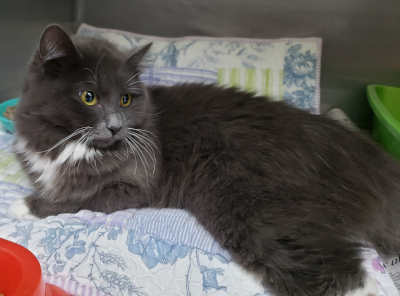
This young female domestic long hair cat is in cat room kennel No. 11, ID No. 14320. Photo courtesy of Lake County Animal Care and Control. Female domestic long hair
This young female domestic long hair cat has a gray and white coat and gold eyes.
She is in cat room kennel No. 11, ID No. 14320.
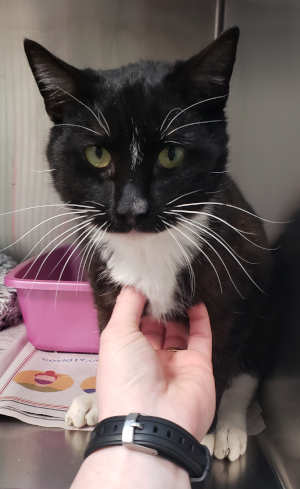
This male tuxedo cat is in cat room kennel No. 39, ID No. 14359. Photo courtesy of Lake County Animal Care and Control. Male tuxedo cat
This male tuxedo cat has a short black and white coat and green eyes.
He is in cat room kennel No. 39, ID No. 14359.
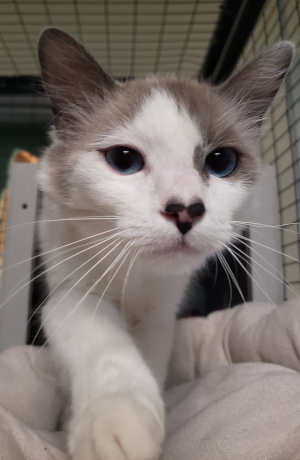
“Buddy” is a male domestic short hair cat in cat room kennel No. 100, ID No. 14384. Photo courtesy of Lake County Animal Care and Control. ‘Buddy’
“Buddy” is a male domestic short hair cat with a flame point and white coat and blue eyes.
He has been neutered.
He’s in cat room kennel No. 100, ID No. 14384.
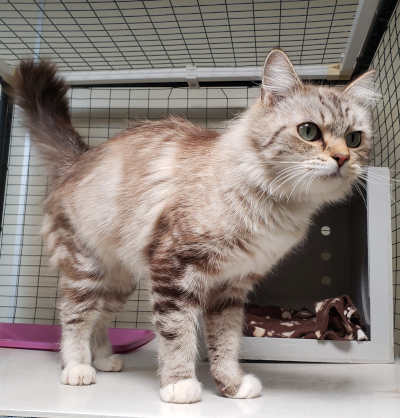
This young female domestic medium hair cat is in cat room kennel No. 108, ID No. 14391. Photo courtesy of Lake County Animal Care and Control. Female domestic medium hair
This young female domestic medium hair cat has a lynx point coat and blue eyes.
She is in cat room kennel No. 108, ID No. 14391.
“Trouble” is a young female domestic medium hair cat in cat room kennel No. 132, ID No. 14378. Photo courtesy of Lake County Animal Care and Control. ‘Trouble’
“Trouble” is a young female domestic medium hair cat with a seal point coat and blue eyes.
She’s in cat room kennel No. 132, ID No. 14378.
Email Elizabeth Larson at This email address is being protected from spambots. You need JavaScript enabled to view it.. Follow her on Twitter, @ERLarson, or Lake County News, @LakeCoNews.
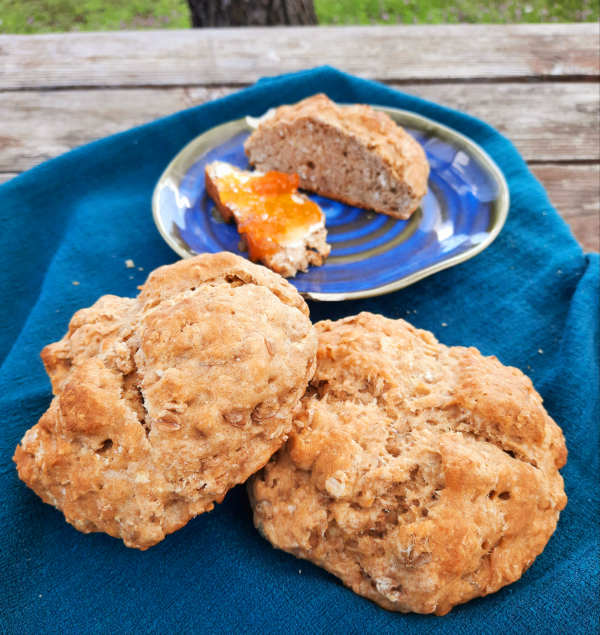
Rustic and hearty, Irish brown bread can pair with sausages for a traditional breakfast or with butter and jam as a bite with tea. A recipe is included in the column. Photo by Esther Oertel. LAKE COUNTY, Calif. – They say that everyone’s Irish on St. Patrick’s Day, and this month many in our country will mark the date by drinking green beer and feasting on corned beef and cabbage.
It’s not well known, however, that corned beef is rarely served in Ireland and is not a St. Patrick’s Day tradition there.
Irish immigrants in the U.S. and Canada found that beef was more plentiful and less expensive on this side of the Atlantic. They used the corned (or salted) version in place of an Irish favorite, bacon joint, to cook with cabbage, thus spawning the tradition.
The Irish don’t have a particular dish they associate with their patron saint; instead, they may mark the holiday by attending Mass in his honor or by enjoying a pint at the local pub. Sometimes they do both.
Since we’re all honorary Irish this month, let’s take a look at some favorite foods that are served year-round on the Emerald Isle.
Lamb stew may be considered the quintessential Irish meal; in fact, some call it the national dish of Ireland.
Irish stews began when animals were slaughtered for landowners and tenant farmers were given the less desirable cuts. They threw these into a three-legged pot to boil over a fire. Over the years, the recipes were refined to use lamb as the only meat in the stew. While there is some controversy as to whether carrots or peas should be included, potatoes always are.
Other dishes that include lamb are Kerry pies (lamb and vegetables in a rich pastry crust made with mutton fat) and shepherd’s pie, which is ground lamb and vegetables baked with a mashed potato crust. If ground beef is substituted in the latter, it’s called a cottage pie.
Not surprisingly, potatoes form the basis of many Irish dishes. They were introduced into Ireland from America in the second half of the 16th century, eventually becoming the main food crop of the poor. Because they provide a high amount of energy per land unit as well as lots of nutrition, they were a valuable staple.
“Irish champ” is the name of a traditional mashed potato dish that includes sliced scallions. It’s served with a pool of melted butter in a well in the middle.
“Potatoes colcannon” (or colcannon potatoes) is a combination of mashed potatoes and cabbage. The word colcannon is from a Gaelic term, cal ceannann, which means white cabbage.
Another popular potato dish is “boxty,” a simple griddle cake that combines raw and mashed potatoes. Sometimes boxty is served as part of an “Ulster fry,” a hearty breakfast dish that includes eggs and a variety of fried meats such as bacon and sausage. There’s a traditional Irish poem that goes, “Boxty on the griddle; boxty in the pan. If you can’t make boxty, you’ll never get a man.”
“Bubble and squeak” is the name of a large pancake that’s made from potatoes and the vegetable remains of Sunday lunch, traditionally served on Monday. Any veggies will do for bubble and squeak, including cabbage, carrots, rutabagas (called “Swedes” in Ireland), or Brussels sprouts, but it must include a good amount of potatoes. The name, among my favorite as food names go, comes from the sound it makes as steam is released from the vegetables as it cooks.
Oats and barley are traditional grains in Irish cooking and are often the main ingredients in desserts or breads. Puddings are made from barley and cakes or breads from oatmeal. Apples, which grow well in Ireland’s clime, are often added to each.
Other fruits used for desserts include strawberries, raspberries, and rhubarb, which also grow well there. These three are used in fruit “fools,” a fluffy, chilled dessert that is a precursor to ice cream.
Years ago, I asked a local Irish celebrity of sorts, Father James McSweeney of Middletown’s St. Joseph’s Church, which food he missed most from his homeland. Sausages topped the list for him. He was especially fond of the simple sausage and brown bread breakfasts of his youth.
According to McSweeney, sausage makers in the U.S. have been unable to duplicate the taste of those from his home in County Cork, where a local herb added unique flavor.
Sadly, Fr. James passed away in August of last year, which makes me especially thankful to have his authentic brown bread recipe, which I’ve shared below. It’s a rustic bread, very hearty, and can be equally delicious in savory or sweet applications. Try it with sausages or cheese, for example, or with some good Irish butter and jam. It can be accompanied by some Barry’s Irish Breakfast Tea, another favorite of Father James.
It’s hard to talk about bread in Ireland without mentioning Irish soda bread. There are many varieties of this (and some will show up in supermarkets this month), but the traditional version is simply four ingredients: flour, salt, baking soda, and buttermilk. A special alchemy occurs with the buttermilk and baking soda that renders yeast unnecessary.
I enjoy adding currants to mine (it doesn’t feel like real soda bread to me without them), but if you want yours to be authentic, stick to the original four ingredients.
Believe it or not, a Society for the Preservation of Irish Soda Bread exists. If you’re interested in learning more about this comestible – including history and recipes – visit their website.
St. Patrick’s Day will be here in just ten days, and in case you’d like to adventure outside the corned beef and cabbage box, I’ve provided some recipes inspired by Ireland below. First up is Fr. McSweeney’s Irish brown bread and following that are three from a culinary class I taught on Irish cooking.
Though they’re not used often in our country, parsnips are a common vegetable in Ireland. In the past they were a year-round staple, sustaining people through cold winters when other vegetables were scarce. They’re paired below in a soup with another vegetable popular on the Emerald Isle, leeks. A bit of horseradish adds a dash of interest and an apple is added to round out the flavor.
Shepherd’s pie with a twist is next on the agenda. A bottle of the dark Irish stout Guinness imparts a rich flavor to the dish. Guinness is Ireland’s oldest stout and has been brewed there since 1759.
Jonathan Swift, dean of St. Patrick’s Cathedral in Dublin, was an Irish satirist, essayist, clergyman and poet who lived in the 17th and 18th centuries. His deadpan, ironic writing has led to that style of satire being called Swiftian. He’s known for such quotes as “satire is a sort of glass, wherein beholders do generally discover everyone’s face but their own” and “but nothing is so hard for those who abound in riches, as to conceive how others can be in want.”
The final recipe, a dessert with intense citrus flavor paired with sweetened flamed whiskey, is a centuries old Irish recipe that is said to have been his favorite.
Whatever you do on St. Patrick’s Day and whatever you eat, I wish you a happy March 17!
Father McSweeney’s Irish Brown Bread
The seven-grain cereal that Fr. James used for this bread is made by Bob’s Red Mill. If unavailable at your local market, it can be found online.
2 cups all-purpose flour 2 cups whole wheat flour 1 ½ cup seven-grain cereal 3 teaspoons baking powder 1 teaspoon baking soda 1 tablespoon sugar 1/8 teaspoon salt 2 cups buttermilk 1/3 cup butter, melted 2 eggs
Mix dry ingredients in the bowl of a large mixer using stir speed for about 30 seconds.
Add buttermilk, melted butter, and eggs to bowl. Mix all ingredients until well blended, but not longer than a minute. Scrape sides of bowl to moisten all ingredients.
Remove to a floured board and knead about four or five times only. Form into six small round loaves. If desired, cut a crisscross on top of loaves.
Place loaves on greased or parchment paper-lined baking sheet and bake for 30 minutes at 400 degrees in an electric oven or for 25 minutes at 450 degrees in a gas oven.
Leek and parsnip soup with horseradish and frizzled carrots
2 medium carrots, peeled 3 tablespoons extra virgin olive oil, divided Salt 3 cups diced leeks, white and light green parts only 2 garlic cloves, minced 1 pound parsnips peeled and cut into half inch dice ½ pound thin-skinned potatoes, peeled and cut into half inch dice 1 apple, peeled and diced 4 cups vegetable stock Freshly-ground black pepper 1 tablespoon prepared horseradish 1 teaspoon fresh lemon juice ¼ cup chopped fresh dill, plus for garnish
Preheat the oven to 375 degrees F.
Use a vegetable peeler to peel carrot strips the length of the carrots.
In a medium bowl, toss the carrots with 1 tablespoon of the olive oil and ¼ teaspoon salt.
Transfer to a parchment paper-covered baking sheet and roast, stirring every 10 minutes, until the carrots are crispy and curled, about 40 minutes. (After 30 minutes, remove the ones that are browned.)
Remove from the oven and store in a container at room temperature.
Meanwhile, warm the remaining 2 tablespoons olive oil in a medium pot.
Add the leeks and sauté over medium-low heat until softened but not browned, about seven minutes.
Add the garlic and sauté an additional two minutes. (Be careful not to burn the garlic as it becomes bitter.)
Add the parsnips, potatoes, apples, stock and 1-1/2 teaspoons salt.
Cover the pot, raise the heat and bring to a boil. Then lower the heat and simmer, partially covered to allow the steam to escape, until the vegetables are tender, about 20 minutes.
Use the back of a spoon to smash half of the vegetables against the sides of the pot to thicken the broth or use an immersion blender to roughly blend some of the vegetables.
Stir in a generous sprinkling of black pepper, the horseradish, lemon juice, and dill.
Taste and add more salt if necessary.
Serve hot, sprinkled with fresh dill and topped with a mound of carrot curls.
This recipe serves four to six and is adapted from a recipe that appeared in “The Healthy Hedonist Holidays: A Year of Multicultural, Vegetarian-Friendly Holiday Feasts” by Myra Kornfeld.
Guinness shepherd’s (or cottage) pie
Vegetarians may substitute mushrooms for the ground meat.
1 teaspoon black pepper 2 pounds ground lamb or beef (with beef, it becomes Cottage Pie) 1 large onion, finely diced 4 large carrots, finely diced 1 cup frozen peas 4 sprigs fresh thyme, leaves removed and finely chopped 2 tablespoons flour 1 tablespoon butter, plus more to grease the pan 1 bottle Guinness 2 tablespoons tomato paste 2 tablespoons Worcestershire sauce 1 cup stock, chicken or vegetable 1 large quantity mashed potatoes (estimating 6 cups, fresh or leftover) 1 egg, beaten Grated parmesan cheese (optional)
Preheat the oven to 400 degrees F and grease a 9-inch by 13-inch oven-proof dish with butter.
Sautee carrots in the olive oil until starting to get tender.
Add in the onions and sauté for a minute or two, and then add the meat.
Season with black pepper and thyme.
Cook until browned then drain fat.
Add the butter and peas.
Sprinkle with flour and stir through.
Add tomato paste, Guinness and Worcestershire sauce.
Let this reduce slightly then add the stock. Allow to reduce down until you have thick, meaty gravy.
Season to taste with salt & freshly-ground black pepper.
Remove from heat and pour into prepared pan.
Spoon or pipe the mashed potatoes over the top.
Brush with egg and sprinkle with Parmesan cheese if using.
Bake for about 20 minutes, or until the potato crust is nicely browned.
This recipe serves four to six and is adapted from a dish served at the Old Bay Restaurant, an Irish pub in New Brunswick, New Jersey. (It closed in 2017 after 30 years of serving up Emerald Isle fare.)
Dean Swift’s burnt oranges
4 large oranges (or 6 to 8 Seville oranges) About 5 ounces (just over ½ cup) medium white wine (or sweet wine with Seville oranges) 4 tablespoons butter 6 tablespoons granulated sugar About 10 ounces (just over 1 cup) fresh-squeezed orange juice 2 tablespoons warmed Irish whiskey
Preheat the oven to 400 degrees F.
Using a fruit zester or a very sharp knife, remove all possible zest from your oranges. (If using a knife, carefully peel just the orange skin from the oranges and slice into thin strips.
Put the zest in a bowl with the wine and allow to steep gently.
Peel the zested oranges and separate the segments out. Pull or scrape off as much as possible of any white pith from the flesh of the orange segments.
Put the oranges into an ovenproof dish that can also be used over direct heat (as the final stages of this dessert happen on the stovetop). Dot the orange slices evenly with the butter. Then sprinkle the orange slices with half the sugar.
Put the orange slices into the oven for 10 minutes, or until the sugar caramelizes.
Meanwhile, mix the orange juice with the remaining sugar in a saucepan and bring to a boil. Lower the heat slightly and let the mixture cook and thicken until syrupy. When it has thickened and reduced, add the orange peel and wine mixture and bring to the boil again, then cook rapidly to reduce and thicken again.
Remove the oranges from the oven. If they're not fully browned, you may want to run them under a broiler for a few minutes, watching carefully to make sure the caramelizing sugar doesn't scorch.
When the browning process is finished, pour the warmed whiskey over the orange segments and set it alight. (Do not neglect to warm the whiskey – otherwise it won't catch fire.)
As the flames die down, add the orange syrup and let the whole dish simmer and bubble gently on a stovetop burner on medium heat for about 2 minutes.
Serve the burnt oranges at once, or if you prefer, they can be served cold. (Pouring double cream – a high-fat cream with 48 percent butter fat not generally available in the U.S. – over the cold version, in the Irish style, works very well.)
This centuries-old Irish recipe serves about four.
Esther Oertel is a writer and passionate home cook from a family of chefs. She grew up in a restaurant, where she began creating recipes from a young age. She’s taught culinary classes in a variety of venues in Lake County and previously wrote “The Veggie Girl” column for Lake County News. Most recently she’s taught culinary classes at Sur La Table in Santa Rosa. She lives in Middletown.
LAKE COUNTY, Calif. – A crash that occurred near Clearlake Oaks on Saturday night seriously injured one person.
The wreck occurred at about 9:45 p.m. Saturday along Highway 20 at Garden Court.
Firefighters were first dispatched to a report of a vehicle into a house with one person reported trapped.
However, when arriving on the scene, Northshore Fire personnel reported over the air that they found the vehicle behind a house, not into it, with one person who had been ejected from the vehicle trapped underneath it.
Incident command requested an air ambulance to land at Cal Fire’s Station 40 in Clearlake Oaks.
Extrication efforts continued until after 11 p.m. The crash victim was transported to the landing zone at about 11:20 p.m. to be flown to a regional trauma center, according to radio reports.
Scanner traffic indicated the incident was terminated at 11:50 p.m.
Additional information will be published as it becomes available.
Email Elizabeth Larson at This email address is being protected from spambots. You need JavaScript enabled to view it.. Follow her on Twitter, @ERLarson, or Lake County News, @LakeCoNews.
 How to resolve AdBlock issue?