 How to resolve AdBlock issue?
News
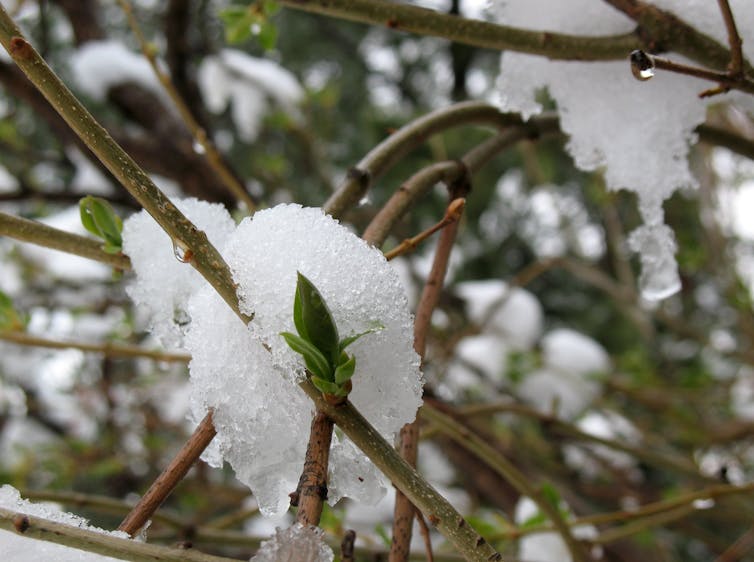
Weather patterns across the U.S. have felt like a roller coaster ride for the past several months. December and January were significantly warmer than average in many locations, followed by February’s intense cold wave and a dramatic warmup.
If you’ve ever seen lilac bushes crushed by snowdrifts, then budding on a warm day just a few weeks later, you may wonder how plants tolerate such extremes. I study how climate change affects the timing of seasonal events in the life cycles of plants, birds and insects in Massachusetts, so I know that species have evolved here to handle New England’s famously changeable weather. But a warming climate is disrupting weather patterns and testing the abilities of many species to adapt.
Tolerating cold
On brutal winter days when temperatures are far below freezing, animals hibernate underground or huddle in protected spots. But trees and shrubs have to sit there and take it. The tissues in their trunks, branches and roots are alive. How do they survive the freezing cold?
In autumn, woody plants in many parts of North America start preparing for winter. When their leaves change color and fall, their twigs, branches and trunks start to lose water. As a result, their cells contain higher concentrations of sugars, salts and organic compounds.
This lowers the freezing point of the cells and tissues, and allows them to survive temperatures far below the normal freezing point of water. The trick has its limits, though, so extreme cold events can still kill certain plants.

Tree and shrub roots remain largely unchanged and inactive during winter, relying on insulation from snow and soil for protection. For the most part, the temperature of the soil around roots stays at or above freezing. Soil, fallen leaves and persistent snow layers insulate the ground above the roots and prevent it from losing heat.
The surprising danger of spring frosts
After plants stoically withstand cold winters, early spring brings new dangers. Plants need to leaf out as early as they can in spring to take full advantage of the growing season. But this involves pumping water into their developing leaves, which reduces the concentration of sugars, salts and organic compounds in their tissues and removes their winter protection from cold.
Each species has a characteristic leaf-out time. Early-leafing species such as blueberries and willows are the gamblers of the plant kingdom. Later species, like oak and pine, are the cautious and conservative types. For any species, leafing out too early is a risk because late frosts can damage or kill young leaves.
Flowers are also vulnerable to unpredictable spring frosts because they contain lots of water. If the flowers of fruit trees, such as apples, are killed by frost, the trees won’t produce fruit later in the summer. Late frosts also can cause disappointingly short flowering seasons for early-flowering ornamental plants such as forsythias and magnolias.
Plant wake-up calls
To guard against frost and still take advantage of the full growing season, trees and shrubs have developed three ways to know when it is time to start growing in spring.
First, plants have winter chilling requirements: They hold on to winter dormancy until they have been exposed to a certain number of cold winter days. This trait helps them avoid leafing or flowering during abnormally warm periods in midwinter.
Second, plants also have spring warming requirements that promote growth after they experience a certain number of warm days each spring. This feature helps them start to grow as soon as it is warm enough.

Third, some plants also have a photoperiod response, which means they react to the length of time they are exposed to light in a 24-hour period. This prepares them to leaf out as days get longer and warmer in the spring. Beech trees have both a warming requirement and a photoperiod response, but the temperature requirement is much stronger, so they get going after just a few warm days in late spring.
Interestingly, North American trees such as red maple and black birch are more cautious and conservative than European and East Asian trees. The weather in eastern North America is more variable, and the threat of late spring frosts is higher here than in those regions. As a result, North American trees have evolved to leaf out a few weeks later than comparable trees from Europe and East Asia.
Climate change scrambles the signals
Plants are highly attuned to temperature signals, so warming driven by climate change is making it harder for many species to withstand winter cold and spring frosts. As spring temperatures get warmer than in the past, trees such as apples and pears may respond by leafing out and flowering several weeks earlier than normal. This can increase their vulnerability to late frosts.
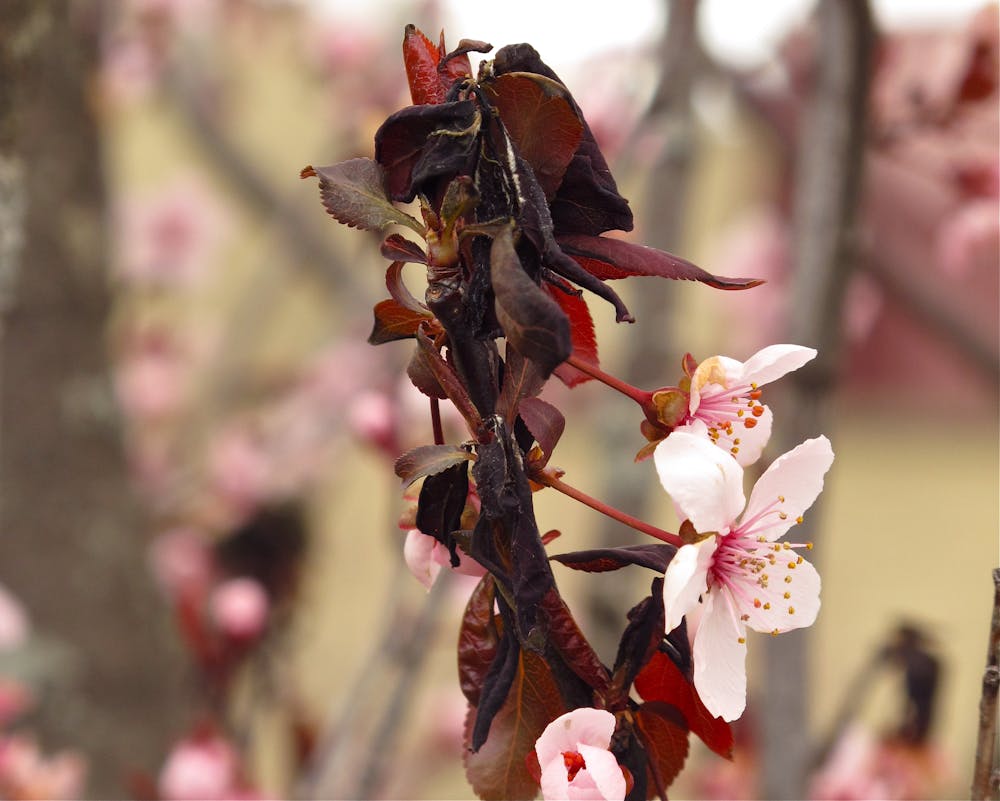
Such late frosts are becoming more common because climate change is destabilizing the jet stream, leading it to dip much farther south, bringing bursts of unusually cold weather.
In 2007, an exceptionally warm period in March triggered trees to leaf out across the eastern and central United States. A hard frost in April then killed the young leaves and flowers of oaks, hickories and other tree species. The trees were able to produce a second crop of leaves, but could not fully replace the leaves they’d lost, which quite likely stunted their growth for that year.
Insect pests also pose an increasing threat to plants. Harsh winter weather holds in check many insects found in northern climates, such as hemlock woolly adelgids and emerald ash borers. As winters become milder, these insects are more likely to survive, move further northward, cause major outbreaks and damage trees.
Warmer winters also lead to more days when the ground is bare. Cold snaps that occur when there is no insulating layer of snow can freeze the soil and kill roots. Tree and shrub branches then die back because the damaged roots cannot supply enough water and nutrients. In extreme cases, the plants may die.
In coming decades, many cold-loving tree species such as spruces and firs will become less abundant when they are not able to handle new challenges associated with a warmer climate. In the Northeast U.S., native species such as sugar maple and beech will be gradually replaced by native species from farther south, such as oaks and hickories. And nonnative species, such as Norway maples, are taking advantage of these disruptions to disperse into forests from roadsides and neighborhoods.
Similar shifts are happening in many places as climate change alters the signals plants rely on to mark the changing seasons.
[You’re smart and curious about the world. So are The Conversation’s authors and editors. You can read us daily by subscribing to our newsletter.]
Richard B. Primack, Professor of Biology, Boston University
This article is republished from The Conversation under a Creative Commons license. Read the original article.
Dogs available for adoption this week include mixes of boxer, Chihuahua, German Shepherd, Labrador Retriever and pit bull.
Dogs that are adopted from Lake County Animal Care and Control are either neutered or spayed, microchipped and, if old enough, given a rabies shot and county license before being released to their new owner. License fees do not apply to residents of the cities of Lakeport or Clearlake.
The following dogs at the Lake County Animal Care and Control shelter have been cleared for adoption (additional dogs on the animal control Web site not listed are still “on hold”).
Call Lake County Animal Care and Control at 707-263-0278 or visit the shelter online at http://www.co.lake.ca.us/Government/Directory/Animal_Care_And_Control.htm for information on visiting or adopting.

Boxer-pit bull terrier mix
This female boxer-pit bull mix has a short red coat.
She is in kennel No. 18, ID No. 14356.
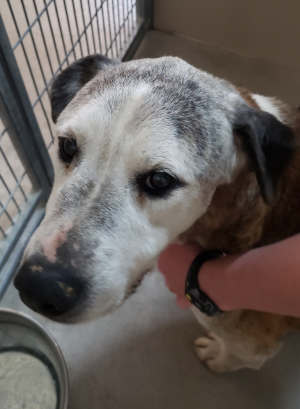
Male pit bull terrier
This senior male pit bull terrier has a short tan and white coat.
He is in kennel No. 22, ID No. 14392.

German Shepherd-Labrador Retriever mix
This male German Shepherd-Labrador Retriever mix has a short black and tan coat.
He is in kennel No. 31, ID No. 14383.

German Shepherd-Labrador Retriever mix
This male German Shepherd-Labrador Retriever mix has a short black and tan coat.
He is in kennel No. 32, ID No. 14382.

Female Chihuahua
This female Chihuahua has a short brown and gray coat.
She has been spayed.
She’s in kennel No. 33, ID No. 14368.
Email Elizabeth Larson at

After traveling several billion miles toward the Sun, a wayward young comet-like object orbiting among the giant planets has found a temporary parking place along the way.
The object has settled near a family of captured ancient asteroids, called Trojans, that are orbiting the Sun alongside Jupiter.
This is the first time a comet-like object has been spotted near the Trojan population.
The unexpected visitor belongs to a class of icy bodies found in space between Jupiter and Neptune. Called "Centaurs," they become active for the first time when heated as they approach the Sun, and dynamically transition into becoming more comet-like.
Visible-light snapshots by NASA's Hubble Space Telescope reveal that the vagabond object shows signs of comet activity, such as a tail, outgassing in the form of jets, and an enshrouding coma of dust and gas. Earlier observations by NASA's Spitzer Space Telescope gave clues to the composition of the comet-like object and the gasses driving its activity.
"Only Hubble could detect active comet-like features this far away at such high detail, and the images clearly show these features, such as a roughly 400,000-mile-long broad tail and high-resolution features near the nucleus due to a coma and jets," said lead Hubble researcher Bryce Bolin of Caltech in Pasadena, California.
Describing the Centaur's capture as a rare event, Bolin added, "The visitor had to have come into the orbit of Jupiter at just the right trajectory to have this kind of configuration that gives it the appearance of sharing its orbit with the planet. We’re investigating how it was captured by Jupiter and landed among the Trojans. But we think it could be related to the fact that it had a somewhat close encounter with Jupiter."
The team's paper appears in the Feb. 11, 2021, issue of The Astronomical Journal.
The research team's computer simulations show that the icy object, called P/2019 LD2 (LD2), probably swung close to Jupiter about two years ago. The planet then gravitationally punted the wayward visitor to the Trojan asteroid group's co-orbital location, leading Jupiter by about 437 million miles.
Bucket brigade
The nomadic object was discovered in early June 2019 by the University of Hawaii's Asteroid Terrestrial-impact Last Alert System, or ATLAS, telescopes located on the extinct volcanoes, one on Mauna Kea and one on Haleakala. Japanese amateur astronomer Seiichi Yoshida tipped off the Hubble team to possible comet activity.
The astronomers then scanned archival data from the Zwicky Transient Facility, a wide-field survey conducted at Palomar Observatory in California, and realized that the object was clearly active in images from April 2019.
They followed up with observations from the Apache Point Observatory in New Mexico, which also hinted at the activity.
The team observed the comet using Spitzer just days before the observatory's retirement in January 2020, and identified gas and dust around the comet nucleus. These observations convinced the team to use Hubble to take a closer look.
Aided by Hubble's sharp vision, the researchers identified the tail, coma structure and the size of the dust particles and their ejection velocity. These images helped them confirm that the features are due to relatively new comet-like activity.
Although LD2's location is surprising, Bolin wonders whether this pit stop could be a common pull-off for some sunward-bound comets. "This could be part of the pathway from our solar system through the Jupiter Trojans to the inner solar system," he said.
The unexpected guest probably will not stay among the asteroids for very long. Computer simulations show that it will have another close encounter with Jupiter in about another two years. The hefty planet will boot the comet from the system, and it will continue its journey to the inner solar system.
"The cool thing is that you're actually catching Jupiter flinging this object around and changing its orbital behavior and bringing it into the inner system," said team member Carey Lisse of the Johns Hopkins University Applied Physics Laboratory, or APL, in Laurel, Maryland. "Jupiter controls what's going on with comets once they get into the inner system by altering their orbits."
The icy interloper is most likely one of the latest members of the so-called "bucket brigade" of comets to get kicked out of its frigid home in the Kuiper belt and into the giant planet region through interactions with another Kuiper belt object.
Located beyond Neptune's orbit, the Kuiper belt is a haven of icy, leftover debris from our planets' construction 4.6 billion years ago, containing millions of objects, and occasionally these objects have near misses or collisions that drastically alter their orbits from the Kuiper belt inward into the giant planet region.
The bucket brigade of icy relics endure a bumpy ride during their journey sunward. They bounce gravitationally from one outer planet to the next in a game of celestial pinball before reaching the inner solar system, warming up as they come closer to the Sun.
The researchers say the objects spend as much or even more time around the giant planets, gravitationally pulling on them – about 5 million years – than they do crossing into the inner system where we live.
"Inner system, 'short-period' comets break up about once a century," Lisse explained. "So, in order to maintain the number of local comets we see today, we think the bucket brigade has to deliver a new short-period comet about once every 100 years."
An early bloomer
Seeing outgassing activity on a comet 465 million miles away from the Sun (where the intensity of sunlight is 1/25th as strong as on Earth) surprised the researchers.
"We were intrigued to see that the comet had just started to become active for the first time so far away from the Sun at distances where water ice is barely starting to sublimate," said Bolin.
Water remains frozen on a comet until it reaches about 200 million miles from the Sun, where heat from sunlight converts water ice to gas that escapes from the nucleus in the form of jets. So the activity signals that the tail might not be made of water.
In fact, observations by Spitzer indicated the presence of carbon monoxide and carbon dioxide gas, which could be driving the creation of the tail and jets seen on the Jupiter-orbiting comet. These volatiles do not need much sunlight to heat their frozen form and convert them to gas.
Once the comet gets kicked out of Jupiter's orbit and continues its journey, it may meet up with the giant planet again.
"Short-period comets like LD2 meet their fate by being thrown into the Sun and totally disintegrating, hitting a planet, or venturing too close to Jupiter once again and getting thrown out of the solar system, which is the usual fate," Lisse said. "Simulations show that in about 500,000 years, there's a 90 percent probability that this object will be ejected from the solar system and become an interstellar comet."
Dr. Gary Pace said Friday that new COVID-19 infections in Lake County and around the state continue to drop.
On Friday, Lake County Public Health reported that the county has had a total of 3,160 cases and 41 deaths.
Pace said the test positivity rate is 4.9 percent.
Even with that “remarkable improvement,” Pace said Lake County’s current case rate is 11 cases per 100,000 people, meaning the virus remains widespread and Lake County is still in the purple tier on the state’s Blueprint for a Safer Economy.
“While we are still in the purple tier, 18 counties are now in the red tier or better, and we are progressing in that direction,” he said. “Under current guidelines, we will need to have a case rate of 7 per 100,000 and testing positivity rate of 8 percent or lower for two weeks to advance to the red tier."
Going to the red tier, Pace said, would allow more indoor activities, like some indoor dining, and middle and high schools will be able to open.
“We are hopeful this will occur in the coming weeks,” he said.
Loosening of these metrics is expected, as more people get vaccinated.
Once 2 million COVID-19 vaccine doses have been administered in the most vulnerable communities around the state – the lowest 25 percent per the California Healthy Places Index – the red tier will expand from seven to 10 cases per 100,000. The state expects this to occur within the next few weeks, as Lake County News has reported.
Once four million doses have been administered in these vulnerable communities, a case rate of six per 100,000 – up from 3.9 cases per 100,000 – will qualify counties for the orange tier. Changes to “certain sector specific guidance” are also expected, “to incorporate learnings from the last year about how the virus spreads.”
More information is here.
Vaccination progress continues
Pace said 9,600 first doses of the vaccine have been administered in Lake County, and 4,800 people have received a second dose.
Of those, 50 percent of those age 75 and older have gotten their doses and 40 percent of people aged 65 to 74 have been vaccinated. “This is a true success,” Pace said.
Pace said the county had hoped to be switching to the state's MyTurn appointment platform this coming week.
“Unfortunately, there continue to be some technical difficulties that we are working with the state to resolve,” he said. “Until that happens, we will continue with the current setup.
Information on the state’s plans to standardize vaccinations statewide is available here.
Pace said priorities for vaccination have recently shifted. Lake County is now aligned with the state framework, so anyone eligible on the state list – those in phase 1a, people age 65 and above, food and agricultural workers, education and emergency workers who meet certain criteria – can sign up for an appointment.
The state anticipates opening eligibility to janitors and public transit drivers next; watch for further updates soon here.
Pace said the county is expecting to get about 3,000 first and second doses next week, compared with 2,000 it received this week.
For the first time, the new one-dose Johnson & Johnson vaccine will be among those 3,000 doses, he said.
“All three vaccines are considered effective, and whichever one is available when you make an appointment is the one you should take,” Pace said.
He said that, generally, Public Health can’t give an option for which vaccine to get. However, on Thursday, March 11, they will be administering the Johnson & Johnson vaccine, only.
If you, or someone you work with, would benefit from the one-shot vaccine – for example, you will be out of town in a month, farmworker, migratory, homeless, other person that is hard to reach to arrange followup or with difficulties getting in – Pace said next Thursday will be a good day to make an appointment.
“We don't know if or when we will be getting more,” he said.
To make an appointment, visit http://health.co.lake.ca.us/Coronavirus/Vaccines.htm.
More information on the process and supports for those unable to schedule online is also available here.
Actualización de COVID-19: Las tendencias siguen siendo positivas; Cambios que vienen al marco del modelo estatal
Johnson & Johnson (Janssen) Vacuna de dosis única disponible en el condado de Lake el jueves, 3/11
Condado de Lake, CA (5 de marzo de 2021) - El año pasado, más de 50,000 californianos murieron por enfermedades relacionadas con COVID-19.
Esta realidad aleccionadora hace que el progreso actual hacia una vacunación más amplia, tasas más bajas y, en última instancia, un estilo de vida más normal sea aún más importante y alentador.
Las nuevas infecciones en el condado de Lake y en todo nuestro estado continúan disminuyendo.
Nuestra tasa de positividad de la prueba es del 4,9%. Incluso con esta notable mejora, la tasa de casos actual del condado de Lake es de 11 / 100,000, lo que significa que el virus sigue estando muy extendido.
PROYECTO PARA UNA ECONOMÍA MÁS SEGURA: DÓNDE ESTAMOS AHORA; CAMBIOS ESPERADOS
Mientras todavía estamos en el Nivel Morado, 18 condados están ahora en el Nivel Rojo o mejor, y estamos progresando en esa dirección. Según las pautas actuales, necesitaremos tener una tasa de casos de 7 / 100,000 y una tasa de positividad de la prueba del 8% o menos durante dos semanas para avanzar al Nivel Rojo. Esto permitiría más actividades en el interior, como algunas cenas en el interior, y las escuelas intermedias y secundarias podrán abrir. Esperamos que esto ocurra en las próximas semanas.
Se espera una relajación de estas métricas, a medida que más personas se vacunen. Una vez que se hayan administrado 2 millones de dosis de la vacuna COVID-19 en las comunidades más vulnerables del estado (el 25% más bajo, según el Índice de Lugares Saludables de California), el Nivel Rojo se expandirá a 10 casos por 100,000, en comparación con 7. El estado espera esto ocurrirá en las próximas semanas. Una vez que se hayan administrado 4 millones de dosis en estas comunidades, una Tasa de Casos de 6 / 100,000 calificará a los condados para el Nivel Naranja (desde 3.9). También se esperan cambios en "ciertas pautas específicas del sector", "para incorporar lo aprendido el año pasado sobre cómo se propaga el virus":
https://www.cdph.ca.gov/Programs/CID/DCDC/Pages/COVID-19/COVID19CountyMonitoringOverview.aspx
https://map.healthyplacesindex.org/
ACTUALIZACIÓN DE LA VACUNA COVID-19: JOHNSON & JOHNSON (JANSSEN) DISPONIBLE EL JUEVES, 3/11
Se han administrado 9,600 primeras dosis de la vacuna en el condado de Lake y 4,800 personas han recibido una segunda dosis. El 50% de las personas mayores de 75 años han recibido sus dosis, el 40% de las personas de 65 a 74 años se han vacunado. Este es un verdadero éxito.
Esperábamos cambiar a la plataforma de citas MyTurn del estado la semana que viene. Desafortunadamente, continúan existiendo algunas dificultades técnicas que estamos trabajando con el estado para resolver. Hasta que eso suceda, continuaremos con la configuración actual. La información sobre los planes del estado para estandarizar las vacunas en todo el estado está disponible aquí:
https://www.cdph.ca.gov/Programs/OPA/Pages/NR21-066.aspx
Las prioridades para la vacunación han cambiado recientemente. El condado de Lake ahora está alineado con el marco estatal: cualquier persona elegible en la lista estatal (Fase 1a, personas mayores de 65 años, trabajadores agrícolas y de alimentos, trabajadores de educación y de emergencia que cumplan con ciertos criterios) puede inscribirse para una cita. El estado anticipa la elegibilidad de apertura para conserjes y conductores de transporte público a continuación; Esté atento a más actualizaciones pronto: https://covid19.ca.gov/vaccines/ .
Esperamos recibir unas 3.000 primeras y segundas dosis la semana que viene. Por primera vez, la nueva vacuna Johnson & Johnson de dosis única estará entre ellas. Las tres vacunas se consideran efectivas, y la que esté disponible cuando programe una cita es la que debe tomar.
Generalmente, no podemos dar una opción sobre qué vacuna recibir. Sin embargo, el próximo jueves (11 de marzo) administraremos la vacuna Johnson & Johnson únicamente. Si usted, o alguien con quien trabaja, se beneficiaría de la vacuna de una sola inyección (por ejemplo, estará fuera de la ciudad en un mes, trabajador agrícola, migrante, sin hogar, otra persona a la que es difícil contactar para coordinar el seguimiento o con dificultades para entrar), el próximo jueves será un buen día para concertar una cita. No sabemos si obtendremos más o cuándo.
Para programar una cita, visite http://health.co.lake.ca.us/Coronavirus/Vaccines.htm. Más información sobre el proceso y el apoyo para aquellos que no pueden programar en línea también está disponible aquí:
http://www.lakecountyca.gov/Government/PressReleases/update030121.htm .

NORTHERN CALIFORNIA – Chancellor Dr. Douglas B. Houston has announced his intended departure from the Yuba Community College District effective April 30.
Chancellor Houston has accepted an appointment as interim chancellor of the State Center Community College District in Fresno to begin May 1.
Dr. Houston joined the Yuba Community College District as chancellor in 2011.
“These past 10 years have been among the most rewarding of my professional career, but it is time for me to move on. I will treasure the work we accomplished during my time with the District,” said Dr. Houston. “I came to YCCD with several goals in mind and they are all but accomplished – completing the transition to a multi-college district; fiscally stabilizing and recession-proofing the district; and commissioning the district’s next-generation strategic plan. While all of these are still ‘works in progress,’ the progress is outstanding, and culmination is in sight.”
The YCCD Governing Board announced after a special board meeting closed session on Wednesday its intent to appoint an interim chancellor to serve during the recruitment process for a permanent chancellor and to ensure leadership stability throughout this transition.
The appointment of an interim chancellor will allow the governing board time to identify the best search firm to lead the district through the recruitment period.
This process will include seeking input from faculty, staff, students, and community leaders to develop a new Chancellor profile that will best fit the current needs of the YCCD college community.
“We are so grateful to Dr. Houston for his 10 years of leadership and service to the YCCD family,” said Board President Susan Alves. “We will miss him greatly but wish him well as he embarks on this new adventure.”
The Yuba Community College District Governing Board, Faculty, staff, and students wish Chancellor Houston the best on his new journey.
The updates allow outdoor ballparks, stadiums and theme parks to open with significantly reduced capacity, mandatory masking and other public health precautions.
These changes take effect April 1.
Following Thursday's announcement of how vaccine equity will be linked to future blueprint case rate tier changes, on Friday CDPH announced how, guided by science, other sector changes can be introduced into the blueprint.
“With case rates and hospitalizations significantly lower, the arrival of three highly effective vaccines and targeted efforts aimed at vaccinating the most vulnerable communities, California can begin gradually and safely bringing back more activities, especially those that occur outdoors and where consistent masking is possible,” said Dr. Mark Ghaly, secretary of the California Health and Human Services Agency. “Even with these changes, California retains some of the most robust public health protocols in the country.”
“Throughout the pandemic, California’s business community has been committed to protecting the health and safety of workers and customers – and that won’t change now,” said Dee Dee Myers, senior advisor to Governor Newsom and director of the Governor’s Office of Business and Economic Development, or GO-Biz. “We will continue to work together with our partners across all sectors of the economy, as we reopen safely, sustainably and equitably.”
Changes to the blueprint include:
– Outdoor sports and live performances (with fans/attendees) are eligible to begin April 1. In the purple tier, capacity will be limited to 100 people or fewer and attendance will be limited to regional visitors. Advanced reservations will be required, and no concession or concourse sales will be allowed. In the red tier, capacity will be limited to 20 percent. Concession sales will be primarily in-seat (no concourse sales). In the orange tier capacity will be limited to 33 percent and in the yellow tier capacity will increase to 67 percent. Attendance will be limited to in-state visitors in the red, orange and yellow tiers.
– Amusement parks are eligible to reopen in the Red tier beginning April 1. Capacity will be limited to 15 percent in the red tier. In the orange tier, that limitation will increase to 25 percent, and then 35 percent in the Yellow tier. Attendance will be limited to in-state visitors.
California will continue to update the blueprint periodically based on science and vaccination progress. View the updated sector chart to see which activities and businesses are allowed in each tier.