 How to resolve AdBlock issue?
News
Two years into the 2020 SECURE Act, the Internal Revenue Service has issued its proposed regulations.
These regulations contain important changes to the required minimum distributions rules for beneficiaries of retirement plans. Distributions received from a retirement plan are taxed as ordinary income.
Under SECURE, a plan participant, or owner, must receive required minimum distributions starting April 1 of the year following his or her 72nd birthday, i.e., the “required beginning date,” an important concept.
Death beneficiaries generally want to delay how long they have to receive plan required minimum distributions after the owner’s death.
Delay means smaller annual required minimum distributions which lowers the recipient’s taxable income and allows undistributed assets to grow tax free.
Generally, under SECURE, a designated beneficiary — i.e., a natural person or certain trusts that meet special IRS rules — has 10 years to receive all plan assets.
Important exceptions, however, exist for five categories of special “eligible designated beneficiaries,” including the deceased owner’s surviving spouse, the deceased owner’s minor child (under age 21), and a chronically ill or disabled beneficiary.
Certain trusts where all the beneficiaries are eligible designated beneficiaries also qualify for the same treatment.
Before the new regulations, it was understood that a designated beneficiary did not have to receive any annual required minimum distributions from a decedent’s plan. Under the regulations that is no longer true.
Different required minimum distributions rules exist for different types of beneficiaries regarding both the annual distributions and the outer limit at which time the plan must be fully distributed.
Which rules apply generally depends on whether the plan owner died before he or she had to begin to receive required minimum distributions and whether or not a death beneficiary qualifies as either a designated beneficiary or an eligible designated beneficiary.
For a designated beneficiary, it was understood that he or she had until the 10th year after the decedent’s death, when all assets had to be withdrawn.
Now, however, if the deceased plan owner died after their required beginning date, the regulations require a designated beneficiary to receive annual required minimum distributions during years one to nine after the participant’s death.
Similarly, an eligible designated beneficiary must also take annual required minimum distributions that are often computed based on the beneficiary’s own actuarial lifetime and sometimes are computed based on the remaining hypothetical actuarial life expectancy of the deceased plan owner at death.
Eligible designated beneficiaries generally have up to their lifetime to completely withdraw all plan assets. A minor child of the deceased owner, however, has only 10 years from when the minor child attains age 21.
Annual required minimum distributions alone, however, can sometimes mean that the retirement plan assets are completely withdrawn sooner than the eligible designated beneficiary’s actuarial lifetime.
Conceptually the foregoing approach has a certain similarity to installment note payments. That is, the amount of annual payments are often amortized (computed) based on distribution over a much longer term of years (e.g., a 30 year amortization) with a final balloon payment at end of the installment note’s term (e.g., a 15 year note).
Lastly, important new rules exist regarding trusts as designated beneficiaries. Trusts have primary and alternative beneficiaries and are used to control distributions. Certain trusts can qualify as either a designated beneficiary or as an eligible designated beneficiary. Such trusts are either “conduit trusts” or “accumulation trusts.”
Conduit trusts require all retirement plan distributions, including required minimum distributions, to be distributed by the trustee to or for the benefit of the conduit trust beneficiaries.
Accumulation trusts allow the trustee to accumulate some or all plan distributions received by the trustee, including required minimum distributions.
How a trust is drafted depends on the goals and circumstances. That said, where possible the conduit trust is usually preferred when the primary beneficiary is an eligible designated beneficiary, such as the surviving spouse.
Planning with an accumulation trust is more complicated because both the primary and the secondary beneficiaries have an impact on which required minimum distribution rules apply.
The foregoing brief discussion of a complex and broad subject is not legal advice. Consult a qualified attorney or financial adviser for guidance.
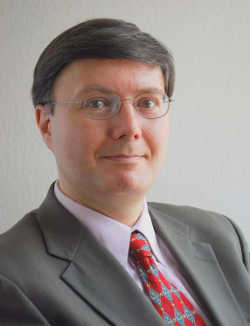
Dennis A. Fordham, attorney, is a State Bar-Certified Specialist in estate planning, probate and trust law. His office is at 870 S. Main St., Lakeport, Calif. He can be reached at


Curious Kids is a series for children of all ages. If you have a question you’d like an expert to answer, send it to
What is a dwarf planet? – Myranda, age 8, Knoxville, Tennessee
The word “planet” came from the ancient Greek words that mean “wandering star.” That makes sense, because for thousands of years, people have watched planets change position in the night sky – unlike stars, which appear fixed and unmoving to the naked eye.
That’s how the ancients discovered five of the planets: Mercury, Venus, Mars, Jupiter and Saturn. Astronomers using telescopes found Uranus in 1781, Neptune in 1846, and Pluto in 1930.

Solar system leftovers
I’m a space scientist with a passion for astronomy and the exploration of the Solar System. I received my Ph.D. in physics in 1994, about the time astronomers began to find more and more objects beyond Neptune, in the Kuiper belt. That’s a place in space that holds the “leftovers” of the solar system – particularly small icy bodies.
Three of those icy bodies – Eris, Haumea and Makemake – were discovered in the early to mid 2000s. They seemed large enough to be planets; all of them are roughly the same size as Pluto.
Astronomers then surmised that there were likely many more of these icy bodies in the Kuiper belt. They began to wonder: How many planets might we end up identifying in our solar system? Twenty? Thirty? A hundred? More?

Dwarf planet defined
In 2006, and after much debate, the International Astronomical Union came up with a new definition for a planet. And for the first time, the term “dwarf planet” was used.
Here’s what the IAU said: A planet has to orbit the Sun directly. It also must be large enough to have a round, or spherical, physical shape.
And the planet must “clear its neighborhood.” That means, aside from any moons it might have, the planet can’t share its orbit with other objects of comparable size.
An object that satisfies only the first two criteria – but not the last – is now called a dwarf planet.


Pluto is demoted
That’s why Pluto lost its status as a planet and is now classified as a dwarf planet. It failed the final item on the checklist – other icy Kuiper belt bodies are within its orbital path. The decision, a controversial one to be sure, is debated by scientists to this very day.
At the same time Pluto got demoted, another solar system object was promoted. Ceres, once considered an asteroid, is now classified as a dwarf planet. It’s nowhere near the Kuiper belt; instead, Ceres is in the main asteroid belt, orbiting between Mars and Jupiter.
Add them up – Pluto, Ceres, Eris, Haumea and Makemake – and that brings the number of dwarf planets in our solar system to five. But that list is sure to grow. Already, hundreds of candidates, nearly all in the Kuiper belt, potentially satisfy the criteria to be a dwarf planet.

About the dwarf planets
Dwarf planets are nothing like Earth.
As their name implies, they are much smaller. Pluto and Eris, the largest of the dwarfs, have less than one-fifth the diameter of the Earth.
They have less mass, too. For example, Earth has about 6,400 times more mass than Ceres. That’s like comparing two killer whales to a guinea pig.
And dwarf planets are cold. Pluto’s average temperature is around minus 400 degrees Fahrenheit (minus 240 Celsius).

Could life exist on a dwarf planet?
Three things are needed for life: liquid water, an energy source and organic molecules – that is, molecules containing carbon.
More than 100 miles (161 kilometers) below Pluto’s surface, an enormous ocean of liquid water may exist; this might also be true for other Kuiper belt worlds. Ceres also has subsurface water, remnants of what might have been an ancient global ocean.
Organic molecules, in abundance everywhere in our solar system, have been found on Ceres and Pluto.
But the one missing ingredient for all the dwarf planets is a source of energy.
Sunlight won’t work, particularly for the Kuiper belt dwarfs; they are simply too far away from the Sun. To reach the belt, the light must travel more than 2.7 billion miles (4.4 billion km). By the time the sunshine arrives at these distant worlds, it’s too weak to significantly heat any of them.
And all the dwarf planets are too small to hold the inner heat that remains from the solar system’s formation.
Yet scientists have discovered life on Earth in the most hostile places imaginable – near the bottom of the ocean, miles deep in the soil and even inside an active volcano. When it comes to life in our solar system, never say never.
Hello, curious kids! Do you have a question you’d like an expert to answer? Ask an adult to send your question to
And since curiosity has no age limit – adults, let us know what you’re wondering, too. We won’t be able to answer every question, but we will do our best.
Vahe Peroomian, Professor of Physics and Astronomy, USC Dornsife College of Letters, Arts and Sciences
This article is republished from The Conversation under a Creative Commons license. Read the original article.
The Lake County Sheriff’s Office identified the man who died as Juan Luis Ortega, 48.
The crash occurred at 3:10 p.m. Wednesday on Highway 20 east of Scotts Valley Road, west of Upper Lake.
The CHP said 38-year-old Jennifer A. Peters of Ukiah was driving a 2004 Acura TSX westbound at an unknown speed with Ronald E. Hoel Jr., 37, of Redwood Valley riding as her passenger.
Ortega was driving eastbound at an unknown speed in a 2003 Chevrolet Silverado, the CHP said.
For reasons that the CHP said are yet to be determined, Peters crossed over the solid double yellow lines into oncoming eastbound traffic and collided head-on with Ortega.
Medics declared Ortega dead at the scene, the CHP said.
The CHP said Peters sustained major injuries. She was transported to Santa Rosa Memorial Hospital via air ambulance. Hoel had minor injuries.
All three individuals were wearing seat-belts at the time of the crash, the CHP said.
The CHP said Thursday that it was unknown if drugs or alcohol contributed to the cause of this crash.
The cause of the crash remains under investigation, the CHP said.
Email Elizabeth Larson at
At the start of the meeting, at staff’s request, the council voted to add an emergency item to its agenda in order to consider submitting a request for community project funding to the federal government.
Later in the meeting, City Manager Alan Flora explained that the federal appropriations process allows for earmarks or community project funding proposals.
He said Congressman Mike Thompson told the city about the availability of funding through that process, which allows each member of Congress to submit up to 15 items for consideration.
Flora said staff wanted to submit a proposal for $2 million for the Burns Valley Sports complex and recreation project, which he believed to be a good fit.
He said the deadline to apply is next Friday, and with no other council meetings before then, it was necessary to discuss it on Thursday night.
The council voted unanimously in support of the application.
Under council business, the council considered and ultimately approved awarding a contract for $53,439 to Chernoh Excavating to demolish and abate structures at 14525 Lakeshore Drive, the former Sunflower restaurant.
Code Enforcement Supervisor Lee Lambert’s written report explains that the property was deemed a health and safety hazard and a public nuisance in December 2018. After the property owner failed to abate the hazards and nuisances, the city issued an order to abate on April 29, 2021.
Lambert said the city advertised for bids for the demolition of structures and abatement of the property and opened the bids in May 2021.
The following month, the property was sold to Roopa Shekar and Vasudev Cherlopalle.
Lambert told the council on Thursday night that staff had asked the council to execute the same contract on July 15, 2021, but at that time the council took no action in order to offer the new property owners a chance to comply with the city’s abatement orders.
Later that month, the new property owners met with staff and presented a timeline for when the violations would be corrected and when the property would be occupied. At that time, the timeline included a December completion date and the expectation of beginning advertising for a lease in January. However, Lambert said the owners haven’t complied with that plan.
The property owners gave the city a revised timeline in January, but that had no completion date and had the restoration of the dilapidated building’s interiors taking place in August.
Lambert said Code Enforcement required that building permits be obtained to make all necessary repairs and corrections before Feb. 28, but so far the property owners haven’t obtained those permits and the property remains a public nuisance.
That led to the city attorney issuing a final notice of violation and order to abate on March 23.
Lambert recommended allowing Flora to execute the demolition contract. A change order with additional funding may be needed if the contractor’s testing finds enough asbestos that requires remediation.
He said the property owners have submitted an appeal of the abatement, and that appeal process will move forward separately.
Flora said the item was for awarding the contract not debating the merits of the appeal, explaining that an appeal hearing has been scheduled. “We’ll deal with that as it moves forward.”
Explaining the reason for wanting to move ahead with the contract, Flora said, “Our experience with this particular property owner especially is that nothing gets done at all unless there’s significant pressure to do so, so that’s why we recommend continuing with the authorization to move forward pending the result of the appeal.”
City Clerk Melissa Swanson read an emailed comment from Bob Mingori. Calling the building by an older name, the “Lakeshore Inn,” Mingori said many of the city’s older and well known buildings have either fallen into disrepair leading to demolition or have been burned by arsonists.
He said the Lakeshore Inn was the last one of any note, and years ago had been the place to be on Friday nights.
Mingori said he realized the whole building needed a lot of work, suggesting a face-lift on the front of the building would allow for work on the interior to take place. He hoped there was a way to achieve the upgrade the city is looking for “without throwing the baby out with the bathwater.”
“I was one of the ones wanting to save this building. I’d still like to save this building,” said Councilman Russ Cremer.
However, after trying to work with the owners, Cremer said he’s run into the same frustrations as Lambert and Flora. He said he’d come to the conclusion that Flora is right — the only way the owners will do what they promise to do is if the city keeps the pressure on.
The council then voted unanimously to approve the contract.
In other business on Thursday, the Clearlake Police Department presented awards to three staffers.
Det. Leonardo Flores, who has been with the department since 2015 and promoted to detective in 2018, was named officer of the year. Volunteer Marti Fultz was honored for her efforts in the You Are Not Alone program that checks in on seniors and Code Enforcement Officer Garrett Copas received an award for his efforts, which include helping recover numerous stolen vehicles.
Lt. Martin Snyder, who presented Copas’ award, said he believed he had even recovered another stolen vehicle earlier that day.
Also on Thursday, the council pulled the approval of a contract for the Austin Park Splash Pad Project from the consent agenda and ended up rejecting the one bid that came in, which was well over the city’s estimate. The city will put the project out for bid again.
The council also presented proclamations declaring April 10 to 16 as Public Safety Telecommunicators Week, and April as Child Abuse Prevention Month and Sexual Assault Awareness Month; approved the Public Works construction project manager job description; authorized amendments to the management benefit plan; adopted an amended 2021/22 salary schedule; and gave the go-ahead for the sale of a small piece of vacant land at 12121 Lakeshore to an adjacent property owner for $10,000.
Email Elizabeth Larson at
Inspired by the non-stop momentum of youth poetry in the United States, Guardado wanted Lake County to become part of the movement by creating the first Youth Poet Laureate program of the county.
The Lake County Poet Laureate program was created in 1998 and has successfully appointed 11 poets laureate between 1998 and 2020.
When she proposed the program to the executive director of the Lake County Arts Council, Barbara Clark, the idea was immediately welcomed with enthusiasm.
The council’s board of directors voted unanimously to create the program with Guardado’s direction and with the Lake County Arts Council, or LCAC, being the host organization.
Over the course of a year, Guardado researched and planned the program while carrying out her own duties as poet laureate and as a fellow with the Academy of American Poets.
She and LCAC have partnered with Urban Word NYC, the very organization that hosts the National Youth Poet Laureate program, to both connect Lake County to partners across the country and for the youth poet laureate to have access to a wide array of opportunities offered by Urban Word NYC.
Many may be familiar with the widely known Youth Poet Laureate Amanda Gorman, who eloquently recited at President Biden’s inauguration in 2020. The current national youth poet laureate, Alexandra Huynh, is from Sacramento.
Urban Word NYC celebrates the nation’s top poets who are committed to artistic excellence, civic engagement, and social impact.
Founded in New York City in 2008, the Youth Poet Laureate Program partners with local and national literary arts organizations across the country to elevate youth voices at the forefront of social change.
Program partners and supporters include the Academy of American Poets, the Library of Congress, the Poetry Foundation, the Ford Foundation, and the National Endowment for the Arts.
With youth programs making a significant impact across the nation, implementing such a program in Lake County would directly support the voices of our rural youth, encourage a new sense of community, build public speaking and leadership skills for our appointee, and give opportunity for youth to speak for social justice, racial equality and diversity.
Urban Word NYC has partnered with leading youth literary arts organizations to launch youth poet laureate programs in more than 35 cities and counties across the country, and counting.
These programs include mission-based commitments to marginalized youth and people of color, diverse artist-led organizations, and organizations that value youth leadership.
Community partnerships for this program will include the Middletown Art Center, the Soper Reese Theater, Lake County Board of Supervisors, the Lake County Office of Education and the Lake County Library.
Guardado and the LCAC also ask for the support of the entire community. If you are interested in donating to this program, visit https://lakearts.org/joingive/donate/ to learn how to donate.
The inaugural youth poet laureate will receive mentorship from the current poet laureate, and a one-year term in which they will be able to offer workshops, open mics or slam events, and more.
As a partner with Urban Word NYC, the youth poet laureate will also be offered publication of poems in the National Youth Poet Laureate annual anthology (published by Penmanship Books), and will be eligible to apply to be a regional youth poet laureate.
The youth poet laureate also will have access to leadership development and seminars with youth poet laureates across the United States.
For details on eligibility, areas of consideration, and timeline, and to submit an applicant interest form, visit https://lakearts.org/literary/youth-poet-laureate/.
Have questions? Would you like to volunteer to be a part of this process in any way? Email Georgina Marie Guardado at
The City of Clearlake Animal Association also is seeking fosters for the animals waiting to be adopted.
Call the Clearlake Animal Control shelter at 707-273-9440, or email
Visit Clearlake Animal Control on Facebook or on the city’s website.
The following dogs are available for adoption.

‘Colt’
“Colt” is a male Rhodesian Ridgeback mix with a short rust and black coat.
He has been neutered.
He is dog No. 49812106.

‘Andy’
“Andy” is a male American pit bull mix with a short gray and white coat.
He is dog No. 48995415.
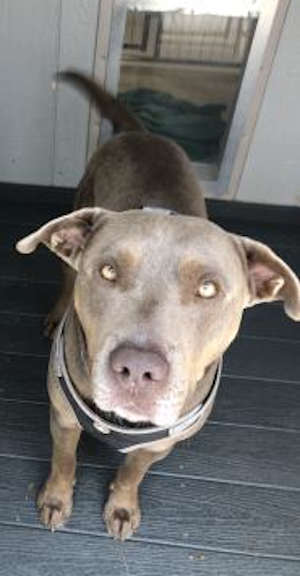
‘Bear’
“Bear” is a male Labrador retriever-American pit bull mix with a short charcoal and fawn coat.
He has been neutered.

‘Chai’
“Chai” is a female Alaskan husky mix with a gray and white coat.
She has been spayed.
She is dog No. 49279552.

‘Ebenezer’
“Ebenezer” is a male American pit bull terrier mix with a short tan and white coat.
He is dog No. 49191651.

‘Fritz’
“Fritz” is a male Australian shepherd mix with a black and white coat.
He is dog No. 49278179.

‘Pooh Bear’
“Pooh Bear” is a 1-year-old male American pit bull mix with a copper and white coat.
He has been neutered.
He is dog No. 49603144.

‘Scrappy’
“Scrappy” is an 11-month-old male American pit bull mix with a short cream-colored coat.
He has been neutered.
He is dog No. 49603144.

‘Snowball’
“Snowball” is a male American Staffordshire mix terrier with a white coat.
He has been neutered.
He is dog No. 49159168.

‘Terry’
“Terry” is a male shepherd mix with a short brindle coat.
He is dog No. 48443693.
Email Elizabeth Larson at