 How to resolve AdBlock issue?
News
The City of Clearlake Animal Association also is seeking fosters for the animals waiting to be adopted.
Call the Clearlake Animal Control shelter at 707-273-9440, or email
Visit Clearlake Animal Control on Facebook or on the city’s website.
The following dogs are available for adoption.

‘Scrappy’
“Scrappy” is an 11-month-old male American pit bull mix with a short cream-colored coat.
He has been neutered.
He is dog No. 49603144.

‘Colt’
“Colt” is a male Rhodesian Ridgeback mix with a short rust and black coat.
He has been neutered.
He is dog No. 49812106.

‘Andy’
“Andy” is a male American pit bull mix with a short gray and white coat.
He is dog No. 48995415.

‘Bear’
“Bear” is a male Labrador retriever-American pit bull mix with a short charcoal and fawn coat.
He has been neutered.

‘Chai’
“Chai” is a female Alaskan husky mix with a gray and white coat.
She has been spayed.
She is dog No. 49279552.

‘Ebenezer’
“Ebenezer” is a male American pit bull terrier mix with a short tan and white coat.
He is dog No. 49191651.

‘Fritz’
“Fritz” is a male Australian shepherd mix with a black and white coat.
He is dog No. 49278179.

‘Pooh Bear’
“Pooh Bear” is a 1-year-old male American pit bull mix with a copper and white coat.
He has been neutered.
He is dog No. 49603144.

‘Snowball’
“Snowball” is a male American Staffordshire mix terrier with a white coat.
He has been neutered.
He is dog No. 49159168.

‘Terry’
“Terry” is a male shepherd mix with a short brindle coat.
He is dog No. 48443693.
Email Elizabeth Larson at
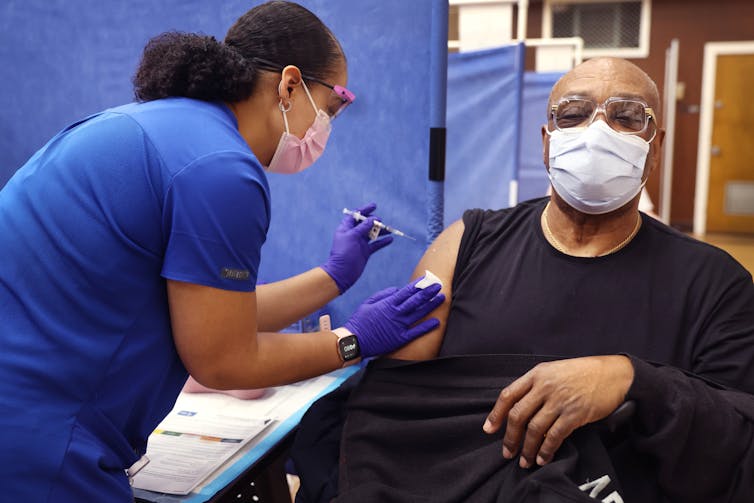
In late March 2022, the U.S. Food and Drug Administration authorized a second booster shot of COVID-19 vaccines for vulnerable populations in the U.S., a move that was soon after endorsed by the Centers for Disease Control and Prevention. People ages 50 years and older and certain immunocompromised individuals who are at higher risk for severe disease, hospitalization and death are eligible four months after receiving the initial booster shot.
A second booster shot is equivalent to a fourth dose for people who received a Pfizer-BioNTech or Moderna mRNA series or a third dose for those who received the single-shot Johnson & Johnson vaccine.
In Israel, people in these same vulnerable categories began receiving fourth doses in January 2022. The U.K. recently started administering a fourth dose for people 75 years and older and coined it a “spring booster.” In Germany, those over 60 years old are now eligible for a fourth shot of the mRNA series.
I am an epidemiologist at the University of Texas Health Science Center School of Public Health and founder and author of Your Local Epidemiologist, a newsletter translating the latest public health science for everyday use.
The latest recommendations have left many wondering about the importance of boosters for protection against COVID-19. Does the third shot wane over time? Is a fourth dose necessary? What if you’ve had a previous infection?
After reviewing the mounting body of research on how the immune system shifts over time following each dose, it is clear that another booster for vulnerable populations has meaningful benefit with very little risk.
Vaccine effectiveness following the first booster dose
There is clear evidence that a third dose of the mRNA series – or the first booster dose – was and still is critical for ensuring a robust immune response against the omicron variant for all age groups. This is in part because the immune response wanes over time and also in part because omicron has proved to be partially effective at evading immunity from the existing COVID-19 vaccines and from prior infections.
But then the question becomes: How well is immunity from the first booster holding up over time?
The best real-time data to follow on vaccine effectiveness over time is in the U.K. The U.K. Health Security Agency currently has follow-up data for 15 weeks after the third dose, or first booster shot. In its latest report, the effectiveness of vaccines against infection wanes significantly after a third dose. In the U.K. report, vaccine effectiveness against hospitalization is holding up much better compared to effectiveness against infection. But even protection against hospitalization is slightly decreasing over time. While this data is insightful, 15 weeks of follow-up data isn’t very helpful in the U.S. because many Americans got their third dose up to 24 weeks ago.
A recent study assessed the durability of a Moderna third dose after six months. Researchers found waning levels of neutralizing antibodies six months after the booster. The CDC also found significant waning protection against emergency department and urgent care visits five months after the first booster. Vaccine effectiveness against hospitalization decreased a little but largely held up five months after the booster.
The studies mentioned above pooled all age groups. But researchers know that older adults don’t mount as durable an immune response as younger people. This explains why breakthrough infections have occurred at a much higher rate among people ages 65 and up. A recent study in the Lancet assessed the durability of a third dose among people ages 76 to 96 years old. Researchers found that the third dose improved neutralizing antibodies, but in the face of omicron, antibodies still dropped substantially following a booster.
Data on the second booster dose/fourth shot
Now that Israel has been delivering a fourth dose for several months, researchers have some data to rely on to assess its effectiveness. There are three studies that have been released so far, one which has not yet been peer-reviewed.
In one study published in the New England Journal of Medicine, scientists assessed the rates of infection and severe illness after a fourth dose – or second booster – among more than a million people ages 60 and older in Israel. The researchers found that after a fourth dose, the rate of COVID-19 infection was two times lower than after a third dose. However, this protection quickly waned after six weeks. They also found the rate of severe disease was four times lower compared to those who received only three doses. It’s important to note, though, that hospitalizations among both groups were very low.
Importantly, another study assessed the effectiveness of a fourth dose among younger health care workers in Israel. The results confirmed that antibody levels dropped significantly five months after the third dose. Unfortunately, the effectiveness of the fourth dose was no different from the effectiveness of a third dose in this population of younger health care workers. In other words, there may not be meaningful benefit of a second booster of the same formula for young, healthy populations.
Researchers carried out a third study, one that has not yet been peer-reviewed, at a large health care system in Israel among people aged 60 to 100 years. Among 563,465 patients in the health care system, 58% received a second booster. During the study period, 92 people who received the second booster died compared to 232 people who had only the first booster. In other words, the second booster equated to a 78% reduction in death compared to the first booster alone.
What if you had a COVID-19 infection with omicron?
The combination of being both vaccinated and having experienced a COVID-19 infection is called “hybrid immunity.” More than 35 studies have shown that hybrid immunity offers complimentary and broad protection. This is because immunity from the vaccines targets the spike protein – after which the COVID-19 vaccines were designed – and infection-induced immunity aims more broadly at the whole virus.
[Over 150,000 readers rely on The Conversation’s newsletters to understand the world. Sign up today.]
So, it is not unreasonable to skip a second booster with a confirmed infection of omicron. This doesn’t mean that people should purposefully get SARS-CoV-2, the virus that causes COVID-19. But it is clear that hybrid immunity is a viable path to protection.
In short, there is strong evidence that a fourth dose – or second booster – provides meaningful protection among vulnerable populations, including people over 60. So another booster is reasonable for some groups. And while a fourth dose may benefit a select group, it is far more important that people receive their first, second and third doses.
Katelyn Jetelina, Assistant Professor of Epidemiology, University of Texas Health Science Center at Houston
This article is republished from The Conversation under a Creative Commons license. Read the original article.
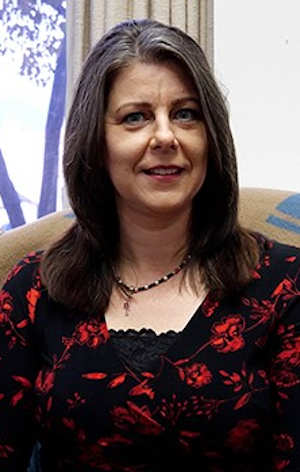
LAKE COUNTY, Calif. — For the first time in more than 40 years, a county supervisor is stepping down before finishing their term.
On Thursday morning, the Lake County Administrative Office reported that District 4 Supervisor Tina Scott is resigning.
Her resignation becomes effective on July 31.
“While I am confident this is the best available decision at this time, there are innumerable aspects of my supervisor role I will deeply miss. I am grateful to have had this opportunity, and looking forward to continuing to invest in Lake County communities,” Scott said in the county statement.
The statement released by the county did not offer much in the way of detail about her decision to leave. “Unfortunately, personal circumstances have made it impossible for Scott to complete her term. Scott appreciates the announcement will come as a surprise to many.”
However, the real reason appears to be that Scott — known for her baking — has been hired as the new career technical education, or CTE, food service and hospitality teacher at Clear Lake High School. She will begin in the fall.
The Lakeport Unified School Board approved Scott’s hire at its Wednesday night meeting. She was one of several hires the board approved following a closed session discussion.
“She will be developing the CTE program and teaching the classes associated with the career pathway,” Lakeport Unified Superintendent Matt Bullard told Lake County News in a Thursday afternoon email. “We are excited to see where this opportunity goes!”
Scott, who was first elected in 2016, is halfway through her second term on the Board of Supervisors. Her only elected experience before joining the Board of Supervisors was on the Lakeport Unified School Board.
“When I sought reelection in 2020, I never imagined I would be stepping away just two years later,” Scott said in the statement released by the county.
Scott’s resignation is the first for a supervisor since the late 1970s. Then-Supervisor Gene Lovi — who also represented District 4 — stepped down in 1979 and Gov. Jerry Brown selected Mary Waterman to fill his unexpired term in March of 1979, said Registrar of Voters Maria Valadez.
In February 1981, the governor appointed Carl M. Larson to fill the vacancy created by the death of District 2 Supervisor William E. Whalen, Valadez said.
Scott’s resignation announcement comes less than a month after County Administrative Officer Carol Huchingson announced she would be stepping down, effective April 29.
Earlier this week, Scott voted in support of naming Huchingson’s assistant county administrative officer, Susan Parker, to succeed Huchingson on an interim basis. Parker has stated she intends to seek the job on a permanent basis.
The timing of Scott’s departure — waiting for the school year to begin rather than leaving sooner — also appears calculated to allow her to help select the permanent successor for Huchingson, for whom she has been a staunch supporter.
The supervisors will discuss filling Scott’s seat at the board’s April 26 meeting, which also will be Huchingson’s last as county administrative officer.
The filling of vacancies on boards of supervisors can be done in two ways.
California Government Code Section 25060 places the responsibility first with the governor: “Whenever a vacancy occurs in a board of supervisors, the Governor shall fill the vacancy. The appointee shall hold office until the election and qualification of his or her successor.”
However, California Government Code Section 25061 gives the option of an election: “The election of a supervisor to fill the vacancy for the unexpired term shall be held at the next general election, unless the term expires on the first Monday after January 1st succeeding the election.”
Whether or not the governor makes an appointment, the board also will consider putting the seat up for general election, the county reported.
“Research toward the Board’s April 26 discussion is still in progress. However, it is probable it will be on the November ballot,” Deputy County Administrative Officer Matthew Rothstein told Lake County News.
While Lake County’s supervisorial districts were redrawn in December 2021, since Scott was elected when previous boundaries were in use, eligibility to vote for District 4 Supervisor in November will be based on those old boundaries, the county reported.
County officials pointed to examples of filling vacant supervisorial seats both by appointment and election in other counties.
In Mendocino County in 2017, the governor made the appointment to fill a vacancy. In San Benito County, a vacancy in 2020 was filled by an election and the governor made an appointment following another resignation in 2021.
County officials said the process to fill a vacancy can take up to several months.
Email Elizabeth Larson at
On March 24, Congressman Mike Thompson came to Lakeport to present a ceremonial check for $320,000 to county officials to go toward the Full Circle Effluent Pipeline preliminary design report.
The goal of the Full Circle Project is to transport Lake County's wastewater to The Geysers for injection in its geothermal steamfield.
In July, Thompson said he’d included the request for the funds in the Fiscal Year 2022 funding package. Congress passed that package later in July.
One of the county officials on hand to meet with Thompson for the presentation was Special Districts Administrator Scott Harter.
Harter told Lake County News that the funding will update the Full Circle Effluent Pipeline’s preliminary design report, which was completed in November of 2004.
“There is a need to update the report due to updated technologies, potential new partners/uses for the treated effluent, and possible alignment changes from what was originally envisioned,” Harter said.
Harter said the county currently has a draft request for proposals into which he will incorporate the funding specific requirements prior to the advertisement.
“We’ll proceed through the consultant selection process and ultimately contract with a consulting engineering firm to perform the update to the 2004 document,” he said.
The updated preliminary design report will “serve as a road map of sorts for the larger project, identifying options and the preferred option as well as considerations for the ultimate design of the project,” he said.
Harter said the RFP is expected to be issued soon and he anticipates the county will be under contract with a firm for updating the preliminary design report this summer.
Email Elizabeth Larson at
This Saturday, April 16, the Lakeport Library branch will host a cooking class to help patrons apply the principles in “The Blue Zones of Happiness” by Dan Buettner.
Book to Action is a free book club that includes not only book discussions, but also “action” events to help Lake County residents apply the material of the book to their lives.
Libraries across the state are participating with book selections unique to their community.
This year, Book to Action is providing free copies of The Blue Zones of Happiness (first come, first serve), which residents can pick up at any of the four library branches: Lakeport, Middletown, Redbud or Upper Lake. Digital copies are also freely available.
In partnership with Blue Zones Project Lake County, the Lake County Library branches will be hosting the following book discussions and events:
• Book discussion: April 16, Upper Lake at noon (on Zoom and in person).
• Cooking class: Participants may take a cooking class with CalFresh and Blue Zones Project Lake County on April 16 at the Lakeport branch at 10 a.m.
• Book discussion: April 20, Lakeport Branch at noon (on Zoom).
• Book discussion: April 21, Clearlake Branch at 2 p.m. (on Zoom).
• Presentation: The presentation will be on “The Blue Zones of Happiness” by Dan Buettner. Participants can take a test to learn about their body’s health and sign up for a walking group. The presentation will take place on April 23 at the Middletown Branch at 10 a.m.
• Walking group: Participants may join walking groups and hike on April 23 at Robert Louis Stevenson Park at 1 p.m.
• Book discussion: April 27, Middletown Branch at 1 p.m. (in person).
• Book discussion: April 30, Clearlake Branch at 3 p.m. (on Zoom).
• Cooking class: Participants may take a cooking class with CalFresh and Blue Zones Project Lake County on April 30 at Middletown at 10 a.m.
The first two events, a Blue Zones Project Lake County presentation and a hike at Highland Springs, took place on Saturday April 9.
“Both went well,” says event coordinator Amy Patton. “Patrons used the library Chromebooks to take the ‘Real Age’ test. And during the hike that afternoon, the flowers and the weather were perfect! The Middletown library will form another walking group on April 23.”
The library clubs — Book Club, Cookbook Club, Yarn Club and Creative Club — are also participating.
The full calendar of events is available at all library branches and is posted on the library website. Interested residents can sign up in person at the library or on the library website. Informational flyers are available at the library.
This project was made possible in part by the Institute of Museum and Library services.
The Lake County Department of Public Services Parks Division and Lake County Department of Public Health CalFresh Program also will be providing speakers, materials and more for the program.
Visit the Lake County Library website for more information.
EDD and Fraud Special Counsel McGregor W. Scott also recently identified and referred to federal authorities 30 more major fraud cases involving $54 million in benefits — mainly associated with the federal Pandemic Unemployment Assistance program.
These 30 investigations involved fraud schemes crossing state or international boundaries, as well as some schemes within California.
“Fraudsters attacked California and every state in the country with unprecedented criminal activity in 2020,” said Scott. “These criminals defrauded taxpayers and stole benefits from workers in need. California responded aggressively with new anti-fraud measures that blocked billions of dollars in fraud attempts. We are now engaged in a monumental effort to uncover these complex fraud schemes and deliver investigations to law enforcement and prosecutors across California.”
As fraud special counsel, Scott aids the state’s work with law enforcement to combat fraud — including supporting state, federal, and local investigations and prosecutions.
Working with EDD, Scott has leveraged his experience to deliver leads and evidence to aid prosecutions and strengthen ongoing investigations. Hundreds of investigations have opened and scores of suspects have been arrested, criminally charged and convicted.
From January 2021 to January 2022, the California Task Force on Pandemic Unemployment Assistance Fraud has led to at least 370 arrests, 130 convictions, and 1,400 active investigations.
These cases include a great variety of fraud schemes ranging from international crime rings to domestic organized and individual criminal activity.
Efforts continue to recover any remaining funds seized during these investigations, including funds held on frozen debit cards pending the investigation or prosecution.
EDD and Scott have also helped boost data sharing agreements with law enforcement partners to expedite investigations. Similarly, EDD established an information sharing program that helps California agencies to access EDD data more quickly.
Officials said fraud investigations are labor intensive criminal investigations because of the complexity of the schemes and the extensive efforts criminals undertake to conceal their activity.
In response, EDD created law enforcement investigative guides and offers technical assistance to law enforcement partners who are working these cases. EDD set up designated regional contacts for each division of the state and works with any agency that needs assistance with an unemployment insurance fraud case.
Law enforcement has arrested, convicted and imprisoned scores of individuals who defrauded the State — and continues to do so.
Those efforts have led to the following:
• A 37-month prison sentence in April 2021 in the Central District of California for a fraudster who obtained more than $500,000 in fraudulent unemployment benefits.
• Sentencing in April 2021 following an investigation by the U.S. Department of Justice National Unemployment Insurance Fraud Task Force conducted by US DOL, IRS, USPS, Murrieta PD, and EDD into a suspect who stole identities and obtained $500,000 in unemployment benefits.
• Guilty pleas in a federal prosecution of two inmates in Chowchilla in April 2021 following a joint investigation by the FBI, CDCR, the US Attorney, and EDD into $103,000 in fraud.
• A guilty plea in federal court in April 2021 following an investigation by the U.S. Department of Labor, FBI and EDD into attempts to file 100 phony claims using stolen identities and 10 payments worth nearly $200,000.
• Arrests in April 2021 by federal authorities following an investigation by Department of Labor, FBI, U.S. Postal Service and EDD into three people who filed $345,000 in fraudulent benefit applications on behalf of inmates.
• Arrests in Placer County in April 2021 in connection with a criminal organization that filed $4.5 million in fraudulent unemployment claims.
• Indictments by a grand jury in California in June 2021 following an investigation by the U.S. Department of Justice and EDD into three people who stole $1.4 million in unemployment benefits.
• Two defendants were convicted in July 2021 and imprisoned for five years for obtaining more than $74,000 in fraudulent unemployment benefits following an investigation by the FBI, the California Department of Corrections and Rehabilitation Investigative Services Unit and EDD.
• Guilty pleas in August 2021 in Los Angeles following an investigation into 200 fraudulent benefit claims totaling $1.6 million.
• Charges filed in August 2021 in Sacramento County against suspects linked to more than $500,000 in fraudulent claims.
• Criminal sentences against three Florida residents in November 2021 for fraudulently obtaining unemployment benefits in California.
• Criminal sentencing in San Diego in December 2021 of a fraudster sentenced to two years in prison for unemployment benefit fraud.
• Guilty pleas in San Diego County in February 2022 following an investigation by the San Diego District Attorney into a $1 million theft of unemployment insurance.
• A five-year prison sentence in February 2022 following an investigation by the U.S. Attorney, U.S. Department of Labor, Homeland Security, U.S. Postal Service, FBI, Social Security Administration and EDD into $4.3 million in stolen unemployment insurance benefits.
• Criminal charges filed in Sacramento in January 2022 following an investigation by EDD and the Sacramento County District Attorney into multiple suspects stealing $2.75 million in unemployment insurance benefits.
• Federal indictments in Sacramento in January 2022 following an investigation by EDD and federal authorities into a New Jersey resident who filed 78 fraudulent unemployment insurance claims in California.
• A guilty plea in federal court in January 2022 following an investigation by the U.S. Attorney and EDD into $132,000 in stolen unemployment insurance benefits.
• Guilty pleas in San Diego County in February 2022 following an investigation by the San Diego District Attorney into a $1 million theft of unemployment insurance.
• A five-year prison sentence in February 2022 following an investigation by the U.S. Attorney, U.S. Department of Labor, Homeland Security, U.S. Postal Service, FBI, Social Security Administration and EDD into $4.3 million in stolen unemployment insurance benefits.
• Eight defendants indicted in Fresno in February 2022 following an investigation by the U.S. Attorney for the Eastern District, FBI, U.S. Department of Labor, CDCR, and EDD into identity theft and mail fraud and $5 million in unemployment insurance fraud.
• A defendant sentenced to 30 months in prison in February 2022 following an investigation by the U.S. Department of Justice into approximately $170,000 in stolen unemployment benefits.
• Seventeen people charged in Bakersfield in March 2022 following an investigation by EDD, the Kern County District Attorney and others into a $394,000 unemployment insurance fraud scheme.
• Indictment in March 2022 in Las Vegas following an investigation by the Department of Labor-Office of Inspector General (DOL-OIG), U.S. Attorney, Department of Homeland Security-Office of Inspector General (DHS-OIG), Federal Bureau of Investigation, and EDD into $1.1 million in fraudulent claims.
While arrest, prosecution, and imprisonment remains a major avenue for holding fraudsters accountable, EDD said will seek restitution through the judicial system whenever possible.
Court-ordered restitution to EDD as a crime victim occurs after a criminal conviction. This can also include funds seized during a criminal investigation and held as evidence.
Other actions California has taken to strengthen its fraud fighting include:
• Stopping $125 billion in attempted fraud by deploying a new identity verification system, ID.me, in 2020 and partnering with Thomson Reuters to help detect and prevent UI and PUA fraud.
• Setting up the 1099-G call center to help victims of identity theft deal with any tax related questions—work that answered 24,000 calls. Fraud can be reported by selecting Form 1099G in Ask EDD or calling 1-866-401-2849.
• No longer printing Social Security numbers on mailed documents to reduce the risk of identity theft.
• Working with Bank of America to issue chip-enabled debit cards that enhance security and to strengthen fraud-prevention strategies.
• Working with the California Office of Emergency Services Fraud Task Force on over a thousand active investigations, arrests, and prosecutions across California.
• Delivering multiple customer alerts about text message and other phishing schemes.
With identity theft remaining a pervasive threat nationwide and globally, EDD has continued to issue consumer scam alerts throughout the pandemic that warn about cell phone and email phishing schemes designed to steal personal information.
Californians who receive suspicious cell phone or email phishing communications can report those scam attempts to the Federal Trade Commission, or FTC.
Phishing emails can be forwarded to the FTC’s Anti-Phishing Working Group at