LAKE COUNTY, Calif. — The Lakeport City Council this week will hold a public hearing on new rules to come into compliance with state law on edible food recovery and will meet new city employees.
The council will meet at 6 p.m. Tuesday, April 19, in the council chambers at Lakeport City Hall, 225 Park St.
The council chambers will be open to the public for the meeting. Masks are highly encouraged where 6-foot distancing cannot be maintained.
If you cannot attend in person, and would like to speak on an agenda item, you can access the Zoom meeting remotely at this link or join by phone by calling toll-free 669-900-9128 or 346-248-7799.
The webinar ID is 973 6820 1787, access code is 477973; the audio pin will be shown after joining the webinar. Those phoning in without using the web link will be in “listen mode” only and will not be able to participate or comment.
Comments can be submitted by email to This email address is being protected from spambots. You need JavaScript enabled to view it.. To give the city clerk adequate time to print out comments for consideration at the meeting, please submit written comments before 3:30 p.m. on Tuesday, April 19.
On Tuesday, the council will hold a public hearing and introduce the ordinance amending Chapter 8.16 of the Lakeport Municipal Code establishing regulations related to the establishment of an edible food recovery program and calendar a second reading of the ordinance.
Compliance Officer Andrew Britton’s report to the council explains that in September 2016 the state adopted SB 1383, which established methane emissions reduction targets in a statewide effort to reduce emissions of short-lived climate pollutants in various economic sectors.
“SB 1383 establishes aggressive targets to achieve by year 2025, including a 75 percent reduction in the level of the statewide disposal of organic waste from the 2014 level; and establishes an additional target that not less than 20 percent of currently disposed edible food is recovered for human consumption by 2025,” Britton wrote.
Britton said edible food recovery is an important component of the SB 1383 legislation. Although the city and other Lake County jurisdictions received rural jurisdiction waivers from CalRecycle for certain components of the SB 1383 regulations through the end of 2026, edible food recovery is not an exempted program.
Under council business, Assistant City Manager Nick Walker will ask the council to consider options for funding and include the South Main Street Paving Project in the spending plan for Coronavirus State and Local Fiscal Recovery funds and include the cost of the project in the 2022-23 budget.
Also on Tuesday, new Community Development Department employee Victor Fernandez and new Public Works employee Ky Ramsey will be introduced, the Youth Governance Council will make a presentation and the Lakeport Police Department will offer a citizen commendation to Connor Disney for aiding a police officer in a rescue on Clear Lake.
On the consent agenda — items usually accepted as a slate on one vote — are ordinances; minutes of the regular council meeting on April 5; adoption of a resolution authorizing continued remote teleconference meetings of the Lakeport City Council and its legislative bodies pursuant to Government Code section 54953(e); approval of event application 2022-014, with staff recommendations, for the 2022 Walk for Life; approval of event application 2022-015, with staff recommendations, for the Tuesday Farmers’ Market in Library Park; adoption of the ordinance amending chapter 3.04 of the Lakeport Municipal Code.
Email Elizabeth Larson at This email address is being protected from spambots. You need JavaScript enabled to view it.. Follow her on Twitter, @ERLarson, or Lake County News, @LakeCoNews.
LAKE COUNTY, Calif. — Lake County Animal Care and Control has another trio of felines waiting to meet you.
Call Lake County Animal Care and Control at 707-263-0278 or visit the shelter online at http://www.co.lake.ca.us/Government/Directory/Animal_Care_And_Control.htm for information on visiting or adopting.
The following cats at the shelter have been cleared for adoption.
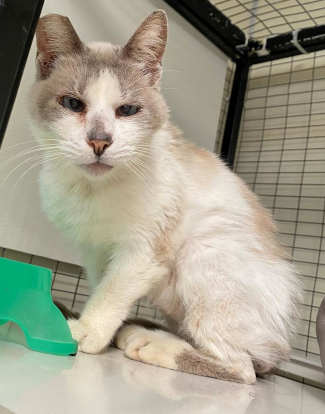
This 5-year-old female Siamese cat is in cat room kennel No. 68, ID No. LCAC-A-3238. Photo courtesy of Lake County Animal Care and Control. Female Siamese
This 5-year-old female Siamese cat has a short white coat with gray markings.
She is in cat room kennel No. 68, ID No. LCAC-A-3238.
This 1-year-old female domestic medium hair cat is in cat room kennel No. 84, ID No. CAC-A-3237. Photo courtesy of Lake County Animal Care and Control. Female domestic medium hair
This 1-year-old female domestic medium hair cat has a gray tabby coat.
She is in cat room kennel No. 84, ID No. LCAC-A-3237.
“Delilah” is a 2-year-old female domestic longhair cat in cat room kennel No. 103, ID No. LCAC-A-3070. Photo courtesy of Lake County Animal Care and Control. ‘Delilah’
“Delilah” is a 2-year-old female domestic longhair cat with a gray coat with white markings.
She is in cat room kennel No. 103, ID No. LCAC-A-3070.
Email Elizabeth Larson at This email address is being protected from spambots. You need JavaScript enabled to view it.. Follow her on Twitter, @ERLarson, or Lake County News, @LakeCoNews.
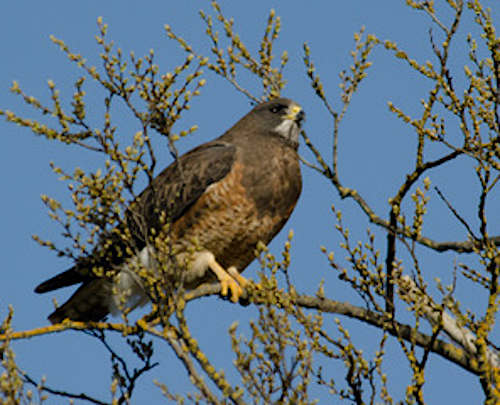
Susie Nishio took this photo of an early arrival of a Swainson's hawk in late February 2012 in Davis, California. It shows the field marks for Swainson's Hawk: a dark bib, a white chin and a yellow cere at the base of the beak. NORTHERN CALIFORNIA — When will the first Swainson's hawk return to our region from its annual migration south?
Certainly by the second week of March, we will see the early returnees circling above their nesting trees throughout the Central Valley of California and foraging in nearby agricultural fields.
Sacramento, Yolo, Contra Costa and San Joaquin counties have the highest concentrations of nesting sites.
Swainson's hawks leave our region in September to fly thousands of miles south. A recent study showed that hawks who nest in the same community, spend the winter in different areas, as far apart as Sinaloa, Mexico, Meta, Colombia and Salta, Argentina.
When a hawk returns to our region, it returns to the site where it nested the previous season, and meets up with its mate there.
Swainson's hawks are found in various colors, but these field marks remain constant. Some Swainson's hawks look purely black and white, and are called "light morphs," while others may have feathers of dark browns, so the field marks aren't readily apparent. They are called "dark morphs." Many others are "intermediate" between light and dark.
The way to tell a Swainson's hawk from a red tailed hawk is by looking at the underside of the wing. The red tailed hawk will have a dark leading edge of the wing while the Swainson's hawk wing will be lighter at the leading edge.
The red tailed hawk will have a "belly band" of color next to a white chest, while the Swainson's hawk will have a lighter belly than their chest color.
In 1983, the state of California declared the Swainson's hawk to be threatened according to the criteria set by the California Endangered Species Act.
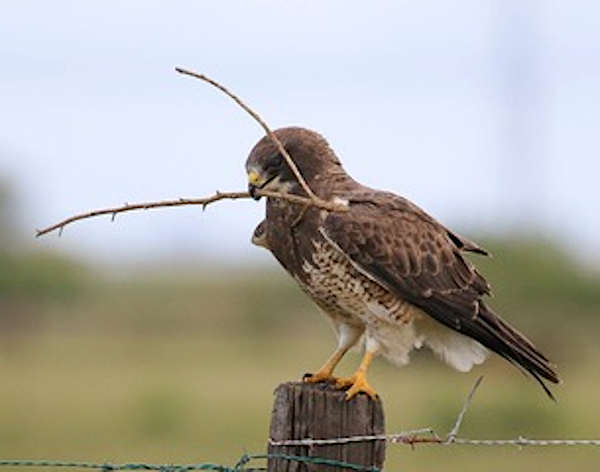
This photo, taken by Dave Harper in Contra Costa County, California, shows typical nest building activity for Swainson's hawks. Since then the California Department of Fish and Wildlife, or CDFW, has confirmed the need for special government protection for this species.
By the end of March in California, about 2,000 thousand Swainson's hawk pairs will be preparing nests to take care of eggs.
If you witness harassment of hawks, please contact the CDFW hotline at 888-334-CALTIP (888 334-2258), 24 hours a day, seven days a week. Or you may submit anonymous tips to CDFW using tip411.
By April, Swainson's Hawk pairs are in nest building, or rebuilding, mode. They will build at the site of their last nest, or in a suitable tree nearby.
Nests are usually in tall, older trees, near the top of the tree. To locate one, watch for hawks flying in and out of a tree with sticks in their beaks.
This is a very exciting time for hawk nest watchers. Our nesting hawk pairs need nearby foraging areas to feed a new generation of our most endangered raptor in California.
The best foraging is alfalfa fields and irrigated pasture because this is where the highest value prey are found in large numbers for the longest period of time. The favorite prey for feeding the young are small field mice, squirrels, rabbits, and voles.
The biggest threat to the breeding success of the Swainson's hawk is the loss of foraging grounds, largely as a result of urbanization of agricultural land.
Preservation of agricultural land and urban limit lines is critical to protecting foraging habitat
Judith Lamare is co-founder of Friends of the Swainson's Hawk, a citizen advocacy group based in Sacramento California. All the photos in this article were contributed by avid bird watchers and hawk advocates. Find Friends of the Swainson's Hawk on Facebook and at www.swainsonhawk.org.
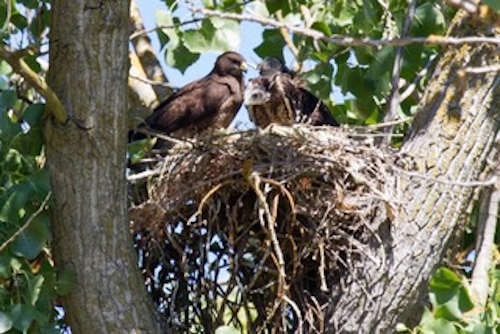
This photo by Robert Sewell along the American River in Sacramento, California, shows a mother and two chicks in a large stick nest. The chicks would have started flying from the nest by July 1. They start learning by climbing out of the nest on branches, called "branching."
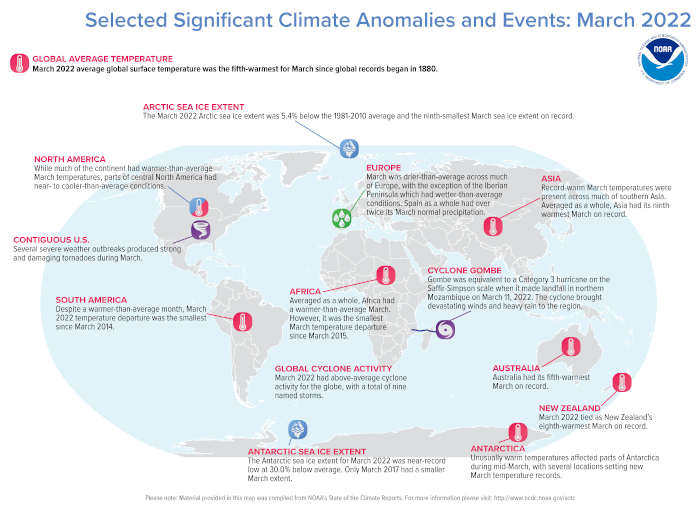
A map of the world plotted with some of the most significant climate events that occurred during March 2022. Please see the story below as well as more details in the report summary from NOAA NCEI at http://bit.ly/Global202203offsite link. (NOAA/NCEI).
March continued the planet’s exceedingly warm start to 2022, ranking as the fifth-warmest March in 143 years.
The year so far ranks as the fifth-warmest globally since 1880, according to scientists from NOAA’s National Centers for Environmental Information.
Below are more highlights from NOAA’s latest monthly global climate report:
Climate by the numbers
March 2022
The average global land and ocean-surface temperature for March was 1.71 degrees F (0.95 of a degree C) above the 20th-century average of 54.9 degrees (12.7 degrees C), ranking as the fifth-warmest March in the global climate record.
March 2022 also was the 46th consecutive March and the 447th consecutive month with temperatures above the 20th-century average.
Looking regionally, Oceania had its fourth-warmest March on record while Asia had its ninth-warmest. North America, South America, Europe and Africa all had above-average March temperatures, but none of the continents saw a top-15 warm March.
Year to date | January through March
For 2022 so far, the global land and ocean surface temperature averaged 1.58 degrees F (0.88 of a degree C), making it the fifth-warmest year to date on record.
Asia also had its fifth warmest year-to-date temperature on record, while South America, Europe, the Caribbean region and Oceania each saw a January-through-March temperature ranked among the nine warmest on record. Africa and North America also were warmer than average, but saw their coolest year to date since 2012 and 2014, respectively.
A map of the world plotted with some of the most significant climate events that occurred during March 2022.
Other notable climate events in the March report:
• Sea ice was scant at the poles: Antarctic sea ice coverage (extent) was just 1.09 million square miles, the second-smallest extent for March in the 44-year record. Only March of 2017 had a smaller sea ice extent. Across the Arctic, sea ice extent averaged 5.63 million square miles — the ninth-smallest for March since records began in 1979.
• A busy month for the tropics: Nine tropical storms formed globally in March, tying as the second-highest number of tropical storms in March — behind March of 1994 which had a total of 10. Only three of the nine tropical storms reached cyclone (hurricane) strength, which is below normal for the month.
LAKE COUNTY, Calif. — Lake County Animal Care and Control has many new dogs waiting to join their new homes this spring.
Dogs available for adoption this week include mixes of Australian cattle dog, Australian Kelpie, Belgian malinois, border collie, boxer, Carolina dog, Chihuahua, Entlebucher mountain dog, French bulldog, husky, Jack Russell terrier, Labrador retriever, Pembroke Welsh corgi and pit bull.
Dogs that are adopted from Lake County Animal Care and Control are either neutered or spayed, microchipped and, if old enough, given a rabies shot and county license before being released to their new owner. License fees do not apply to residents of the cities of Lakeport or Clearlake.
The following dogs at the Lake County Animal Care and Control shelter have been cleared for adoption.
Call Lake County Animal Care and Control at 707-263-0278 or visit the shelter online for information on visiting or adopting.
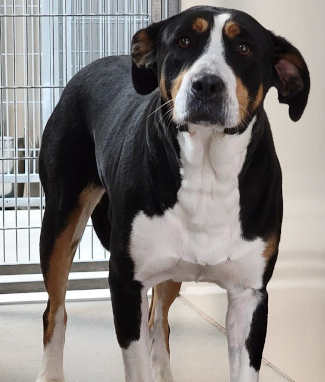
This 3-year-old female Entlebucher mountain dog is in kennel No. 2, ID No. LCAC-A-3250. Photo courtesy of Lake County Animal Care and Control. Female Entlebucher mountain dog
This 3-year-old female Entlebucher mountain dog has a short tricolor coat.
She is in kennel No. 2, ID No. LCAC-A-3250.
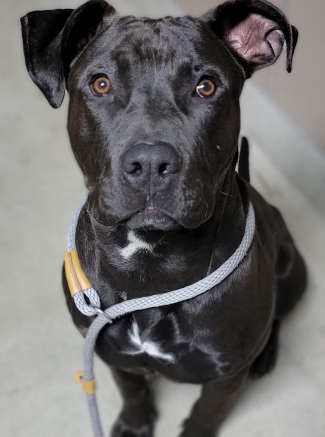
This 1-year-old male pit bull is in kennel No. 6, ID No. LCAC-A-3290. Photo courtesy of Lake County Animal Care and Control.Male pit bull
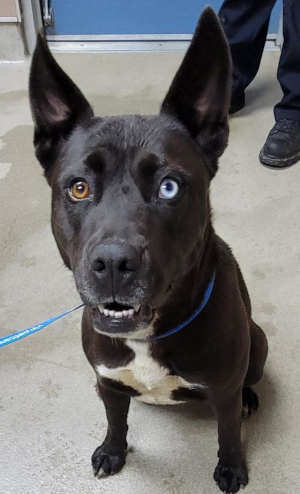
This 1-year-old male pit bull has a short black coat with white markings.
He is in kennel No. 6, ID No. LCAC-A-3290.
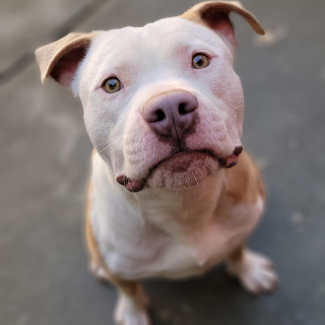
This 1-year-old male pit bull terrier is in kennel No. 7, ID No. LCAC-A-2821. Photo courtesy of Lake County Animal Care and Control. Male pit bull terrier
This 1-year-old male pit bull terrier has a short white and tan coat.
He is in kennel No. 7, ID No. LCAC-A-2821.
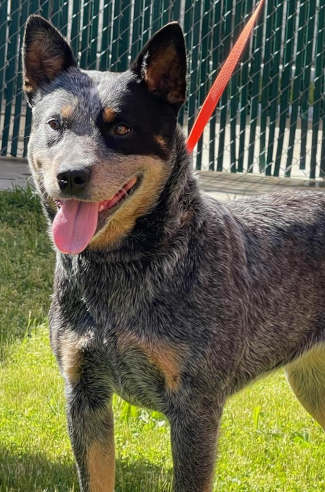
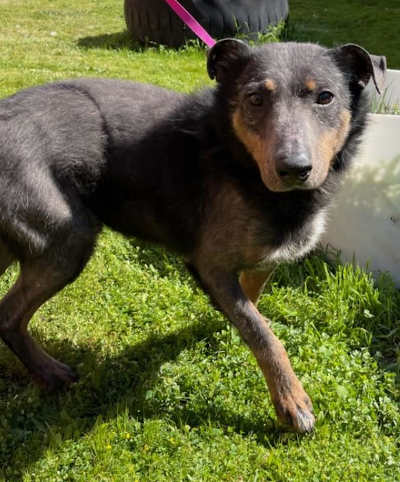
This 2-year-old female Australian cattle dog is in kennel No. 8, ID No. LCAC-A-3231. Photo courtesy of Lake County Animal Care and Control. Female Australian cattle dog
This 2-year-old female Australian cattle dog has a short blue, black and tan coat.
She is in kennel No. 8, ID No. LCAC-A-3231.
This 2-year-old male pit bull is in kennel No. 9, ID No. LCAC-A-3278. Photo courtesy of Lake County Animal Care and Control. Male pit bull
This 2-year-old male pit bull has a short black coat.
He is in kennel No. 9, ID No. LCAC-A-3278.
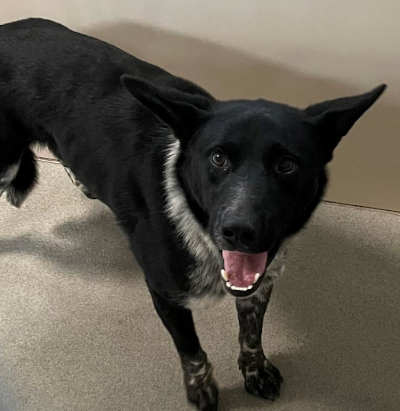
This 3-year-old male cattle dog is in kennel No. 14, ID No. LCAC-A-3228. Photo courtesy of Lake County Animal Care and Control. Male cattle dog
This 3-year-old male cattle dog has a short black coat with white markings.
He is in kennel No. 14, ID No. LCAC-A-3228.
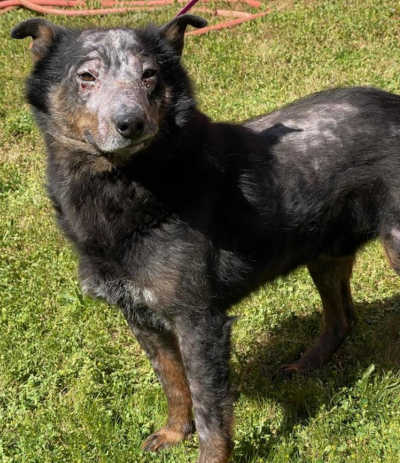
This 3-year-old male cattle dog is in kennel No. 16, ID No. LCAC-A-3131. Photo courtesy of Lake County Animal Care and Control. Australian cattle dog
This 3-year-old male Australian cattle dog has a black coat with tan markings.
He is in kennel No. 16, ID No. LCAC-A-3131.
This 3-year-old male pit bull is in kennel No. 18, ID No. LCAC-A-3288. Photo courtesy of Lake County Animal Care and Control. Male pit bull
This 3-year-old male pit bull has a short black and white coat.
He is in kennel No. 18, ID No. LCAC-A-3288.
“Cody” is a 7-year-old male French bulldog-pit bull terrier mix in kennel No. 19, ID No. LCAC-A-3284. Photo courtesy of Lake County Animal Care and Control. ‘Cody’
“Cody” is a 7-year-old male French bulldog-pit bull terrier mix with a short brindle and white coat.
He is in kennel No. 19, ID No. LCAC-A-3284.
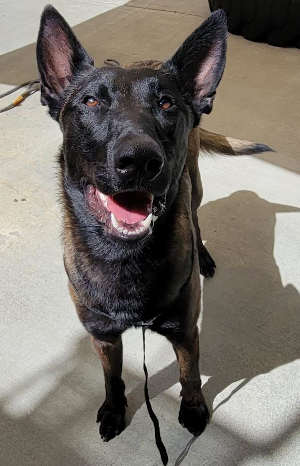
This 1-year-old male Belgian malinois is in kennel No. 20, ID No. LCAC-A-3270. Photo courtesy of Lake County Animal Care and Control. Male Belgian malinois
This 1-year-old male Belgian malinois has a short brown and black coat.
He is in kennel No. 20, ID No. LCAC-A-3270.
This 3-year-old male Pembroke Welsh corgi is in kennel No. 22, ID No. LCAC-A-3271. Photo courtesy of Lake County Animal Care and Control. Male Pembroke Welsh corgi
This 3-year-old male Pembroke Welsh corgi has a short white and tan coat.
He is in kennel No. 22, ID No. LCAC-A-3271.
This 1-year-old female husky-pit bull mix is in kennel No. 23, ID No. LCAC-A-3289. Photo courtesy of Lake County Animal Care and Control. Husky-pit bull mix
This 1-year-old female husky-pit bull mix has a short black coat.
She is in kennel No. 23, ID No. LCAC-A-3289.
This 2-year-old female Carolina dog is in kennel No. 24, ID No. LCAC-A-3281. Photo courtesy of Lake County Animal Care and Control. Carolina dog
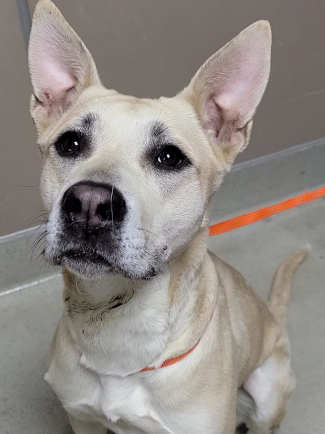
This 2-year-old female Carolina dog has a short white coat.
She is in kennel No. 24, ID No. LCAC-A-3281.
“Blue” is a 4-year-old female husky in kennel No. 25, ID No. LCAC-A-2816. Photo courtesy of Lake County Animal Care and Control. ‘Blue’
“Blue” is a 4-year-old female husky with a gray and white coat, and blue eyes.
She is in kennel No. 25, ID No. LCAC-A-2816.
This 2-year-old female husky is in kennel No. 26, ID No. LCAC-A-3225. Photo courtesy of Lake County Animal Care and Control. Female husky
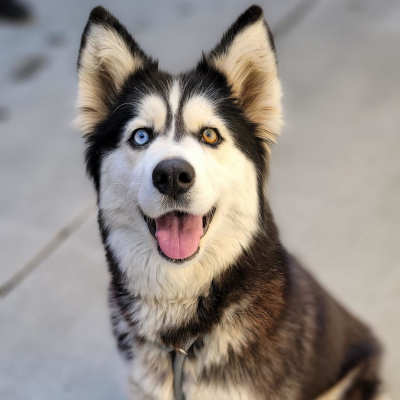
This 2-year-old female husky has a medium-length black and white coat, with one blue eye and one yellow eye.
She is in kennel No. 26, ID No. LCAC-A-3225.
“King” is a 1-year-old American bulldog in kennel No. 32, ID No. 3109. Photo courtesy of Lake County Animal Care and Control. ‘King’
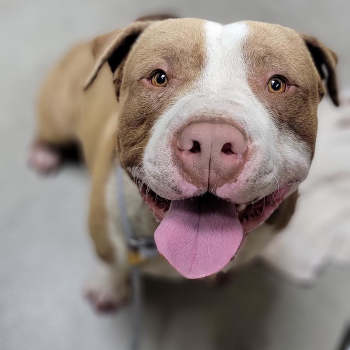
“King” is a 1-year-old American bulldog with a short brown and white coat.
He is in kennel No. 32, ID No. 3109.
This 3-year-old male Australian cattle dog is in kennel No. 34, ID No. LCAC-A-3130. Photo courtesy of Lake County Animal Care and Control. Male Australian cattle dog
This 3-year-old male Australian cattle dog has a short black, tan and white coat.
He is in kennel No. 34, ID No. LCAC-A-3130.
Email Elizabeth Larson at This email address is being protected from spambots. You need JavaScript enabled to view it.. Follow her on Twitter, @ERLarson, or Lake County News, @LakeCoNews.
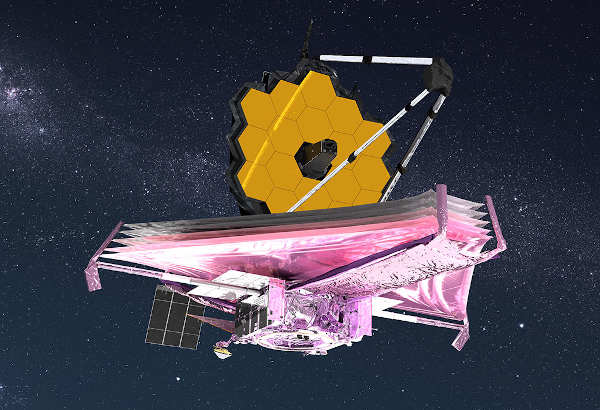
In this illustration, the multilayered sunshield on NASA’s James Webb Space Telescope stretches out beneath the observatory’s honeycomb mirror. The sunshield is the first step in cooling down Webb’s infrared instruments, but the Mid-Infrared Instrument (MIRI) requires additional help to reach its operating temperature. Credits: NASA GSFC/CIL/Adriana Manrique Gutierrez. NASA’s James Webb Space Telescope will see the first galaxies to form after the big bang, but to do that its instruments first need to get cold — really cold.
On April 7, Webb’s Mid-Infrared Instrument, or MIRI — a joint development by NASA and the European Space Agency – reached its final operating temperature below 7 kelvins (minus 447 degrees Fahrenheit, or minus 266 degrees Celsius).
Along with Webb’s three other instruments, MIRI initially cooled off in the shade of Webb’s tennis-court-size sunshield, dropping to about 90 kelvins (minus 298 F, or minus 183 C).
But dropping to less than 7 kelvins required an electrically powered cryocooler. Last week, the team passed a particularly challenging milestone called the “pinch point,” when the instrument goes from 15 kelvins (minus 433 F, or minus 258 C) to 6.4 kelvins (minus 448 F, or minus 267 C).
“The MIRI cooler team has poured a lot of hard work into developing the procedure for the pinch point,” said Analyn Schneider, project manager for MIRI at NASA’s Jet Propulsion Laboratory in Southern California. “The team was both excited and nervous going into the critical activity. In the end it was a textbook execution of the procedure, and the cooler performance is even better than expected.”
The low temperature is necessary because all four of Webb’s instruments detect infrared light – wavelengths slightly longer than those that human eyes can see.
Distant galaxies, stars hidden in cocoons of dust, and planets outside our solar system all emit infrared light. But so do other warm objects, including Webb’s own electronics and optics hardware.
Cooling down the four instruments’ detectors and the surrounding hardware suppresses those infrared emissions. MIRI detects longer infrared wavelengths than the other three instruments, which means it needs to be even colder.
Another reason Webb’s detectors need to be cold is to suppress something called dark current, or electric current created by the vibration of atoms in the detectors themselves.
Dark current mimics a true signal in the detectors, giving the false impression that they have been hit by light from an external source. Those false signals can drown out the real signals astronomers want to find.
Since temperature is a measurement of how fast the atoms in the detector are vibrating, reducing the temperature means less vibration, which in turn means less dark current.
MIRI’s ability to detect longer infrared wavelengths also makes it more sensitive to dark current, so it needs to be colder than the other instruments to fully remove that effect. For every degree the instrument temperature goes up, the dark current goes up by a factor of about 10.
Once MIRI reached a frigid 6.4 kelvins, scientists began a series of checks to make sure the detectors were operating as expected. Like a doctor searching for any sign of illness, the MIRI team looks at data describing the instrument’s health, then gives the instrument a series of commands to see if it can execute tasks correctly.
This milestone is the culmination of work by scientists and engineers at multiple institutions in addition to JPL, including Northrop Grumman, which built the cryocooler, and NASA’s Goddard Space Flight Center, which oversaw the integration of MIRI and the cooler to the rest of the observatory.
“We spent years practicing for that moment, running through the commands and the checks that we did on MIRI,” said Mike Ressler, project scientist for MIRI at JPL. “It was kind of like a movie script: Everything we were supposed to do was written down and rehearsed. When the test data rolled in, I was ecstatic to see it looked exactly as expected and that we have a healthy instrument.”
There are still more challenges that the team will have to face before MIRI can start its scientific mission.
Now that the instrument is at operating temperature, team members will take test images of stars and other known objects that can be used for calibration and to check the instrument’s operations and functionality.
The team will conduct these preparations alongside calibration of the other three instruments, delivering Webb’s first science images this summer.
“I am immensely proud to be part of this group of highly motivated, enthusiastic scientists and engineers drawn from across Europe and the U.S.,” said Alistair Glasse, MIRI instrument scientist at the UK Astronomy Technology Centre in Edinburgh, Scotland. “This period is our ‘trial by fire’ but it is already clear to me that the personal bonds and mutual respect that we have built up over the past years is what will get us through the next few months to deliver a fantastic instrument to the worldwide astronomy community.”
More about the mission
The James Webb Space Telescope is an international program led by NASA with its partners, the European Space Agency, or ESA, and the Canadian Space Agency.
MIRI was developed through a 50-50 partnership between NASA and ESA. JPL leads the U.S. efforts for MIRI, and a multinational consortium of European astronomical institutes contributes for ESA. George Rieke with the University of Arizona is the MIRI science team lead. Gillian Wright is the MIRI European principal investigator.
Laszlo Tamas with UK ATC manages the European Consortium. The MIRI cryocooler development was led and managed by JPL, in collaboration with Northrop Grumman in Redondo Beach, California, and NASA’s Goddard Space Flight Center in Greenbelt, Maryland.
 How to resolve AdBlock issue?