 How to resolve AdBlock issue?
News
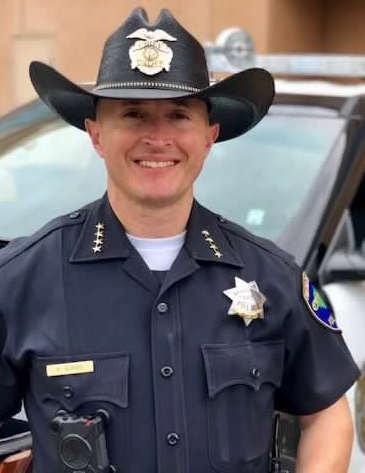
LAKE COUNTY, Calif. — Friends and colleagues around Lake County and the North Coast are remembering and honoring the life of a former Lakeport and Healdsburg police chief.
Kevin Burke, who last year retired as the chief of police for the city of Healdsburg, where he had served after leaving the Lakeport Police Department, has died. He was 55.
Burke’s body was found in his Healdsburg home on Tuesday evening by officers from his former department following a request for a welfare check, said his friend, Lakeport Police Chief Brad Rasmussen. Burke is reported to have died of a self-inflicted gunshot wound.
“We’re all in shock,” said Margaret Silveira, a friend of Burke’s who retired as Lakeport city manager in 2020.
“I just can’t believe he’s gone,” Silveira said.
Rasmussen said he had gotten the news on Tuesday night and began notifying friends of Burke’s, as did Jason Ferguson, chief of the Cloverdale Police Department, who also had worked with Burke while he was at Lakeport Police.
“I didn’t sleep last night at all,” said Rasmussen on Wednesday afternoon, noting Ferguson also passed a sleepless night after receiving the news and trying to notify people.
On Wednesday evening, Ferguson posted on Facebook, “Truly heartbroken over the loss of this man who was a dear friend and mentor. I will forever cherish the memories and opportunities that he made possible during my career.”
In a statement posted on its Facebook page on Wednesday, the city of Healdsburg said it was mourning the passing of Burke, who had been chief from 2010 to 2021. Officials called him “a true wit, a friend and advisor to his colleagues, and a respected member of the City team.”
“The loss of Kevin Burke, our former Police Chief, will be felt by countless members of our community,” said Healdsburg Mayor Ozzy Jimenez. “His light and kind heart will be missed by so many. Our Healdsburg Police Department has lost a great leader and friend.”
“We are heartbroken and saddened over Kevin’s passing,” stated current Police Chief Matt Jenkins. “As his Healdsburg Police Department family mourns the loss, we remember him for everything he did for the department and the community. He was a mentor and a friend, and he led us through many difficult times with courage and dignity.”
The city of Lakeport’s Facebook page memorialized Burke in a Facebook post on Wednesday that said, “This is terribly sad news for anyone who knew Kevin. Some of us were fortunate to work with him while he was our Police Chief and Interim City Manager. Our sincere condolences to all of his friends, family and loved ones.”
“Kevin was a phenomenal leader both as Lakeport Police Chief and City Manager. He made many positive improvements to the department that are still in place today and have continually helped move us forward. I am where I am today because of his leadership,” Rasmussen told Lake County News.

An accomplished career
Burke, the son of a longtime teacher, grew up in St. Helena with his siblings, a brother and a sister.
He received a bachelor's degree in economics from Whittier College, a law degree from University of California, Berkeley's law school and later, while working for Lakeport, a master's degree from Johns Hopkins University in public safety management.
Throughout his life, he was an extensive traveler, taking trips around the world. He also was an outdoorsman, hunter and athlete.
Before entering policing, he worked as a deputy district attorney in Orange County. Later, he went to work for the Los Angeles Police Department, rising to the rank of sergeant before he arrived as the city of Lakeport’s new chief in March 2006.
Lisa Morrow, executive director of Lake Family Resource Center, said Burke was the first to invite the center to the chiefs’ meeting, which includes the sheriff, the two city police chiefs and the probation chief.
“It is how we started training. He was the most compassionate and realistic advocate,” Morrow said.
Morrow also credited Burke with helping create the strong and collaborative relationship between Lake Family Resource Center and law enforcement. Today, the organization is partnering with Lakeport Police to put a crisis intervention specialist on the streets along with officers.
While serving as chief, Burke, members of his staff and the sheriff’s office attended the National Peace Officers’ Memorial Day Services in Washington, DC in 2007 and 2008.
Burke worked for the city of Lakeport for just over four and a half years. During that time, he spent nearly two years doing double-duty as the interim city manager. In that role, he managed to balance the budget and avoid layoffs during a challenging time for the city.
“He was the interim city manager when I got there and he was just so gracious in assisting me with getting on board,” said Silveira. Although they only worked together for about nine months, she said they were memorable ones.
She recalled him as a man of great intelligence, wit and grace, who was fun to be with.
He also was an adventurer. Silveira recalled taking sailing lessons with him and said they also went sky diving together — even though his knuckles were a bit white on that trip.
“He just was fun. And funny,” she said.
Longtime city staffer Andrew Britton said Burke was “always professional, always prepared,” and was willing to step up when the city needed his leadership as interim city manager.
“The bonus was he was a very kind and gracious man,” Britton said.
Burke then went on to Healdsburg, his second and final chief’s job.
In a 2010 interview with Lake County News, Burke — then just 44 — said he was looking forward to taking on “some additional responsibility with a larger organization and some new challenges.”
Even when moving into a larger department, Burke intended to keep his hands-on approach to policing. “It's kind of my style anyway,” he said.
He said at that time that he would miss the people he’d met — co-workers, friends and city staff. “I've worked in a lot of places over the years and in Lakeport I've made a lot of good friends, and never lived in a place that made me feel so welcome so quickly,” he said.
During his 10 years as Healdsburg chief, he made an impact. The city of Healdsburg said Burke “played a lead role in the community’s response to the Kincade Fire, the pandemic, and a national dialogue over police reform. Committed to community policing, Chief Burke also created a program within the police department wherein a social worker works with sworn officers to provide services to community members.”
He retired from Healdsburg last year and appeared headed for a busy retirement of trips, and time with friends and his beloved dogs.
Britton said he appreciated that Burke maintained a relationship with Lakeport and some of the people he worked with more than a decade after he left. “That’s pretty rare in my experience.”
Burke came to Lakeport for Public Works Director Doug Grider’s retirement party last December, at which point Britton said he got a chance to say hi and congratulate him on his retirement.
“The man touched a lot of lives. All positively as far as I can tell,” Britton said.
‘This career gets to the best of us’
In January Burke announced he was planning to run for the Sonoma County sheriff’s job.
Burke amassed numerous key endorsements early in his campaign, including from Sonoma County Supervisor James Gore and District Attorney Jill Ravitch, Santa Rosa Mayor Chris Rogers, Healdsburg Mayor Ozzy Jimenez and Sebastopol Mayor Patrick Slayter, council members from Cloverdale, Healdsburg and Santa Rosa, as well as unions and the Sonoma County Democratic Party.
But in early March, just two months into the campaign, Burke suddenly withdrew, citing health issues.
Mauricio Barreto, a Clearlake Police officer and former Lake County deputy sheriff, was a friend of Burke, who he said was a “bright light in this world,” and “a true leader and a great human being.”
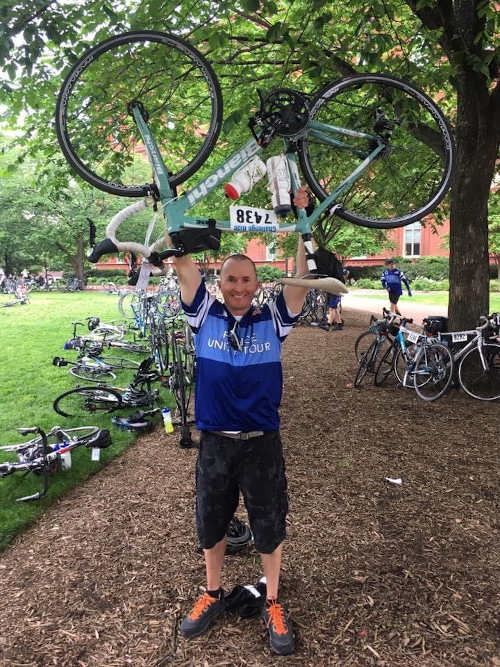
Barreto said Burke often participated in road bike rides to benefit law enforcement, and he credited Burke with getting him into road bike racing.
They also worked out together, along with Deputy Jake Steely, who died after he was injured on the Mendocino Coast while trying to rescue his son from the ocean in April 2016.
Barreto said the day before Burke quit the sheriff’s race, there was a campaign event and he looked great. “I don’t understand what happened.”
However, Barreto added, “This career gets to the best of us.”
Barreto said he had last spoken to Burke about a month and a half ago as they were supposed to go on a bike ride. Barreto said Burke was doing great.
“We were supposed to go on a ride together and he told me he was going to have plenty of time soon. We had coffee one afternoon and talked about life. I never would have expected him to end his life. I’m heartbroken and very sad about his passing,” Barreto said.
Rasmussen said he was traveling through Healdsburg last Wednesday and called Burke to connect but didn’t hear back. He said that wasn’t entirely unusual, as it would often be several days before he would get a call back from Burke if he was on a trip.
He said he believes that Burke was depressed about not being in law enforcement any longer.
Retirement is rough for law enforcement officers, said Rasmussen, noting that a high number of cops are dying by suicide.
Rasmussen pointed to another former chief he knew — retired Fortuna Police chief, William Dobberstein, who was found dead in his home at the end of March, also of an apparent suicide. Dobberstein, who was 53, had retired in January of 2020.
Richard Persons, who was chief executive officer of the Lake County Fair during Burke’s tenure at the Lakeport Police Department, said he’s worked with a lot of law enforcement professionals over nearly four decades, nearly all of them smart, selfless, caring people.
“Kevin was one of the smartest people I've ever met. He was always warm, witty, firm and focused,” he said.
“Kevin was small in stature, but he was a very big human being. He leaves behind communities that are better for his having been part of them. I'll miss him, and I know many others will as well,” Persons said.
Individuals in distress and needing support and mental health resources can get help around the clocks at https://suicidepreventionlifeline.org/. If you need help, please ask for it; your life matters — more than you can ever know.
Email Elizabeth Larson at
The 84 returned properties include 79 parcels whose owners chose to participate in the full debris removal program.
The owners of the other five chose to take part in the program's hazardous trees only element.
Under the program, administered by the California Governor's Office of Emergency Services, or Cal OES, and the California Department of Resources Recycling and Recovery, or CalRecycle, in collaboration with county officials, participating property owners incur no direct costs.
"The return of all 84 properties in Lake County is a significant step forward in the recovery and rebuilding process for the owners of those properties," said Cal OES Deputy Director of Recovery Ryan Buras. "The state's recovery team has worked incredibly hard to remove more than 350,000 tons of debris, nearly 22,000 eligible fire-damaged trees and other hazardous materials on public roads and properties from the 2021 wildfires statewide. We are committed to clearing and returning the remaining properties as quickly as possible so that families can safely return home and move forward in their recovery."
Return of the properties to city officials follows the completion of site assessments; asbestos surveys; the removal of bulk quantities of asbestos containing materials; and the removal of eligible debris.
The process also included analysis of soil samples by a certified laboratory to verify they met state health and environmental standards; the felling and removal of hazardous trees; the implementation of erosion control measures; and a final walk-through by state debris officials to ensure all work meets state standards.
During the debris removal process, state contractors removed 9,640 tons of fire-related debris, including 467 tons of burned metal, 582 tons of burned concrete and 8,591 tons of ash and contaminated soil generated by the fire. Contractors also felled and removed 71 hazardous trees from 18 properties identified with such trees.
State debris officials also have returned 17, or 81%, of the 21 properties in Mendocino County participating in the program to local officials affected by the Hopkins. All but one of the properties is participating in the full debris removal program.
During debris removal operations in Mendocino County, crews removed 85 tons of burned metal, 828 tons of burned concrete and 4,,997 tons of ash and contaminated soil generated by the fire. Contractors also have felled and removed 108 hazardous trees from 18 properties identified with such trees in danger of falling on the public or public infrastructure.
To date, state debris officials have returned 796, or 37.2%, of 2,142 properties statewide participating in the full or hazardous trees only element of the program to their respective county to begin the permitting process.
To date, state-managed crews have cleared all eligible debris generated by the 2021 wildfires from 1,523, or 85.5% of the 1,781 properties enrolled in the full debris removal program.
Wildfire survivors had the option to either use their own contractor or enroll in the state-managed program.
Of the properties with damage from the 2021 fires, 1,781 signed up to have the remains of their homes and other structures cleared by the state. Another 359 property owners chose to participate in the hazardous trees only element of the program.
The cleanup will take place between 9 a.m. and 2 p.m. in the public parking lot north of the Fifth Street boat ramp in downtown Lakeport.
This event is limited to city of Lakeport residents and business owners.
Those dropping off trash and solid waste will be required to provide photo identification and a copy of a current city of Lakeport utility bill. The utility bill must be current in order to participate.
Participants are asked to follow these guidelines:
• Stay in vehicle while Lakeport Disposal staff unloads materials;
• Two visits maximum per each Lakeport address;
Acceptable: Household trash, televisions, appliances (stoves, washers, dryers, dishwashers and water heaters), electronic waste, mattresses, household furniture, unusable clothes, blankets, towels and similar materials.
Not accepted: Refrigerators, hot tubs/spas, air conditioners, construction debris, used tires and household hazardous waste.
For more details, please see the city’s website, its Facebook page or contact Lakeport Disposal at 707-263-6080.

Around the world, revolutionary changes are under way in transportation. More electric vehicles are on the road, people are taking advantage of sharing mobility services such as Uber and Lyft, and the rise in telework during the COVID-19 pandemic has shifted the way people think about commuting.
Transportation is a growing source of the global greenhouse gas emissions that are driving climate change, accounting for 23% of energy-related carbon dioxide emissions worldwide in 2019 and 29% of all greenhouse gas emissions in the U.S.
The systemic changes under way in the transportation sector could begin lowering that emissions footprint. But will they reduce emissions enough?
In a new report from the Intergovernmental Panel on Climate Change released April 4, 2022, scientists examined the latest research on efforts to mitigate climate change. The report concludes that falling costs for renewable energy and electric vehicle batteries, in addition to policy changes, have slowed the growth of climate change in the past decade, but that deep, immediate cuts are necessary. Emissions will have to peak by 2025 to keep global warming under 1.5 degrees Celsius (2.7 F), a Paris Agreement goal, the report says.
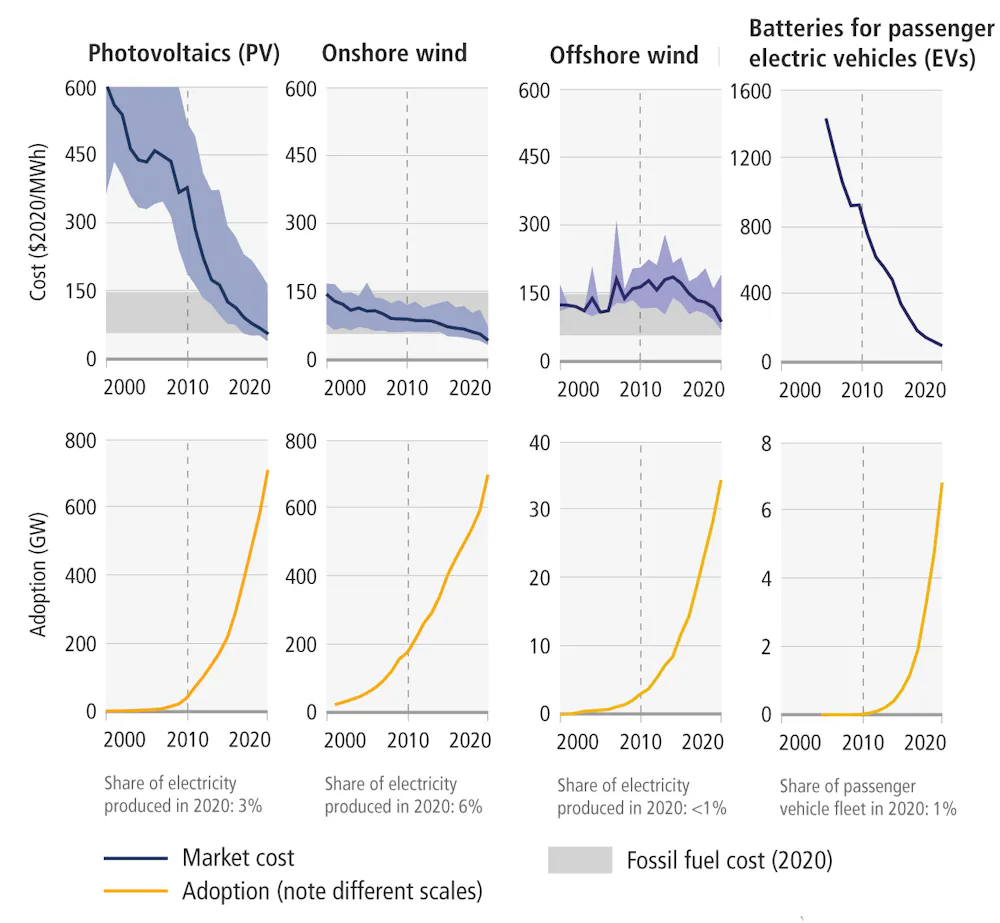
The transportation chapter, which I contributed to, homed in on transportation transformations – some just starting and others expanding – that in the most aggressive scenarios could reduce global greenhouse gas emissions from transportation by 80% to 90% of current levels by 2050. That sort of drastic reduction would require a major, rapid rethinking of how people get around globally.
The future of EVs
All-electric vehicles have grown dramatically since the Tesla Roadster and Nissan Leaf arrived on the market a little over a decade ago, following the popularity of hybrids.
In 2021 alone, the sales of electric passenger vehicles, including plug-in hybrids, doubled worldwide to 6.6 million, about 9% of all car sales that year.
Strong regulatory policies have encouraged the production of electric vehicles, including California’s Zero Emission Vehicle regulation, which requires automakers to produce a certain number of zero-emission vehicles based on their total vehicles sold in California; the European Union’s CO2 emissions standards for new vehicles; and China’s New Energy Vehicle policy, all of which have helped push EV adoption to where we are today.
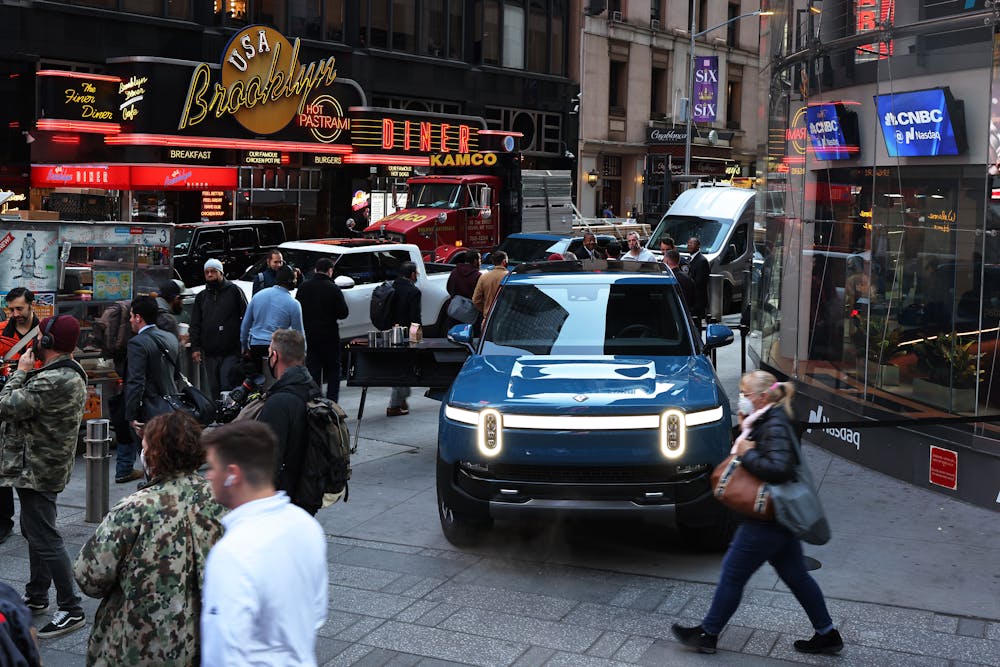
Beyond passenger vehicles, many micro-mobility options – such as autorickshaws, scooters and bikes – as well as buses, have been electrified. As the cost of lithium-ion batteries decreases, these transportation options will become increasingly affordable and further boost sales of battery-powered vehicles that traditionally have run on fossil fuels.
An important aspect to remember about electrifying the transportation system is that its ability to cut greenhouse gas emissions ultimately depends on how clean the electricity grid is. China, for example, is aiming for 20% of its vehicles to be electric by 2025, but its electric grid is still heavily reliant on coal.
With the global trends toward more renewable generation, these vehicles will be connected with fewer carbon emissions over time. There are also many developing and potentially promising co-benefits of electromobility when coupled with the power system. The batteries within electric vehicles have the potential to act as storage devices for the grid, which can assist in stabilizing the intermittency of renewable resources in the power sector, among many other benefits.
Other areas of transportation are more challenging to electrify. Larger and heavier vehicles generally aren’t as conducive to electrification because the size and weight of the batteries needed rapidly becomes untenable.

For some heavy-duty trucks, ships and airplanes, alternative fuels such as hydrogen, advanced biofuels and synthetic fuels are being explored as replacements for fossil fuels. Most aren’t economically feasible yet, and substantial advances in the technology are still needed to ensure they are either low- or zero-carbon.
Other ways to cut emissions from transportation
While new fuel and vehicle technologies are often highlighted as decarbonization solutions, behavioral and other systemic changes will also be needed to meet to cut greenhouse gas emissions dramatically from this sector. We are already in the midst of these changes.
Telecommuting: During the COVID-19 pandemic, the explosion of teleworking and video conferencing reduced travel, and, with it, emissions associated with commuting. While some of that will rebound, telework is likely to continue for many sectors of the economy.
Shared mobility: Some shared mobility options, like bike and scooter sharing programs, can get more people out of vehicles entirely.
Car-sharing and on-demand services such as Uber and Lyft also have the potential to reduce emissions if they use high-efficiency or zero-emission vehicles, or if their services lean more toward car pooling, with each driver picking up multiple passengers. Unfortunately, there is substantial uncertainty about the impact of these services. They might also increase vehicle use and, with it, greenhouse gas emissions.
New policies such as the California Clean Miles Standard are helping to push companies like Uber and Lyft to use cleaner vehicles and increase their passenger loads, though it remains to be seen whether other regions will adopt similar policies.
Public transit-friendly cities: Another systemic change involves urban planning and design. Transportation in urban areas is responsible for approximately 8% of global carbon dioxide emissions.
Efficient city planning and land use can reduce travel demand and shift transportation modes, from cars to public transit, through strategies that avoid urban sprawl and disincentivize personal cars. These improvements not only decrease greenhouse gas emissions, but can decrease congestion, air pollution and noise, while improving the safety of transportation systems.
How do these advances translate to lower emissions?
Much of the uncertainty in how much technological change and other systemic shifts in transportation affects global warming is related to the speed of transition.
The new IPCC report includes several potential scenarios for how much improvements in transportation will be able to cut emissions. On average, the scenarios indicate that the carbon intensity of the transportation sector would need to decrease by about 50% by 2050 and as much as 91% by 2100 when combined with a cleaner electricity grid to stay within the 1.5-degree Celsius (2.7 Fahrenheit) target for global warming.
These decreases would require a complete reversal of current trends of increasing emissions in the transportation sector, but the recent advances in transportation provide many opportunities to meet this challenge.
Alan Jenn, Assistant Professional Researcher in Transportation, University of California, Davis
This article is republished from The Conversation under a Creative Commons license. Read the original article.
The California Highway Patrol confirmed a death had resulted from the two-vehicle wreck, which was first reported just before 3:15 p.m. Wednesday on Highway 20 just east of Scotts Valley Road, west of Upper Lake.
Units arriving at the scene reported finding the roadway blocked by a pickup truck and a sedan, according to CHP and radio reports.
Within a few minutes of getting to the scene, medics confirmed one person had died, according to radio traffic.
Shortly before 3:45 p.m., Northshore Fire medics at the scene asked for an air ambulance to respond to Sutter Lakeside Hospital to transport another patient to an out-of-county trauma center.
The CHP said just before 4 p.m. that the highway was closed in both directions, with no estimated time of reopening.
The roadway was reported to have been reopened just before 6 p.m.
Additional information will be published as it becomes available.
Email Elizabeth Larson at
The project to restore wetlands encompasses 1,650 acres near Upper Lake in the confluence of Middle and Scotts creeks, Clear Lake’s two largest tributaries, which Deputy Water Resources Director Marina Deligiannis said make up 50% of the Clear Lake watershed.
Deligiannis said those two tributaries provide 57% of the inflow and 71% of the phosphorus floating into Clear Lake.
She said the project is meant to reduce flood risk in Upper Lake — which will be aided by removing deteriorating levees — while also improving water quality and restoring habitat.
“This project has been going on for a very long time,” she said, going over a timeline that goes back decades, with the first public meeting about it having taken place in 1984.
One of the more recent developments in the effort was the establishment in 2016 of the Middle Creek Project Committee, which includes county staff, elected officials and volunteers.
Among that latter group is Dr. Harry Lyons, a retired biology professor who taught for many years at Woodland Community College’s Lake County Campus. He’s long been known as an enthusiast of Clear Lake and its unique biology, and for his ability to share that knowledge and enthusiasm with his students and the community.
Peter Windrem, a well-known Kelseyville attorney who is now retired, is another of the volunteers. Raised in Lake County, Windrem is also a champion of the Clear Lake hitch, listed as endangered under California law and now the focus of a lawsuit seeking after a federal listing was denied during the last months of the Trump administration.
Both Lyons and Windrem were on hand with Deligiannis on Tuesday to update the board on the project.
Lyons discussed the project stakeholders, one of the most important being the U.S. Army Corps of Engineers. He said the Corps has $109 billion worth of civil projects in the queue; that’s 15 times their annual budget.
“They are efficient and they do an excellent job,” he said.
The committee is trying to make the project as attractive as possible so it’s competitive in terms of the Corp’s annual work plan, Lyons said.
Lyons said the committee has been in touch with federal representatives, so when Congress gets involved the funds will get allocated.
“It is a project where the work is useful regardless of when it finishes. As far as we’ve come can’t be undone,” he said, explaining that buying property and making cultural and biological studies are achievements that don’t go away. A feasibility study done on the project needs to be updated and supplemented.
“Just steel your patience with the knowledge that quite a bit of effort has already been made,” Lyons said.
Lyons also noted the work done by the county of Lake, as head of the watershed protection district, one of the nonfederal sponsors, and the California Department of Water Resources, which has been a source of money for land acquisition.
State Water Resources, through the efforts of Assemblywoman Cecilia Aguiar-Curry, most recently gave the project $15 million in grant money. The agency also previously had given the county $12 million for the project. As the project moves forward, Lyons said the state gets reduced liability and a functioning wetland.
“We want the Corps to dance with us. We gotta look cute,” said Lyons, adding one way to do that is to have purchased all of the necessary property.
Lyons also emphasized the important role of the tribes, for whom the area is of historical and continuing importance. He said their input is needed in the feasibility study and construction phases so cultural resources are not damaged.
He said the long-running project is “at the end of the beginning.” They presented to the board a letter addressed to the Army Corps restating the county’s support for the project, which they asked the board to approve.
Lyons said Congressman Mike Thompson will keep pushing to get the project through, with the state’s two members of the U.S. Senate to be brought in at a later time.
“We’re very proud of the work that we have done and will continue to do for this project,” Windrem said of the Middle Creek Restoration Coalition, a group that came together in 2016.
At that time, Windrem said the project was essentially dead — the Army Corps had even written to the county to ask if it intended to move forward.
The coalition formed and continues to have a No. 1 objective of getting money for the project. “No money, no project,” Windrem said.
He said the coalition reached out to ask Aguiar-Curry to work with the state Department of Water Resources to get the $15 million for property acquisition.
The concern now is that the county needs to finish acquisition by a deadline that’s been pushed back to next year.
“We’re committed and thrilled about this project. We always have been,” Windrem said.
He said the project will restore the area and act as a filter, allowing phosphorus — which fields the blue-green algae that has been a particular challenge on the lake — to drop out of the water.
Deligiannis read the Middle Creek Project Committee vision, which is to have a completed project that protects persons and wildlife from flooding, restores natural habitat for fishes and wildlife, improves Clear Lake’s water quality, and creates a recreation area for the residents and visitors of clearlake.
She said the project has one current source of funds, the state Department of Water Resources’ Flood Corridor Program.
“We are really hitting the final hour now,” she said of the grant deadline, which has been extended until June 2023.
Board Chair EJ Crandell said the project is one of the “ideal remedies” to address Clear Lake’s nutrient load, which feeds algae.
Supervisor Bruno Sabatier said moving forward “is arduous,” explaining that the process has been slowed down a lot.
Supervisor Tina Scott asked about any holdups the project is facing. Deligiannis said they have 29 different parcels remaining, involving 17 parcel owners, that they are working to acquire. The grant is for willing sellers only.
Sabatier moved to approve the letter to the Army Corps, which the board passed unanimously.
The Middle Creek Project Committee meets every other month on Zoom. The next meeting is 10:30 a.m. Monday, June 6. More information, as well as past meeting videos, is available on the Lake County Department of Water Resources website.
Email Elizabeth Larson at