 How to resolve AdBlock issue?
News
Judge Shanda Harry passed sentence on 31-year-old Patricia Martha Murphy, who was convicted after pleading out to gross vehicular manslaughter while intoxicated for the death of Justin Dale, 30, of Lucerne.
Harry accepted Lake County Probation’s recommendation and sentenced Murphy to an upper term of 10 years in prison, with 240 days of credit that includes time already served since her arrest on Jan. 16.
Murphy had a prior 2021 conviction for an alcohol-driving related offense otherwise known as a “wet reckless.” It is not technically a DUI conviction, but has the same effect, said Deputy District Attorney Danny Flesch.
The prior conviction involved Murphy driving under the influence and flipping her vehicle. She was found to have cocaine in her pocket at the time of that crash.
During testimony on Friday, the defense maintained that Murphy’s childhood — marked by an alcoholic mother who turned a blind eye to her boyfriend’s sexual abuse of her two youngest daughters and an alcoholic father who physically abused her, at one point threatening her with a butcher knife when was a teenager — were factors that drove her to use alcohol.
On the day of the wreck, Murphy and Dale had decided to make a visit to friends in Fort Bragg where they spent time watching the sunset on the beach and then in Willits on Jan. 16 and were returning home when the crash occurred shortly before midnight.
During their visits with friends, Murphy admitted that they had been drinking. At the time of the crash, she had a box of empty alcohol bottles in the back seat of her 2012 Volkswagen that she tried to put in the trunk afterward.
In tearful testimony given during the hearing, Murphy — wearing a black and white jail jumpsuit and handcuffed at the waist — recounted being upset that they couldn’t stop and see a friend in Upper Lake so she decided to keep driving.
She said she made a loop through Lucerne and was about to turn back and go home. Dale was asleep in the passenger seat, not wearing a seat belt.
“I reached for something in my car,” Murphy said. “When I reached for it I turned the wheel a little bit. Two seconds later I heard a big crash and I looked up and it was too late.”
The California Highway Patrol report said Murphy drove into the rear of a parked Ram 550 work truck on westbound Highway 20 east of Lake Street in Lucerne.
The CHP arrested Murphy at the scene and she’s remained in custody since.
Family gives impact statements
The Friday hearing included several victim impact statements from Dale’s close friends and family.
Flesch read a text message from Evan Dills, Dale’s friend and employer. “He was the best kind of friend I could ever have asked for,” with a heart of gold, and a smile and laugh that could change the atmosphere in a room, Dills said.
“Everybody that knew him loved him,” and he always had a smile on his face, even when doing hard work, said Dills. “Justin was a true asset to the community.”
He said Murphy made a selfish decision that resulted in Dale’s life being taken away.
Justin Dale’s mother, Amy Dale, spoke of the “unbearable” loss of her only son, who had a kind heart and loved to help people.
She said he helped care for his elderly grandfather and had told his mother that someday he would take care of her and his father. “That will never happen now that he has died.”
Amy Dale said her son loved children and wanted to have a family someday. She was grieving not just his loss but the grandchildren she had hoped to have.
“Patricia, you had very little regard for my son’s life when you got behind the wheel while you were intoxicated. My son is dead because you decided you didn’t want to stay home,” she said.
Amy Dale asked the court to give Murphy the maximum 10-year sentence, not out of vengeance but so she would have time to reflect on how precious life is and to turn her life around to be a good mother to her young daughter.
“You shouldn't have gotten behind the wheel while intoxicated. You hurt us so much. It’s a pain in my heart that’s unbearable,” Amy Dale said.
Also speaking was Justin Dale's uncle, Matthew Kendall, the sheriff of Mendocino County. On this day, Kendall was in civilian clothes, his voice breaking with emotion as he recounted that his nephew was a good man and someone who was an important part of his tight-knit family.
“The decisions that we make when we are young sometimes haunt us,” Kendall said.
He said his nephew had a heart of gold and loved to work. “He was a big portion of our lives and he always will be.”
Kendall said people have to own their mistakes before they can get through them. “We’re at a time now when a lot of folks aren’t owning their mistakes and therefore are repeating them.”
Based on his beliefs, Kendall said he has to forgive. “The only way that can occur is for the person responsible for this to be held accountable, and trust me, I've seen plenty of this in over 30 years.”
Over the objection of defense attorney Sterling Thayer, Judge Harry allowed Flesch to enter into the record an August 2021 Facebook post from Murphy in which she mocked the court system over her wet reckless conviction in July 2021.
She wrote that after almost three years of fighting in court she finally got her driver’s license back, and it only cost her $143, rather than the usual $10,000. She also maintained that she didn’t have a DUI conviction. “Take that, shady ass court system,” she wrote.
Flesch said Murphy also is associated with a known biker gang called the Winos. At his request, the court played an 18-second audio portion of a jail phone call in which she said she and a friend would routinely drive drunk but that she was the least drunk.
Thayer called Murphy’s sister, Ingrid Kerr, to the stand. Kerr testified about their abusive childhood and the sexual abuse her two younger sisters endured due to their mother’s neglect.
Kerr said the result is that they’ve turned to alcohol as a coping mechanism, a “numbing agent” that she herself has stopped using in recent years.
During her time on the stand, which followed her sister’s, Murphy referred to Justin Dale as “Gimli,” a dwarf from J.R.R. Tolkien’s “Lord of the Rings” saga. With his short, stout physique and big auburn beard, Dale resembled Gimli, a loyal member of the Fellowship of the Ring.
She recounted inviting him over for biscuits and gravy on the morning of Jan. 16 and making the “random” decision to go to the coast.
Murphy described the crash and how afterward she tried to wake Dale up but couldn’t. Emergency medical personnel told her he died. “Then I lost control and I screamed.”
During questioning, Murphy said, “I went through every dysfunction you can imagine,” recounting the abuse and neglect by her parents.
When asked how she felt about the potential term of 10 years in prison, she said she was scared but that she expected it. “I don’t feel probation is a just response or a likely one.”
She said she hopes to go to a fire camp and become a firefighter, and then hopes to get back on track for a teaching career. She said she never planned to drink again.
Murphy said she didn’t get to say goodbye to Dale, and has lost almost every friend she had because of the fatal wreck. “I have to live without him as well.”
With her hands still cuffed, she unfolded a written statement which she read, telling his family she knows that saying she is sorry is not enough, and that it won’t “ the dark reality brought on by my bad choices.”
“I can’t ever know how I feel,” she said, adding the regret, guilt and pain will weigh on her long after the sentence is over. “He was the only person who cared enough to make sure I was OK.”
She added, “If there was anything I could do to fix this, I would do it without hesitation,” and she said she hoped they could forgive her for her poor choices.
During questioning by Flesch, Murphy admitted she failed to seek counseling after her previous case.
Flesch, who acknowledged her abusive past, said he knew Dale from around town, and that he was a happy go lucky guy. “She gets a second or third or fourth chance. Justin does not.”
Thayer asked for a lesser sentence, explaining that Murphy is willing and able to take responsibility for what she did. “It’s not anything that anybody wanted to intend. She made an incredibly stupid decision. She has to live with the consequences of her decision. She killed her best friend. If that’s not going to change someone’s life, someone's perspective on life, I don’t see what 10 years is going to do.”
Judge Harry said Murphy had taken responsibility and had a ““significantly unpleasant childhood.” However, her recent, previous case that also had involved driving and alcohol counted against her, as she didn’t take the lesson of avoiding driving while intoxicated.
In sentencing Murphy to 10 years in prison, Harry said she hoped Murphy will use the time to deal with her issues so she can be there for her daughter. “She needs a mother who can mother her.”
Harry also granted restitution to Dale’s family but waived all other fines.
Email Elizabeth Larson at
MIDDLETOWN, Calif. — The Middletown Area Town Hall, or MATH, hosted a candidates forum on Thursday, May 12.
The event featured the candidates running for the following seats:
• Middletown Unified School District Governing Board: Bryan Pullman and Charise Reynolds;
• Assessor-recorder: Rich Ford (incumbent) and Hannah Faith Lee;
• Treasurer-tax collector: Paul Flores and Patrick Sullivan;
• District attorney: Anthony Farrington and Susan Krones (incumbent).
The forum can be viewed in the video shown above.
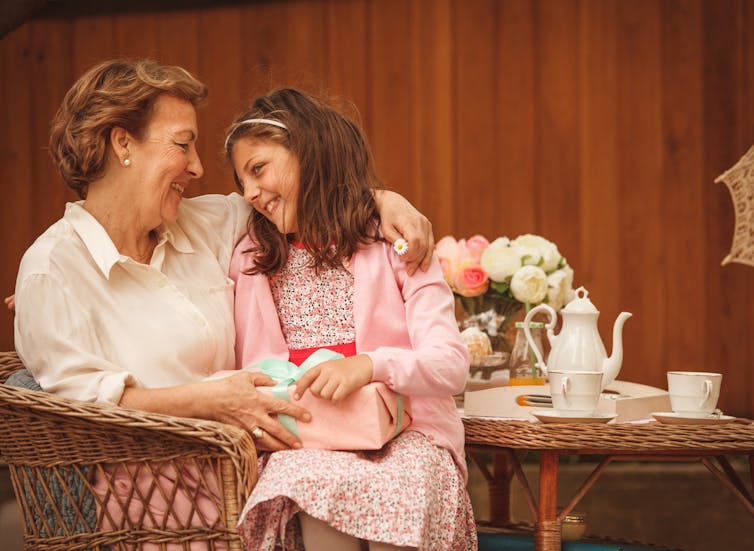
“How risky is being indoors with our 10-year-old granddaughter without masks? We have plans to have birthday tea together. Are we safe?”
That question, from a woman named Debby in California, is just one of hundreds I’ve received from concerned people who are worried about COVID-19. I’m an epidemiologist and one of the women behind Dear Pandemic, a science communication project that has delivered practical pandemic advice on social media since the beginning of the pandemic.
How risky is swim team? How risky is it to go to my orthodontist appointment? How risky is going to the grocery store with a mask on if no one else is wearing one and my father is an organ transplant recipient? How risky is it to have a wedding with 200 people, indoors, and the reception hall has a vaulted ceiling? And on and on.
These questions are hard to answer, and even when we try, the answers are unsatisfying.
So in early April 2022, when Anthony Fauci, the president’s chief medical advisor, told Americans that from here on out, each of us is going to have to do our own personal risk assessment, I put my head down on my desk.
Individualized risk assessment is not a reasonable ask, even for someone who does risk assessment for a living, let alone for the rest of us. It’s impossible to evaluate our own risk for any given situation, and the impossibility of the task can make us feel like giving up entirely. So instead of doing that, I suggest focusing on risk reduction. Reframing in this way brings us back to the realm of what we can control and to the tried and true evidence-based strategies: wearing masks, getting vaccinated and boosted, avoiding indoor crowds and improving ventilation.
A cascade of unknowable variables
In my experience, nonscientists and epidemiologists use the word “risk” to mean different things. To most people, risk means a quality – something like danger or vulnerability.
When epidemiologists and other scientists use the word risk, though, we’re talking about a math problem. Risk is the probability of a particular outcome, in a particular population at a particular time. To give a simple example, the chances that a coin flip will be heads is 1 in 2.
As public health researchers, we often offer risk information in this format: The probability that an unvaccinated person will die of COVID-19 if they catch it is about 1 in 200. As many as 1 in 8 people with COVID-19 will have symptoms persisting for weeks or months after recovering.
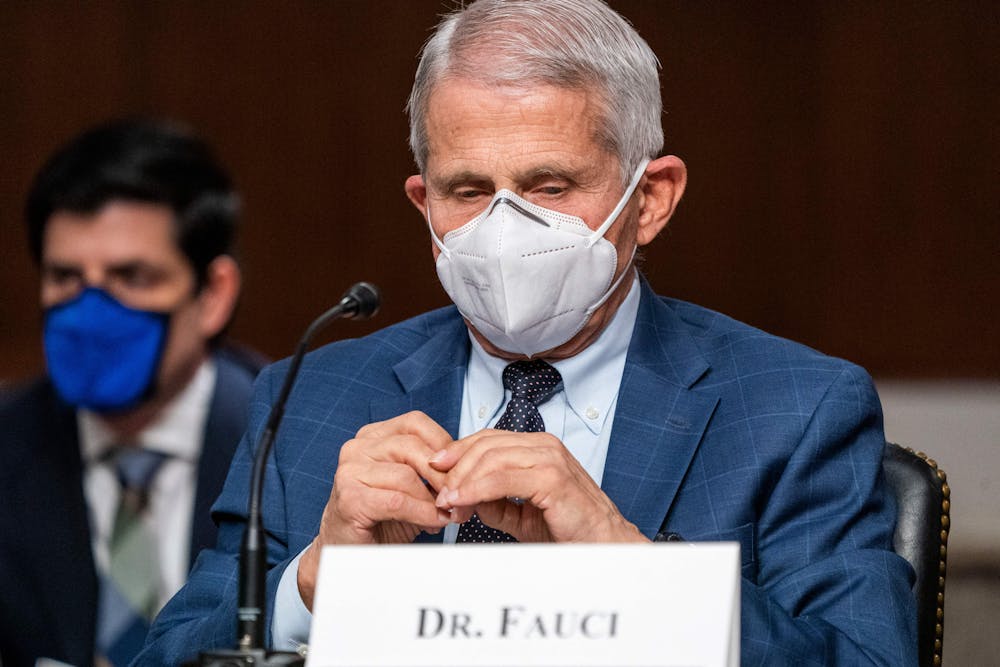
To embark on your personal risk assessment, as Fauci casually suggested, you first have to decide what outcome you’re talking about. People often aren’t very specific when they consider risk in a qualitative sense; they tend to lump a lot of different risks together. But risk is not a general concept. It’s always the risk of a specific outcome.
Let’s think about Debby. First, there’s the risk that she will be exposed to COVID-19 during tea; this depends on her granddaughter. Where does she live? How many kids at her school have COVID-19 this week? Will she take a rapid test before she comes over? These factors all influence the granddaughter’s risk of exposing Debby to COVID-19, but I don’t know any of them and likely neither does Debby. Given the lack of systematic testing, I have no idea how many people in my own community have COVID-19 right now. At this point, our best guess at community rates is literally in the toilet – monitoring sewage for the coronavirus.
If I assume that Debby’s granddaughter does have COVID-19 on the appointed day, I can start thinking about Debby’s downstream risks: whether she’ll get COVID-19 from her granddaughter; the chances that she’ll be hospitalized and that she’ll die; and the probability that she’ll have long COVID. I can also consider the risk that Debby will catch COVID-19 and then give it to others, perpetuating an outbreak. If she gets sick, the whole hierarchy of risks comes into play for everyone Debby sees after she is infected.
Finally, there are competing risks. If Debby decides to skip the party, there may be risks to her own or her granddaughter’s mental health or their relationship. Many skipped celebrations in many families could negatively affect the economy. People could lose business; they could lose their jobs.
Each of these probabilities is influenced by a cascade of fickle conditions. Some of the factors that shape risks are in your control. For example, I decided to get vaccinated and boosted. Therefore, I’m less likely to end up in the hospital and to die if I get COVID-19. But some risks are not in your control – age, other health conditions, gender, race and the behavior of the people all around you. And many, many of the risk factors are simply unknowns. We’ll never be able to accurately evaluate the whole volatile landscape of risk for a particular situation and come up with a number.
Taking charge of what you can
There will never be a situation where I can say to Debby: The risk is 1 in 20. And even if I could, I’m not sure it would be helpful. Most people have a very hard time understanding probabilities they encounter every day, such as the chance that it will rain.
The statistical risk of a particular outcome doesn’t address Debby’s underlying question: Are we safe?
Nothing is entirely safe. If you want my professional opinion on whether it’s safe to walk down the sidewalk, I will have to say no. Bad things happen. I know someone who tore a tendon in her hand while putting a fitted sheet on a bed last week.
It’s much more practical to ask: What can I do to reduce the risk?

Focusing on actions that reduce risk frees us from obsessing over unanswerable questions with useless answers so we can focus on what is within our control. I will never know precisely how risky Debby’s tea is, but I do know how to make the risks smaller.
I suspect the question folks are really asking is: How can I manage the risks? I like this question better because it has an answer: You should do what you can. If it’s reasonable to wear a mask, wear one. Yes, even if it isn’t required. If it’s reasonable to do an at-home antigen test before you see your vulnerable grandparents, do that. Get vaccinated and boosted. Tell your friends and family that you did, and why. Choose outdoor gatherings. Open a window.
Constantly assessing and reassessing risks has given many people decision fatigue. I feel that too. But you don’t need to recalibrate risks of everything, every day, for every variant, because the strategies to reduce risk remain the same. Reducing risk – even if it’s just a little bit – is better than doing nothing.
Malia Jones, Scientist in Health Geography, University of Wisconsin-Madison
This article is republished from The Conversation under a Creative Commons license. Read the original article.
The City of Clearlake Animal Association also is seeking fosters for the animals waiting to be adopted.
Call the Clearlake Animal Control shelter at 707-273-9440, or email
Visit Clearlake Animal Control on Facebook or on the city’s website.
The following dogs are available for adoption.
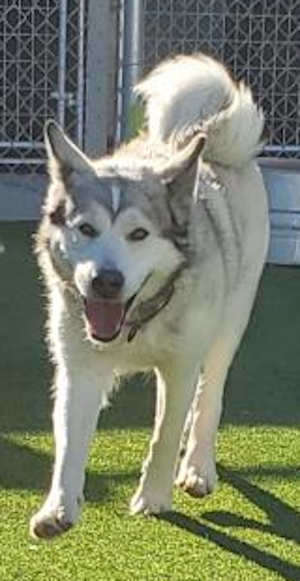
‘Chai’
“Chai” is a female Alaskan husky mix with a gray and white coat.
She has been spayed.
She is dog No. 49279552.
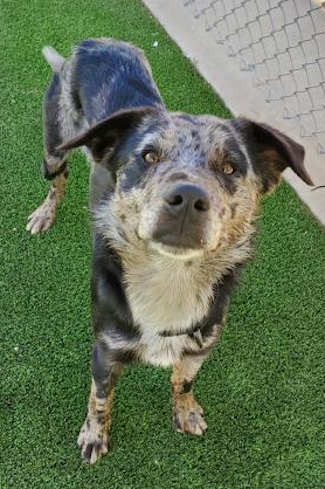
‘Captain’
“Captain” is a male border collie mix with a black, white and blue coat.
He is dog No. 49623709.
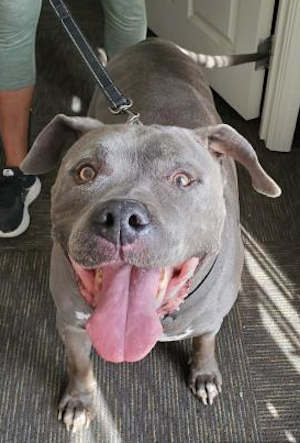
‘Big Phil’
“Big Phil” is a 13-year-old male American pit bull terrier mix with a blue coat.
He is dog No. 49951647.

‘Andy’
“Andy” is a male American pit bull mix with a short gray and white coat.
He is dog No. 48995415.
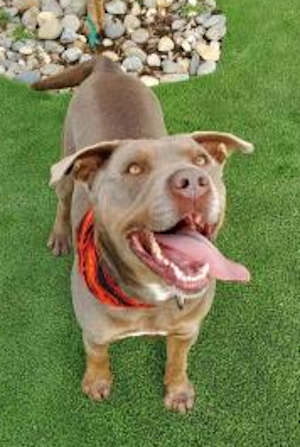
‘Bear’
“Bear” is a male Labrador retriever-American pit bull mix with a short charcoal and fawn coat.
He has been neutered.
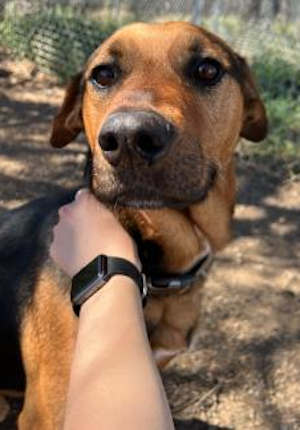
“Colt.” Photo courtesy of Clearlake Animal Control.
‘Colt’
“Colt” is a male Rhodesian Ridgeback mix with a short rust and black coat.
He has been neutered.
He is dog No. 49812106.
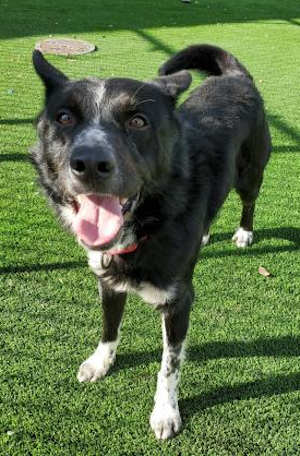
‘Fritz’
“Fritz” is a male Australian shepherd mix with a black and white coat.
He is dog No. 49278179.
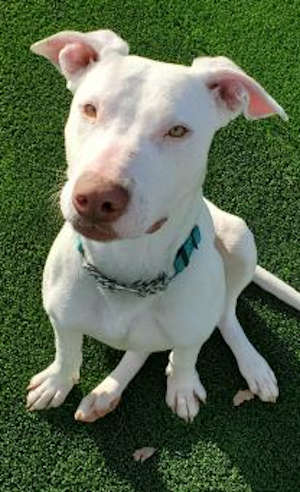
‘Snowball’
“Snowball” is a male American Staffordshire mix terrier with a white coat.
He has been neutered.
He is dog No. 49159168.
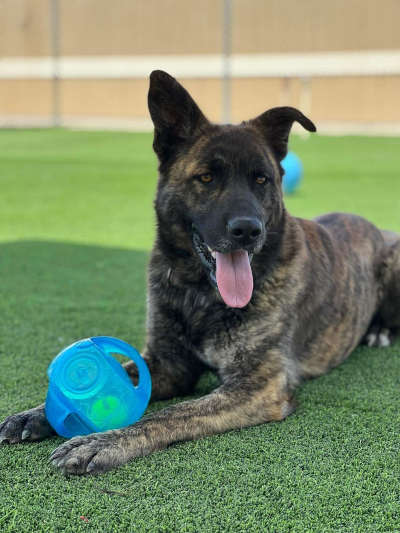
‘Terry’
“Terry” is a handsome male shepherd mix with a short brindle coat.
He gets along with other dogs, including small ones, and is discovering that he enjoys toys. He also likes water, playing fetch and keep away.
Staff said he is now getting some training to help him build confidence.
He is dog No. 48443693.
Email Elizabeth Larson at

Completing a nearly 30-year marathon, NASA's Hubble Space Telescope has calibrated more than 40 "milepost markers" of space and time to help scientists precisely measure the expansion rate of the universe – a quest with a plot twist.
Pursuit of the universe's expansion rate began in the 1920s with measurements by astronomers Edwin P. Hubble and Georges Lemaître.
In 1998, this led to the discovery of "dark energy," a mysterious repulsive force accelerating the universe's expansion. In recent years, thanks to data from Hubble and other telescopes, astronomers found another twist: a discrepancy between the expansion rate as measured in the local universe compared to independent observations from right after the big bang, which predict a different expansion value.
The cause of this discrepancy remains a mystery. But Hubble data, encompassing a variety of cosmic objects that serve as distance markers, support the idea that something weird is going on, possibly involving brand new physics.
"You are getting the most precise measure of the expansion rate for the universe from the gold standard of telescopes and cosmic mile markers," said Nobel Laureate Adam Riess of the Space Telescope Science Institute (STScI) and the Johns Hopkins University in Baltimore, Maryland.
Riess leads a scientific collaboration investigating the universe's expansion rate called SH0ES, which stands for Supernova, H0, for the Equation of State of Dark Energy.
“This is what the Hubble Space Telescope was built to do, using the best techniques we know to do it. This is likely Hubble's magnum opus, because it would take another 30 years of Hubble's life to even double this sample size,” Riess said.
Riess's team's paper, to be published in the Special Focus issue of The Astrophysical Journal reports on completing the biggest and likely last major update on the Hubble constant.
The new results more than double the prior sample of cosmic distance markers. His team also reanalyzed all of the prior data, with the whole dataset now including over 1,000 Hubble orbits.
When NASA conceived of a large space telescope in the 1970s, one of the primary justifications for the expense and extraordinary technical effort was to be able to resolve Cepheids, stars that brighten and dim periodically, seen inside our Milky Way and external galaxies.
Cepheids have long been the gold standard of cosmic mile markers since their utility was discovered by astronomer Henrietta Swan Leavitt in 1912. To calculate much greater distances, astronomers use exploding stars called Type Ia supernovae.
Combined, these objects built a "cosmic distance ladder" across the universe and are essential to measuring the expansion rate of the universe, called the Hubble constant after Edwin Hubble. That value is critical to estimating the age of the universe and provides a basic test of our understanding of the universe.
Starting right after Hubble's launch in 1990, the first set of observations of Cepheid stars to refine the Hubble constant was undertaken by two teams: the HST Key Project led by Wendy Freedman, Robert Kennicutt, Jeremy Mould, and Marc Aaronson, and another by Allan Sandage and collaborators, that used Cepheids as milepost markers to refine the distance measurement to nearby galaxies.
By the early 2000s the teams declared "mission accomplished" by reaching an accuracy of 10 percent for the Hubble constant, 72 plus or minus 8 kilometers per second per megaparsec.
In 2005 and again in 2009, the addition of powerful new cameras onboard the Hubble telescope launched "Generation 2" of the Hubble constant research as teams set out to refine the value to an accuracy of just one percent.
This was inaugurated by the SH0ES program. Several teams of astronomers using Hubble, including SH0ES, have converged on a Hubble constant value of 73 plus or minus 1 kilometer per second per megaparsec. While other approaches have been used to investigate the Hubble constant question, different teams have come up with values close to the same number.
The SH0ES team includes long-time leaders Dr. Wenlong Yuan of Johns Hopkins University, Dr. Lucas Macri of Texas A&M University, Dr. Stefano Casertano of STScI, and Dr. Dan Scolnic of Duke University. The project was designed to bracket the universe by matching the precision of the Hubble constant inferred from studying the cosmic microwave background radiation leftover from the dawn of the universe.
"The Hubble constant is a very special number. It can be used to thread a needle from the past to the present for an end-to-end test of our understanding of the universe. This took a phenomenal amount of detailed work," said Dr. Licia Verde, a cosmologist at ICREA and the ICC-University of Barcelona, speaking about the SH0ES team's work.
The team measured 42 of the supernova milepost markers with Hubble. Because they are seen exploding at a rate of about one per year, Hubble has, for all practical purposes, logged as many supernovae as possible for measuring the universe's expansion. Riess said, "We have a complete sample of all the supernovae accessible to the Hubble telescope seen in the last 40 years." Like the lyrics from the song "Kansas City," from the Broadway musical Oklahoma, Hubble has "gone about as fur as it c'n go!"
Weird physics?
The expansion rate of the universe was predicted to be slower than what Hubble actually sees. By combining the Standard Cosmological Model of the Universe and measurements by the European Space Agency's Planck mission (which observed the relic cosmic microwave background from 13.8 billion years ago), astronomers predict a lower value for the Hubble constant: 67.5 plus or minus 0.5 kilometers per second per megaparsec, compared to the SH0ES team's estimate of 73.
Given the large Hubble sample size, there is only a one-in-a-million chance astronomers are wrong due to an unlucky draw, said Riess, a common threshold for taking a problem seriously in physics.
This finding is untangling what was becoming a nice and tidy picture of the universe's dynamical evolution. Astronomers are at a loss for an explanation of the disconnect between the expansion rate of the local universe versus the primeval universe, but the answer might involve additional physics of the universe.
Such confounding findings have made life more exciting for cosmologists like Riess. Thirty years ago they started out to measure the Hubble constant to benchmark the universe, but now it has become something even more interesting.
“Actually, I don't care what the expansion value is specifically, but I like to use it to learn about the universe,” Riess added.
NASA's new Webb Space Telescope will extend on Hubble's work by showing these cosmic milepost markers at greater distances or sharper resolution than what Hubble can see.
The Hubble Space Telescope is a project of international cooperation between NASA and the European Space Agency. NASA's Goddard Space Flight Center in Greenbelt, Maryland, manages the telescope. The Space Telescope Science Institute (STScI) in Baltimore, Maryland, conducts Hubble science operations. STScI is operated for NASA by the Association of Universities for Research in Astronomy in Washington, D.C.
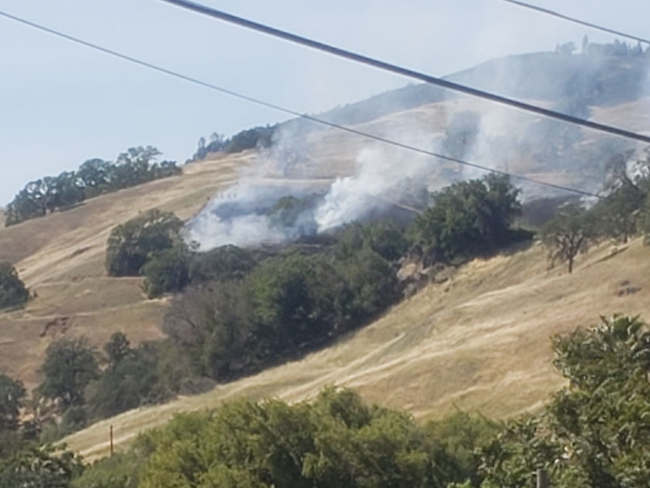
LUCERNE, Calif. — A Lucerne man who was squatting on private property in the paper subdivision area above Lucerne has been arrested for causing a wildland fire on Wednesday afternoon.
Cal Fire said its law enforcement officers arrested Robert John Moore for starting the Robinson fire due to a barbecue.
The fire was first reported at around 3:15 p.m. on Wednesday near Robinson Road and Foothill Drive, as Lake County News has reported.
Cal Fire’s Sonoma-Lake-Napa Unit and Northshore Fire Protection District responded to the incident and were in unified command, according to radio reports.
When firefighters first arrived on scene, the fire was estimated to be approximately one-quarter of an acre and moving uphill, Cal Fire said. Not long afterward, it was reported to be an acre.
Northshore Fire Chief Mike Ciancio said the fire’s movement was very odd. It was a “backing fire,” which he said means that it was backing up the hill and not really progressing forward. He said it also was moving into the wind.
Cal Fire credited quick actions by firefighters — which included personnel and crews along with air resources such as air attack and Copter 104 — with containing the Robinson fire at 2.5 acres with no evacuations needing to be issued.
Ciancio said firefighters got lucky on Wednesday. “Another month and we’d still be fighting that fire,” he said.
Had it been drier and windier and throwing sparks in the wind, “We wouldn’t have been able to catch it” at a small size, Ciancio said.
As it was, on Wednesday winds in the area were close to 6 miles per hour, according to Lake County’s News’ weather tracking equipment.
Cal Fire said its law enforcement officers immediately began an investigation of the origin and cause of the fire, identifying Moore as having been responsible.
The agency said Moore started a fire in a small barbecue surrounded by dry vegetation, which ultimately caused the fire.
“The guy was using a barbecue in 18-inch tall grass. It wasn’t even cleared out,” Ciancio said.
During the incident, it was reported that a man was trapped in the fire area and unable to escape. Shortly afterward, incident command reported that he had reached the individual. Moore appears to have been that same person.
Cal Fire said its law enforcement officers determined Moore had a warrant for his arrest within Lake County. They placed Moore under arrest for the warrant as well as cited him for violation of California Health and Safety Code §13001, causing a fire through careless or negligent action.
Moore was transported by Cal Fire’s officers to the Lake County Jail to be processed, Cal Fire said.
Moore was not in custody in the Lake County Jail on Thursday, according to jail records.
Ciancio said Moore was squatting on the property where the fire began.
There appear to be more squatters in that paper subdivision and Ciancio said he’s reported the fire and the issue with squatters to Community Development Department’s Code Enforcement Division Manager Marcus Beltramo.
Ciancio said he had a good response from Beltramo, who has indicated he will visit the area to investigate the situation.
Over the past few years the hills above Lucerne have seen an influx of illegal dumping, including the abandonment of numerous vehicles, many of them dilapidated motor homes, and squatting.
Just hours before the fire, Beltramo had participated in the regular meeting of the Abandoned Vehicle Abatement Service Authority, which was held at Clearlake City Hall.
Beltramo, who has taken a proactive approach to dealing with the county’s illegal dumping issues, said during the meeting that his staff is seeing more abandoned RVs popping up throughout the county on a weekly basis and it’s starting to create an issue.
In a Thursday statement, Cal Fire Sonoma-Lake-Napa Unit Chief Mike Marcucci said it’s important to exercise fire safety due to the severe drought conditions.
In the case of outdoor cooking, Cal Fire said it’s necessary to have a nonflammable 10-foot clearance around the cooking area and make sure there are no flying embers or sparks being produced. A water source and some tools nearby in case a fire starts also are recommended.
“Always remember that safe cooking practices not only help protect you from getting hurt and your property from being damaged, but it also helps protect your community and the people around you,” the statement said.
Cal Fire said it will take aggressive and prompt enforcement actions to prevent fires and hold those responsible for causing them accountable.
Email Elizabeth Larson at