How to resolve AdBlock issue?
News

BERKELEY, Calif. — Checking off one of its key goals, the James Webb Space Telescope, or JWST, imaged its first exoplanet — a young, gas giant planet six to 12 times more massive than Jupiter orbiting a star 350 light years from Earth.
“The JWST cameras were designed to take photos of exoplanetary systems, and we just demonstrated that everything works like a charm,” said astronomer Paul Kalas, an adjunct professor of astronomy at the University of California, Berkeley, and a co-investigator for the telescope’s Early Release Science, or ERS, program focused on exoplanets. “The planet was first discovered in 2017 by ground-based observatories, but JWST is able to capture the planet’s warm emission at longer, infrared wavelengths.”
The star, HIP 65426, is very young and hot, having recently completed its planet-forming stage. It lies in the southern constellation Centaurus.
“This planetary system is only 14 million years old, and these new data will advance our knowledge of how planets form and evolve,” Kalas said.
The young planet, which is designated HIP 65426b, is several thousand times fainter than the star, so sophisticated cameras aboard JWST — the Near-Infrared Camera, or NIRCam, and Mid-Infrared Instrument, or MIRI — had to artificially eclipse the starlight using coronagraphs in order to capture the images.
This is the first image of an exoplanet in mid-infrared wavelengths — that is, wavelengths greater than 5 microns (a millionth of a meter, or a thousandth of a millimeter).
“Obtaining this image felt like digging for space treasure,” said team member Aarynn Carter, a postdoctoral researcher at UC Santa Cruz who led the analysis of the images. “I think what’s most exciting is that we’ve only just begun. There are many more images of exoplanets to come that will shape our overall understanding of their physics, chemistry and formation. We may even discover previously unknown planets, too.”
Carter is first author of a paper describing the results that has been submitted for publication. A non-peer reviewed preprint is available online.
The ERS exoplanet team was tasked with evaluating how well the NIRCam and MIRI work in suppressing starlight, so it pointed JWST toward a known exoplanet. The team’s analysis showed that JWST is so sensitive that it could detect young Saturn-mass planets, a capability unmatched by any other astronomical observatory.
Much of the expertise needed to design these cameras and science programs originated from sophisticated, ground-based efforts, such as with UC’s Lick and Keck observatories, Kalas said.
A former UC Berkeley graduate student, Marshall Perrin, worked to commission JWST and trained with Kalas and professor James Graham at both Lick and Keck more than a decade ago. Perrin is also a member of the ERS exoplanet team, as are current Berkeley astronomers Keming Zhang and Marta Bryan.
Webb is an international mission led by NASA in collaboration with its partners, the European Space Agency and Canadian Space Agency.
Robert Sanders writes for the UC Berkeley News Center.
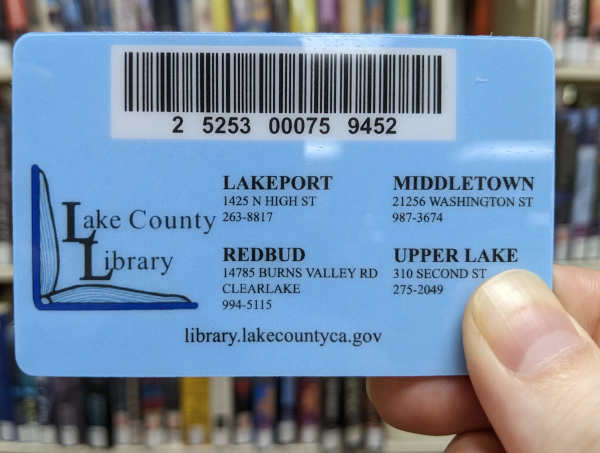
LAKE COUNTY, Calif. — A Lake County Library card is more powerful and even easier to get than ever before.
This small but mighty card unlocks a world of print resources at the four branches of the Lake County Library.
In the last three years, the library has made even more resources available with your card.
There are three options to get a library card.
Residents can visit their local library branch, can call their local branch over the phone, or can visit the library website and apply online.
The address of the library website is: http://library.lakecountyca.gov.
For many years now, a Lake County Library card provides free access to materials from the Lake, Sonoma, and Mendocino county libraries.
Altogether that's access to over a half a million physical items. Lake County alone owns over 120,000 items.
The entire Lake County collection contains more than 7,000 DVDs, as well as books, audio books, and music CDs. Patrons can search the library catalog online and request to pick up materials at their local branch.
This year, thanks to a grant from the Institute of Museum and Library Services, IMLS, you can receive books by mail.
If you are homebound and aren't able to make it into your library branch you can sign up for the Books by Mail service. This service allows you to receive library materials through the United States Postal Service, at no cost to yourself.
Each Lake County Library branch has free Wi-Fi and public internet computers. Thanks to an IMLS grant, your library card also allows you to check out Wi-Fi hotspots and bring home the internet. You can also borrow a Chromebook, which is a small laptop, to take home.
The Lake County Library continues to provide a wealth of digital resources, and these have been expanded as well. A library card provides digital access to over one million eBooks, eAudiobooks, streaming movies, television shows, eMagazines, digital comics, and music. These digital items can be accessed on computers, smart phones, tablets and compatible televisions.
A library card also allows access to many online resources that provide job training, skill building and creative development.
Video learning sites like LinkedIn Learning or Coursera can help residents prepare for a new job. Creativebug offers virtual arts and crafts classes at the beginner to advanced level.
For kids, digital resources like BookFlix or ABCmouse help with early learning. These premium resources are all free with a library card.
Visit your local branch during September and take advantage of the array of free resources available.
Lakeport Library
1425 N. High St.
Telephone 707-263-8817
Hours: Tuesdays, 10 a.m. to 5 p.m.; Wednesdays, 10 a.m. to 7 p.m.; Thursdays through Saturdays, 10 a.m. to 5 p.m.
Redbud Library
14785 Burns Valley Road, Clearlake
Telephone 707-994-5115
Hours: Tuesdays, 10 a.m. to 5 p.m.; Wednesdays, 10 a.m. to 7 p.m.; Thursdays through Saturdays, 10 a.m. to 5 p.m.
Middletown Library
21256 Washington St.
Telephone 707-987-3674
Hours: Tuesdays through Fridays, 10 a.m. to 5 p.m.; Saturdays, 10 a.m. to 5 p.m.
Upper Lake Library
310 Second St.
Telephone 707-275-2049
Hours: Tuesdays through Fridays, noon to 5 p.m.; Saturdays, 10 a.m. to 3 p.m.
Visit the Lake County Library Website at http://library.lakecountyca.gov.
The legislation builds on California’s Extreme Heat Action Plan released earlier this year, an all-of-government strategy to strengthen the state’s resilience and mitigate the health, economic and ecological impacts of extreme heat, which fall disproportionately on the most vulnerable Californians.
“This week’s unprecedented heat wave is a painful reminder of the costs and impacts of climate change — and it won’t be the last,” said Gov. Newsom. “California is taking aggressive action to combat the climate crisis and build resilience in our most vulnerable communities, including a comprehensive strategy to protect Californians from extreme heat. With lives and livelihoods on the line, we cannot afford to delay.”
Extreme heat ranks amongst the deadliest of all climate change hazards, with structural inequities playing a significant role in the capacity of individuals, workers, and communities to protect and adapt to its effects.
AB 1643 by Assemblymember Robert Rivas (D-Salinas) will create an advisory committee to inform a study on the effects of extreme heat on California’s workers, businesses and economy.
AB 2238 by Assemblymember Luz Rivas (D-Arleta) will create the nation's first extreme heat advance warning and ranking system to better prepare communities ahead of heat waves.
AB 2420 by Assemblymember Dr. Joaquin Arambula (D-Fresno) is a first-in-the-nation measure that directs the California Department of Public Health to review research on the impacts of extreme heat on perinatal health and develop guidance for safe outdoor conditions to protect pregnant workers.
SB 852 by Senator Bill Dodd (D-Napa) will allow cities and counties to create climate resilience districts with financing power to invest in programs that tackle extreme heat, drought, wildfire and other climate impacts.
“California has been battling record breaking extreme heat all week. Unfortunately, each summer we are experiencing extreme heat weather events that are hotter and more devastating than the last,” said Assemblywoman Luz Rivas. “Thank you to Gov. Newsom for signing my legislation, AB 2238, that will help save the lives of Californians, and my thanks to Insurance Commissioner Ricardo Lara for his leadership and dedication in pushing this legislation forward. California will now lead the nation with the first advance warning and ranking system for extreme heat waves.”
“California is once again leading the world in fighting climate change and its deadly effects. Ranking heat waves will be a powerful new tool to protect all Californians alongside Gov. Gavin Newsom’s Extreme Heat Action Plan,” said Insurance Commissioner Ricardo Lara, who sponsored AB 2238 and issued the first California Climate Insurance Report. “I applaud the governor’s and the bill’s joint authors’ continued leadership on these necessary extreme heat investments and policies that will save lives and close the protection gap for our most at-risk communities as we face more heat waves in the years ahead.”
Earlier this week, Gov. Newsom signed AB 2645 by Assemblymember Freddie Rodriguez (D-Pomona), which requires counties to ensure community resilience centers can serve as community-wide assets to mitigate public health impacts during disasters, including extreme heat events.
Budget legislation signed by the governor earlier this week directs $315 million General Fund over two years to advance implementation of the Extreme Heat Action Plan across various programs that protect communities, the economy and natural systems.
Gov. Newsom’s historic $53.9 billion multi-year climate commitment includes $865 million in total to address extreme heat, with funding to plant trees and expand other school greening projects, bolster community resilience centers that help protect public health during climate-driven extreme weather events, and more.
Extreme heat endangers vulnerable Californians, including our elderly and those with health concerns.
This year’s state budget created the Office of Community Partnerships and Strategic Communications and invests $20 million over two years to support public education and outreach to these communities.
Resources and information to help the public stay safe, cool, and connected during this heat wave can be found here.
Tips for how to stay safe during extreme heat:
• If you don’t have an air conditioner, go to a shopping mall or public building for a few hours. If you must be outdoors, wear lightweight clothing and sunscreen, avoid the hottest parts of the day, and avoid strenuous activities.
• Sweating removes needed salt and minerals from the body. Avoid drinks with caffeine (tea, coffee, and soda) and alcohol.
• Check on friends and family and have someone do the same for you. If you know someone who is elderly or has a health condition, check on them twice a day. Watch for signs of heat exhaustion or heat stroke. Know the symptoms of heat-related illness and be ready to help.
• Find cooling centers in your area by contacting your county or calling your local health department, or find one at Cooling Centers | California Governor’s Office of Emergency Management.
• Employers who have questions or need assistance with workplace health and safety programs can call Cal/OSHA’s Consultation Services Branch at 800-963-9424. Complaints about workplace safety and health hazards can be filed confidentially with Cal/OSHA district office. Cal/OSHA’s Heat Illness Prevention program includes enforcement of the heat regulation as well as multilingual outreach and training programs for California’s employers and workers. Cal/OSHA inspectors will be conducting unannounced inspections checking for compliance at worksites throughout the state.
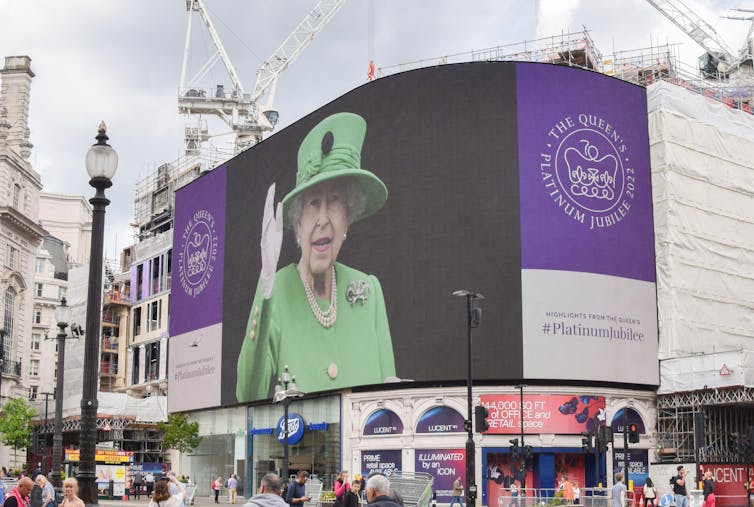
When Queen Elizabeth II came to the throne in 1952, Britain was just seven years out of the second world war. Rebuilding work was still ongoing, and rationing key products such as sugar, eggs, cheese and meat would continue for another year or so.
But the austerity and restraint of the 1940s was giving way to a more prosperous 1950s. It is perhaps no wonder, then, that the Queen’s succession was hailed as the “new Elizabethan age”. Society was changing, and here was a young, beautiful queen to sit at its helm.
Seventy years later, Britain looks very different. Elizabeth II ruled over perhaps the most rapid technological expansion and sociopolitical change of any monarch in recent history. Looking back on Elizabeth II’s life raises key questions about not just how the monarchy has changed, but also how Britain itself has transformed throughout the twentieth and twenty-first century.
Global Britain
If Elizabeth I’s reign was a period of colonial expansion, conquest and domination, then the “new Elizabethan age” was marked by decolonisation and the loss of Empire.
When Elizabeth II succeeded the throne, the last vestiges of the British Empire were still intact. India had been granted independence in 1947, and other countries soon followed throughout the 1950s and 1960s. Although it existed from 1926, the current Commonwealth was constituted in the London Declaration 1949, making member states “free and equal”. The Commonwealth has a veneer of colonial power given that it shares a history with Empire, and continues to invest the British monarch with symbolic power.
The Commonwealth featured heavily in the 1953 coronation ceremony, from television programmes showing Commonwealth celebrations, to the Queen’s coronation dress decorated with the floral emblems of Commonwealth countries. She continued to celebrate the Commonwealth throughout her reign.
The colonial history of the Commonwealth is reproduced in the values of Brexit, and related nationalist projects which suffer from what Paul Gilroy calls “postcolonial melancholia”. The Queen was the living embodiment of British stoicism, “the Blitz spirit”, and global imperial power, on which so much of the Brexit rhetoric hung. What will the loss of Britain’s longest-reigning monarch do to the nostalgia that contemporary right-wing politics draws upon?
The media and the monarchy
At the coronation, the British prime minister, Winston Churchill, allegedly responded to proposals to broadcast the ceremony on live television that “modern mechanical arrangements” would damage the coronation’s magic, and “religious and spiritual aspects should [not] be presented as if it were a theatrical performance”.
Television was a new technology at the time, and it was feared that televising the ceremony would be too intimate. Despite these concerns, televising the coronation was a big success. The research project “Media and Memory in Wales” found that the coronation played a formative role in people’s first memories of television. Even non-ardent monarchists could give an intimate account of their experiences.
The royal image has always been mediated, from the monarch’s profile on coins, to portraiture. For Elizabeth II this involved radical development: from the emergence of television, through tabloid newspapers and paparazzi, to social media and citizen journalism (processes related to democratisation and participation). Because of this, we now have more access to monarchy than ever before.
In my book, Running The Family Firm: How the monarchy manages its image and our money, I argue that the British monarchy relies upon a careful balance of visibility and invisibility to reproduce its power. The royal family can be visible in spectacular (state ceremonies) or familial (royal weddings, royal babies) forms. But the inner workings of the institution must remain secret.
The monarchy’s striving for this balance can be seen throughout the Queen’s reign. One example is the 1969 BBC-ITV documentary Royal Family. Royal Family used new techniques of “cinema verite” to follow the monarchy for one year – what we would now recognise as “fly-on-the-wall” reality television.
It gave us intimate glimpses of domestic scenes, such as family barbecues, and the Queen taking infant Prince Edward to a sweet shop. Despite its popularity, many were concerned that the voyeuristic style fractured the mystique of monarchy too far. Indeed, Buckingham Palace redacted the 90-minute documentary so it is not available for public viewing, and 43-hours of footage remained unused.
“Royal confessionals”, modelled on celebrity culture and notions of intimacy and disclosure, have haunted the monarchy over the past few decades. Diana’s Panorama interview in 1995 was iconic, where she told interviewer Martin Bashir about royal adultery, palace plots against her, and her deteriorating mental and physical health.
More recently, Prince Harry and Meghan Markle’s interview with Oprah Winfrey discussed what they described as “the Firm’s” racism, lack of accountability, and its dismissal of Markle’s mental health. These interviews really did expose the inner-workings of institution, and ruptured the visibility/invisibility balance.
Like the rest of the world, the monarchy now has an account on most major UK social media platforms. The Duke and Duchess of Cambridge Instagram account, run on behalf of Prince William, Kate Middleton and their children, is perhaps the most obvious example of royal familialism in the contemporary age.
The photographs appear natural, impromptu and informal, and the Instagram is framed as the Cambridge “family photo album”, allowing “intimate” glimpses into Cambridge family life. Yet, as with every royal representation, these photographs are precisely staged.
Social media has given the monarchy access to new audiences: a younger generation who are more likely to scroll royal photographs on phone apps than read newspapers. How will this generation respond to the death of the monarch?
Political figures
The Queen succeeded to the throne during a period of radical political transformation. The Labour Party’s Clement Atlee had won office in 1945 in a sensational, landslide election which seemed to signal voters desire for change. The establishment of the NHS in 1948 as a central policy of the postwar welfare state, promised support from cradle to grave.
Winston Churchill’s Conservative party retook parliament in 1952. Churchill spoke to a different version of Britain: more traditional, imperialist, and staunchly monarchist. Such contrasting ideologies were visible in responses to the Queen’s coronation in June 1953.
David Low’s satirical protest cartoon “The Morning After”, published in the Manchester Guardian on June 3 1953, depicted party litter (bunting, champagne bottles) and the text “£100,000,000 spree” scrawled across the floor. The cartoon promptly instigated 600 letters of criticism for being in “bad taste”, and drew attention to contrasting political ideologies.
In the 1980s, Margaret Thatcher’s Conservative government began a systematic dismantling the postwar welfare state, instead emphasising neoliberal free markets, tax cuts and individualism.
By the time of Tony Blair’s “Cool Britannia” years at the turn of the new millennium, the Queen was an older woman. Princess Diana was famously the “people’s princess” of the age, as her new brand of intimacy and “authenticity” threatened to expose an “out of touch” monarchy.
By 2000, three years after Diana’s death in a car accident in Paris, support for monarchy was at its lowest point. The Queen was believed to have acted inappropriately, failing to respond to public grief and “represent her people”. The Express, for example, published the headline “Show us you care: mourners call for the Queen to lead our grief”.
Eventually, she gave a televised speech which mitigated her silence by emphasising her role as grandmother, busy “helping” William and Harry address their grief. We’ve seen this grandmotherly role elsewhere too: in her 90th birthday photographs in 2016, taken by Annie Leibowitz, she sat in a domestic setting surrounded by her youngest grandchildren and great-grandchildren.
What next?
This is the image of the Queen that many will remember: an older woman, dressed pristinely, clutching her iconic, familiar handbag. While she was head of state throughout many of the seismic political, social and cultural changes of the 20th and 21st centuries, the fact that she rarely gave a political opinion means she successfully navigated the monarch’s constitutional political neutrality.
She also ensured that she remained an icon. She was never really given a “personality” like other royals, who have initiated a love-hate relationship with the public because we know more about them.
The Queen remained an image: indeed, she is the most represented person in British history. For seven decades British people have not been able to make a cash purchase without encountering her face. Such quotidian banality demonstrates monarchy’s – and the Queen’s – interweaving into Britain’s fabric.
The Queen’s death is bound to prompt Britain’s reflection on its past, its present and its future. Time will tell what the reign of Charles III will look like, but one thing is for sure: the “new Elizabethan age” is long gone. Britain is now recovering from recent ruptures in its status quo, from Brexit, to the COVID-19 pandemic, to ongoing calls for Scottish independence.
Charles III inherits a very different country than that of his mother. What purpose, if any, will the next monarchy have for Britain’s future?
Laura Clancy, Lecturer in Media, Lancaster University
This article is republished from The Conversation under a Creative Commons license. Read the original article.
Sufficient proof of a person’s identity, such as a state issued driver’s license, is needed in many situations related to estate planning and estate administration.
Consider, for example, notarizing estate planning documents, obtaining a medallion signature guarantee to transfer securities, opening a bank account, obtaining possession of legal documents, and receiving an inheritance. Let us discuss.
Trusts, deeds, powers of attorney and advance health care directives, amongst others, are all documents that are typically required to be notarized.
According to the National Notary Association’s website, “[n]otarization is the official fraud-deterrent process that assures the parties of a transaction that a document is authentic, and can be trusted. … Above all, notarization is the assurance by a duly appointed and impartial Notary Public that a document is authentic, that its signature is genuine, and that its signer acted without duress or intimidation, and intended the terms of the document to be in full force and effect.”
Notarization requires that the signor provide an acceptable picture proof of identification, such as a driver’s license, passport, or tribal card, provided it either is current or was issued within five years.
Unfortunately, some senior citizens no longer have a driver’s license. Such seniors can still obtain a state issued “non-driver’s proof of identity” which is adequate proof of identity.
Alternatively, California allows a notary to accept the sworn statement of two credible witnesses each of whom knows the signor and has their own acceptable government issued proof of identity.
Next, a so-called, “medallion guarantee stamp” is required to transfer securities and to open a brokerage account, such as when transferring a decedent’s brokerage account.
According to the National Notary Association’s website, “[a] Medallion Signature Guarantee is used primarily when a customer transfers or sells securities, and it represents an assurance by the financial institution that the signature on the transaction is genuine and the financial institution accepts liability for any forgery. These guarantees are performed by specially assigned bank employees.”
A medallion guarantee stamp is typically obtained from a bank or brokerage with whom one has an open account. Like a notarial act, a medallion stamp requires a valid government issued proof of identification.
Opening a bank account may not only require presenting a government issued proof of identify but sometimes can also require providing other supporting legal documents, such as a trustee’s certification of trust (to open a trust account), or certified court issued letters of administration of a decedent’s estate and a certified court order (to open a personal representative’s account in a probate). These supporting documents prove the person’s representative authority.
Taking possession of legal documents at a bank safe or from an attorney’s office will also require proof of identification. With a bank safe, however, it is also necessary for the person to have the key to the safe deposit box.
Receiving an inheritance may require identifying oneself to a bank (to claim a pay on death benefit) or to an administrator or trustee of a decedent’s estate when a person’s current name differs from the name used in the estate planning document.
A so-called “one and the same” affidavit may be sufficient. The affidavit is a sworn statement under penalty of perjury that the person is known by two or more names. It requires a notarial act known as a jurat, which itself requires proof of identification of the name used to sign the affidavit.
Clearly not having an acceptable government issued identification issued within the last five years can be an obstacle to estate planning or estate administration.
While not everyone needs a driver’s license, everyone should at least consider maintaining a current non-driver’s state issued form of identification, a current passport or a current tribal card.
Dennis A. Fordham, attorney, is a State Bar-Certified Specialist in estate planning, probate and trust law. His office is at 870 S. Main St., Lakeport, Calif. He can be reached at
Nature likes spirals — from the whirlpool of a hurricane, to pinwheel-shaped protoplanetary disks around newborn stars, to the vast realms of spiral galaxies across our universe.
Now astronomers are bemused to find young stars that are spiraling into the center of a massive cluster of stars in the Small Magellanic Cloud, a satellite galaxy of the Milky Way.
The outer arm of the spiral in this huge, oddly shaped stellar nursery called NGC 346 may be feeding star formation in a river-like motion of gas and stars. This is an efficient way to fuel star birth, researchers say.
The Small Magellanic Cloud has a simpler chemical composition than the Milky Way, making it similar to the galaxies found in the younger universe, when heavier elements were more scarce. Because of this, the stars in the Small Magellanic Cloud burn hotter and so run out of their fuel faster than in our Milky Way.
Though a proxy for the early universe, at 200,000 light-years away the Small Magellanic Cloud is also one of our closest galactic neighbors.
Learning how stars form in the Small Magellanic Cloud offers a new twist on how a firestorm of star birth may have occurred early in the universe's history, when it was undergoing a "baby boom" about 2 to 3 billion years after the big bang (the universe is now 13.8 billion years old).
The new results find that the process of star formation there is similar to that in our own Milky Way.
Only 150 light-years in diameter, NGC 346 boasts the mass of 50,000 Suns. Its intriguing shape and rapid star formation rate has puzzled astronomers. It took the combined power of NASA's Hubble Space Telescope and the European Southern Observatory's Very Large Telescope, or VLT, to unravel the behavior of this mysterious-looking stellar nesting ground.
"Stars are the machines that sculpt the universe. We would not have life without stars, and yet we don't fully understand how they form," explained study leader Elena Sabbi of the Space Telescope Science Institute in Baltimore. "We have several models that make predictions, and some of these predictions are contradictory. We want to determine what is regulating the process of star formation, because these are the laws that we need to also understand what we see in the early universe."
Researchers determined the motion of the stars in NGC 346 in two different ways. Using Hubble, Sabbi and her team measured the changes of the stars' positions over 11 years. The stars in this region are moving at an average velocity of 2,000 miles per hour, which means that in 11 years they move 200 million miles. This is about 2 times the distance between the Sun and the Earth.
But this cluster is relatively far away, inside a neighboring galaxy. This means the amount of observed motion is very small and therefore difficult to measure. These extraordinarily precise observations were possible only because of Hubble's exquisite resolution and high sensitivity. Also, Hubble's three-decade-long history of observations provides a baseline for astronomers to follow minute celestial motions over time.
The second team, led by Peter Zeidler of AURA/STScI for the European Space Agency, used the ground-based VLT's Multi Unit Spectroscopic Explorer (MUSE) instrument to measure radial velocity, which determines whether an object is approaching or receding from an observer.
"What was really amazing is that we used two completely different methods with different facilities and basically came to the same conclusion, independent of each other," said Zeidler. "With Hubble, you can see the stars, but with MUSE we can also see the gas motion in the third dimension, and it confirms the theory that everything is spiraling inwards."
But why a spiral?
"A spiral is really the good, natural way to feed star formation from the outside toward the center of the cluster," explained Zeidler. "It's the most efficient way that stars and gas fueling more star formation can move towards the center."
Half of the Hubble data for this study of NGC 346 is archival. The first observations were taken 11 years ago. They were recently repeated to trace the motion of the stars over time. Given the telescope's longevity, the Hubble data archive now contains more than 32 years of astronomical data powering unprecedented, long-term studies.
"The Hubble archive is really a gold mine," said Sabbi. "There are so many interesting star-forming regions that Hubble has observed over the years. Given that Hubble is performing so well, we can actually repeat these observations. This can really advance our understanding of star formation."
The teams' findings appear Sept. 8 in The Astrophysical Journal.
Observations with NASA's James Webb Space Telescope should be able to resolve lower-mass stars in the cluster, giving a more holistic view of the region. Over Webb's lifespan, astronomers will be able to repeat this experiment and measure the motion of the low-mass stars. They could then compare the high-mass stars and the low-mass stars to finally learn the full extent of the dynamics of this nursery.
The Hubble Space Telescope is a project of international cooperation between NASA and ESA. NASA's Goddard Space Flight Center in Greenbelt, Maryland, manages the telescope. The Space Telescope Science Institute (STScI) in Baltimore conducts Hubble science operations. STScI is operated for NASA by the Association of Universities for Research in Astronomy, in Washington, D.C.