 How to resolve AdBlock issue?
News
Call Lake County Animal Care and Control at 707-263-0278 or visit the shelter online at http://www.co.lake.ca.us/Government/Directory/Animal_Care_And_Control.htm for information on visiting or adopting.
The following cats at the shelter have been cleared for adoption.

‘Mama’
“Mama” is a 2-year-old domestic shorthair cat with an all-black coat.
She is in cat room kennel No. 7, ID No. LCAC-A-3884.
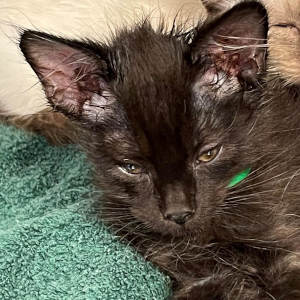
Female domestic shorthair kitten
This 3-month-old female domestic shorthair kitten has a black coat.
She is in kennel No. 13b, ID No. LCAC-A-3880.

Female domestic shorthair kitten
This 4-month-old female domestic shorthair kitten has a white coat with blue eyes.
She is in kennel No. 13c, ID No. LCAC-A-3881.

Female domestic shorthair cat
This 2-year-old female domestic shorthair cat has an all-black coat.
Shelter staff said she is a “master greeter.”
“She is very talkative and likes softs pets down her back. She is uncomfortable when being picked up, but is more than happy to come to you, especially for pets,” and has a “chill” attitude, the shelter reported.
She is in cat room kennel No. 32, ID No. LCAC-A-3887.

‘Willow’
“Willow” is a female domestic shorthair cat with a gray and white coat.
She is in cat room kennel No. 47, ID No. LCAC-A-3762.

Male domestic shorthair cat
This 1-year-old male domestic shorthair cat has a black coat.
Shelter staff said he is a sweet, talkative kitty, who loves head scratches and will rub all over your legs as you walk through the room.
He is in cat room kennel No. 60, ID No. LCAC-A-3932.

Male domestic shorthair kitten
This 4-month-old male domestic shorthair kitten has an all-black coat.
Shelter staff said he is a unique kitten, who is very sweet and playful despite having a limb deformity.
“He can run around and play with all the other kittens and he loves toys and adventure. He will need to be indoor only so he can live his life worry free,” the shelter reported.
He is in cat room kennel No. 62a, ID No. LCAC-A-3877.

Male domestic medium hair kitten
This 3-month-old male domestic medium hair kitten has a black coat.
He is in kennel No. 62b, ID No. LCAC-A-3874.

Male domestic medium hair kitten
This 3-month-old male domestic medium hair kitten has a gray coat.
He is in kennel No. 74a, ID No. LCAC-A-3873.

Male domestic medium hair kitten
This 3-month-old male domestic medium hair kitten has a gray tabby coat.
He is in kennel No. 74d, ID No. LCAC-A-3876.

Female domestic shorthair kitten
This female domestic shorthair kitten has a gray coat with white markings.
Shelter staff said she came to them with an injury to one of her eyes and needed to have the eye removed, but that has only made her more eager for head bonks.
“She has the cutest little meow and is a running shelter champion for the ‘best biscuit maker,’” the staff said.
She would be best as an indoor-only cat.
She is in cat room kennel No. 107a, ID No. LCAC-A-3842.

Female domestic shorthair kitten
This 4-month-old female domestic shorthair kitten has a white coat with blue eyes.
She is in kennel No. 107b, ID No. LCAC-A-3882.
Email Elizabeth Larson at

The Research Brief is a short take about interesting academic work.
The big idea
When it comes to academic success for college students, having a sense of purpose and gratitude makes a significant difference. That’s what I found in a peer-reviewed study published in June 2022 in the Journal of College Student Retention: Research, Theory & Practice.
For the study, I analyzed answers provided by 295 undergraduates to questions about whether they did better academically if they had a sense of purpose and gratitude during the COVID-19 pandemic.
I wondered if students were more likely to be academically engaged – and less likely to suffer academic burnout – if they had a strong sense of purpose. I specifically asked about three types of purpose: self-growth, others-growth and career-focused purpose orientations. I also wanted to know if being grateful for positive experiences made a difference.
I defined academic engagement as a motivational mindset that is characterized by students’ enthusiasm for school-related activities. I also looked at three types of academic burnout: devaluation of schoolwork, reduced sense of accomplishment and mental exhaustion.
I found that only one type of purpose was directly relevant to engagement and burnout - career-focused purpose. When undergraduate students connect their life purpose with career aspirations, they tend to be engaged in their academic studies. They are also less likely to devalue their schoolwork or feel unaccomplished in their studies.
I also found that gratitude was just as important. These findings suggest that the more grateful undergraduate students feel, the more they are engaged in their academic work and the more they feel accomplished and value schoolwork.
Why it matters
This study adds to a growing body of research that suggests having a deep sense of life purpose is important for people’s well-being, success and ability to cope with challenging life situations.
My study suggests that university advisers and faculty should recognize the role that sense of purpose plays for student success. They should also engage in practices that foster students’ sense of life purpose. For example, faculty members can use assignments to encourage students to reflect on their life purpose and connect it with their future career aspirations.
Fostering gratitude is also important. This is because gratitude is also associated with greater academic engagement and less burnout among undergraduate students. My study also suggests that it benefits students if they are given opportunities to reflect on things in life for which they are grateful. Such opportunities can be incorporated into first-year experience courses or incoming student orientations.
What still isn’t known
Since this study was conducted when participants had few, if any, opportunities to help others due to COVID19 restrictions, I wonder if others-growth and self-growth types of purpose will be more relevant to academic success once these restrictions are eased.
I also wonder whether classroom activities aimed at connecting life purpose with students’ future careers will lead to higher graduation rates.
What’s next?
As part of Graduation Initiative 2025 – an initiative is meant to increase graduation rates and close gaps in the rates of graduation between different groups – my colleague Gitima Sharma and I created an undergraduate course, titled “Fostering Sense of Purpose.” Our preliminary data showed that students who took this course in spring of 2022 reported a strengthened sense of life purpose. We plan to continue to examine how effective the course is at fostering sense of purpose in life. We also plan to look at whether the course leads to lasting positive effects for students’ academic and career success, such as higher graduation rates.
Mariya Yukhymenko, Associate Professor of Research and Statistics, California State University, Fresno
This article is republished from The Conversation under a Creative Commons license. Read the original article.

LOWER LAKE, Calif. — On Saturday, Oct. 1, the Anderson Marsh Interpretive Association, or AMIA, will host a celebration of the 40th Anniversary of the founding of Anderson Marsh State Historic Park.
The event, to be held in the picnic area of the park, will include music, refreshments, a few speeches and a few surprises.
Roberta Lyons, AMIA president, played a large part in the community effort to protect the Native American cultural sites located within the present park boundaries from being destroyed by commercial development.
“For those of us who were involved in the fight to save Anderson Marsh from development, it is hard to believe that it’s been 40 years since we accomplished that goal through the creation of Anderson Marsh State Historic Park,” said Lyons. “Since then, the road has been a little rocky, but the park is still open and Anderson Marsh is still here to be enjoyed by us all.”
The day will begin with a guided nature walk at 9 a.m., followed by a welcoming address by Lyons and a talk by Tom Nixon, former State Parks Ranger assigned to the park, about the founding of the park and its history since that time.
In addition to other surprise speakers, the day will feature music on the ranch house porch by Don Coffin and friends, tours of the exhibits in the South Barn and, of course, a 40th birthday cake.
AMIA invites everyone to spend a lovely fall day with friends and neighbors while we celebrate Anderson Marsh State Historic Park.
AMIA is a nonprofit association cooperating with the California Department of Parks and Recreation to promote educational and interpretive activities at Anderson Marsh State Historic Park.
For information about Anderson Marsh State Historic Park or AMIA, visit www.andersonmarsh.org or contact AMIA at either
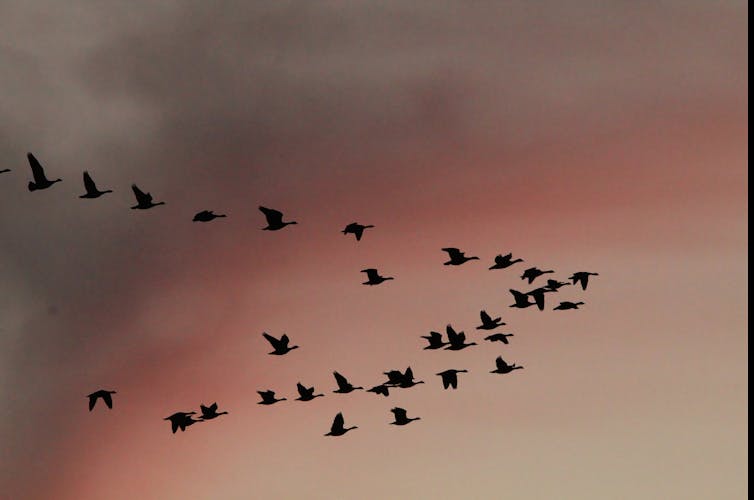
Although it still feels like beach weather across much of North America, billions of birds have started taking wing for one of nature’s great spectacles: fall migration. Birds fly south from the northern U.S. and Canada to wintering grounds in the southern U.S., Caribbean and Latin America, sometimes covering thousands of miles. Other birds leave temperate Eurasia for Africa, tropical Asia or Australia.
Using observation records and data collected through bird banding, 20th-century ornithologists roughly mapped general migration routes and timing for most migratory species. Later, using radar at airports and weather stations, they discovered how weather and other factors affect when birds migrate and how high they fly.
Today, technological advances are providing new insights into bird migration and showing that it is more complex and wonderful than scientists ever imagined. These new and constantly improving technologies are key aids for protecting migratory birds in the face of habitat loss and other threats.
Birding across borders
The power of the internet has greatly aided migratory bird research. Using the popular eBird network, birders all over the world can upload sightings to a central database, creating a real-time record of the ebb and flow of migration. Ornithologists have also learned to use NEXRAD, a national network of Doppler weather radars, to visualize birds migrating down the North American continent.
Now, scientists are setting up a global network of receiver stations called the Motus Network, which currently has 1,500 receivers in 31 countries. Each receiver constantly records the presence of any birds or other animals within a nine-mile (15-kilometer) radius that scientists have fitted with small, lightweight radio transmitters, and shares the data online. The network will become increasingly useful for understanding bird migration as more receiver stations become active along migration tracks.
Tracking individual birds via satellite
Three new technologies are rapidly expanding what we know about bird migration. The first is satellite telemetry of bird movement. Researchers fit birds with small solar-powered transmitters, which send data on the birds’ locations to a satellite and then on to a scientist’s office computer. The scientist can learn where a bird is, the route it took to get there and how fast it travels.
For example, the bar-tailed godwit, a pigeon-sized shorebird, breeds in Alaska and then migrates to New Zealand. Satellite transmitters show that godwits often fly nonstop from Alaska to New Zealand. Recently, a godwit set the record for the longest nonstop flight by a land bird: 8,100 miles (13,000 kilometers) in 10 days, from Alaska to Australia.
Satellite telemetry studies show how much individual birds, even those from the same breeding location, vary in their migratory behavior. Individual differences in migratory behavior are probably due to differences in physical condition, learning, experience and personal preferences.
Another shorebird, the whimbrel, also makes a phenomenally long journey over the ocean. Satellite telemetry has shown that some whimbrels travel from northwest Canada, across the North American continent to Canada’s east coast, then set off over the Atlantic Ocean on a 3,400-mile (5,400-kilometer), six-day nonstop flight to the coast of Brazil. In total, they may travel 6,800 miles (11,000 kilometers).
Sadly, hunters kill some of these birds when they land to rest on islands in the Lesser Antilles. The unfortunate fate of two satellite-tracked whimbrels has catalyzed a campaign to tighten regulations on shorebird hunting in the Caribbean.
Geotagging small birds
Many birds are too small to carry a satellite transmitter. Given the energetic effort required for migration, a device must weigh less than 5% of a bird’s body weight, and many migratory songbirds weigh under 0.7 ounces (20 grams).
An ingenious solution for small birds is a geolocator tag, or geologger – a tiny device that simply records time, location and presence or absence of sunlight. Scientists know the timing of sunrise and sunset on a given date, so they can calculate a bird’s location on that date to within about 125 miles (200 kilometers).
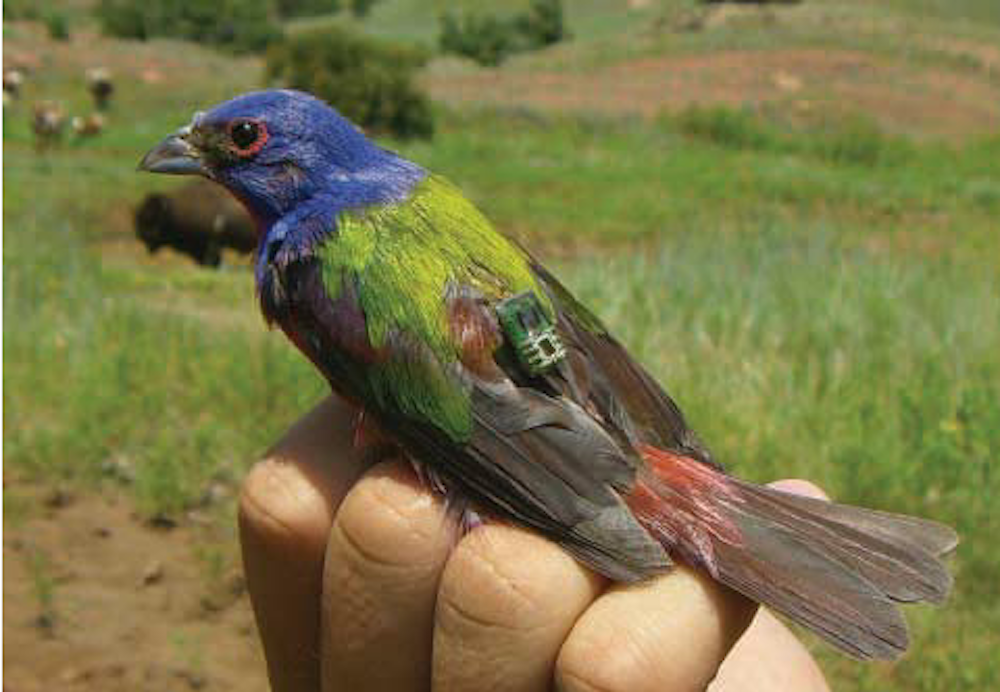
Birds carrying geologgers must be recaptured to download the data. That means the bird must survive a migration round trip and return to the same place where it was first captured and tagged. Amazingly, many geologger-tagged small birds do.
Geologgers have shown that Blackpoll warblers – small songbirds that breed in the boreal forests of North America – fly long distances over the Atlantic in fall, heading to the Amazon basin. Birds breeding in eastern North America head out over the Atlantic in maritime Canada or the northeastern U.S. and make a 60-hour, nonstop, 1,500-mile (2,500-kilometer) flight to the Greater Antilles. There they rest and recuperate, then continue across the Caribbean to South America.
Blackpolls breeding in Alaska fly across the North American continent before leaving shore on the Atlantic coast and flying to South America. In total, they journey 6,600 miles (10,700 kilometers) over 60 days.
Even more amazing, geologgers show that another small songbird, the northern wheatear, migrates from North America to sub-Saharan Africa. Wheatears that breed in Alaska fly 9,100 miles (14,600 kilometers) across Asia to East Africa, taking three months to do so. Those breeding in eastern Canada journey 4,600 miles (7,400 kilometers) across the Atlantic to Europe and then on to West Africa – including a 2,100-mile (3,400-kilometer), four-day nonstop overwater flight.
Recording birds’ night migration calls
Two hours after sunset in fall, I like to sit outside and listen to birds migrating overhead. Most birds migrate at night, and many give a species-specific “chit,” “zeep” or other call-note while in flight. The calls may serve to keep migrating flocks together, including different species heading to the same destination.
Ornithologists are using automated passive acoustic recording to study these nocturnal calls and identify the species or group of related species that make each sound. The technology is a microphone directed at the sky, connected to a computer that continuously records the sound stream and is aided by sound recognition software. Sometimes it reveals migrants overhead that are rarely seen on the ground.
Nick Kachala, an honors student in my lab, set up recording units on three university properties in the fall of 2021. One of the most common migrants recorded was the gray-cheeked thrush, a shy bird of the northern boreal forest that is rarely seen in the northeast U.S. during fall migration. He also detected the dickcissel, a grassland bird that I have never seen in our area.
Many birdwatchers are now building do-it-yourself backyard recording units to identify the birds flying over their homes during migration.
Conserving migratory birds
Radar monitoring indicates that the number of North American migratory birds declined by 14% between 2007 and 2017. There probably are multiple causes, but habitat loss is likely the principal culprit.
Satellite telemetry and geologgers show that there are special stopover sites along migration routes where migrants rest and refuel, such as the Texas Gulf Coast, the Florida Panhandle and Mexico’s Yucatan Peninsula. Conservation experts widely agree that to protect migratory birds, it is critical to conserve these sites.
Effective conservation measures require knowing where and how birds migrate, and what dangers they face during migration. Ornithologists, using these new technologies, are learning things that will help to stop and reverse the global decline in migratory birds.
Tom Langen, Professor of Biology, Clarkson University
This article is republished from The Conversation under a Creative Commons license. Read the original article.
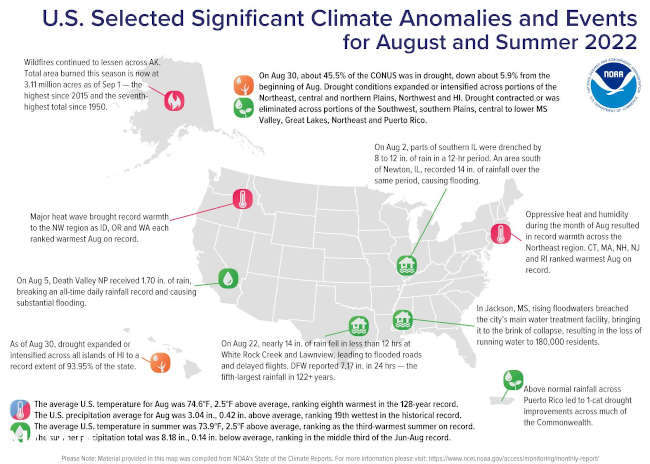
A top-10 warm August capped off a distinctly hot summer, as the U.S. saw its third-hottest meteorological summer on record.
Last month was also marked by several extreme rainfall events across the nation that resulted in historic flooding, according to NOAA’s National Centers for Environmental Information.
Climate by the numbers
Meteorological summer
For meteorological summer (June 1 through Aug. 31), the average temperature for the contiguous U.S. was 73.9 degrees F, 2.5 degrees above average, ranking as the third-hottest summer in 128 years.
Summer temperatures were above average across most of the contiguous U.S. Massachusetts, Rhode Island and Texas each saw their second-warmest summer on record, while seventeen additional states across the West, South and Northeast saw their top-10 warmest summer on record.
The summer precipitation total across the contiguous U.S. was 8.18 inches — 0.14 of an inch below average — ranking in the middle third in the historical summer record. Precipitation was above average along the West Coast, parts of the Southwest, Midwest, lower Mississippi Valley and northern New England.
Meanwhile, precipitation was below average across the Great Plains and portions of the East Coast. Arizona had its seventh-wettest summer on record as Nebraska saw its third-driest summer.
August 2022
The average temperature for August across the contiguous U.S. was 74.6 degrees F, 2.5 degrees above average, and ranked as the eighth-warmest August on record.
The contiguous U.S. monthly average minimum temperature was record-warm for the second month in a row during August. California, Idaho, Nevada, Oregon and Washington each ranked warmest on record for August nighttime temperatures.
The average precipitation for August in the contiguous U.S. was 3.04 inches (0.42 of an inch above average), ranking in the wettest third of the climate record. Extreme rainfall events during the month of August contributed substantially to the record-wet August for Mississippi — as well as the third-wettest August for Nevada and Louisiana.
However, a few states stayed quite dry last month, with Nebraska seeing its second-driest August on record and Kansas seeing its seventh driest.
Year to date (YTD, January through August 2022)
The average U.S. temperature for the first eight months of 2021 was 55.4 degrees F — 1.5 degrees above the 20th-century average — ranking in the warmest third of the climate record. Florida had its fourth-warmest such YTD on record and California saw its fifth warmest.
The nation had 19.68 inches of precipitation for the YTD, 1.03 inches below average, ranking in the driest third of the January–August record. California ranked driest YTD on record, while Nebraska ranked fifth driest and Nevada ranked seventh driest for this YTD.
Other notable climate events
Multiple historic flooding events struck: Several extreme 1,000-year flooding events occurred across the U.S. in August. On August 2, parts of southern Illinois were drenched by 8–12 inches of rain in a 12-hour period. An area south of Newton, Illinois, recorded 14 inches of rainfall over the same period. On August 5, Death Valley National Park received 1.70 inches of rain, an all-time 24-hour rainfall record for the area, resulting in substantial flooding and damage to roads and vehicles, temporarily stranding park visitors and staff overnight.
On Aug. 22, some parts of Dallas, Texas, saw more than 13 inches of rainfall within 12 hours. Texas Governor Greg Abbott declared a disaster for 23 Texas counties, including Dallas, after storms caused damage and devastating flash flooding.
Drought conditions improved overall: According to the August 30 U.S. Drought Monitor report, 45.5% of the contiguous U.S. was in drought, down about 5.9% from the beginning of August. Drought conditions lessened or were eliminated across portions of the Southwest, southern Plains, central Mississippi Valley, Great Lakes, parts of the Northeast and Puerto Rico.
Drought conditions expanded or intensified across portions of the Northeast, central and northern Plains, the Northwest and Hawaii.
Dogs available for adoption this week include mixes of Australian cattle dog, Doberman pinscher, German shepherd, Great Pyrenees, hound, husky, pit bull, Rottweiler, shepherd and treeing walker coonhound.
Dogs that are adopted from Lake County Animal Care and Control are either neutered or spayed, microchipped and, if old enough, given a rabies shot and county license before being released to their new owner. License fees do not apply to residents of the cities of Lakeport or Clearlake.
The following dogs at the Lake County Animal Care and Control shelter have been cleared for adoption.
Call Lake County Animal Care and Control at 707-263-0278 or visit the shelter online for information on visiting or adopting.

Female pit bull terrier
This 2-year-old female pit bull terrier has a black and white coat.
Shelter staff said she is a gentle girl with a loving personality who came into the shelter needing some tender loving care.
She is in kennel No. 9, ID No. LCAC-A-3856.

Male pit bull terrier
This 1-year-old male pit bull terrier has a gray and white coat.
Shelter staff said is a playful young dog who does well on a leash and loves fetch. He will benefit from training.
He is in kennel No. 10, ID No. LCAC-A-3855.

Male hound mix puppy
This 6-month-old male hound mix puppy has a short brindle coat.
Shelter staff said he is very playful with a lot of energy, and he loves toys. “He is extremely treat motivated and has shown he is eager to learn all the cool tricks you could teach him.”
He is in kennel No. 15, ID No. LCAC-A-3916.

Female treeing walker coonhound-Doberman pinscher puppy
This 2-month-old female treeing walker coonhound-Doberman pinscher has a short tan coat.
She is in kennel No. 16a, ID No. LCAC-A-3924.

Female treeing walker coonhound-Doberman pinscher puppy
This 2-month-old female treeing walker coonhound-Doberman pinscher has a short tan coat.
She is in kennel No. 16b, ID No. LCAC-A-3925.

Female treeing walker coonhound-Doberman pinscher puppy
This 2-month-old female treeing walker coonhound-Doberman pinscher has a short tan coat.
She is in kennel No. 16c, ID No. LCAC-A-3926.

Female treeing walker coonhound-Doberman pinscher puppy
This 2-month-old female treeing walker coonhound-Doberman pinscher has a short tan coat.
She is in kennel No. 16d, ID No. LCAC-A-3927.

Male treeing walker coonhound-Doberman pinscher puppy
This 2-month-old male treeing walker coonhound-Doberman pinscher has a short tricolor coat.
He is in kennel No. 17a, ID No. LCAC-A-3921.

Male treeing walker coonhound-Doberman pinscher puppy
This 2-month-old male treeing walker coonhound-Doberman pinscher has a short tan and white coat.
He is in kennel No. 17b, ID No. LCAC-A-3922.

Male treeing walker coonhound-Doberman pinscher puppy
This 2-month-old male treeing walker coonhound-Doberman pinscher has a short tricolor coat.
He is in kennel No. 17c, ID No. LCAC-A-3923.

Male Rottweiler-Australian cattle dog cross
This 5-year-old male Rottweiler-Australian cattle dog cross has a short tricolor coat.
He is in kennel No. 18, ID No. LCAC-A-3942.

Female pit bull
This 2-year-old female pit bull has a short brown brindle coat.
She is in kennel No. 20, ID No. LCAC-A-3918.

Female treeing walker coonhound
This young female treeing walker coonhound has a short black brindle coat.
She is in kennel No. 22, ID No. LCAC-A-3776.

Female German shepherd
This 1-year-old female German shepherd has a short black and tan coat.
She is in kennel No. 24, ID No. LCAC-A-3780.

Male German shepherd
This 2-year-old male German shepherd has a black and tan coat.
Shelter staff called him a “handsome sweet dude who is motivated by treats and does well walking on a leash.
He is in kennel No. 25, ID No. LCAC-A-3870.

Male German shepherd
This 3-year-old male German shepherd has a black and tan coat.
He is in kennel No. 26, ID No. LCAC-A-3929.

Female husky
This 1-year-old female husky has a cream and black coat.
She is in kennel No. 27, ID No. LCAC-A-3893.

‘Poppy’
“Poppy” is a 4-month-old female Great Pyrenees with a short white and gray coat.
She is in kennel No. 30, ID No. LCAC-A-3790.

Male German shepherd
This 1-year-old male German shepherd has a black and tan coat.
He is in kennel No. 31, ID No. LCAC-A-3930.

‘Piper’
“Piper” is a young female Great Pyrenees with a short white coat.
She is in kennel No. 34, ID No. LCAC-A-3789.
Email Elizabeth Larson at