 How to resolve AdBlock issue?
News
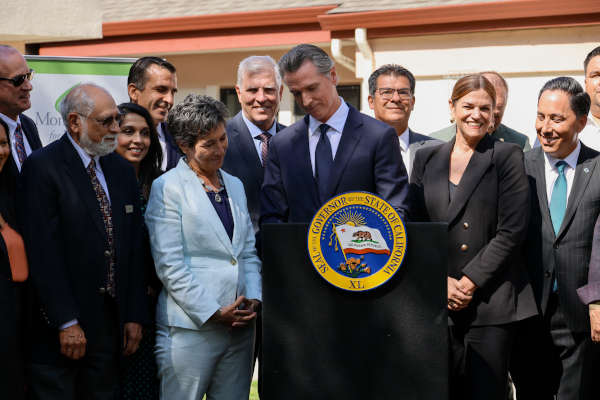
Alongside state and local leaders and Californians impacted by mental illness, Gov. Gavin Newsom on Wednesday signed legislation enacting CARE Court, which Newsom’s office calls “a paradigm shift” that will provide individuals with severe mental health and substance use disorders the care and services they need to get healthy.
The Community Assistance, Recovery, and Empowerment Act — SB 1338 by Sen. Thomas Umberg (D-Santa Ana) and Sen. Susan Talamantes Eggman (D-Stockton) — will provide help upstream, ahead of conservatorships and outside the walls of institutions.
Under CARE Court, families, clinicians, first responders and others will be able to refer individuals suffering from schizophrenia spectrum or psychotic disorders.
“With overwhelming support from the Legislature and stakeholders across California, CARE Court will now become a reality in our state, offering hope and a new path forward for thousands of struggling Californians and empowering their loved ones to help,” said Gov. Newsom. “I thank our legislators and the broad coalition of partners who made this day possible and look forward to our work ahead together to implement this transformative program in communities across California.”
CARE Court will be implemented statewide and will start with a phased-in approach. The first cohort to implement CARE Court includes the counties of Glenn, Orange, Riverside, San Diego, Stanislaus, Tuolumne and San Francisco.
CARE Court received bipartisan and near-unanimous approval in both the state Senate and Assembly.
The framework is supported by unprecedented funding under the state’s $15.3 billion investment in addressing homelessness, including $1.5 billion for behavioral bridge housing; more than $11.6 billion annually for mental health programs throughout California; and more than $1.4 billion for the state’s health and human services workforce.
An additional $88.3 million in CARE Court start-up funds was provided for the state, counties, courts, self-help and legal aid.
“I have seen first-hand the good that can come when our judicial, executive, and legislative branches work together to address delicate populations and nuanced issues like mental health, veterans, at-risk youth, and substance use,” said Sen. Umberg. “The individual frameworks and best practices for collaboration exist here – and we pulled them together in SB 1338 for something new and revolutionary in California. I’m proud to have been able to spearhead this effort with Senator Eggman and look forward to more advances in the years ahead.”
“It is an inescapable conclusion – with the evidence observable in community after community in California – that our behavioral health system is broken and has allowed too many people with severe mental illness to fall through the cracks,” said Sen. Eggman (D-Stockton). “The crisis is playing out on our streets and Californians want an answer to the crisis of conscience we all feel when we see this suffering firsthand. The CARE Act provides a critical new on-ramp into the behavioral health system for a population of people that are the hardest to reach. Basic human dignity requires us to put our full effort into helping get care for people struggling with severe mental illness on our streets. I applaud Governor Newsom and Secretary Ghaly for their leadership in crafting this bold and much needed reform. And I want to thank my colleague Senator Umberg for the strong partnership in shepherding the CARE Act through the legislature.”
CARE Court was created based on the evidence that people with untreated psychosis can be stabilized and housed in community-based care settings, with treatment and support.
The plan focuses on people with schizophrenia spectrum and other psychotic disorders, who may also have substance use challenges.
“The CARE Act recognizes that to serve those with the most complex behavioral health conditions, we must do the hard work of prioritizing those who need help the most, providing a comprehensive CARE plan that honors self-determination to the greatest extent possible, and holding ourselves accountable to delivering services and housing that are key to long term stability and recovery,” said Secretary of the California Health & Human Services Agency, Dr. Mark Ghaly. “Today is significant and would not have been possible without the contributions of the many passionate and thoughtful individuals and organizations we have engaged with over the past many months to help craft this unprecedented and innovative legislation. On the shoulders of those who leaned in to get us to this point, we now shift our full energy to implementing the CARE Act program in counties across the state. Rolling up sleeves to collaborate, partner and plan so those who can benefit from this new pathway can do so as soon as possible.”
CARE Court will provide individuals with clinically appropriate, community-based and court-ordered Care Plans consisting of culturally and linguistically competent county mental health and substance use disorder treatment services.
These include short-term stabilization medications, wellness and recovery supports, social services and housing. Services are provided to the individual while they live in the community. Plans can be between 12 to 24 months.
In addition to their full clinical team, the client-centered approach also includes a volunteer supporter to help individuals make self-directed care decisions, and an attorney.
“NAMI stands proud to support the CARE Act and looks forward to seeing this legislation become a reality in every community throughout the state. CARE Court will be a lifeline to thousands of individuals across California looking for help to live a more fulfilling life,” said NAMI California CEO Jessica Cruz.
The CARE Court framework includes real accountability. Counties and other local governments could be issued fines by the court if they are out of compliance.
That money will be placed in the CARE Act Accountability Fund and will be used to support the efforts of the local government entities that paid the fines to serve individuals.
For more information, visit https://www.chhs.ca.gov/care-court/.
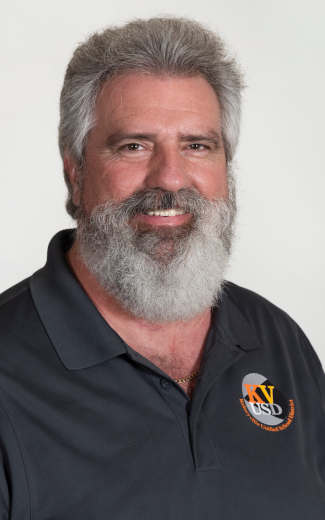
KELSEYVILLE, Calif. — After nearly 14 years on the job, Kelseyville Unified School District’s superintendent said he is planning to retire at the end of the 2022-23 school year.
Dr. Dave McQueen said he’ll step down effective on June 30, 2023.
As a result, the Kelseyville Unified School District Board of Trustees is seeking a highly qualified superintendent to take the helm starting July 1, 2023.
Dr. McQueen said he looks forward to retirement but can hardly believe the time has come.
He’s spent his lifetime with the district, completing his entire K-12 education as a Kelseyville Unified student. All of his children graduated from Kelseyville High School.
In 1998, he began working for the district as the vice principal of Kelseyville High School, then became principal of Kelseyville Elementary and Alternative Education.
In 2009, he was named district superintendent.
“You know, building relationships with Kelseyville students, families and community members has been a joy. Now, after a 14-year career as superintendent at KVUSD, it’s time for me to step down. We will take this year to find the right person to lead the district going forward, and to assure a smooth transition,” Dr. McQueen said.
The superintendent’s position will be posted this week and the deadline for applications is Oct. 12.
More information is available at kvusd.org. Click on the “District” menu and select “Current Job Openings.”
The Board of Trustees has asked Dr. McQueen to manage all inquiries. He can be reached at 707-279-1511 or via email at
Clearlake City Council to discuss recreation center feasibility study, consider mutual aid agreement
The council will meet at 6 p.m. Thursday, Sept. 15, in the council chambers at Clearlake City Hall, 14050 Olympic Drive.
The meeting will be broadcast live on the city's YouTube channel or the Lake County PEGTV YouTube Channel. Community members also can participate via Zoom or can attend in person.
The agenda can be found here.
Comments and questions can be submitted in writing for City Council consideration by sending them to City Clerk Melissa Swanson at
To give the council adequate time to review your questions and comments, please submit your written comments before 4 p.m. Thursday, Sept. 15.
Each public comment emailed to the city clerk will be read aloud by the mayor or a member of staff for up to three minutes or will be displayed on a screen. Public comment emails and town hall public comment submissions that are received after the beginning of the meeting will not be included in the record.
At the start of Thursday’s meeting, the council will meet one of September’s adoptable dogs from the city shelter, host a swearing-in of new police department employees and present a proclamation declaring Sept. 23, 2022, as Native American Day.
Under business, the council will hear a presentation and discuss the second phase of the Lake County Recreation Center Feasibility Study.
The council also will discuss a mutual aid agreement between the cities of Clearlake, Lakeport, Fort Bragg, Point Arena, Ukiah and Willits.
“The cities in Lake and Mendocino counties meet regularly to discuss similar issues, share ideas, and lend support and guidance as needed,” City Manager Alan Flora said in his written report to the council.
“As a result of these discussions a proposal was developed, with the City of Ukiah as the lead, for a mutual aid agreement between all six cities. The goal of having this agreement in place is to formalize our ability to provide support for each other, provide for reimbursement, and clarification of roles and responsibilities,” Flora wrote.
In other business, the council will consider an amendment to the agreement with Pacific Gas and Electric for the use of the community/senior center for emergencies not connected to public safety power outages.
On the meeting's consent agenda — items that are considered routine in nature and usually adopted on a single vote — are warrants; consideration of acceptance of the property located at 16626 Third Ave.; approval of Police Chief Andrew White’s response to the 2021-22 Grand Jury report on abandoned vehicles; continuation of authorization to implement and utilize teleconference accessibility to conduct public meetings pursuant to Assembly Bill 361; approval of response to the 2021-22 Grand Jury Report, “Not Your Grandpa's Dump”; acceptance for filing the 2022 Local Agency Biennial Notice regarding amendments to the conflict of interest code.
The council also will hold a closed session to discuss two potential cases of litigation.
Email Elizabeth Larson at
The California Department of Public Health, or CDPH, urges Californians to get vaccinated against the flu because it’s the best way to prevent serious illness and reduce the spread to others.
“Do your part to protect yourselves and your loved ones by getting vaccinated,” said Dr. Tomás J. Aragón, CDPH director and State Public Health officer. "Flu vaccinations keep people out of the hospital, keeping our healthcare system open to help with other illnesses during the winter.”
In California, flu activity usually begins to increase in late November or December, so everyone is recommended to get vaccinated against the flu by the end of October.
It takes a couple of weeks after vaccination for the body to build an immunity. Flu and COVID-19 vaccines may be administered concurrently, so do not hesitate to get boosted or immunized against COVID-19 when receiving your flu shot.
CDPH recommends the annual flu vaccination for everyone six months of age and older.
Those at higher risk of getting severe flu disease include:
• People 65 years and older.
• People who smoke or have underlying medical conditions like diabetes, heart disease, asthma, lung disease, neurologic disorders and weakened immune systems.
• People who are pregnant and children under 5 years of age.
• African Americans, Latinx and Native populations, who are disproportionately affected by chronic medical conditions that can increase the risk for severe flu or COVID-19.
• Caregivers and residents in long-term care facilities.
• Employees who work with the public.
CDPH encourages Californians to contact their health care provider, physician’s office or clinic about getting the flu vaccine. Adults may also find flu vaccine appointments at a pharmacy. Pharmacies usually accept most insurance, including Medi-Cal. Some local health departments may also offer low- or no-cost flu immunizations.
“Call your doctor or pharmacist to get vaccinated against flu today,” said Dr. Aragón. “We are stronger when we are all protected.”
Besides getting immunized, you can also take everyday preventive actions to stop the spread of germs:
• Stay home when sick.
• Cough or sneeze into your elbow, arm, or disposable tissue. If you use disposable tissue, use hand sanitizer, or wash your hands afterwards.
• Wash hands frequently and thoroughly with soap and warm water or use an alcohol-based hand sanitizer.
• Avoid touching your eyes, nose, and mouth.
For more information about the flu, visit CDPH’s website and to find a flu vaccine location nearest you, visit www.vaccines.gov/find-vaccines. The Fight the Flu. Get Vaccinated! website has additional information.
“Do your part to protect yourselves and your loved ones by getting vaccinated,” said Dr. Tomás J. Aragón, CDPH director and State Public Health officer. "Flu vaccinations keep people out of the hospital, keeping our healthcare system open to help with other illnesses during the winter.”
In California, flu activity usually begins to increase in late November or December, so everyone is recommended to get vaccinated against the flu by the end of October.
It takes a couple of weeks after vaccination for the body to build an immunity. Flu and COVID-19 vaccines may be administered concurrently, so do not hesitate to get boosted or immunized against COVID-19 when receiving your flu shot.
CDPH recommends the annual flu vaccination for everyone six months of age and older.
Those at higher risk of getting severe flu disease include:
• People 65 years and older.
• People who smoke or have underlying medical conditions like diabetes, heart disease, asthma, lung disease, neurologic disorders and weakened immune systems.
• People who are pregnant and children under 5 years of age.
• African Americans, Latinx and Native populations, who are disproportionately affected by chronic medical conditions that can increase the risk for severe flu or COVID-19.
• Caregivers and residents in long-term care facilities.
• Employees who work with the public.
CDPH encourages Californians to contact their health care provider, physician’s office or clinic about getting the flu vaccine. Adults may also find flu vaccine appointments at a pharmacy. Pharmacies usually accept most insurance, including Medi-Cal. Some local health departments may also offer low- or no-cost flu immunizations.
“Call your doctor or pharmacist to get vaccinated against flu today,” said Dr. Aragón. “We are stronger when we are all protected.”
Besides getting immunized, you can also take everyday preventive actions to stop the spread of germs:
• Stay home when sick.
• Cough or sneeze into your elbow, arm, or disposable tissue. If you use disposable tissue, use hand sanitizer, or wash your hands afterwards.
• Wash hands frequently and thoroughly with soap and warm water or use an alcohol-based hand sanitizer.
• Avoid touching your eyes, nose, and mouth.
For more information about the flu, visit CDPH’s website and to find a flu vaccine location nearest you, visit www.vaccines.gov/find-vaccines. The Fight the Flu. Get Vaccinated! website has additional information.
LUCERNE, Calif. — The Lucerne Area Town Hall will meet at 6 p.m. Thursday, Sept. 15.
The meeting will take place at the Lucerne Hotel, 3700 Country Club Drive.
It also will be available via Zoom; the meeting ID is 932 6070 2591, pass code is 071816.
On the agenda is an update on the Lucerne Harbor, with the group asking for a specific date on the long-awaited harbor dredging, and an update on the management action plan.
Also on Thursday, LATH will hold a discussion about Elijah House, which formerly ran the county’s homeless shelter.
Members also will be asked to authorize the chair to make a complaint to the Lake County Grand Jury on behalf of the town hall regarding Elijah House, which is continuing to run a sober living environment in the town’s former visitor center.
The group also will talk about a request of the sheriff to have deputies regularly stop at Lucerne Harbor Park and Lucerne Alpine Park while on patrol, consider the approval of proposed bylaws and hold a discussion on a vacant board seat.
Other items include updates on the needle exchange, the latest from Cal Water and the Northshore Fire Protection District, discussion of a community cleanup initiative and a call for volunteers at the shoreline cleanup at the harbor.
The meeting will take place at the Lucerne Hotel, 3700 Country Club Drive.
It also will be available via Zoom; the meeting ID is 932 6070 2591, pass code is 071816.
On the agenda is an update on the Lucerne Harbor, with the group asking for a specific date on the long-awaited harbor dredging, and an update on the management action plan.
Also on Thursday, LATH will hold a discussion about Elijah House, which formerly ran the county’s homeless shelter.
Members also will be asked to authorize the chair to make a complaint to the Lake County Grand Jury on behalf of the town hall regarding Elijah House, which is continuing to run a sober living environment in the town’s former visitor center.
The group also will talk about a request of the sheriff to have deputies regularly stop at Lucerne Harbor Park and Lucerne Alpine Park while on patrol, consider the approval of proposed bylaws and hold a discussion on a vacant board seat.
Other items include updates on the needle exchange, the latest from Cal Water and the Northshore Fire Protection District, discussion of a community cleanup initiative and a call for volunteers at the shoreline cleanup at the harbor.
LAKE COUNTY, Calif. — Gov. Gavin Newsom on Monday announced $254 million in grants to public libraries in 172 cities across 34 counties to renovate and improve facilities across the state, with Lake County’s four libraries among those receiving awards.
This is the first round of the California State Library’s $439 million Building Forward Library Improvement Grant Program — the largest investment in public library infrastructure in California history.
Lake County’s library system has received approximately $1,099,667 in this round of grants.
The Lakeport Library will receive $633,067; the Middletown Library has been allocated $193,533; Redbud Library, $254,467; and the Upper Lake Library, $18,600.
“Public libraries are the hearts of communities across the state and our hubs of learning, discovery, and oftentimes — safety,” said Newsom. “While states across the nation are banning books, California is awarding $254 million in grants for our historic public libraries — an investment to make books more accessible by repairing and modernizing libraries throughout the state.”
The 234 projects in this initial round of funding under the Building Forward Library Improvement Grant Program range from $14,300 to $10 million and include efforts to make libraries safer and more accessible, including their ability to be cooling centers for underserved communities.
The city of Porterville, whose only library was destroyed in a 2020 fire that took the lives of two firefighters, will receive $7.2 million.
“Libraries are hubs of community activity — they are a safe haven, an escape into the wonders of reading, a place to find a meal when you need one, to create, to vote, to enrich children, to learn a new skill, and so much more,” said First Partner Jennifer Siebel Newsom. “Strengthening our libraries’ infrastructure — their ability to safely and effectively meet the needs of the community — is such a critical investment in the community members who rely on them.”
First priority for grants was given to the state’s least-resourced communities and projects that address long-delayed critical life and safety facility needs including seismic safety, heating and air system replacement, building security, and improved Americans with Disabilities Act accessibility.
“There are lots of reasons 24 million Californians have library cards. Local libraries are cornerstones of their communities and critical parts of California’s education system,” said California State Librarian Greg Lucas. “Strengthening public libraries strengthens California and helps make it easier for all Californians to get the information and assistance they need to succeed and thrive.”
This is the first round of the California State Library’s $439 million Building Forward Library Improvement Grant Program — the largest investment in public library infrastructure in California history.
Lake County’s library system has received approximately $1,099,667 in this round of grants.
The Lakeport Library will receive $633,067; the Middletown Library has been allocated $193,533; Redbud Library, $254,467; and the Upper Lake Library, $18,600.
“Public libraries are the hearts of communities across the state and our hubs of learning, discovery, and oftentimes — safety,” said Newsom. “While states across the nation are banning books, California is awarding $254 million in grants for our historic public libraries — an investment to make books more accessible by repairing and modernizing libraries throughout the state.”
The 234 projects in this initial round of funding under the Building Forward Library Improvement Grant Program range from $14,300 to $10 million and include efforts to make libraries safer and more accessible, including their ability to be cooling centers for underserved communities.
The city of Porterville, whose only library was destroyed in a 2020 fire that took the lives of two firefighters, will receive $7.2 million.
“Libraries are hubs of community activity — they are a safe haven, an escape into the wonders of reading, a place to find a meal when you need one, to create, to vote, to enrich children, to learn a new skill, and so much more,” said First Partner Jennifer Siebel Newsom. “Strengthening our libraries’ infrastructure — their ability to safely and effectively meet the needs of the community — is such a critical investment in the community members who rely on them.”
First priority for grants was given to the state’s least-resourced communities and projects that address long-delayed critical life and safety facility needs including seismic safety, heating and air system replacement, building security, and improved Americans with Disabilities Act accessibility.
“There are lots of reasons 24 million Californians have library cards. Local libraries are cornerstones of their communities and critical parts of California’s education system,” said California State Librarian Greg Lucas. “Strengthening public libraries strengthens California and helps make it easier for all Californians to get the information and assistance they need to succeed and thrive.”