How to resolve AdBlock issue?
News
The council will meet at 6 p.m. Tuesday, Sept. 6, in the council chambers at Lakeport City Hall, 225 Park St.
The agenda can be found here.
The council chambers will be open to the public for the meeting. Masks are highly encouraged where 6-foot distancing cannot be maintained.
If you cannot attend in person, and would like to speak on an agenda item, you can access the Zoom meeting remotely at this link or join by phone by calling toll-free 669-900-9128 or 346-248-7799.
The webinar ID is 973 6820 1787, access code is 477973; the audio pin will be shown after joining the webinar. Those phoning in without using the web link will be in “listen mode” only and will not be able to participate or comment.
Comments can be submitted by email to
Last week, Mayor Pro Tem Mireya Turner accepted the job of Lake County Community Development director on a permanent basis, as Lake County News has reported.
On the same day, Aug. 30, Turner immediately resigned her position on the Lakeport City Council after two terms.
On Tuesday, the council will be asked to direct City Clerk/Administrative Services Director Kelly Buendia to solicit applications to fill Turner’s seat and to work with Mayor Stacey Mattina to set a date and time for interviews at either a regular or special meeting.
At the same time, the council will be asked to nominate and elect a new mayor pro tem.
On Tuesday, the council is set to hold a public hearing for staff to introduce approval of entitlements related to the Parkside Residential Project, proposed by Waterstone Residential.
The newest plans for the property includes 128 new apartment units and 48 cluster homes on the 15-acre site at 1310 Craig Ave.
Staff will introduce the project’s general plan amendment, zoning code amendment and approval of a mitigated negative declaration under the California Environmental Quality Act.
The council will hold the first reading of the zone change ordinance and schedule a public hearing for a second reading of the ordinance for Sept. 20.
The Lakeport Planning Commission considered the project at its Aug. 10 meeting and is recommending the council approve it.
In other business on Tuesday, the council will receive a presentation about the second phase of a feasibility study on a recreation center, will discuss the revised commercial lease agreement with the Lakeport Yacht Club for use of the facility located at 15 Fifth St., and consider approving the associated purchase agreement for the procurement of a 2023 John Deere 310 SL backhoe.
On the consent agenda — items usually accepted as a slate on one vote — are ordinances; minutes of the special and regular meetings on Aug. 16; adoption of a resolution authorizing continued remote teleconference meetings of the Lakeport City Council and its legislative bodies pursuant to Government Code section 54953(e); approval of event application 2022-021, with staff recommendations, for the 2022 Climb Out of the Darkness event; approval of event application 2022-024, with staff recommendations, for the Lore of the Lake event; authorize the city manager to submit city of Lakeport responses to the 2021-2022 Lake County Civil Grand Jury 2021-2022 Final Report to the Lake County Superior Court; and conduct a second reading and adopt the ordinance amending section 17.52.040 of Title 17 of the Lakeport Municipal Code regarding the text of the Sign Ordinance.
The council also will hold a closed session for labor negotiations with the Lakeport Police Officers’ Association.
Email Elizabeth Larson at

Labor Day 2022 comes smack bang in the middle of what is increasingly looking like a pivotal year in the history of American unions.
The summer has seen a steady stream of workforce mobilizations. Employees at Trader Joe’s locations in Massachusetts and Minneapolis both voted to unionize. Meanwhile, restaurant chain Chipotle saw the first of its stores unionize, following a vote by workers at an outlet in Lansing, Michigan.
It comes on the back of a wave of successful efforts to mobilize at Starbucks and Amazon. The growth of unionized stores at Starbucks in particular has been stunning. Since baristas in Buffalo, New York, became the first at the chain to unionize in December 2021, colleagues at a further 234 outlets have followed suit in recent months.
Likewise, the success of an independent Amazon Labor Union – formed in 2020 by Chris Smalls, an Amazon worker fired for protesting what he saw as inadequate COVID-19 safety precautions – in forming the first plant of the retail giant to have a unionized workforce has inspired others to do likewise.
It comes as polling shows that public support of unions is at its highest since 1965, with the backing of 71% of Americans. Something is definitely happening in the labor movement in 2022.
A different kind of organizing
As a scholar of the labor movement who has observed union drives for two decades, what I find almost as striking as the victories is the unconventional nature of the organizing campaigns.
Workers at Amazon and Trader Joe’s are setting up independent unions, whereas at Starbucks and Chipotle, employees are teaming up with established unions. But that difference apart, the dynamics at play are remarkably similar: The campaigns are being led by determined young workers. For the most part, it is bottom-up unionizing, rather than being driven by official, seasoned union representatives.
Inspired by pro-union sentiment in political movements, such as Bernie Sanders’ presidential bids, Black Lives Matter and the Democratic Socialists of America, individuals are spearheading the efforts for workplace reform rather than professional union organizers. Indeed, one would be hard-pressed to find many experienced organizers among the recent successful campaigns.
Instead, the campaigns have involved a significant degree of “self-organization” – that is, workers “talking union” to each other in the warehouse and coffee shops and reaching out to colleagues in other shops in the same city and across the nation. This marks a sea change from the way the labor movement has traditionally operated, which has tended to be more centralized and led by seasoned union officials.
A labor revival
Perhaps more important than the victories at Starbucks, Amazon, Trader Joe’s and Chipotle themselves is their potential for creating a sense of optimism and enthusiasm around union organizing, especially among younger workers.
The elections follow years of union decline in the U.S., both in terms of membership and influence.
Prior to the COVID-19 pandemic, these recent labor wins would probably have seemed unimaginable. Powerful, wealthy corporations like Amazon and Starbucks appeared invincible then, at least in the context of National Labor Relations Board rules, which are stacked heavily against pro-union workers. Under NLRB rules, employers can – and do – force workers, on the threat of dismissal, to attend anti-union sessions, often led by highly paid external consultants.
Starbucks has said it has been “consistent in denying any claims of anti-union activity. They are categorically false.” But the NLRB has alleged that the coffee chain has fired and coerced workers, placed union supporters under surveillance and retaliated against them.
The NLRB has also filed a complaint against Starbucks for unlawfully withholding wage and benefit increases from pro-union workers, and currently has almost 300 open unfair labor practices charges lodged against Starbucks management. Amazon, which in the past has advertised for analysts to monitor “labor organizing threats,” has said it respects workers’ rights to join or not join unions.
The significance of the recent victories is not primarily about the 8,000 new union members at Amazon or a gradual flow of new union members at Starbucks. It is about instilling in workers the belief that if pro-union workers can win at Amazon and Starbucks, they can win anywhere.
Historic precedents show that labor mobilization can be infectious.
In 1936 and 1937, workers at the Flint plant of General Motors brought the powerful automaker to its knees in a sit-down strike that quickly inspired similar action elsewhere. In the reported words of a Chicago doctor, when explaining a subsequent sit-down strike by wet nurses in the city: “It’s just one of those funny things. They want to strike because everyone else is doing it.”
Seizing the moment
The pandemic has created an opportunity for unions.
After working on the front lines for over two years, many essential workers such as those at Amazon and Trader Joe’s believe they have not been adequately rewarded for their service during the pandemic and have not been treated with respect by their employers.
This appears to have helped spur the popularity of smaller, workplace-specific unions.
The homegrown nature of these campaigns deprives chains of employing a decades-old trope at the heart of corporate anti-union campaigns: that a union is an external “third party” that doesn’t understand or care about the concerns of employees and is more interested in collecting dues.
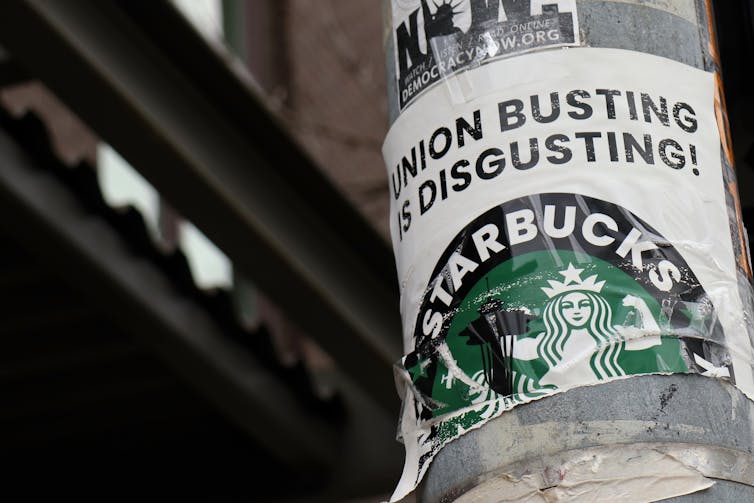
But those arguments mostly ring hollow when the people doing the unionizing are colleagues they work alongside day in and day out.
It has the effect of nullifying that central argument of anti-union campaigns despite the many millions of dollars that companies often pumped into them.
An unfavorable legal landscape
This “self-organization” is consistent with what was envisioned by the authors of the 1935 Wagner Act, the statute that provides the foundation of today’s union representation procedures.
The National Labor Relations Board’s first chair, J. Warren Madden, understood that self-organization could be fatally undermined if corporations were allowed to engage in anti-union pressure tactics:
“Upon this fundamental principle – that an employer shall keep his hands off the self-organization of employees – the entire structure of the act rests,” he wrote.“ Any compromise or weakening of that principle strikes at the root of the law.”
Over the past half century, anti-union corporations and their consultants and law firms – assisted by Republican-controlled NLRBs and right-wing judges – have undermined that process of worker self-organization by enabling union elections to become employer-dominated.
But for the long-term decline in union membership to be reversed, I believe pro-union workers will need stronger protections. Labor law reform is essential if the almost 50% of nonunion American workers who say they want union representation are to have any chance of getting it.
Dispelling fear, futility and apathy
Lack of popular interest has long been an obstacle to labor law reform.
Meaningful labor law reform is unlikely to happen unless people are engaged with the issues, understand them and believe they have a stake in the outcome.
But media interest in the campaigns at Starbucks and Amazon suggests the American public may finally be paying attention.
It isn’t known where this latest labor movement – or moment – will lead. It could evaporate or it may just spark a wave of organizing across the low-wage service sector, stimulating a national debate over workers’ rights in the process.
The biggest weapons that anti-union corporations have in suppressing labor momentum are the fear of retaliation and a sense that unionization is futile. The recent successes show unionizing no longer seems so frightening or so futile.
This is an updated version of an article originally published on April 4, 2022.
John Logan, Professor and Director of Labor and Employment Studies, San Francisco State University
This article is republished from The Conversation under a Creative Commons license. Read the original article.
Call Lake County Animal Care and Control at 707-263-0278 or visit the shelter online at http://www.co.lake.ca.us/Government/Directory/Animal_Care_And_Control.htm for information on visiting or adopting.
The following cats at the shelter have been cleared for adoption.

Female domestic shorthair kitten
This 4-month-old female domestic shorthair kitten has a white coat with gray markings.
She is in kennel No. 13a, ID No. LCAC-A-3878.
Female domestic shorthair kitten
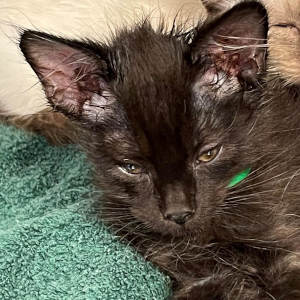
This 3-month-old female domestic shorthair kitten has a black coat.
She is in kennel No. 13b, ID No. LCAC-A-3880.

Female domestic shorthair kitten
This 4-month-old female domestic shorthair kitten has a white coat with blue eyes.
She is in kennel No. 13c, ID No. LCAC-A-3881.

Female domestic shorthair cat
This 2-year-old female domestic shorthair cat has an all-black coat.
Shelter staff said she is a “master greeter.”
“She is very talkative and likes softs pets down her back. She is uncomfortable when being picked up, but is more than happy to come to you, especially for pets,” and has a “chill” attitude, the shelter reported.
She is in cat room kennel No. 32, ID No. LCAC-A-3887.
‘Willow’
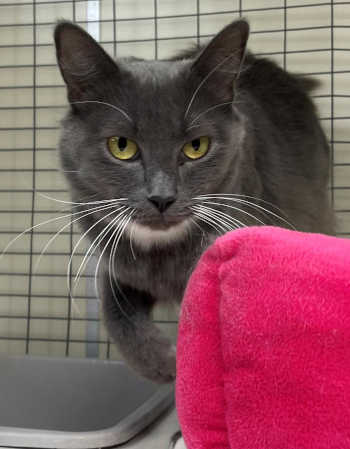
“Willow” is a female domestic shorthair cat with a gray and white coat.
She is in cat room kennel No. 47, ID No. LCAC-A-3762.

Male domestic shorthair kitten
This 4-month-old male domestic shorthair kitten has an all-black coat.
Shelter staff said he is a unique kitten, who is very sweet and playful despite having a limb deformity.
“He can run around and play with all the other kittens and he loves toys and adventure. He will need to be indoor only so he can live his life worry free,” the shelter reported.
He is in cat room kennel No. 62a, ID No. LCAC-A-3877.
Male domestic medium hair kitten
This 3-month-old male domestic medium hair kitten has a black coat.
He is in kennel No. 62b, ID No. LCAC-A-3874.

Male domestic medium hair kitten
This 3-month-old male domestic medium hair kitten has a white coat with blue eyes.
He is in kennel No. 62c, ID No. LCAC-A-3875.
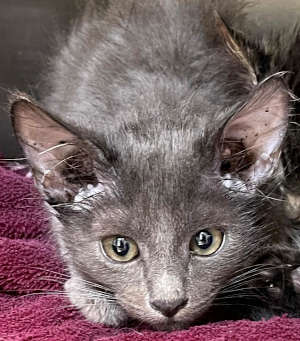
Male domestic medium hair kitten
This 3-month-old male domestic medium hair kitten has a gray coat.
He is in kennel No. 74a, ID No. LCAC-A-3873.
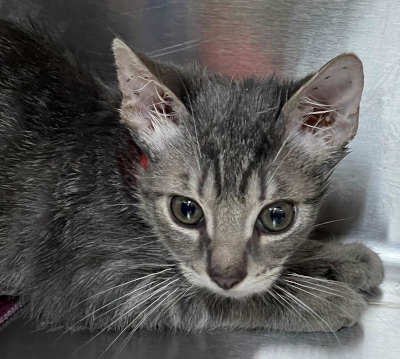
Male domestic medium hair kitten
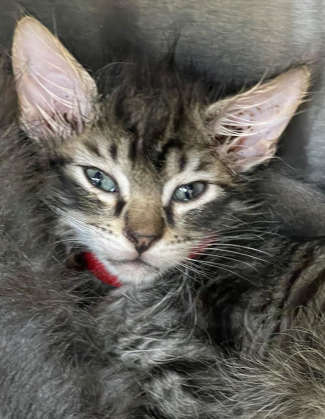
This 3-month-old male domestic medium hair kitten has a gray tabby coat.
He is in kennel No. 74d, ID No. LCAC-A-3876.
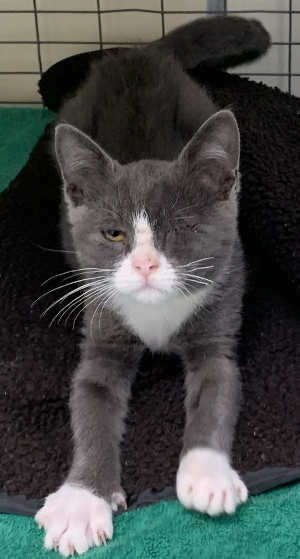
Female domestic shorthair kitten
This female domestic shorthair kitten has a gray coat with white markings.
Shelter staff said she came to them with an injury to one of her eyes and needed to have the eye removed, but that has only made her more eager for head bonks.
“She has the cutest little meow and is a running shelter champion for the ‘best biscuit maker,’” the staff said.
She would be best as an indoor-only cat.
She is in cat room kennel No. 107a, ID No. LCAC-A-3842.

Female domestic shorthair kitten
This 4-month-old female domestic shorthair kitten has a white coat with blue eyes.
She is in kennel No. 107b, ID No. LCAC-A-3882.

Female domestic shorthair kitten
This 4-month-old female domestic shorthair kitten has a white coat with blue eyes.
Shelter staff said she has a stunning Siamese coat, and is sweet and quiet. “She enjoys toys and gentle pets as well as curling up on a fluffy bed.”
She is in kennel No. 107c, ID No. LCAC-A-3889.
Email Elizabeth Larson at
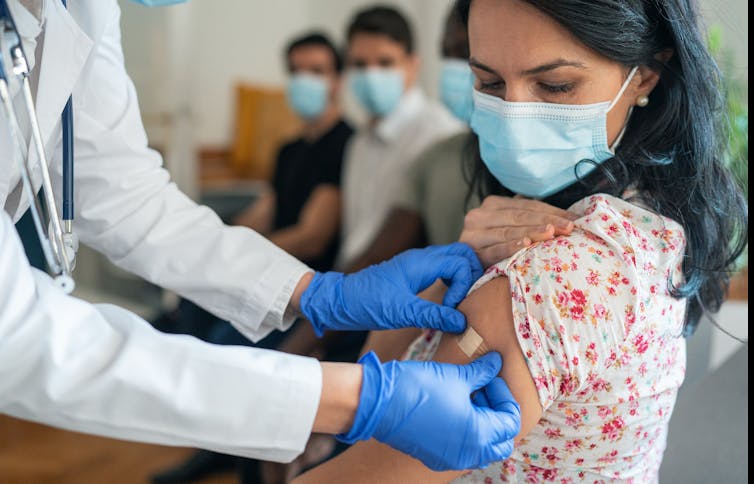
On Sept. 1, 2022, the Centers for Disease Control and Prevention endorsed the use of updated COVID-19 booster shots that are specifically tailored to combat the two most prevalent omicron subvariants, BA.4 and BA.5. The decision comes just a day after the Food and Drug Administration’s emergency use authorization of the shots. The CDC’s backing will enable a full roll-out of the reformulated vaccines to begin within days.
The new booster shots – one by Moderna and another from Pfizer-BioNTech – come as more than 450 people are still dying of COVID-19 every day in the U.S.
As of Aug. 31, 2022, only 48.5% of booster-eligible people in the U.S. have received their first booster shot, and just under 34% of those eligible have received their second. These low numbers may in part be influenced by people waiting for the newer versions of the vaccines to provide better protection. But booster shots have proven to be an essential layer of protection against COVID-19.
Prakash Nagarkatti and Mitzi Nagarkatti are immunologists who study infectious disorders and how vaccines trigger different aspects of the immune system to fight infection. They weigh in on how the updated booster shots train the immune system and how protective they might be against COVID-19.
1. What is different about the updated booster shots?
The newly authorized shots are the first updates to the original COVID-19 vaccines that were introduced in late 2020. They use the same mRNA technology as the original vaccines. The key difference between the original COVID-19 shots and the new “bivalent” version is that the latter consists of a mixture of mRNA that encodes the spike proteins of both the original SARS-CoV-2 virus and the more recent omicron subvariants, BA.4 and BA.5.
As of late August 2022, the BA.4 and BA.5 omicron subvariants are dominant worldwide. In the U.S., currently 89% of COVID-19 infections are caused by BA.5 and 11% are caused by BA.4.
The inability of the original vaccine strains to prevent reinfection and to trigger long-term protective immunity prompted the need for the reformulated vaccines.
2. How does a bivalent vaccine trigger an immune response?
In an actual COVID-19 infection, the SARS-CoV-2 virus uses its protruding spike protein to latch onto human cells and gain entry into cells. The spike protein triggers the production of so-called neutralizing antibodies, which bind to the spike protein and prevent the virus from invading other cells.
But when the virus mutates, as we know that it does, the antibodies that were previously produced in response to the virus can no longer effectively bind to the newly mutated spike protein. In this respect, the SARS-CoV-2 virus acts like a chameleon – a master of disguise – by changing its body configuration and escaping recognition by the immune system.
The ongoing viral mutations are why antibodies produced in response to the original vaccine strains have over time become less effective at fending off infections by new variants.
The concept of bivalent vaccines aimed at protecting against two different strains of a virus is not new. For instance, Cervarix is an FDA-approved bivalent vaccine that provides protection against two different types of human papillomaviruses that cause cancer.
3. How protective will the new shots be against infection?
There are as of yet no human studies on the efficacy of the new bivalent vaccine at preventing reinfections and providing long-term immune protection.
However, in human clinical trials and laboratory studies, both Pfizer-BioNTech and Moderna found that their initial version of the bivalent vaccine, which was directed against the original SARS-CoV-2 virus and an earlier omicron strain, BA.1, induced a strong immune response and longer protection against both the original strain and the BA.1 variant. In addition, the companies reported that the same early combination generated a significant antibody response against the newest omicron subvariants, BA.4 and BA.5, though this antibody response was lower than that seen against subvariant BA.1.
Based on those results, in spring 2022 the FDA rejected the BA.1 bivalent boosters because the agency felt the boosters may fall short of providing sufficient protection against the newest strains, BA.4 and BA.5, which were by then spreading quickly throughout the U.S. and the world. So the FDA asked Pfizer-BioNTech and Moderna to develop bivalent vaccines specifically targeting BA.4 and BA.5, instead of BA.1.
Because clinical trials are time-consuming, the FDA was willing to consider animal studies and other laboratory findings, such as the ability of antibodies to neutralize the virus, to decide whether to authorize the bivalent boosters.
This decision has stirred up controversy over whether it is appropriate for the FDA to approve a booster without direct human data to support it. However, the FDA has stated that millions of people have safely received the mRNA vaccines – which were originally tested in humans – and that the changes in the mRNA sequences in the vaccines do not affect vaccine safety. Thus, it concluded that the bivalent vaccines are safe and that there is no need to wait for human clinical trials.
It is also noteworthy that influenza vaccines are introduced each year based on prediction of the strain that is likely to be dominant, and such formulations do not undergo new clinical trials.
Based on available evidence from the previous COVID-19 vaccines, we believe it is very likely that the new boosters will continue to offer strong protection from severe COVID-19 leading to hospitalization and death. But whether they will protect against reinfection and breakthrough infections remains to be seen.
4. Will it only be a booster shot?
The bivalent vaccines can only be used as a booster shot at least two months after the completion of the primary series – or initial required shots – or following a previous booster shot. The Moderna bivalent vaccine is authorized for use in people 18 years of age, while the Pfizer bivalent vaccine is authorized for those 12 years of age and older.
Because of the superiority of the bivalent vaccines, the FDA has also removed the use authorization for the original monovalent Moderna and Pfizer COVID-19 vaccines for booster purposes in individuals 18 years of age and older and 12 years of age and older, respectively.
The new bivalent vaccines contain a lower dose of mRNA, and as such are meant to be used only as boosters and not in people who have never received a COVID-19 vaccination.
5. Will the new shots protect against future variants?
How well the bivalent vaccines will perform in the face of new variants that might arise will depend on the nature of future spike protein mutations.
If it is a minor mutation or set of mutations when compared to the original strain or to omicron variants BA.4 and BA.5, the new shots will provide good protection. However, if a hypothetical new strain were to possess highly unique mutations in its spike protein, then it’s likely that it could once again dodge immune protection.
On the flip side, the successful development of the updated vaccines demonstrates that the mRNA vaccine technology is nimble and innovative enough that – within a couple of months of the emergence of a new variant – it is now likely possible to develop and distribute new vaccines that are tailor-made to fight an emerging variant.
This article has been updated to reflect the CDC’s endorsement of the reformulated shots.
Prakash Nagarkatti, Professor of Pathology, Microbiology and Immunology, University of South Carolina and Mitzi Nagarkatti, Professor of Pathology, Microbiology and Immunology, University of South Carolina
This article is republished from The Conversation under a Creative Commons license. Read the original article.
From Wilderness Connect, Learn About Wilderness, Fast Facts:
The Beginnings of the National Wilderness Preservation System
“When the Wilderness Act was passed in 1964, 54 areas (9.1 million acres) in 13 states were designated as wilderness. This law established these areas as part of the National Wilderness Preservation System. Since 1964, the NWPS has grown almost every year and now includes 803 areas (111,706,287) in 44 states and Puerto Rico. In 1980, the passage of the Alaska National Interest Lands Conservation Act (ANILCA) added over 56 million acres of wilderness to the system, the largest addition in a single year. 1984 marks the year when the most new wilderness areas were added.
“Overall, however, only about 5% of the entire United States—an area slightly larger than the state of California—is protected as wilderness. Because Alaska contains just over half of America's wilderness, only about 2.7% of the contiguous United States—an area about the size of Minnesota—is protected as wilderness.”
From The American Presidency Project, Proclamation 10248—National Wilderness Month, 2021:
“During National Wilderness Month, we affirm that our Nation's public lands and waters must be accessible to all Americans, we recognize that our lands and waters can revitalize the soul and solidify our respect for the natural wonders that surround us and the earth we share, and we recommit to their preservation and protection, today and for future generations.
“The Wilderness Act, signed into law by President Lyndon B. Johnson in 1964, opened a new chapter in American conservation by creating the National Wilderness Preservation System. The primary goal of the act is to preserve the places "where the earth and its community of life are untrammeled." Today, the National Wilderness Preservation System includes more than 800 wilderness areas spanning more than 111 million acres. These wilderness areas are located within national forests, parks, wildlife refuges, and conservation lands and waters. During the COVID-19 pandemic, many Americans turned to these areas for physical recreation, mental well-being, and inspiration, and our public lands and waters became places of healing and sanctuary.
“But our natural wonders are at risk. Now more than ever, we must come together to combat the climate crisis and unprecedented acceleration of species extinction, to protect and conserve our great outdoors before it is too late.”

LAKE COUNTY, Calif. — A group of Kelseyville residents determined to find ways to protect their communities against wildland fire have formed a new organization that has received an important donation from the district supervisor.
The Konocti Fire Safe Council on Tuesday received a $10,000 donation from District 5 Supervisor Jessica Pyska. The funds came from supervisors’ discretionary cannabis funds.
“For many years now, homeowners associations in the Kelseyville-area communities known as the Rivieras have been showing strong leadership, and working effectively to reduce the risk of wildfire,” Pyska said in a statement issued by the County Administrative Office. “Establishment of the Konocti Fire Safe Council brings valuable coordination to these efforts, and better positions these communities to access grant funding in the future.”
“Everyone in the county, by and large, agrees the Rivieras would be the worst place for a rural fire to occur. There are many homes, with a lot of local fuels, and limited access and firefighting capabilities,” said Konocti Fire Safe Council President Kathy Andre.
Council Treasurer Bill Groody told Lake County News the group officially formed in June, but that it has actually been meeting a year or longer. It grew out of an effort to get a new firehouse in the Soda Bay corridor as a means of lowering insurance rates and increasing response times.
He said that morphed into Measure A, which the Kelseyville Fire Protection District put before voters late last year. In addition to the firehouse, the measure was meant to increase staffing and equipment.
However, the measure failed. As a result, Groody said the new group grew out of community members in four homeowners associations — Clear Lake Riviera, Buckingham, Riviera West and Riviera Heights — asking how they could improve safety conditions in the Soda Bay corridor without the measure.
Thus the Konocti Fire Safe Council was born. In addition to Groody, the board includes President Kathy Andre, Vice President Phil Hartley, and members Cindy Jassar, John Nowell, Rian Sommerfield and Kathy Sylar.
Its coverage area runs along Clear Lake State Park and follows the lakeshore, extends down to Point Lakeview Road then back along Highway 29, up along Kelsey Creek in Kelseyville and Gaddy Lane to the state park. Groody said they also are including the western side of Mount Konocti, where a fire could potentially start and come over the mountain.
Groody said they are trying to bring together not just the four homeowners associations but also representatives from areas outside the associations’ boundaries.
The council seeks to increase community wildfire preparedness and survivability through education, project and resource development, evacuation readiness and hazardous fuel reduction.
When the group formed, Groody said each homeowners association agreed to contribute $1,000 a year. When Pyska saw those and other fundraising efforts were underway, Groody said she offered the discretionary funds. “We’re very thankful for that.”
Thanks to that funding, “We have our core operating expenses taken care of for the next three years,” Groody said, noting they’re operating on a “modest” budget.
That strong financial start will allow them to focus on fundraising and pursuing grants for bigger efforts, he said.

Groody said the group plans to coordinate and work with other community groups and local government agencies to improve wildfire safety around their communities.
He said they are still in the formative stages, getting the group off the ground and preparing to develop a social media presence and website.
They plan to pursue grants and other funding to carry out a number of projects, including working on evacuation routes, Groody said, and removing brush and dead tree clearing along the Soda Bay corridor, which are critical.
The situation on Soda Bay road is very urgent with regard to clearing, he said.
They’ve looked at options for brush clearing, including goats. “Every goat that’s available is out there eating now,” Groody said.
They also want to identify the 100 most hazardous trees in the area in order to have them removed. Groody pointed out that the board, at the request of Pyska, declared a tree mortality emergency.
He pointed out that in the past two and a half weeks there have been three fires in the council’s coverage area.
“The urgency is there,” he said.
The No. 1 priority, said Groody, is coordinating to use grant funds given to the county by Cal Fire to improve Soda Bay Road as an evacuation route.
“I think we’re going to be heavily involved in working on this evacuation plan,” he said.
With the county being short-staffed, Groody said the homeowners’ associations may end up being fiscal agents to help move that project along.
They’re also looking at ways to free up some of the assessment funding covering Clear Lake Riviera, Buckingham, Riviera West and Riviera Heights, as well as lots adjacent to them within County Service Area No. 23 that went into effect in 2019.
The one-time assessment, the proceeds of which were meant to be used for vegetation management, followed approval by voters in the associations and the Board of Supervisors based on a plan put forward by then-District 5 Supervisor Rob Brown.
To reach the council, email
Email Elizabeth Larson at