 How to resolve AdBlock issue?
News

A new paper reviews past earthquakes to better understand potential future risks.
The San Andreas may be the most well-known fault in California, but no one alive today experienced its most recent significant earthquake that ruptured 116 years ago.
The Great San Francisco Earthquake struck at 5:12 a.m. local time on April 18, 1906. The magnitude 7.9 quake caused shaking that lasted up to 60 seconds and sent vibrations all the way to southern Oregon, Los Angeles, and central Nevada. The earthquake and subsequent fires killed an estimated 3,000 people and left half of the city’s 400,000 residents homeless.
Researchers study older significant earthquakes like this one to better understand how frequently they strike on a fault. Although no one can predict when an earthquake will occur, scientists can better assess seismic hazards by calculating the probability of a ground-rupturing earthquake occurring in a specific area within a certain number of years.
Considering the historical average rate of large earthquakes on some faults in California, including the San Andreas, the odds that there hasn’t been a major earthquake in the last 116 years are very low.
In a new publication, USGS geologist Devin McPhillips studied sites along three faults in California with long histories of earthquakes to better understand what’s happening.
“The wait between earthquakes might be longer than we previously thought because the evidence for older earthquakes isn’t always 100% accurate,” McPhillips said. “If some of these older earthquakes are misidentified, then the long wait we are currently experiencing might be more typical.”
It's California's fault
The San Andreas Fault first captured the world’s attention on that fateful April day 116 years ago when it ruptured along the northernmost 296 miles (477 km) of the 800 mile- (1300 km) long fault that marks where the Pacific plate slides by the North American plate.
The relative movement along the fault varied from 2 to 32 feet (0.5 m to 9.7 m), which means if two people were standing on opposite sides of the fault, in some places one would slide away from each other by up to 32 feet from the other. In southern California, the last rupture of the San Andreas Fault occurred in 1857.
Geologists find that the total accumulated displacement from earthquakes (sudden fault movement) and creep (steady fault movement) is at least 350 miles (560 km) along the San Andreas fault since it came into being about 15 to 20 million years ago.
In addition to the San Andreas Fault, McPhillips also studied two additional sites on the Hayward and San Jacinto faults.
The Hayward Fault’s most recent damaging earthquake was more than 150 years ago. USGS scientists have found evidence for 12 quakes on the southern Hayward Fault during the past 1,900 years. Notably, the last six quakes (from 1134 to 1868) occurred at intervals of 95 to 183 years, with an average interval of about 150 years.
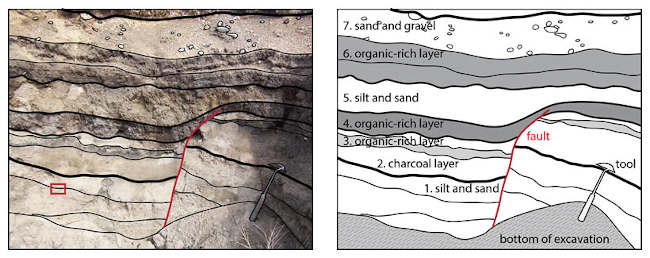
Using past clues to understand future earthquakes
Whenever an earthquake happens, it leaves telltale signs that eventually get buried or imprinted into outcrops and other geologic formations. For instance, fault scarps (when a side of a fault has moved vertically with respect to the other), offset or folded layers of sediment and soil, and parts of the landscape that have been tilted, uplifted, or torn apart are all signs of an ancient earthquake.
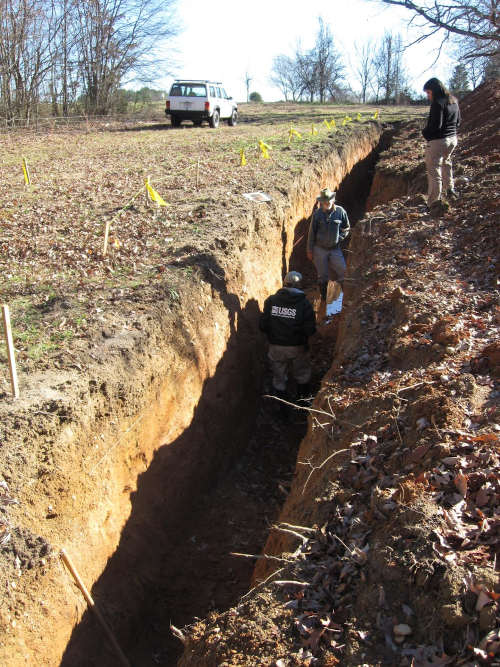
For the most part, researchers only see evidence for earthquakes above magnitude 6, because smaller quakes don’t typically leave behind evidence. To expose what happened, researchers can dig trenches along a fault. Inside a trench, they can see when and how frequently an earthquake hit that spot.
They tally how many past earthquakes they see and determine the number of years separating each earthquake. Those numbers help them determine a recurrence interval, which is the average time between earthquakes at the same site along a fault.
McPhillips calculated recurrence intervals for sites on the San Andreas, Hayward, and San Jacinto faults. He also refined some calculations of recurrence intervals to consider whether past earthquakes were correctly interpreted as unique earthquakes.
“Some trench sites can have 10 or more records of past earthquakes and recurrence intervals are usually a little over 100 years,” McPhillips said. “But we aren’t 100% confident on what we’re inferring about past earthquakes.”
At the Thousand Palms paleoseismic site in Southern California, the 97.5% confidence interval changes from 455 years to 1431 years when event likelihoods are considered. Event likelihood is the probability that the evidence has been correctly interpreted as a unique earthquake. “When we acknowledge that not all inferred past earthquakes are real and unique, the range of likely recurrence intervals can get much wider,” McPhillips said.
He incorporated the uncertainty into his research to better understand how it can affect recurrence intervals for various sites, including the one in Thousand Palms. Having more accurate recurrence intervals can bolster the Unified California Earthquake Rupture Forecast, which is a comprehensive model of earthquake occurrences for California.
“Anytime we can improve our earthquake models and data, we give people more confidence in our forecasts to better understand potential hazards,” McPhillips said.
More information on the paper is available here.
Dogs available for adoption this week include mixes of Doberman pinscher, German shepherd, Great Pyrenees, hound, husky, pit bull, Rottweiler, shepherd, treeing walker coonhound and Yorkshire terrier.
Dogs that are adopted from Lake County Animal Care and Control are either neutered or spayed, microchipped and, if old enough, given a rabies shot and county license before being released to their new owner. License fees do not apply to residents of the cities of Lakeport or Clearlake.
The following dogs at the Lake County Animal Care and Control shelter have been cleared for adoption.
Call Lake County Animal Care and Control at 707-263-0278 or visit the shelter online for information on visiting or adopting.

Female pit bull terrier
This 2-year-old female pit bull terrier has a black and white coat.
Shelter staff said she is a gentle girl with a loving personality who came into the shelter needing some tender loving care.
She is in kennel No. 9, ID No. LCAC-A-3856.

Male pit bull terrier
This 1-year-old male pit bull terrier has a gray and white coat.
Shelter staff said is a playful young dog who does well on a leash and loves fetch. He will benefit from training.
He is in kennel No. 10, ID No. LCAC-A-3855.

Male Rottweiler-shepherd mix
This male Rottweiler-shepherd mix puppy has a short black and tan coat.
“This little pup is shy when meeting new people, but with the right toy and some TLC he warms up and shows some true puppy spirit,” shelter staff reported.
He is in kennel No. 13, ID No. LCAC-A-3851.

Male hound mix puppy
This 6-month-old male hound mix puppy has a short brindle coat.
Shelter staff said he is very playful with a lot of energy, and he loves toys. “He is extremely treat motivated and has shown he is eager to learn all the cool tricks you could teach him.”
He is in kennel No. 15, ID No. LCAC-A-3916.

Female treeing walker coonhound-Doberman pinscher puppy
This 2-month-old female treeing walker coonhound-Doberman pinscher has a short tan coat.
She is in kennel No. 16a, ID No. LCAC-A-3924.

Female treeing walker coonhound-Doberman pinscher puppy
This 2-month-old female treeing walker coonhound-Doberman pinscher has a short tan coat.
She is in kennel No. 16b, ID No. LCAC-A-3925.

Female treeing walker coonhound-Doberman pinscher puppy
This 2-month-old female treeing walker coonhound-Doberman pinscher has a short tan coat.
She is in kennel No. 16c, ID No. LCAC-A-3926.

Female treeing walker coonhound-Doberman pinscher puppy
This 2-month-old female treeing walker coonhound-Doberman pinscher has a short tan coat.
She is in kennel No. 16d, ID No. LCAC-A-3927.

Male treeing walker coonhound-Doberman pinscher puppy
This 2-month-old male treeing walker coonhound-Doberman pinscher has a short tricolor coat.
He is in kennel No. 17a, ID No. LCAC-A-3921.

Male treeing walker coonhound-Doberman pinscher puppy
This 2-month-old male treeing walker coonhound-Doberman pinscher has a short tan and white coat.
He is in kennel No. 17b, ID No. LCAC-A-3922.

Male treeing walker coonhound-Doberman pinscher puppy
This 2-month-old male treeing walker coonhound-Doberman pinscher has a short tricolor coat.
He is in kennel No. 17c, ID No. LCAC-A-3923.
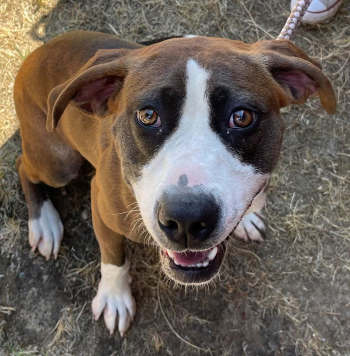
Female hound mix
This 1-year-old female hound mix has a short brown and white coat.
Shelter staff said she loves to be around people and will show you the true meaning of a lap dog. She enjoys toys and walks well with a leash.
He is in kennel No. 19, ID No. LCAC-A-3766.

Female treeing walker coonhound
This young female treeing walker coonhound has a short black brindle coat.
She is in kennel No. 22, ID No. LCAC-A-3776.

Female German shepherd
This 1-year-old female German shepherd has a short black and tan coat.
She is in kennel No. 24, ID No. LCAC-A-3780.
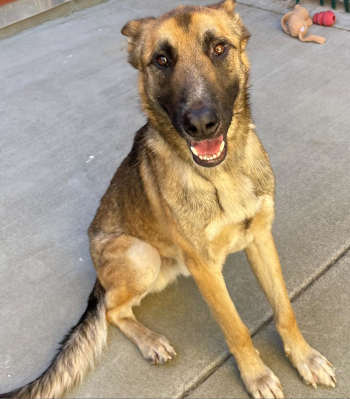
Male German shepherd
This 2-year-old male German shepherd has a black and tan coat.
Shelter staff called him a “handsome sweet dude who is motivated by treats and does well walking on a leash.
He is in kennel No. 25, ID No. LCAC-A-3870.
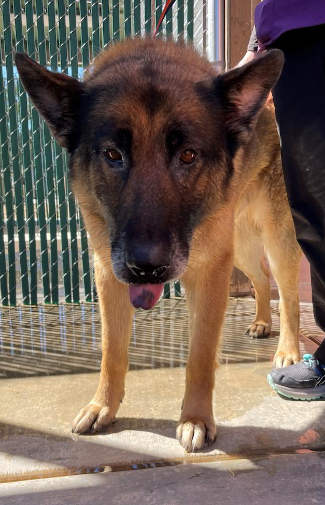
Male German shepherd
This 3-year-old male German shepherd has a black and tan coat.
He is in kennel No. 26, ID No. LCAC-A-3929.

Female husky
This 1-year-old female husky has a cream and black coat.
She is in kennel No. 27, ID No. LCAC-A-3893.

Male Yorkshire terrier
This 2-year-old male Yorkshire terrier has a long black and tan coat.
He is in kennel No. 29, ID No. LCAC-A-3950.

‘Poppy’
“Poppy” is a 4-month-old female Great Pyrenees with a short white and gray coat.
She is in kennel No. 30, ID No. LCAC-A-3790.

Male German shepherd
This 1-year-old male German shepherd has a black and tan coat.
He is in kennel No. 31, ID No. LCAC-A-3930.

‘Piper’
“Piper” is a young female Great Pyrenees with a short white coat.
She is in kennel No. 34, ID No. LCAC-A-3789.
Email Elizabeth Larson at

For almost three years, scientists have raced to understand the immune responses in patients who develop severe COVID-19, with an enormous effort aimed at defining where healthy immunity ends and destructive immunity begins.
In the early days of the COVID-19 pandemic, much attention focused on reports of harmful inflammation and so-called cytokine storms – dangerous immune overreactions that can lead to tissue damage and death – in patients with severe COVID-19. It wasn’t long before researchers began to identify antibodies that target the patient’s own body rather than attacking SARS-CoV-2, the virus the causes COVID-19.
Those studies revealed that patients with severe COVID-19 share some of the key traits of chronic autoimmune diseases – diseases in which the patient’s immune systems chronically attack their own tissues. Scientists have long suspected and sometimes even documented links between viral infection and chronic autoimmune diseases, but the research remains murky. However, the COVID-19 pandemic has offered an opportunity to better understand potential connections between these conditions.
As an immunologist and member of an interdisciplinary team of physicians and scientists investigating the intersection between COVID-19 and autoimmunity, I have been working to understand the origins of these untamed antibody responses and their long-term effects. Led by Ignacio Sanz, a specialist in investigating the immune dysfunctions that underlie autoimmune diseases like lupus, our group has long suspected that these misdirected immune responses may follow patients well after recovery and could even contribute to the debilitating set of symptoms commonly referred to as “long COVID-19.”
Our new study, published in the journal Nature, helps shed light on these questions. We now know that in patients with severe COVID-19, many of the developing antibodies responsible for neutralizing the viral threat are simultaneously targeting their own organs and tissues. We also show that self-directed antibodies can persist for months or even years in those suffering from long COVID-19.
As researchers like us continue to study COVID-19, our understanding of the link between antiviral immunity and chronic autoimmune disease is rapidly evolving.
The immune system makes mistakes when under duress
It’s easy to assume that your immune system is laser-focused on identifying and destroying foreign invaders, but that isn’t the case – at least under some circumstances. Your immune system, even in its healthy state, contains a contingent of cells that are fully capable of targeting and destroying your own cells and tissues.
To prevent self-destruction, the immune system relies on an intricate series of fail-safes that are collectively termed self-tolerance to identify and eliminate potentially traitorous immune cells. One of the most important steps in this process occurs as the immune system builds up its arsenal against a potential threat.
When your immune system first encounters a pathogen or even a perceived threat – such as a vaccine that resembles a virus – it rapidly recruits “B” cells that have the potential to become antibody-producers. Then, any of these “naive” B cell recruits – naive being a technical term used in immunology – that demonstrate an ability to competently attack the invader are put into a boot camp of sorts.
Here, the cells are trained to better recognize and combat the threat. The training period is intense and mistakes are not tolerated; B cells with any discernible potential for misdirected attacks against their host are killed. However, like any training process, this buildup and mobilization takes time – typically a week or two.
So, what happens when the threat is more immediate – when someone is quite literally fighting for their life in an intensive care unit?
Researchers now know that under the stress of severe viral infection with SARS-CoV-2, that training process collapses. Instead, it is replaced by an emergency response in which new recruits with little training are rushed into battle.
Friendly fire is the unfortunate result.
High-risk immune responses are mostly transient
Our team’s new work reveals that in the heat of battle with severe COVID-19, the same antibodies responsible for fighting the virus are uncomfortably prone to targeting a patient’s own tissue. Importantly, this effect seems mostly restricted to severe disease. We identified the cells that produce these rogue antibodies much less frequently in patients with mild forms of the illness whose immune responses were more measured.

So, does that mean that everyone who gets severe COVID-19 develops an autoimmune disorder?
Fortunately, no. By following patients after their infection has resolved, we have found that months later, most of the concerning indications of autoimmunity have subsided. And this makes sense. Though we are identifying this phenomenon in human COVID-19, researchers studying these emergency immune responses for more than a decade in mice have determined that they are mostly short-lived.
“Mostly” being the operative word.
Implications for recovery from long COVID-19
Although most people fully recover from their run-in with the virus, up to 30% have not returned to normal even three months after recovery. This has created a group of patients who are experiencing what is known as post-acute sequelae of COVID-19, or PASC – the technical terminology for long COVID-19.
With debilitating symptoms that can include the long-term loss of taste, smell or both, general fatigue, brain fog and a variety of other conditions, these patients have continued to suffer and are rightfully looking for answers.
An obvious question for researchers who are studying these patients is whether the same self-targeted antibodies that are emerging in severe COVID-19 are lingering in those who suffer from long COVID-19. They are. Our new study makes clear that newly developed self-antibodies can persist for months. What’s more, in work currently under development and not yet peer-reviewed, we find that these responses are not restricted to those recovering from severe illness, and are readily identifiable in a large subset of long COVID-19 patients who had recovered from more mild illness as well.
Just as it was in the race to better understand the causes of acute disease earlier in the pandemic, we researchers are now working to get a more complete understanding of the cells and antibodies directing this self-attack for months and years following the resolution of infection.
Are they directly contributing to the symptoms long COVID-19 sufferers are experiencing? If so, are there therapeutic interventions that could blunt or eliminate the threats they pose? Are long COVID-19 patients at increased risk for the development of true, chronic autoimmune diseases in the future? Or, is all of this just a red herring – a temporary quirk of the immune system that will resolve on its own?
Only time and continued work in this critical area will tell.
Matthew Woodruff, Instructor of Human Immunology, Emory University
This article is republished from The Conversation under a Creative Commons license. Read the original article.
What's Up for September? Mars on the move, prime viewing time for Jupiter, and a clever way to find your bearings on the equinox.
You'll find Mars hanging out high in the south on September mornings before sunrise.
Early in the month, it's near orange-colored Aldebaran, the eye of Taurus the bull. And over the course of the month, Mars works its way eastward from Aldebaran toward reddish Betelgeuse, creating a sort of "red triangle" in the morning sky.
Then the Red Planet will appear to hit the brakes and halt its eastward motion, to hang out in that triangle for the next month or so. (We'll talk about what's going on there in our October video…)
On the morning of the 11th, before sunrise, you'll find the Moon just a couple of finger-widths from Jupiter on the sky, making for a great viewing opportunity to observe them together through binoculars.
Jupiter's at opposition this month, making it visible all night under clear skies. And it's around this time when the planet's at its biggest and brightest for telescope viewing. But a pair of binoculars is enough to reveal the giant planet's four large moons as little starlike points of light next to Jupiter.
And this month, NASA's Jupiter-orbiting Juno spacecraft is slated to make a special, fast flyby of one of those icy moons, Europa, on the 29th. The spacecraft is planned to pass a little over 200 miles above the moon's surface, returning images and science data. And NASA is currently preparing its Europa Clipper spacecraft for launch in 2024.
It's planned to make dozens of close flybys of Europa to investigate whether the moon could have conditions suitable for life.
Turning to the evening sky, you'll have Saturn together with Jupiter as your planetary companions all month long. On the night of Sept. 9, Jupiter and Saturn escort the Moon across the sky.
You'll find the trio rising in the southeast in the first couple of hours after dark, and gliding westward together over the course of the night.
By the end of the month, you'll find the pair of planets is rising even earlier, appearing in the east soon after it gets dark, with bright Jupiter hanging low in the sky.
Sept. 23 brings the September equinox, which marks the start of fall in the Northern Hemisphere, and the start of spring in the Southern Hemisphere.
The equinoxes occur twice per year, when Earth's tilt with respect to the Sun is the same for both hemispheres. Both north and south receive the same amount of sunlight, and day and night are, briefly, of nearly equal length.
And, get this: if you take note of exactly where the Sun appears to rise and set on the equinoxes, those points mark the locations of due east and due west, respectively.
And that's something useful to know for skywatchers, whatever hemisphere you happen to live in. So take note of any buildings, tall trees, lampposts, and the like at those places on the horizon, and you can use them to find your bearings when looking skyward all year long.
Here are the phases of the Moon for September. Stay up to date with all of NASA's missions to explore the solar system and beyond at www.nasa.gov.
Preston Dyches works for NASA's Jet Propulsion Laboratory.
“The California Coastal Commission’s Coastal Cleanup Day and Caltrans’ Let’s Change This to That stormwater public education campaign are collaborating to create even more awareness to help reduce litter and water pollution,” said Caltrans Director Tony Tavares. “We’re asking people to join us this month to clean up the waterways and beaches that belong to us all.”
Caltrans and the California Coastal Commission invite Californians to participate by cleaning up their neighborhoods, parks and local areas during the month of September.
The monthlong effort is focused not only on the coastline but also along rivers, creeks and lakes.
Trash from inland areas can flow downstream, so cleaning up neighborhoods can prevent litter and debris from ever reaching vital waterways.
“We are excited to expand our long-standing partnership with Caltrans this year,” said California Coastal Commission Executive Director Jack Ainsworth. “By emphasizing the impact trash can have on stormwater and the potential for that litter to eventually pollute our waterways, our two agencies are working together to emphasize that these waterways, like the ocean, are downhill from all of us.”
Del Norte, Humboldt, Mendocino and Lake County residents who want to join the cleanup effort can participate in these local events:
• Clear Lake Shoreline near Lakeport from 9 a.m. to noon on Sept. 17.
• Halvorsen Park in Eureka from 11 a.m. to 1 p.m. on Sept. 10.
• Glass Beach near Fort Bragg from 9 a.m. to noon on Sept. 17
• South Beach in Crescent City from 9 a.m. to noon on Sept. 17.
• Houda Point in Trinidad from 9:30 a.m. to noon on Sept. 25.
• Moonstone Beach in Trinidad from 9:30 a.m. to noon on Sept. 25.
• Arcata Marsh and Wildlife Sanctuary from 10 a.m. to 1 p.m. on Sept. 25.
• These cleanups listed by the North Coast Environmental Center.
A map of events throughout the state is available on the Coastal Cleanup Day website, and information is updated regularly as events are confirmed.
In 1993, California Coastal Cleanup Day was recognized by the Guinness Book of World Records as the “largest garbage collection” ever organized, with more than 50,000 volunteers.
Since then, the reach of Coastal Cleanup Day has steadily spread inland, where most of the debris found on California’s beaches starts as urban trash or litter.
Established by voter initiative in 1972, the California Coastal Commission is committed to protecting and enhancing California’s coast and ocean for present and future generations. It does so through careful planning and regulation of environmentally sustainable development, rigorous use of science, strong public participation, education and effective intergovernmental coordination.
Let’s Change This to That is a three-year public education campaign led by Caltrans to raise awareness and increase understanding of the sources and pathways of stormwater pollution throughout California.
The campaign provides resources for people who live, work and play in California’s unique communities to spur behavior change in ways that lead to improved water quality.
For more information about the campaign, please visit https://cleancalifornia.dot.ca.gov/water.
“In the wealthiest country on earth, no one should go bankrupt when receiving health care. For too long, Americans have been forced to choose between putting food on the table or going to the doctor,” said Thompson. “With the Inflation Reduction Act signed into law, our community is going to see lower health care costs from lower premiums and prescription drug costs.”
The Inflation Reduction Act benefits the district with:
Affordable Health Care
By extending critical tax credits set to expire this year, the Inflation Reduction Act will help 28,734 people in the district currently enrolled in subsidized marketplace health insurance coverage through the Affordable Care Act save an average of $1,379 in premiums starting next year.
Lower prescription drug costs
The Inflation Reduction Act caps Medicare beneficiaries’ annual out-of-pocket costs for prescription drugs covered by Medicare Part D at $2,000 per year starting in 2025. An estimated 2,000 Medicare Part D beneficiaries in our district had out-of-pocket costs above $2,000 in 2020.
For the estimated 5,800 Medicare beneficiaries receiving insulin in our district, the new law will cap monthly copayments for insulin products at $35 per month.
The Inflation Reduction Act allows the government to negotiate lower drug prices. If the Inflation Reduction Act’s drug pricing provisions had been fully in effect in 2020:
• The total cost of prescriptions filled by Medicare beneficiaries in our district could have been $24 million lower.
• Medicare beneficiaries in our district could have saved a total of $7 million in reduced premiums and out-of-pocket costs.
The report on benefits of the Inflation Reduction Act health coverage provisions for the district can be found here.
The report on benefits of the Inflation Reduction Act Medicare drug pricing provisions for our district can be found here.