 How to resolve AdBlock issue?
News
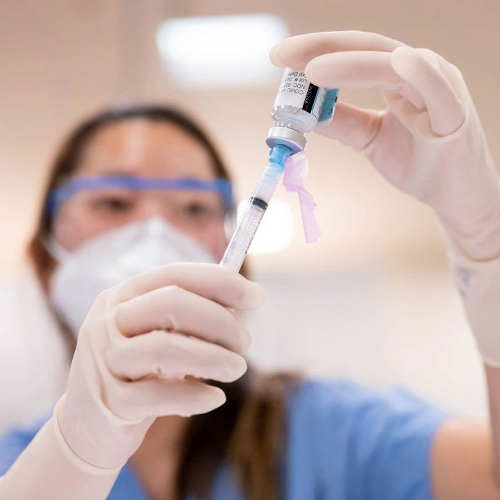
Last month new booster vaccines made by Moderna and Pfizer became available. They are called “bivalent,” because they protect against currently circulating Omicron variants as well as earlier strains of the SARS-CoV-2 virus that causes COVID-19.
Boosters reduce the likelihood of becoming infected with Omicron, and they also reduce the likelihood of hospitalization and death should one become infected despite vaccination.
To learn more about the new booster vaccines and the prospects for gaining the upper hand against COVID-19, we spoke to Joel Ernst, MD, a UCSF professor of medicine whose research aims to understand how pathogens evade the immune system.
Which COVID-19 virus variants are the new vaccines designed to fight?
Each vaccine has a fifty-fifty mix of the virus’s spike protein from the original Wuhan strain of the virus that was used for the earlier vaccines and a spike protein segment from the Omicron BA4 and BA5 variants responsible for the most recent surge, and for most new U.S. cases today.
How soon after vaccination does the booster offer its strongest protection, and how long will protection last?
The booster ramps up to a high level of protection in about a week – faster than a first-vaccine dose – and surely within two weeks. We’re not sure how long the new booster will be protective, but it will likely act like earlier boosters, providing optimal protection for two-to-four months, good protection for four-to-six months, and less protection, but still some, after six months.
Should people who received a monovalent booster recently wait awhile before receiving the bivalent vaccine designed to also fight these Omicron variants?
It’s appropriate to wait at least two months from the time of the previous booster, but many people may choose to wait four months, as a previous booster is likely to offer sufficient protection to greatly reduce risk of severe infection for four months.
VACCINES AND LONG COVID
Do we know anything about the added protection provided by the bivalent booster in terms of risks for infection, transmission, serious disease or long COVID?
It’s too early to know about any of those types of protection. What’s known so far is that the new bivalent boosters increase the immune system’s antibody responses to the BA4 and BA5 Omicron variants far beyond responses seen with the earlier monovalent vaccine. Even though we don’t have data on infection and serious disease, we have reason to believe from the antibody responses that the new vaccine will provide greater protection against these newer variants.
If I was infected with an Omicron variant already, should I still get this new booster?
Yes, some people have become reinfected. However, it’s recommended to wait two months since the last symptomatic infection before getting a booster. Some protective COVID-virus-targeting T cells and antibody-producing B cells remain after infection ends, but they need time to readjust and reset their metabolism before they can respond optimally to a booster vaccine.
NEW OMICRON VARIANTS
Another highly transmissible mutant Omicron strain of COVIID-19, called BA2.75.2, is rapidly becoming dominant in India, and has shown up in several other countries around the globe. Do you think this strain poses a threat for another pandemic surge in the United States or elsewhere? Is it known how likely that strain is to cause serious disease, and should we expect the bivalent vaccine to offer any protection?
The answers to all those questions are still outstanding. I am concerned about it. But there have been other variants that have emerged and spread widely in one country or another and then never made it very far. There’s reason to believe that the new vaccine will be more effective than the old vaccine against that new strain. It’s been hard to accurately predict which variants will spread, but from a public health perspective, it’s important to conduct surveillance and to genetically sequence the virus to detect the arrival of new variants and to track changes in variant prevalence.
No human data for the new Omicron vaccines were presented for review prior to approval. Do you have any concerns that potential risks of vaccination might be underestimated?
I don’t think there is any reason to think that these new vaccines will pose any risks beyond what we have already seen with the original vaccines. The total dose of RNA in the new vaccines is the same as in the earlier vaccines. Serious side effects are extremely rare, and benefits exceed risks.
What about the risk of myocarditis?
There have been quite a few studies with the earlier vaccines, which indicate that there is one case of myocarditis per 100,000 to 200,000 people vaccinated. The risk is small, but not zero. The risk is consistently higher in males under age 40. Except in exceedingly rare cases, vaccine-associated myocarditis cases have been transient – people recover. Studies indicate that incidence of myocarditis among people infected with SARS-CoV-2 is much higher than incidence due to vaccination.
Booster and Flu Shots Together
If I get my Omicron booster right away, should I get a flu shot at the same time, or is there a better time to get the flu shot to avoid interactions and to obtain maximum protection during flu season?
It’s fine to save a trip and get both at the same time. If you anticipate being uncomfortable with symptoms that arise as your immune system responds to either of the vaccinations, you might want to get them at different times. Maybe it’s on the early side, but September or October is not too soon for a flu shot. We never know for sure when the flu season is going to hit.
Will COVID ever go away?
My answer is that I am optimistic that the pandemic is going to recede into the background, even if it is unlikely to go away. I think the virus will mutate to a point where it doesn’t make people as sick as it did early on, and our immunity will continue to increase.
Jeff Norris writes for the UCSF News Center.

NASA recently crashed a spacecraft into an asteroid in an attempt to push the rocky traveler off its trajectory. The Double Asteroid Redirection Test – or DART – was meant to test one potential strategy for preventing an asteroid from colliding with Earth. The collision occurred on Sept. 27, 2022, and on Oct. 11, 2022, NASA announced that the mission had successfully changed the orbit of the asteroid Dimorphos. David Barnhart is a professor of astronautics at the University of Southern California and director of the Space Engineering Research Center there. He watched NASA’s live stream of the successful mission and explains what happened.
1. What do the images from DART show?
The first images, taken by a camera aboard DART, show the double asteroid system of Didymos – about 2,500 feet (780 meters) in diameter – being orbited by the smaller asteroid Dimorphos, which is about 525 feet (160 meters) long.
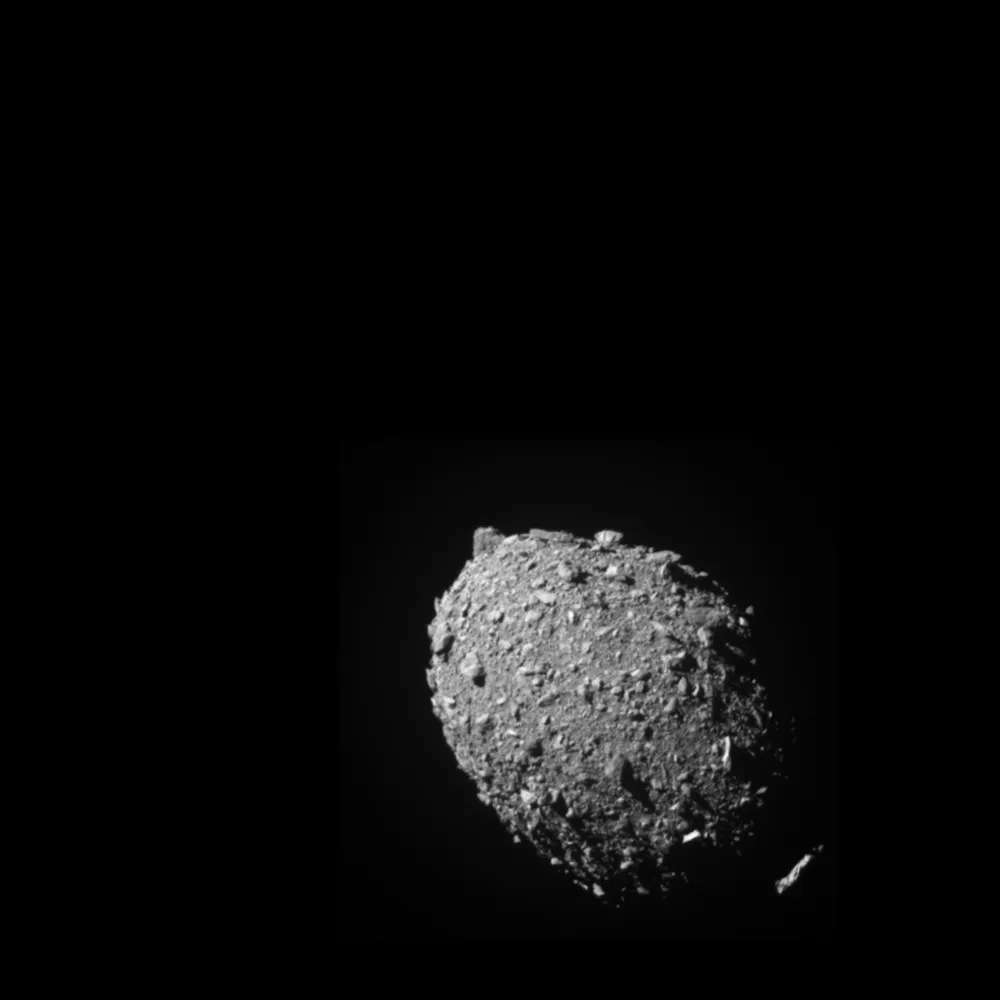
As the targeting algorithm on DART locked onto Dimorphos, the craft adjusted its flight and began heading toward the smaller of the two asteroids. The image taken at 11 seconds before impact and 42 miles (68 kilometers) from Dimorphos shows the asteroid centered in the camera’s field of view. This meant the targeting algorithm was fairly accurate and the craft would collide right at the center of Dimorphos.

The second-to-last image, taken two seconds before impact, shows the rocky surface of Dimorphos, including small shadows. These shadows are interesting because they suggest that the camera aboard the DART spacecraft was seeing Dimorphos directly on but the Sun was at an angle relative to the camera. They imply the DART spacecraft was centered on its trajectory to impact Dimorphos at the moment, but it’s also possible the asteroid was slowly rotating relative to the camera.

The final photo, taken one second before impact, only shows the top slice of an image, but this is incredibly exciting. The fact that NASA received only part of the image suggests that the shutter took the picture but DART, traveling at around 14,000 mph (22,500 kph), was unable to transmit the complete image before impact.
2. What was supposed to happen?
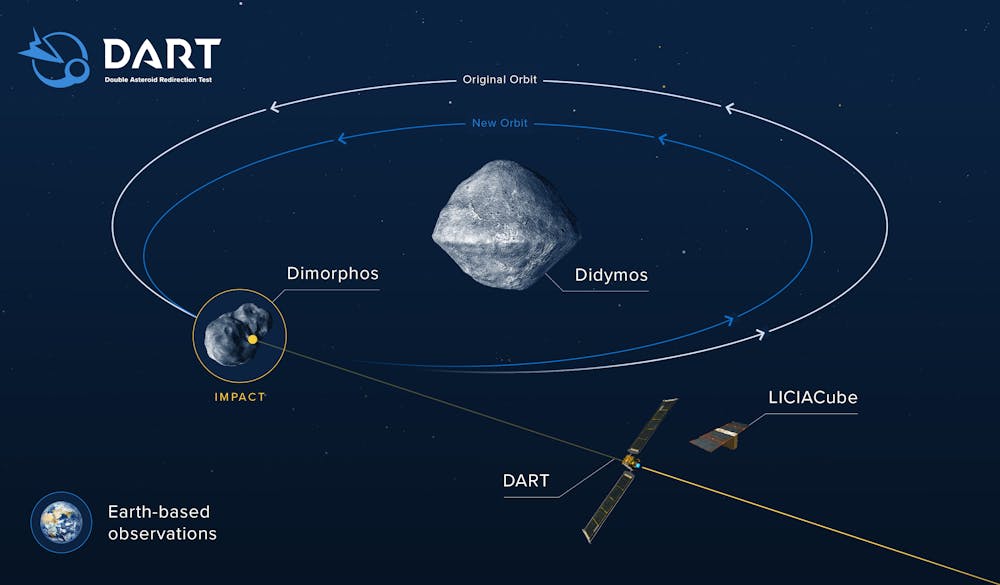
The point of the DART mission was to test whether it is possible to deflect an asteroid with a kinetic impact – by crashing something into it. NASA used the analogy of a golf cart hitting the side of an Egyptian pyramid to convey the relative difference in size between tiny DART and Dimorphos, the smaller of the two asteroids. Prior to the test, Dimorphos orbited Didymos in just under 12 hours. NASA expects the impact to shorten Dimorphos’ orbit by about 1%. Though small, if done far enough away from Earth, a nudge like this could potentially deflect a future asteroid headed toward Earth just enough to prevent an impact.

3. Did it work?
The last bits of data that came from the DART spacecraft right before impact showed that it was on course. The fact that the images stopped transmitting after the target point was reached was the first sign of success.
Fifteen days before the impact, DART released a small satellite with a camera that was designed to document the entire impact. The small satellite has been sending photos of the impact back to Earth during early October 2022. A number of Earth-based telescopes as well as some satellites in orbit, including Hubble and James Webb, were watching Didymos at the time of the impact as well.
Using data from these telescopes taken at the time of impact as well as over the following weeks, the DART team at NASA has been able to calculate just how much the impact deflected the orbit of Dimorphos. Before DART, it took 11 hours and 55 minutes for the smaller moonlet to orbit the larger asteroid Didymos. The energy from the impact shortened Dimorphos’s orbit by 32 minutes – showing the impact to be more than 25 times more effective than NASA’s conservative goal of 72 seconds.
4. What does the test mean for planetary defense?
I believe this test was a great proof-of-concept for many technologies that the U.S. government has invested in over the years. And importantly, it proves that it is possible to send a craft to intercept with a minuscule target millions of miles away from Earth and change its orbit. DART has been a great success.
Over the course of the next months and years, researchers will learn just how efficient the impact was – and most importantly, whether this type of kinetic impact can actually move a celestial object ever so slightly at a great enough distance to prevent a future asteroid from threatening Earth.
This is an updated version of a story first published on Sept. 27, 2022.
David Barnhart, Professor of Astronautics, University of Southern California
This article is republished from The Conversation under a Creative Commons license. Read the original article.
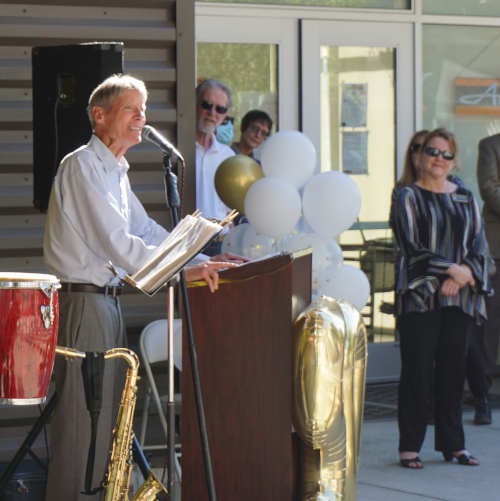
CLEARLAKE, Calif. — Faculty, staff, students and supporters came together on Thursday to celebrate five decades of educational opportunities that have grown and blossomed at the Lake County Campus of Woodland Community College.
On the warm and sunny fall afternoon, there were reunions, food, music and memories of how the campus has helped shape and shift young people from challenging backgrounds into meaningful careers and lives that contribute to the larger community.
The campus began in 1972 as the Lake County Center of Yuba College, which offered classes at Konocti Harbor Inn in Kelseyville before moving to the Clearlake location in 1974, at which time the first buildings were constructed.
Today, the Lake County Campus sits on nearly 13 acres in Clearlake. In 2012, new bond-funded facilities were completed and dedicated, including the library; student services center; biology, chemistry and early childhood education classrooms; and Aromas Restaurant and its state-of-the-art kitchen and dining room.
The campus has gone through several name changes in the intervening years. In 1990, it was changed from the Lake County Center of Yuba College to the Lake County Campus. In 2000, it was renamed Clear Lake Community College.
In 2003, under the instruction of the California Community College Chancellor’s Office, the Yuba Community College District removed the word “college” from the campus’s name and it was renamed “Clear Lake Campus.”
The final name change was in July 2016, when it became the Lake County Campus of Woodland Community College as part of a district realignment.
While those changes have taken place, those celebrating the anniversary on Thursday said one thing remained constant — the dedication of the campus, its faculty and staff to giving students the best education possible as a means of offering them life-changing opportunities.
The city of Clearlake believes in the school enough that last year the City Council unanimously approved the Clearlake College Promise Program, an agreement between the city and Woodland Community College in which the city has committed $55,000 for the 2022-23 and 2023-24 academic years “for the purpose of implementing a last dollar scholarship program.”
The Thursday afternoon celebration began with street tacos, a food truck and treats prepared by Chef Robert Cabreros, head of the campus’ culinary department, and his students.
The school’s culinary department began in 2000, and since then Cabreros has become well-known and respected for his innovative and quality curriculum and for the highly sought after graduates — or culinary artists — of his program.
There also was music by the group “Good Measure,” which includes several educators, among them, retired Konocti Unified Superintendent Dr. Bill MacDougall and Doug Harris, the newest Yuba Community College District Board of Trustees member who taught career-technical classes and university prep classes at the campus for 20 years.

One of the songs the group performed, “Comes A Time,” by Neil Young, says,
“Comes a time when you're driftin,'
“Comes a time when you settle down.”
Those lyrics captured a thread of some of the stories shared by those whom the campus has impacted. The education and experiences they had there introduced them to education in a supportive atmosphere, and gave them a chance to pursue higher education and break generational poverty patterns to settle down and live better lives.
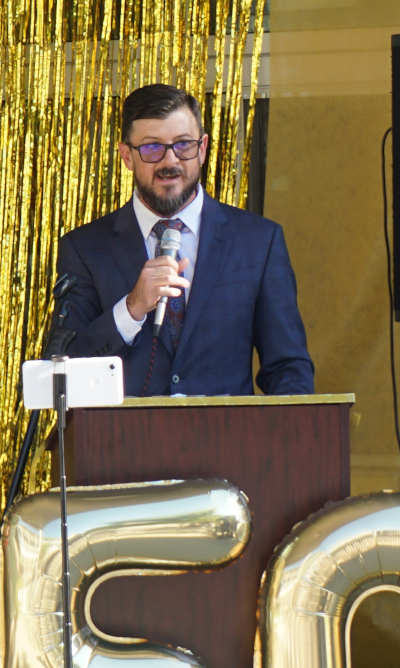
Interim Campus Dean Dr. Annette Lee,EdD, was the master of ceremonies on Thursday.
In Lee’s own experience runs the current of opportunities that become possible with higher education. Appointed interim dean in July, she is herself a former campus student and now is a tenured member of the Business and Management faculty.
“Moments like this give you chills,” she said, looking over the audience of past and current students, faculty and staff, community leaders, visitors and friends, and noting that many of them were getting together for the first time in many years.
The campus has been a fixture in southeast Lake County for 50 years, Lee noted.
The ceremony included a land acknowledgment for the Pomo who had made their home on the land where the campus is, with nearby villages belonging to a group that called itself “the Water People.”
Chancellor Jim Houpis and members of the board of trustees also were on hand, as they held their monthly meeting at the campus later on Thursday evening.
Houpis, who himself grew up in a small, economically challenged community, said, “I’m fully committed to the campus,” and educational opportunities in Lake County.
Dr. Art Pimentel, the Woodland Community College president and former campus executive dean, said the college knows how important the campus is to the community.
He said the campus is dedicated to transforming lives, and acknowledged the work of the faculty.
Pimentel recalled his late friend Margaret Brown, a teacher at the campus for 25 years, who consistently advocated for giving the campus’ students the very best.
“We look forward to the next 50 years and beyond of serving the Lake County community,” Pimentel said.
A place that impacts people
Several other speakers shared their experiences at the campus.
They included Dr. Mark Cooper, a retired dentist and current member of the Lake County Board of Education, who after extensive academic coursework at the university level took classes at the college in welding and cooking while also teaching history sections with his late friend, Dr. Bill Cornelison.
Cooper honored teachers, and said not to forget to teach the trades. However, Cooper also emphasized the importance of liberal arts because of the necessity of teaching civic responsibility and how to be lifelong learners.
Supervisor Bruno Sabatier said the campus has been a big part of his life. He credited Pam Bordisso and Peggy Alexander for encouraging him to run for student body president. He later received a political science degree at the University of California, Davis.
“This place impacts people. This place changes people. And it’s been doing it for 50 years,” he said.
Dr. Harry Lyons, the campus’ now-retired and legendary biology professor who is well-known for his knowledge of and love for Clear Lake, sang a song he had written in praise of the college. Titled “Yuba,” it was performed to the tune of the Kinks song “Lola,” with the chorus a long “Yu-yu-yu-yu-yu-ba.”
Speakers also included Voris Brumfield, a former south county supervisor who taught theater at the college; alumna Zabdy Neria, now a member of the Konocti Unified School District Board; and Robert Reil, culinary teacher at Lower Lake High School, 2019 Konocti Unified School District Teacher of the Year and a former student of Cabreros.
Terri Gonsalves, now a Lake County Office of Education employee, had at one point been told she wasn’t college material before arriving at the campus, where she received encouragement and support from Harris and other teachers. She went on to graduate from the campus and receive a university degree with a near-perfect grade-point average.
Nick Walker, now the city of Lakeport’s assistant city manager and finance director, also shared his story.
Growing up in Kelseyville, raised by a single mother after his parents divorced, Walker said both of his parents struggled with substance abuse and he himself was kicked out of school and barely graduated.
At the Lake County Campus, Walker found the supportive atmosphere he needed to surmount his background. That experience led him to graduate from the college and prepared him to later receive his degree from Sonoma State University and become a Certified Public Accountant.
He said he’s constantly reminded of his gratitude for the opportunity he found there. “Please cherish your time here,” and go out and do more, Walker said.
Harris said the campus has endured despite many challenges over the years.
Looking ahead, he urged the community to nourish the continuing partnership with the campus.
Email Elizabeth Larson at
A study published this week by the Public Health Institute’s Dr. Gina Solomon and PHI’s Tracking California program revealed that microcystin, a toxin produced by cyanobacteria, contaminated private drinking water that many community members rely on in Lake County.
Clear Lake is the largest freshwater lake in the state, and over 60% of residents in Lake County receive their drinking water from the lake.
An estimated 500 homes around the lake have private drinking water supplies — either lake water intakes or near-shore wells.
“A new study, Harmful Algal Bloom (HAB) Affecting Private Drinking Water Intakes – Clear Lake, California,” published Wednesday in Morbidity and Mortality Weekly Reports, a publication of the Centers for Disease Control and Prevention, found that:
• Microcystins were detected in the tap water of 22 of 31 homes (about 70% of homes tested) with lake water intakes.
• In 18 of the 31 homes (58%) with lake water intakes, the microcystin level was at or above the US Environmental Protection Agency’s drinking water health advisory of 0.3 μg/L (maximum=3.85 μg/L).
• Microcystins were not detected in tap water of any of the homes with near-shore wells.
The researchers noted that 17 public drinking water systems also use lake water, but these systems conducted frequent testing and used water treatment to successfully control the toxins.
The study was a collaborative project between the Public Health Institute, PHI’s Tracking California, Big Valley Band of Pomo Indians, and the California Environmental Protection Agency’s Office of Environmental Health Hazard Assessment and State Water Resources Control Board’s Division of Drinking Water.
Referred to as “California Water: Assessment of Toxins for Community Health,” or Cal-WATCH, the study is funded by the CDC’s Environmental Health Capacity program.
Over the past decade, many locations in California and nationwide, including Clear Lake, have experienced an increase in harmful algal blooms.
Cyanotoxins produced by cyanobacteria contaminate the water and can cause illness and even death in humans, domestic animals and wildlife.
“Tribes have always relied on Clear Lake for some basic needs — members use the lake for important cultural activities, it’s a source of food and income, and the wildlife depend on it as well,” said Sarah Ryan, director of the Big Valley Band of Pomo Indians’ Environmental Protection Department and a co-author of the study.
“Our ecosystem is altered because of climate change. Drought and HABs have created severe impacts on our local economy, affecting access to safe drinking water for many people in the Clear Lake area, impairing traditional cultural activities, and creating health issues,” Ryan added.
From June to November 2021, the Cal-WATCH project collected and analyzed tap water samples from households with private lake water intakes and private wells located within 50 feet of the lake and analyzed the tap water samples for microcystin.
Based on initial findings from the Cal-WATCH study and an increase in severity of HABs in Clear Lake, the local health officer issued an emergency advisory in September of 2021, advising community members with private lake water intakes in the Lower and Oaks Arms of the lake “not to drink” their tap water.
State, local and tribal governments coordinated with local public water systems and provided free drinking water filling stations for the affected population.
Although the drinking water advisory was lifted two months later, the severity of the bloom on the lake in 2022 has prompted renewed recreational and private intake drinking water advisories from the local health officer and the tribe.
“We will likely continue to see an increase in HABs due to climate change,” said Dr. Gina Solomon, the lead author of the new study. “This study revealed that households who rely on water directly from an affected lake are at high risk. We are encouraged that agencies are partnering for a united public health response and providing access to free drinking water as a short-term solution.”
The researchers pointed out that long-term solutions are also necessary, including transitioning homes to public water systems, providing ongoing public education, and researching/implementing other strategies to mitigate HABs, including reduction of nutrient run-off, revegetation of shorelines and aeration.
The event will also be live-streamed on the district’s YouTube channel.
Three candidates are running for two open school board seats with four-year terms ending in December 2026.
The two incumbents are current board president, Rick Winer, and current board vice-president, Allison Panella. The challenger is teacher and businesswoman Janet Rykert.
Kelseyville High School Civics teacher Shane Boehlert will serve as the moderator.
More information about each candidate can be found online. Winer’s site is www.facebook.com/rickwiner4KVUSD.
Panella’s site is www.facebook.com/profile.php?id=100085933832852.
Rykert’s site is www.facebook.com/profile.php?id=100085488343287.
For more information about the general election on Nov. 8, visit www.lakecountyca.gov/Government/Directory/ROV/Upcoming/202211GenElection.htm.
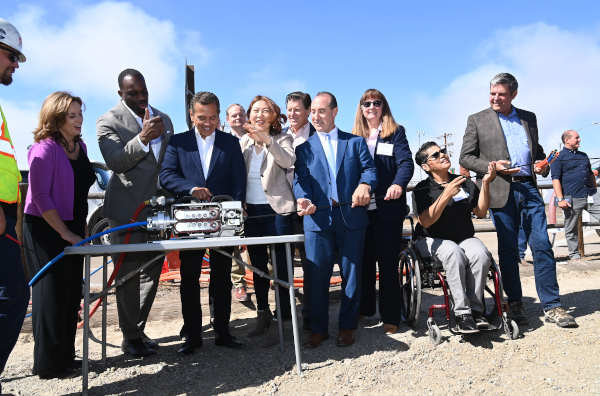
Construction began Thursday in rural San Diego County on the first leg of the 10,000-mile broadband network aimed at bringing high-speed internet services to all Californians so they can access emergency information, telehealth services, education, and employment.
“California is now one step closer to making the digital divide a thing of the past,” said Gov. Gavin Newsom. “We’re starting construction today to get affordable high-speed internet in every California home because livelihoods depend on access to a reliable and fast internet connection. This is about ensuring that all Californians, no matter the zip code they call home, can be part of the Golden State’s thriving and diverse economy.”
Construction began Thursday on State Route 67 near Poway in San Diego County, where Newsom Administration officials gathered as 500 feet of fiber optic cable was blown through conduit in the first segment of a massive, $3.8 billion statewide project known as the “Middle Mile” broadband network.
The planned network, which will be the nation’s largest, will cover the entire state to help bring reliable, high-speed internet access to the millions of Californians who do not have it now.
Once complete, funding for “last mile” efforts will support internet connections from “middle mile” lines to homes and businesses, as well as efforts to ensure individuals can afford broadband service where it already exists.
Roughly one in five Californians do not have access to reliable and affordable high-speed internet.
Secretary of the California Transportation Agency Toks Omishakin, Secretary of Government Operations Amy Tong, and former Los Angeles Mayor Antonio Villaraigosa marked the occasion in Poway, at the site of a new fiber optic line that will run from Lakeside to Ramona. More than 200,000 people in the San Diego area do not have broadband service.
“Beginning construction on the middle-mile network is a significant step toward broadband equity and providing all Californians the opportunity to access critical information,” said Secretary Omishakin. “High-speed internet is much more than a connection — it’s a lifeline that families need to work, learn, and access critical services.”
“We are thrilled to see construction begin on the middle-mile network,” said Secretary Tong. “Too many rural and urban areas lack adequate broadband infrastructure, forcing residents to attempt to connect via mobile hotspots and unreliable satellite service, which leaves out too many Californians.”
Former Los Angeles Mayor Antonio Villaraigosa, who was named by the Governor in August to serve as Infrastructure Advisor to the State of California, joined the event Thursday to highlight the substantial federal resources coming to the state for infrastructure investments like broadband networks.
“This broadband network is one of the most ambitious and impactful infrastructure projects in California — and we’re thrilled that construction is underway starting today,” Mayor Villaraigosa said. “With billions more in federal infrastructure dollars on the way, we’re getting ready to celebrate many more groundbreakings for innovative projects across California. This goes far beyond infrastructure, this is about building the future of our state and creating thousands of good-paying jobs along the way.”
CDT Director Liana Bailey-Crimmins said construction on the first segment of the Middle Mile network follows more than a year of planning.
“The rapid planning by the Middle Mile team as well as our local partners is coming to fruition,” Bailey-Crimmins said. “It’s wonderful to see the hard work paying off, to make a difference in the lives of Californians who live in unserved areas like this one.”
Caltrans Director Tony Tavares said each of the Department’s 12 districts is working to build segments of the Middle Mile network on an ambitious timeline in the hope of capturing the maximum amount of federal funding available.
“This project provides a wonderful opportunity for us to ‘dig smart’ and highlights the benefits of coordination among state agencies and with our local partners,” said Caltrans Director Tony Tavares. “Caltrans is proud to partner with the Department of Technology to create a broadband Middle Mile network, providing equitable, high-speed broadband service to all Californians.”
Once the Middle Mile network is complete, local carriers will have access to the network to provide communities with direct service to homes and businesses as well as reduced-cost or free broadband internet service for those who are eligible.
In July 2021, Governor Newsom signed into law Senate Bill 156 sponsored by Senate President pro Tempore Toni Atkins and Assembly Speaker Anthony Rendon to expand the state’s broadband fiber infrastructure and increase internet connectivity for families and businesses. It includes provisions related to the $3.25 billion initially budgeted to build, operate and maintain an open access, state-owned Middle Mile network – high-capacity fiber lines that carry larger amounts of data at higher speeds over longer distances between local networks. The 2022 Budget Act included an additional $550 million General Fund to support the Middle Mile Broadband Initiative.
Broadband access in California received a boost in federal funding in 2021 with the passage of the federal American Rescue Plan Act and the federal Infrastructure Investment and Jobs Act, both aimed at helping the nation recover from the COVID-19 pandemic with wide-ranging infrastructure investments including affordable access to high-speed broadband for individuals, families and communities so they may work, learn and connect remotely.
Californians interested in seeing if they qualify for discounted high-speed internet services available now may learn more at the state’s Broadband for All website.
The design and construction of the middle mile network is overseen by the Middle Mile Advisory Committee with expertise from GoldenStateNet, the state’s consultant. For more information and interactive maps outlining the 10,000 mile system, please visit the Middle Mile Broadband Initiative website.