 How to resolve AdBlock issue?
News
The California Highway Patrol is bringing awareness to the role we all play in ensuring students throughout the state travel safely to and from school as part of National School Bus Safety Week, Oct. 17 to 21.
“School bus safety is part of the CHP’s mission, and we take our mission very seriously,” CHP Commissioner Amanda Ray said. “This week is a reminder that everyone should do their part each day to remain alert behind the wheel, particularly when you see a school bus or children at bus stops.”
With few exceptions, California law requires drivers to stop in both directions when a school bus has flashing red lights on.
Drivers must stop until the red lights are off, and school bus drivers are trained to only turn their flashing red lights off when they are certain the children are safely out of the road and seated on the bus.
According to the National Highway Traffic Safety Administration, riding a school bus is the safest way for students to get to school — 70 times safer compared to other modes of transportation. School buses are one of the most regulated vehicles on the road.
On average, more than 50,000 certified school bus drivers transport more than one million students each year in California, traveling approximately 243.5 million miles.
To help ensure the safety of students, the CHP inspects more than 20,000 school buses annually and launched the Vehicles Illegally Passing a School Bus, or VIPS, enforcement project in 2017.
During VIPS enforcement operations, CHP officers ride on school buses and patrol bus routes, watching for vehicles that do not stop for flashing red school bus lights.
The VIPS enforcement project also encourages people to report drivers who illegally pass a school bus — a violation that last year resulted in citations to 218 motorists.
For nonemergency complaints, you can contact your local CHP Area office at https://www.chp.ca.gov/find-an-office or call 1-800-TELL-CHP.
The board will meet beginning at 9 a.m. Tuesday, Oct. 18, in the board chambers on the first floor of the Lake County Courthouse, 255 N. Forbes St., Lakeport.
The meeting can be watched live on Channel 8, online at https://countyoflake.legistar.com/Calendar.aspx and on the county’s Facebook page. Accompanying board documents, the agenda and archived board meeting videos also are available at that link.
To participate in real-time, join the Zoom meeting by clicking this link.
The meeting ID is 931 6832 0280, pass code 852821. The meeting also can be accessed via one tap mobile at +16694449171,,93168320280#,,,,*852821#.
All interested members of the public that do not have internet access or a Mediacom cable subscription are encouraged to call 669-900-6833, and enter the Zoom meeting ID and pass code information above.
To submit a written comment on any agenda item visit https://countyoflake.legistar.com/Calendar.aspx and click on the eComment feature linked to the meeting date. If a comment is submitted after the meeting begins, it may not be read during the meeting but will become a part of the record.
At 9:06 a.m., the board will receive a presentation from BluePoint Planning on the preparation of a countywide parks, recreation and trails master plan.
Public Services Director Lars Ewing’s report to the board explains that earlier this year his department “solicited proposals to analyze opportunities and constraints of the County’s parks, recreation, and trails system; assess existing facilities, potential locations, recreation programs, and trail components; and develop a comprehensive countywide parks, recreation, and trails master plan.”
The board awarded the contract to BluePoint Planning, with the work now underway, Ewing said.
“The final plan will serve as an implementation tool and operational guide for management of county parks, recreation programs, and trails,” he wrote.
Ewing said BluePoint staff and Public Services wants to “take a brief opportunity to ‘kickoff’ the project with an introduction to your Board to provide an overview of the work plan and the events that will occur over the next year.”
At 11:30 a.m., the supervisors will hold a public hearing to consider an ordinance rescinding specified sections of the Lake County Zoning Ordinance relating to early activation.
At 1 p.m., there will be a discussion regarding retention of specialized legal services to address PG&E's wildfire mitigation activities.
The full agenda follows.
CONSENT AGENDA
5.1: Approve the Updated Bylaws of the Lucerne Area Town Hall.
5.2: Approve Amendment No. 2 to the lease agreement between the county of Lake and the Middletown Senior Citizens Inc. for lease of buildings and grounds located at 21256 Washington St., Middletown, California and authorize the chair to sign.
5.3: Approve continuation of proclamation of the existence of a local emergency due to pervasive tree mortality.
5.4: Adopt resolution amending Resolution No. 2202-118 adopting Final Budget for FY 22-23 to provide a temporary loan from the non-departmental revenue (Fund 001) to Community Development Block Grant Program Income Capital Projects Fund (Fund 936).
5.5: Adopt resolution approving Agreement No. 22-0998-004-SF with California Department of Food and Agriculture for compliance with the Sudden Oak Death Quarantine program for period July 1, 2022 through June 30, 2023 in the amount of $4,695.26.
5.6: Approve Amendment No. 2 to the agreement between Sierra Vista for acute inpatient psychiatric hospital services and professional services associated with acute inpatient psychiatric hospitalizations for fiscal years 2020-21, 2021-22, and 2022-23 for a new contract maximum of $81,572.00 and authorize the board chair to sign.
5.7: (a) Adopt resolution authorizing the agreement between the county of Lake and Advocates for Human Potential for the Department of Care Health Care Services for the Period of April 19, 2022 through Dec. 31, 2022 and authorize the Behavioral Health director to sign the agreement and (b) waive competitive bidding in accordance with Section 2-38.2 of the Lake County Code and (c) approve the agreement in the amount of $294,000 between COAR Design Group for facility design services and the county of Lake for the Behavioral Health Clearlake Facility Expansion Project and authorize the board chair to sign the agreement.
5.8: Adopt resolution authorizing Lake County Behavioral Health Services to Increase the rates for substance use disorder drug medi-cal services effective fiscal year 2022-23. not available not available
5.9: Approve Amendment No. 1 to the agreement between county of Lake and Hilltop Recovery Services for FY 2022-23 to reflect drug Medi-Cal rate changes and authorize the board chair to sign the amendment.
5.10: Approve purchase order for Heritage Oaks Hospital for acute inpatient psychiatric hospitalization and professional services associated with acute inpatient psychiatric hospitalizations in the amount of $50,000.00 and authorize the department head to sign.
5.11: (a) Waive the formal bidding process, pursuant to Lake County Code Section 38.2, as it is not in the public interest due to the unique nature of goods or services; and (b) approve the agreement between county of Lake and Kings View Professional Services for MIS support services for fy 2022-23 in the amount of $158,469.00 and authorize the board chair to sign.
5.12: Approve Board of Supervisors minutes Sept. 13, 2022, Sept. 20, 2022, and Oct. 4, 2022.
5.13: Approve amendment to the purchase amount of a New 2023 Ford Explorer for the Building & Safety Division, from $33,298.15 to $40,184.06.
5.14: (a) Waive the formal bidding process, pursuant to Lake County Code Section 38.2, as it is not in the public interest due to the unique nature or goods or services; (b) approve purchase of 2023 Ford Bronco Sport base four door; and (c) authorize the department head/assistant purchasing agent to issue a purchase order for total amount $28,899.91.
5.15: Approve continuation of resolution authorizing teleconferenced meetings during a state of emergency to continue to exist.
5.16: Approve continuation of a local health emergency related to the 2019 Coronavirus (COVID-19) as proclaimed by the Lake County Public Health officer.
5.17: Approve continuation of a local health emergency and order prohibiting the endangerment of the community through the unsafe removal, transport, and disposal of fire debris for the LNU Complex wildfire.
5.18: a) Waive the formal bidding requirement pursuant to Lake County Code Section 38.1, as it is an extension of an annual agreement and the county purchasing agent has determine such action to be a cost advantage and in the best interest of the county; and b) authorize the IT director to issue a purchase order to Zoom Video Communications, Inc. for Zoom Video Conferencing licenses in the amount of $27,581.96.
5.19: Approve continuation of a local emergency due to COVID-19.
5.20: Approve continuation of a local emergency in lake county in response to the LNU Lightning Complex wildfire event.
5.21: Approve continuation of an emergency declaration for drought conditions.
5.22: Approve agreement by and between the county of Lake and G.D. Nielson Construction, Inc. for Installation of Standby Generator at Hill Road Correctional Facility in the amount of $507,456 and authorize the chair to sign the agreement for award of Bid No. 22-08.
5.23: Approve purchase orders for the purchase of six vehicles for the Central Garage Fleet, and authorize the Public Works director/assistant purchasing agent to sign the purchase orders.
5.24: Approve Supplemental Services Agreement No. 2 between the county of Lake and Armstrong Consultants for consulting services related to Lampson Airfield and authorize the chair to sign the agreement.
5.25: Approve destruction of records, paper, or documents which are more than two years old or document that is not expressly required by law to be filed and preserved.
5.26: Approve Amendment No. 1 for the continuation of agreement with Zonehaven for SaaS software in the amount of $8,400 per year and a total agreement price of $25,200 for three years and authorize the chair to sign.
5.27: Adopt resolution to affirm the establishment of the Lake County Housing Commission office located at 16170 Main St., Suite F, Lower Lake, CA, 95457.
5.28: Sitting as the Lake County Sanitation District Board of Directors, authorize Special Districts administrator/assistant purchasing agent to issue a purchase order not to exceed $60,000.00 to Thomas & Associates for the purchase of a Gorman-Rupp 4” self-priming sewage pump.
TIMED ITEMS
6.2, 9:06 a.m.: Presentation of BluePoint Planning for the preparation of a countywide parks, recreation and trails master plan.
6.3, 9:30 a.m.: Public hearing, hearing of notice of violation and notice of nuisance and order to abate; property owner: Thomas Carter; location: 1622 Hunter Point Road, Upper Lake (APN 022-001-05).
6.4, 9:35 a.m.: Public hearing, consideration of appeal of notice of nuisance and order to abate for 200 Hoover St., Clearlake Oaks (APN# 035-404-180); appellant: Brett Hill.
6.5, 10:30 a.m.: Continued from Sept. 27, 2022, public hearing, consideration of proposed rezone (RZ 22-02) and negative declaration (IS 22-19). Applicant: Daniel Sosa. Project Location: 3774 and 3794 E. Highway 20, Nice (APNs 032-181-02 and 03).
6.6, 11:30 a.m.: Public hearing, consideration of ordinance rescinding specified sections of the Lake County Zoning Ordinance relating to early activation.
6.7, 1 p.m.: Consideration of retention of specialized legal services to address PG&E's wildfire mitigation activities.
UNTIMED ITEMS
7.2: Consideration of an advocacy letter requesting urgent state action in support of Lake County’s tree mortality emergency.
7.3: Consideration of county representation for Oct. 27 meeting with California Public Utilities Commissioner Darcie Houck and Rural County Representatives of California; discussion to gather board member and public input in preparation for this meeting.
7.4: Consideration of resolution authorizing an amendment to the standard agreement between the county of Lake and the Department of Health Care Services for the period of July 1, 2020, through June 30, 2023, and authorizing the Behavioral Health director to sign the amendment to the standard agreement.
7.5: Consideration of Amendment No. 3 to the agreement between county of Lake and North Valley Behavioral Health LLC for acute inpatient psychiatric hospital services and professional services associated with acute inpatient psychiatric hospitalization for fiscal year 2021-22 in the amount of $911,380.00 and authorize the board chair to sign.
7.6: Consideration of (a) waiving the formal bidding process, pursuant to Lake County Code Section 38.2, as it is not in the public interest due to the unique nature of goods or services; and (b) agreement between county of Lake and the Regents of the University of California, Davis in the amount of $510,981.00 for early psychosis intervention program evaluation services for fys 2022-23 through 2025-26 and authorize the board chair to sign.
7.7: Consideration of the following Advisory Board appointments: Lucerne Area Town Hall.
ASSESSMENT APPEAL HEARING
8.1: Consideration of request by the Lake County Assessor's Office to continue the following assessment appeal applications: 03-2020 through 10-2020, Earthways Foundation Inc., a Delaware Nonprofit Corporation to the May 2, 2023 Board of Supervisors meeting.
8.2: Consideration of request by the appellant to continue the following assessment appeal applications: No. 68-2022 Worldmark to the May 2, 2023 Board of Supervisors meeting.
8.3: Consideration of withdraw on the following assessment appeal applications: a) No. 05-2021, Charles E.Bellig TRS.; and b) No. 06-2021, Lakeshore Drive, LLC; and c) No. 09-2021, Transform SR Holding Management, LLC; and d) No. 01-2021, 03-2021, Geysers Power Co. LLC.
8.4: Consideration to deny the following assessment appeal applications on timeliness, as no request for hearing received: a) No. 02-2021, Norman Winters Trustee; and b) No. 08-2021, Patricia Gage.
8.5: Consideration of stipulation on the following assessment appeal applications: No. 07-2021, Bakhtiara, Deborah Ann (TE),Karl Eric (TE).
CLOSED SESSION
9.1: Conference with legal counsel: Significant exposure to litigation pursuant to Gov. Code sec. 54956.9 (d)(2) (e)(1) – One potential case.
9.2: Conference with legal counsel: Existing litigation pursuant to Gov. Code sec. 54956.9(d)(1): In re National Prescription Opiate Litigation MDL No. 2804/Case No. 17-MD-2804.
9.3: Conference with legal counsel: Existing litigation pursuant to Gov. Code section 54956.9(d)(1) – City of Clearlake v. County of Lake, et al.
Email Elizabeth Larson at
The council will meet at 6 p.m. Tuesday, Oct. 18, in the council chambers at Lakeport City Hall, 225 Park St.
The agenda can be found here.
The council chambers will be open to the public for the meeting. Masks are highly encouraged where 6-foot distancing cannot be maintained.
If you cannot attend in person, and would like to speak on an agenda item, you can access the Zoom meeting remotely at this link or join by phone by calling toll-free 669-900-9128 or 346-248-7799.
The webinar ID is 973 6820 1787, access code is 477973; the audio pin will be shown after joining the webinar. Those phoning in without using the web link will be in “listen mode” only and will not be able to participate or comment.
Comments can be submitted by email to
On Tuesday, the council will meet new Public Works employees Cody Morland and Lucy Avilez, present a proclamation declaring October 2022 as Domestic Violence Awareness Month and offer a plaque in appreciation of former Council Member Mireya Turner’s contributions to the city.
The council will hold public hearings to close out several Community Development Block Grants, adopt a draft resolution authorizing the city manager to sign the necessary amendment
documents for the State Community Development Block Grant Coronavirus Aid, Relief,
and Economic Security Act, Rounds 2 and 3, and introduce a draft ordinance related to outdoor dining design guidelines with the second reading to be set for Nov. 2.
Under business, the council will consider approving a professional services agreement with WMH for the Lakeport Blvd at Bevins Street Project study report equivalent as well as a mutual aid agreement for emergency assistance among the cities of Lakeport, Clearlake, Ukiah, Fort Bragg, Willits and Point Arena.
Also on Tuesday, Assistant City Manager and Finance Director Nick Walker will present a request for approval of amendments to the fiscal year 2022-23 City budget and Public Works Superintendent Ron Ladd will ask for approval of an on-call professional service agreements
with 15 contractors.
On the consent agenda — items usually accepted as a slate on one vote — are ordinances; minutes of the regular council meeting on Sept. 20; the warrant register of Sept. 27; adoption of a resolution authorizing continued remote teleconference meetings of the Lakeport City Council and its legislative bodies pursuant to Government Code section 54953(e); approval of application 2022-024, with staff recommendations, for the 2022 Clear Lake High School Homecoming Parade; approval of application 2022-025, with staff recommendations, for the 2022 Halloween Parade; receipt and filing of the Community Development Department quarterly report for the first quarter of the 2022-23 fiscal year; adoption of a resolution authorizing the city manager to apply for PLHA funding allocations in accordance with the five-year plan; adoption of the resolution accepting construction of the Martin Street Apartments Off-Site Improvement Project by Pacific West Builders and authorize the filing of the notice of completion; approval for the mayor to sign the letter of support for Pacific West Communities, Inc. to apply for an Infill Infrastructure Grant for the Bevins Street Senior Apartments.
The council also will hold a closed session to discuss property negotiations with the Lakeport Fire Protection District regarding 445 N. Main St. and 901 Larrecou Lane and employee negotiations with the Lakeport Police Officers’ Association.
Email Elizabeth Larson at
Call Lake County Animal Care and Control at 707-263-0278 or visit the shelter online at http://www.co.lake.ca.us/Government/Directory/Animal_Care_And_Control.htm for information on visiting or adopting.
The following cats at the shelter have been cleared for adoption.
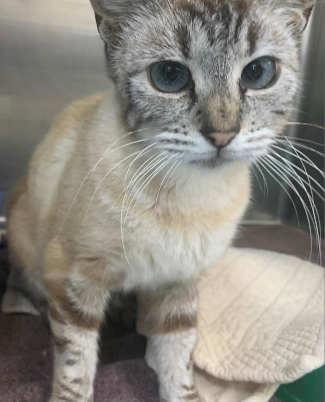
Female domestic shorthair
This 2-year-old female domestic shorthair cat has a Siamese coat with reddish points and blue eyes.
She is in cat room kennel No. 73, ID No. LCAC-A-4090.

‘Mama’
“Mama” is a 2-year-old domestic shorthair cat with an all-black coat.
She is in cat room kennel No. 7, ID No. LCAC-A-3884.
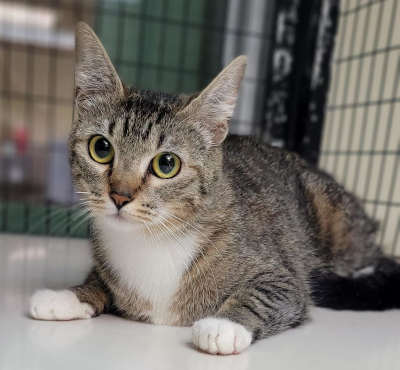
Female domestic shorthair
This 2-year-old female domestic shorthair cat has a gray tabby coat.
“She is an adult cat with some playful kitten tendencies when toys are brought out. She has a sweet little meow and likes to have playful chats with you,” shelter staff said.
She is in cat room kennel No. 10, ID No. LCAC-A-3661.

Male domestic shorthair
This 3-year-old male domestic shorthair cat has an orange tabby coat.
“This guy can be shy at first, but once he knows that you are all about the pets, he will roll right over and start his purr machine. He has a unique curly tail which he flicks around when curious,” shelter staff said.
He is in cat room kennel No. 13, ID No. LCAC-A-4021.
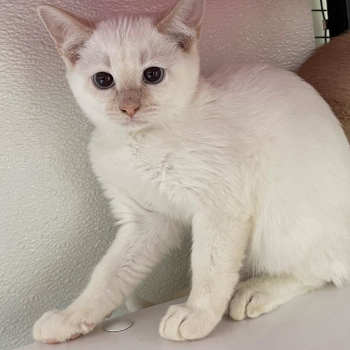
Male domestic shorthair kitten
This 2-month-old male domestic shorthair kitten has a white coat and blue eyes.
He is in cat room kennel No. 36A, ID No. LCAC-A-4081.

Male domestic shorthair kitten
This 2-month-old male domestic shorthair kitten has a light orange coat.
He is in cat room kennel No. 36B, ID No. LCAC-A-4082.

Male domestic shorthair kitten
This 2-month-old male domestic shorthair kitten has an orange coat.
He is in cat room kennel No. 36C, ID No. LCAC-A-4083.

Male domestic longhair cat
This 1-year-old male domestic longhair cat has a black and white coat.
“This guy had a hard start, but has a lot of love to give once he warms up to you,” shelter staff said.
Staff said he also loves brushing and shows his appreciation with purring and head bumps.
He is in kennel No. 107, ID No. LCAC-A-4023.

Female domestic shorthair kitten
This 2-month-old female domestic shorthair kitten has a white coat with orange markings.
She is in kennel No. 129a, ID No. LCAC-A-4084.
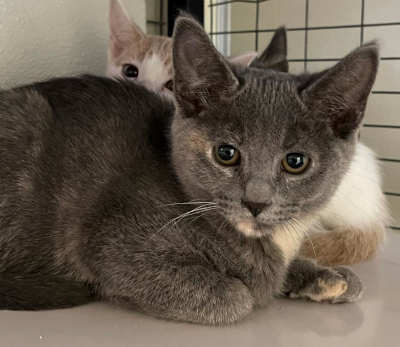
Female domestic shorthair kitten
This 2-month-old female domestic shorthair kitten has a gray coat with white markings.
She is in kennel No. 129b, ID No. LCAC-A-4085.
Female domestic shorthair kitten
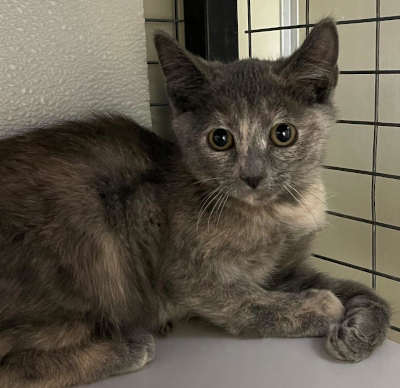
This 2-month-old female domestic shorthair kitten has a tortoiseshell coat.
She is in kennel No. 129c, ID No. LCAC-A-4086.
Email Elizabeth Larson at
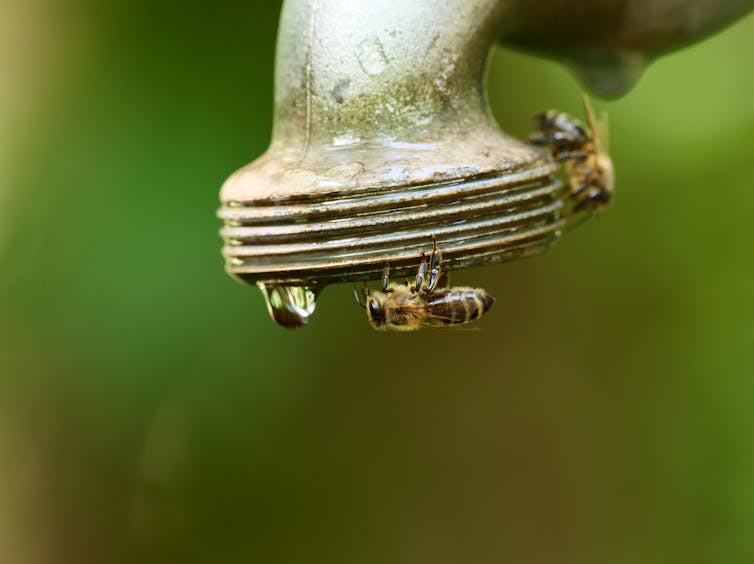
The extreme weather that has battered much of the U.S. in 2022 doesn’t just affect humans. Heat waves, wildfires, droughts and storms also threaten many wild species – including some that already face other stresses.
I’ve been researching bee health for over 10 years, with a focus on honey bees. In 2021, I began hearing for the first time from beekeepers about how extreme drought and rainfall were affecting bee colony health.
Drought conditions in the western U.S. in 2021 dried up bee forage – the floral nectar and pollen that bees need to produce honey and stay healthy. And extreme rain in the Northeast limited the hours that bees could fly for forage.
In both cases, managed colonies – hives that humans keep for honey production or commercial pollination – were starving. Beekeepers had to feed their bees more supplements of sugar water and pollen than they usually would to keep their colonies alive. Some beekeepers who had been in business for decades shared that they lost 50% to 70% of their colonies over the winter of 2021-2022.
These weather conditions likely also affected wild and native bees. And unlike managed colonies, these important species did not receive supplements to buffer them through harsh conditions.
Each year, the U.S. Department of Agriculture and the Environmental Protection Agency host federal pollinator experts to share the latest scientific findings on bee and pollinator health, and assess the status of these important insects, birds, bats and other species. One clear takeaway from this year’s meeting was that climate change has become a new and formidable stressor for bees, potentially amplifying previously known issues in ways that scientists can’t yet predict but need to prepare for.
The scourge of Varroa mites
Pollinators contribute an estimated US$235 billion to $577 billion yearly to global agriculture, based on the value of the crops they pollinate. Understanding and mitigating the impacts of climate change on pollinators is key for supporting healthy ecosystems and sustainable agriculture.
Bee health first attracted widespread attention in 2006 with the emergence of Colony Collapse Disorder, a phenomenon where the majority of adult worker bees in a colony disappeared, leaving their honey and pollen stores and some nurse bees behind to care for the queen and remaining immature bees. In the past five years, reported cases have declined substantially. Now, researchers are focusing on what beekeepers call the “four Ps”: parasites, pathogens, pesticides and poor nutrition, as well as habitat loss for wild and native bees.
One of the most severe threats to honey bees over the past several decades has been Varroa destructor, a crablike parasitic mite that feeds on honey bees’ fat body tissue. The fat body is a nutrient-dense organ that functions much like the liver in mammals. It helps bees maintain a strong immune system, metabolize pesticides and survive through the winter.
These are vital functions, so controlling mite infestations is essential for bee health. Varroa can also transmit deadly pathogens to honey bees, such as deformed wing virus.
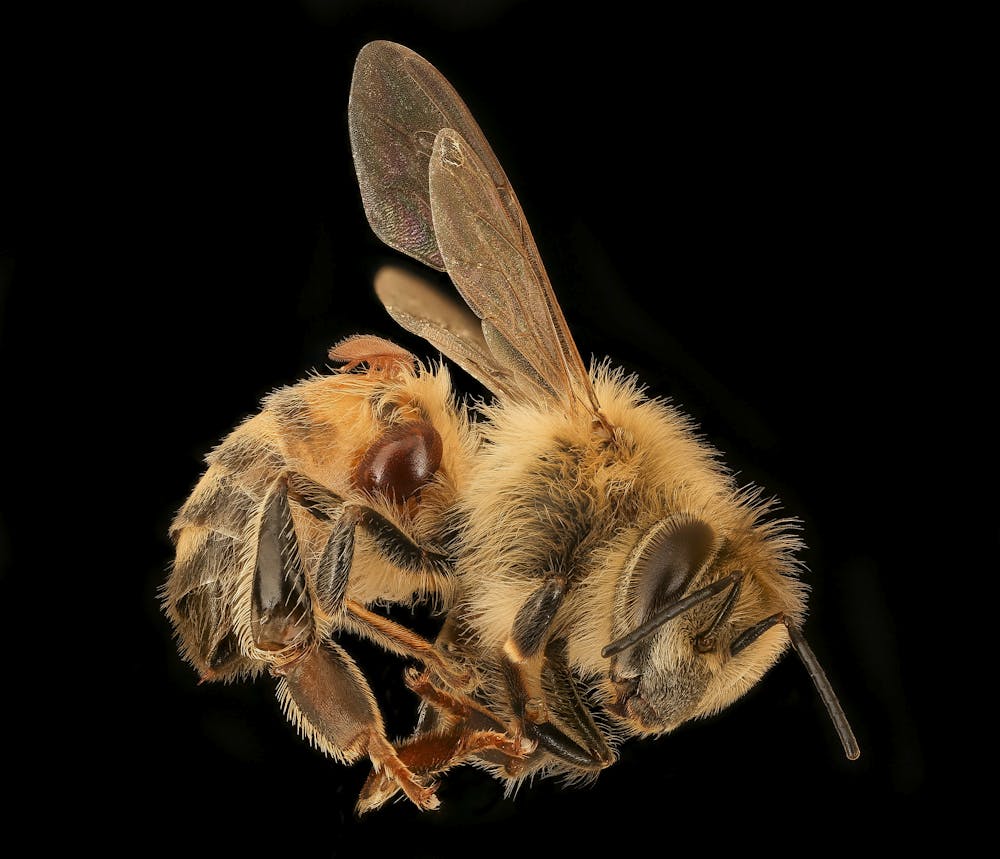
Controlling mite populations is challenging. It requires using an insecticide in an insect colony, or as beekeepers say, “trying to kill a bug on a bug.” It’s hard to find a formula strong enough to kill mites without harming the bees.
Monitoring Varroa takes significant skill and labor, and mites can build up resistance to treatments over time. Researchers and beekeepers are working hard to breed Varroa-resistant bees, but mites continue to plague the industry.
Pesticide microdoses
Pesticides also harm bees, particularly products that cause sublethal or chronic bee health issues. Sublethal pesticide exposures can make bees less able to gather forage, grow healthy larvae and fight off viruses and mites.
However, it can be hard to document and understand sublethal toxicity. Many factors affect how bees react to agrochemicals, including whether they are exposed as larvae or as adult bees, the mixture of chemicals bees are exposed to, the weather at the time of application and how healthy a bee colony is pre-exposure.
Researchers are also working to understand how soil pesticides affect ground-nesting wild bees, which represent over 70% of the U.S. native bee population.

Junk food diets
Like many other species, bees are losing the habitat and food sources that they depend on. This is happening for many reasons.
For example, uncultivated lands are being converted to farmland or developed worldwide. Large-scale agriculture focuses on mass production of a few commodity crops, which reduces the amount of nesting habitat and forage available for bees.
And many farmers often remove pollinator-friendly plants and shrubs that grow around farm lands to reduce the risk of attracting animals such as deer and rodents, which could spread pathogens that cause foodborne illness. Research suggests that these efforts harm beneficial insects and don’t increase food safety.
As diverse and healthy bee forage disappears, beekeepers feed their bees more supplements, such as sugar water and pollen substitutes, which are not as nutritious as the nectar and pollen bees get from flowers.
Climate change is a force multiplier
Researchers don’t know exactly how climate change will affect bee health. But they suspect it will add to existing stresses.
For example, if pest pressures mount for farmers, bees will be exposed to more pesticides. Extreme rainfall can disrupt bees’ foraging patterns. Wildfires and floods may destroy bee habitat and food sources. Drought may also reduce available forage and discourage land managers from planting new areas for bees as water becomes less readily available.
Climate change could also increase the spread of Varroa and other pathogens. Warmer fall and winter temperatures extend the period when bees forage. Varroa travel on foraging bees, so longer foraging provides a larger time window for mites and the viruses they carry to spread among colonies. Higher mite populations on bee colonies heading into winter will likely cripple colony health and increase winter losses.
Studies have already shown that climate change is disrupting seasonal connections between bees and flowers. As spring arrives earlier in the year, flowers bloom earlier or in different regions, but bees may not be present to feed on them. Even if flowers bloom at their usual times and locations, they may produce less-nutritious pollen and nectar under extreme weather conditions.
Research that analyzes the nutritional profiles of bee forage plants and how they change under different climate scenarios will help land managers plant climate-resilient plants for different regions.
Creating safe bee spaces
There are many ways to support bees and pollinators. Planting pollinator gardens with regional plants that bloom throughout the year can provide much-needed forage.
Ground-nesting native bees need patches of exposed and undisturbed soil, free of mulch or other ground covers. Gardeners can clear some ground in a sunny, well-drained area to create dedicated spaces for bees to dig nests.
Another important step is using integrated pest management, a land management approach that minimizes the use of chemical pesticides. And anyone who wants to help monitor native bees can join community science projects and use phone apps to submit data.
Most importantly, educating people and communities about bees and their importance to our food system can help create a more pollinator-friendly world.
Jennie L. Durant, Research Affiliate in Human Ecology, University of California, Davis
This article is republished from The Conversation under a Creative Commons license. Read the original article.
The lake is always green and there is so much algae, it’s everywhere. We are visiting another lake this weekend, will there be algae there too? How do we find out?
— Asking about algae
Dear Asking,
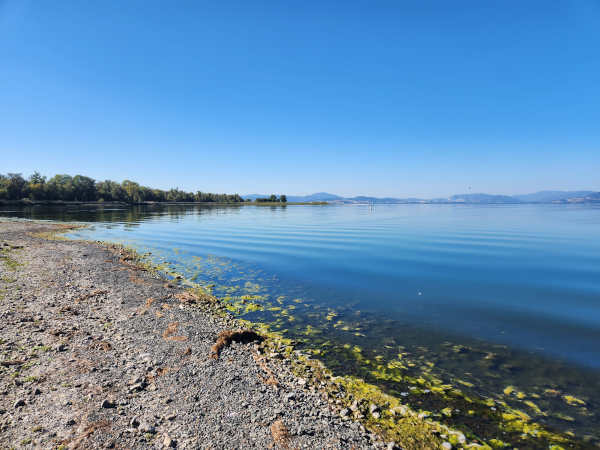
Thank you for asking this question, it’s timely and very important! There is also a lot of confusion around “algae” and what is commonly mistaken for algae. What you are probably concerned about is actually cyanobacteria. However, what you are noticing about your lake happens every summer, and not just in Clear Lake, but in other places around the state, around the Country, and around the world.
Now it’s important to recognize that algae is not cyanobacteria, and cyanobacteria is not algae. They may look similar to us standing on the beach or a boat, but they actually originate in different biological kingdoms. Cyanobacteria are as different to green algae as a mushroom is to a horse — they are not similar at all! They just happen to inhabit the same space — water.
Cyanobacteria belong in the Bacteria/Monera kingdom and green algae, or phytoplankton, belong in the protozoa kingdom.
For more information on the biological kingdoms and why algae and cyanobacteria are separated into different kingdoms, I recommend the Wikipedia page on Kingdoms. This page really does a good job discussing what is classified in each kingdom and some of the history of classification.
Before we go on, let’s review a few things.
Clear Lake is full of life, so it’s important for us to understand all that lives in the lake for us to understand what we are concerned about and what potential solutions are, and what their impacts might be on all things in the lake.
One: aquatic plants (or macrophytes) grow in the water, some are rooted in the lake sediments at the bottom and some are not rooted, and are free-floating.
Two: Green algae are microscopic plants (sometimes called phytoplankton) that are the primary fish food in the lake. Clear Lake is very green - that is from the green algae and that is why we have a world class fishery and people come from all over to catch record-sized fish living in the lake. The phytoplankton, or green algae is why Clear Lake is called “A Living Lake” as the productive green algae can sustain abundant life. In contrast, Lake Tahoe does not produce that much green algae because it is cold and dark, and does not have a work class fishery or as much life as Clear Lake.
For more information on Algae in Clear Lake, visit the “County of Lake Algae in Clear Lake” webpage.
Three: Cyanobacteria, which are sometimes called blue-green algae, are not really algae, but bacteria that live in the water alongside green algae. Cyanobacteria is also the culprit behind the “Harmful Algal Blooms, or HABs” colloquial. Cyanobacteria is NOT a preferred food source for fish. Sometimes when cyanobacteria populations grow in great numbers (called blooms) they can produce toxins that can cause public health hazards (hence their reference as Harmful Algal Blooms or HABs).
For more information about cyanobacteria, visit the “County of Lake Cyanobacteria” webpage.
So when someone states that they want to get rid of all the algae, that is usually not what they mean. The green algae is really, really important for our lake’s food web. It's the base of the food web and if it was all removed, we would see the collapse of the entire food web. From fish, otters, to birds, to all the living things that depend on green algae feeding fish. We would also see the elimination of our world class fishery.
Macrophytes, algae, and cyanobacteria all conduct photosynthesis, meaning they turn sunlight energy and carbon in the air into both oxygen and food energy or starch to grow. For macrophytes, algae, and cyanobacteria, the three main nutrients they rely on for growth are carbon, nitrogen and phosphorus.
Carbon and nitrogen are very abundant in the atmosphere and water, carbon in the form of CO2 and nitrogen in the form of N2 (gas) and any animal or plant waste or breakdown product in the water.
Phosphorus is least common, therefore phosphorus is the main driver of growth, because it’s normally least available, so it’s what limits growth of macrophytes, algae, and cyanobacteria. It’s not surprising that in Clear Lake, there is abundant light, warm temperature, and plentiful food nutrients. When the lake has excess phosphorus, we get excess growth of plants, algae, and cyanobacteria.
For more detailed information about Cyanobacteria in Clear Lake, refer to my first Lake of the Lake column from July 11,2021, “Concerned about Cyanobacteria in Soda Bay.”
For Clear Lake, there is a comprehensive cyanobacteria monitoring program managed by Big Valley EPA and other tribal partners. They have a website with most recent monitoring data posted. They sample about 20 sites every two weeks in the summer and every month in the winter. Results are also posted on the Facebook page called “Clear Lake Water Quality”. Red pins mean DANGER levels have been found and it’s recommended to not go into the water in that area. Orange pins mean WARNING, and yellow mean CAUTION. Green pins mean no cyanobacteria toxins have been detected in the sampled water from that area.
Cyanobacteria is not just a Clear Lake problem
As conditions around the country and the world change, cyanobacteria blooms are becoming more prevalent. Monitoring and reporting is also more widespread across the state and country. For example, here in California HABS data can be reported and shared on the My Water Quality HABS portal as part of the California Water Quality Monitoring Council.
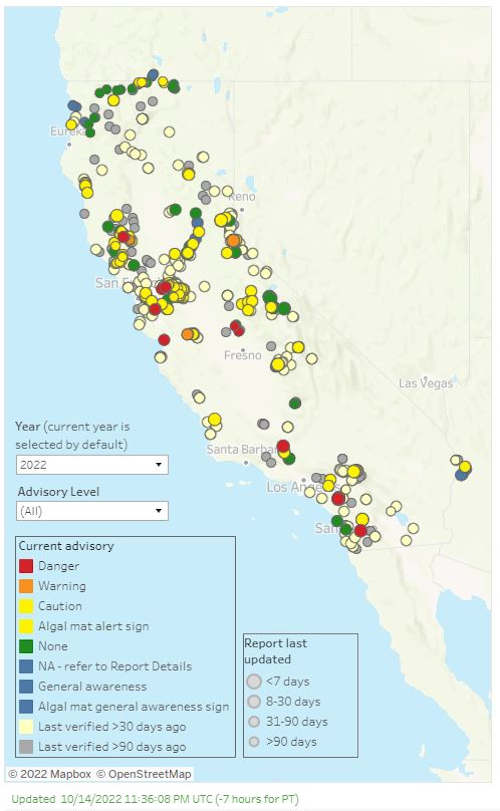
On the California HABs portal is a link to a HAB Incident Reports Map, which provides data on voluntarily reported blooms in California. The data may include reports under investigation and/or confirmed incidents of HABs, but it’s a good visual to see what conditions are in water bodies in different parts of the state.
This site also provides a satellite freshwater HABmap <https://fhab.sfei.org/> tool developed by San Francisco Estuary Institute (SFEI). This map displays estimated amounts of cyanobacteria in large water bodies calculated from satellite imagery. The map includes approximately 250 water bodies in California large enough to be detected by the satellite. It is designed as a screening level analysis tool to indicate past 10-day aggregate conditions.
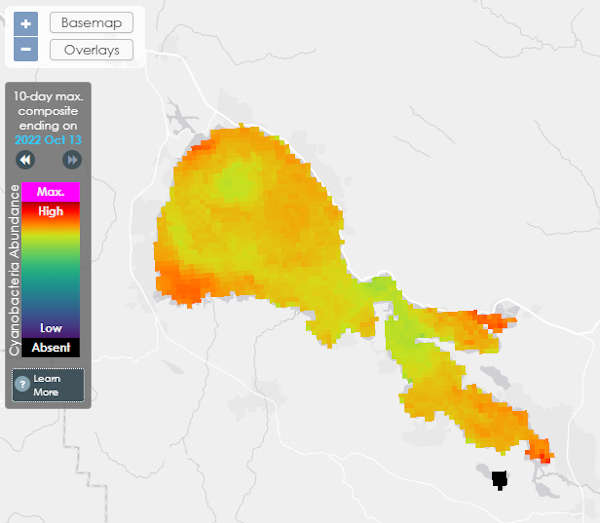
By exploring these tools, it becomes evident, and quite obvious, that cyanobacteria issues extend beyond Clear Lake, and are now becoming more frequent in other water bodies throughout the state.
The use of these tools in making informed decisions when recreating on or in freshwater is invaluable. Before planning a water excursion, you can see what current bloom conditions are in a lake of interest, and can use that knowledge to stay safe while enjoying the lake.
Cyanobacteria and HABS beyond California
Just this summer around the country, for example, there have been numerous reports of lakes or beaches closing due to harmful blooms. Here are a few examples from states like Colorado, New York, Michigan and Nebraska. This summer, lake monitoring revealed harmful cyanobacteria bloom conditions across the Country, further demonstrating that cyanobacteria is a serious issue that extends beyond Clear Lake and requires both state and national focus and attention.
Here are few:
A drinking water reservoir in Colorado was closed due to cyanobacteria bloom in August.
Ulster waterways had to issue warnings to the public after cyanobacteria bloom occurred.
In Michigan, throughout July and August, numerous lakes were reported and confirmed to have cyanobacteria blooms.
And as recently in September, in Nebraska, five lakes were under a health alert after testing confirmed cyanobacteria abundance above health triggers.
Therefore, it's important to be aware of conditions when visiting any freshwater water body, whether it’s located close to you or miles from home. Much like when you visit the ocean, you look for signs warning of rip currents, tides, or dangerous marine wildlife. When visiting freshwaters, keep aware of any posted signage.
Cyanobacteria blooms don’t always impact entire lakes or streams, and there can be areas that are less concerning, however you might have to spend a little time doing some research to find the monitoring data online from a local or state source. Every year more and more states are conducting monitoring and providing public health information so everyone can stay safe while enjoying their favorite lake, near or far.
— Sincerely Lady of the Lake
The CDC is a great resource for learning more about potential health impacts of cyanobacteria, what to look for, and how to protect you, your kids, and pets, when recreating in freshwaters.
Angela De Palma-Dow is a limnologist (limnology = study of fresh inland waters) who lives and works in Lake County. Born in Northern California, she has a Master of Science from Michigan State University. She is a Certified Lake Manager from the North American Lake Management Society, or NALMS, and she is the current president/chair of the California chapter of the Society for Freshwater Science. She can be reached at