 How to resolve AdBlock issue?
News
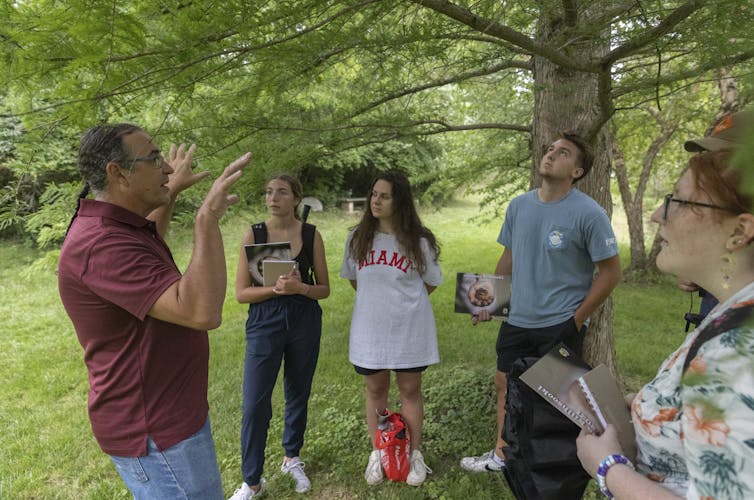
When the federal government set up boarding schools in the 19th century to assimilate Native American children into American culture, one of the objectives was to get them to turn away from the use of their native languages. In recognition of Indigenous Peoples’ Day in the U.S., The Conversation turned to Daryl Baldwin, a citizen of the Miami Tribe of Oklahoma who is a leader in Native American language and cultural revitalization and a member of the National Council on the Humanities, for insight into a tribal community’s efforts working with a university to help bring languages back.
How were Indigenous languages lost?
Many actions throughout history put pressure on tribal communities to abandon the use of their languages. This included the forced assimilation that resulted from the Indian Civilization Act of 1819. This act established Indian boarding schools to teach subjects such as math and science while suppressing the use of Indigenous languages and cultures.
Boarding schools lasted until the mid-20th century, and their effect was devastating for Indigenous communities and their languages. Linguists have estimated that prior to European settlement, there were 300 Indigenous languages spoken in what is now the United States. Communities are struggling to pass these languages on to a younger generation.
These affected communities include the Miami Tribe of Oklahoma, of which I am a citizen. The Miami Tribe lost the last speakers of the Myaamia language during the mid-20th century in part due to these assimilation efforts. Additionally, the forced relocation of the Tribe from its homeland in the Ohio-Indiana region to Kansas, and eventually Oklahoma, during the 19th century caused the community to become fragmented due to some families remaining behind or being exempt from relocation.
These factors also increased the stress on the community to simply survive. Many tribal members and elders from this time have recounted how they didn’t pass the language on to their children for fear of discrimination.
Why bring the languages back?
Simply put, our languages help make us whole again. When we empower our cultural selves through speaking our languages, we begin to undo the damage caused by years of cultural and linguistic oppression.
For the Miami Tribe of Oklahoma, language and cultural revitalization is a priority. We contribute significant time and financial resources into educational programs that help tribal citizens reconnect to their cultural heritage.
When we engage in revitalization activities, we are weaving strands of knowledge, cultural practices and other ways of being into our lives so we may draw on them as a source of community strength. Today, this encompasses all aspects of our lives, including art, games and food, as well as song and dance. For many of us, our Myaamia language is central to this process.
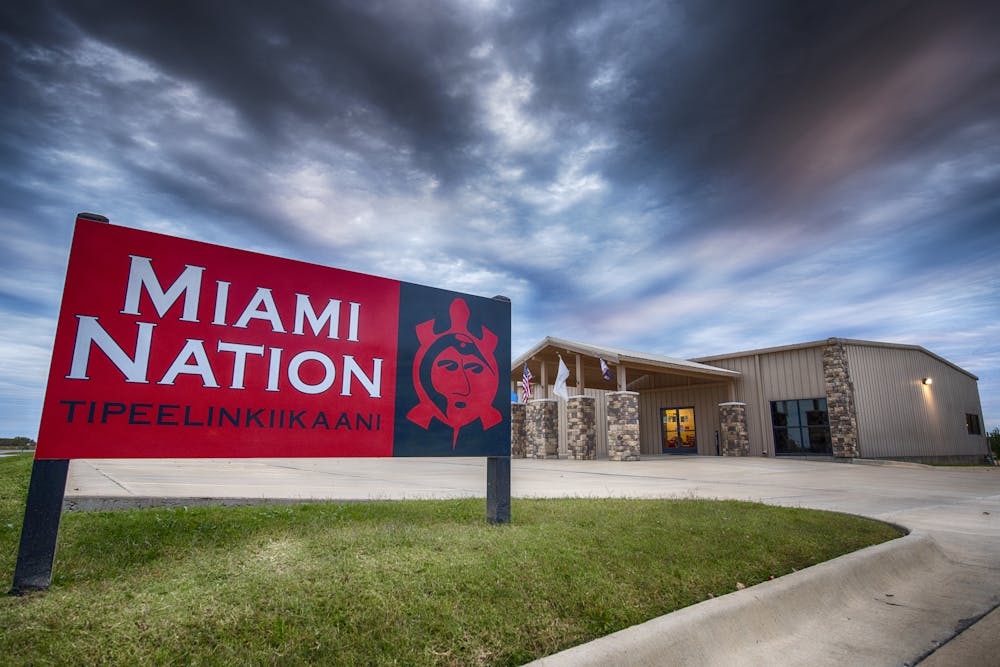
Since 1972, Miami University has been an important partner in this process of language and cultural revitalization. The Myaamia Center – the tribe’s research arm – directly supports the Myaamia Heritage Program. The program provides Miami Tribe students with tuition waivers and a unique opportunity to engage with their cultural heritage while earning a college degree.
What practical uses do these languages serve?
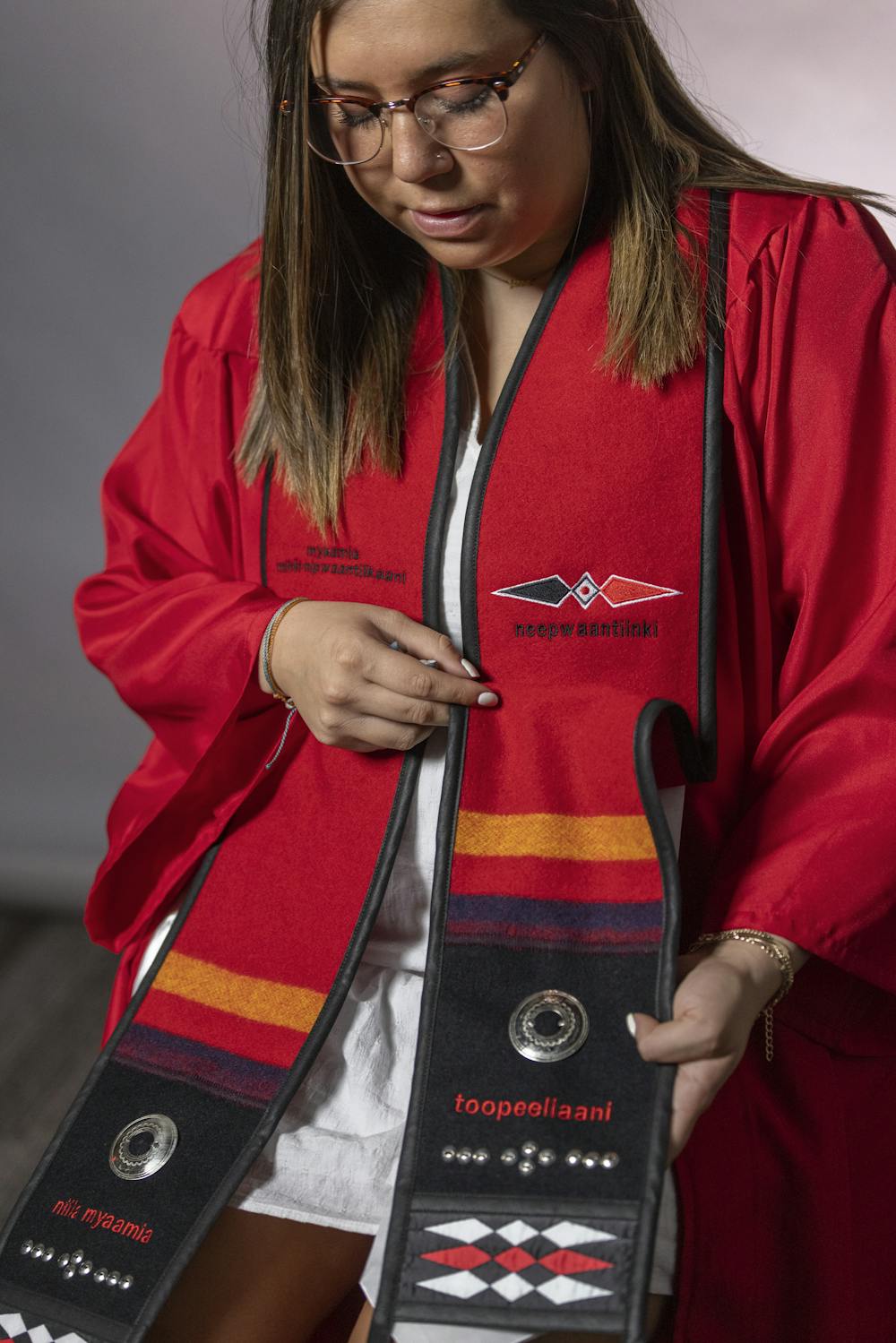
Language was an important aspect of my home when my four kids were young. Being able to say teepaalilaani – “I love you” – and to sing bedtime songs to my children – kiilhswa neewaki kiilhswa neewita … – “I see the moon, the moon sees me …” - in my native language was important to me.
Speaking my language connects me to our ancestral homelands of what are now parts of Ohio and Indiana. And doing so strengthens my relationship with my immediate family who also speak the language, and allows me to communicate in a way that is unique to my culture. My language may not be practical in holding a mainstream job or getting around in the world, but it is important to my identity as a Myaamia person. I feel grounded when I can speak my language with other members of my family and community.
The Myaamia Center’s Nipwaayoni Acquisition and Assessment Team has evaluated programs since 2012 and found that Myaamia students regularly comment on how important speaking their language is to their identity.
Jenna Corral, a Myaamia student who graduated in 2021, described her experience: “Learning our language has been one of the best ways to make me feel connected to my identity and tribal community. Being able to learn and speak the language that was developed by my ancestors was something I never thought I would do. I am forever grateful for all I have learned about my heritage and culture and the positive impact it has had on my life.”
How do students benefit from learning these languages?
Myaamia tribal youth who participate in language and cultural revitalization programs are more engaged in tribal activities, internal assessment research shows. Participation has continually risen over the past 20 years, in part due to increased tribal enrollment encouraged by language and cultural revitalization. Engagement is increasing because people want to be involved and participate in what is happening. We have gained approximately 1,000 citizens in the last five years, boosting our enrollment to 6,780 today. This is a significant development because we view youth engagement as important to future growth of the tribal nation.
Myaamia students have been enrolled at Miami University since 1991. Students who attended before the creation of the Myaamia Heritage Course, which allows students to explore their Myaamia heritage, had a graduation rate of 56%. Since the addition of the course in 2003, our six-year graduation rate has increased to 92% – more than double the national six-year graduation rate of 41% for Native Americans – and 106 Myaamia students have earned degrees from Miami University.
We believe growth of tribal programs developed by the tribe’s Cultural Resources Office, the creation of the Myaamia Center and further development of the heritage program are at the core of what has driven this dramatic increase in our graduation rate.
How will these languages be preserved going forward?
Just as the boarding school era was designed to remove language and culture, our tribal efforts can put back what was taken.
But these efforts require financial resources. Some people feel that the federal government holds a degree of financial responsibility in the revitalization of these languages. This is because significant federal funding was used historically to eradicate these languages. The federal government spent US$2.81 billion – adjusted for inflation – to support the nation’s Indian boarding schools, but only a fraction of that amount for Indigenous language revitalization today.
Partnerships between tribes and universities can be powerful in building a response to inequalities that have emerged through our recent history. Yes, language is an important part of what we do, but in the end it’s about knowledge, who holds that knowledge and how it’s expressed through our unique language and culture. Our partnership with Miami University is one such model.
Daryl Wade Baldwin, Executive Director, Myaamia Center, Miami University
This article is republished from The Conversation under a Creative Commons license. Read the original article.
Dogs available for adoption this week include mixes of American blue heeler, border collie, Chihuahua, collie, dachshund, German shepherd, husky, Labrador retriever, pit bull and Rottweiler.
Dogs that are adopted from Lake County Animal Care and Control are either neutered or spayed, microchipped and, if old enough, given a rabies shot and county license before being released to their new owner. License fees do not apply to residents of the cities of Lakeport or Clearlake.
The following dogs at the Lake County Animal Care and Control shelter have been cleared for adoption.
Call Lake County Animal Care and Control at 707-263-0278 or visit the shelter online for information on visiting or adopting.
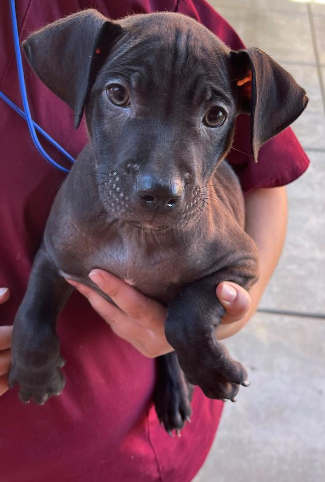
Male pit bull terrier puppy
This 2-month-old male pit bull terrier puppy has a short black coat.
He is in kennel No. 6a, ID No. LCAC-A-4098.
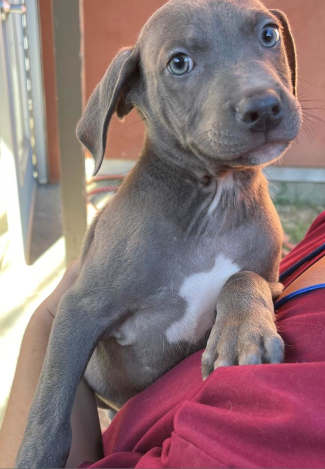
Male pit bull terrier puppy
This 2-month-old male pit bull terrier puppy has a short gray coat.
He is in kennel No. 6b, ID No. LCAC-A-4099.
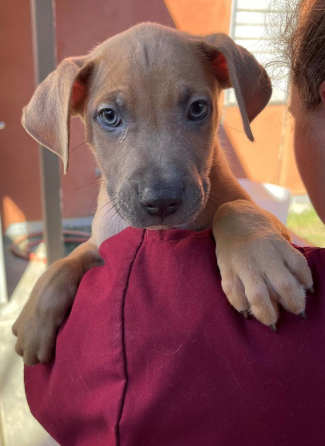
Male pit bull terrier puppy
This 2-month-old male pit bull terrier puppy has a short brown coat.
He is in kennel No. 6c, ID No. LCAC-A-4100.
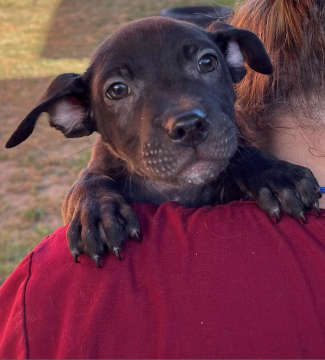
Female pit bull terrier puppy
This 2-month-old female pit bull terrier puppy has a short black coat.
She is in kennel No. 7a, ID No. LCAC-A-4101.
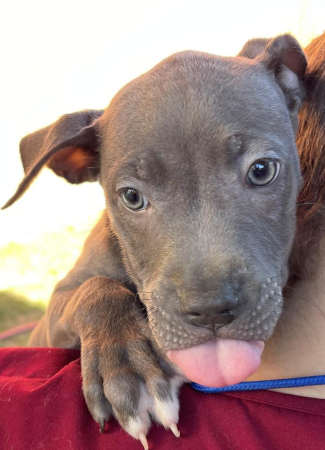
Female pit bull terrier puppy
This 2-month-old female pit bull terrier puppy has a short gray coat.
She is in kennel No. 7b, ID No. LCAC-A-4102.
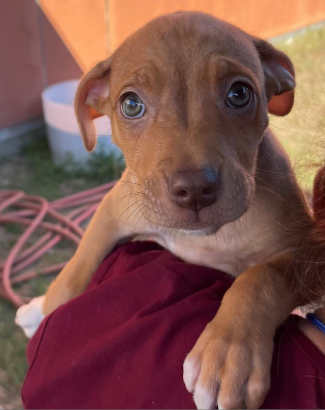
Female pit bull terrier puppy
This 2-month-old female pit bull terrier puppy has a short brown coat.
She is in kennel No. 7c, ID No. LCAC-A-4103.
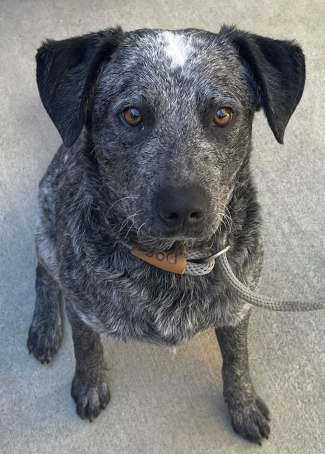
Male American blue heeler
This 1-year-old male American blue heeler has a short coat.
He is in kennel No. 10, ID No. LCAC-A-4128.

Female Chihuahua-dachshund mix
This 2-year-old female Chihuahua-dachshund mix has a short brown and white coat.
She is in kennel No. 11, ID No. LCAC-A-4126.
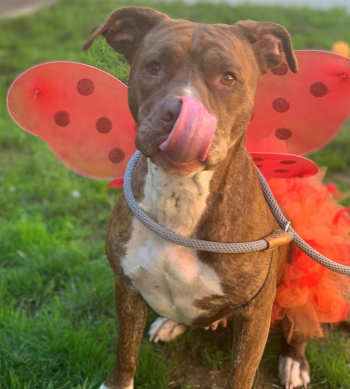
‘Bailey’
“Bailey” is a 5-year-old female pit bull terrier with a brown and white coat.
She is in kennel No. 13, ID No. LCAC-A-4125.

Male Labrador Retriever
When he’s not dressed as a unicorn, this 2-year-old male Labrador retriever has a short black coat.
He is in kennel No. 14, ID No. LCAC-A-4112.
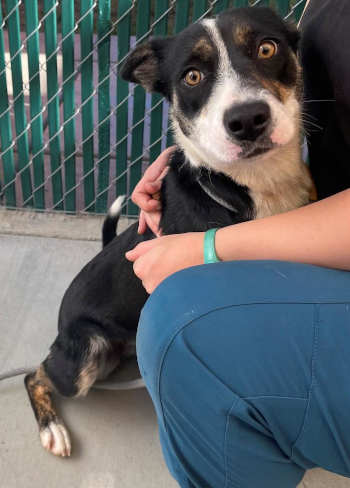
Female collie mix
This 1-year-old female collie mix has a tricolor coat.
She is in kennel No. 15, ID No. LCAC-A-4111.
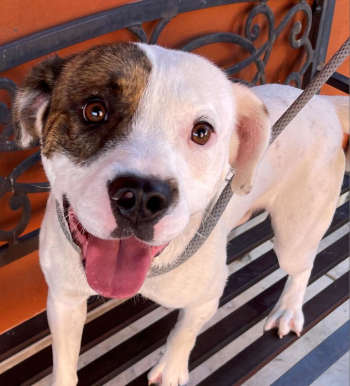
Male pit bull terrier
This 1-year-old male pit bull terrier has a short white coat with brown markings.
He is in kennel No. 16, ID No. LCAC-A-4110.
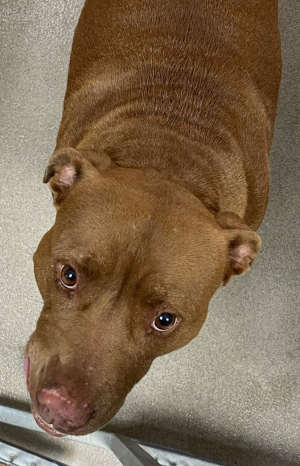
Female pit bull terrier
This 5-year-old female pit bull terrier has a short brown coat.
She is in kennel No. 17, ID No. LCAC-A-4109.

Male border collie
This 2-year-old male border collie has a black and white coat.
He is in kennel No. 18, ID No. LCAC-A-3995.
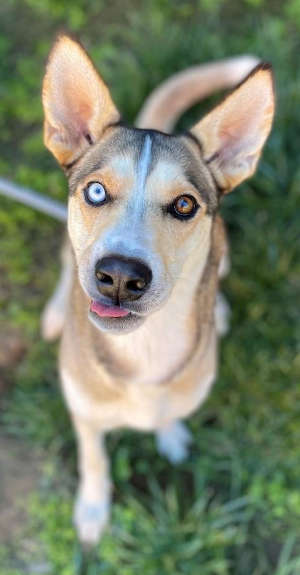
Male husky
This 3-year-old male husky has a short tricolor coat.
He is in kennel No. 22, ID No. LCAC-A-4014.
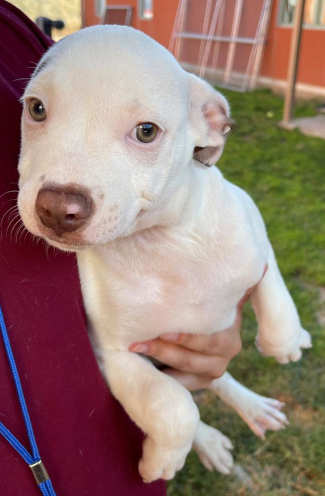
Male pit mix puppy
This 2-month-old male pit bull terrier mix puppy has a short gray and white coat.
He is in kennel No. 23a, ID No. LCAC-A-4116.
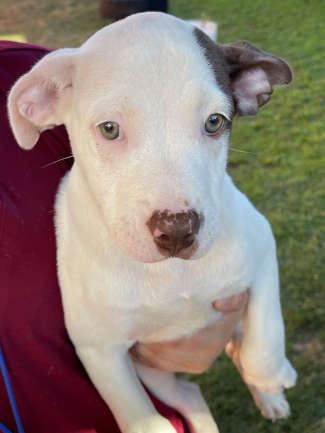
Male pit mix puppy
This 2-month-old male pit bull terrier mix puppy has a short gray and white coat.
He is in kennel No. 23b, ID No. LCAC-A-4117.
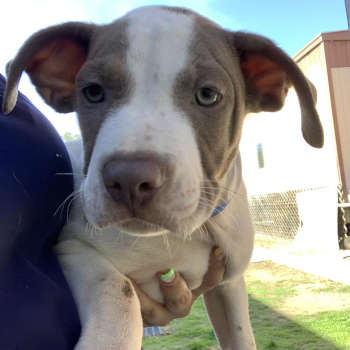
Male pit mix puppy
This 2-month-old male pit bull terrier mix puppy has a short gray and white coat.
He is in kennel No. 23c, ID No. LCAC-A-4118.
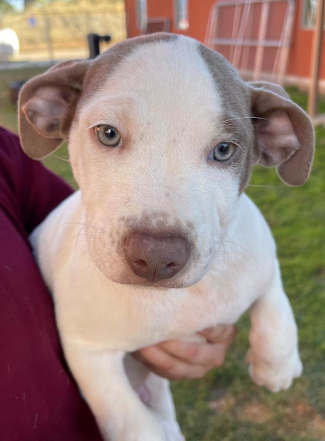
Male pit bull puppy
This 2-month-old male pit bull puppy has a short white and gray coat.
He is in kennel No. 24a, ID No. LCAC-A-4120.
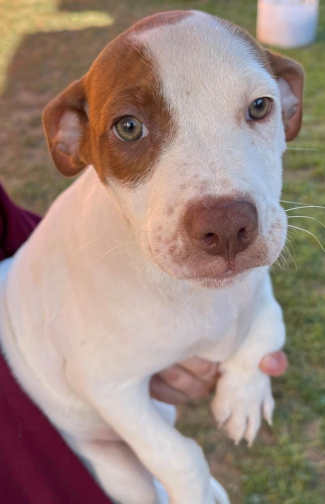
Female pit bull puppy
This 2-month-old female pit bull puppy has a short white and red coat.
She is in kennel No. 24b, ID No. LCAC-A-4121.
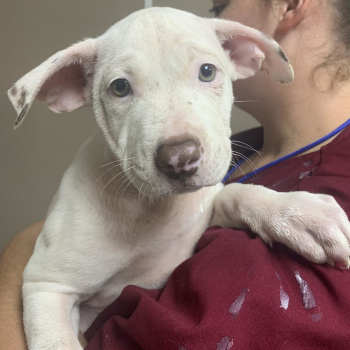
Female pit mix puppy
This 2-month-old female pit bull terrier mix puppy has a short white coat.
He is in kennel No. 24c, ID No. LCAC-A-4122.

Male pit bull
This 2-year-old male pit bull has a short black and white coat.
He is in kennel No. 29, ID No. LCAC-A-4097.

‘Ziggy’
“Ziggy” is a 10-year-old female dachshund with a high brown coat.
She is in kennel No. 30, ID No. LCAC-A-4059.
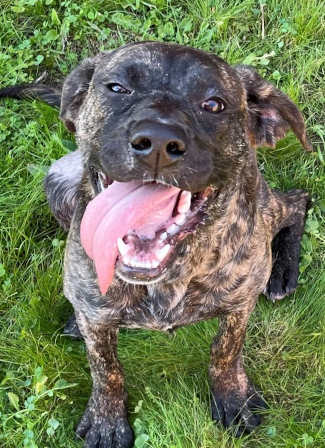
‘Ruby’
“Ruby” is a 6-month-old female hound mix with a brindle coat.
She is in kennel No. 31, ID No. LCAC-A-3753.
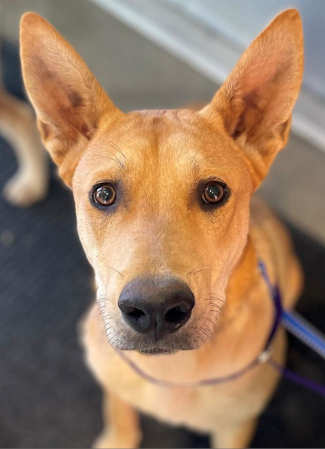
German shepherd-husky
This 1-year-old male German shepherd-husky mix has a short tan coat.
He is in kennel No. 32, ID No. LCAC-A-4079.

‘Bella’
“Bella” is a 6-year-old female shepherd mix with a tricolor coat.
She is in kennel No. 33, ID No. LCAC-A-4078.
Email Elizabeth Larson at
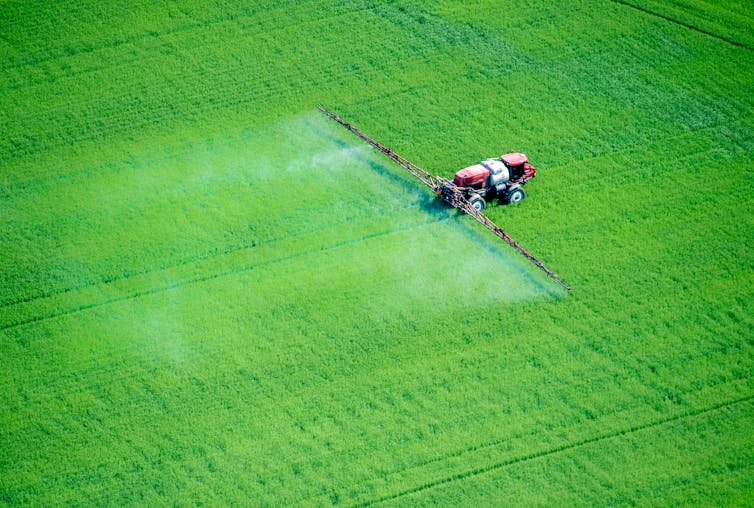
In 1962 environmental scientist Rachel Carson published “Silent Spring,” a bestselling book that asserted that overuse of pesticides was harming the environment and threatening human health. Carson did not call for banning DDT, the most widely used pesticide at that time, but she argued for using it and similar products much more selectively and paying attention to their effects on nontargeted species.
“Silent Spring” is widely viewed as an inspiration for the modern environmental movement. These articles from The Conversation’s archive spotlight ongoing questions about pesticides and their effects.
1. Against absolutes
Although the chemical industry attacked “Silent Spring” as anti-science and anti-progress, Carson believed that chemicals had their place in agriculture. She “favored a restrained use of pesticides, but not a complete elimination, and did not oppose judicious use of manufactured fertilizers,” writes Harvard University sustainability scholar Robert Paarlberg.

This approach put Carson at odds with the fledgling organic movement, which totally rejected synthetic pesticides and fertilizers. Early organic advocates claimed Carson as a supporter nonetheless, but Carson kept them at arm’s length. “The organic farming movement was suspect in Carson’s eyes because most of its early leaders were not scientists,” Paarlberg observes.
This divergence has echoes today in debates about whether organic production or steady improvements in conventional farming have more potential to feed a growing world population.
2. Concerned cropdusters
Well before “Silent Spring” was published, a crop-dusting industry developed on the Great Plains in the years after World War II to apply newly commercialized pesticides. “Chemical companies made broad promises about these ‘miracle’ products, with little discussion of risks. But pilots and scientists took a much more cautious approach,” recounts University of Nebraska-Kearney historian David Vail.
As Vail’s research shows, many crop-dusting pilots and university agricultural scientists were well aware of how little they knew about how these new tools actually worked. They attended conferences, debated practices for applying pesticides and organized flight schools that taught agricultural science along with spraying techniques. When “Silent Spring” was published, many of these practitioners pushed back, arguing that they had developed strategies for managing pesticide risks.
Today aerial spraying is still practiced on the Great Plains, but it’s also clear that insects and weeds rapidly evolve resistance to every new generation of pesticides, trapping farmers on what Vail calls “a chemical-pest treadmill.” Carson anticipated this effect in “Silent Spring,” and called for more research into alternative pest control methods – an approach that has become mainstream today.
3. The osprey’s crash and recovery
In “Silent Spring,” Carson described in detail how chlorinated hydrocarbon pesticides persisted in the environment long after they were sprayed, rising through the food chain and building up in the bodies of predators. Populations of fish-eating raptors, such as bald eagles and ospreys, were ravaged by these chemicals, which thinned the shells of the birds’ eggs so that they broke in the nest before they could hatch.
“Up to 1950, ospreys were one of the most widespread and abundant hawks in North America,” writes Cornell University research associate Alan Poole. “By the mid-1960s, the number of ospreys breeding along the Atlantic coast between New York City and Boston had fallen by 90%.”
Bans on DDT and other highly persistent pesticides opened the door to recovery. But by the 1970s, many former osprey nesting sites had been developed. To compensate, concerned naturalists built nesting poles along shorelines. Ospreys also learned to colonize light posts, cell towers and other human-made structures.
Today, “Along the shores of the Chesapeake Bay, nearly 20,000 ospreys now arrive to nest each spring – the largest concentration of breeding pairs in the world. Two-thirds of them nest on buoys and channel markers maintained by the U.S. Coast Guard, who have become de facto osprey guardians,” writes Poole. “To have robust numbers of this species back again is a reward for all who value wild animals, and a reminder of how nature can rebound if we address the key threats.”
4. New concerns
Pesticide application techniques have become much more targeted in the 60 years since “Silent Spring” was published. One prominent example: crop seeds coated with neonicotinoids, the world’s most widely used class of insecticides. Coating the seeds makes it possible to introduce pesticides into the environment at the point where they are needed, without spraying a drop.
But a growing body of research indicates that even though coated seeds are highly targeted, much of their pesticide load washes off into nearby streams and lakes. “Studies show that neonicotinoids are poisoning and killing aquatic invertebrates that are vital food sources for fish, birds and other wildlife,” writes Penn State entomologist John Tooker.
In multiple studies, Tooker and colleagues have found that using coated seeds reduces populations of beneficial insects that prey on crop-destroying pests like slugs.
“As I see it, neonicotinoids can provide good value in controlling critical pest species, particularly in vegetable and fruit production, and managing invasive species like the spotted lanternfly. However, I believe the time has come to rein in their use as seed coatings in field crops like corn and soybeans, where they are providing little benefit and where the scale of their use is causing the most critical environmental problems,” Tooker writes.
Editor’s note: This story is a roundup of articles from The Conversation’s archive.
Jennifer Weeks, Senior Environment + Energy Editor, The Conversation
This article is republished from The Conversation under a Creative Commons license. Read the original article.
On Oct. 16, at 7:04 a.m. EDT, NASA’s Lucy spacecraft, the first mission to the Jupiter Trojan asteroids, will skim the Earth’s atmosphere, passing a mere 220 miles above the surface.
By sling-shotting past Earth on the first anniversary of its launch, Lucy will gain some of the orbital energy it needs to travel to this never-before-visited population of asteroids.
The Trojan asteroids are trapped in orbits around the Sun at the same distance as Jupiter, either far ahead of or behind the giant planet. Lucy is currently one year into a 12 year voyage. This gravity assist will place Lucy on a new trajectory for a two-year orbit, at which time it will return to Earth for a second gravity assist.
This second assist will give Lucy the energy it needs to cross the main asteroid belt, where it will observe asteroid Donaldjohanson, and then travel into the leading Trojan asteroid swarm.
There, Lucy will fly past six Trojan asteroids: Eurybates and its satellite Queta, Polymele and its yet unnamed satellite, Leucus, and Orus.
Lucy will then return to Earth for a third gravity assist in 2030 to re-target the spacecraft for a rendezvous with the Patroclus-Menoetius binary asteroid pair in the trailing Trojan asteroid swarm.
For this first gravity assist, Lucy will appear to approach Earth from the direction of the Sun. While this means that observers on Earth will not be able to see Lucy in the days before the event, Lucy will be able to take images of the nearly full Earth and Moon. Mission scientists will use these images to calibrate the instruments.
Lucy’s trajectory will bring the spacecraft very close to Earth, lower even than the International Space Station, which means that Lucy will pass through a region full of earth-orbiting satellites and debris. To ensure the safety of the spacecraft, NASA developed procedures to anticipate any potential hazard and, if needed, to execute a small maneuver to avoid a collision.
“The Lucy team has prepared two different maneuvers,” says Coralie Adam, Lucy deputy navigation team chief from KinetX Aerospace in Simi Valley, California. “If the team detects that Lucy is at risk of colliding with a satellite or piece of debris, then — 12 hours before the closest approach to Earth — the spacecraft will execute one of these, altering the time of closest approach by either two or four seconds. This is a small correction, but it is enough to avoid a potentially catastrophic collision.”
Lucy will be passing the Earth at such a low altitude that the team had to include the effect of atmospheric drag when designing this flyby. Lucy’s large solar arrays increase this effect.
“In the original plan, Lucy was actually going to pass about 30 miles closer to the Earth,” says Rich Burns, Lucy project manager at NASA’s Goddard Space Flight Center in Greenbelt, Maryland. “However, when it became clear that we might have to execute this flyby with one of the solar arrays unlatched, we chose to use a bit of our fuel reserves so that the spacecraft passes the Earth at a slightly higher altitude, reducing the disturbance from the atmospheric drag on the spacecraft’s solar arrays.”
At around 6:55 a.m. EDT, Lucy will first be visible to observers on the ground in Western Australia (6:55 p.m. for those observers). Lucy will quickly pass overhead, clearly visible to the naked eye for a few minutes before disappearing at 7:02 a.m. EDT as the spacecraft passes into the Earth’s shadow.
Lucy will continue over the Pacific Ocean in darkness and emerge from the Earth’s shadow at 7:26 a.m. EDT. If the clouds cooperate, sky watchers in the western United States should be able to get a view of Lucy with the aid of binoculars.
“The last time we saw the spacecraft, it was being enclosed in the payload fairing in Florida,” said Hal Levison, Lucy principal investigator at the Southwest Research Institute (SwRI) Boulder, Colorado office. “It is exciting that we will be able to stand here in Colorado and see the spacecraft again. And this time Lucy will be in the sky.”
Lucy will then rapidly recede from the Earth’s vicinity, passing by the Moon and taking a few more calibration images before continuing out into interplanetary space.
“I’m especially excited by the final few images that Lucy will take of the Moon,” said John Spencer, acting deputy project scientist at SwRI. “Counting craters to understand the collisional history of the Trojan asteroids is key to the science that Lucy will carry out, and this will be the first opportunity to calibrate Lucy’s ability to detect craters by comparing it to previous observations of the Moon by other space missions.”
The public is invited to join the #WaveToLucy social media campaign by posting images of themselves waving towards the spacecraft and tagging the @NASASolarSystem account. Additionally, if you are in an area where Lucy will be visible, take a photograph of Lucy and post it to social media with the #SpotTheSpacecraft hashtag. Instructions for observing Lucy from your location are available here.
Hal Levison of Southwest Research Institute, or SwRI, in the Boulder Colorado office is the principal investigator. SwRI, headquartered in San Antonio, also leads the science team and the mission’s science observation planning and data processing.
NASA Goddard provides overall mission management, systems engineering and the safety and mission assurance for Lucy. Lockheed Martin Space in Littleton, Colorado built the spacecraft, principally designed the orbital trajectory and is providing flight operations.
Goddard and KinetX Aerospace are responsible for navigating the Lucy spacecraft. Lucy is the thirteenth mission in NASA’s Discovery Program, which is managed by NASA’s Marshall Space Flight Center in Huntsville, Alabama.
For more information about the Lucy mission, visit https://www.nasa.gov or http://lucy.swri.edu.
Katherine Kretke works for the Southwest Research Institute.

Social Security is set to boost the benefits it provides retirees by 8.7%, the biggest cost-of-living adjustment since 1981. It comes as sky-high inflation continues to eat into incomes and savings.
The changes are set to take effect in January 2023 and were announced following the release of the September 2022 consumer price index report, which showed inflation climbing more than expected during the month, by 0.4%.
The automatic adjustment will surely come as a relief to tens of millions of retirees and those who receive supplemental security income who may be struggling to afford basic necessities as inflation has accelerated throughout 2022. But an annual adjustment wasn’t always the case – and other government benefits and programs deal with inflation differently.
John Diamond, who directs the Center for Public Finance at Rice’s Baker Institute, explains the history of the Social Security cost-of-living, or COLA, increase, what other benefits are adjusted for inflation and why the government makes these changes.
1. How fast is the cost of living rising?
The latest data, for September, shows average consumer prices are up 8.2% from a year earlier. The monthly gain of 0.4% was double what economists surveyed by Reuters had expected.
More troubling, so-called core inflation – which excludes volatile food and energy prices – gained even more in September, ticking up by 0.6%. Core inflation is a measure that’s closely watched by the Federal Reserve, as it helps show how pervasive and persistent inflation has become in the economy.
2. How are Social Security benefits adjusted for inflation?
Automatic adjustments to Social Security benefits began in 1975 after President Richard Nixon signed the 1972 Social Security amendments into law.
Before 1975, Congress had to act each year to increase benefits to offset the effects of inflation. But this was an inefficient system, as politics would often be injected into a simple economic decision. Under this system, an increase in benefits could be too small or too large, or could fail to happen at all if one party blocked the change entirely.
Not to mention that with the baby boomers – those born from 1946 to 1964 – entering the labor force it was already clear that Social Security would face long-term funding issues in the future, and so putting the program on autopilot reduced the political risk faced by politicians.
Since then, benefits have climbed automatically by the average increase in consumer prices during the third quarter of a given year from the same period 12 months earlier. This is based on a version of the consumer price index meant to estimate price changes for working people and has been rising slightly faster than the overall pace of inflation.
While helpful, these inflation adjustments are backward-looking and imperfect. For example, 2022 Social Security benefits increased by 5.9% from the previous year, even though inflation throughout this year has been significantly higher – which means the higher benefits weren’t covering the higher cost of living. Thus, the 2023 increase in benefits primarily offsets what was lost over the previous year.

3. Are the benefits taxable?
A growing portion of Social Security benefits are taxed in the same way as ordinary income, except at different threshold with various caps and percentages. Only 8% of benefits were subject to taxation in 1984, but that’s climbed to almost 50% in recent years. That percentage will likely continue to increase as the taxable thresholds are not adjusted for inflation.
For example, if an individual filer’s income, including benefits, is below US$25,000, none of that is taxed. But up to 50% of a person’s benefits may be taxed at incomes of $25,000 to $34,000. After that, up to 85% of their benefits may be taxed.
Such a big increase in Social Security benefits likely means some people who paid no tax will now have to pay some, while others will see larger increases in their tax liability.
4. Why does the government adjust benefits for inflation?
Rapid gains of inflation, like the kind the U.S. and many other countries are currently experiencing, can have significant impacts on the finances of households and businesses.
For example, it might mean seniors cutting back on heating or food. Government policies generally try to account for this to reduce the negative impacts that rising prices can have on those with limited or fixed resources.
In addition, reducing the impacts of price changes creates a more efficient and fair allocation of resources and reduces the arbitrary outcomes that would otherwise occur.
5. What other government programs typically get a COLA?
Other government programs and benefits also increase to account for inflation.
The U.S. Department of Agriculture estimates the cost of its Thrifty Food Plan each June and adjusts Supplemental Nutrition Assistance Program or SNAP benefits – formerly known as food stamps – in October of each year. Beginning in October 2022, food stamp benefits rose by 12.5%, which helps make up for the largest increases in food prices since the 1970s.
In addition, the federal poverty level is adjusted for changes in the consumer price index annually by the Department of Health and Human Services, an adjustment that affects a number of government-provided benefits, such as housing benefits, health insurance and others, including SNAP benefits.
6. Does the tax system also adjust for inflation?
While some aspects of the tax code adjust for inflation, others do not.
For example, income tax bracket thresholds, the size of the standard deduction, alternative minimum tax parameters and estate tax provisions all increase annually for inflation. That means come tax filing season next year, U.S. tax filers will likely see big changes in all these items.
But examples of provisions that are not adjusted for inflation include the maximum value of the child tax credit and the $10,000 cap on the deduction of state and local taxes. In addition, the threshold that determines who is liable for the net investment income tax – the additional 3.8% tax on investment and passive income for taxpayers above a certain income level – doesn’t adjust, which means each year more individuals are subject to it.
John W. Diamond, Director of the Center for Public Finance at the Baker Institute, Rice University
This article is republished from The Conversation under a Creative Commons license. Read the original article.
The City of Clearlake Animal Association also is seeking fosters for the animals waiting to be adopted.
Call the Clearlake Animal Control shelter at 707-273-9440, or email
Visit Clearlake Animal Control on Facebook or on the city’s website.
The following dogs are available for adoption. New additions are at the top.
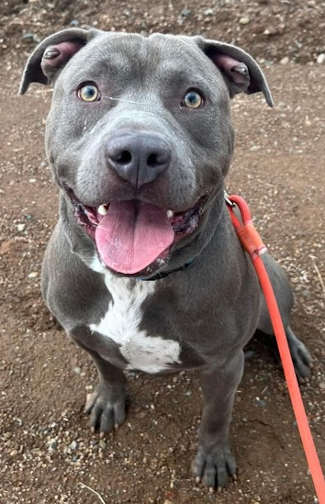
‘Bruce’
“Bruce” is a 2-year-old American pit bull mix with a short gray coat with white markings.
He has been neutered.
He is dog No. 50684304.

‘Herman’
“Herman” is a 7-year-old male American pit bull terrier mix with a brown coat.
He has been neutered.
He is dog No. 51236411.
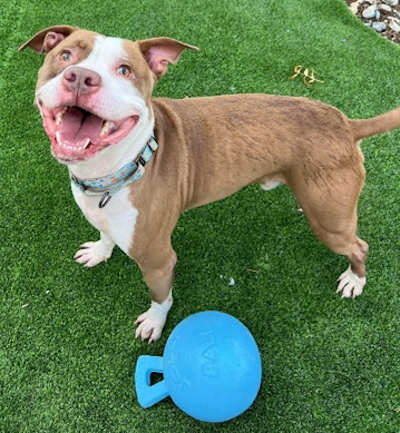
‘Poppa’
“Poppa” is a 3-year-old male American pit bull terrier mix with a short red and white coat.
He has been neutered.
He is dog No. 50773597.
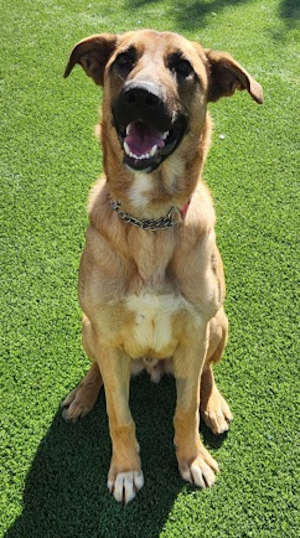
‘Rascal’
“Rascal” is a male shepherd mix with a black and brown coat.
He has been neutered.
He is dog No. 50806384.

‘Andy’
“Andy” is a male American pit bull mix with a short gray and white coat.
He is dog No. 48995415.
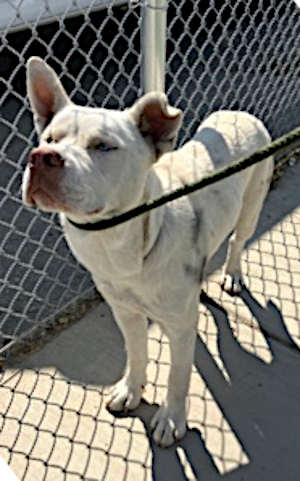
‘Aoki’
“Aoki” is a male Siberian husky mix with a white coat.
He has been neutered.
He is dog No. 50905477.

‘Babs’
“Babs” is a female Labrador retriever mix with a short black coat.
She has been spayed.
She is dog No. 49505856.

‘Baby’
“Baby” is a female American pit bull mix with a white coat.
She has been spayed.
She is dog No. 50933640.

‘Bear’
“Bear” is a male Labrador retriever-American pit bull mix with a short charcoal and fawn coat.
He has been neutered.
He is dog No. 48443153.
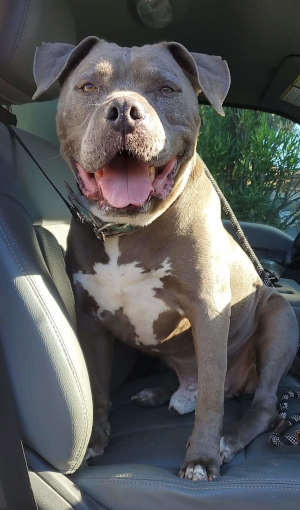
‘Big Phil’
“Big Phil” is a 13-year-old male American pit bull terrier mix with a blue coat.
He has been neutered.
He is dog No. 49951647.

‘Buster’
“Buster” is a male pit bull mix with a short tan coat.
He has been neutered.
He is dog No. 50762164.

‘Eros’
“Eros” is a male Rottweiler mix with a short black and tan coat.
He has been neutered.
He is dog No. 50754504.
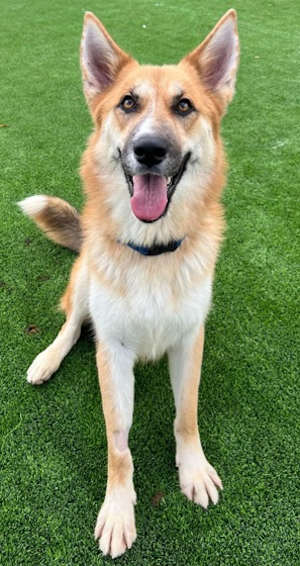
‘Foxie’
“Foxie” is a female German shepherd with a red, black and white coat.
She has been spayed.
She is dog No. 49702845.
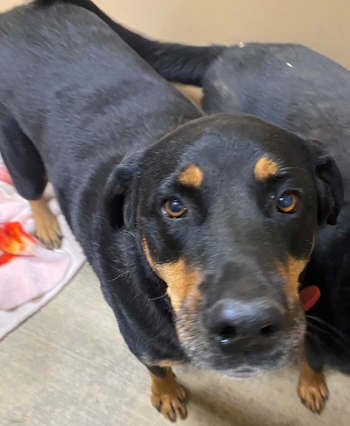
‘Goliath’
“Goliah” is a male Rottweiler mix with a short black and tan coat.
He is dog No. 50754509.
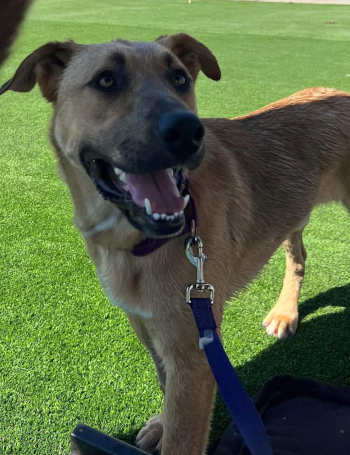
‘Hakuna’
“Hakuna” is a male shepherd mix with a tan coat.
He has been neutered.
He is dog No. 50176912.
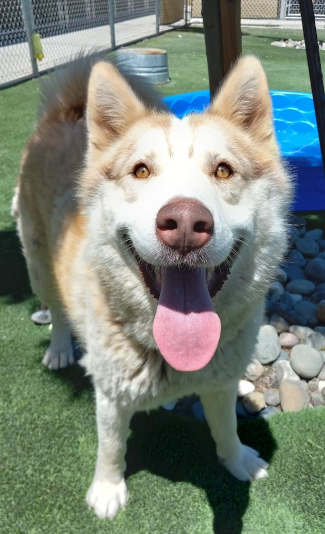
‘Hondo’
“Hondo” is a male Alaskan husky mix with a buff coat.
He has been neutered.
He’s dog No. 50227693.
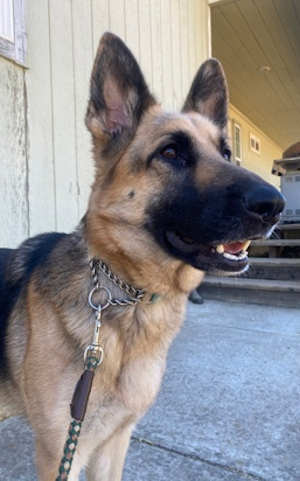
‘Keilani’
“Keilani” is a 3-year-old female German shepherd mix with a black and tan coat.
She has been spayed and she is house trained.
She is dog No. 50427566.
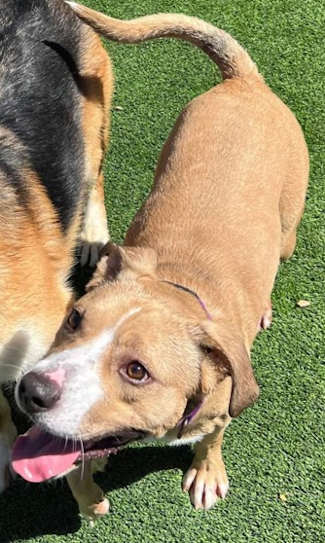
‘Little Boy’
“Little Boy” is a male American pit bull terrier mix with a short tan coat.
He has been neutered.
He is dog No. 50075256.

‘Luciano’
“Luciano” is a male Siberian husky mix with a short black and white coat.
He has been neutered.
He is dog No. 50596272.

‘Mamba’
“Mamba” is a male Siberian husky mix with a gray and cream-colored coat.
He has been neutered.
He is dog No. 49520569.
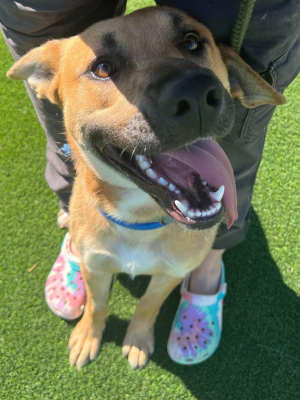
‘Matata’
“Matata” is male shepherd mix with a tan coat.
He has been neutered.
He is dog No. 50176912.
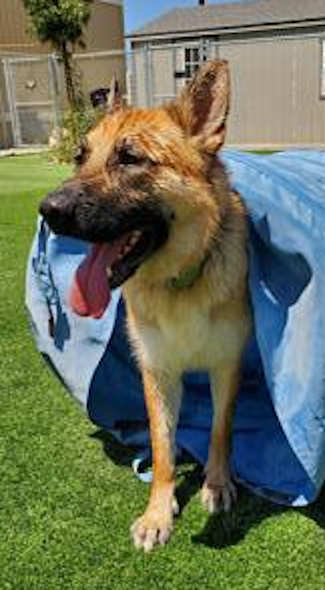
‘Maya’
“Maya” is a female German shepherd with a black and tan coat.
She has been spayed.
She is dog No. 50428151.

‘Mikey’
“Mikey” is a male German shepherd mix with a short brown and tan coat.
He has been neutered.
He is dog No. 51012855.
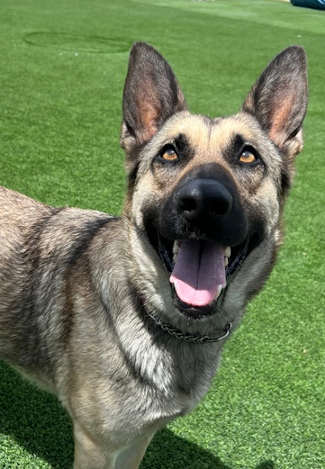
‘Sadie’
“Sadie” is a female German shepherd mix with a black and tan coat.
She has been spayed.
She is dog No. 49802563.

‘Snowball’
“Snowball is a 1 and a half year old male American Staffordshire terrier mix with a short white coat.
He has been neutered.
He is dog No. 49159168.

‘Terry’
“Terry” is a handsome male shepherd mix with a short brindle coat.
He gets along with other dogs, including small ones, and enjoys toys. He also likes water, playing fetch and keep away.
Staff said he is now getting some training to help him build confidence.
He is dog No. 48443693.
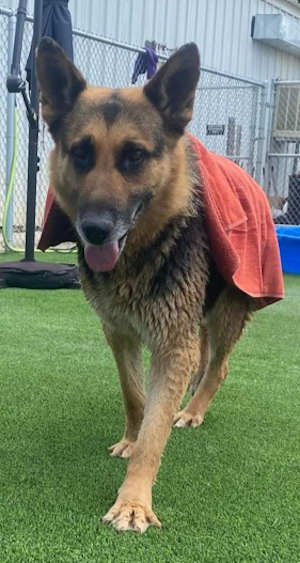
‘Willie’
“Willie” is a male German shepherd mix with a black and tan coat.
He has been neutered.
He is dog No. 50596003.
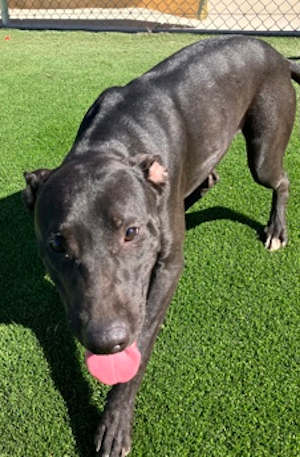
‘Zeda’
“Zeda” is a female Labrador retriever mix.
She has been spayed.
She is dog No. 51108916.
Email Elizabeth Larson at